Should a Bathroom Door Open IN or OUT?

If you’re building a home or remodeling, the way your bathroom door swings matters more than you’d think. It affects privacy, safety, traffic flow, and how much usable floor space you have. Bathroom doors come in many styles and configurations, so choosing the right swing direction can make a big difference in both comfort and function.
Below, we’ll quickly explain what most homeowners do, the pros and cons of each option, smart space-saving alternatives, and then the ADA/code basics you should know.
What Most Homeowners Choose

In many homes, bathroom doors swing inward. It’s the most common setup in residential design because it keeps hallways clear, feels familiar, and supports privacy. That said, outward swing or sliding doors can be the smarter move in compact layouts or where accessibility is a priority.
Pros & Cons of an Inward-Opening Bathroom Door
An inward-opening bathroom door is the most common setup in residential homes. It feels familiar, looks clean, and works well in most layouts. Here’s a closer look at what makes this option practical, and where it can become a challenge.
Pros of an Inward-Swinging Bathroom Door

Keeps Hallways Clear and Safe
One of the biggest advantages of an inward swing is how it keeps hallways and adjoining rooms uncluttered. Since the door opens into the bathroom, you won’t risk hitting someone walking past or blocking other doors nearby. This is especially useful in a house with narrow corridors, busy family traffic, or bedrooms close together, where safety and flow matter more than saving a few inches inside.
Familiar Feel That Matches Most Interior Doors
Inward-swinging doors follow the same layout as most other interior doors in a home. That means the hinges, latch direction, and privacy locks all feel consistent, making them easier to operate intuitively. Because of this standardization, most homeowners and builders default to inward-swinging bathroom doors for a cohesive interior look and feel.
Better Privacy and Sound Control
When a bathroom door swings inward, it tends to seal the room more effectively, both visually and acoustically. For homeowners using a glass bathroom door, this layout helps contain steam while still letting natural light flow through. You can partially open the bathroom door without revealing the entire space, and when closed, it helps contain sound, steam, and odor. This makes inward-swinging bathroom doors a good fit for bathrooms located near living areas, hallways, or kitchens, where privacy is key.
ALSO READ: Creating Privacy with a Bathroom Door with Glass
Cons of an Inward-Swinging Bathroom Door

Takes Up Valuable Interior Floor Space
The most common complaint about inward doors is how much space they consume inside the bathroom. In smaller layouts, the swing radius can make it hard to move around. It’s even more noticeable when you’re sitting at the vanity or using the toilet near the door. This can also make cleaning or quick entry harder when someone else is using the sink or mirror.
Can Interfere with Fixtures and Storage
Inward doors often collide with interior fixtures such as towel bars, toilet lids, or vanity drawers. This can lead to chipped finishes or limit how you use your wall space. If your bathroom is already compact, every inch counts and a swinging door might reduce your options for storage, shelving, or decorative mirrors.
Reduced Safety in Emergency Situations
In the event of a fall, an inward-swinging door might be harder to open if someone collapses behind it. While not a universal building-code violation in homes, this is a valid design concern, especially for bathrooms used by seniors or those with limited mobility. That’s why many accessible or aging-in-place layouts favor outward or sliding doors, which make it easier to enter in an emergency.
TLDR: Pros & Cons of an Inward-Opening Bathroom Door
Pros
- Keeps hallways clear: No surprise door swings into traffic.
- Familiar feel: Matches most interior doors and latch/lock expectations.
- Privacy control: Easy to crack open slightly without exposing the room.
Cons
- Eats interior space: The swing path can crowd a small bathroom.
- Fixture conflicts: Door edges can bump a toilet, vanity, or towel bar.
- Emergency access: If someone falls behind the door, it can be harder to open.
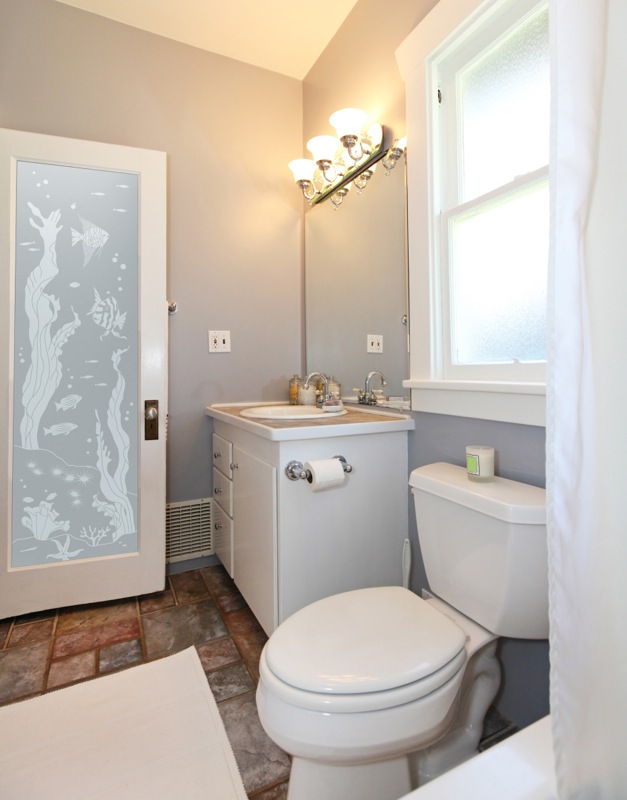
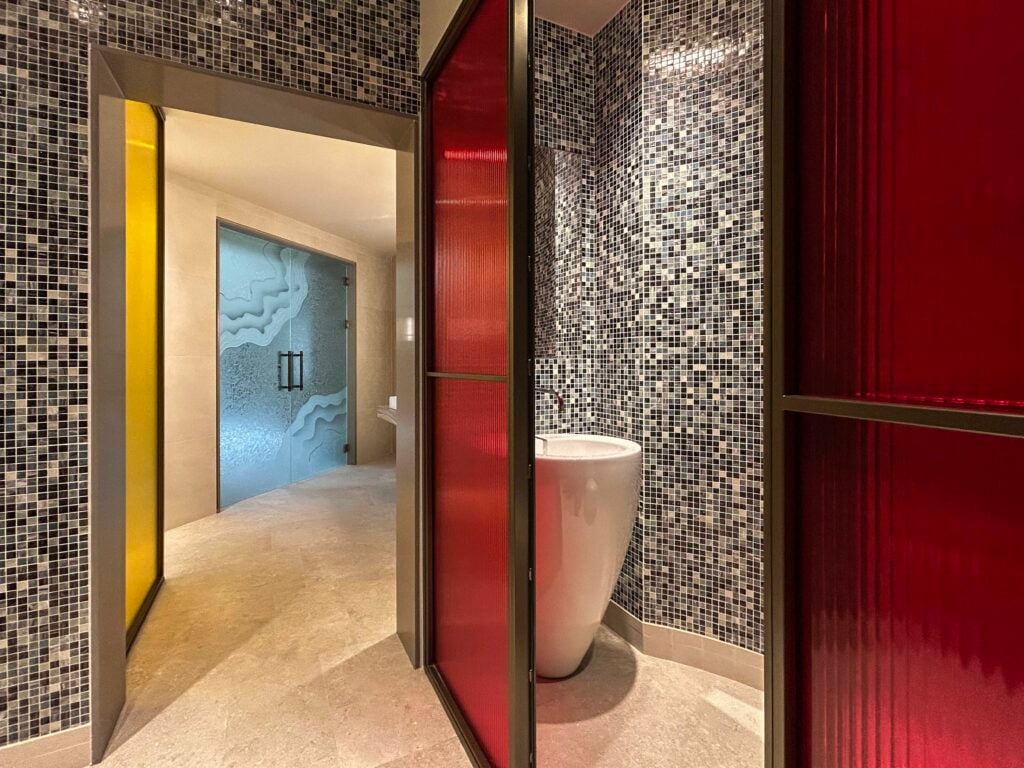
Pros & Cons of an Outward-Opening Bathroom Door
An outward-opening bathroom door swings toward the hallway or adjoining room instead of into the bathroom itself. Though outward swinging doors are less common in traditional homes, the design is gaining popularity in modern remodels, compact layouts, and accessible homes.
Here’s what to consider before choosing an outward-opening door.
Pros of an Outward-Swinging Bathroom Door
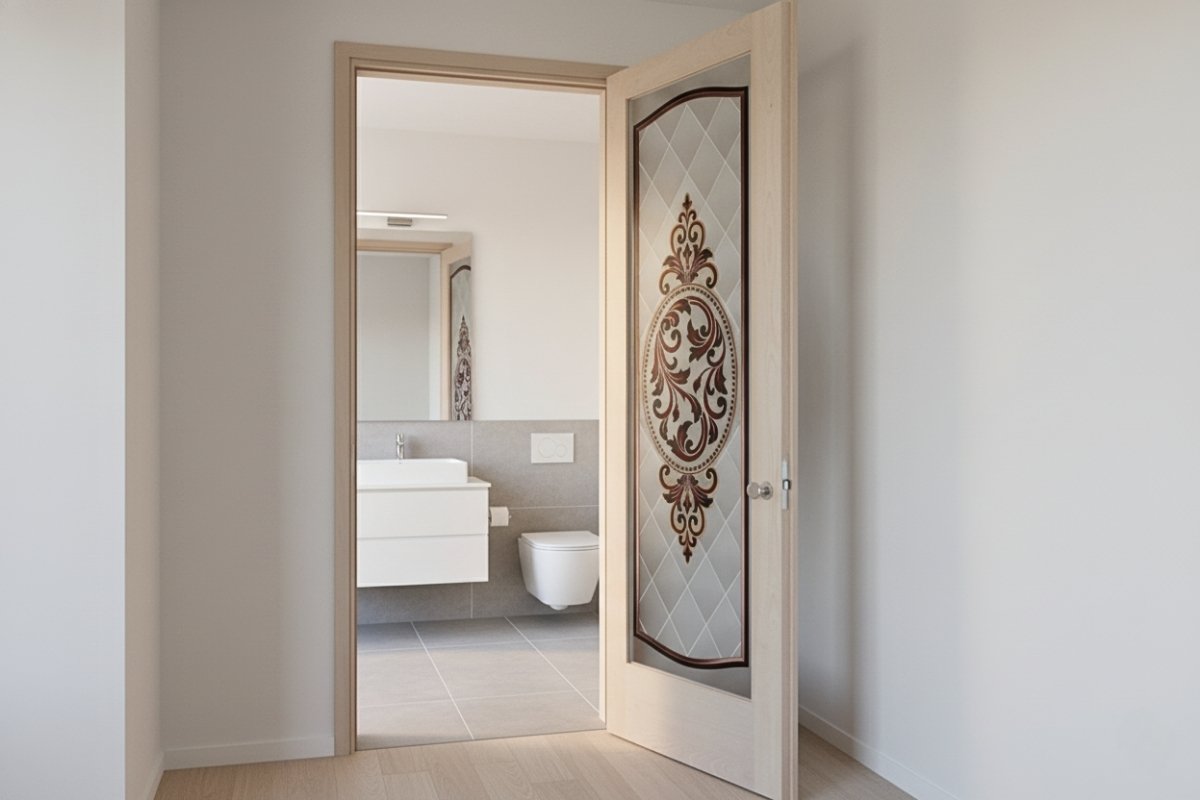
Frees Up Space Inside the Bathroom
The main reason homeowners choose an outward swing is simple — space efficiency. When the door opens outward, it doesn’t eat into the limited floor space inside the bathroom. This allows for a larger vanity, extra shelving, or more legroom around the toilet or shower. It also makes cleaning, turning, and moving around easier, especially in tight half baths or guest bathrooms.
Improved Safety and Emergency Access
Outward-swinging doors are safer in emergencies. If someone inside the bathroom faints or collapses, rescuers can still open the door from the outside without obstruction. This safety factor is why ADA-compliant and senior-friendly bathrooms often feature outward or sliding doors — they allow quick access when seconds matter.
Ideal for Accessibility and Wheelchair Use
Outward-opening or sliding doors provide more maneuvering space inside, making them a natural fit for wheelchair users or those with mobility challenges. Without the door’s swing path taking up room, there’s extra clearance for turns and transfers. It’s an essential consideration for universal or aging-in-place design.
Better Ventilation and Airflow
While not a code requirement, some designers note that outward-swinging doors can make bathrooms feel less confined. They can also help moisture escape more quickly after showers, especially when paired with an exhaust fan or transom vent. Still, true ventilation depends on fan placement and airflow, not the swing direction alone.
Cons of an Outward-Swinging Bathroom Door

Possible Interference with Hallways or Nearby Doors
One of the biggest downsides is how an outward swing can interfere with hallway traffic or adjacent doorways. If your bathroom opens directly into a narrow corridor or near a staircase, the door could hit someone passing by or obstruct another door’s path. Careful layout planning and hinge placement can minimize this issue, but in some homes, it’s simply not practical.
Less Privacy if the Door Faces a Common Area
If your bathroom opens into a busy hallway, living room, or shared space, an outward-swinging door can feel less private. When someone opens it suddenly, it exposes more of the bathroom interior to the outside — something most homeowners want to avoid. This can be mitigated by using a glass bathroom door with frosted or decorative glass panels that allow light through but obscure visibility, keeping the space bright yet private.
Requires Extra Clearance and Hinge Planning
Because the door swings into another room, it needs enough wall clearance to open fully. Hinges must be placed strategically so the door doesn’t hit trim, furniture, or decorative moldings. Outward swings may also require stronger hinges or stop hardware to prevent stress on the frame, especially if the door is solid core or glass.
A typical Look Compared to Other Interior Doors
Most homeowners are used to inward-swinging doors, so an outward door may look unconventional in traditional layouts. This isn’t a problem structurally — but if design cohesion matters, you’ll want to balance visual consistency with functionality.
TLDR: Pros & Cons of an Outward-Opening Bathroom Door
Pros
- Maximizes interior space: Great for small baths and powder rooms.
- Improved emergency access: Easier to open if someone needs help.
- Good for accessibility: More room to maneuver inside the bathroom.
Cons
- Hallway interference: Can clip passersby or block nearby doors.
- Hinge/trim planning: Needs clear wall space and proper stop hardware.
- Slight privacy trade-off: If the hallway is busy, you may prefer in-swing.
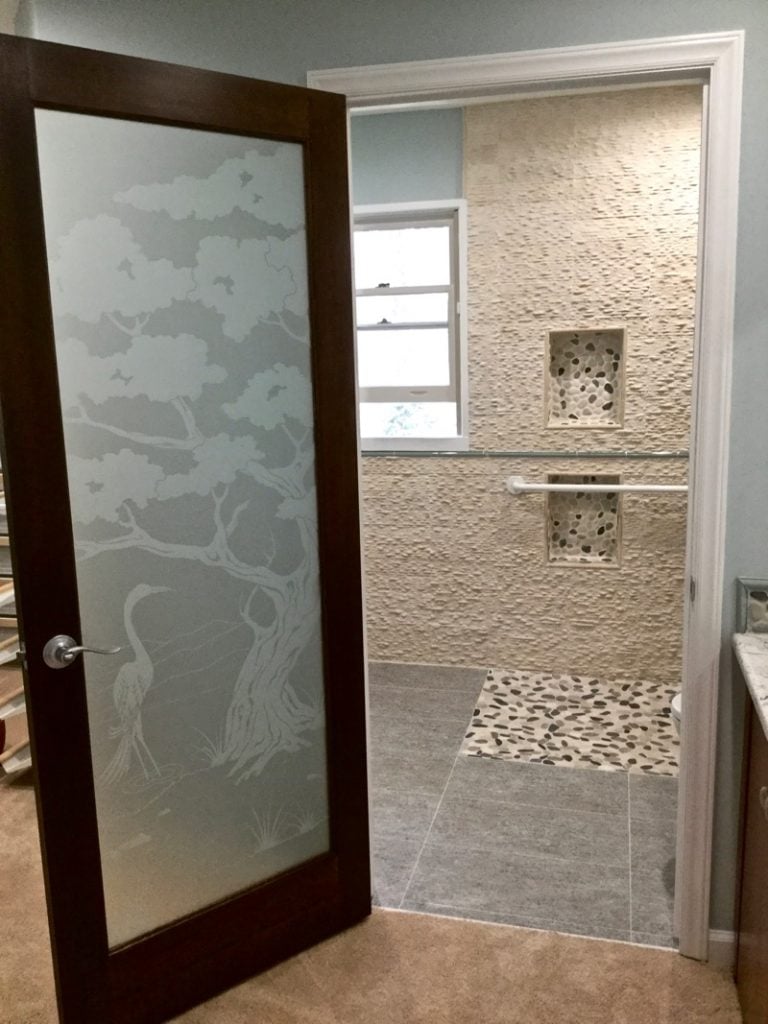
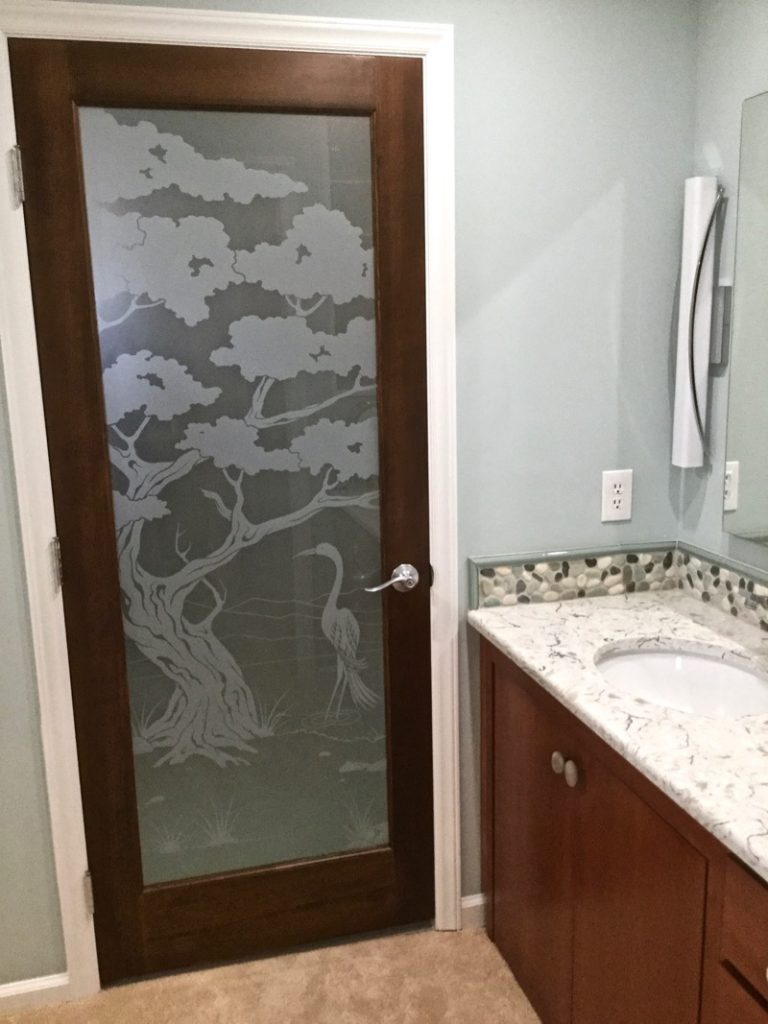
Space-Saving Alternatives to Traditional Swing Doors

When space is limited or your layout makes a door swing awkward, switching to a sliding or folding style can instantly improve comfort and flow. Below are the most practical and popular space-saving bathroom door alternatives.
Pocket Doors: The Best Space-Saver for Small Bathrooms
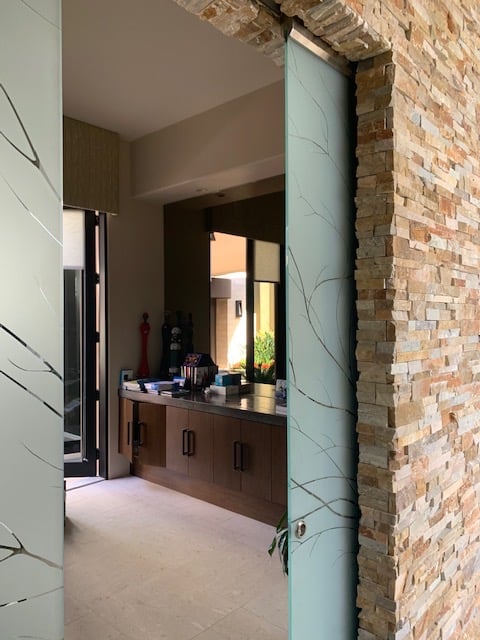

Pocket doors slide into the wall cavity, completely eliminating the door swing. They’re ideal for small bathrooms, powder rooms, or tight hallways where every inch counts.
Key tips:
- Requires a hollow wall cavity free of pipes, vents, or electrical wiring.
- Use a soft-close pocket frame system for smooth, quiet operation.
- Finish with a privacy latch or edge pull for bathrooms.
Pocket doors are popular in modern remodels because they look clean, function smoothly, and can fit full-size slabs, including frosted glass designs.
Barn Doors: Stylish and Easy to Retrofit
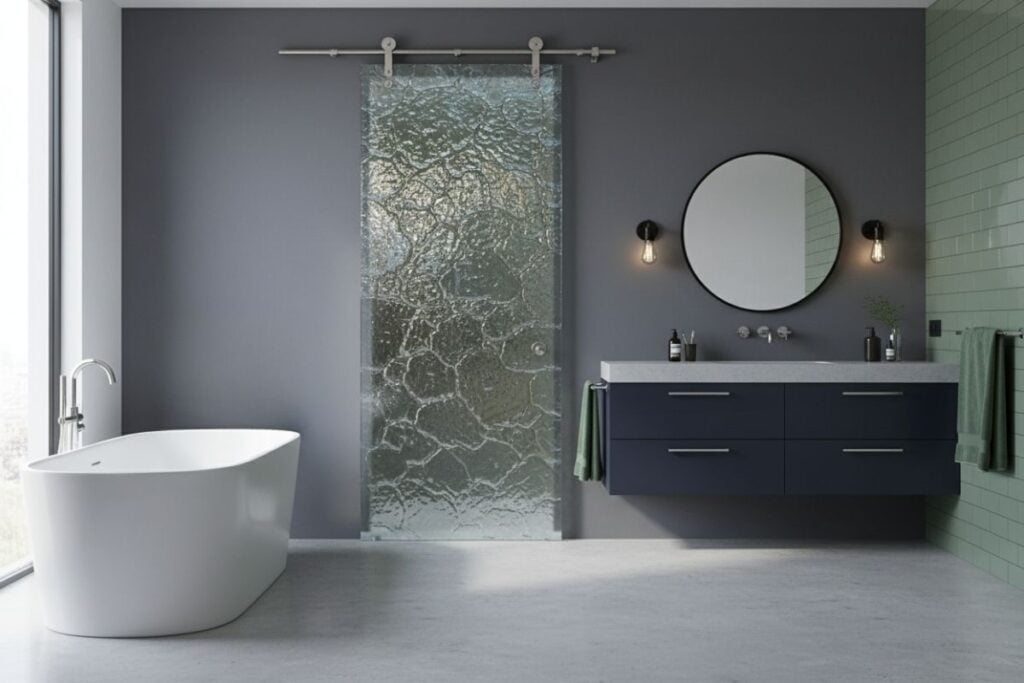
Barn doors slide along an exposed track on the wall, making them one of the easiest upgrades for homeowners who want style and practicality without reframing walls.
Benefits of bathroom barn doors:
- Works great where there’s no space for a pocket door installation.
- Adds a modern or farmhouse look to bathrooms and ensuites.
Keep in mind:
- They don’t seal tightly for sound or steam control.
- You’ll need a floor guide and a privacy lock kit for bathroom use.
A frosted or sandblasted glass barn door can offer privacy while maintaining natural light — a favorite choice for contemporary interiors.
Bi-Fold Doors: Compact and Budget-Friendly
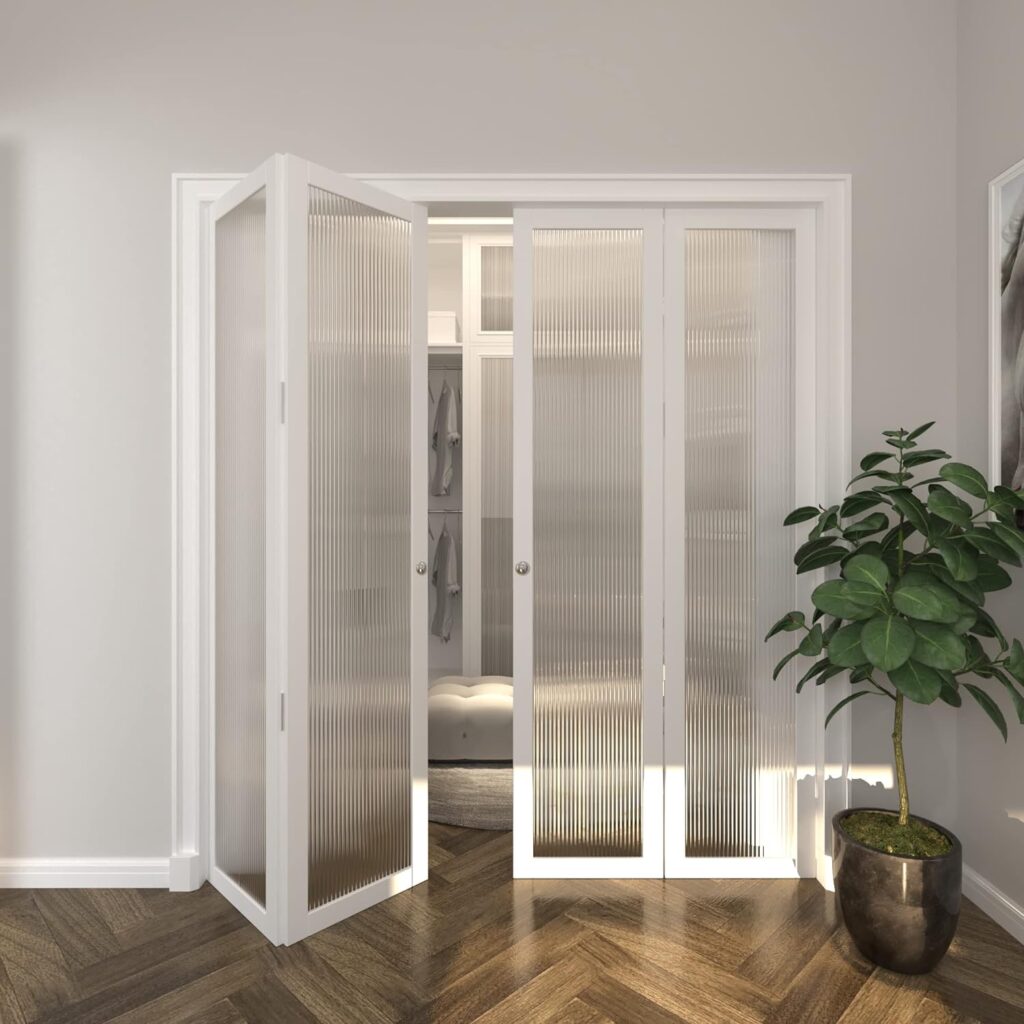
Bi-fold doors fold in half on center hinges, reducing the swing clearance needed in cramped bathrooms. They’re the most cost-effective solution when a pocket or barn door isn’t feasible.
Advantages of bi-fold bathroom doors:
- Simple to install using existing door openings.
- Great for half baths or utility areas.
Drawbacks of bi-fold bathroom doors:
- Not as sturdy or soundproof as a solid slab door.
- May require occasional track maintenance for smooth folding.
Still, a well-fitted bi-fold door can make a big difference in usability, especially in older homes with narrow layouts.
ADA and Building Code Considerations for Bathroom Doors
If you’re remodeling or building a new bathroom, building codes and accessibility guidelines can influence which way your bathroom door should swing. While most residential homes aren’t required to meet ADA standards, understanding these rules helps you design a bathroom that’s safe, practical, and future-ready.
Are Bathroom Doors Required to Swing a Certain Way by Code?
In most residential settings, building codes don’t require a bathroom door to open in or out — either direction is acceptable as long as it doesn’t block access to fixtures or create a safety hazard. The International Residential Code (IRC) leaves swing direction up to the designer or homeowner. However, certain jurisdictions add rules for accessibility or emergency access, so it’s smart to confirm with your contractor or local building department before finalizing the swing direction.
For example:
- The door shouldn’t block toilets or sinks when open.
- There must be enough floor clearance for a person to move freely.
- The door should be easy to unlock from outside in case of emergency — a common safety feature in many homes and required in some jurisdictions.
If you’re unsure, check with your local building authority or contractor — some municipalities have specific guidelines for small or single-occupant bathrooms.
ADA Requirements for Accessible Bathrooms
For public or accessible bathrooms, the Americans with Disabilities Act (ADA) provides clear requirements to ensure usability:
- Door Swing: ADA bathrooms typically use outward-swinging or sliding doors to keep interior space clear for wheelchair movement. If a door swings inward, there must be additional floor space beyond the swing arc.
- Clear Width: Doorways must have at least 32 inches of clear width when the door is open 90 degrees.
- Turning Radius: A wheelchair needs a 60-inch diameter clear floor space or a T-shaped turning area for full movement.
- Door Hardware: Latches and handles must be operable with one hand — no tight grasping or twisting required.
- Force to Open: The door shouldn’t require more than 5 pounds of force to operate.
Even though these standards apply primarily to public and commercial spaces, homeowners often follow them voluntarily for aging-in-place design or to make their homes more inclusive and comfortable for everyone.
When an Outward and Sliding Door Is the Safer Choice
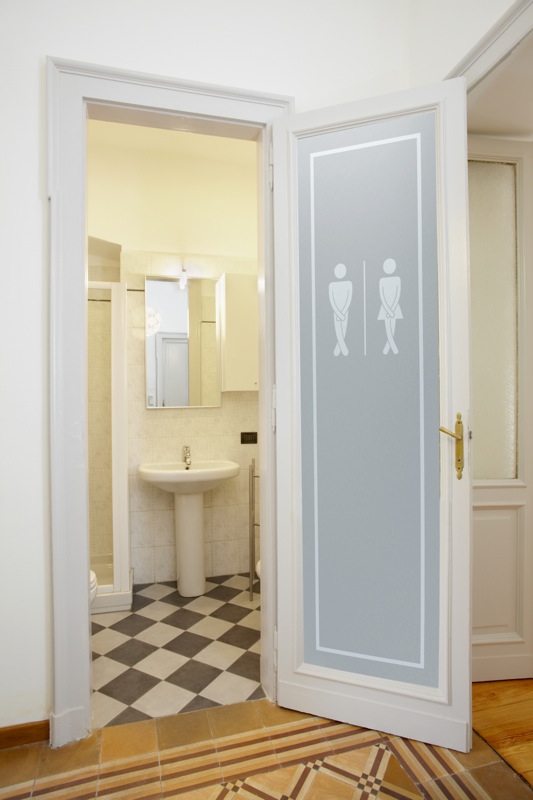
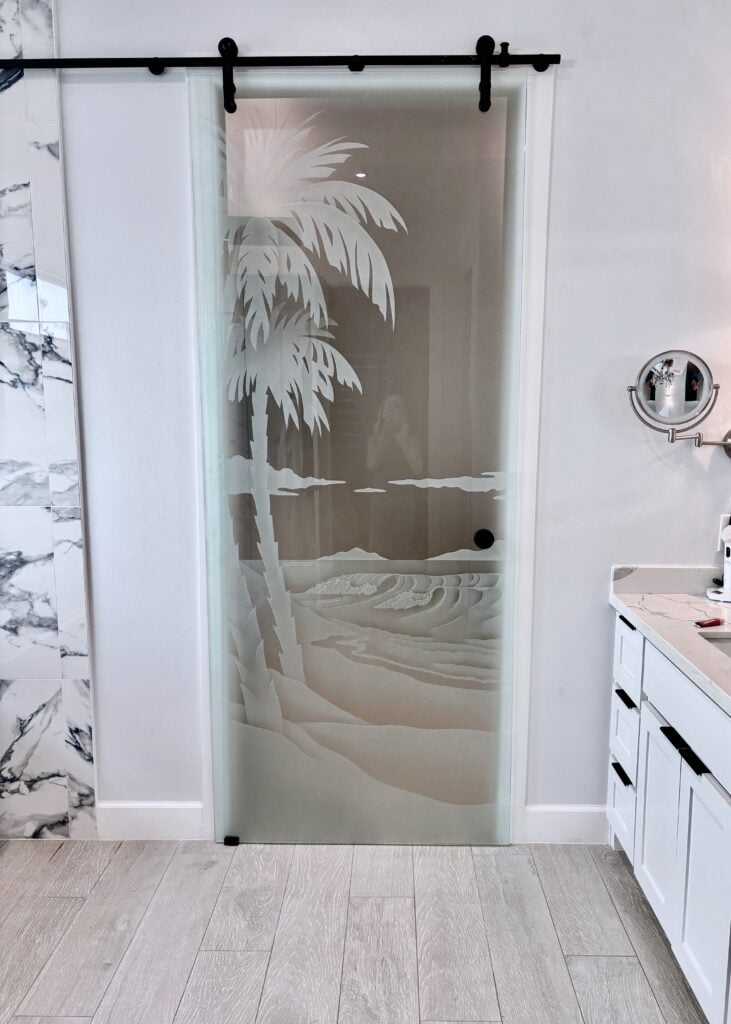
Safety is a key reason outward-swinging and sliding doors are often recommended, especially for small bathrooms or homes with older adults.
Here’s why:
- If someone collapses against the door, it’s easier to open outward for rescue access.
- Sliding doors (like pocket or barn styles) eliminate this concern entirely.
- They also prevent doors from hitting fixtures or obstructing movement inside.
For homeowners planning long-term accessibility, choosing an outward swing or pocket door now can prevent expensive remodels later.
Always Check Local Codes Before You Install
While ADA provides national guidance, local building codes vary by city and state. Before reversing a door swing or framing a pocket wall, confirm:
- Minimum doorway width requirements.
- Swing direction rules near hallways or stairs.
- Ventilation, lighting, and privacy regulations.
A licensed contractor or building inspector can review your floor plan to ensure it meets both safety and accessibility standards before bathroom door installation.
How Public and Residential Bathroom Doors Differ
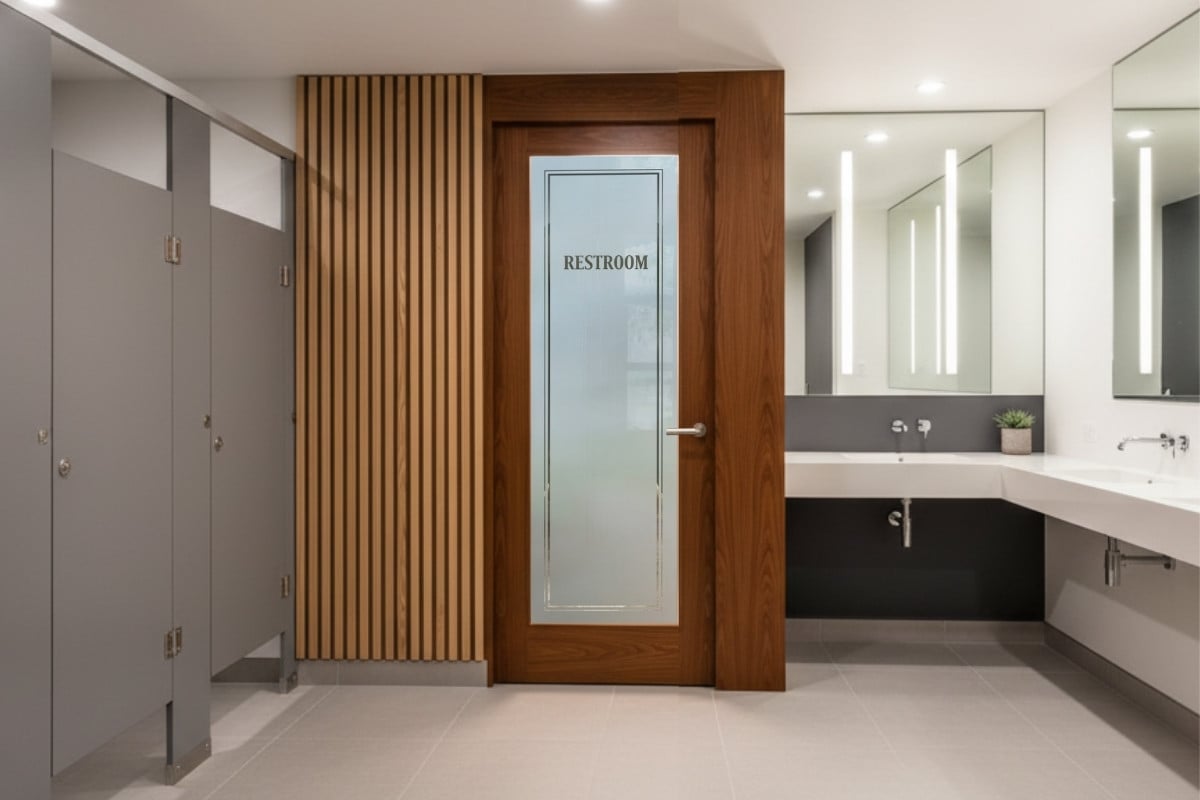
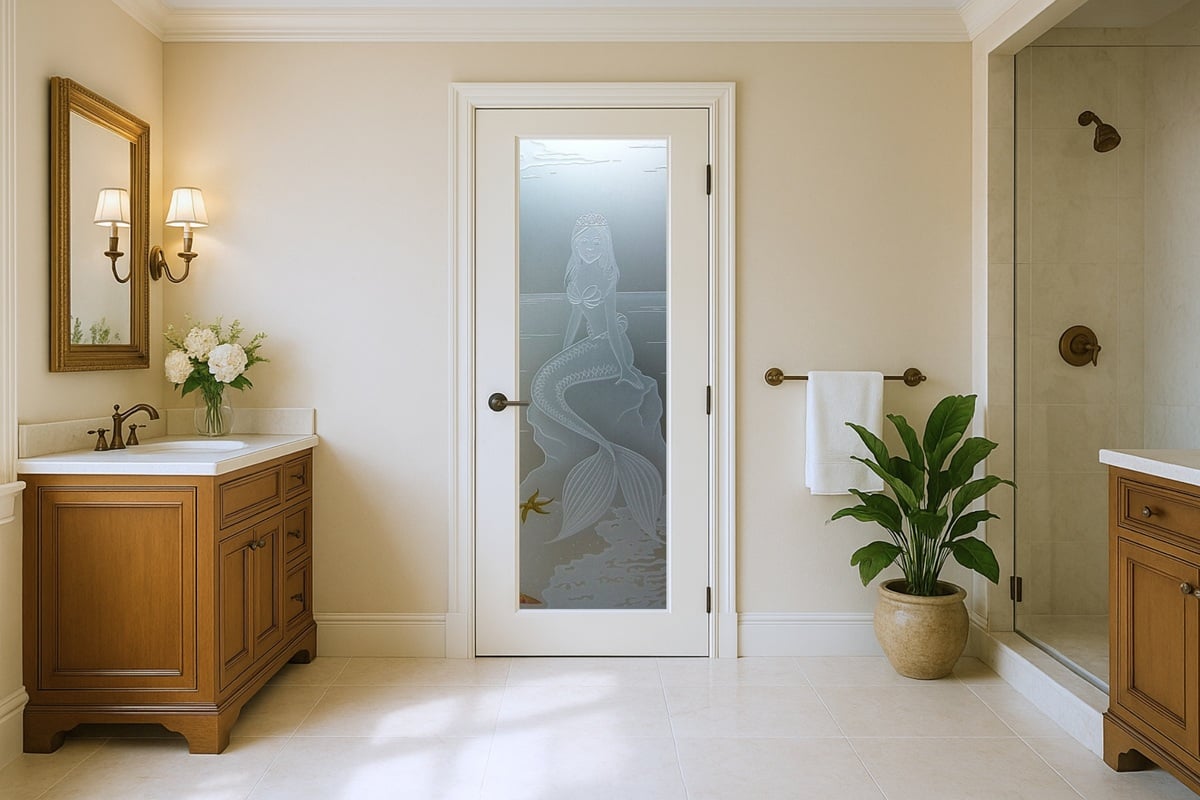
If you’ve ever noticed how public bathrooms and residential bathrooms use different door swings, there’s a good reason. Safety, accessibility, and space all play a role but the rules are very different depending on location and building type.
In commercial bathrooms, outward-swinging doors are often required to meet ADA standards and provide quick emergency access, while residential bathrooms allow more design flexibility.
Public Restrooms Require Outward-Swinging Doors
In accessible public restrooms, stall doors usually swing outward so the door doesn’t block wheelchair maneuvering space — a requirement under ADA design standards. However, in many standard multi-stall restrooms, stall doors swing inward to save aisle space. The rule of thumb is accessibility first: accessible stalls open outward for clearance and safety, while regular stalls may swing inward depending on layout.
In residential settings, you can choose whichever swing direction works best for your space. Most interior doors — including bathrooms — swing inward for consistency, but in small or narrow layouts, an outward swing may be more practical. Unlike public restrooms, homeowners have the flexibility to prioritize comfort, style, and accessibility.
Residential Bathrooms Have More Flexibility
At home, you get to choose your desired direction based on comfort and layout. Most bedroom doors and interior doors swing inward, and it makes sense for attached bathrooms to follow the same pattern. Since most bedroom doors open inward, continuing that direction into the bathroom keeps the flow of movement and hinge alignment consistent throughout the home.
However, in such scenarios as narrow hallways or a small space, an outswinging door may be the best solution. It frees up valuable floor area while still maintaining privacy.
Unlike public facilities, homeowners can tailor the swing direction to their daily routine, decor, and house layout — whether that means matching your master bath to the adjoining master bedroom or maximizing convenience in a compact powder room.
Designer Tips: Pick the Swing That Fits Your Bathroom Space
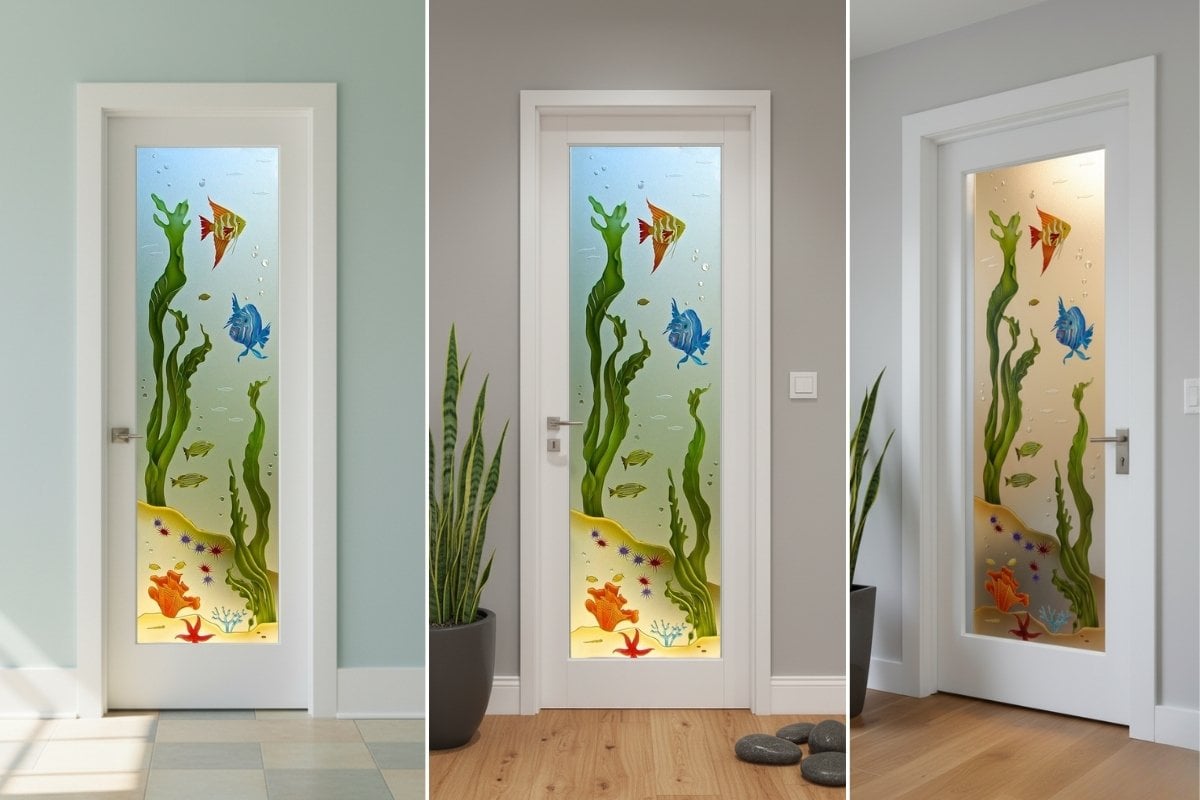
Choosing whether your bathroom doors open in or out comes down to layout, lifestyle, and how you move through the space. Designers look at clearance, traffic flow, lighting, and even door material before deciding.
Map the Swing Before You Build
Trace the door’s arc to check if it hits the vanity, toilet, or back wall — especially in tight bathrooms where every inch matters. If the door blocks movement, go for an outward or sliding option. If it opens smoothly without obstruction, an inward swing works fine. During remodels, flipping hinges or latch direction can fix conflicts without full replacement. You can also adjust the hinge side before you re-hang the door to change how it opens.
Coordinate with Room Traffic
Think beyond the bathroom. An inward swing keeps narrow hallways clear and matches how most bedroom doors open, maintaining consistency. This layout also keeps the swing direction aligned with nearby closet doors for a uniform flow. In a master suite or ensuite, an outward or sliding door can make the space feel larger and more open.
Plan Around Switches and Hardware
Check how the swing interacts with switches, outlets, and towel bars before installation. Avoid blocking them — it prevents daily inconvenience and rework later.
Match Hardware to Door Style
Use soft-close hinges and privacy levers for swinging doors, or flush pulls and latches for pocket and barn doors. If you’re upgrading to a frosted glass design, choose hardware that supports the glass’s weight and complements the look.
Balance Privacy, Light, and Ventilation
Inward doors trap steam and sound; outward or sliding doors release air faster — ideal for small baths without windows. If you have two bathrooms, tailor each swing to the layout. Pair frosted glass doors with a vent or fan for better airflow and privacy.
Match the Door to Your Long-Term Needs
Finally, think ahead. If your household includes children, seniors, or anyone with limited mobility, an outward-swinging or sliding door may be the safest and most convenient option.
Designers often recommend universal design principles — layouts that are functional for all ages and abilities. Planning your bathroom door swing with future use in mind can prevent major remodeling costs later.
💡 Design Upgrade Ideas: Combine Function with Style

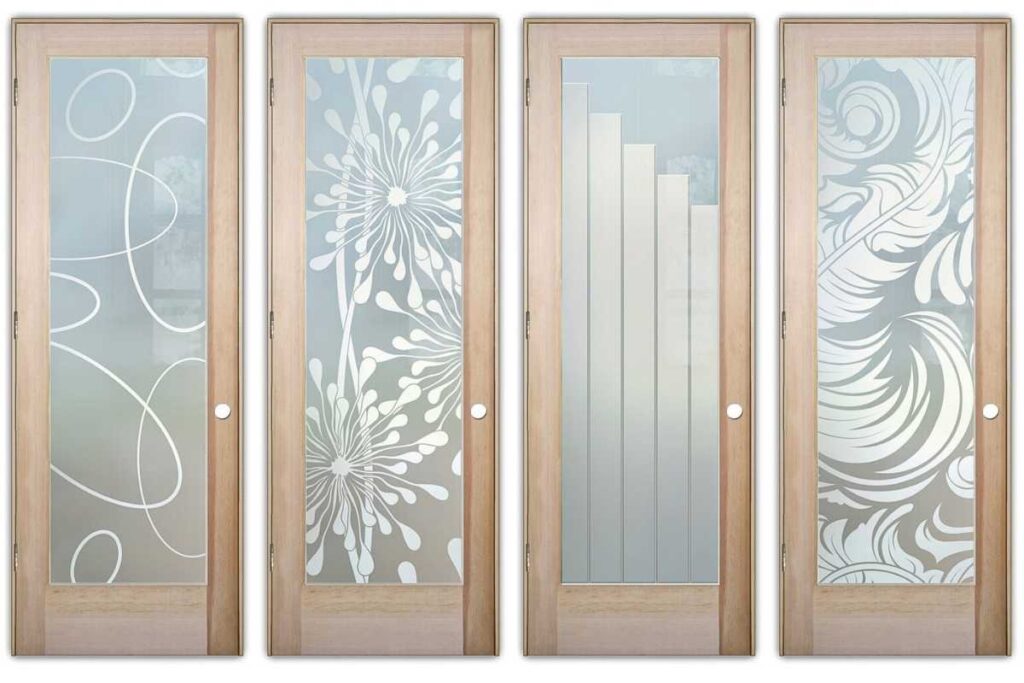
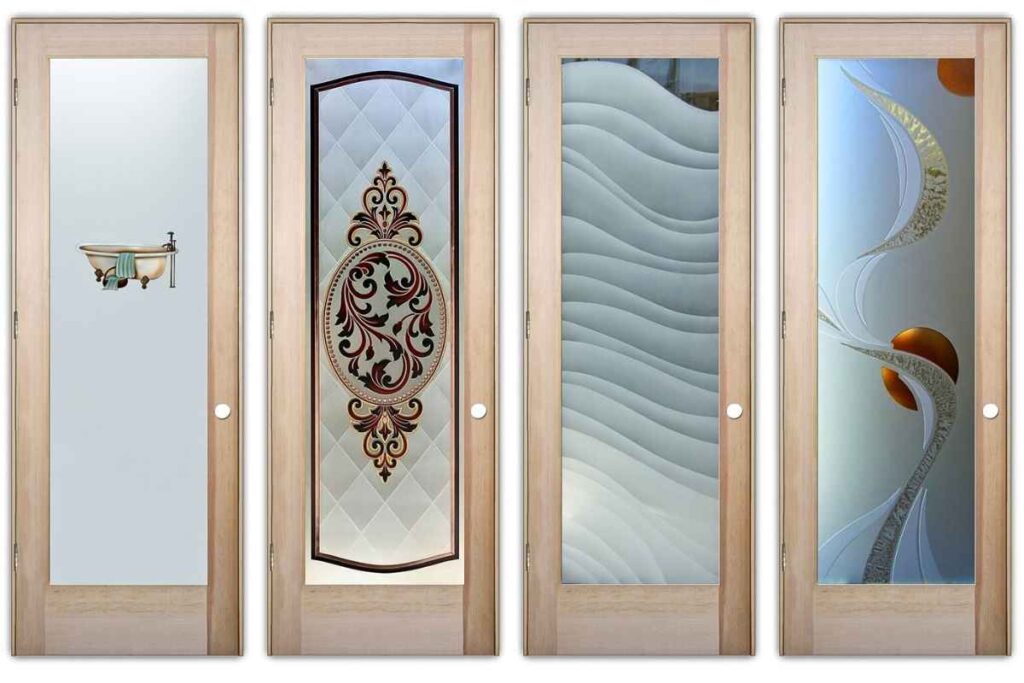
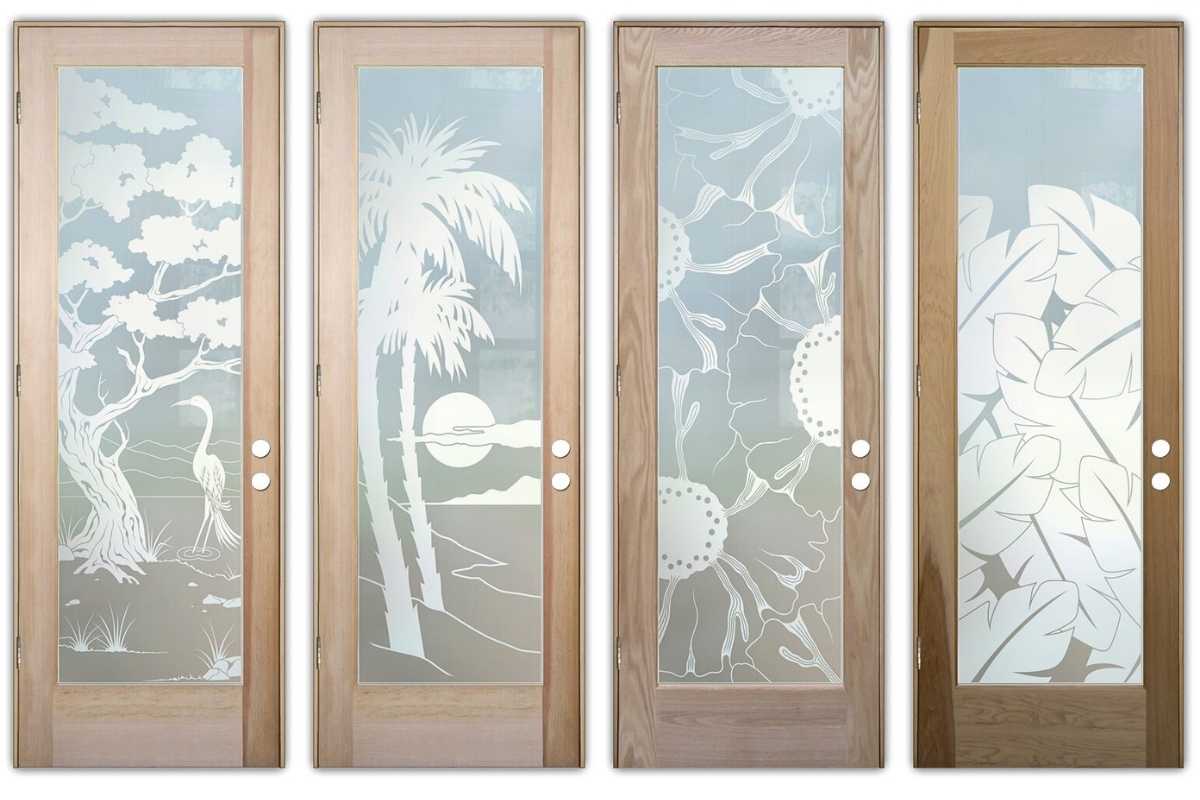
If you’re updating your layout or replacing an old bathroom door, consider how materials can make just as much impact as the swing direction. A glass bathroom door adds brightness and an open feel. A bathroom frosted glass door offers privacy without blocking natural light.
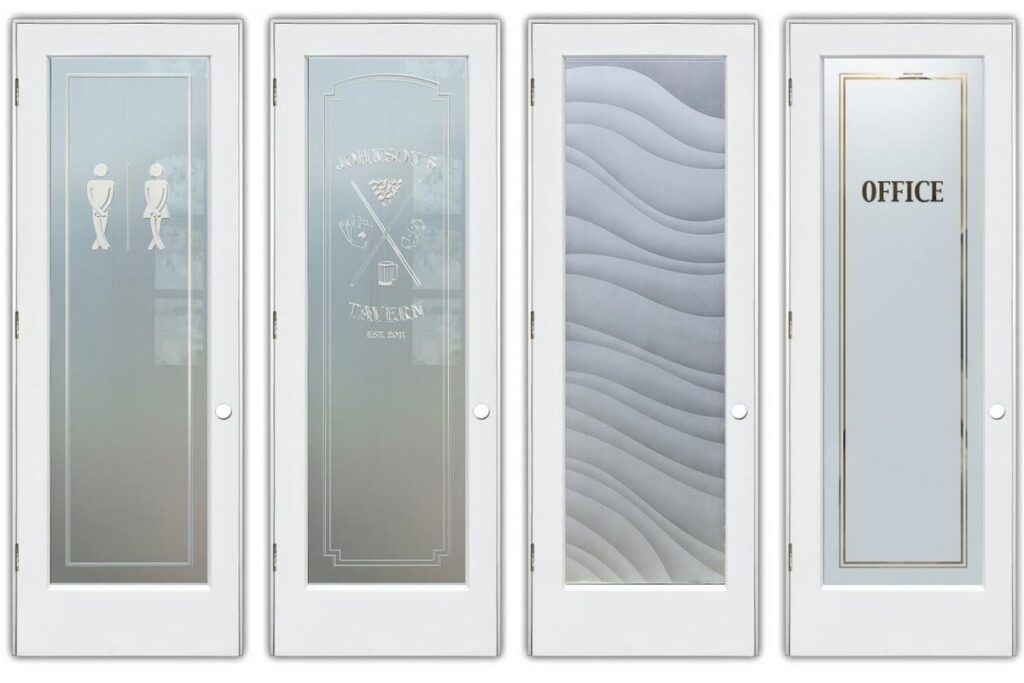
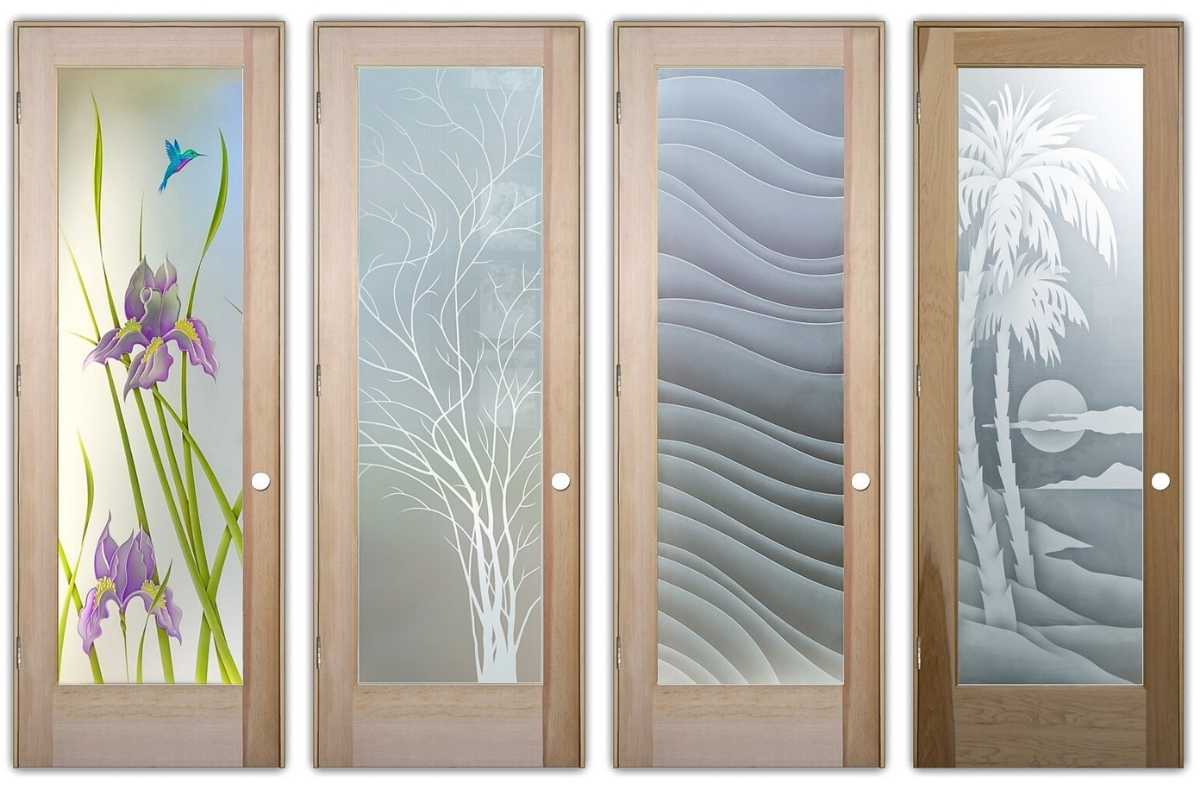
For homeowners who want more privacy, bathroom doors with frosted glass balance light flow and discretion. Bathroom doors with frosted glass are perfect for shared bathrooms or small spaces. You can explore various privacy levels, designs, and finishes in our Bathroom Frosted Glass Doors collection.

Conclusion
There’s no one “right” answer. In-swing is common and keeps corridors clean. Out-swing or sliding is often smarter for tight rooms or accessible layouts. Plan the swing early, verify local code, and choose the option that gives you the safest, most comfortable daily use.
Frequently Asked Questions
Can a bathroom door open inward if it’s next to a staircase or hallway?
Yes, but it depends on the available clearance and safety. If your bathroom door opens directly into a narrow hallway or near the top of a staircase, an inward swing is safer since it prevents someone from being hit as they walk past. Outward swings near stairs or tight landings can create tripping hazards, so it’s best to evaluate the surrounding space before deciding.
What type of bathroom door is best for moisture and humidity?
Bathrooms are exposed to steam, so solid core wood, fiberglass, or laminated glass doors perform better than hollow core styles. If you’re installing a bathroom frosted glass door, the frosted surface faces inward, so moisture and cleaning are easier to manage. Always seal wood doors properly to prevent warping from humidity.
Does changing the door swing direction require a permit?
In most residential settings, simply reversing a door swing doesn’t need a permit. However, if the change affects a load-bearing wall, doorway size, or electrical layout, you may need approval. Always check with your local building department before making modifications to ensure compliance with safety and fire egress standards.
Are pocket doors safe for bathrooms?
Yes, as long as they’re installed correctly. Pocket doors are space-savers, but they should include a privacy latch, soft-close track, and sturdy frame to prevent rattling. Avoid using lightweight or hollow-core panels, as they’re more prone to warping in humid conditions. A well-installed pocket door can last for years with minimal maintenance.
How do I know if my bathroom door swings the wrong way?
If your door hits a fixture, blocks the light switch, or makes entry awkward, it’s probably swinging the wrong direction for your layout. Another sign is if the door reduces usable wall space for towel bars or shelves. A quick test: stand inside, open and close the door a few times, and see if you naturally move out of the way—if you do, it may need a reversal.
What’s the safest door swing for homes with children or seniors?
For young children and seniors, an outward or sliding door is often the safer option. These styles prevent anyone from being trapped inside and allow quick access if help is needed. If you prefer an inward swing, consider using wide hinges to maximize the opening width and choose a door that’s easy to operate with minimal effort.
How does ventilation affect door swing choice?
Inward-swinging doors help contain steam, while outward swings or sliding doors promote better air circulation. If your bathroom has poor ventilation or no window, pairing an outward-swinging or glass door with a strong exhaust fan can help control moisture and prevent mold growth.
Why do bathroom stall doors in public restrooms open outward?
In public restrooms, stall doors and toilet stalls open outward for safety and accessibility. This design makes it easier for users to exit quickly and ensures no one gets trapped inside during emergencies. The same concept applies to outswing doors in small bathrooms where space or safety is a concern.
What’s the best solution for small bathrooms or tight layouts?
If your bathroom has a small space or an awkward location, a pocket door or outswinging door is often the best solution. Both help save space and improve movement without sacrificing privacy.
✨ Looking to upgrade your layout? Explore our handcrafted glass bathroom door collection— available in frosted and decorative designs that add light and privacy even in compact spaces.
Why do toilet stall doors in airports usually swing inward?
In most airports, stall doors swing inward to help manage space and traffic flow. Since airport restrooms serve large crowds, inward-swinging doors keep the main walkway clear and prevent passengers from bumping into open doors as people exit stalls. They also maintain better privacy—when the door opens inward, users can close and lock it without exposing the interior of the stall to others.
However, accessible stalls are the exception. Those doors swing outward to provide enough room for wheelchair users to enter and turn comfortably. In short, regular stalls swing inward for efficiency, while accessible ones swing outward for safety and accessibility.
Which way should the bathroom stall door open?
In most public restrooms, bathroom stall doors open outward for safety and accessibility. This ensures no one gets trapped inside and allows for quick exits during emergencies. However, in crowded facilities like airports, standard stalls may open inward to save aisle space, while accessible stalls always open outward to accommodate wheelchairs.
Should doors open outwards or inwards?
It depends on the room and layout. Most interior doors, like bedroom or bathroom doors, open inward to maintain hallway flow and privacy. However, outward-swinging doors are often used in small bathrooms, powder rooms, or accessible spaces to free up interior floor space and make emergency access easier.
Which direction should a bathroom door face?
Ideally, a bathroom door should face a neutral wall or hallway — not directly toward a bed, dining area, or kitchen. From a design perspective, this improves visual flow and privacy. If unavoidable, use a bathroom frosted glass door, partition, or hallway turn to soften the sightline and create separation.
Should bathroom doors be open or closed for feng shui?
According to feng shui principles, bathroom doors should remain closed when not in use. Bathrooms are considered spaces of drainage, symbolizing energy and wealth flow leaving the home. Keeping the door closed helps “contain” good energy and promotes harmony in your living space.
Is it okay for a bathroom door to open outwards?
Yes, it’s perfectly okay and often recommended for small bathrooms or where accessibility is important. Outward swings prevent the door from blocking fixtures and make it easier to assist someone inside if needed. Just make sure there’s enough hallway clearance to open the door fully without obstruction.
Which way should a shower door open, left or right?
A shower door can open to the left or right depending on your shower layout and plumbing location. The goal is to have the handle accessible from the outside while keeping water from dripping onto the floor. Frameless glass shower doors, for instance, can be customized to swing either direction based on hinge placement and wall clearance.
Does it matter which way a sliding door opens?
Yes — sliding doors should open toward the side that offers the most clearance and convenience. In bathrooms, this usually means sliding toward a wall or empty section to keep the handle accessible and avoid blocking mirrors or light switches. For double sliding doors, choose the direction that aligns with your daily movement and privacy needs.
Can I install a glass door for my bathroom?
Absolutely. Tempered glass doors are a safe, durable choice because tempered glass is heat-treated to resist shattering. Pair them with frosted or etched designs for privacy that still allows light to pass through. Browse our bathroom doors with frosted glass to find handcrafted styles that combine safety, light, and elegant privacy for any bathroom design.
RELATED READS:
Prehung vs Slab Doors: A Guide to Understanding What’s Best for Your Home
12 Best Bathroom Doors with Frosted Glass: Top 5 Types and Designs in 2025
Find the Best Swing Doors for Bathroom Remodels



Sans Soucie Art Glass: Decorative, Custom & Frosted Glass Doors, Windows, Showers & Stained Glass Since 1976
Family-owned and operated since 1976, Sans Soucie Art Glass leads the industry in decorative glass and custom glass design — from sandblast frosted glass and carved glass to hand-painted and stained glass art — transforming ordinary glass into Works of Art Captured in Glass recognized worldwide.
Innovative Frosted Glass Door Designer Tool
In 2010, we invented and launched our Frosted Glass Pantry Door Designer – a fun, easy-to-use tool that makes it simple for anyone to design and customize not only pantry doors, but a wide range of frosted glass doors for every room.
Explore our Frosted Glass Doors Collection
Our custom frosted glass doors include a beautiful variety for every style and space:
- Pantry Doors
- Frosted Glass Interior Door
- Interior Doors with Frosted Glass
- Frosted Glass French Doors
- Frosted Glass Front Door
- Front Doors with Frosted Glass
- Interior Glass Doors
- Glass Barn Doors
- Frosted Glass Barn Door
- Sliding Glass Barn Door
- All Glass Doors Interior
- All Glass Front Doors
- Bathroom Doors with Frosted Glass
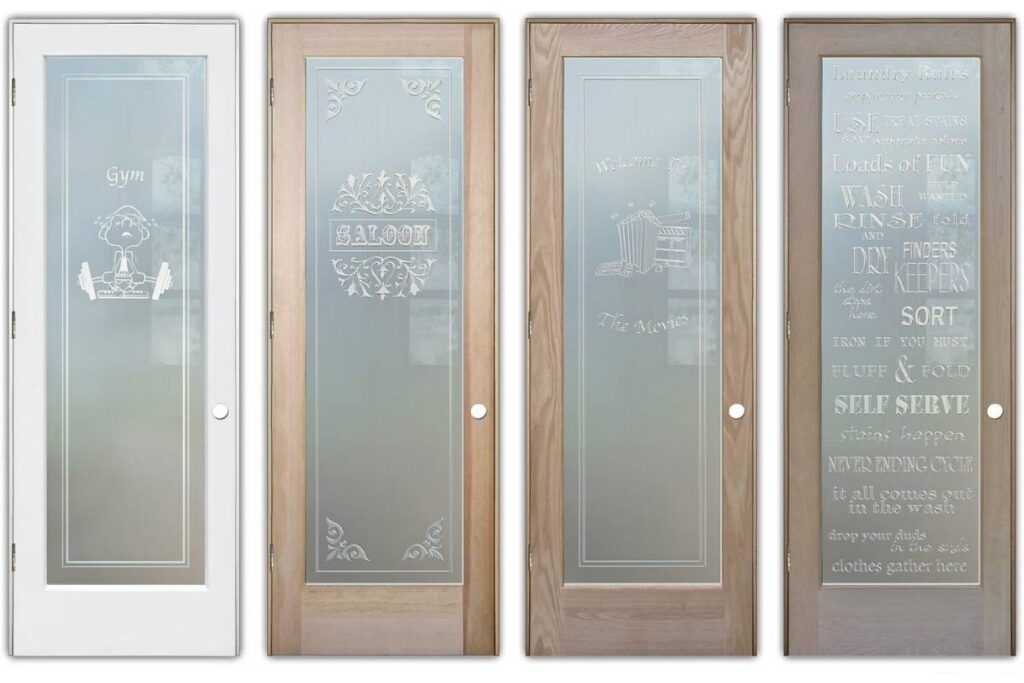
- Laundry Room Doors
- Wine Room Doors
If you already have a door, and only need the glass insert, we also offer:
- Frosted Glass for Interior Doors
- Door Glass Inserts for Front Doors
- Glass Panels for Pantry Doors
- Frosted Glass Inserts for Bathroom Doors
- Laundry Room Door Glass Inserts
- Glass Panels for Interior Wine Cellar Doors
Elegant Frosted Glass Throughout Your Home
While our frosted glass doors are a top choice, we also create stunning glass products for every area of your home, including:
- Frosted Glass Shower Doors
- Glass Shower Partition
- Frosted Glass Shower Panel
- Frosted Glass Showers
- Frosted Glass Windows
- Bathroom Window Frosted Glass
- Decorative Window Glass, Window Frosting
- Custom Glass Dining Table
- Custom Glass Coffee Table
- Glass Shelves, Custom Glass Shelves
- Hand Carved & Painted Mirrors
- Frosted Glass Signs, Etched Glass Signs
- Cabinet Door Glass Inserts, Frosted Glass Inserts for Cabinet Doors
- Glass Wall Art, Wall Art on Glass
Looking for Inspiration? Explore Our Galleries
Discover visual idea boards, style concepts, décor applications, real project photos, and helpful information in our expanding gallery collection:
- Custom Glass
- Custom Glass Edges
- Custom Mirror
- Decorative Glass
- Decorative Glass Doors
- Decorative Glass Front Doors
- Decorative Glass Interior Doors
- Decorative Glass Window
- Stained Glass
- Stained Glass Doors
- Stained Glass Front Doors
- Stained Glass Windows
Free Shipping. Expert Packing, Peace of Mind
With FREE SHIPPING on most orders and worldwide delivery from our studio in Palm Desert, California, every order is packed in-house by our expert glaziers using custom materials and proven methods — ensuring safe arrival with a damage rate of less than 1%!
Explore our complete frosted glass doors collection and find the perfect frosted glass door for your space. Have questions? Contact us today!
Copyright © 2025, Sans Soucie Art Glass. All rights reserved.