Can You See Through Frosted Glass Doors at Night?

Can you see through frosted glass doors at night?
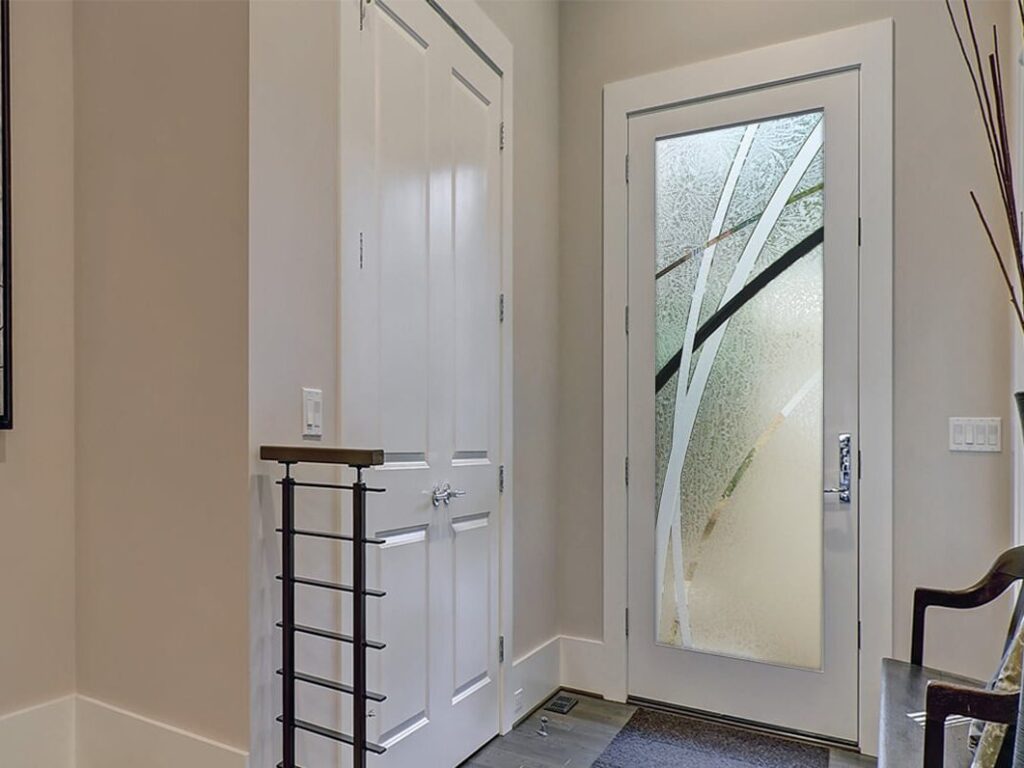
No. A frosted glass front door obscures clear visibility, even when the lights are on inside. At most, someone outside might notice soft shapes or shadows within a few inches of the glass, but details remain hidden. This makes front doors with frosted glass a reliable choice for homeowners who want both privacy and natural light.
But privacy isn’t one-size-fits-all. The level of obscurity depends on the type of frosted effect, the background glass finish, and how much of the door is covered by the design. In this guide, we’ll explain how lighting affects frosted glass, compare different privacy levels, and share tips on choosing the best frosted glass front door for your home.
What Happens to Frosted Glass Doors at Night
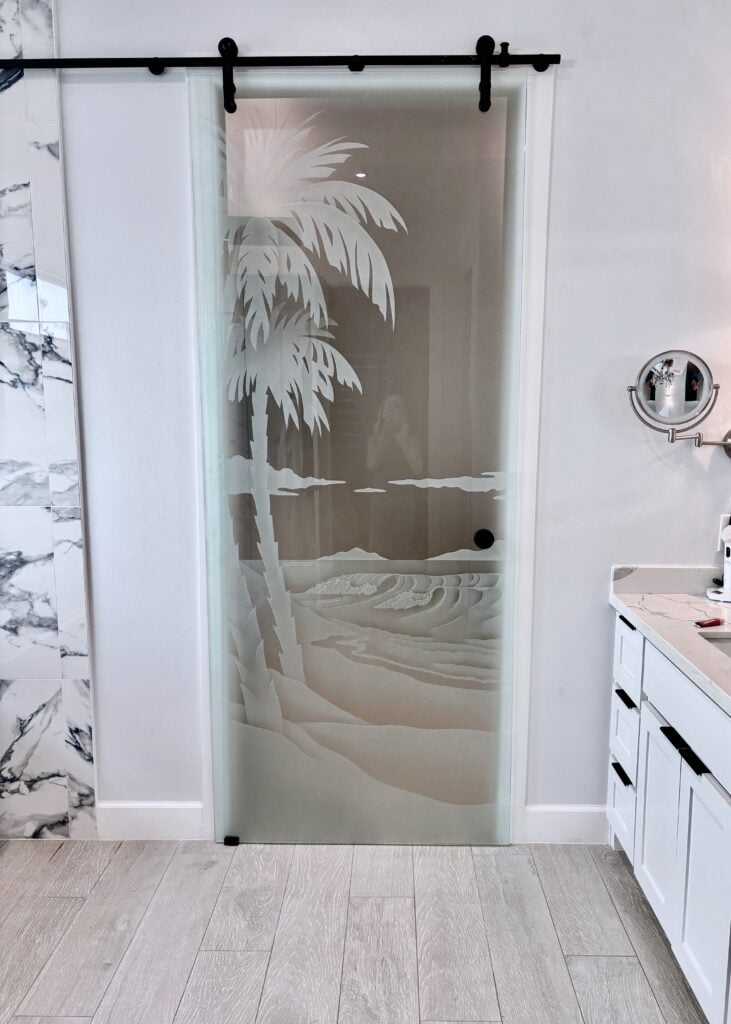
You can’t clearly see through frosted glass doors at night. The etched or sandblasted surface scatters light, breaking up visibility and blurring anything on the other side. This scattering effect means even with bright interior lights on, the glass prevents outsiders from seeing details like furniture, faces, or valuables inside your home.
At most, someone standing directly against the door may notice soft movement or a shadow close to the glass, but the view is too diffused to make out what’s happening inside. The further away a person is, the less they’ll see — beyond a foot or so, even silhouettes fade.
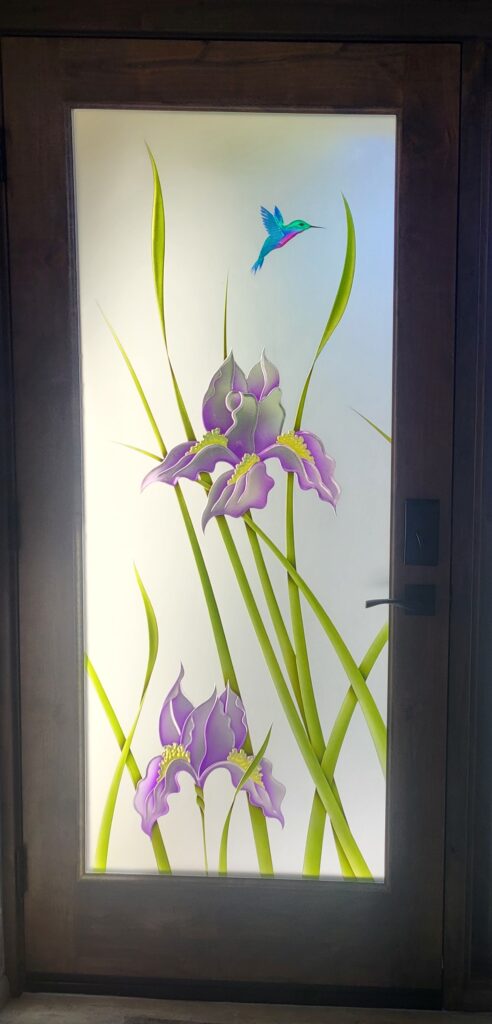
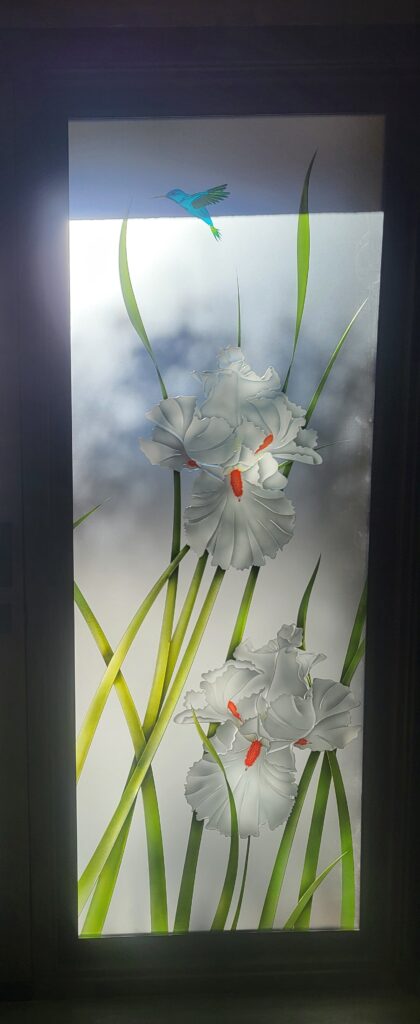
Another factor is design coverage. A full-coverage frosted door offers privacy, while decorative designs with larger clear areas provide semi-privacy, which may show slightly more glow at night.
This makes glass front doors with frosted finishes a popular choice for homeowners who want privacy without sacrificing style. Unlike a clear glass front door, which exposes the inside of your entryway, a frosted glass front door protects you from outside views while still welcoming natural daylight into your space.

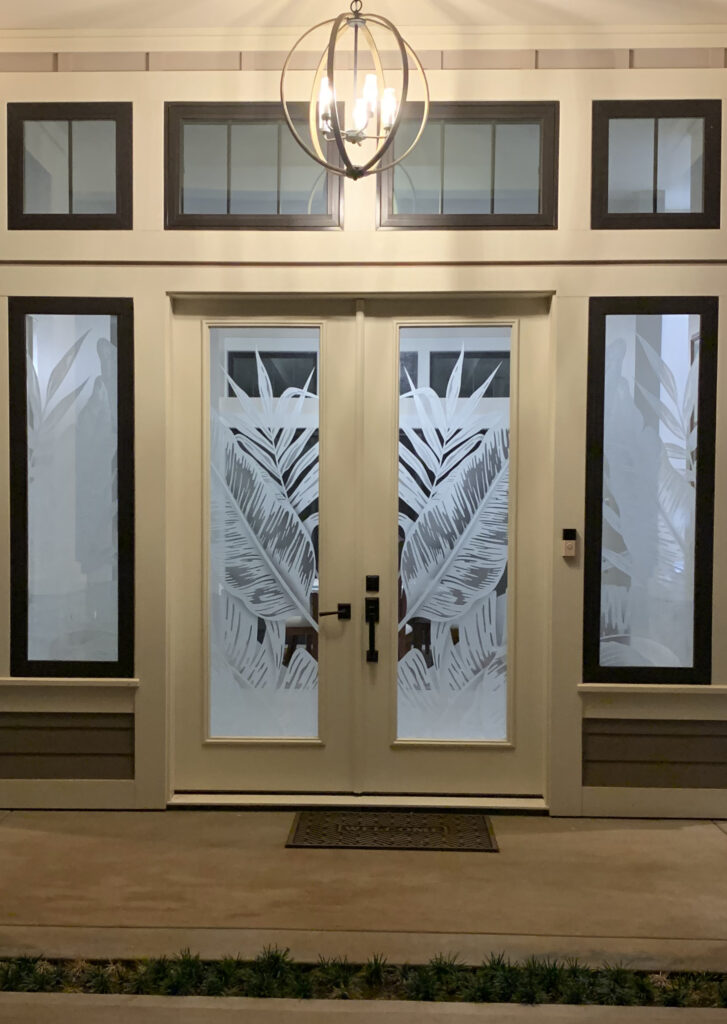
Frosted Glass Doors: A Stylish Solution for Privacy

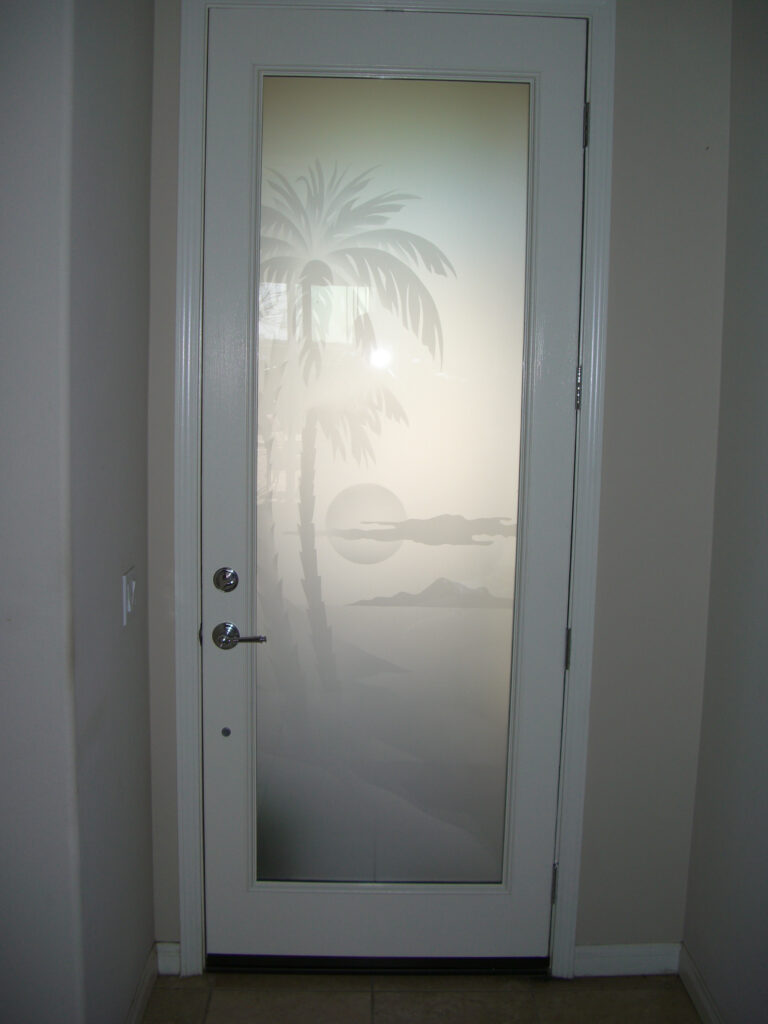

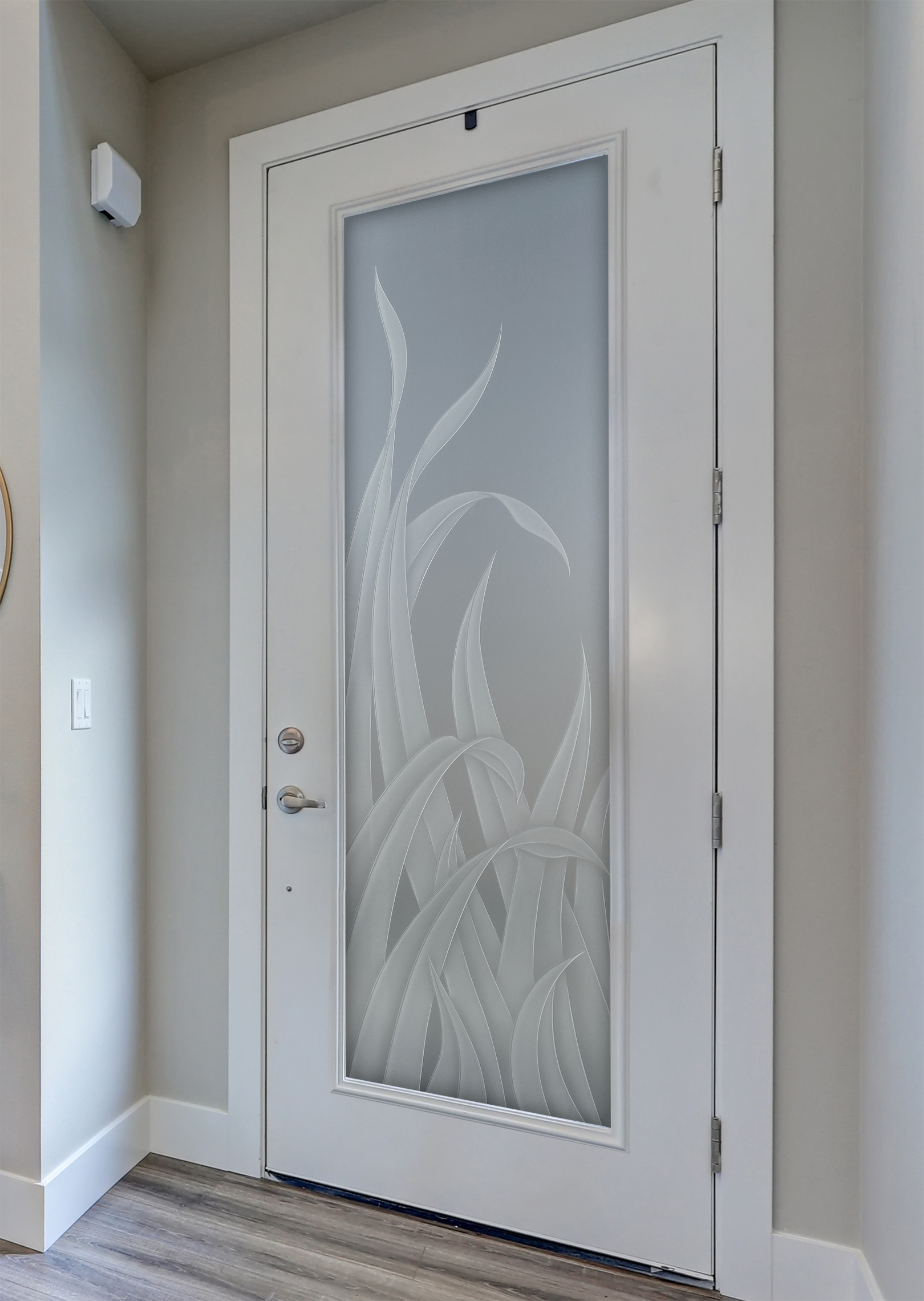
How Lighting Affects Frosted Glass Privacy

Lighting conditions change how frosted glass interacts with your space. During the day, sunlight naturally illuminates the frosting, creating a bright, airy entryway while maintaining privacy. At dusk, the glass front door softens the transition between outdoor and indoor light, giving your door a warm, glowing effect.
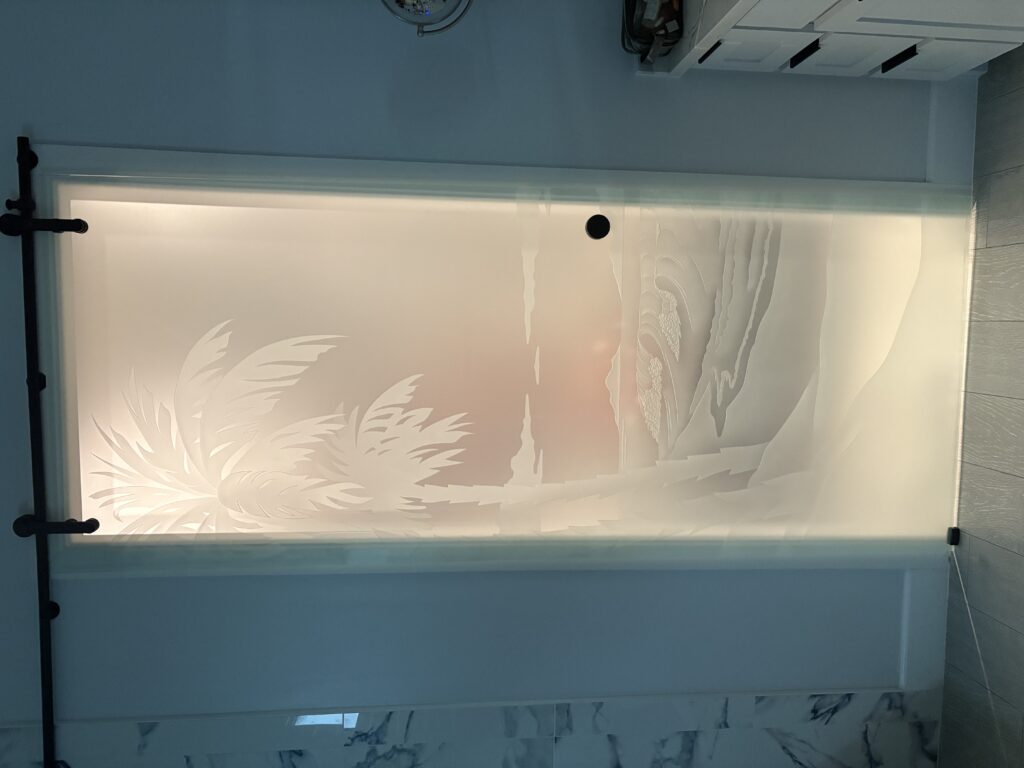
At night, interior lights make the frosted surface stand out even more, turning the glass into a glowing focal point. While this highlights the design beautifully, it also means any decorative clear areas will transmit more light. A door with full-coverage frosting maintains complete privacy, while patterns with large clear sections may show brighter spots from outdoors.
For homeowners who want both elegance and security, custom glass doors allow you to balance light flow with the level of privacy you prefer.
Can You See Through Frosted Glass Doors at Night? Watch the Demo
Types of Frosted Glass Front Doors and Privacy Levels
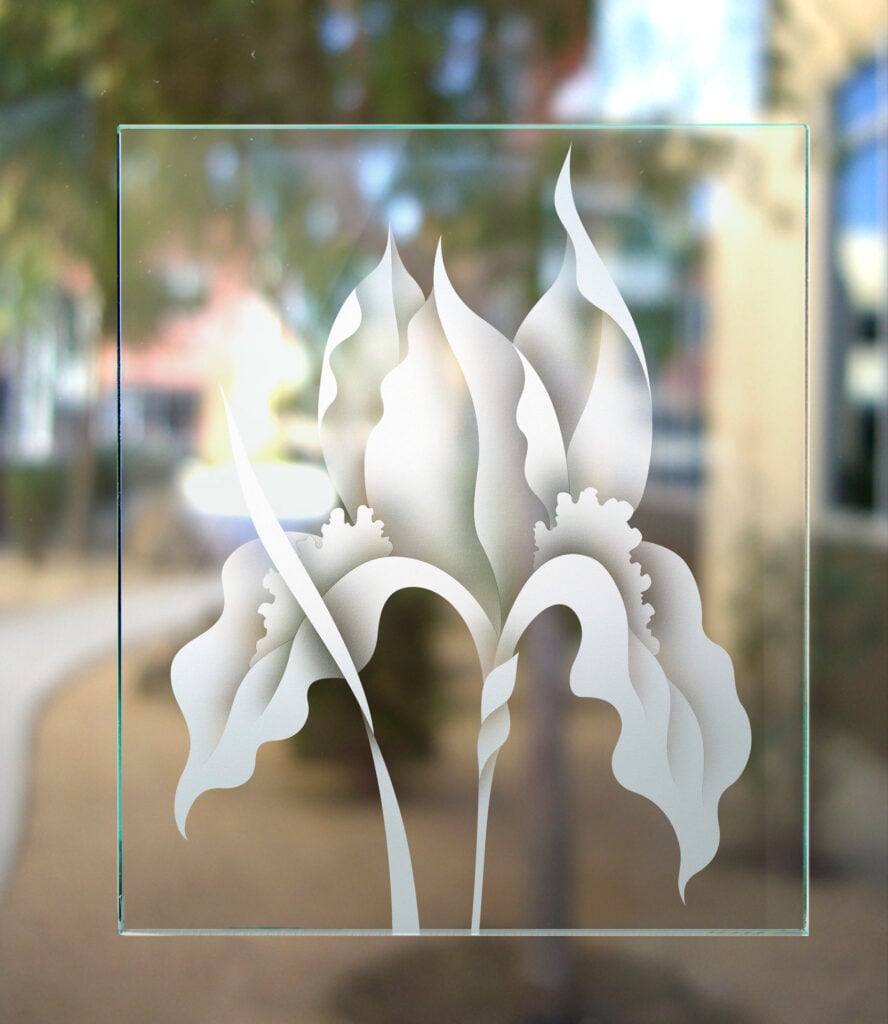
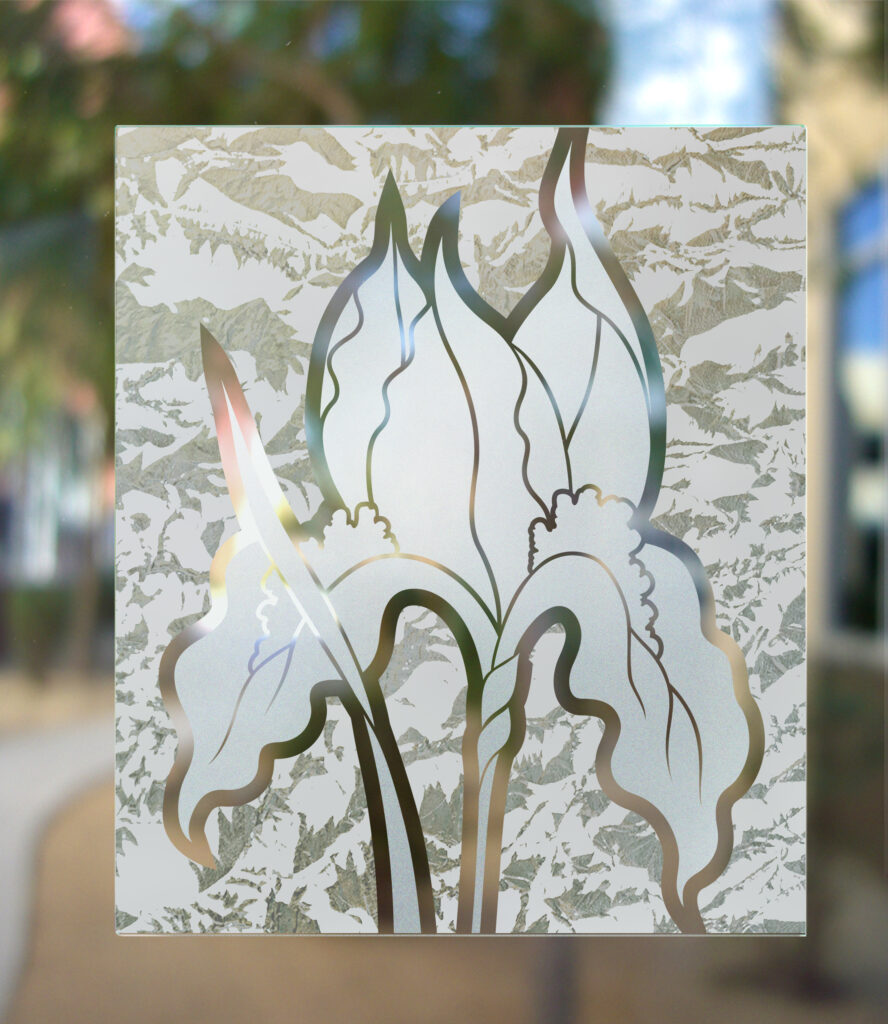
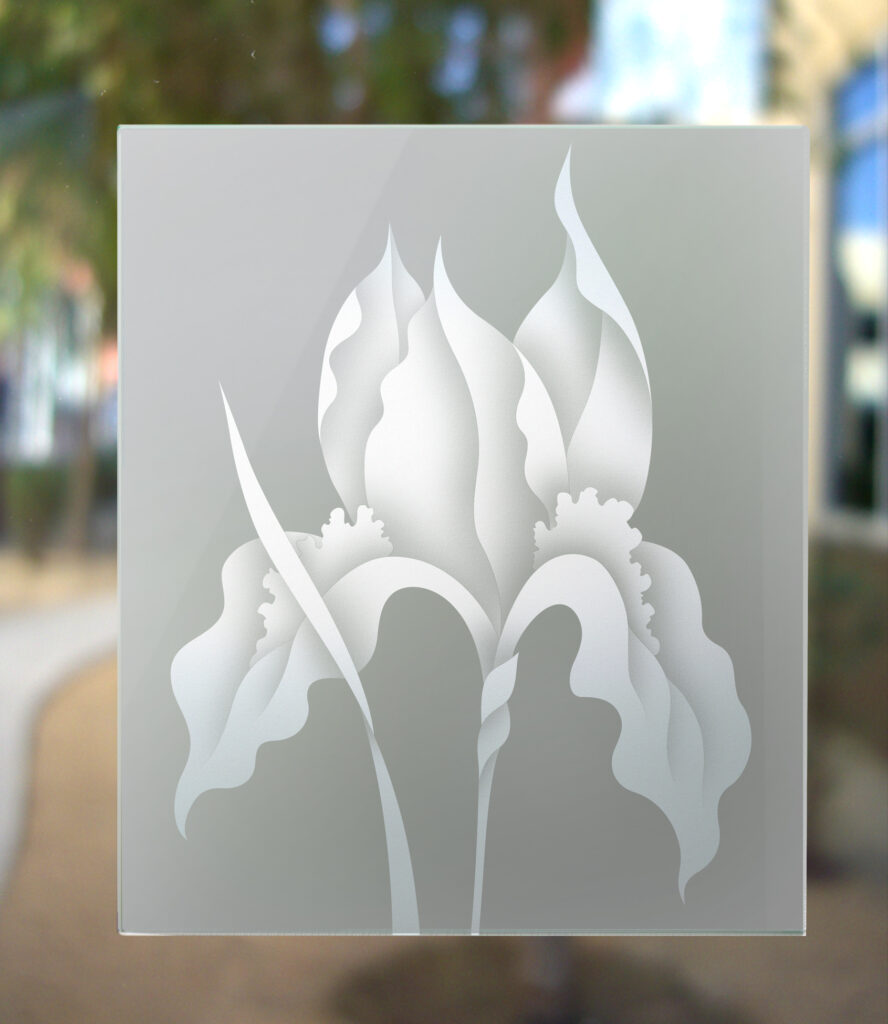
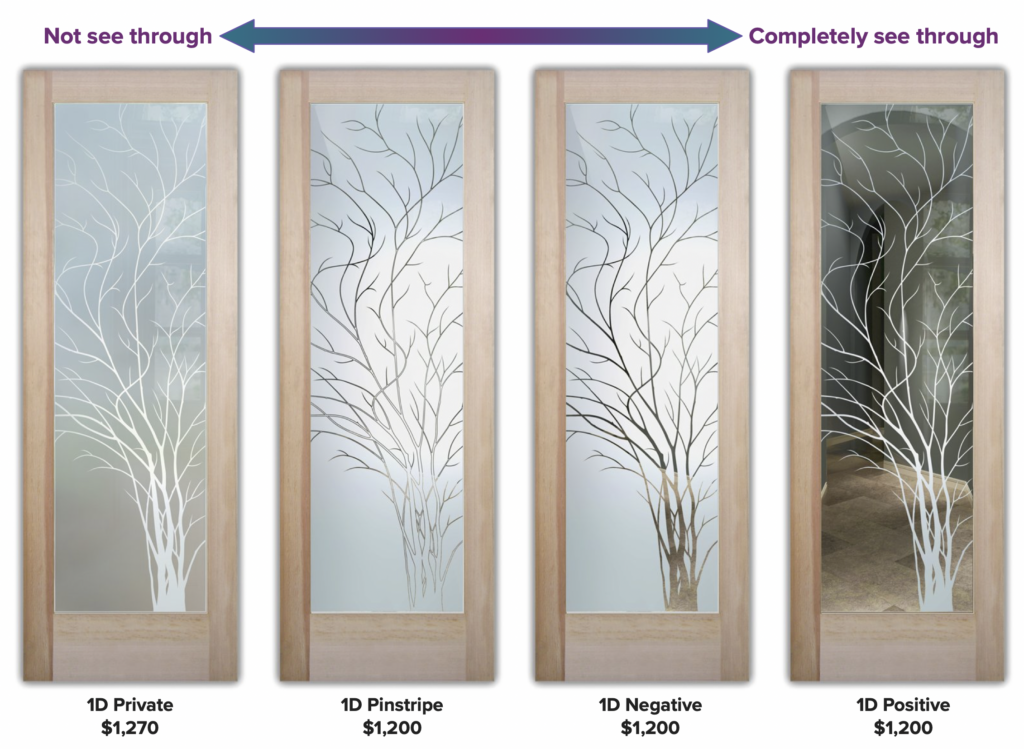
Privacy depends on the background glass finish and the sandblast effect used. Here’s a quick breakdown:
- Clear Glass (Semi-Private): Even with etched designs, clear glass leaves large see-through areas. Best for decorative glass doors where privacy isn’t a concern.
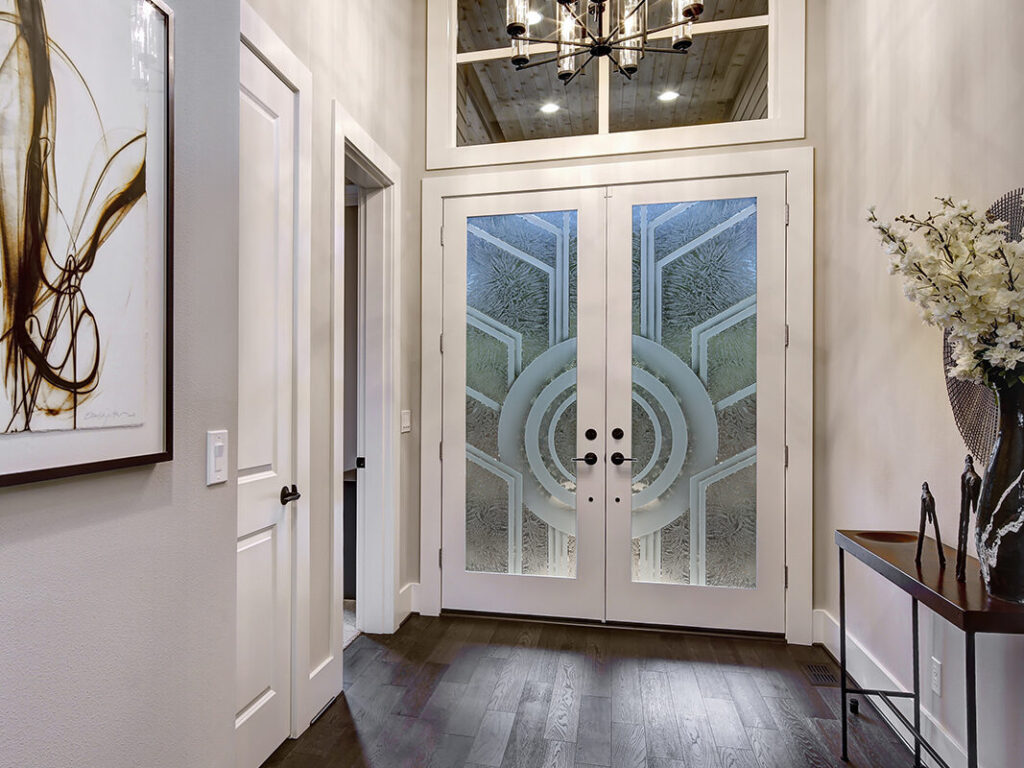
- Gluechip Glass (Semi-Private): Features a sparkling, fern-like texture that blurs objects about 10–12 inches away. Great for semi-private glass front doors that allow light while softening views.
- Frosted Glass (Private): The most popular choice for a front door with glass. It provides complete obscurity, so no one can see inside — even at night with lights on.
Beyond finishes, privacy also depends on the design coverage. A fully frosted glass front door will block views completely, while a door with partial decorative patterns may provide semi-privacy.
ALSO READ: Can you see through Frosted Glass Doors?
Are Frosted Glass Front Doors Secure at Night?

A common concern is whether glass front doors are secure after dark. Modern frosted glass doors are built with safety in mind — most use tempered or laminated glass, which is much stronger than standard glass and resists shattering. Even if broken, tempered glass crumbles into small, blunt pieces instead of sharp shards, reducing risk.
Privacy also adds a layer of security. Unlike a clear front door with glass, frosted designs keep valuables, furniture, and movement inside your home hidden from view. For added peace of mind, you can pair frosted glass with reinforced locks, solid-core frames, or sidelights made with frosted or textured glass for consistency and extra privacy.
If damage does occur, replacing a glass panel in a front door is straightforward and doesn’t always require a full-door replacement. This flexibility makes frosted glass a durable, long-term investment. Homeowners can even order custom-sized glass entry doors to fit unique openings without sacrificing strength or safety.
ALSO READ: Top Types of Front Doors With Glass: A Visual Guide
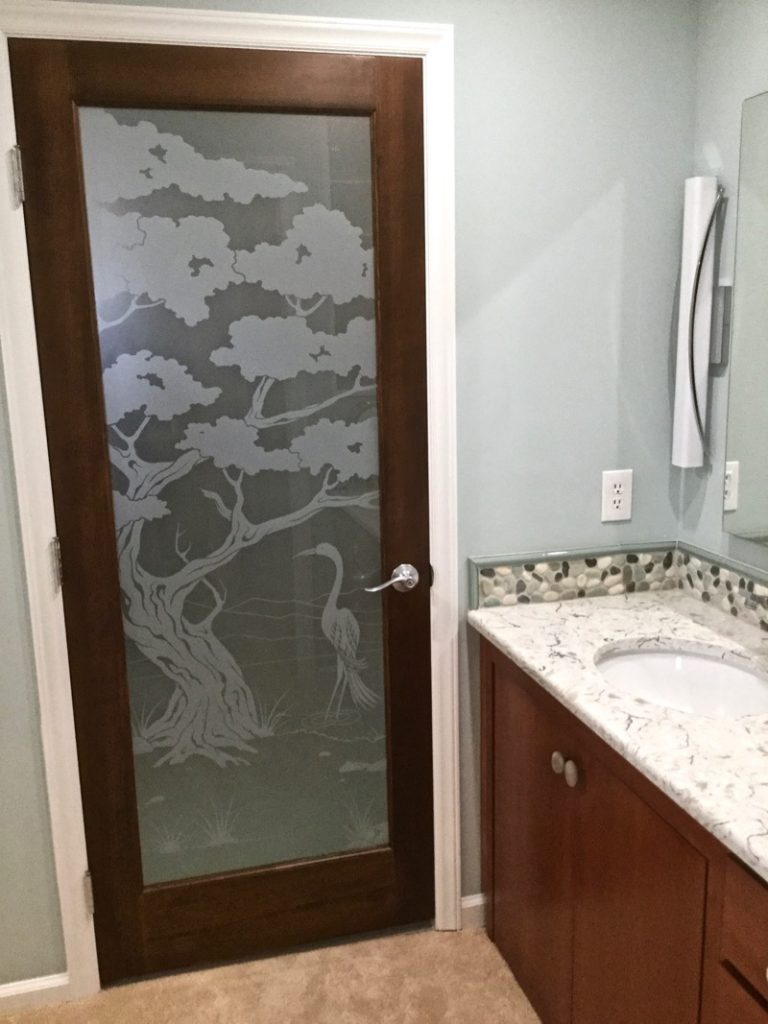
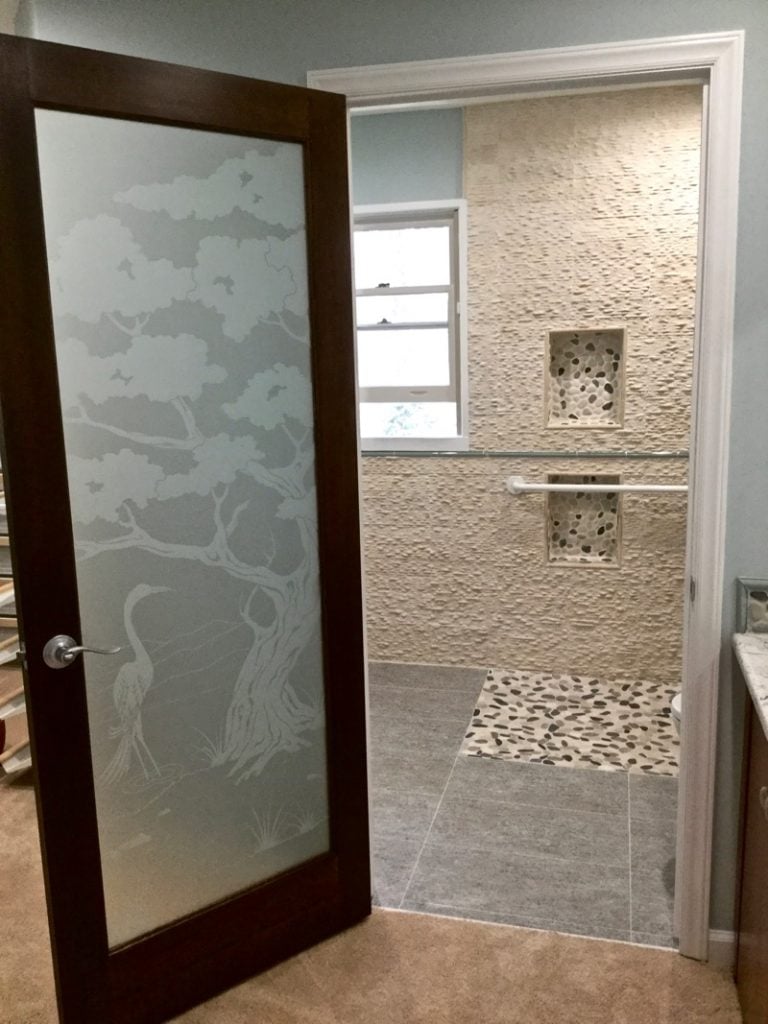
Visibility Comparison: Closed and Open Frosted Glass Doors
Benefits of Choosing Frosted Glass Front Doors

Frosted glass doors offer the best of both worlds: privacy and light. You don’t need curtains or blinds, yet your entryway still feels bright and open during the day and secure at night.
Frosted glass doors are also highly customizable. From full-coverage frosting to decorative patterns, you can choose a design that matches your home’s style while deciding how much privacy you want.
Another advantage is energy efficiency. Many frosted doors are built with insulated glass, which helps regulate temperature and reduce noise from outside.
Finally, frosted glass front doors are easy to maintain. The sandblasted surface is durable and permanent — it won’t peel or fade like films or sprays, and it cleans easily with standard glass cleaners.
ALSO READ: Exploring the Benefits of a Frosted Door
Care and Maintenance

Frosted glass is durable, but keeping it clean ensures it always looks its best. Here are a few easy care tips:
- Use mild cleaners. A standard glass cleaner or a mix of vinegar and water works well. Avoid harsh abrasives that could scratch the surface.
- Tackle grease spots. For tougher marks, like fingerprints or kitchen grease, use rubbing alcohol or acetone with a soft cloth.
- Clean regularly. Wipe down high-touch areas every week, especially around handles, to prevent buildup.
- Protect the frosted side. For front doors, the etched surface typically faces outside. Cleaning it gently helps maintain its crisp finish.
With these simple steps, your frosted glass will stay clear and beautiful for years without fading or peeling.
ALSO READ: How to Clean Frosted Glass: The Ultimate Guide! Top 19 FAQs
Comparing Privacy Levels for Glass Front Doors
When choosing between clear, gluechip, or frosted backgrounds, it helps to see how each option performs in real life. Our custom glass front doors, handcrafted by skilled artisans, show the difference in privacy levels, from semi-private textures that soften the view to fully obscured surfaces that block visibility completely. Every custom front door with hand-etched designs is created to balance natural light with the privacy your home needs, giving you both security and style.
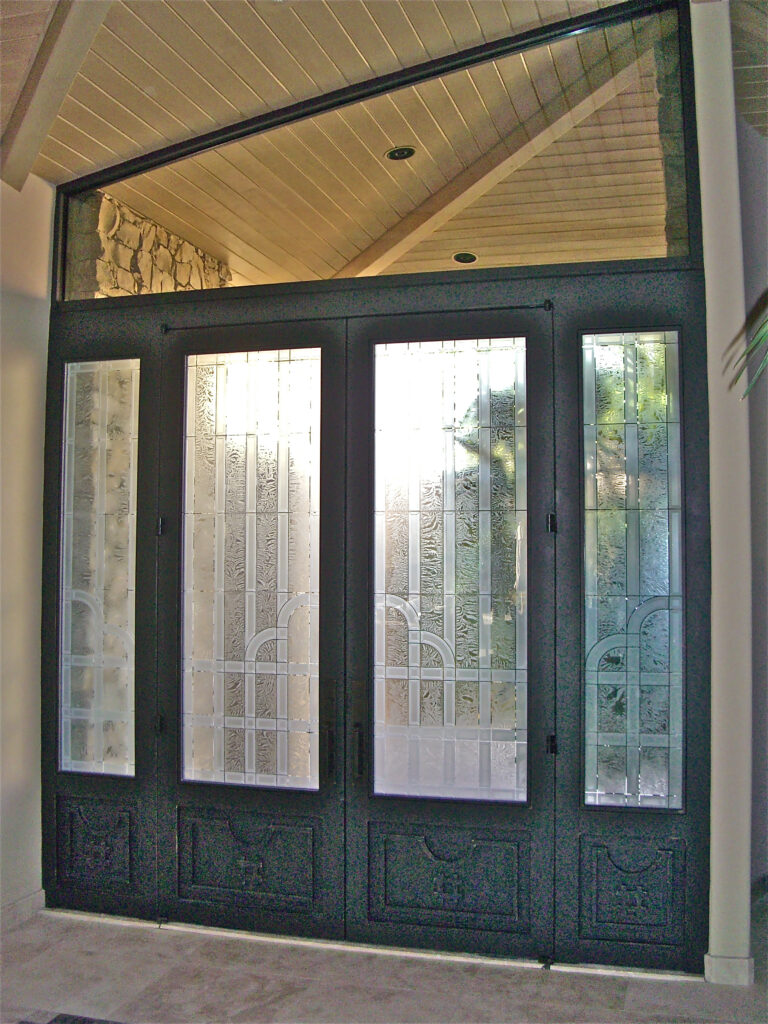
Gluechip Glass Semi-Private: Elegant glass front doors with custom frosted patterns that enhance light flow but keep visibility open for display-style entryways. Gluechip glass is created by applying glue to a sheet of glass and then drying it.
As the glue dries, it shrinks and chips off the surface of the glass, creating a unique, fern-like pattern. This texture diffuses light and distorts the view, making it difficult to see clearly through the glass while still allowing plenty of light to pass through. It’s an elegant solution for entryways where you want to maintain a sense of openness without sacrificing all privacy.
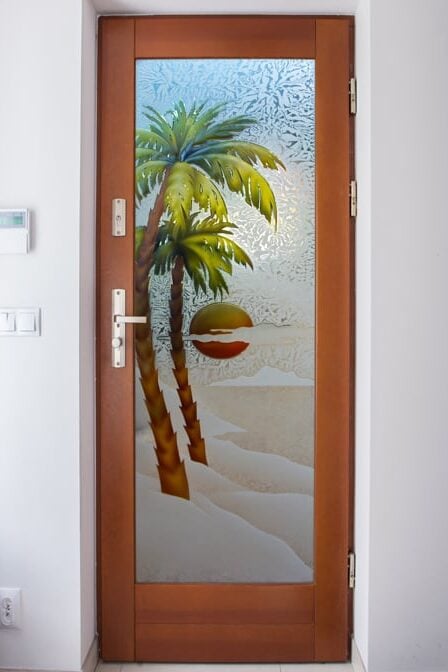
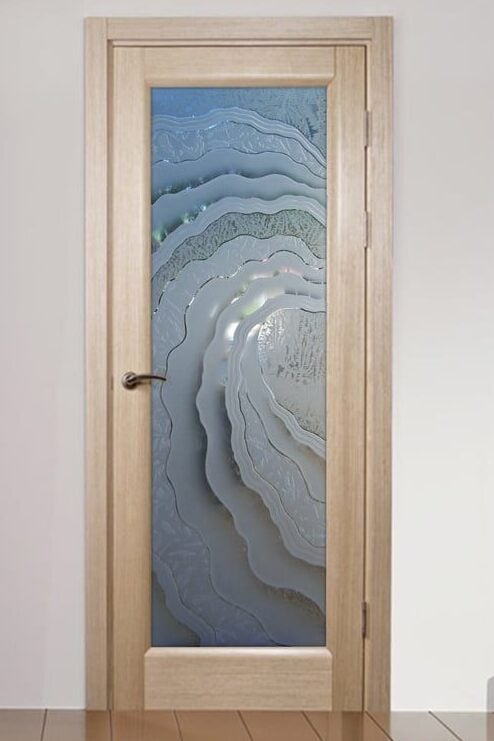
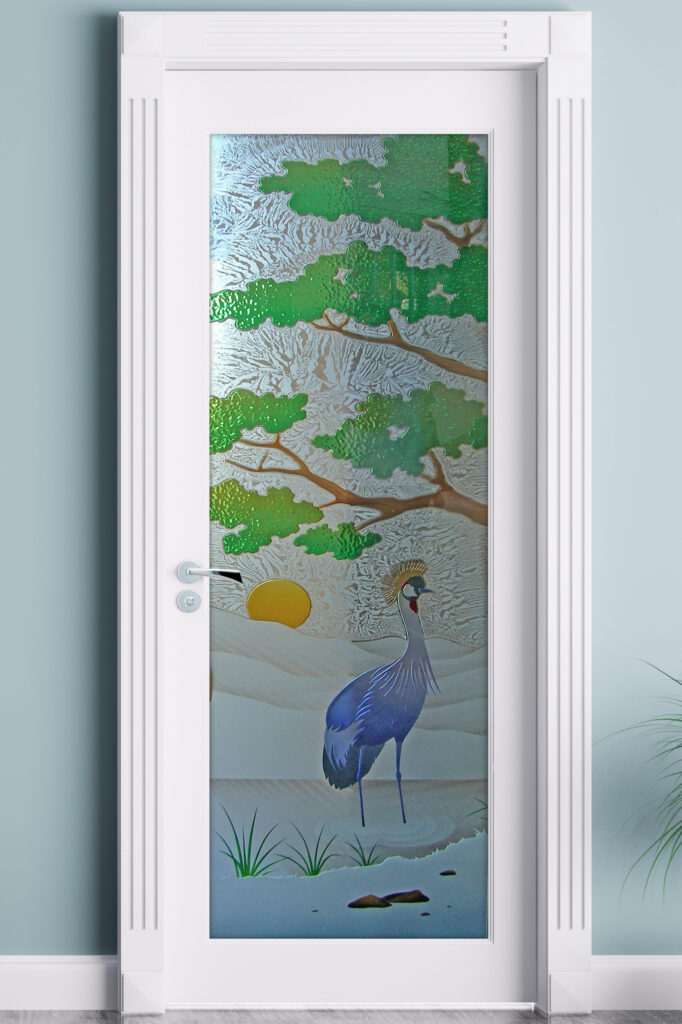
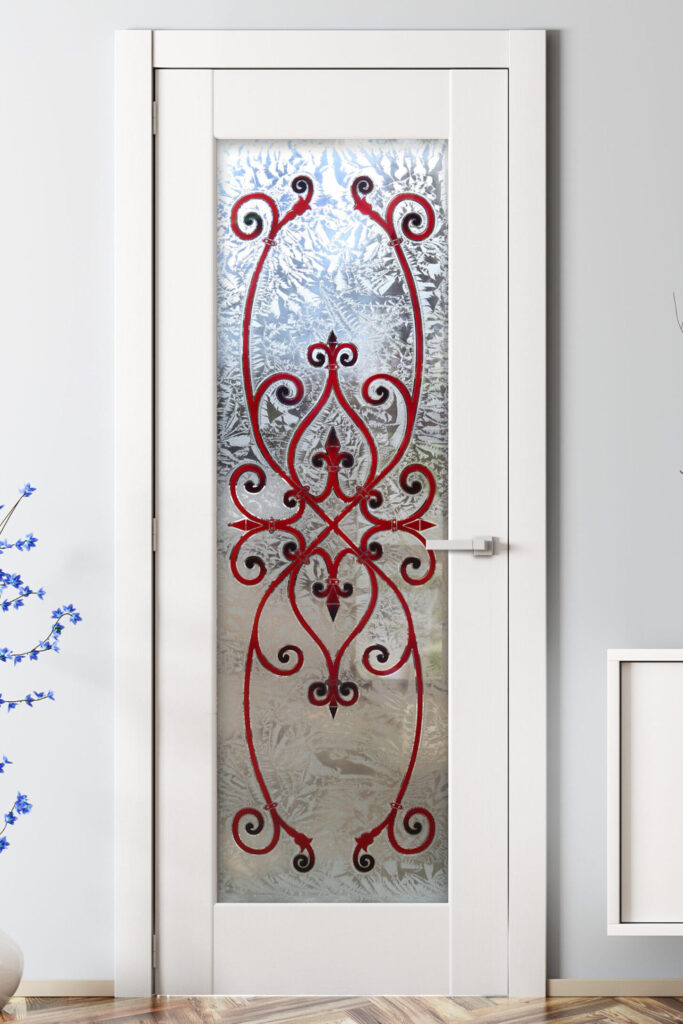
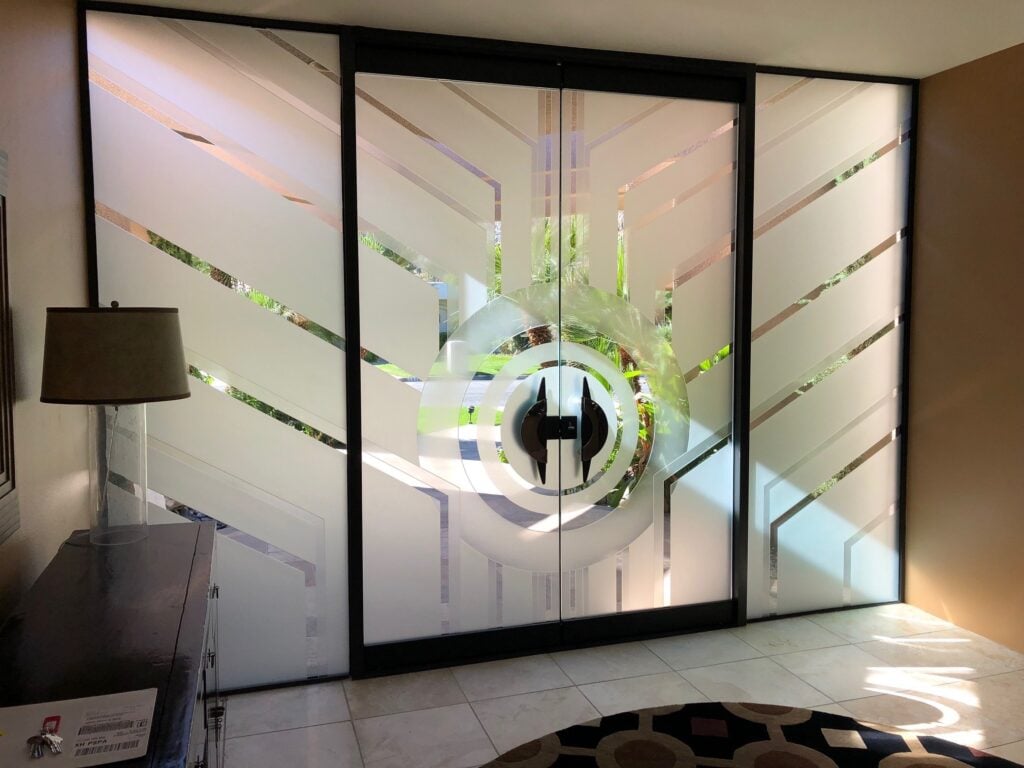
Frosted Glass Private: Secure glass front doors for modern homes that block visibility completely, even when lights are on inside. Frosted glass is the most private option. It’s created by sandblasting or acid-etching the surface of the glass, giving it a milky, opaque appearance. This process completely blocks visibility, ensuring that people can’t see inside your home, even when the lights are on at night. It’s a great choice for modern homes and provides maximum privacy and security.
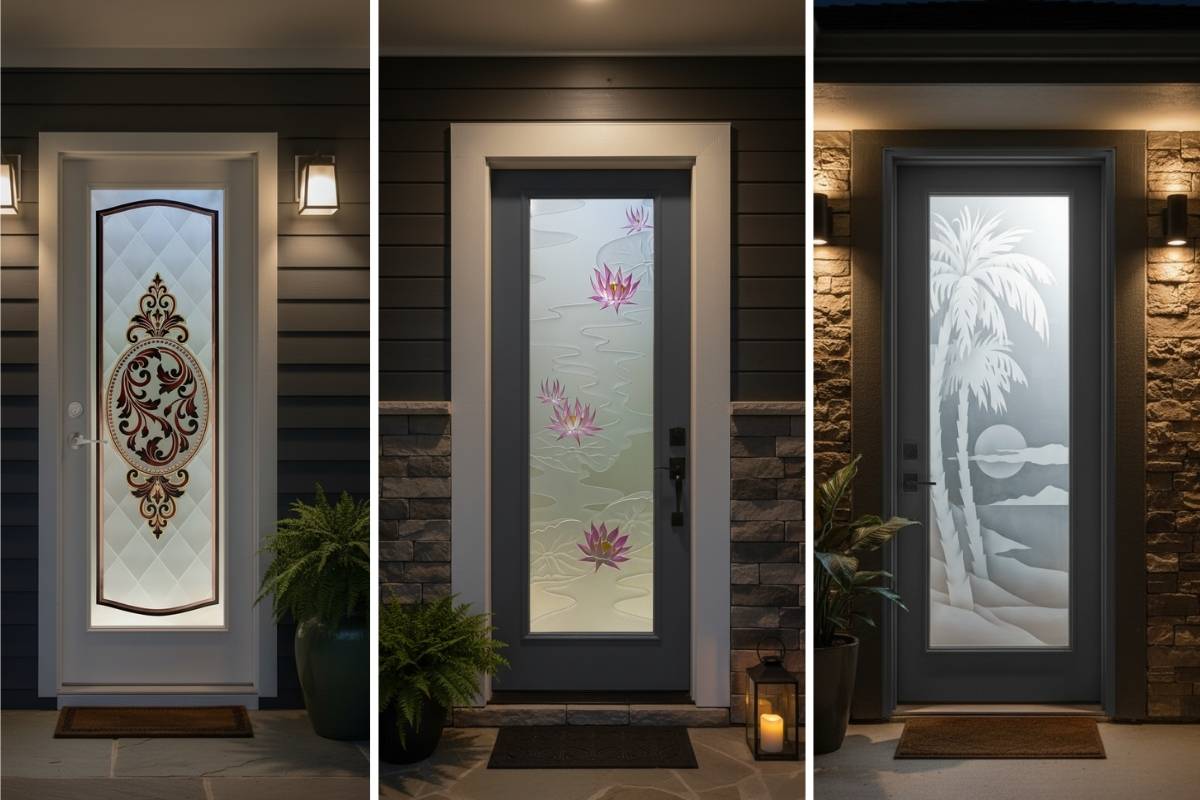
Combination Designs: Energy-efficient glass front doors with privacy options that combine artistic clear areas with frosted coverage for a tailored look. If you want the best of both worlds, combination designs are a perfect solution. These doors incorporate different types of glass to create a custom look that meets your specific needs.
For example, a design might feature a central decorative clear area surrounded by a frosted glass border. This allows you to have a unique, artistic element while maintaining privacy where it matters most. These designs are highly customizable and can be tailored to suit any style.
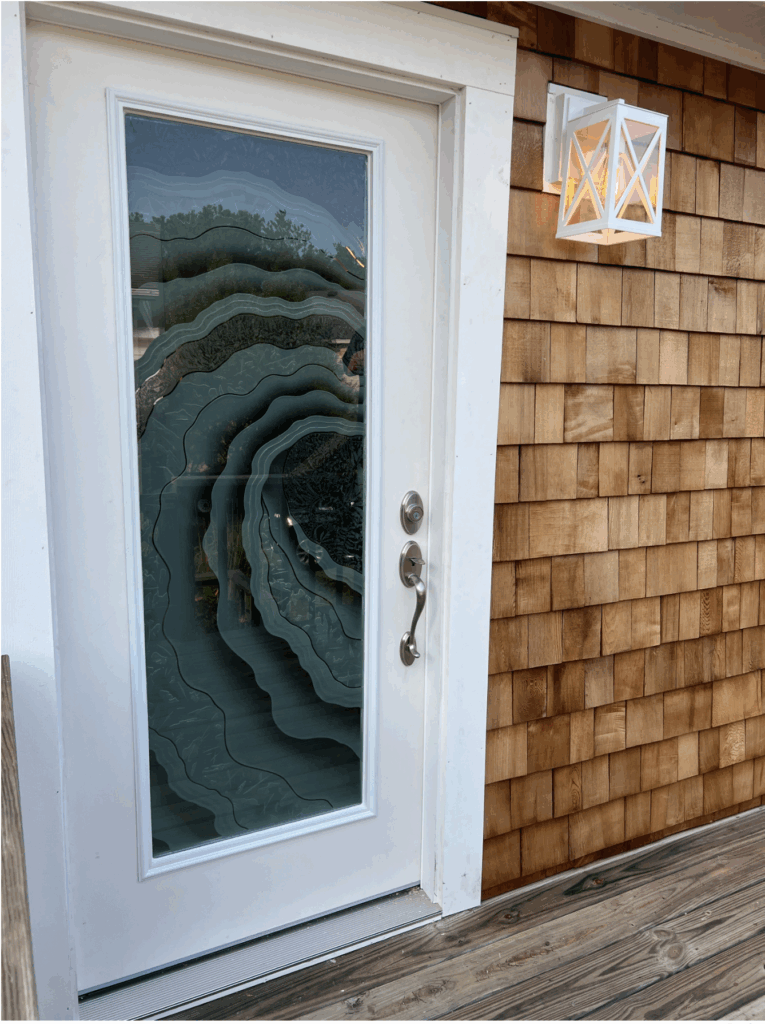
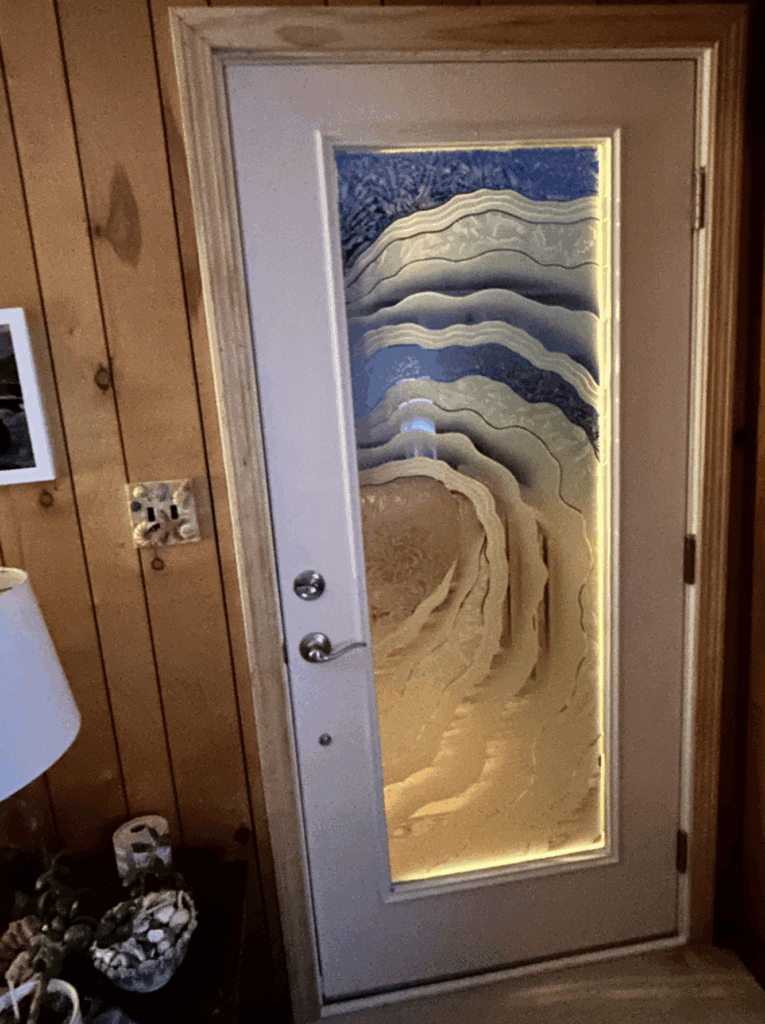
Decorative Clear Glass, Not Private: A front door with glass panels built from tempered safety glass that’s ideal for showcasing interior design but offers little privacy. Decorative clear glass is ideal for those who want to let in as much light as possible and showcase their home’s interior. This type of glass is transparent, so it provides a clear view through the door. It’s often used for intricate, multi-pane designs or as part of a larger, decorative entry system. While it’s great for aesthetics, it offers no privacy.

Frequently Asked Questions About Frosted Glass Doors at Night
Can people see shadows through frosted glass doors?
Yes, faint shapes or movement may be visible up close, but details are fully obscured. Frosted glass doors are designed to scatter light, keeping interiors private.
Are glass front doors safe at night?
Yes. Modern glass front doors are made with tempered or laminated safety glass, which is four to five times stronger than regular glass. If broken, tempered glass crumbles into small, dull pieces rather than dangerous shards, while laminated glass stays bonded to its interlayer, making forced entry more difficult. When paired with quality deadbolts, reinforced door frames, and multipoint locks, frosted glass entry doors offer security on par with or better than traditional doors.
Is a front door with glass less private than a solid door?
Not if it’s frosted. A front door with glass in a frosted finish blocks visibility. Unlike clear glass, which leaves interiors visible at night, frosted doors maintain privacy under all lighting conditions. Full-coverage frosting provides the highest level of obscurity, while partial decorative designs offer semi-privacy for those who prefer more natural light and a touch of visibility.
Do frosted glass doors fade over time?
No. The frosted finish is created through permanent sandblast etching or carving directly into the glass surface. This process physically alters the texture of the glass rather than applying a removable layer. As a result, it will never peel, bubble, or fade like adhesive films or spray-on frosting. With simple cleaning and proper care, frosted glass front door designs maintain their crisp appearance for decades.
Do frosted glass doors provide privacy if someone is standing outside with a flashlight?
Yes. Even with a flashlight directed at the glass, the frosted surface diffuses light and prevents clear visibility inside. While the brightness may increase the glow of the glass, it won’t reveal details or allow someone to see into your home. This also reinforces that frosted glass see through visibility is extremely limited, even under direct lighting.
Are there different levels of frost for more or less privacy?
Yes. Frosted glass can be customized to different opacity levels. Lighter frosting allows more light but offers slightly less privacy, while heavier or layered frosting creates a more opaque finish for maximum privacy, especially at night. Heavier finishes are often compared to opaque glass, which blocks visibility almost completely.
Does the thickness of the glass affect privacy?
Not significantly. Privacy is mainly determined by the surface treatment (frosting or etching), not the thickness of the glass. However, thicker glass can improve durability, insulation, and sound reduction. For comparison, privacy solutions like window films rely on surface application rather than permanent texture.
Will interior blinds or curtains still be needed with frosted glass doors?
In most cases, no. Fully frosted glass provides enough privacy on its own, eliminating the need for additional window coverings. However, some homeowners still add blinds for light control rather than privacy. Temporary options like static cling coverings are sometimes used but don’t offer the same durability or appearance.
Can frosted glass doors reduce glare from outdoor lighting at night?
Yes. Frosted glass softens and diffuses harsh outdoor lighting, such as streetlights or porch lights, creating a more comfortable and ambient glow inside your home. This is especially beneficial for entryways with large windows that would otherwise let in intense light.
Are frosted glass doors a good option for homes close to neighbors or sidewalks?
Absolutely. Frosted glass is ideal for homes with nearby neighbors or high foot traffic because it blocks direct visibility while still allowing natural light to enter. It offers a modern alternative to stained glass, which provides privacy but with a more traditional look.
Do sidelights or transoms with frosted glass affect privacy differently?
They can. If sidelights or transoms use clear glass, they may reduce overall privacy. For consistent privacy at night, it’s best to match them with frosted or textured glass to complement your front door. This is especially important in open layouts where entryways connect directly to living rooms.
Can you combine frosted and clear glass for both privacy and visibility?
Yes. Many custom designs incorporate both frosted and clear elements. This allows you to maintain privacy where needed while still adding visual interest or limited visibility through select areas. Strategically placed frosting can also add privacy without sacrificing design.
Does frosted glass help with noise reduction?
Frosting itself doesn’t reduce sound, but many frosted glass doors are made with insulated or double-pane glass, which can help minimize outside noise and improve overall comfort. This makes them a great option not only for entryways but also for areas like cabinets or interior partitions.
Is frosted glass a good option for smart or modern homes?
Yes. Frosted glass doors pair well with modern design features like smart locks, security cameras, and motion lighting. They enhance curb appeal while maintaining privacy and functionality. They also elevate the overall decoration of a space with a clean, contemporary look.
Can frosted glass designs be customized to match a home’s style?
Yes. Frosted glass can be custom-designed with patterns inspired by nature, geometric styles, or traditional motifs to suit any home aesthetic. This level of customization allows homeowners to balance beauty with everyday functionality.
Is frosted glass suitable for all types of windows and doors?
Yes. Frosted glass works well across many applications, including entry doors, partitions, and even picture windows where privacy is needed without blocking light. It maintains a soft, diffused look rather than appearing overly shiny or reflective.
Does frosted glass affect the overall look of a home’s exterior?
Yes, in a positive way. Frosted glass adds a refined, upscale look that enhances the curb appeal of any house. It creates visual interest while maintaining a clean and cohesive design.
Are the edges of frosted glass doors finished differently?
Typically, yes. The edges of the glass are polished or beveled for safety and a clean appearance, even when the main surface is frosted. Proper finishing ensures a high-quality look and long-lasting durability.
Is professional installation required for frosted glass doors?
In most cases, yes. While some inserts can be DIY, it’s best to install frosted glass doors with professional help to ensure proper fit, sealing, and security. This is especially important for exterior doors exposed to weather and daily use.
Does frosted glass help regulate indoor temperature?
Yes, especially when combined with insulated glass units. Frosted glass can help reduce heat transfer while still allowing natural light to enter. This contributes to improved energy efficiency in your home.
Can frosted glass be used in other areas of the home besides entry doors?
Absolutely. Frosted glass is commonly used in bathrooms, interior doors, and partitions where privacy is essential. It’s also popular in home offices, adding privacy without closing off the space.
Is frosted glass suitable for workspaces or professional environments?
Yes. Frosted glass is widely used in office settings to create private areas while maintaining an open, modern feel. It allows light to flow while reducing distractions.
Why do homeowners prefer custom frosted glass over standard options?
Custom designs allow customers to choose their exact level of privacy, style, and glass type to suit their home. This personalization helps enhance both function and visual appeal.
Who should you talk to when choosing a frosted glass door?
It’s best to contact a glass design specialist who can guide you through design options, privacy levels, and installation requirements. Expert advice ensures you get the perfect balance of style, privacy, and performance.
Can you replace just the glass in a front door?
Yes—often… but not always. If the glass is cracked, chipped, or otherwise damaged, many glass-panel front doors allow you to swap out just the glass panel—no need to replace the entire door slab or frame. Replacement inserts are available in original sizes and styles, and custom-cut panels accommodate unique or oversized doors, making a glass front door a long-term, cost-effective investment.
But heads up—some doors are tougher to retrofit. Certain door frames simply aren’t built for it. For example, many fiberglass doors—especially flush-glazed models—do not easily allow glass removal without risking damage to the frame or molding. In fact, owners of some fiberglass doors have been told by professionals that the panel cannot be safely removed at all.
Determining whether your door is a good candidate can be tricky on your own. A skilled door installer or glass company is your best bet to evaluate:
- Whether the panel is actually removable without harming trim or structural components, especially in fiberglass models that may be sealed or glued in place.
- If the frame is square and sound, or if modifications—or even a full slab replacement—might be required.
- Whether a custom insert will fit properly, including any molding or weather-proofing adjustments needed.
So while many glass front doors can have their glass panel replaced, not all do. Trusting a professional to assess your specific model ensures your door stays intact, safe and functional.
👉 Shop our Front Door Glass Inserts to find the perfect replacement or upgrade for your front door!
Conclusion
Frosted glass doors give you the best balance of privacy and light. At night, you can’t see through them clearly — only blurred shadows may appear up close, but details remain hidden. That makes a glass front door with frosted finishes a smart choice for anyone who wants security without losing the brightness and style of natural light.
Ready to upgrade your entryway? Shop and explore custom designs that bring privacy, beauty, and lasting value to your home.
Request a Quote for a Custom Design
Private Frosted Glass Doors
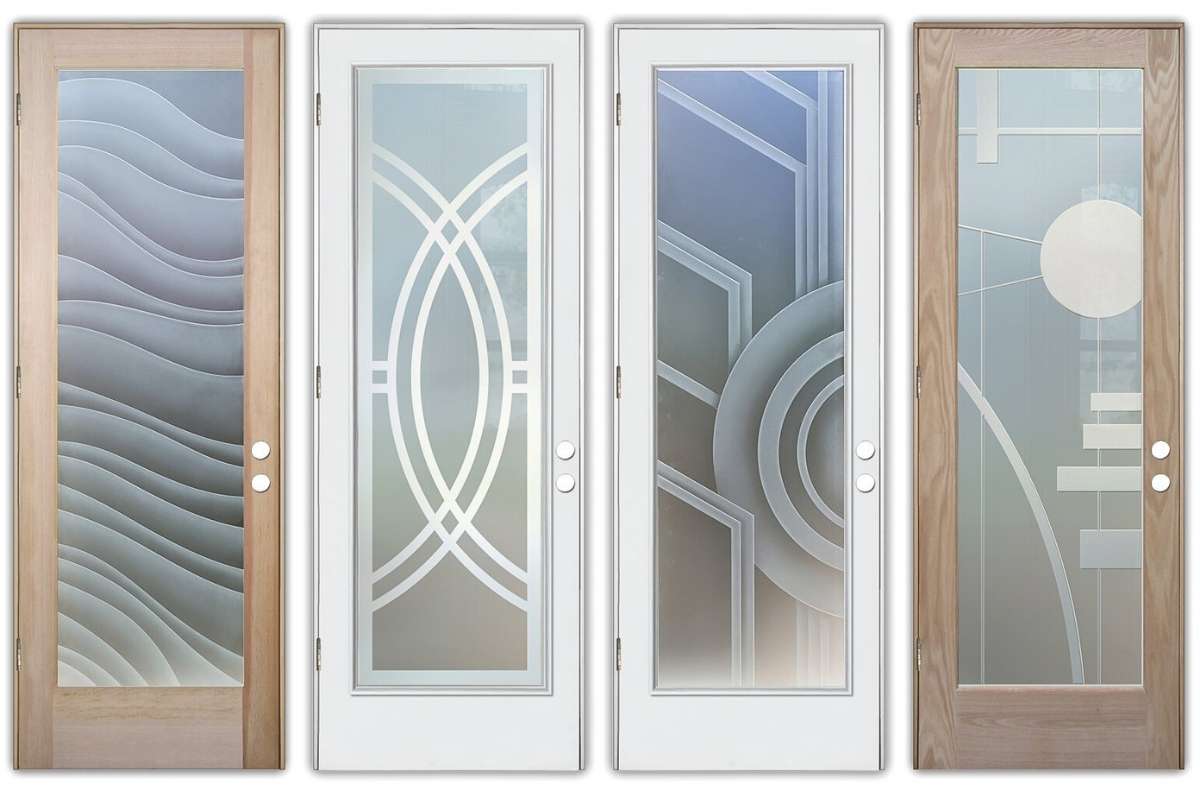
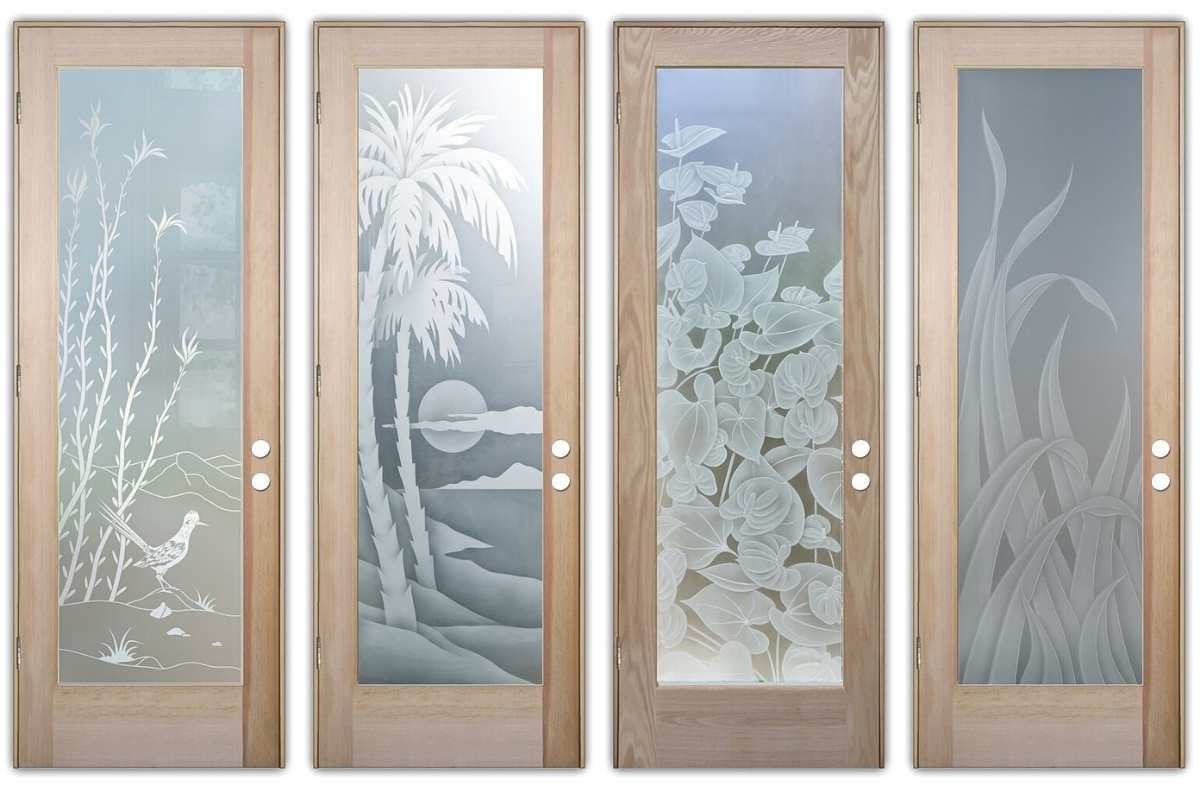
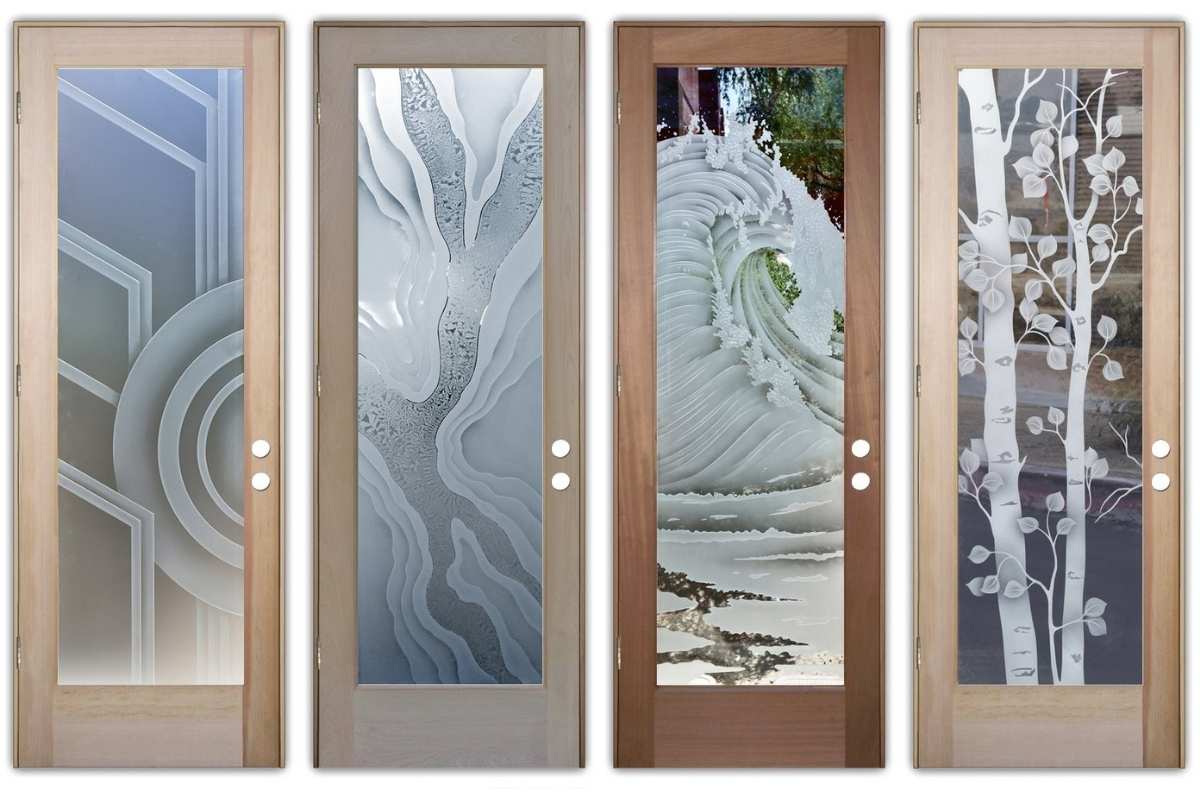

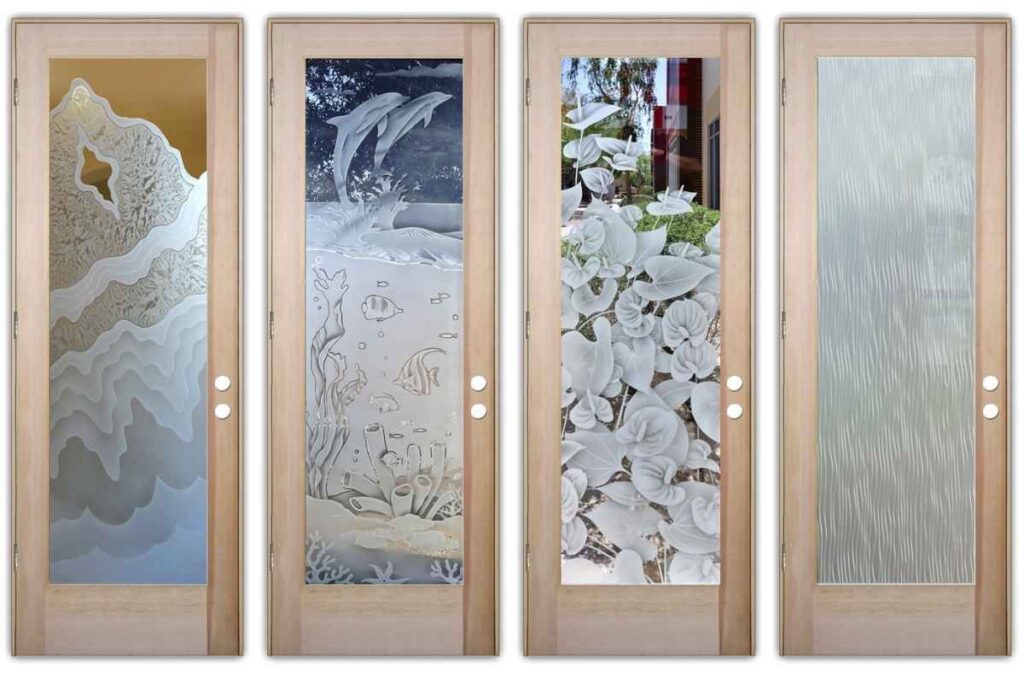
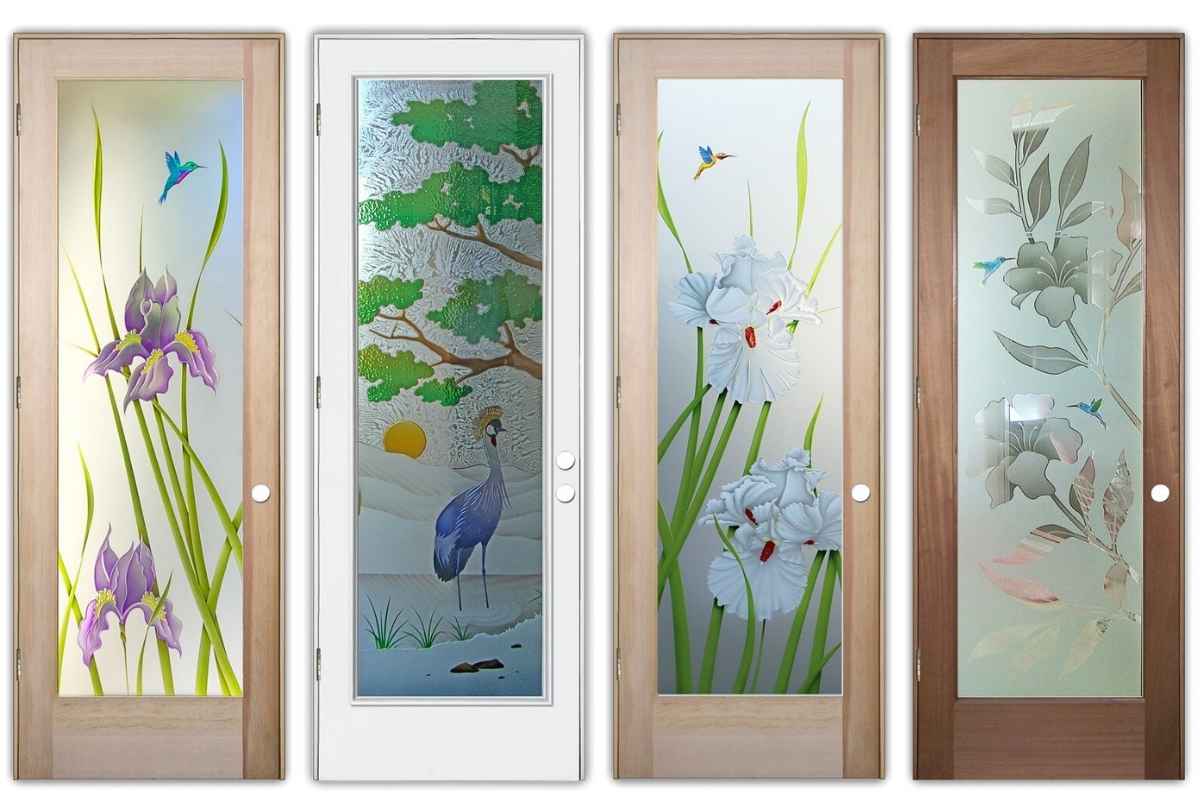
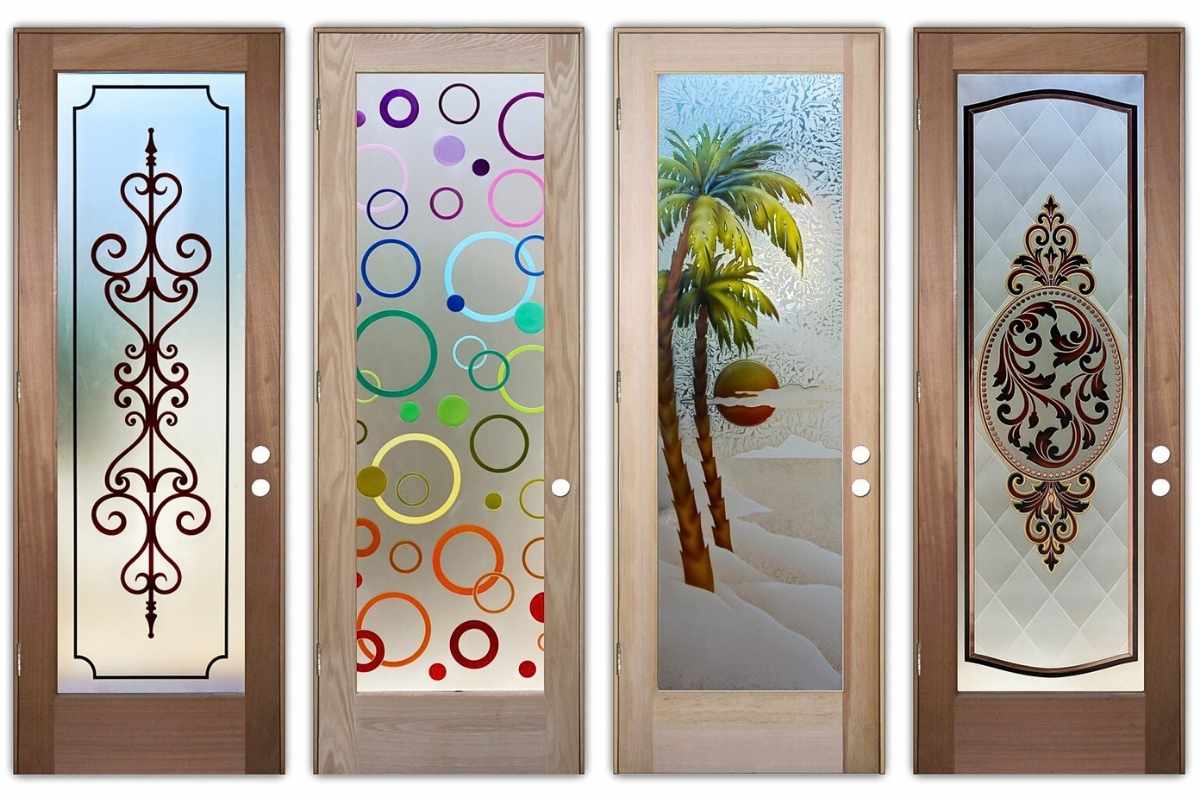
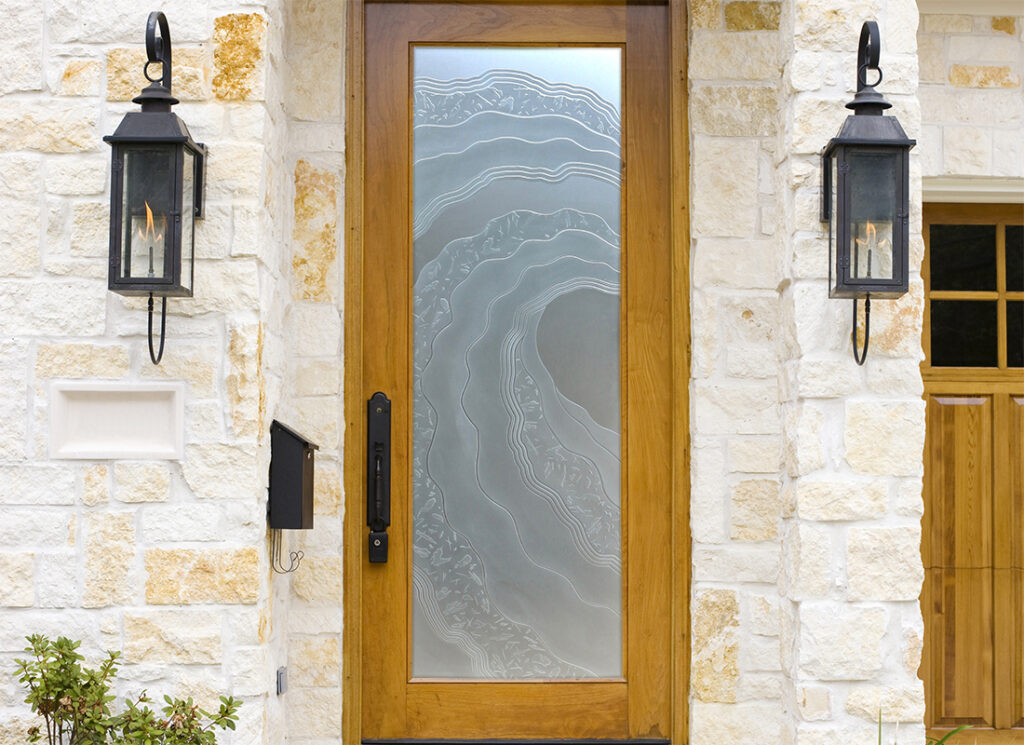
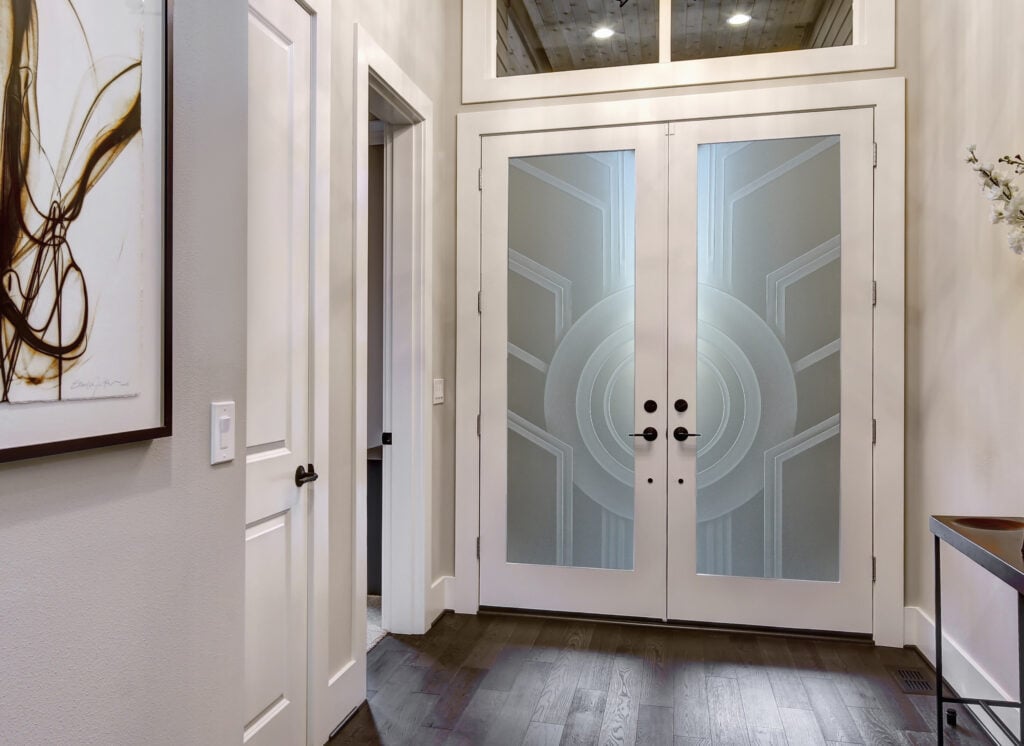
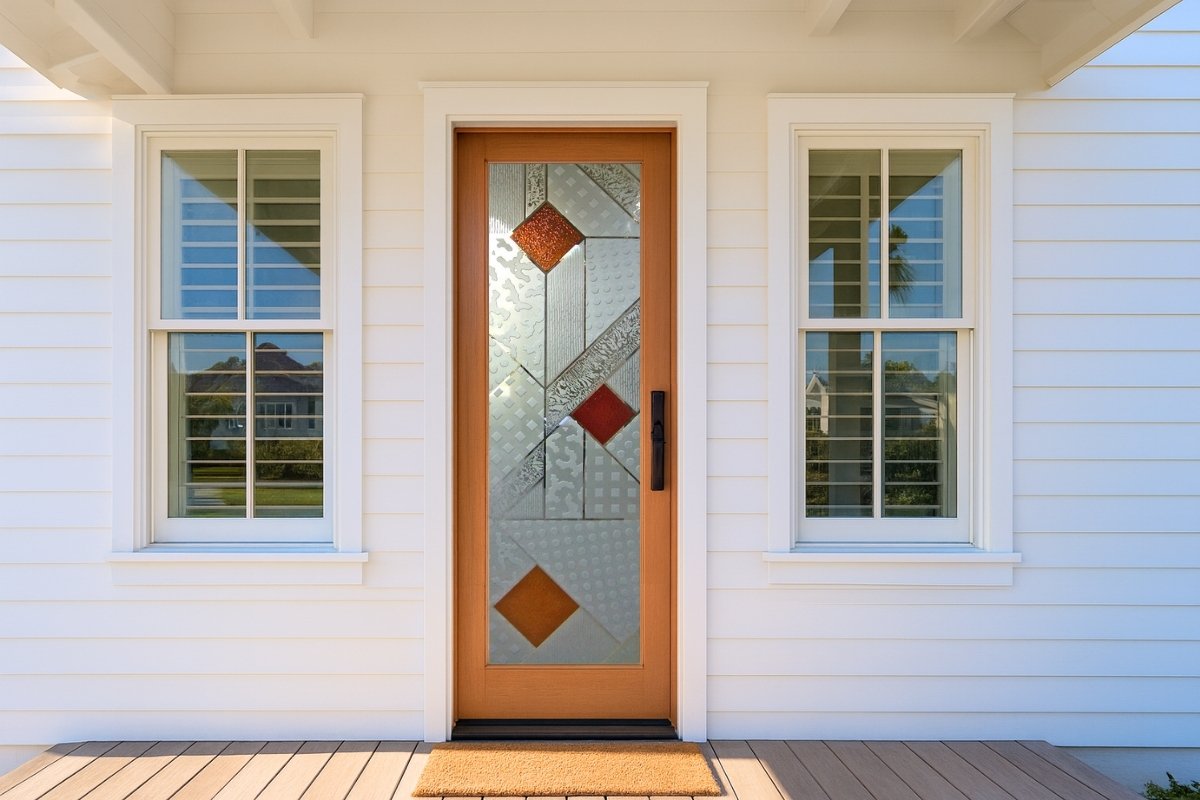
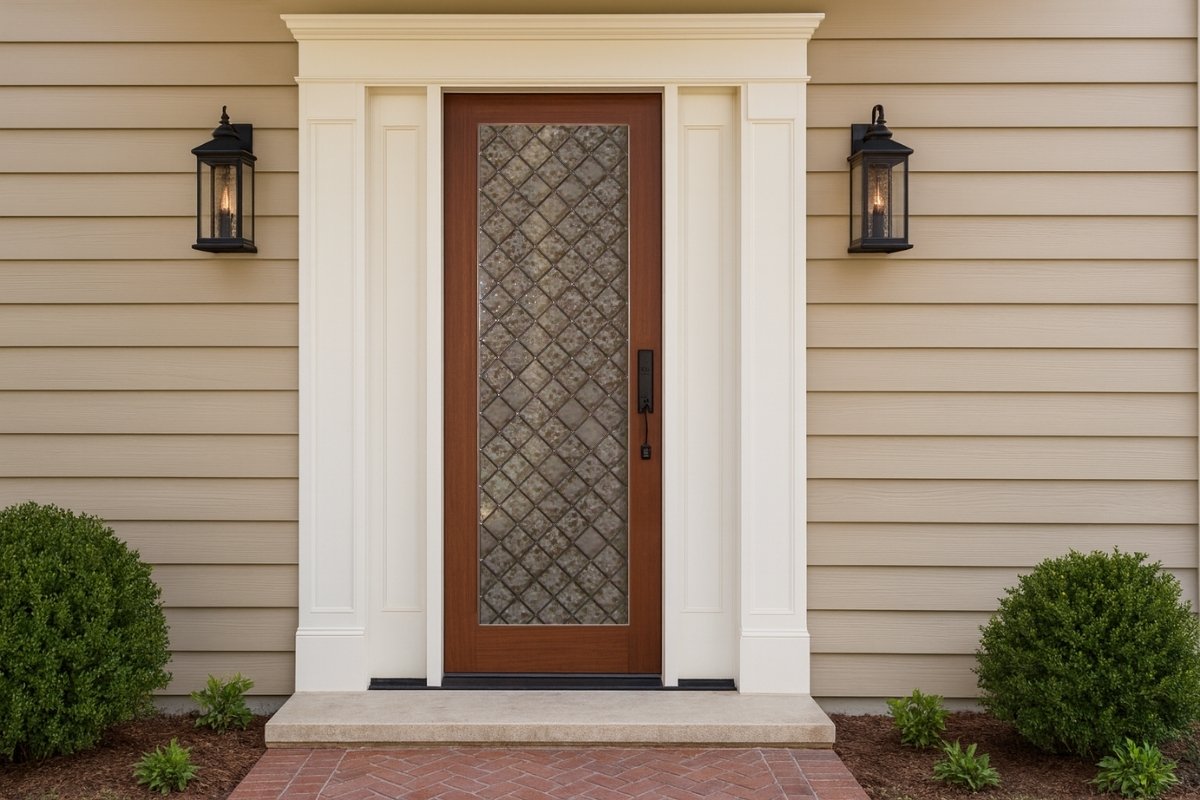
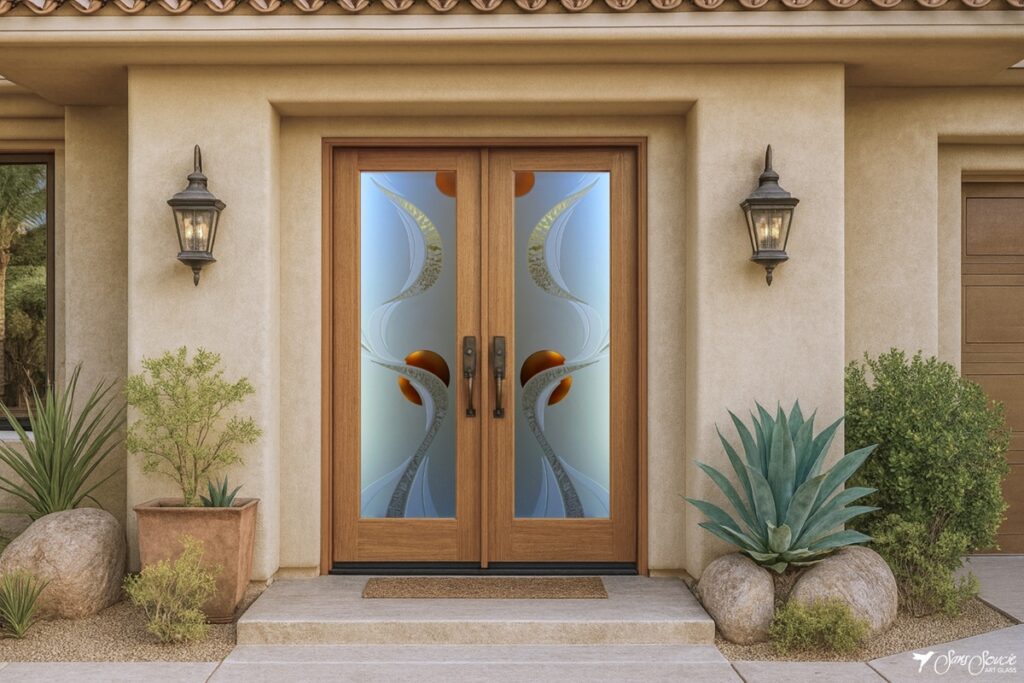
Upgrade your entryway with premium glass front doors built to last, designed to highlight your home’s style while protecting what matters most.
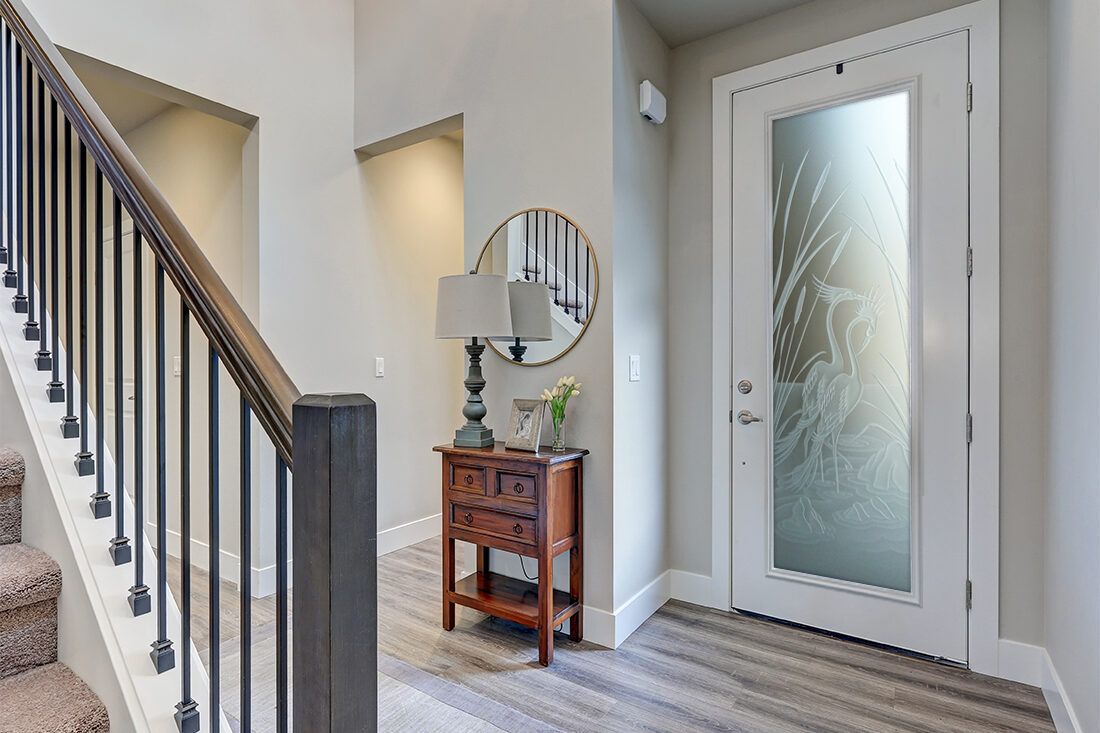

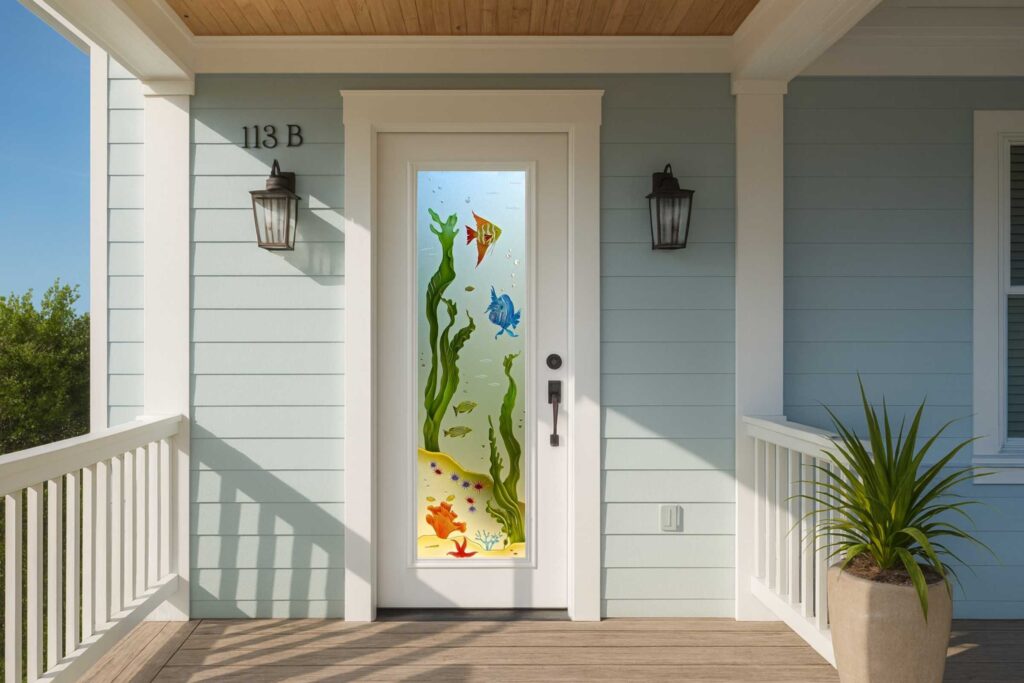

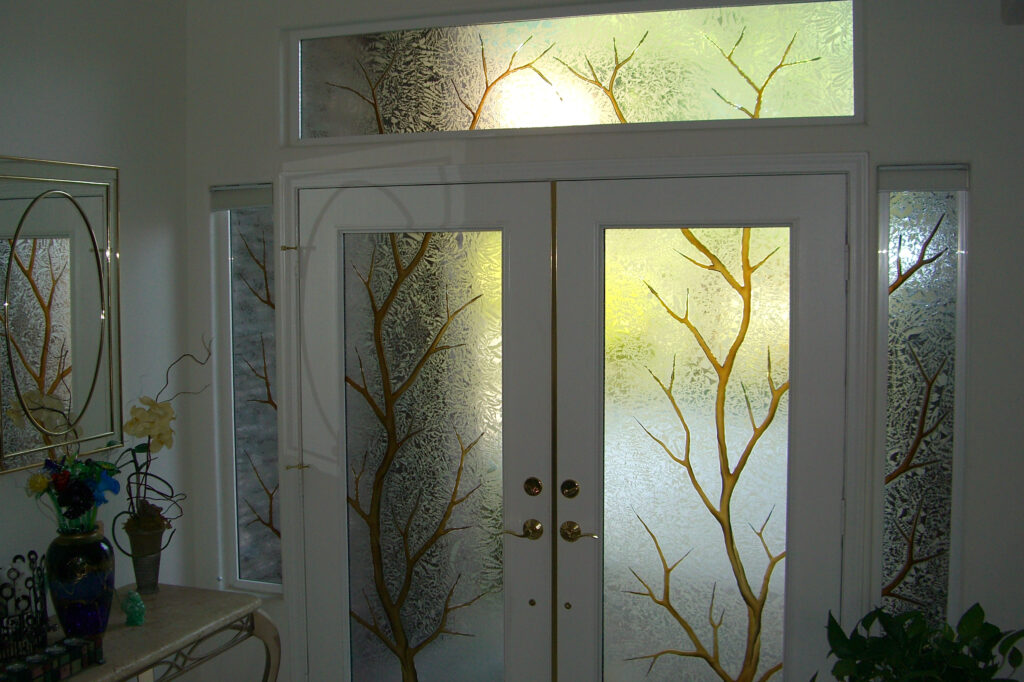
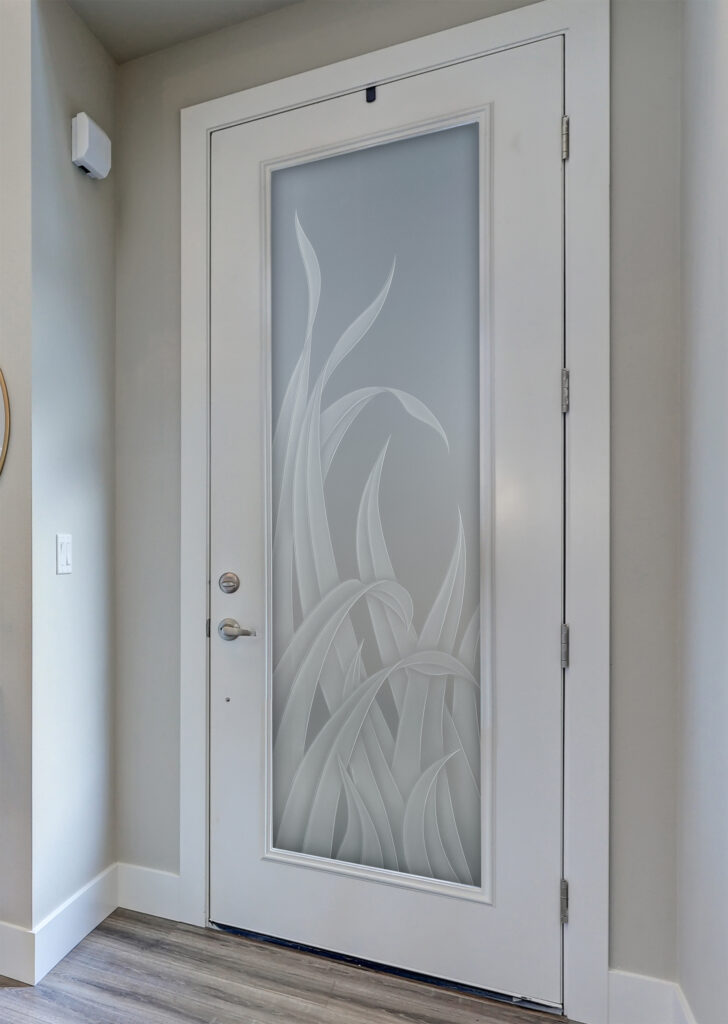

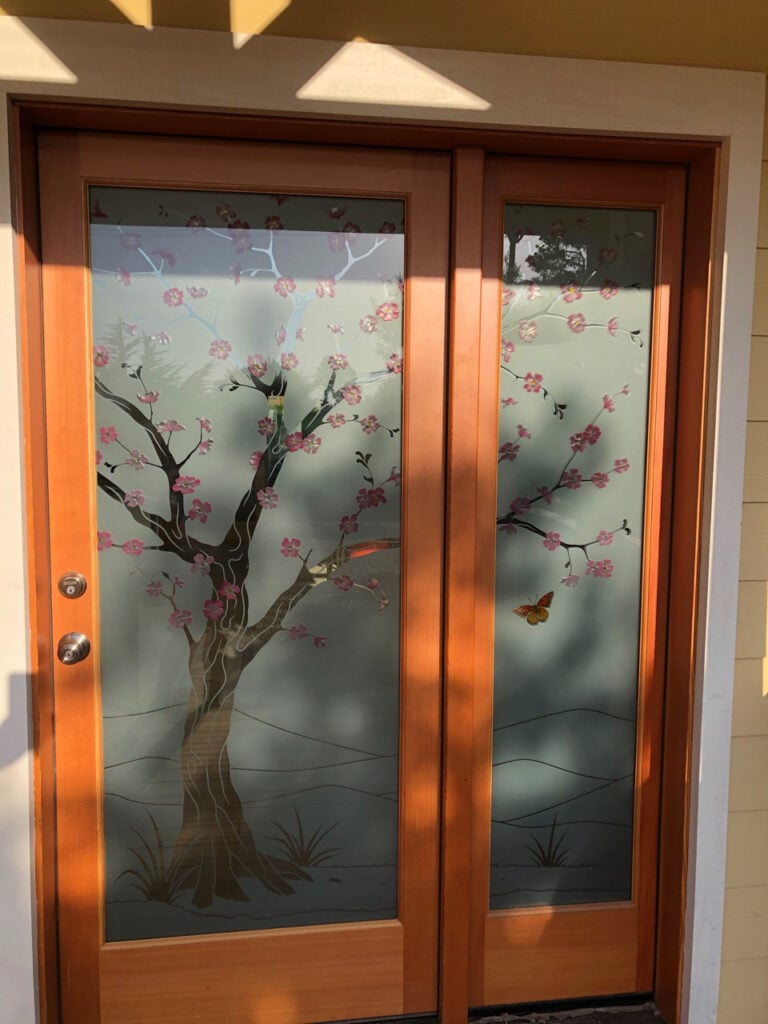
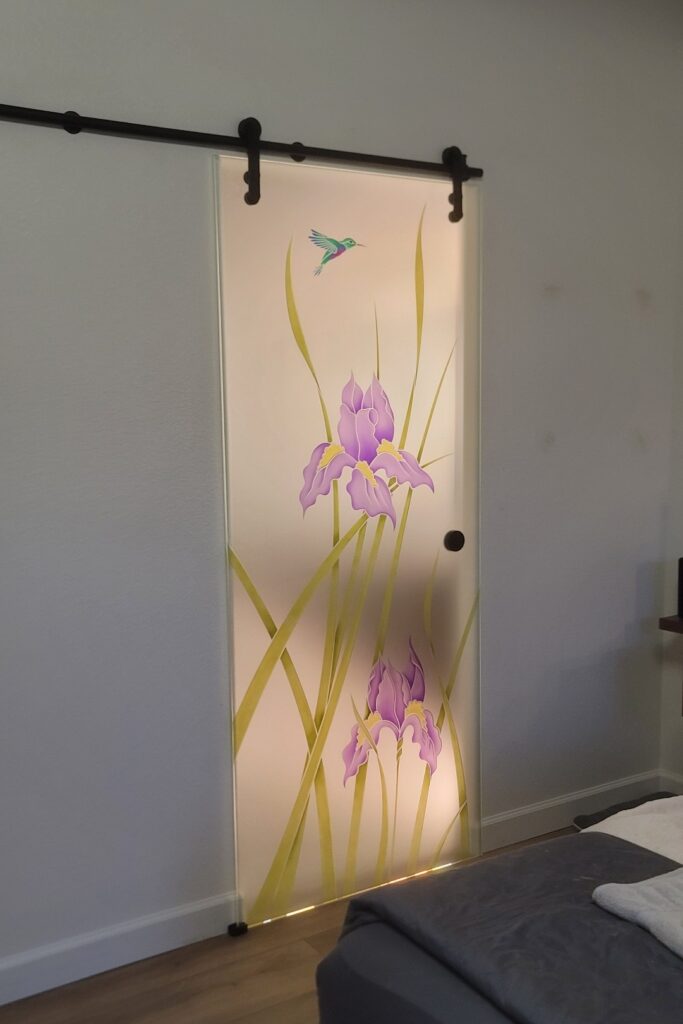
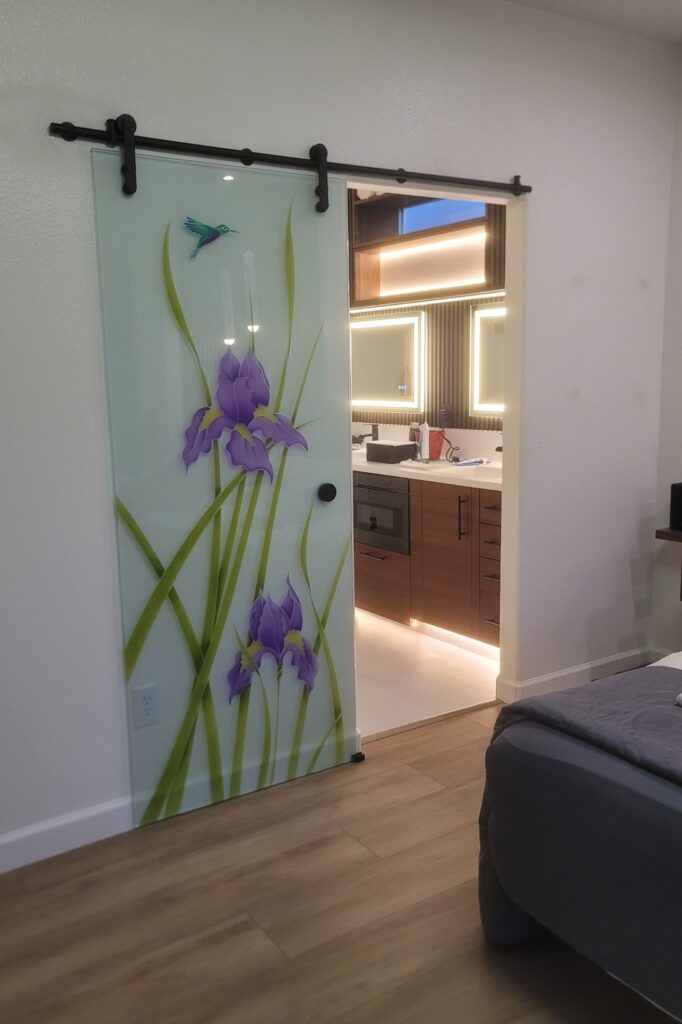
Check Out This Artistic Glass Door with Hand-Carved Details and Painted Finish!

Sans Soucie Art Glass: Decorative, Custom & Frosted Glass Doors, Windows, Showers & Stained Glass Since 1976
Family-owned and operated since 1976, Sans Soucie Art Glass leads the industry in decorative glass and custom glass design — from sandblast frosted glass and carved glass to hand-painted and stained glass art — transforming ordinary glass into Works of Art Captured in Glass recognized worldwide.
Innovative Frosted Glass Door Designer Tool
In 2010, we invented and launched our Frosted Glass Pantry Door Designer – a fun, easy-to-use tool that makes it simple for anyone to design and customize not only pantry doors, but a wide range of frosted glass doors for every room.
Explore our Frosted Glass Doors Collection
Our custom frosted glass doors include a beautiful variety for every style and space:
- Pantry Doors
- Frosted Glass Interior Door
- Interior Doors with Frosted Glass
- Frosted Glass French Doors
- Frosted Glass Front Door
- Front Doors with Frosted Glass
- Interior Glass Doors
- Glass Barn Doors
- Frosted Glass Barn Door
- Sliding Glass Barn Door
- All Glass Doors Interior
- All Glass Front Doors
- Bathroom Doors with Frosted Glass
- Laundry Room Doors
- Wine Room Doors
If you already have a door, and only need the glass insert, we also offer:
- Frosted Glass for Interior Doors
- Door Glass Inserts for Front Doors
- Glass Panels for Pantry Doors
- Frosted Glass Inserts for Bathroom Doors
- Laundry Room Door Glass Inserts
- Glass Panels for Interior Wine Cellar Doors
Elegant Frosted Glass Throughout Your Home
While our frosted glass doors are a top choice, we also create stunning glass products for every area of your home, including:
- Frosted Glass Shower Doors
- Glass Shower Partition
- Frosted Glass Shower Panel
- Frosted Glass Showers
- Frosted Glass Windows
- Bathroom Window Frosted Glass
- Decorative Window Glass, Window Frosting
- Custom Glass Dining Table
- Custom Glass Coffee Table
- Glass Shelves, Custom Glass Shelves
- Hand Carved & Painted Mirrors
- Frosted Glass Signs, Etched Glass Signs
- Cabinet Door Glass Inserts, Frosted Glass Inserts for Cabinet Doors
- Glass Wall Art, Wall Art on Glass
Looking for Inspiration? Explore Our Galleries
Discover visual idea boards, style concepts, décor applications, real project photos, and helpful information in our expanding gallery collection:
- Custom Glass
- Custom Glass Edges
- Custom Mirror
- Decorative Glass
- Decorative Glass Doors
- Decorative Glass Front Doors
- Decorative Glass Interior Doors
- Decorative Glass Window
- Stained Glass
- Stained Glass Doors
- Stained Glass Front Doors
- Stained Glass Windows
Free Shipping. Expert Packing, Peace of Mind
With FREE SHIPPING on most orders and worldwide delivery from our studio in Palm Desert, California, every order is packed in-house by our expert glaziers using custom materials and proven methods — ensuring safe arrival with a damage rate of less than 1%!
Explore our complete frosted glass doors collection and find the perfect frosted glass door for your space. Have questions? Contact us today!
Copyright © 2025, Sans Soucie Art Glass. All rights reserved.