25 Wood Front Door with Glass Panel Ideas for Every Home Style

A wood front door with glass panels can add natural light, privacy, and architectural character while complementing nearly any home style. The best design depends on the home’s architecture, the amount of glass desired, the required privacy level, and the wood finish. Well-designed glass doors with wood frames offer a timeless combination of warmth, openness, and curb appeal.
Here are 25 wood front door with glass panel ideas to consider:
- Narrow vertical glass panel
- Full-lite frosted glass
- Three-panel Craftsman glass
- Tree-patterned Craftsman glass
- Mahogany door with beveled glass
- Arched decorative glass panel
- Farmhouse divided glass lites
- Modern farmhouse frosted panel
- Knotty alder speakeasy glass
- Rustic wildlife etched glass
- Coastal wave-patterned glass
- Coastal reeded glass
- Mediterranean ornamental glass
- Spanish-style ironwork with frosted glass
- Tudor diamond-pane glass
- French country floral glass
- Transitional symmetrical glass panels
- Mid-century geometric glass
- Art Deco etched glass
- Minimalist clear-border glass
- Botanical etched glass
- Custom monogram glass
- Double doors with coordinating glass
- Matching door and sidelight glass
- Carved and shaded decorative glass
25 Wood Front Door with Glass Panel Ideas
1. Modern Wood Front Door with a Narrow Vertical Glass Panel
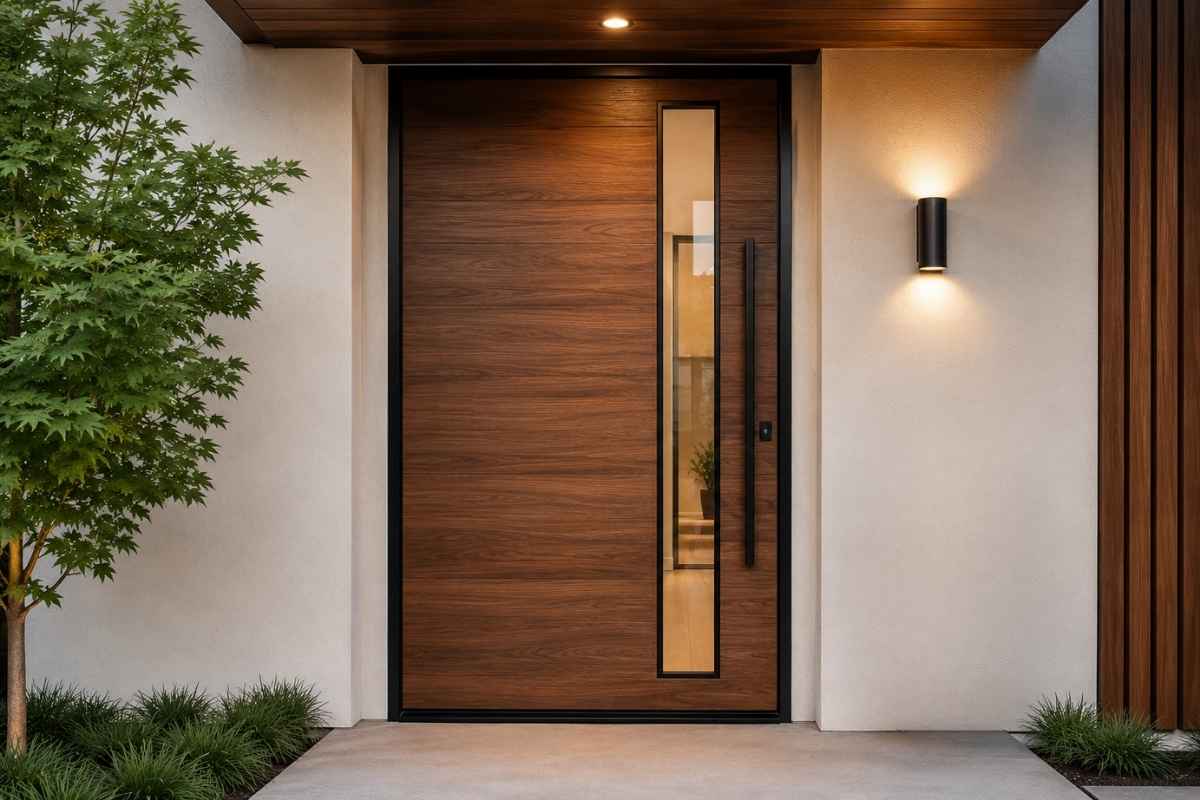
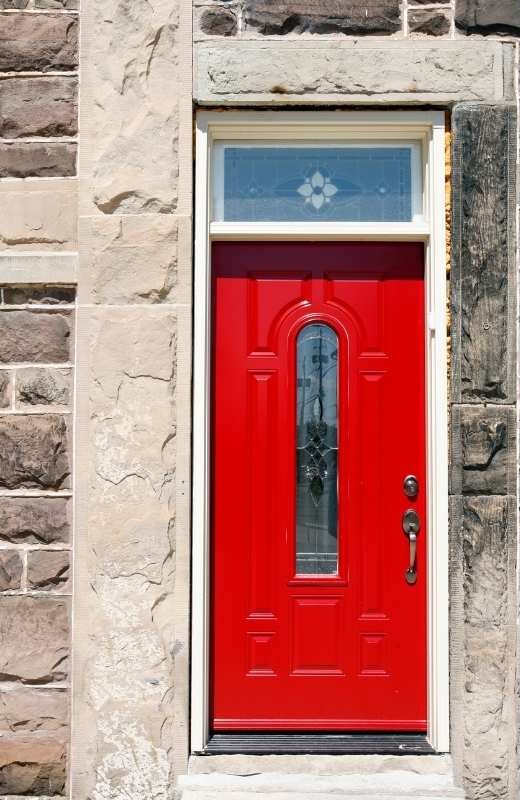
A modern wood front door with a narrow vertical glass panel creates a clean, architectural look without making the entry feel overly exposed. The glass insert can run nearly the full height of the door and be positioned off-center near the handle side for an asymmetrical contemporary effect.
Pair the slim panel with flat wood surfaces, strong vertical grain, and a warm walnut, teak, or medium oak finish. Clear glass creates the most open appearance, while reeded, etched, or lightly frosted glass softens the view inside. A long matte black pull handle and minimal trim complete the streamlined design.
A custom modern front door frosted glass design can provide a streamlined appearance without leaving the entry fully exposed.
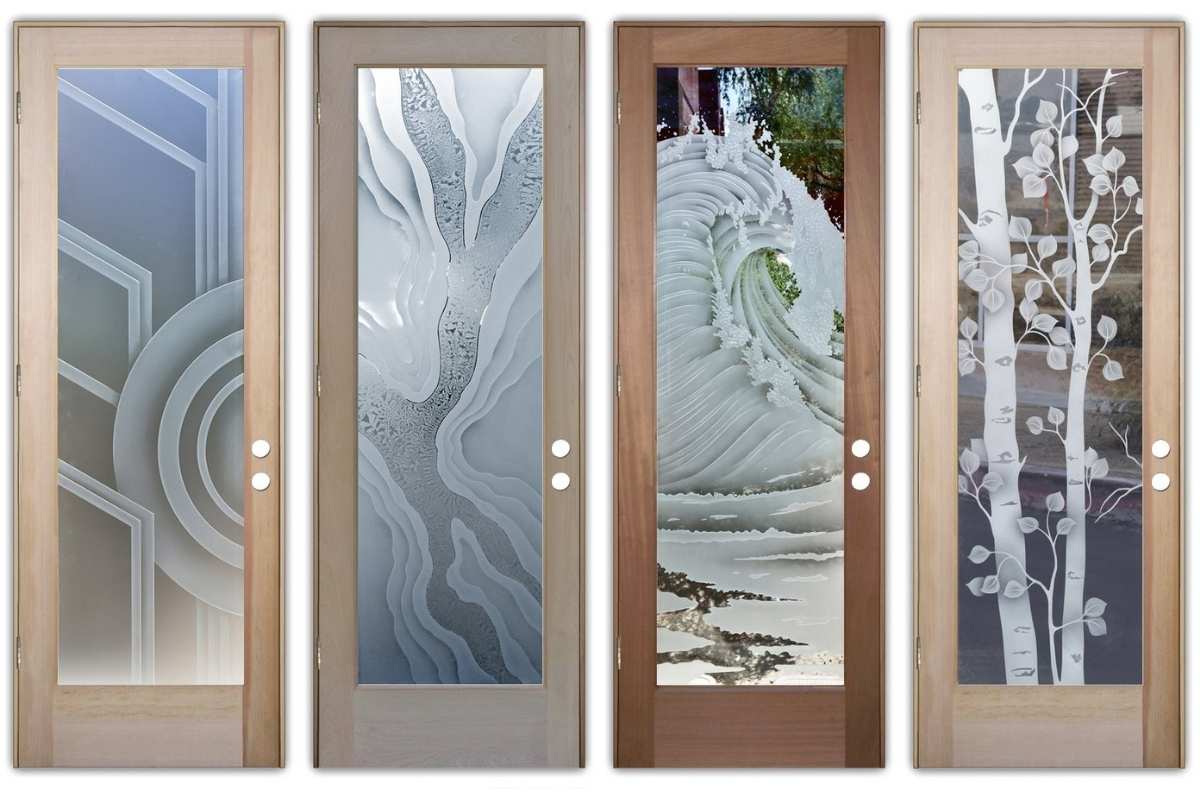
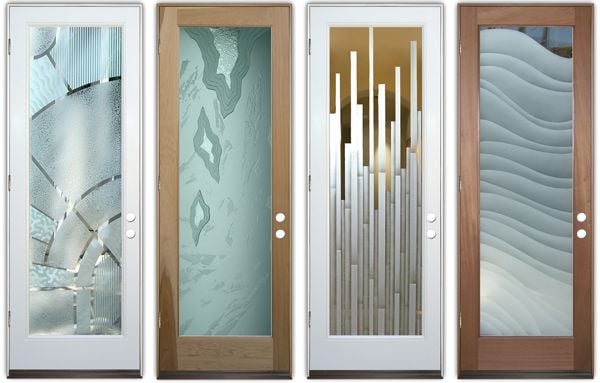
2. Full-Lite Wood Front Door with Frosted Glass Designs
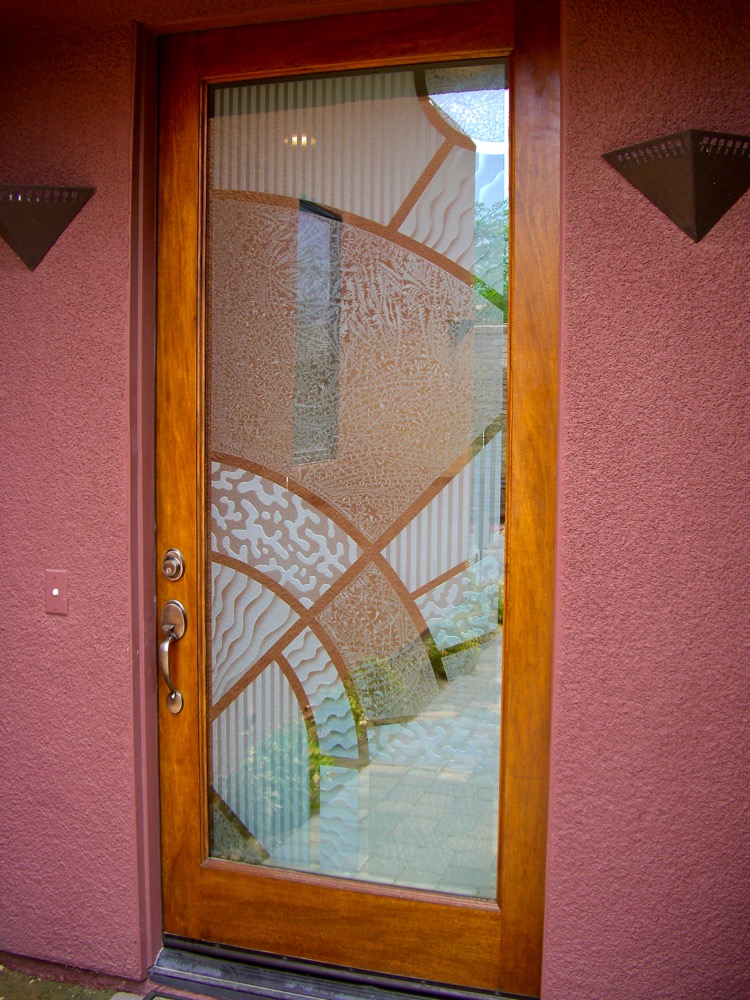

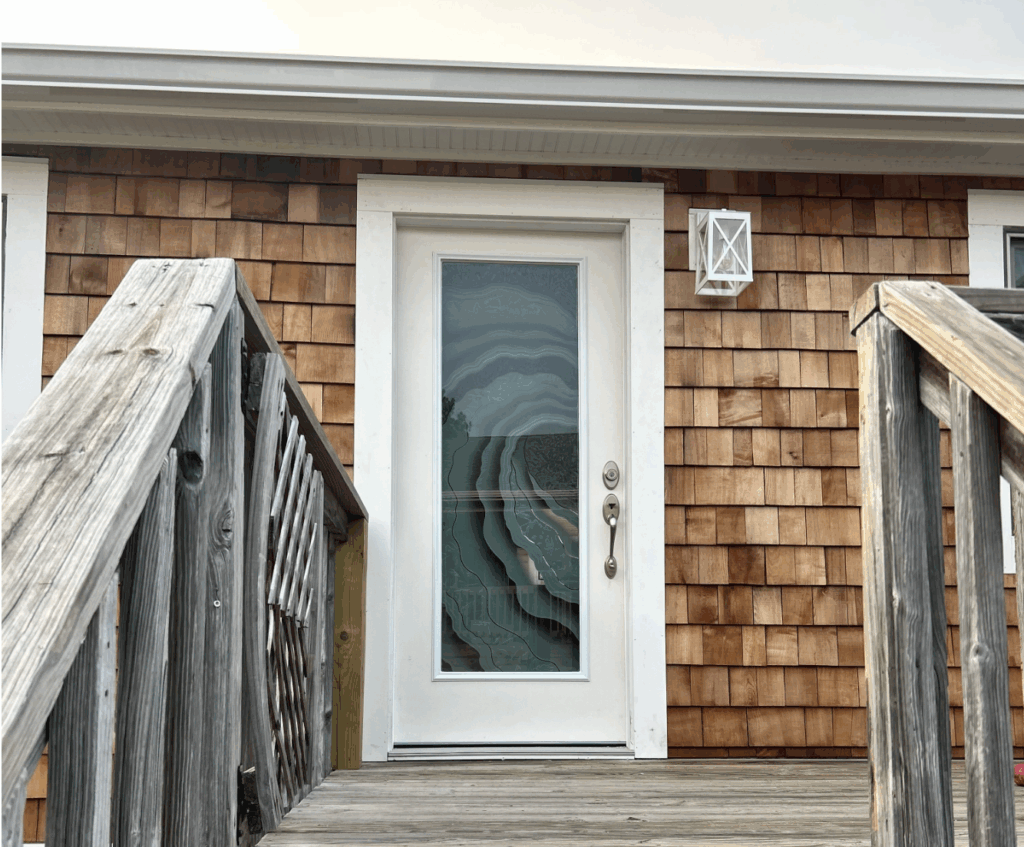
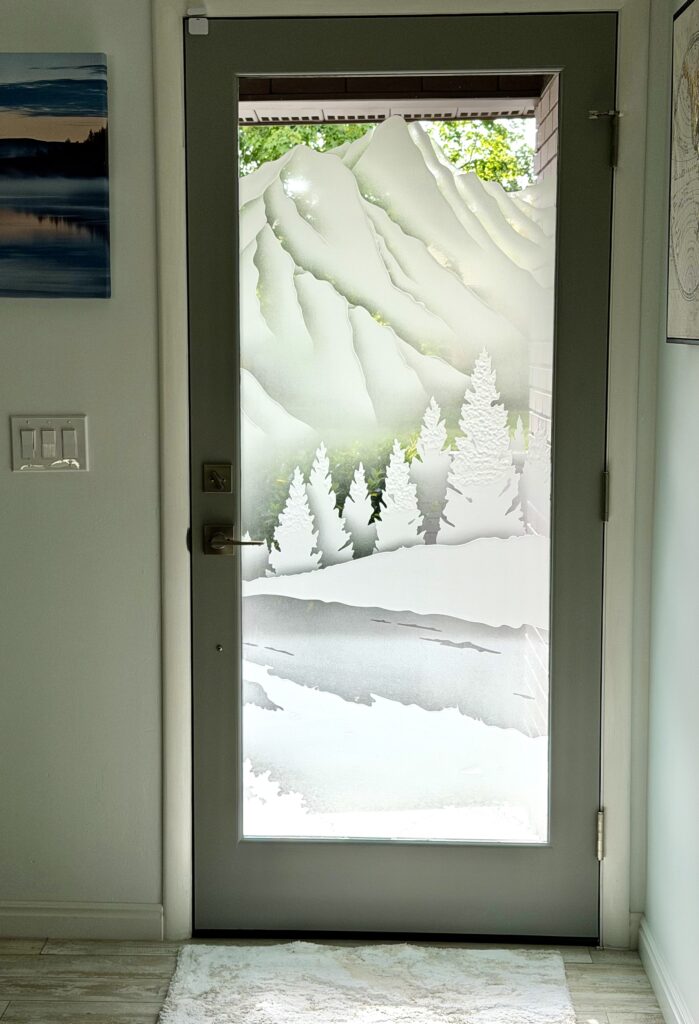

A full-lite wood front door uses one large glass panel surrounded by relatively narrow wood stiles and rails, allowing the glass to become the main visual feature. Many homeowners choose front doors with frosted glass for their balance of natural light and privacy. Frosted glass is especially effective in this layout because it fills the entry with soft, diffused daylight while reducing direct visibility into the foyer.
The wood frame can be finished in natural oak for a light Scandinavian look, dark walnut for a dramatic modern entrance, or black-stained wood for stronger contrast. This design works particularly well for narrow hallways, shaded porches, and homes that need more daylight without sacrificing privacy.
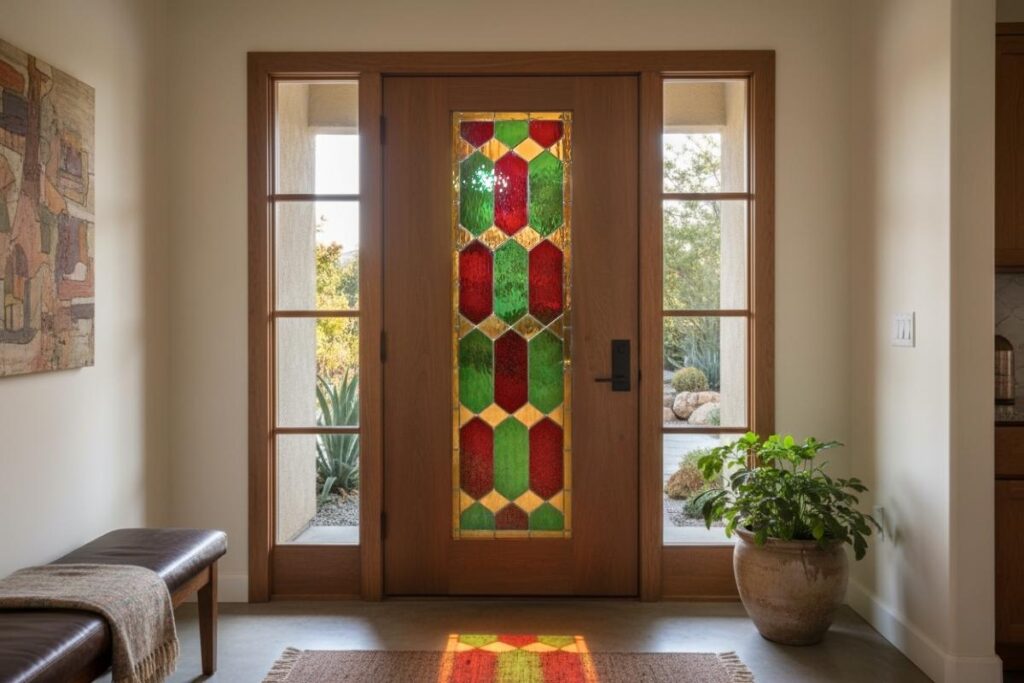
A high-quality frosted glass front door is especially useful for covered entries, narrow foyers, and homes that need more natural light.
3. Craftsman Wood Front Door with Three Upper Glass Panels
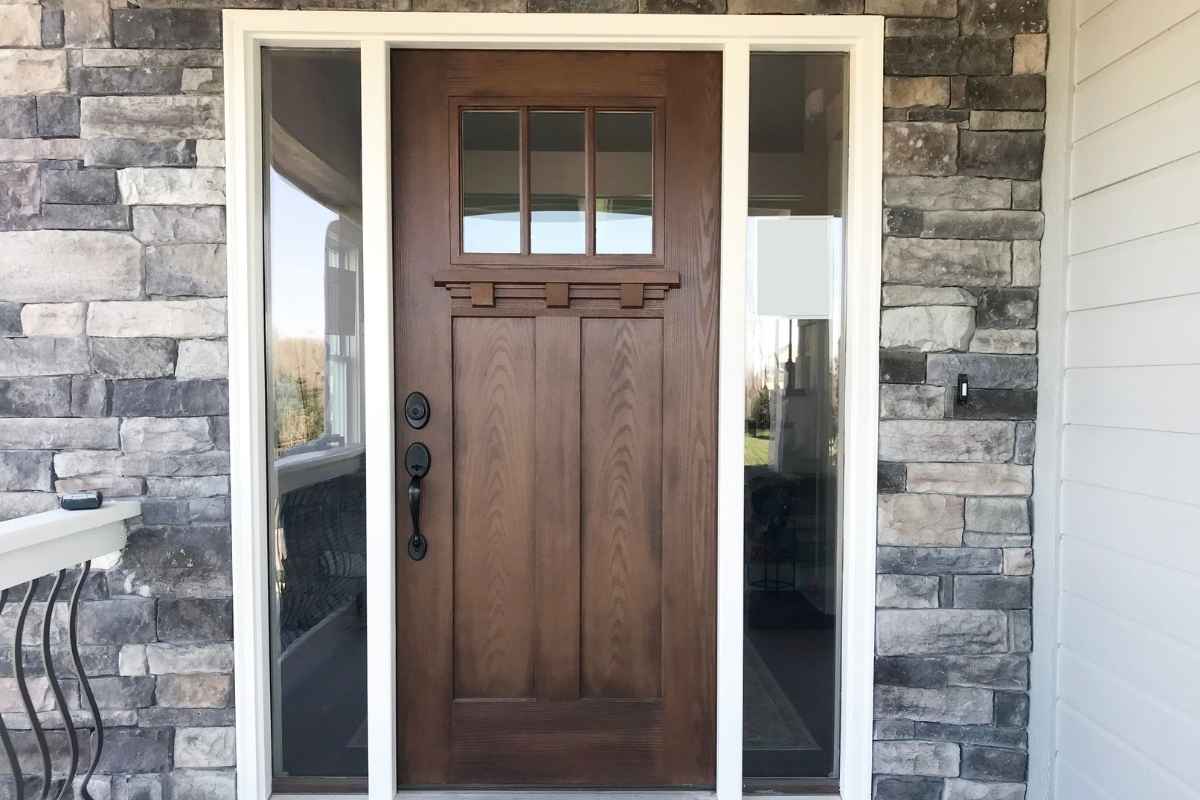
A Craftsman wood front door with three upper glass panels offers a balanced combination of solid wood, natural light, and traditional architectural detail. The three square or rectangular lites are typically aligned across the upper third of the door, leaving the lower portion solid and substantial.
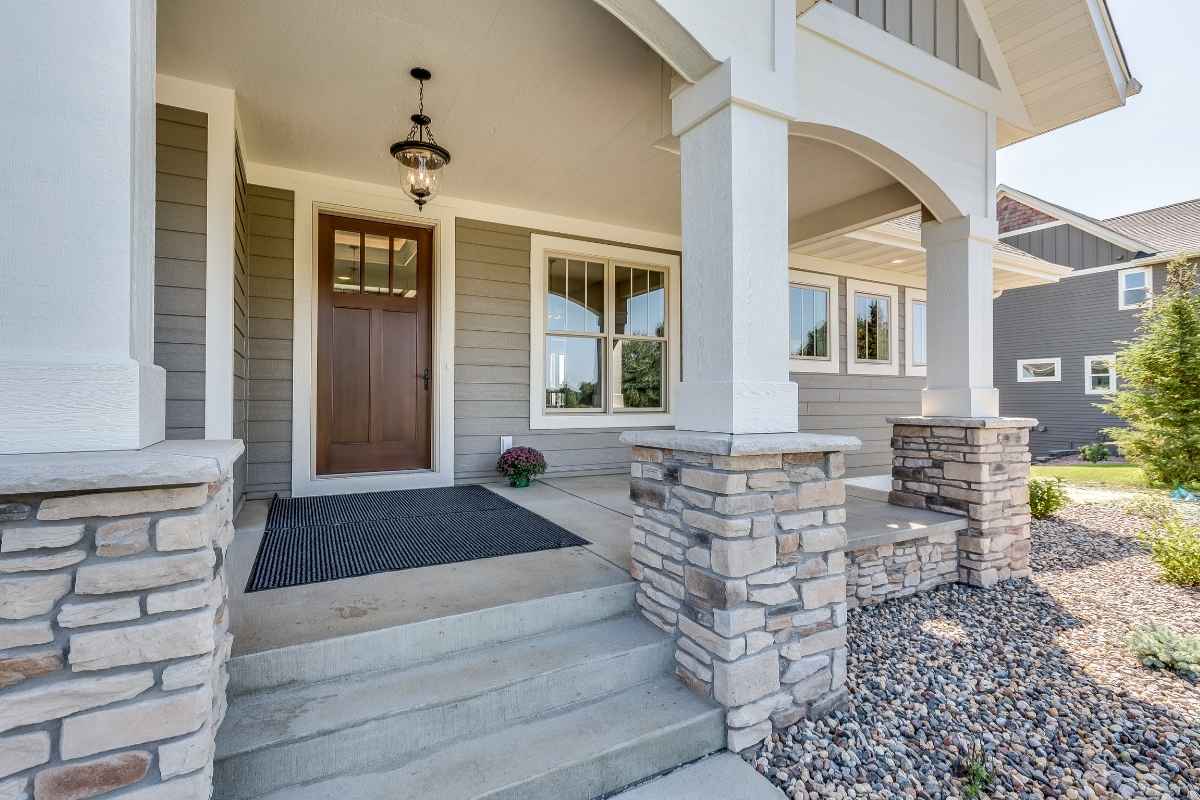
Quartersawn oak, Douglas fir, or mahogany complements the handcrafted appearance, especially when finished in a warm medium stain that highlights the grain.
The glass can be clear, lightly textured, or frosted, with simple divided-light borders that echo Craftsman windows and built-in cabinetry. A dentil shelf and dark bronze hardware can be added when they match the home’s exterior details.
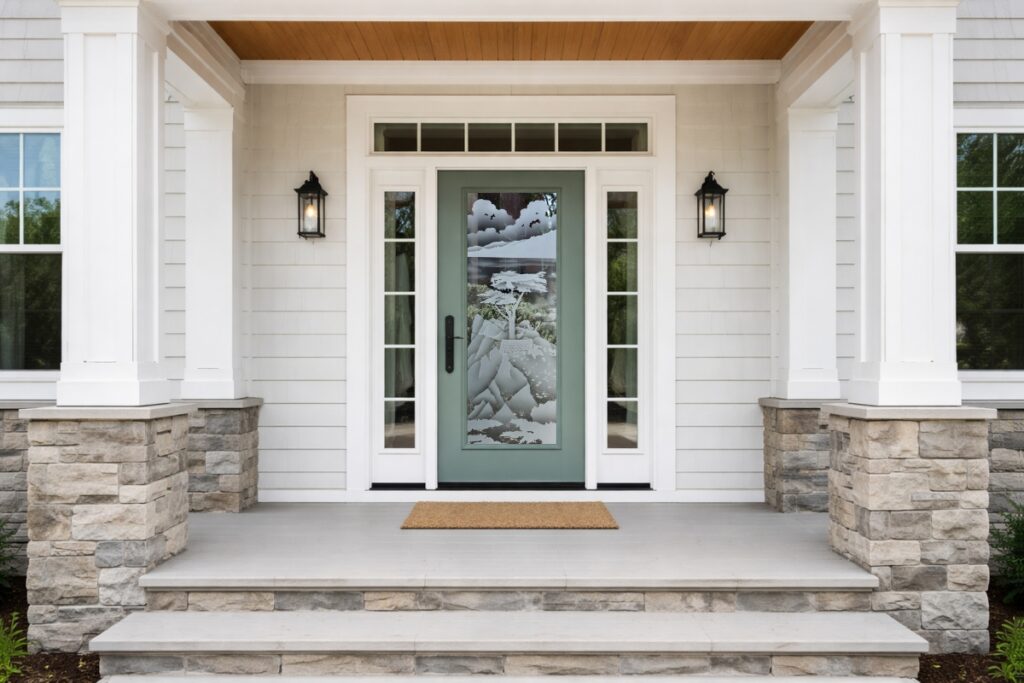
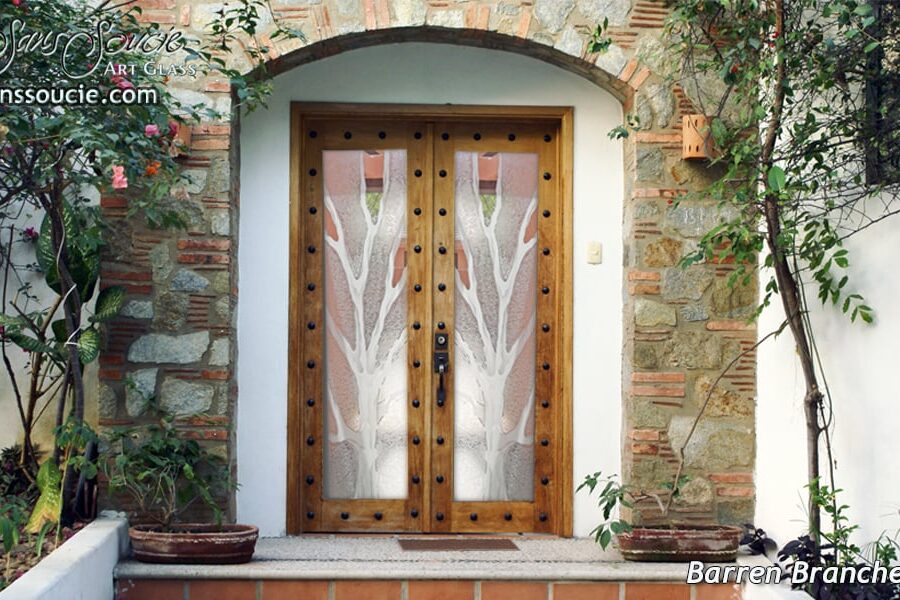
4. Craftsman Door with Tree-Patterned Glass
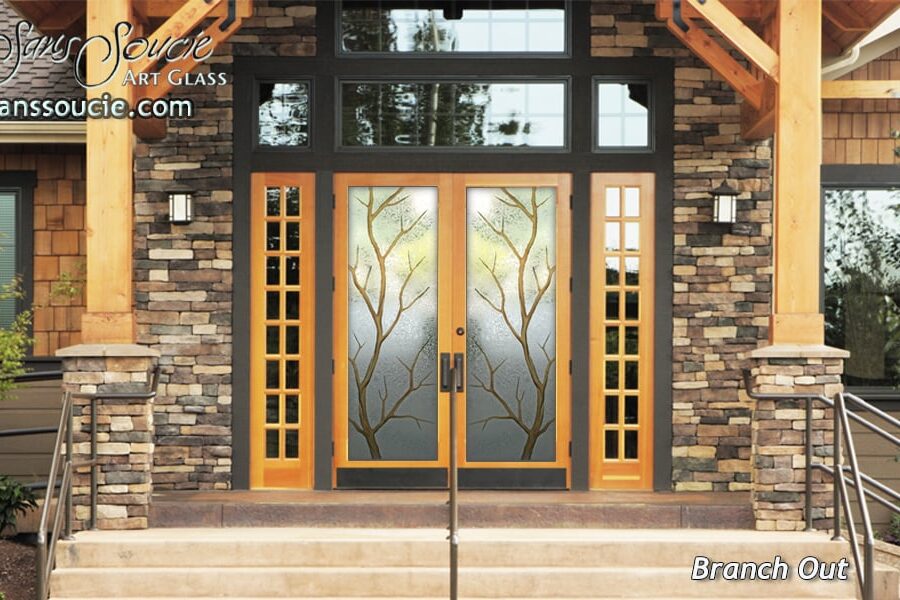
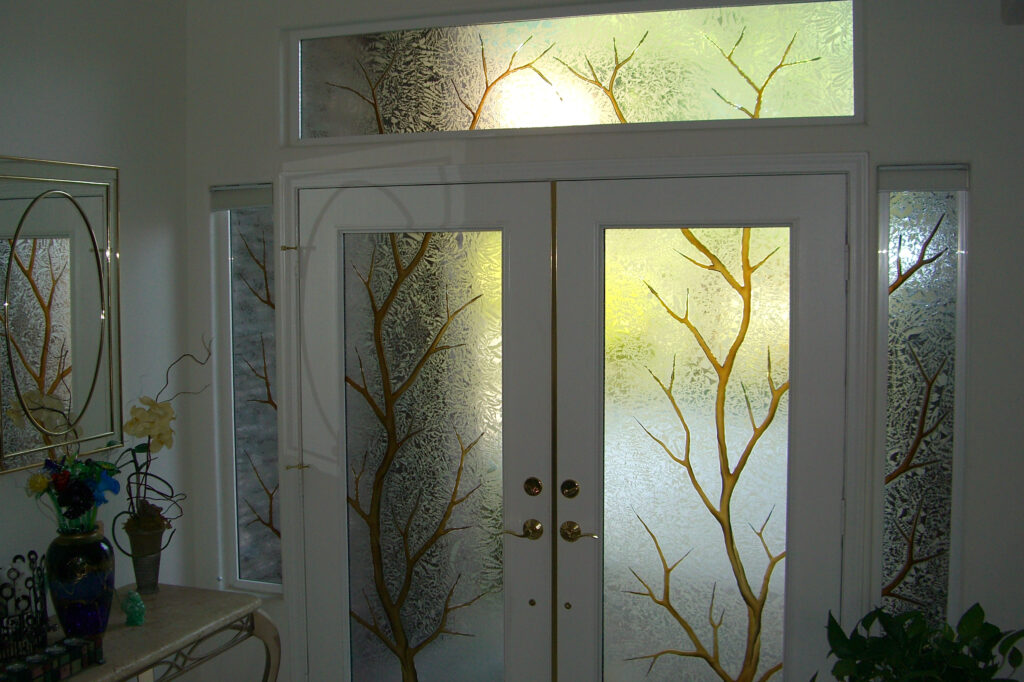
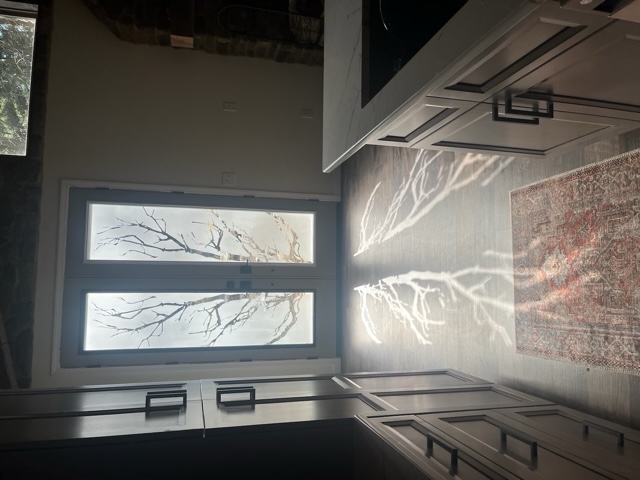
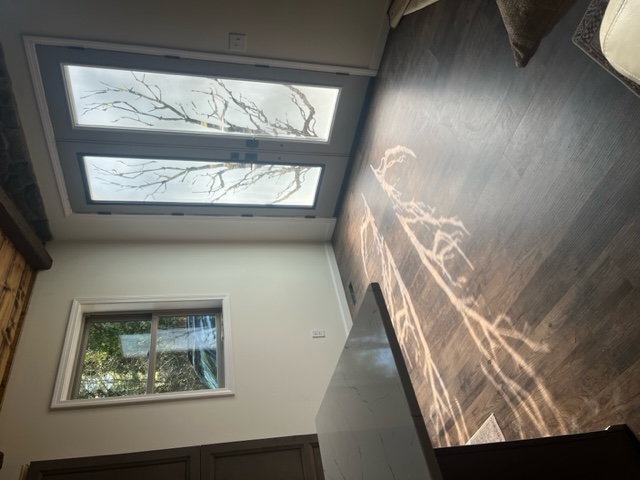
A Craftsman door with tree-patterned glass reinforces the style’s strong connection to nature and handcrafted materials. Tree-inspired designs give glass front doors a distinctive, nature-inspired character while maintaining privacy. The artwork may feature an oak tree, pine branches, leaves, or a forest silhouette centered within the upper glass panel.
Sandblasted shading can create depth in the bark, branches, and foliage, while a frosted background provides privacy and makes the design easier to see from the street.
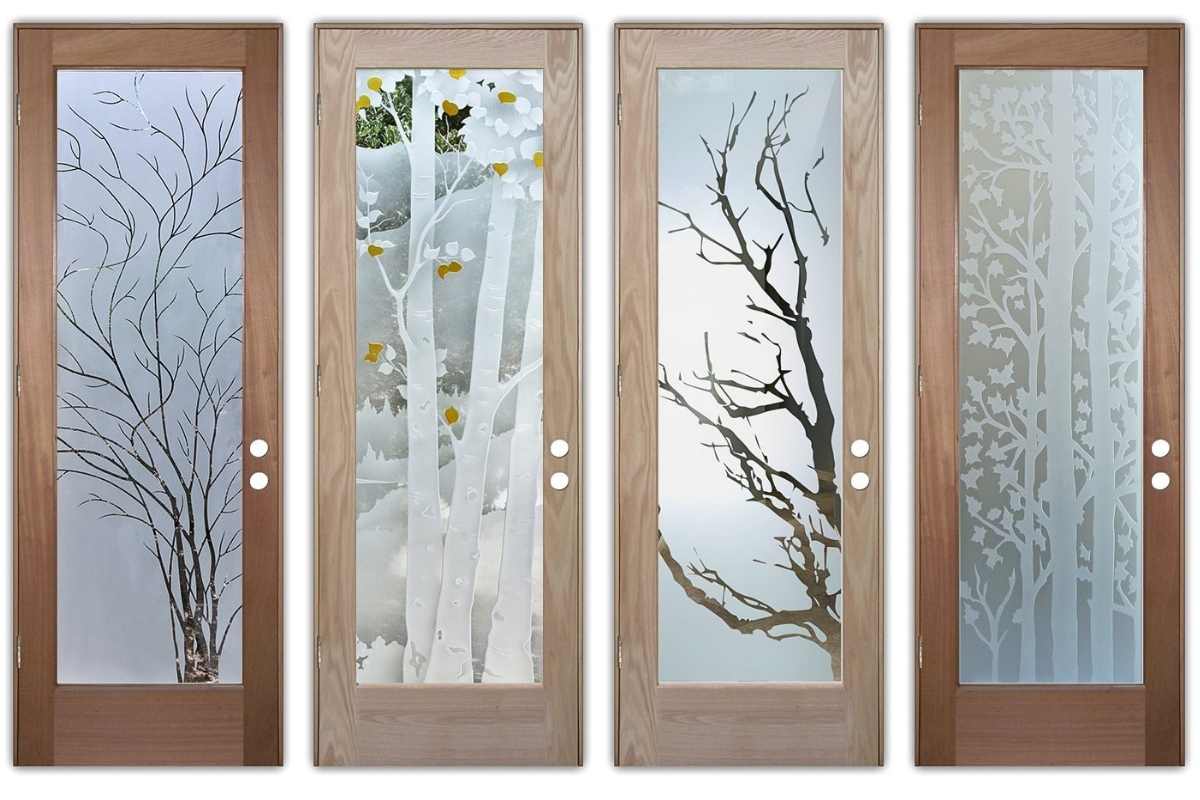
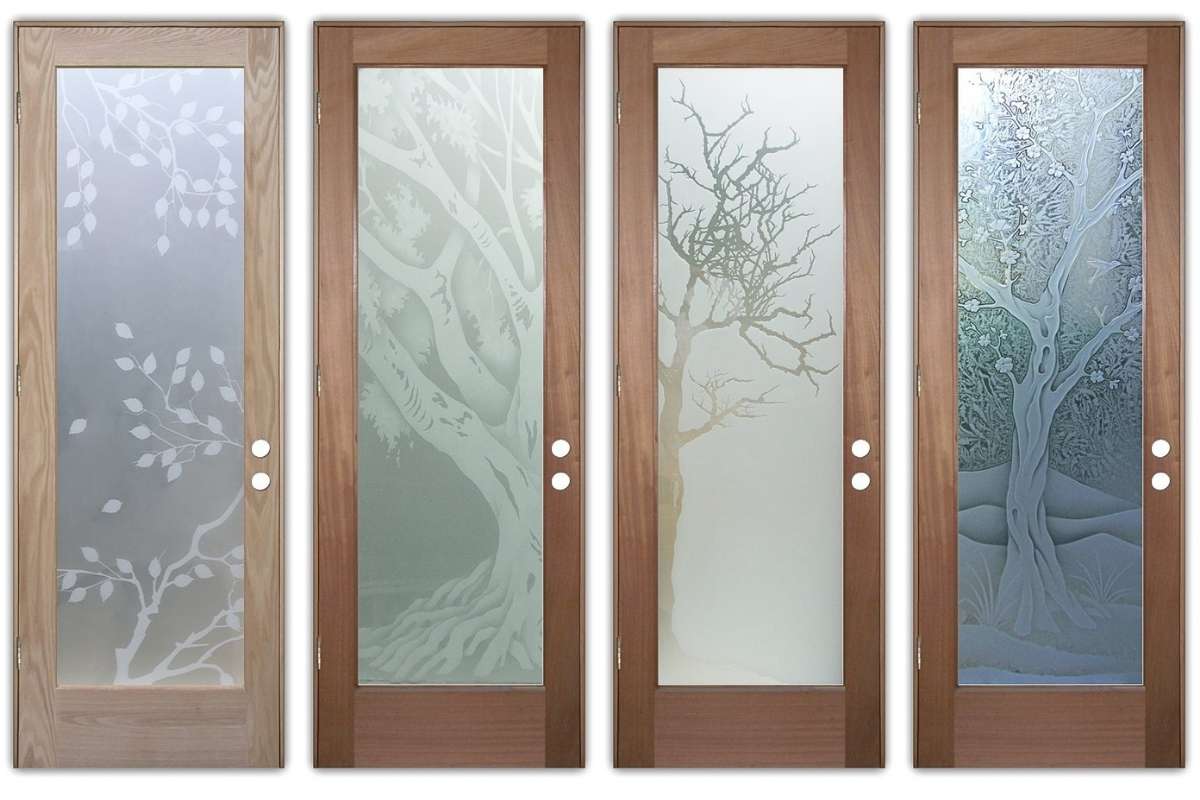
The glass looks especially striking when framed by rich oak or mahogany and paired with stone columns, timber brackets, or natural landscaping. Keep the surrounding door design relatively simple so the tree remains the focal point.
5. Traditional Mahogany Front Door with Beveled Glass
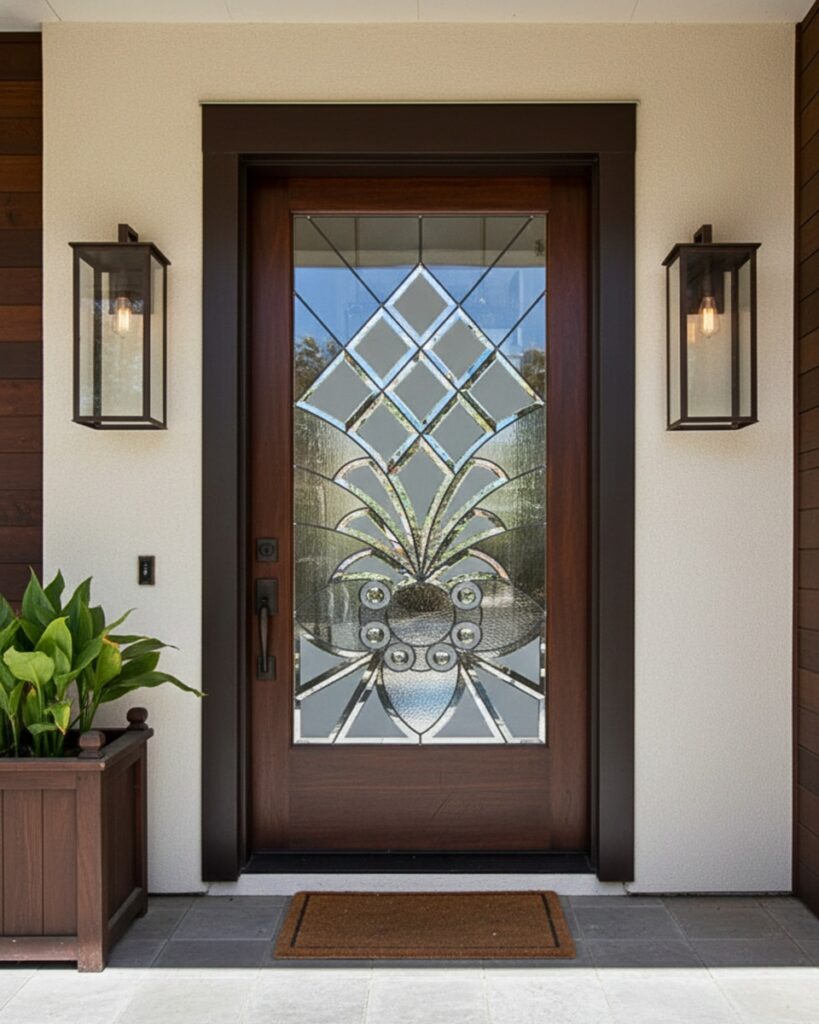
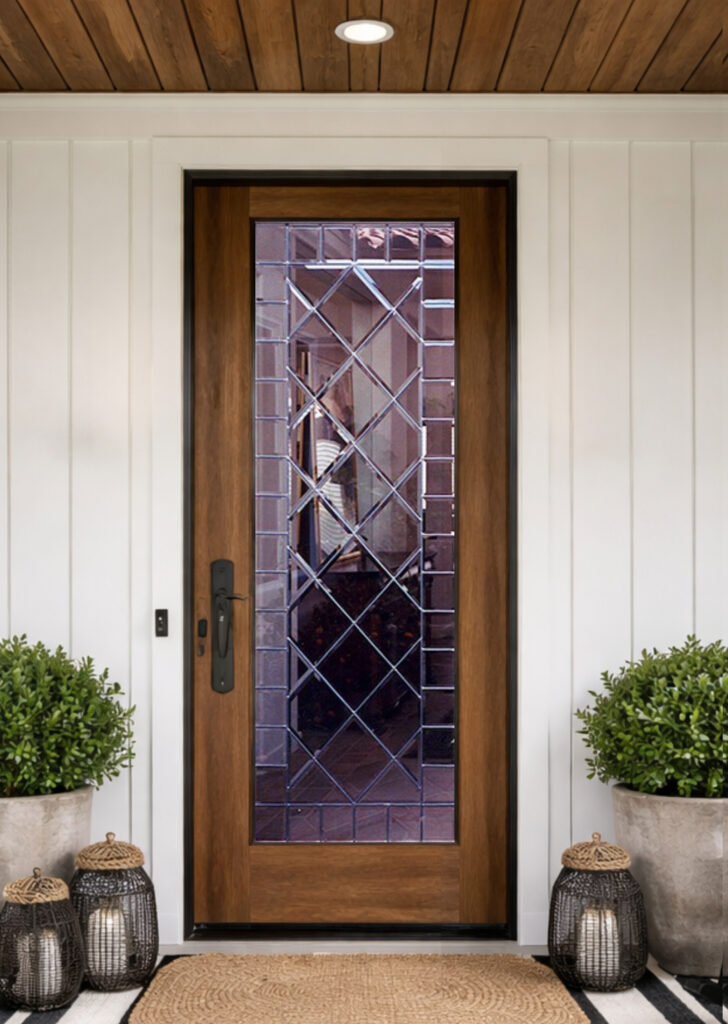
A traditional mahogany front door with beveled glass creates a polished, formal entrance with rich color and reflective detail. These stunning glass doors offer a timeless appeal that elevates any home’s curb appeal. The glass panel may feature a symmetrical arrangement of clear beveled pieces, frosted borders, and restrained scrollwork that catches and refracts light.
Deep reddish-brown mahogany gives the door visual weight, while raised wood panels below the glass add classic structure. Polished brass, antique bronze, or dark oil-rubbed hardware complements the refined appearance. This style works particularly well with brick exteriors, Colonial homes, Georgian architecture, and entryways with matching sidelights or transoms.
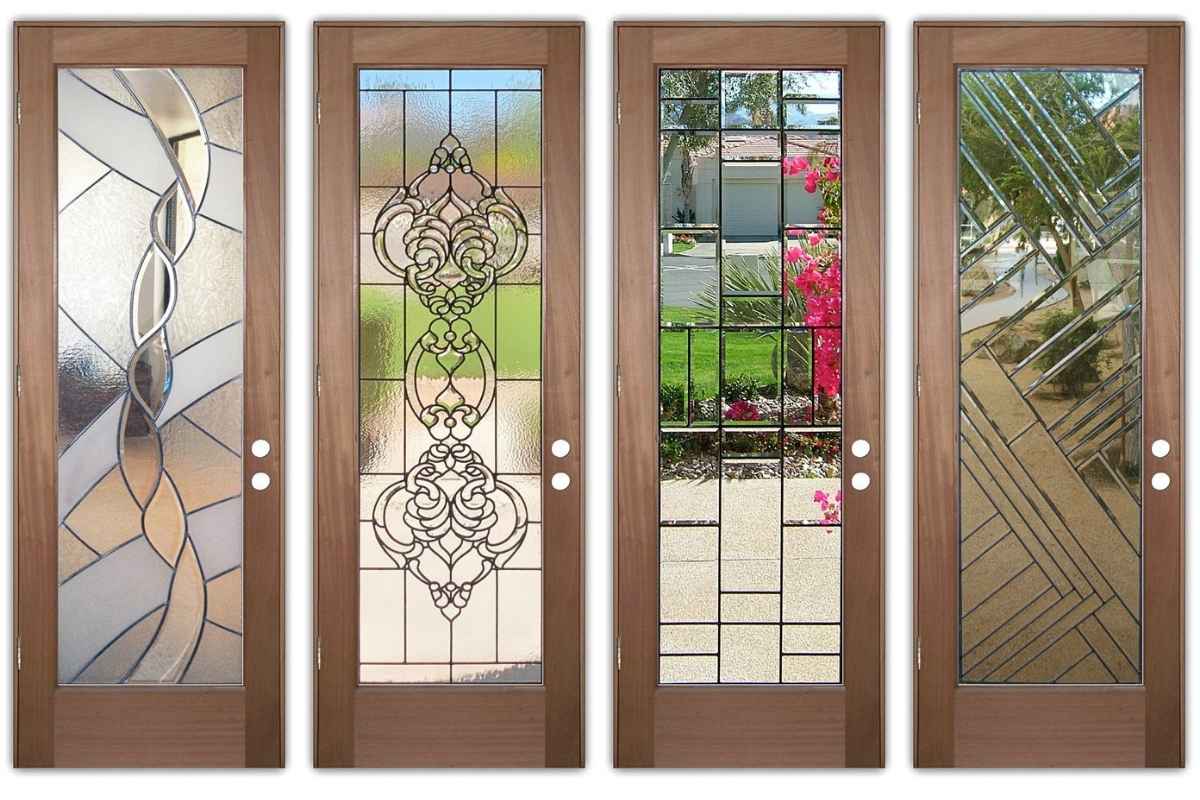
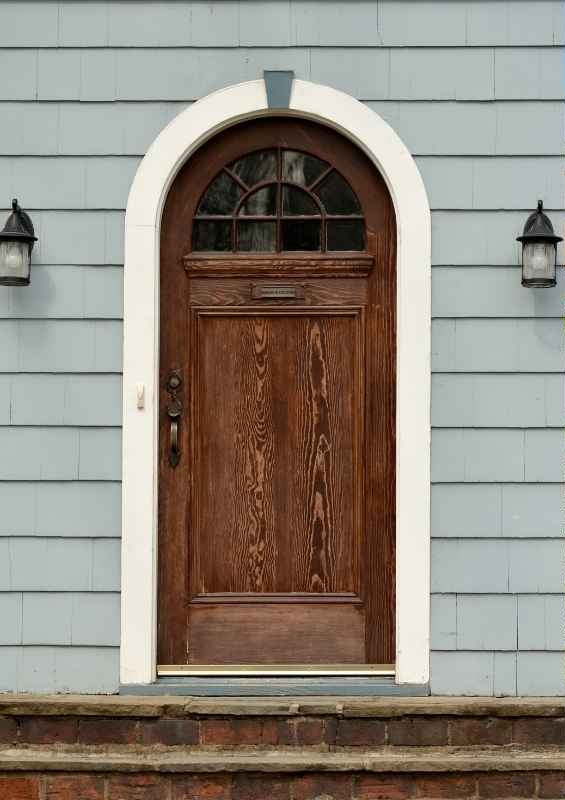
6. Traditional Wood Door with an Arched Glass Panel
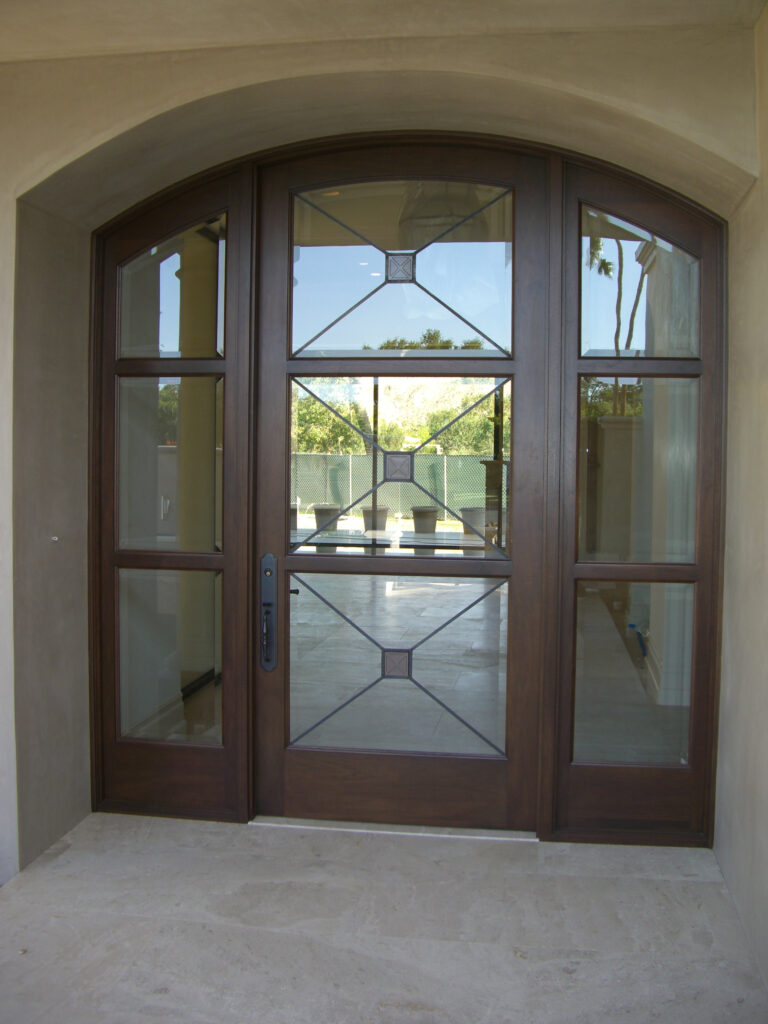
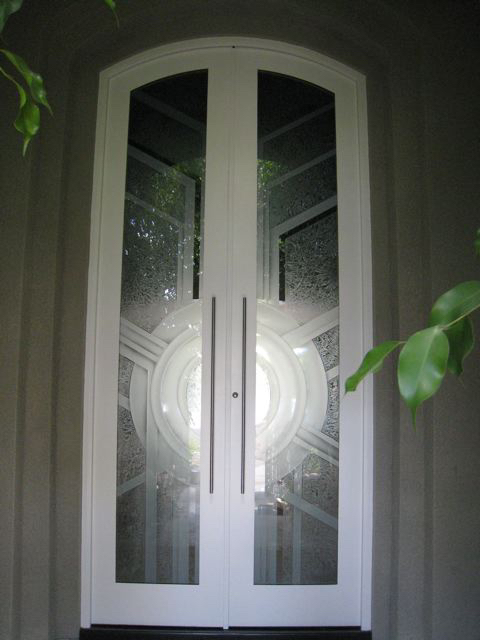
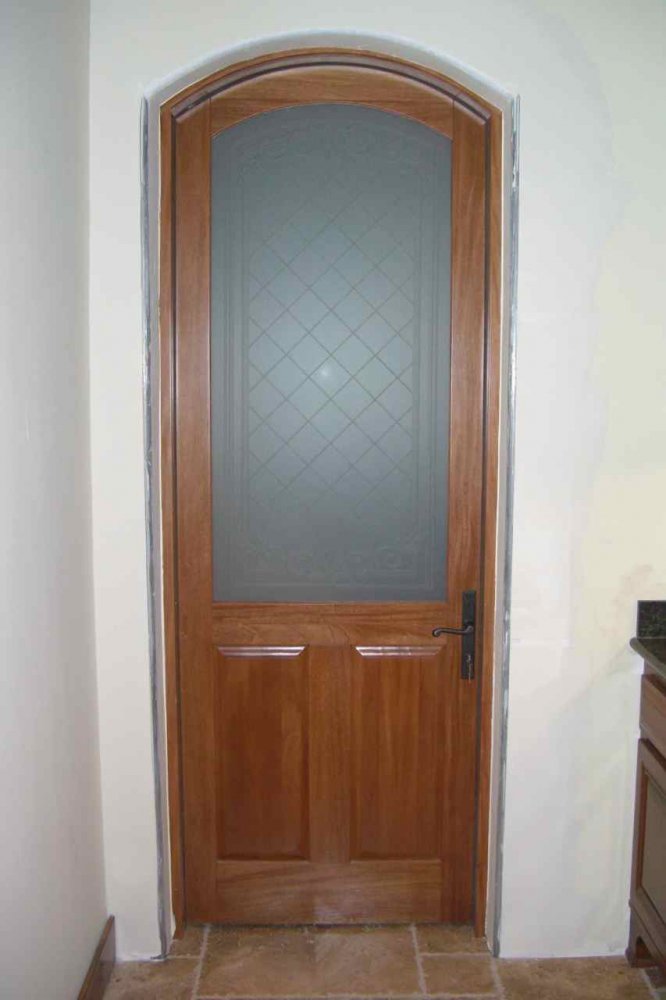
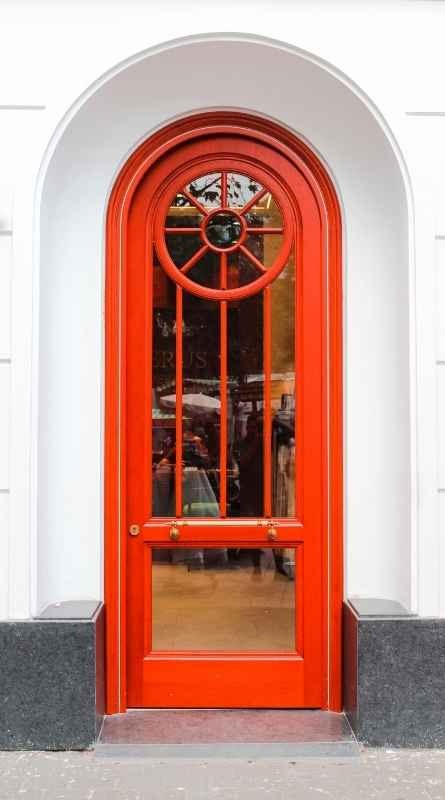
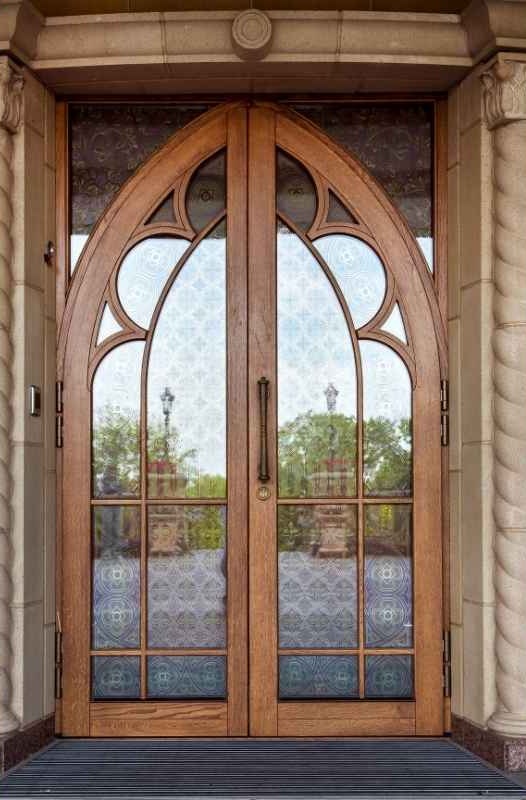
A traditional wood door with an arched glass panel introduces graceful curves that soften the appearance of a heavy rectangular slab. The glass can have a full semicircular top, a gentle eyebrow arch, or a cathedral shape that repeats arches found in nearby windows, porch openings, or masonry.
Decorative options include beveled borders, floral etching, scrollwork, or lightly frosted glass with clear accents. A dark walnut or mahogany finish gives the door a formal look, while medium oak creates a warmer, more relaxed effect. The arch should feel proportional to the door and aligned with the surrounding architecture rather than added as an isolated decorative shape.
7. Farmhouse Wood Front Door with Divided Glass Lites
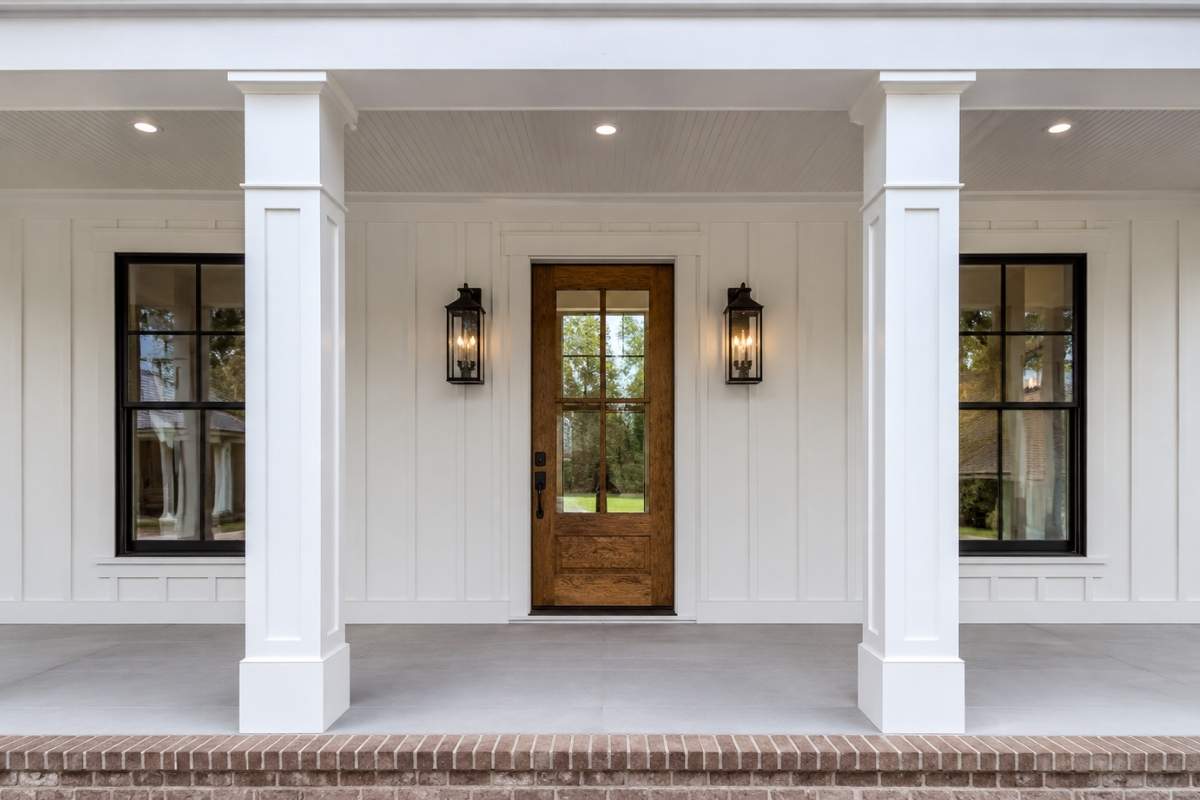
A farmhouse wood front door with divided glass lites delivers familiar charm through a grid of four, six, or nine rectangular panes. The door can be made from natural oak, painted white wood, or a medium brown stain, depending on whether the exterior leans traditional, rustic, or modern farmhouse.
Clear glass works well for private rural properties, while frosted or lightly textured glass is better for homes close to sidewalks or neighboring houses. Black muntins and matte black hardware create strong contrast against lighter wood or paint. The divided-light design pairs naturally with board-and-batten siding, porch columns, metal roofing, and black-framed windows.
Custom front doors with glass allow homeowners to keep the familiar farmhouse grid while choosing a more private decorative glass treatment.
8. Modern Farmhouse Door with One Large Frosted Panel
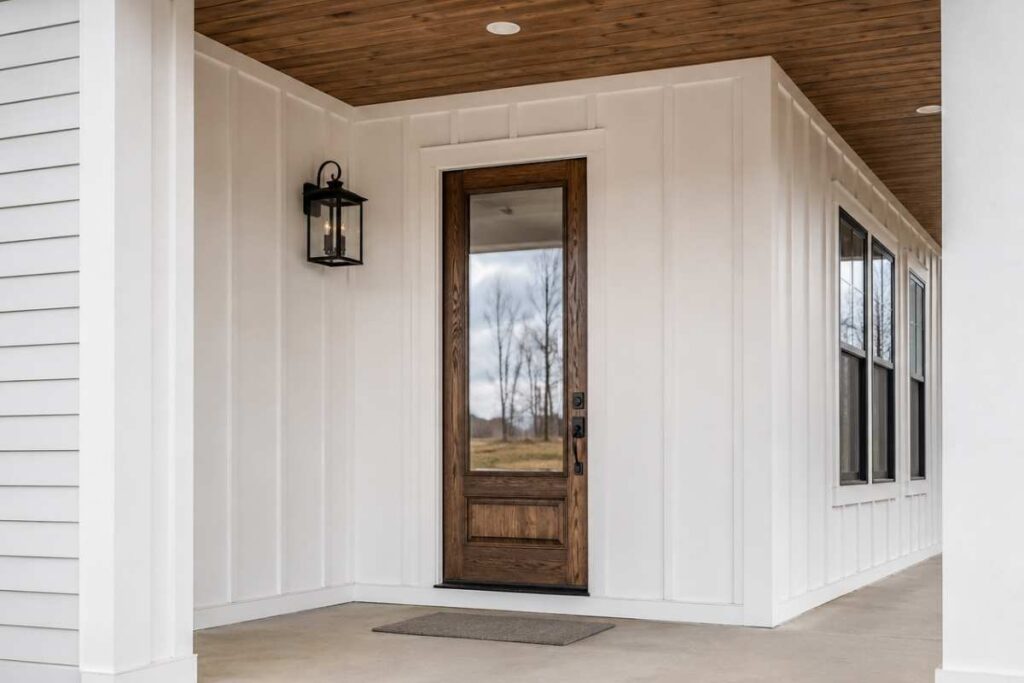
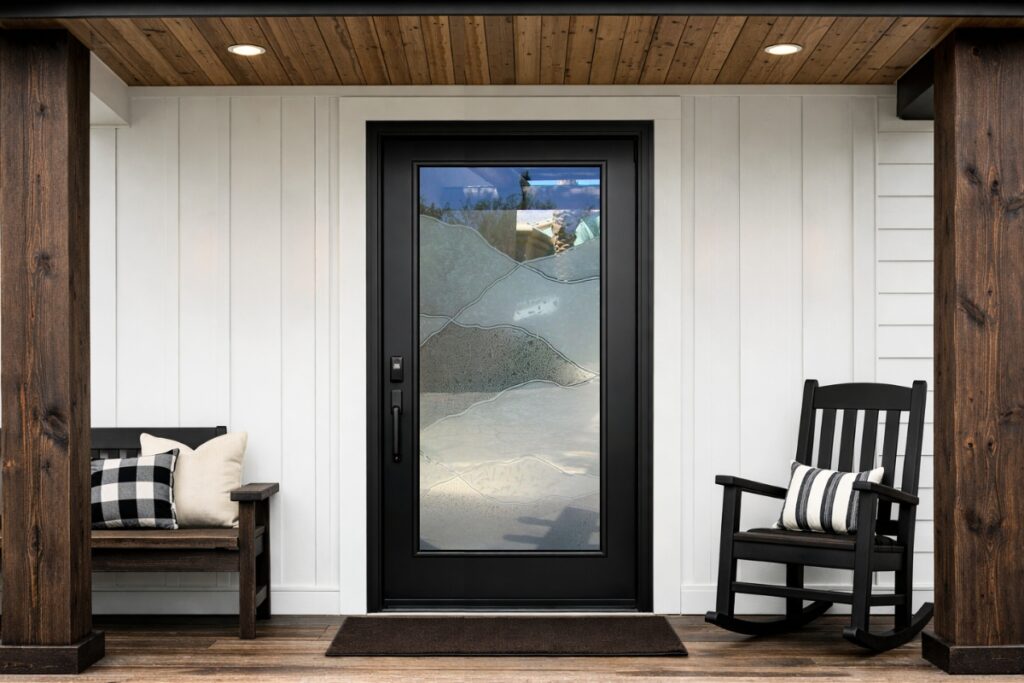
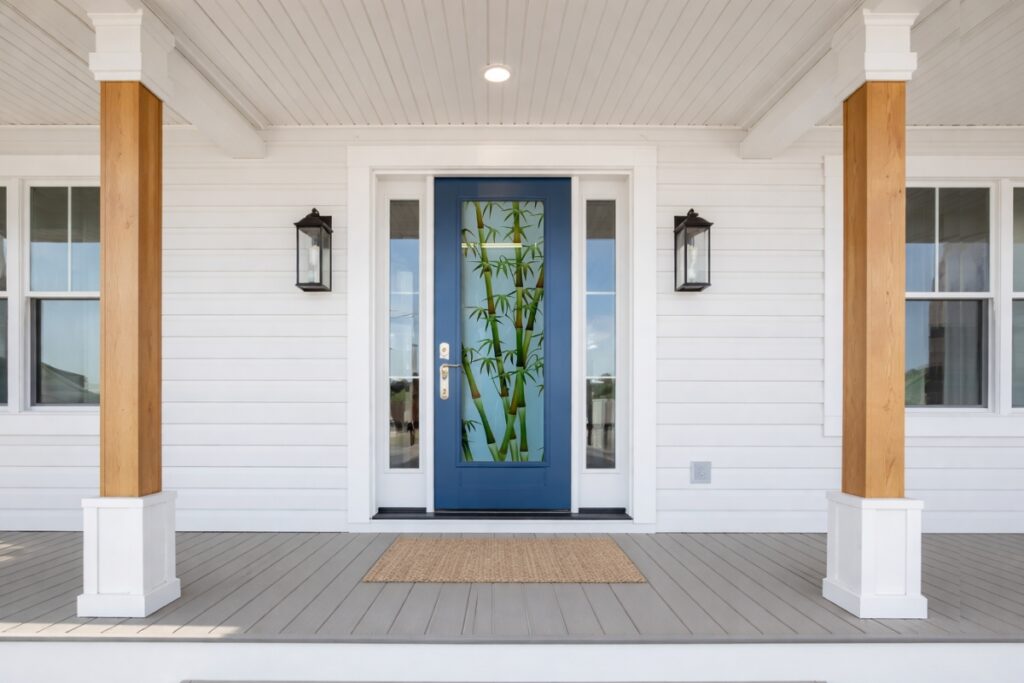
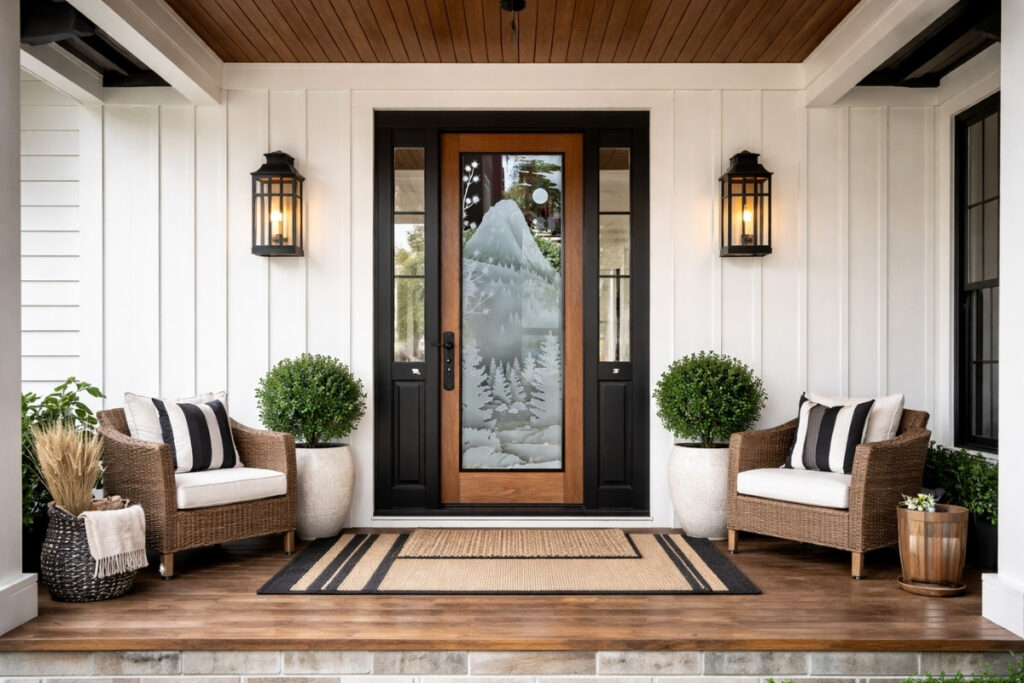
A modern farmhouse door with one large frosted glass panel offers a simpler, more updated alternative to traditional divided lites. Choosing a frosted glass front door is an excellent way to balance natural light with complete privacy. The rectangular glass panel can extend through most of the upper half or nearly the full height of the door, framed by warm natural wood.
Soft white frosting keeps the entry bright while creating a clean backdrop that works well with black-and-white exterior palettes. A subtle linear, geometric, or botanical pattern can be added without making the design feel ornate.
Pair the door with a long black handle, minimal casing, and simple porch lighting to maintain the crisp modern farmhouse aesthetic.
👉 SEE ALSO: Modern Farmhouse Front Door Ideas
9. Rustic Knotty Alder Door with a Small Speakeasy Glass Panel
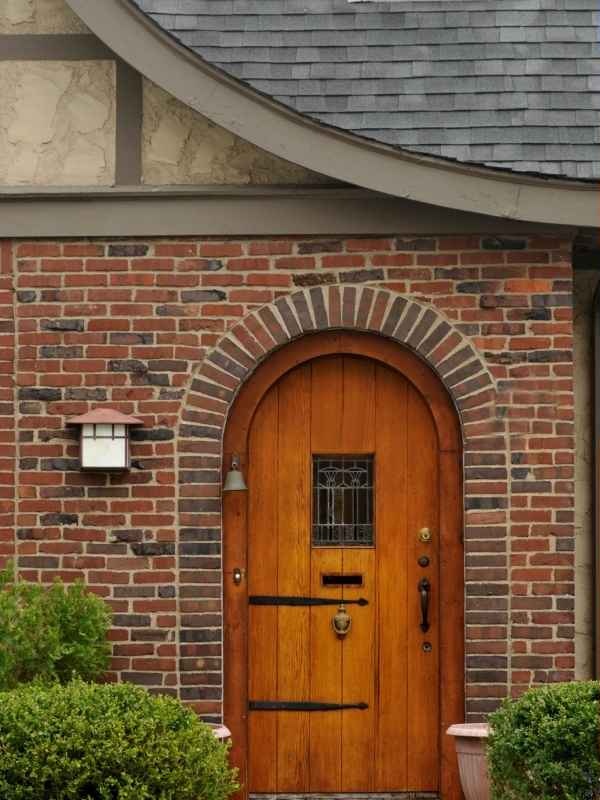
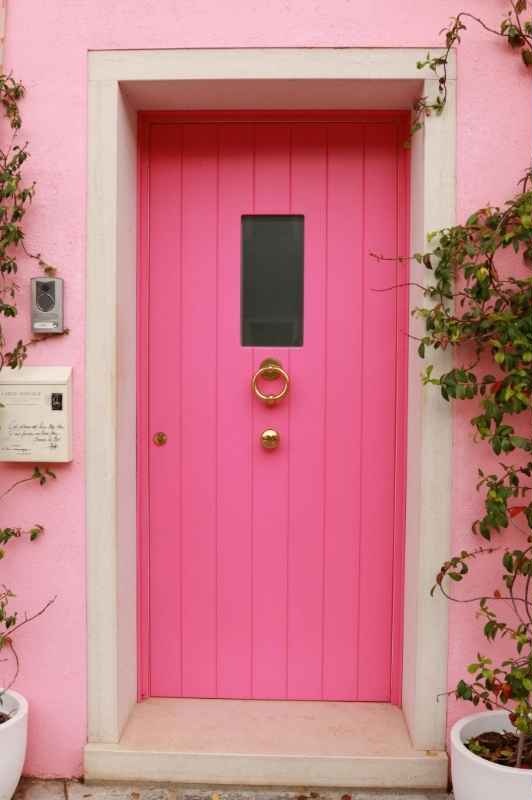
A rustic knotty alder door with a small speakeasy glass panel has a heavy, handcrafted appearance that suits mountain, lodge, Southwestern, and Old World homes. The compact glass opening is usually placed near eye level and may be rectangular, arched, or covered with a hinged iron grille.
Knotty alder adds natural character through visible knots, color variation, and irregular grain, especially when finished in a warm honey, chestnut, or dark distressed stain. Seeded, textured, or frosted glass maintains privacy while still admitting a small amount of light. Decorative strap hinges and hammered iron hardware reinforce the substantial, historic character.
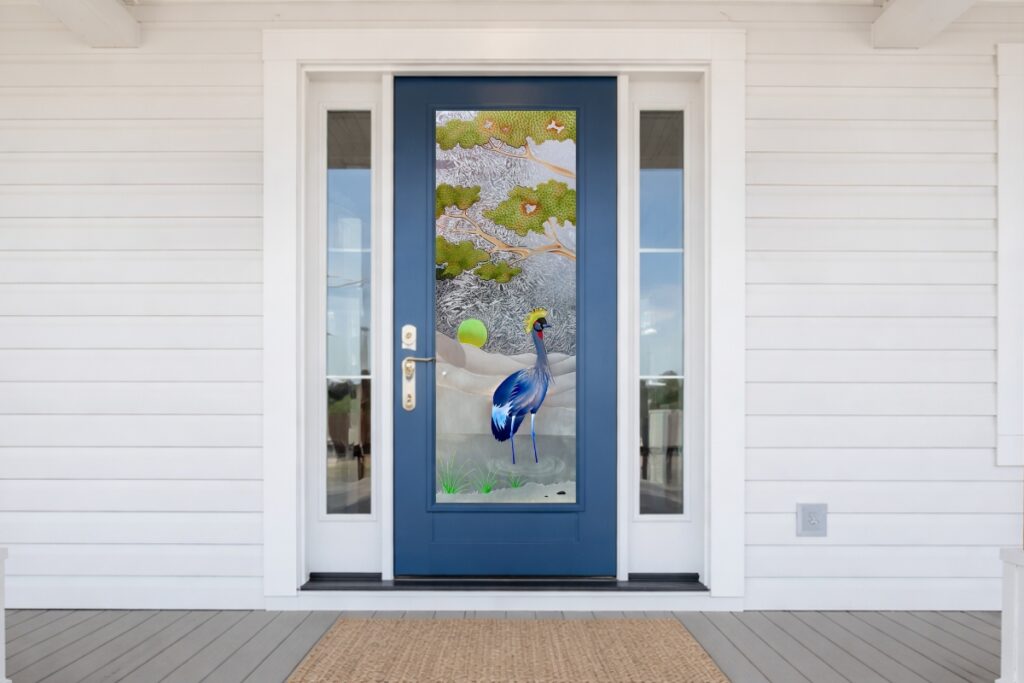
10. Rustic Wood Door with Wildlife Etched Glass

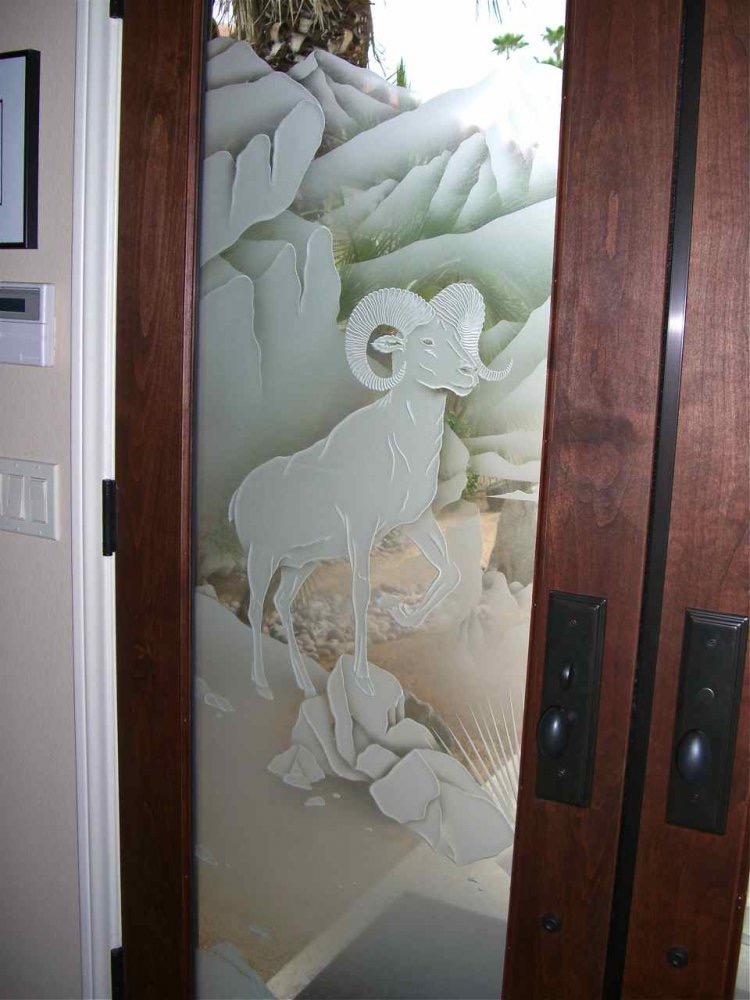
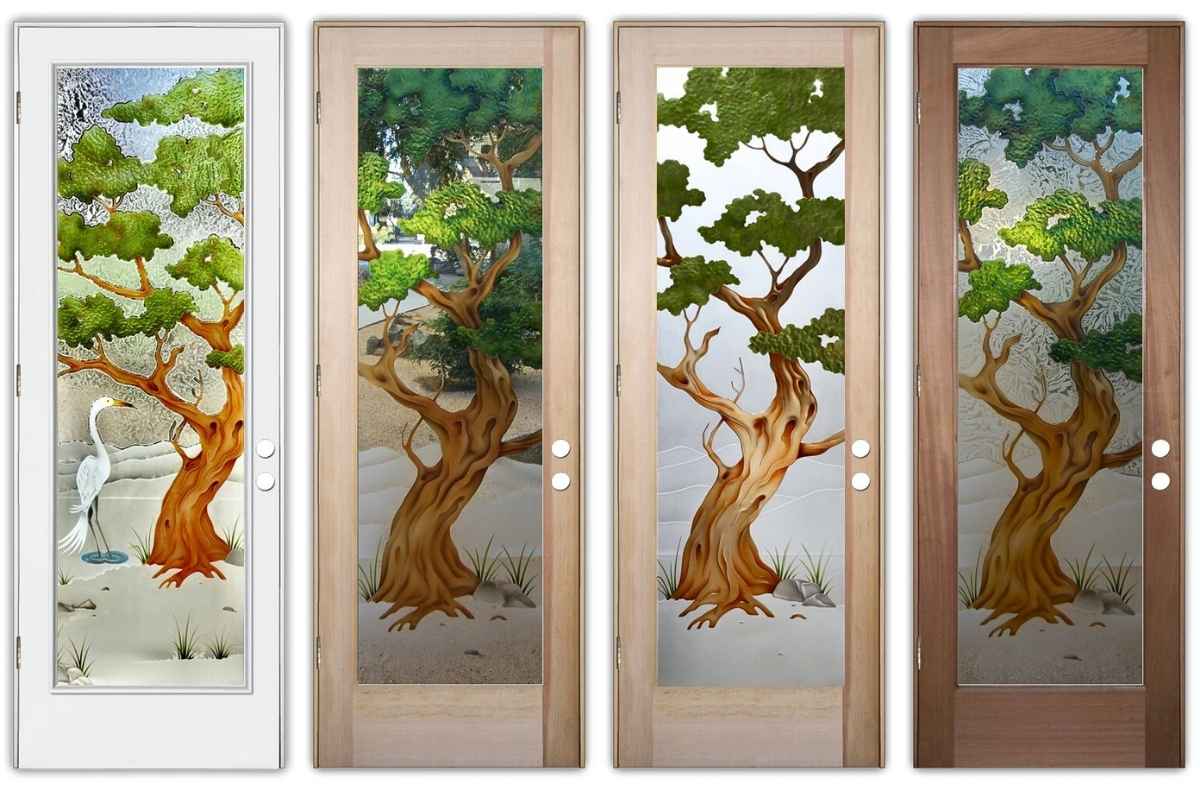
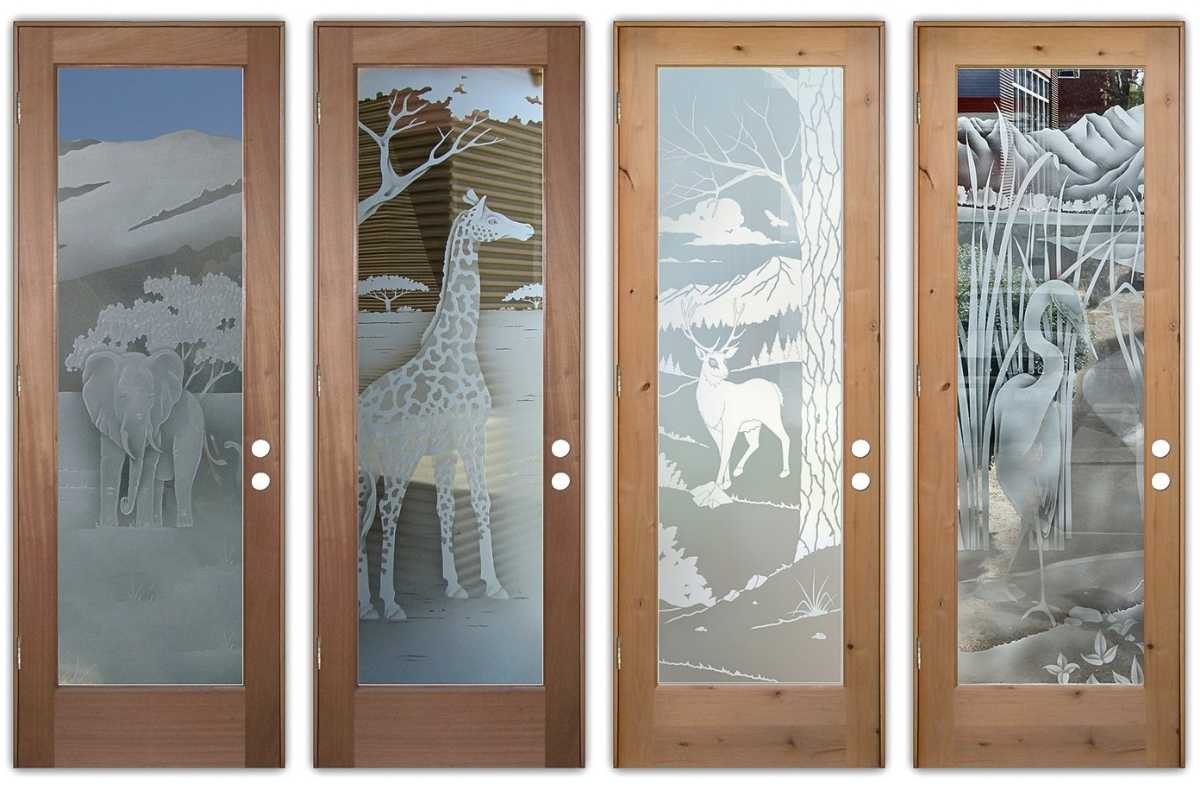
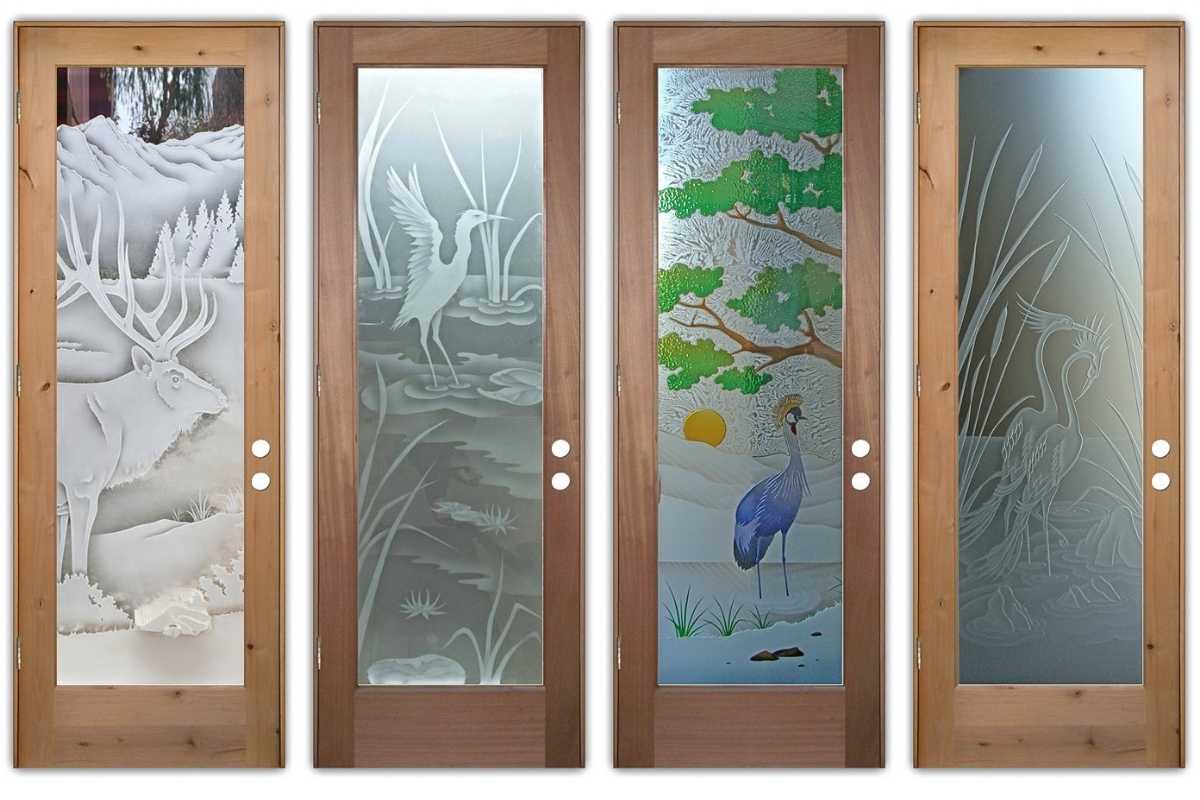
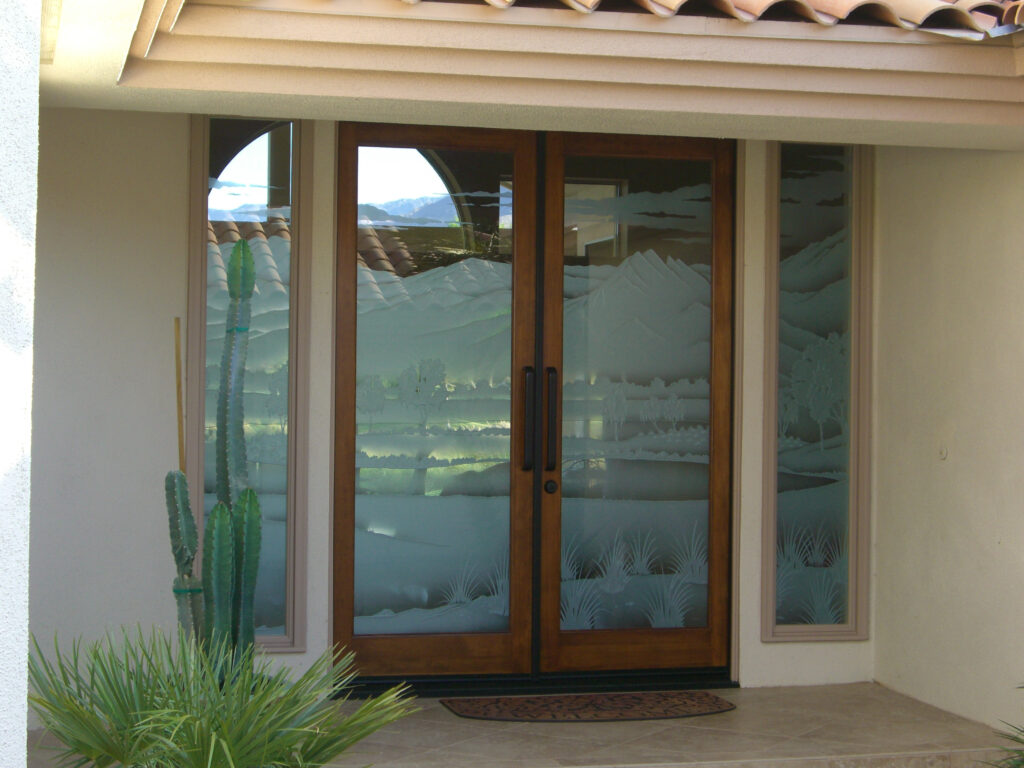
A rustic wood door with wildlife etched glass turns the entry into a personalized statement piece inspired by the surrounding landscape. Integrating a custom glass door allows homeowners to showcase unique, nature-inspired artwork right at their entrance. The glass panel may feature deer in a pine forest, elk against mountain peaks, bears near a stream, or birds framed by branches. Multi-level sandblasting and hand shading can create realistic depth in the animals, trees, rocks, and background scenery.
Dark walnut, knotty alder, or reclaimed-style wood provides a strong frame for the pale etched artwork, making the design highly visible from a distance. Because the glass is already detailed, the wood panels, hardware, and surrounding trim should remain relatively simple.
Decorative glass doors can carry a coastal theme without relying on temporary nautical décor.
11. Coastal Wood Front Door with Wave-Inspired Glass
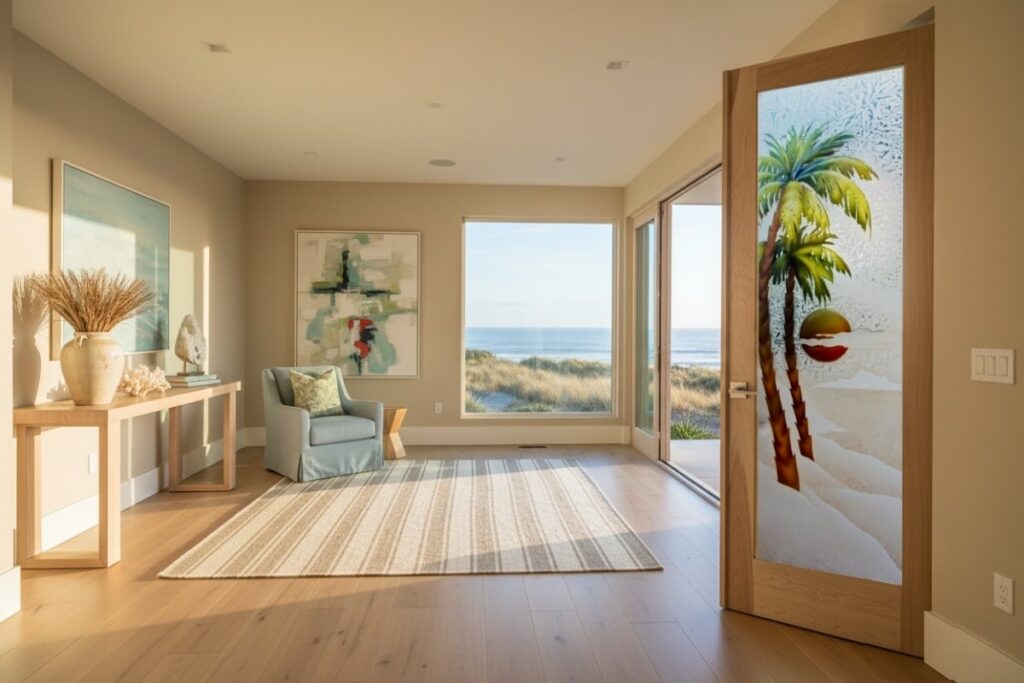
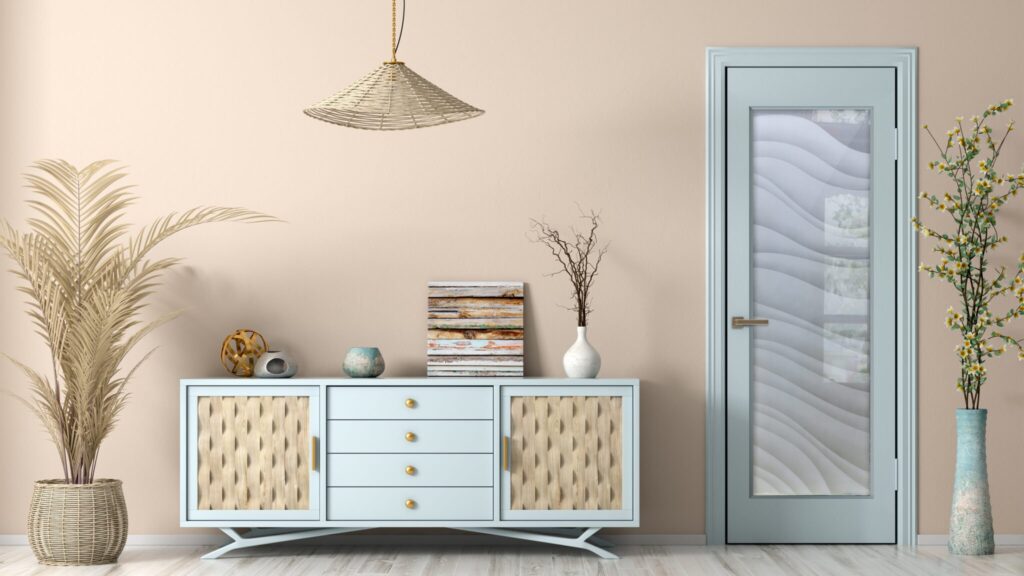
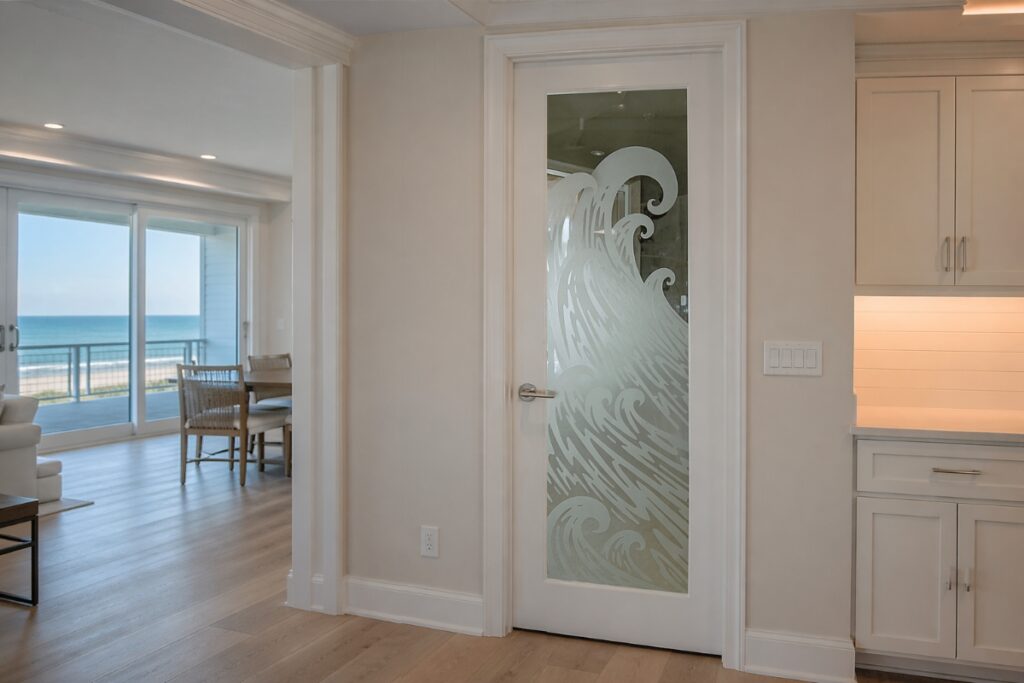
A coastal wood front door with wave-inspired glass design brings movement and a relaxed waterfront character to the entry. The glass panel can feature flowing wave lines, sea grass, shells, coral, or abstract water patterns created with a mix of clear and frosted areas.
Light oak, weathered gray wood, soft driftwood tones, or white-painted wood keep the door bright and casual, while brushed nickel or satin stainless-steel hardware adds a clean coastal finish. For homes facing a street or neighboring property, a frosted background can provide privacy while allowing the wave design to remain crisp and visible.
👉 SEE ALSO: 32 Coastal Decor Frosted Glass Doors: Best Designs for Seaside Elegance
12. Coastal Home Wood Door with Reeded Glass
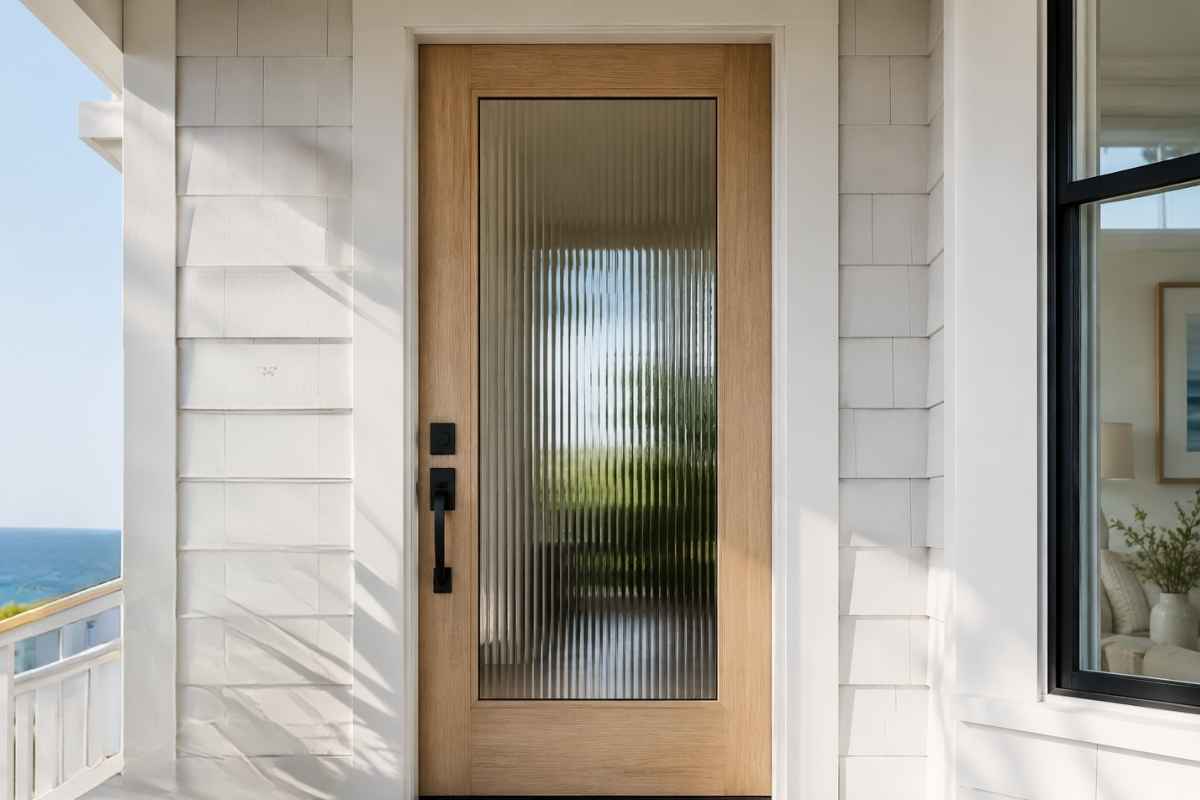
A coastal wood door with reeded glass uses narrow vertical ridges to distort the view through the panel while creating a subtle rippled effect that resembles moving water. The texture works especially well in a tall, narrow insert or a large rectangular panel framed by pale oak, natural maple, white-painted wood, or a light gray stain. Because reeded glass is visually simple, it pairs easily with coastal, transitional, and modern beach homes.
Matte black hardware creates stronger contrast, while satin nickel keeps the look light and understated. Reeded glass softens visibility, but homeowners who need stronger privacy may prefer a frosted or more heavily textured option.
13. Mediterranean Wood Front Door with Ornamental Glass Design
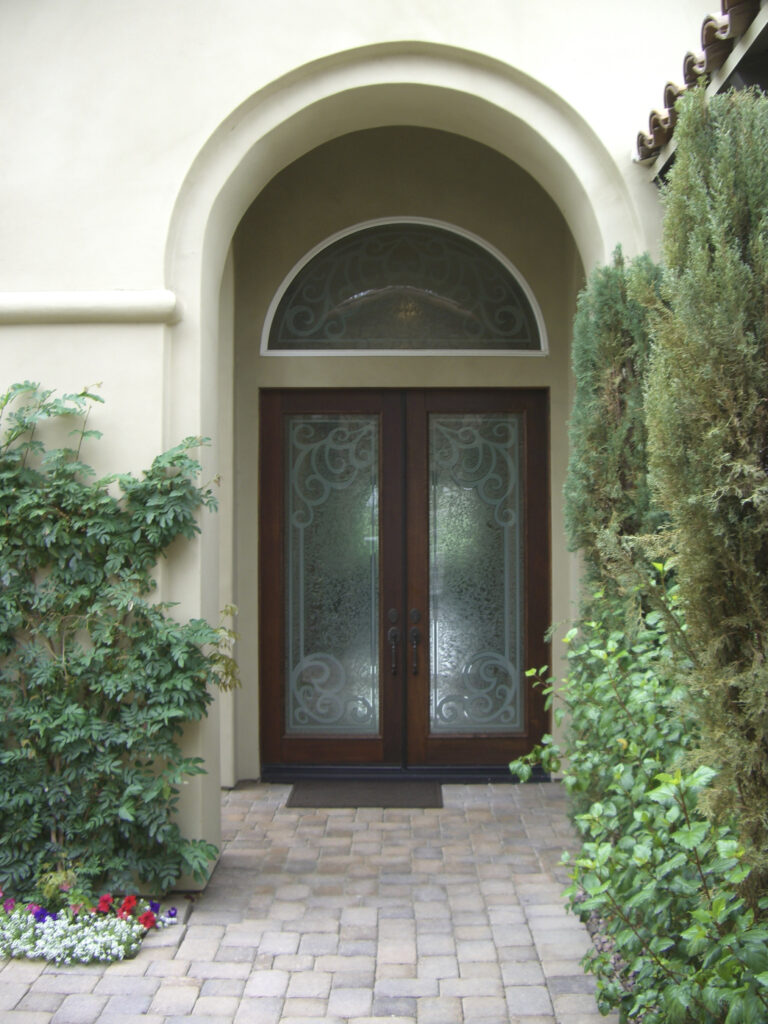
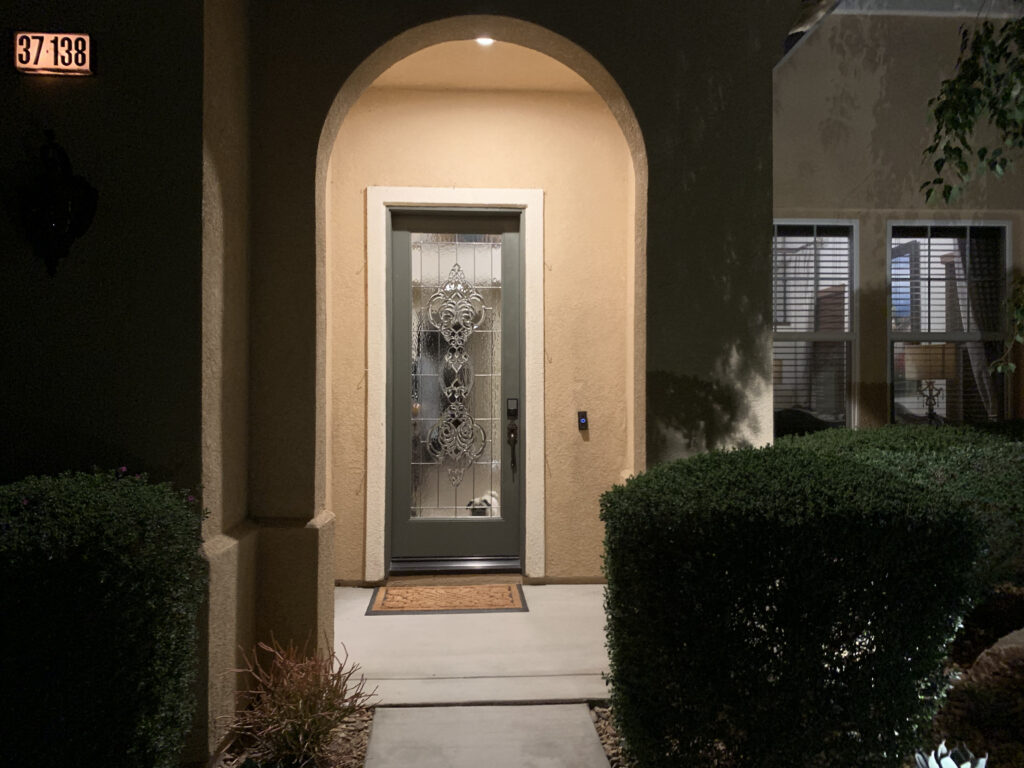
A Mediterranean wood front door with ornamental glass should feel substantial, elegant, and connected to the curved architectural details often found in stucco and stone homes. The glass panel may feature scrolls, vines, acanthus leaves, floral medallions, or symmetrical borders arranged within an arched or elongated opening.
Dark walnut, mahogany, or espresso-stained wood creates a rich frame for the design, while carved and shaded glass adds depth that complements wrought iron, clay tile roofing, and textured masonry.
Antique bronze or black hardware completes the look. Keep the glass pattern balanced and formal so it enhances the entry rather than competing with the surrounding architecture.
14. Spanish-Style Wood Door with Ironwork and Frosted Glass
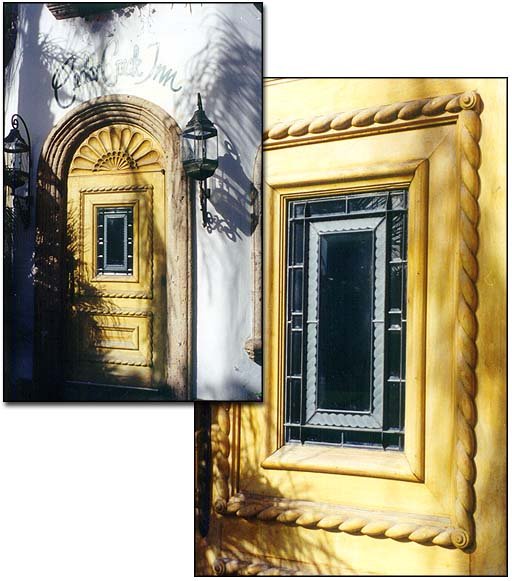
A Spanish-style wood door with ironwork and frosted glass combines privacy with bold Old World detail. The glass is typically set behind a decorative grille with scrolls, geometric bars, or hand-forged motifs, creating visible depth between the metalwork and the softly illuminated glass surface. Deep brown, chestnut, or black-stained wood works best with matte black or aged bronze iron.
Frosted glass reduces direct views into the home while still brightening the foyer, making it especially useful for doors facing a walkway or courtyard. An arched panel reinforces traditional Spanish architecture, while a rectangular opening offers a cleaner, more transitional version of the style.
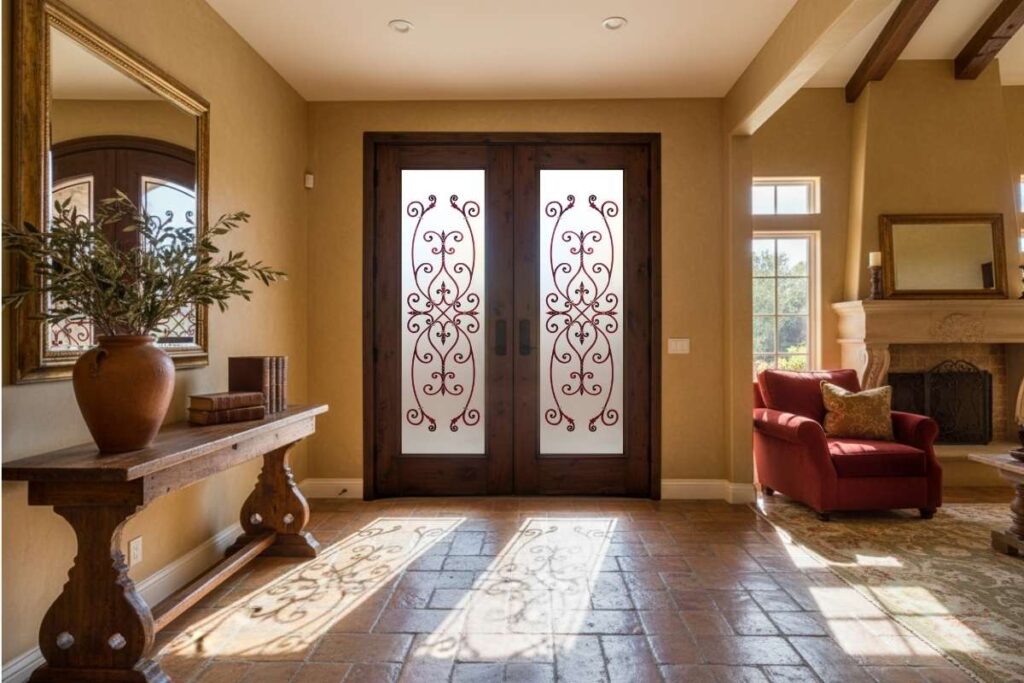
A high-quality frosted glass exterior door can combine strong privacy with traditional Spanish-style detailing.
15. Tudor Wood Front Door with Diamond-Pane Glass
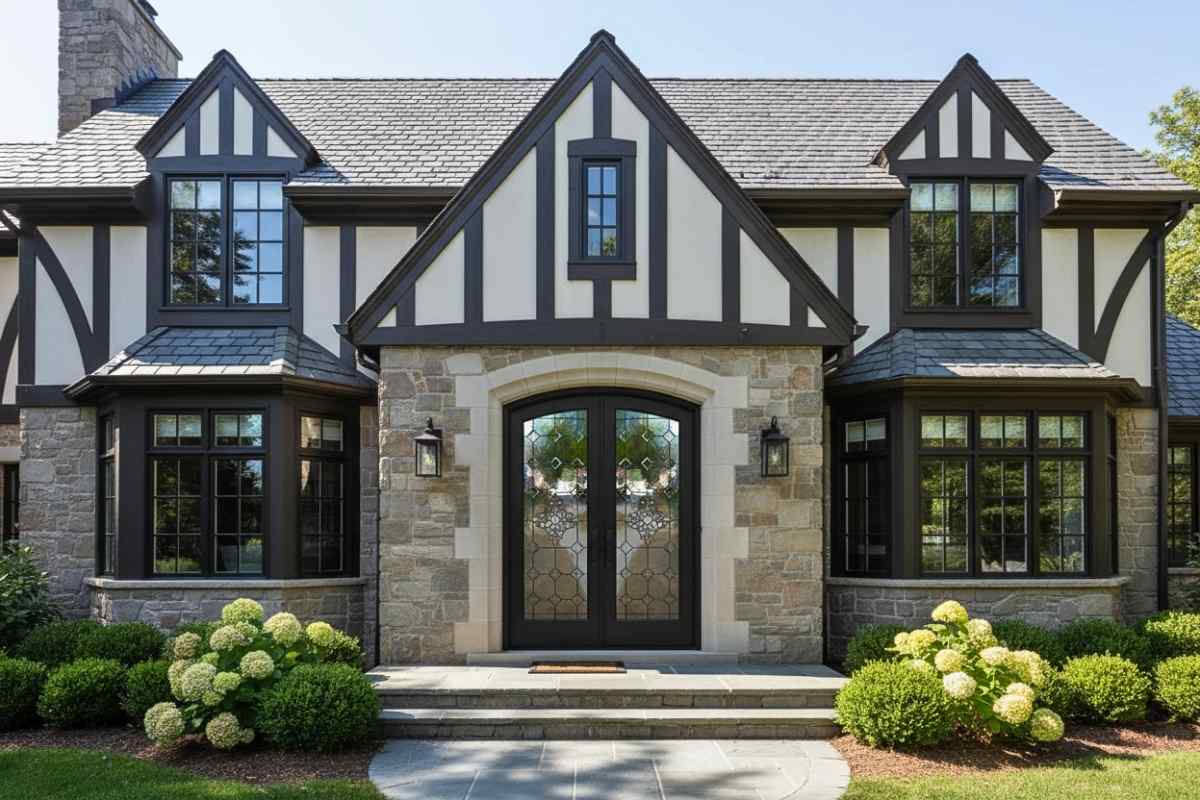
A Tudor wood front door with diamond-pane glass reflects the steep rooflines, stonework, and historic character associated with English-inspired architecture. The glass area is usually kept relatively small and placed in the upper portion of the door so the slab retains a heavy, protective appearance. Individual diamond shapes can be created with leaded lines, simulated divided lites, or etched borders.
Dark oak, walnut, or nearly black wood finishes suit the style, especially when paired with arched door tops, iron strap hinges, and substantial black hardware. Lightly textured or frosted panes can improve privacy without losing the recognizable diamond pattern.
16. French Country Wood Door with Floral Glass Design
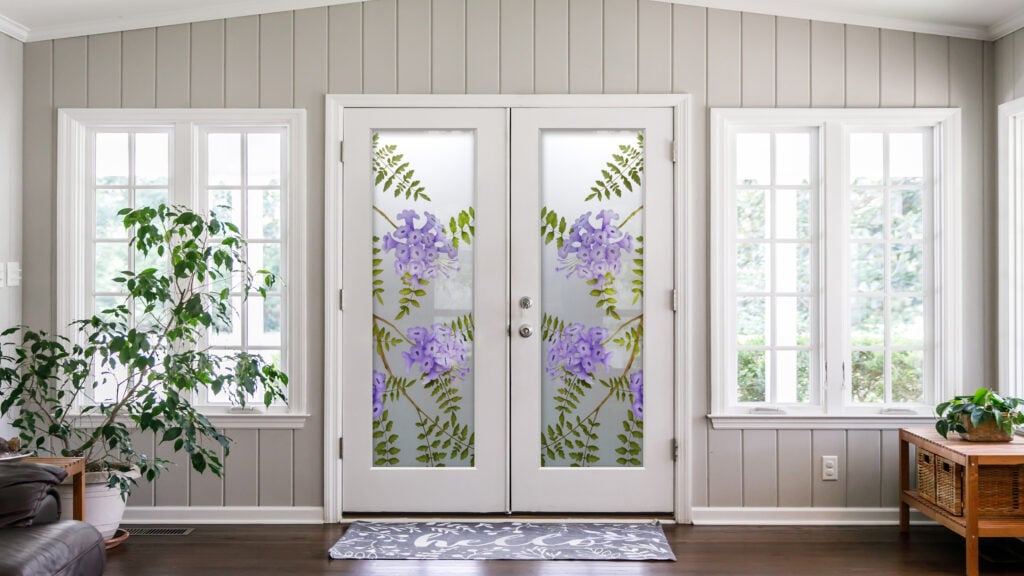
A French country wood door with floral glass creates a softer, more romantic entrance through delicate botanical artwork and warm, timeworn materials. The panel may feature climbing vines, lavender stems, roses, olive branches, or garden-inspired borders arranged within an arched or narrow rectangular opening.
Medium oak, muted walnut, distressed cream paint, soft gray-green, or weathered blue finishes work well with stone walls and aged metal accents.
Etched shading can give leaves and petals more dimension, while a frosted background keeps the design visible and private. Curved hardware and antique bronze finishes enhance the relaxed European character.
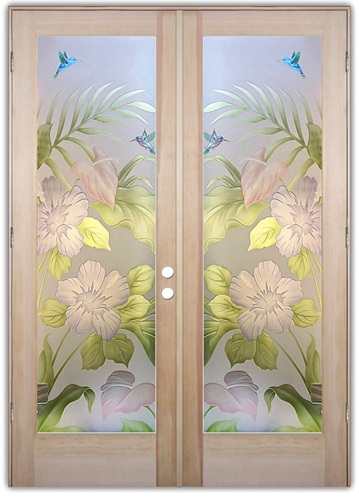
17. Transitional Home Wood Door with Symmetrical Glass Panels
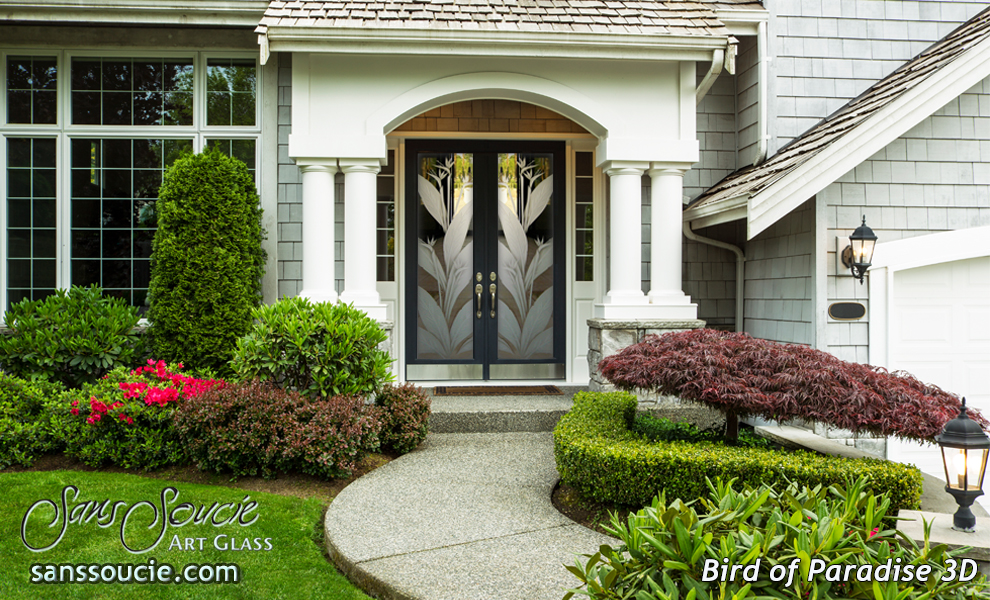
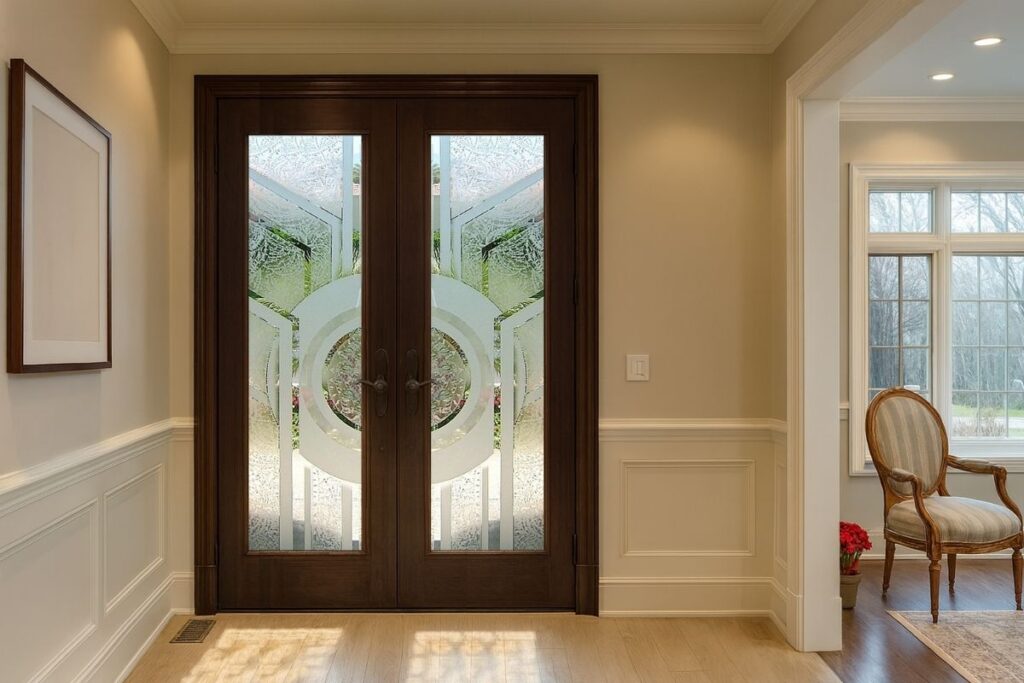
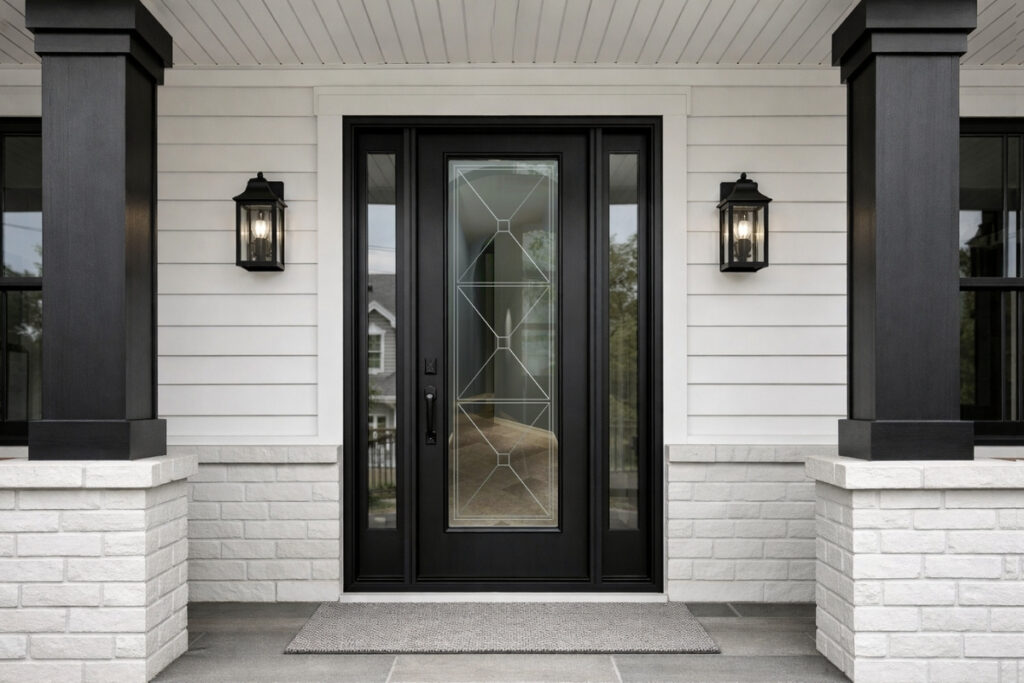
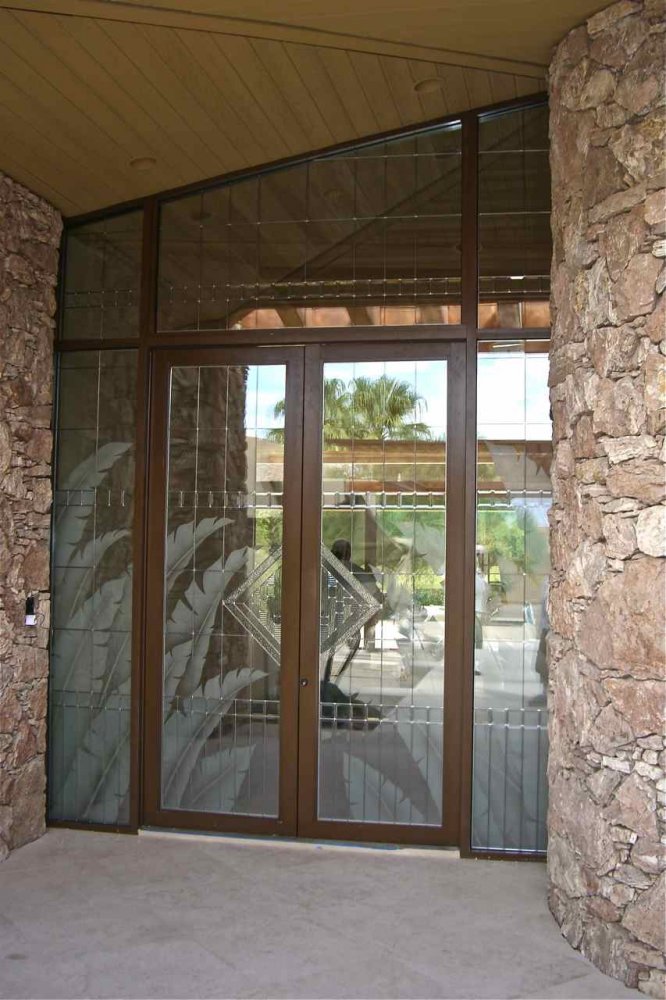
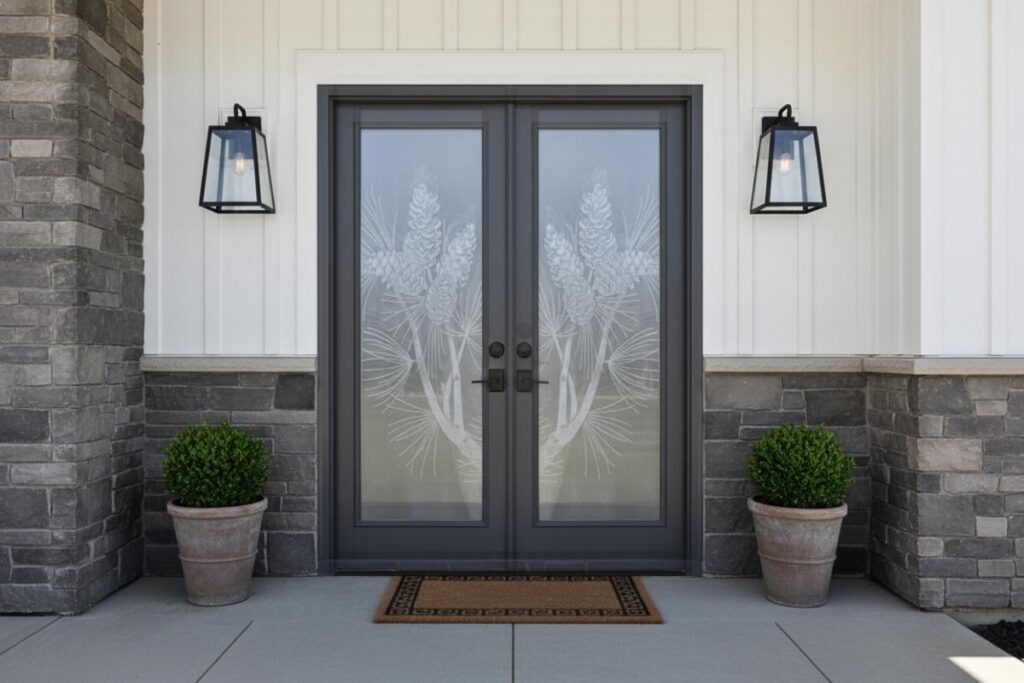
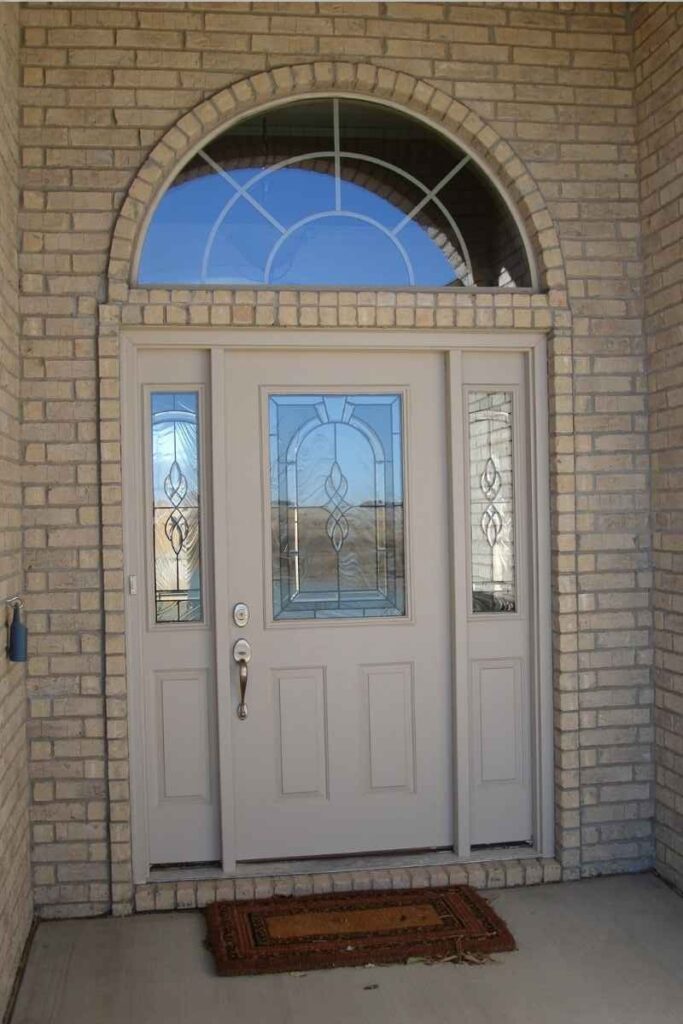
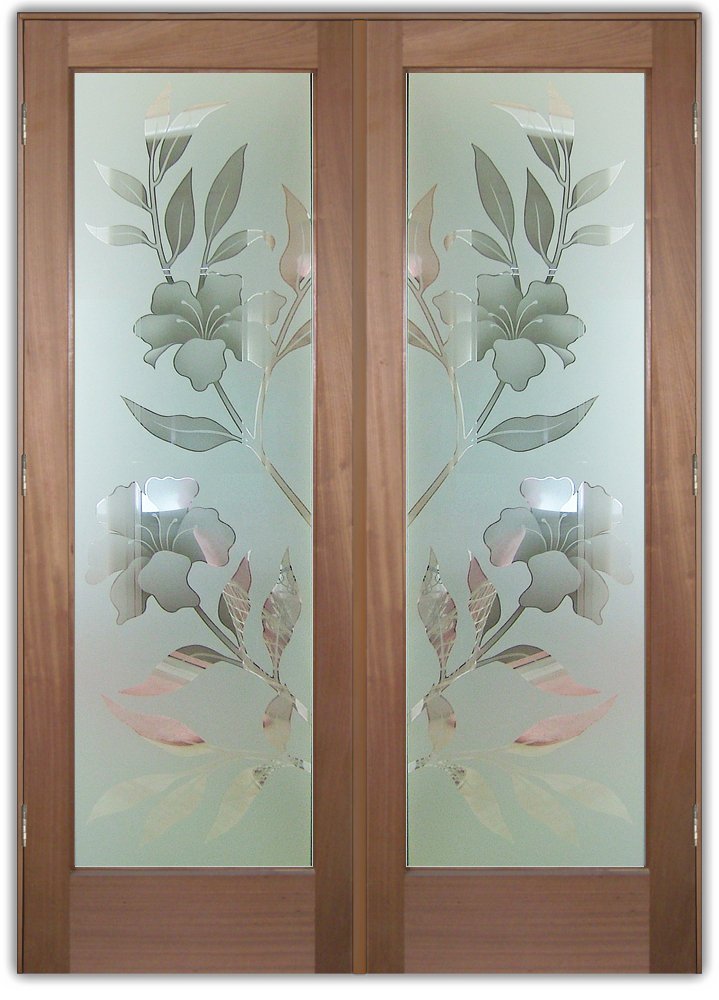
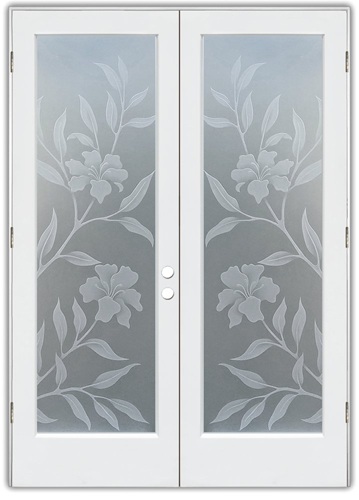
A transitional wood door with symmetrical glass panels blends traditional balance with cleaner, more contemporary detailing. Two narrow vertical inserts can be positioned evenly on either side of the centerline, or a single rectangular panel can be framed with simple raised or flat wood sections.
Medium walnut, warm oak, or dark espresso finishes keep the door polished without feeling overly ornate. The glass should use restrained geometric borders, soft frosting, or subtle etched lines.
This design is especially effective on homes that combine classic rooflines and masonry with updated windows, lighting, and hardware.
18. Mid-Century Modern Wood Door with Geometric Glass
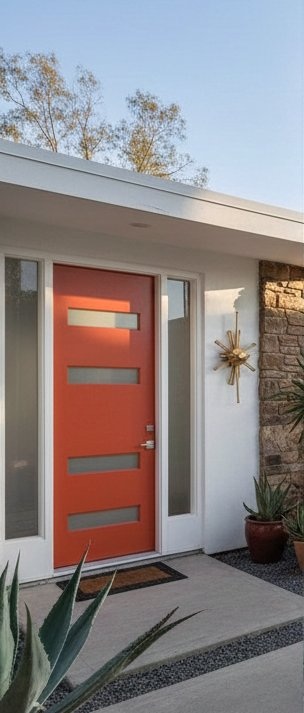
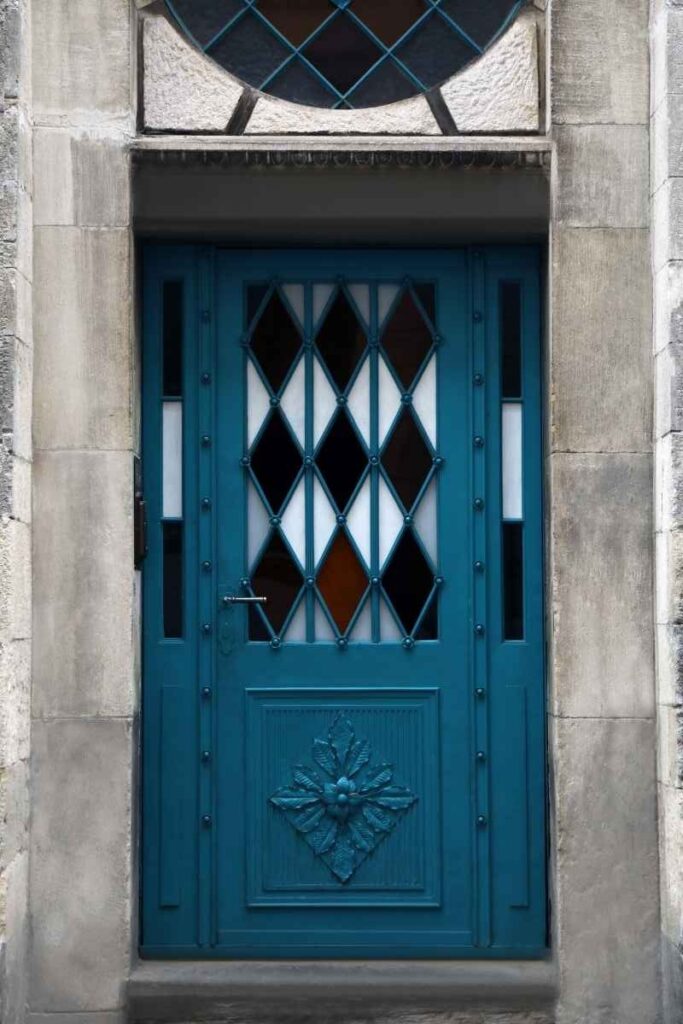
A mid-century modern wood door with geometric glass should feel bold, graphic, and slightly asymmetrical. The panel can feature offset rectangles, intersecting lines, circles, boomerang shapes, or abstract blocks inspired by 1950s and 1960s design.
Walnut, teak-toned wood, or a warm amber stain reinforces the period look, while the glass may combine frosted sections with clear areas for contrast. A simple flat slab, minimal casing, and a long rectangular handle keep the design authentic. This style works best when the glass pattern relates to other exterior features such as breeze blocks, angular rooflines, or horizontal siding.
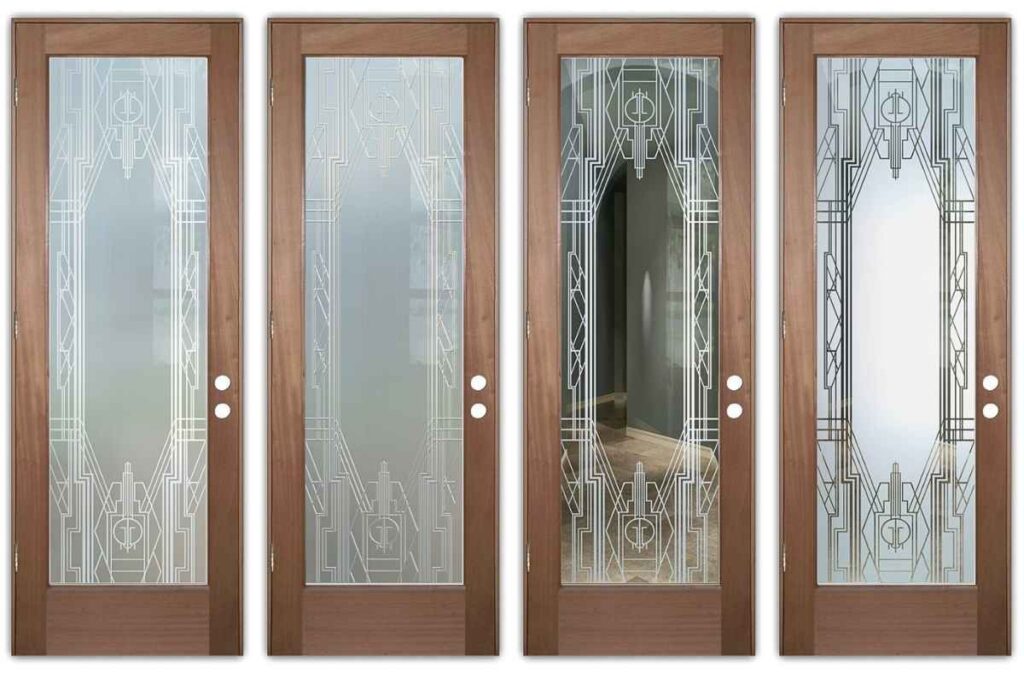
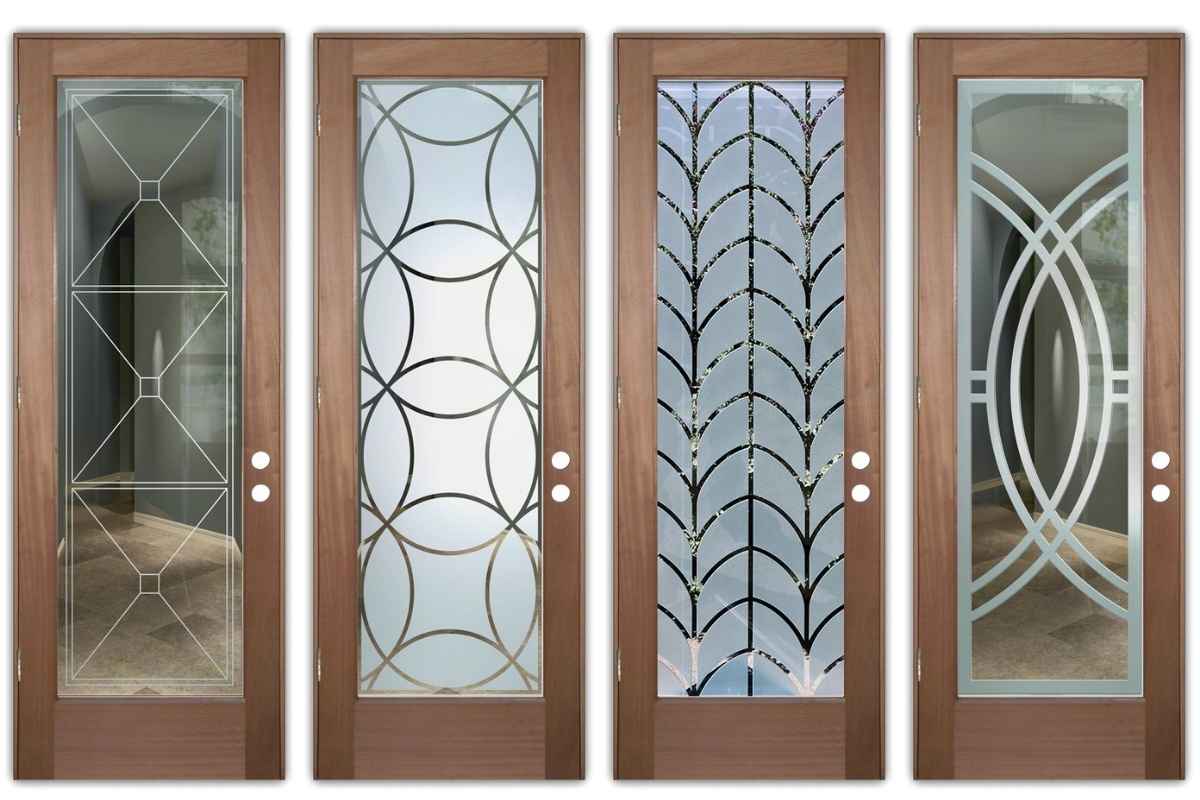
19. Art Deco Wood Door with Etched Geometric Glass
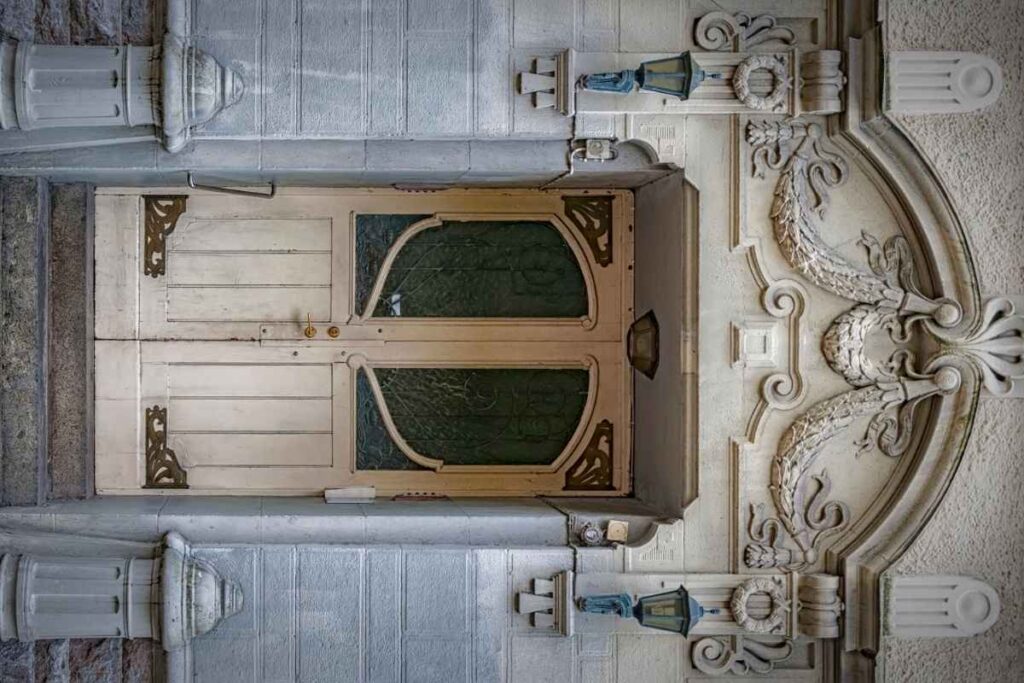
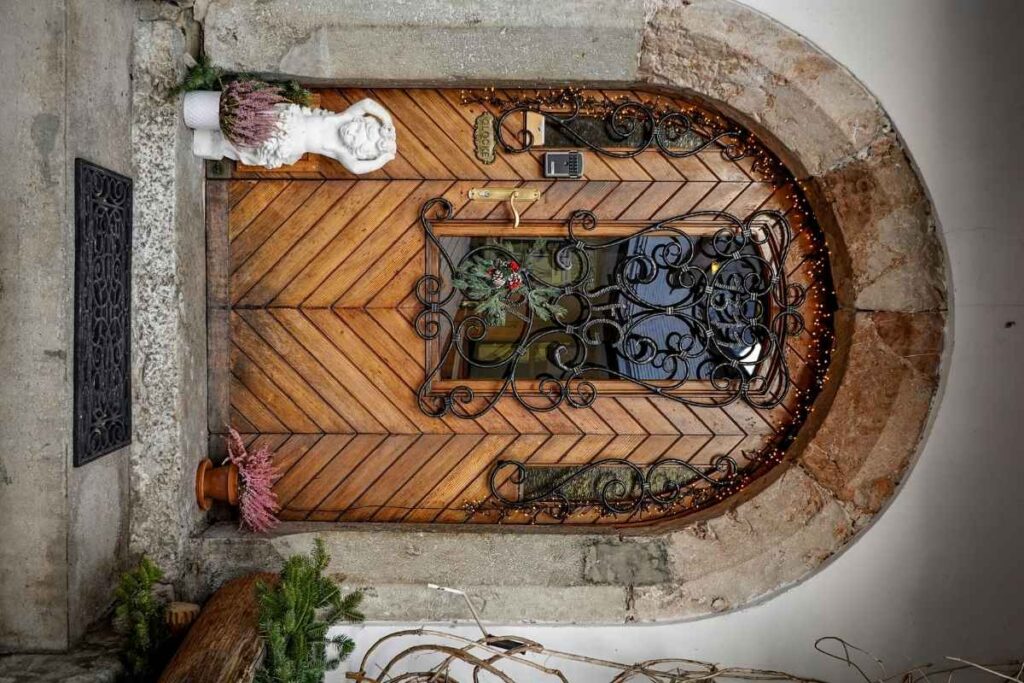
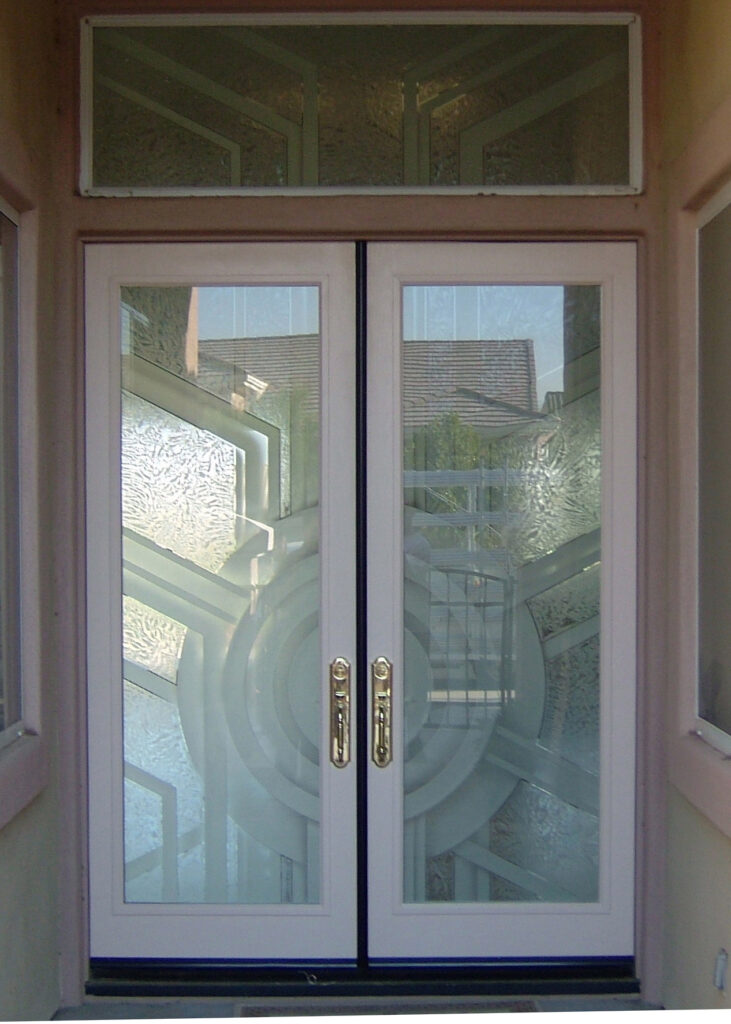
An Art Deco wood door with etched geometric glass creates a sophisticated statement through symmetry, repetition, and strong linear detail. The design may include fan shapes, sunbursts, stepped borders, concentric arches, or vertical rays centered within a tall rectangular panel.
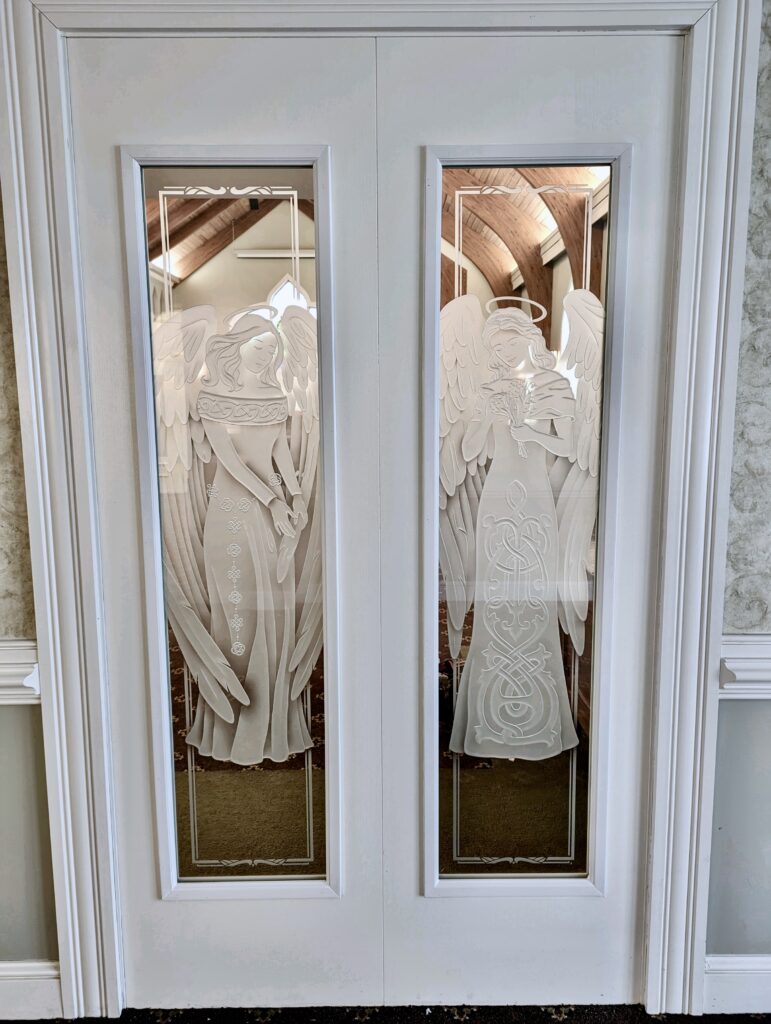
Dark walnut, black-stained wood, or a deep mahogany finish provides a dramatic backdrop, while brass, polished nickel, or black hardware adds a refined metallic accent. Frosted and clear sections can be layered to emphasize the geometry and catch light differently throughout the day.
👉 SEE ALSO: Art Deco Frosted Glass Doors: Stunning Designs for Your Art Deco Home
20. Minimalist Wood Door with Clear Border Glass
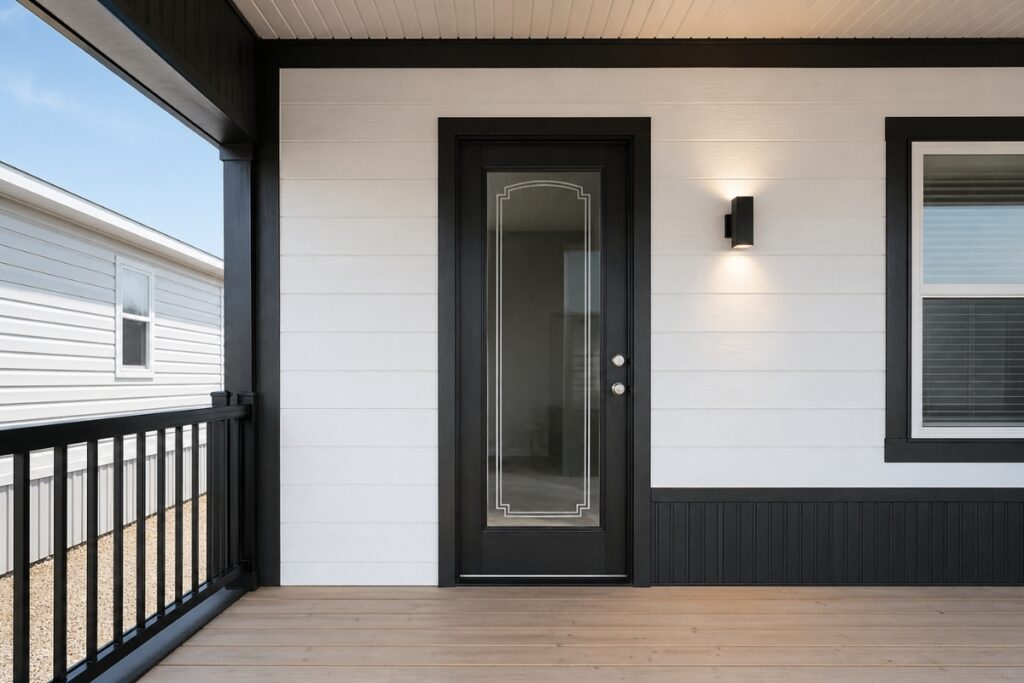
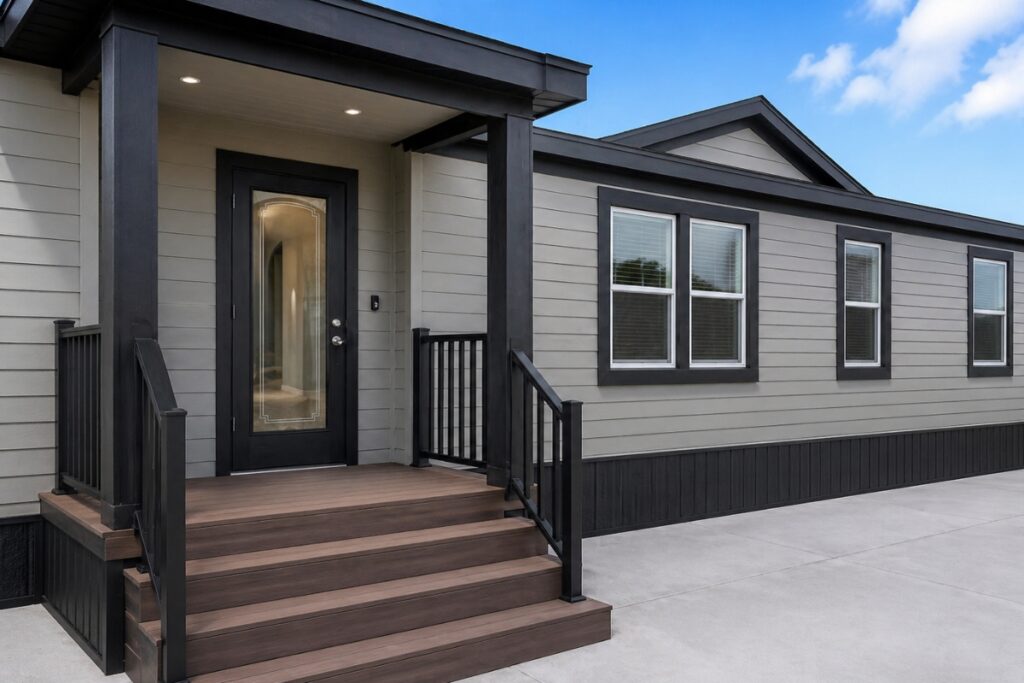
A minimalist wood door with clear border glass uses a restrained combination of transparency and frosting to create visual interest without adding decorative clutter. One effective layout features a softly frosted center panel surrounded by a narrow clear perimeter, while another reverses the treatment with a clear center and frosted border.
The glass should be set within a flat-panel door with straight edges, consistent proportions, and little or no applied molding. Natural white oak, walnut, or black-stained wood works well, depending on the exterior palette.
A simple lever or long pull handle completes the understated design while the glass border adds definition and light. Custom frosted glass front doors can be designed with controlled clear areas for a tailored balance of privacy and transparency.
21. Wood Front Door with Botanical Etched Glass
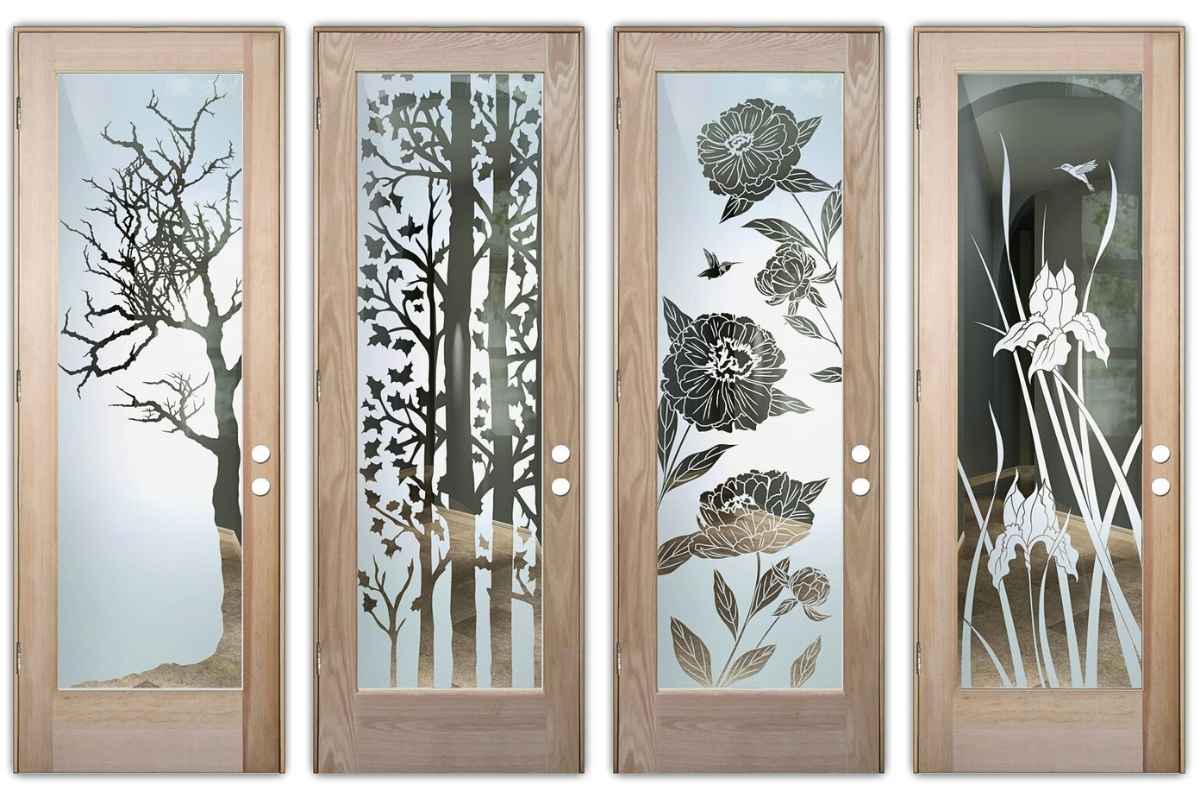
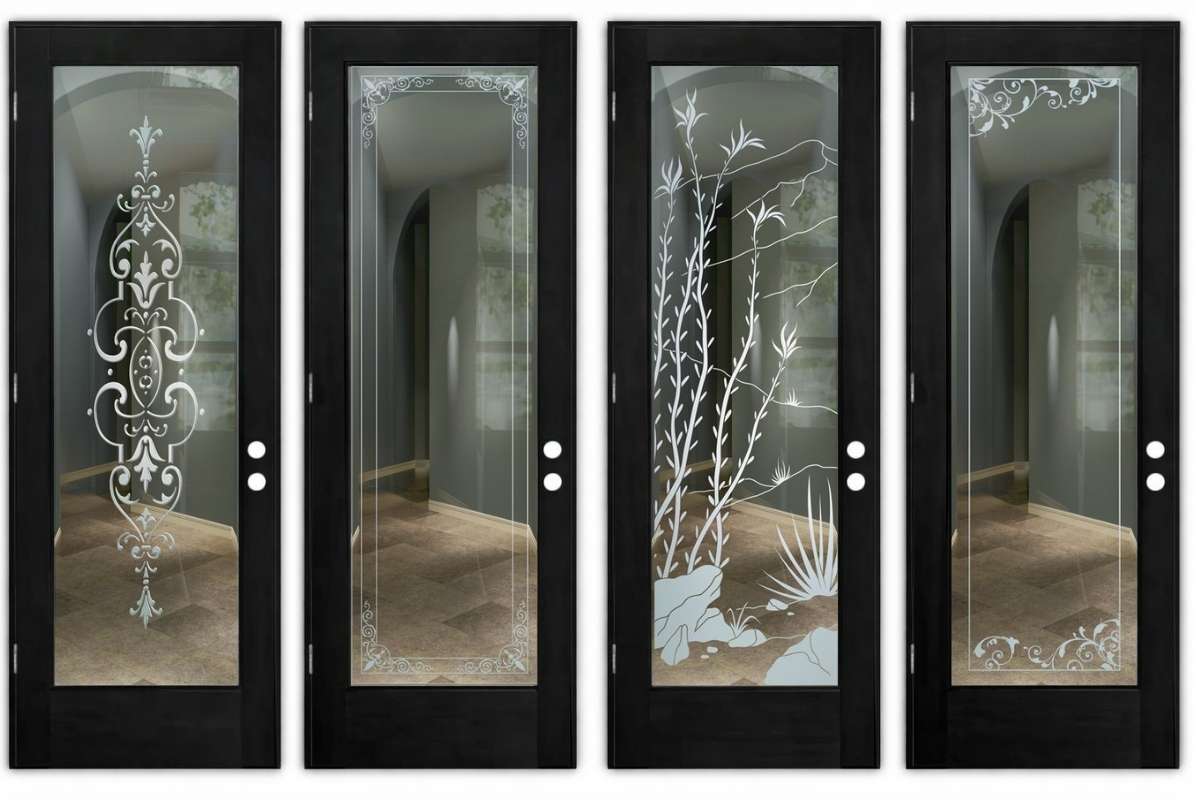
A wood front door with botanical etched glass brings organic detail to the entry through leaves, flowers, branches, palms, bamboo, or flowing grasses. The artwork can be arranged as a centered focal design, a full-height pattern, or a border that frames a clearer center area.
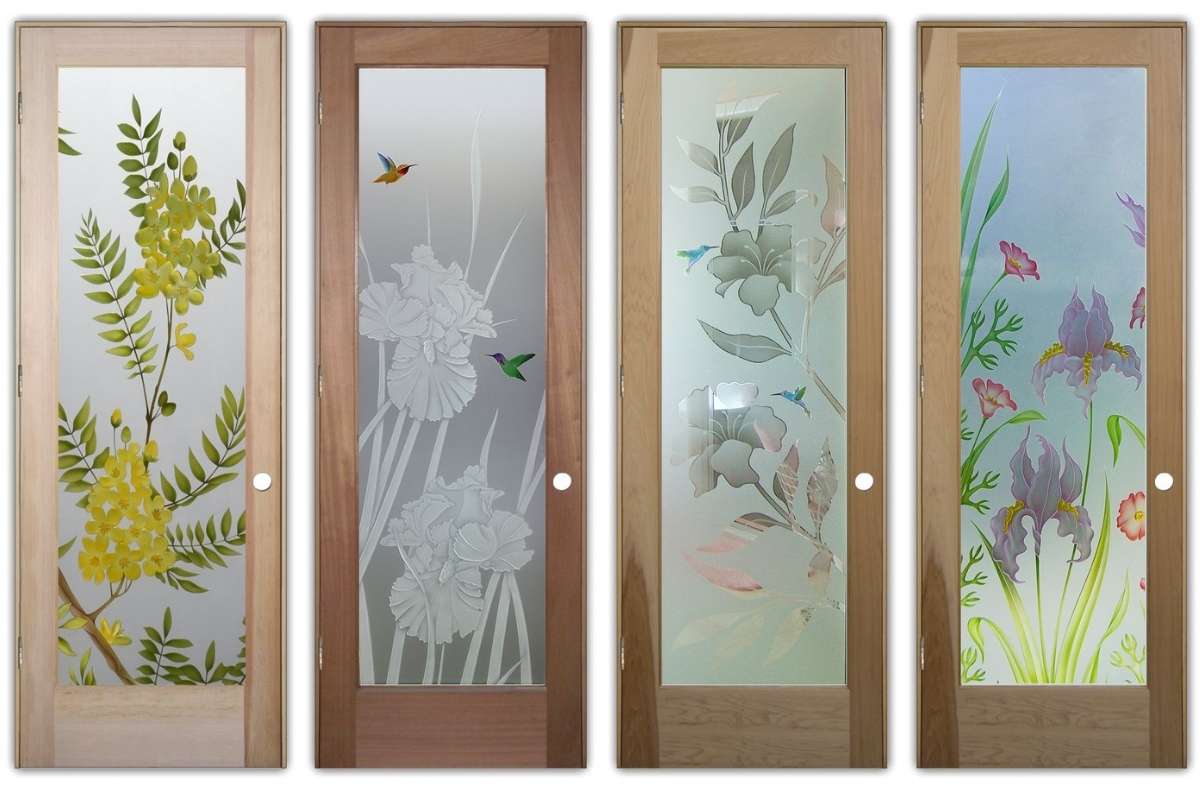
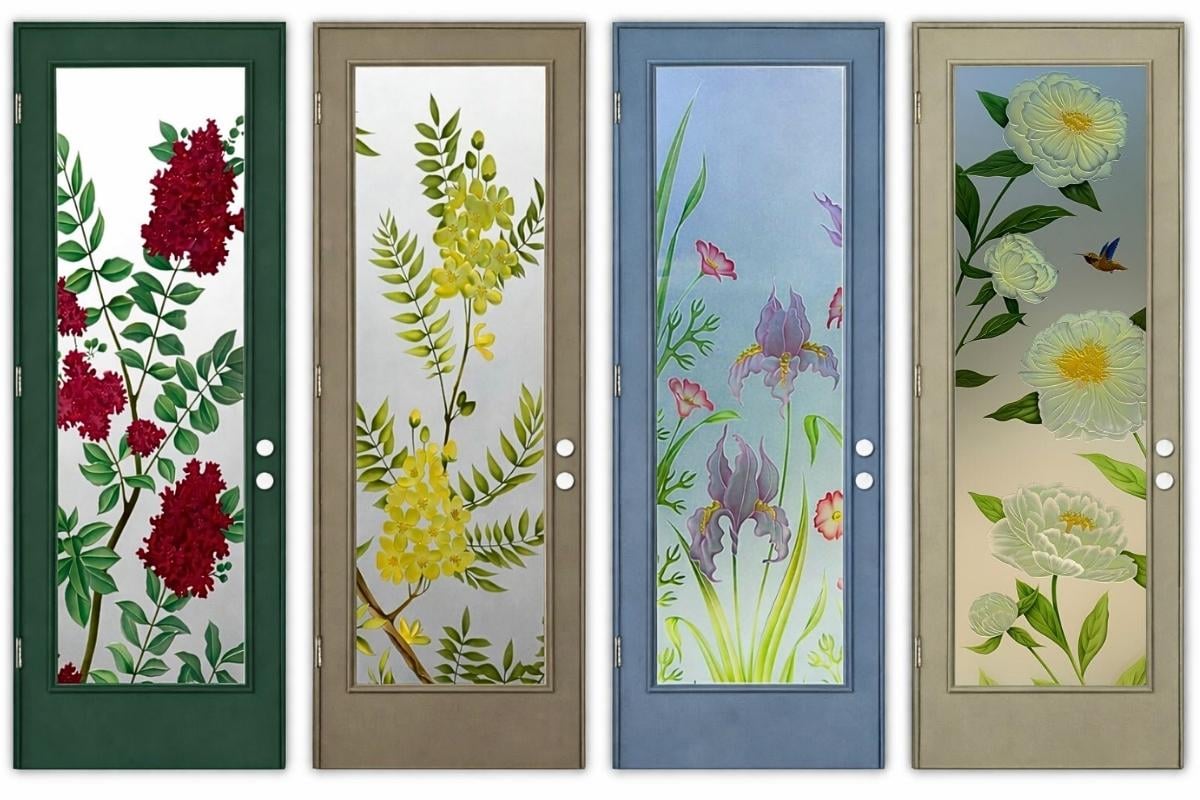
Tropical foliage pairs well with coastal and modern homes, oak or maple leaves suit Craftsman architecture, and formal vines work beautifully with traditional or Mediterranean exteriors. A frosted background increases privacy and helps the botanical design appear brighter, while carved and shaded detailing adds depth to petals, stems, and leaves.
Keep the surrounding wood panels and hardware simple so the glass remains the main visual feature.
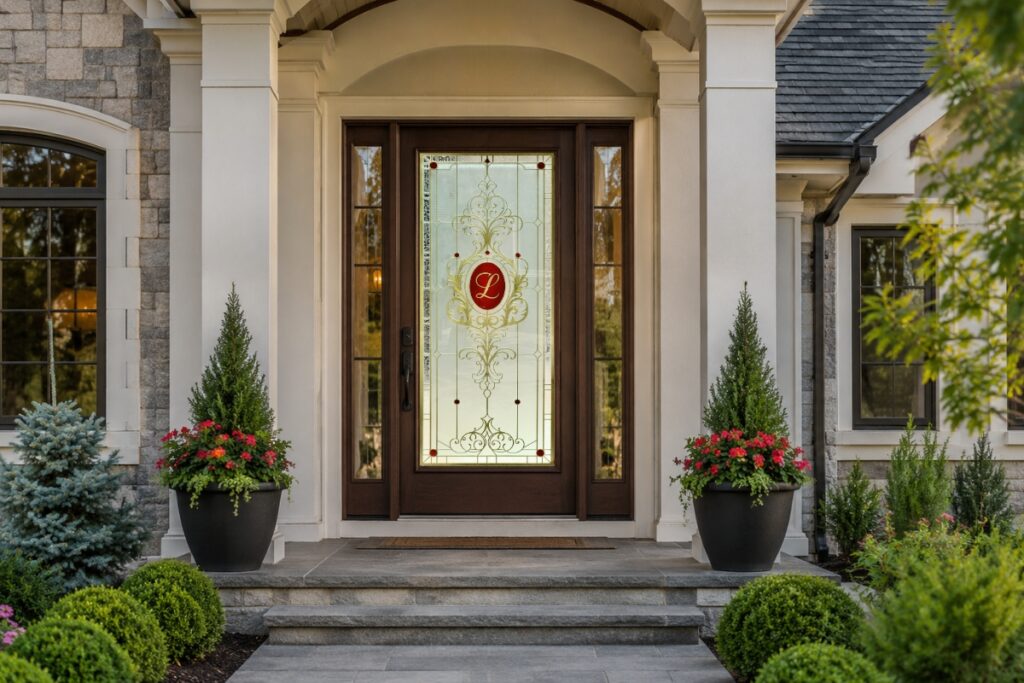
22. Wood Front Door with a Custom Monogram Glass Panel
A wood front door with a custom monogram glass panel gives the entrance a personalized, architectural character. The design may include a family initial, house number, name, crest, or short word centered within a circular, oval, square, or rectangular frame.
Traditional homes can use scrolls, floral borders, or beveled accents around the monogram, while modern homes may prefer clean geometric lines and minimal framing.
The lettering should be large enough to read from the walkway and positioned where door hardware will not interrupt it. A frosted background can preserve privacy while allowing the personalized detail to stand out clearly. A personalized glass door can create a distinctive entrance while preserving the architectural character of the wood frame.
23. Double Wood Front Doors with Coordinating Glass Panels
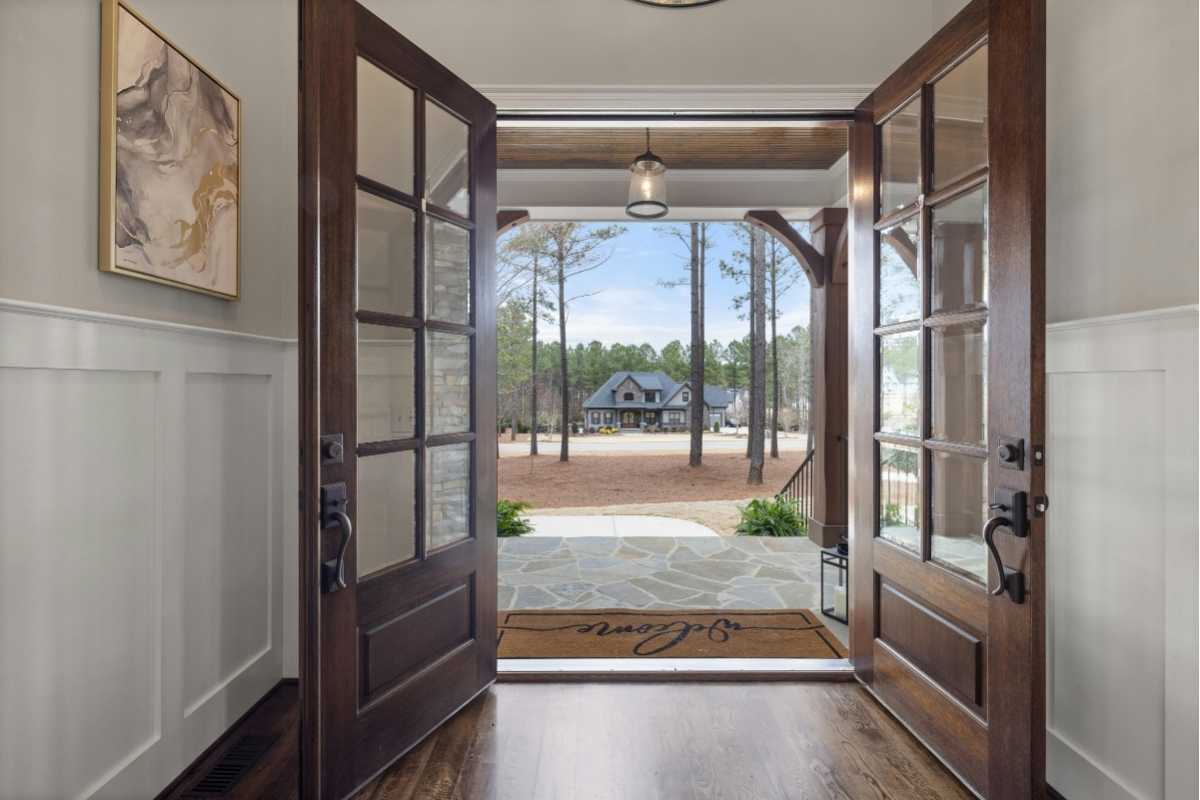
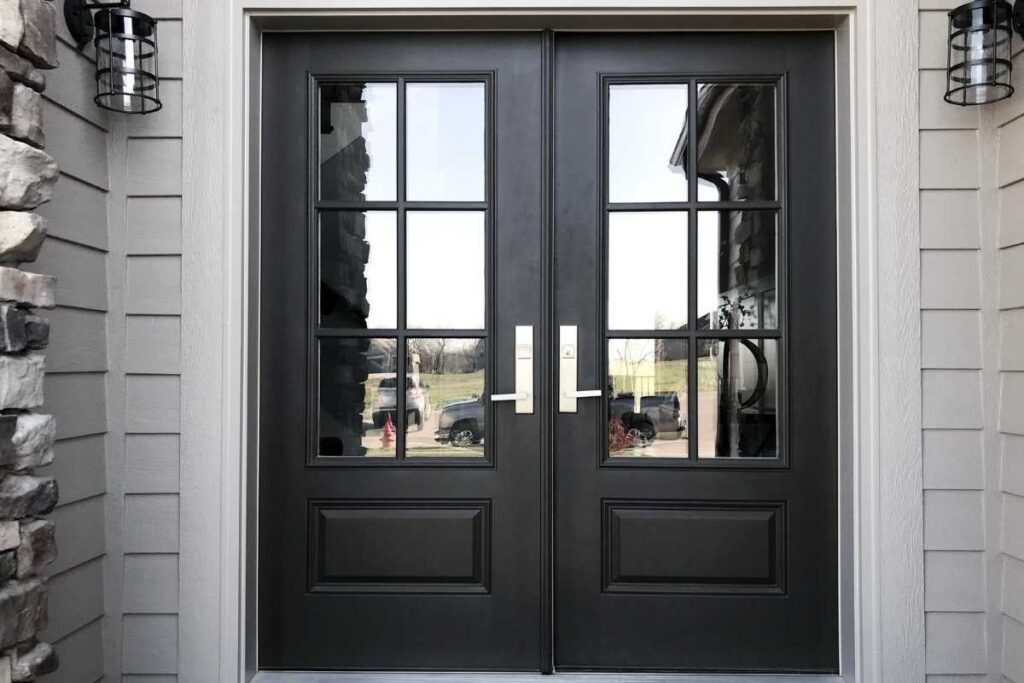
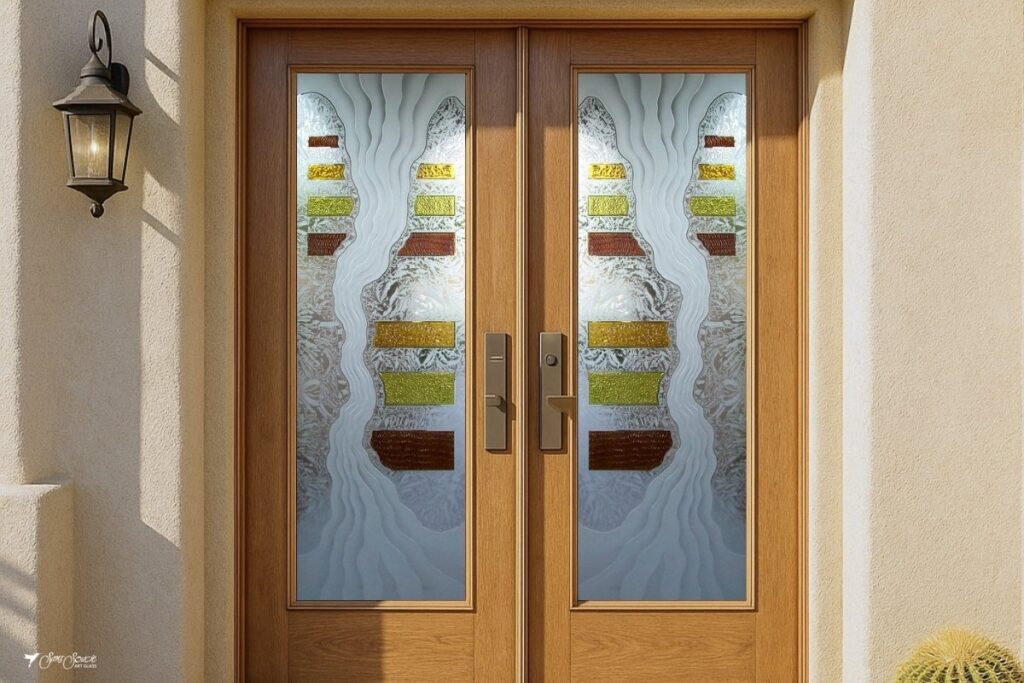
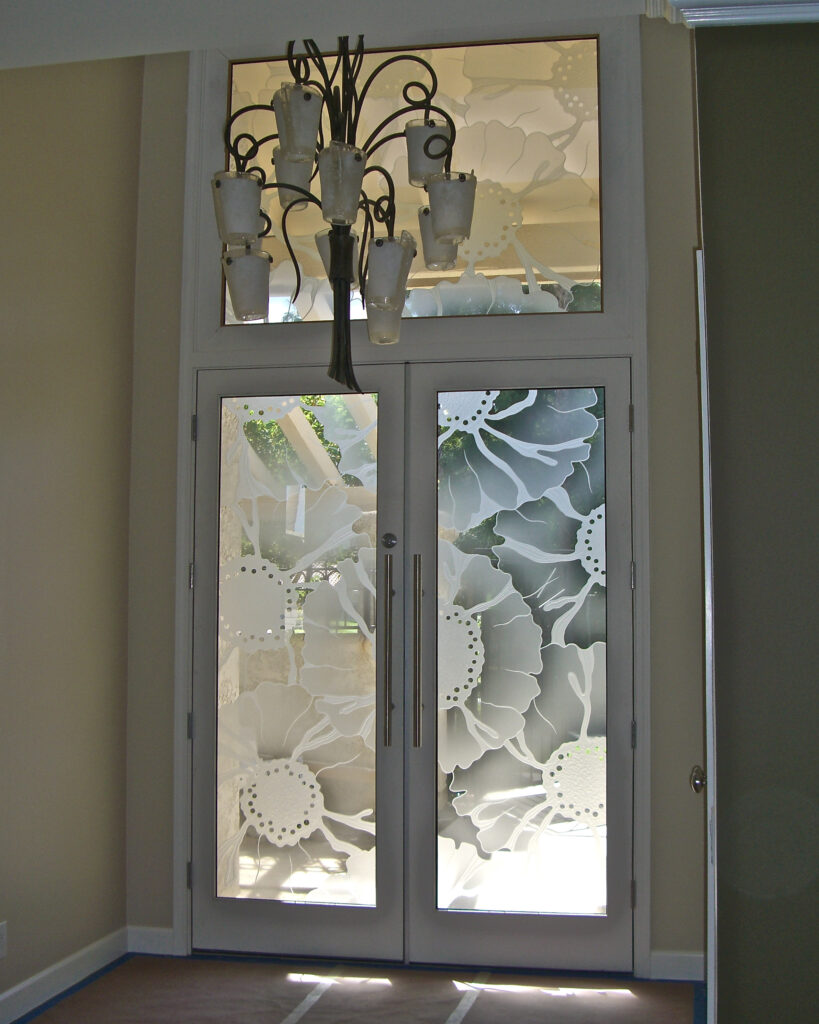
Double wood front doors with coordinating glass panels create a grand, balanced entrance for wide foyers, estate homes, Mediterranean properties, and formal transitional exteriors.
The glass designs can be mirrored so each door reflects the other, or they can form one continuous composition that meets at the center when the doors are closed. Botanical artwork, geometric patterns, scrolls, landscapes, and abstract designs all work well when carefully divided across the pair.
The center meeting line should not cut through the most important part of the artwork, and the wood grain, glass proportions, handles, and panel spacing should remain symmetrical. Custom glass front door designs can be adapted into mirrored or continuous artwork for double-door entrances.
24. Wood Front Door with Matching Sidelight Glass
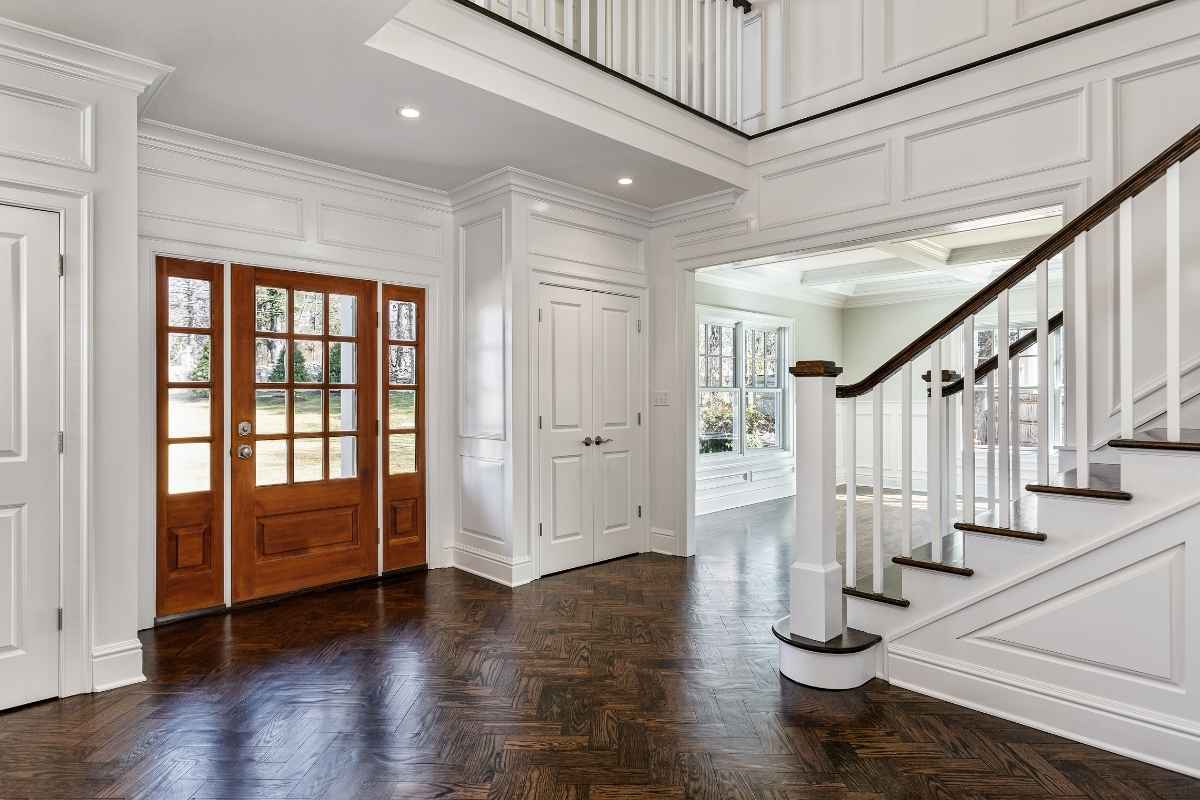
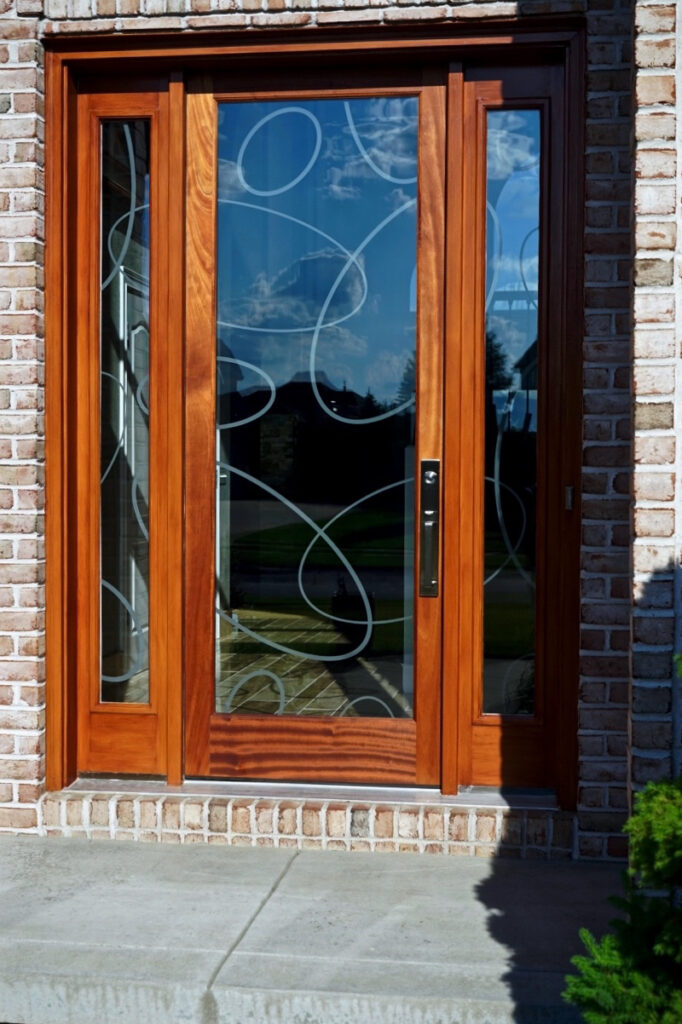
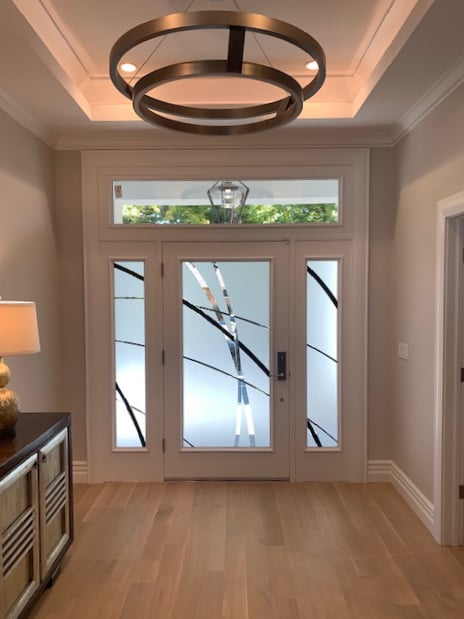
A wood front door with matching sidelight glass creates a unified entrance by repeating the same borders, textures, privacy level, or artwork across the door and the narrow glass panels beside it. The main door can carry the most detailed focal design, while the sidelights use simpler supporting elements such as matching branches, geometric lines, or frosted borders. This keeps the composition balanced without making the entry feel too busy.
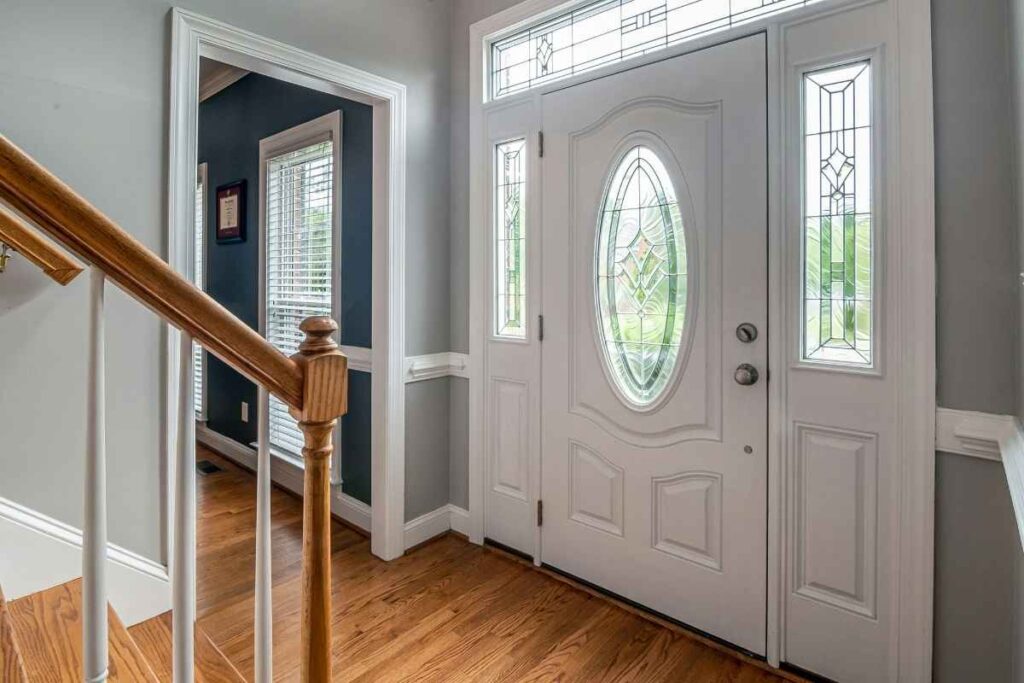
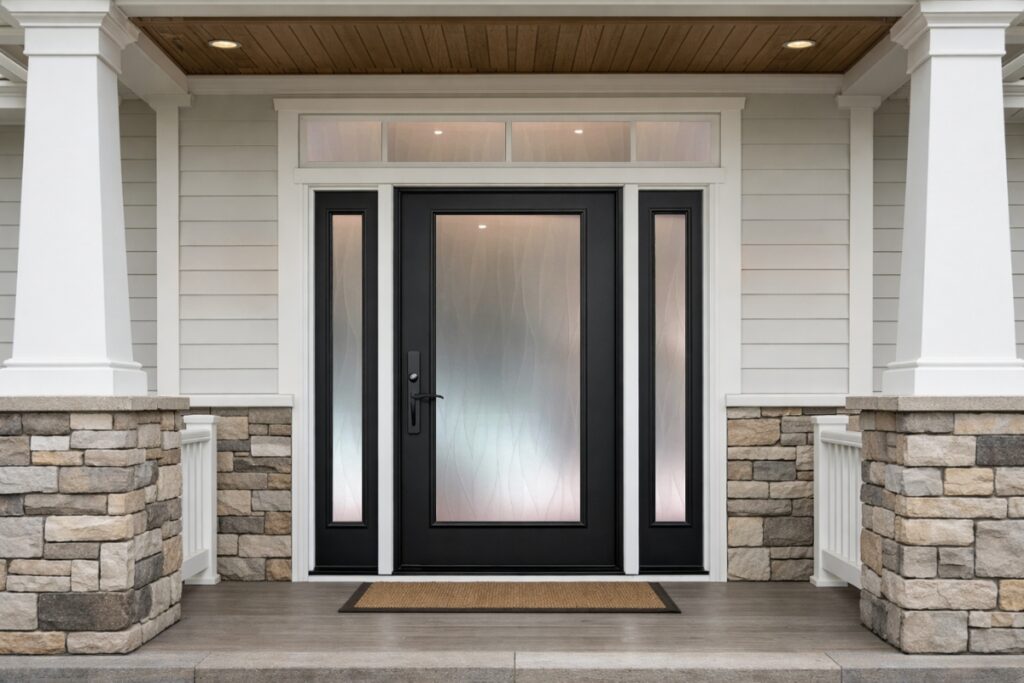
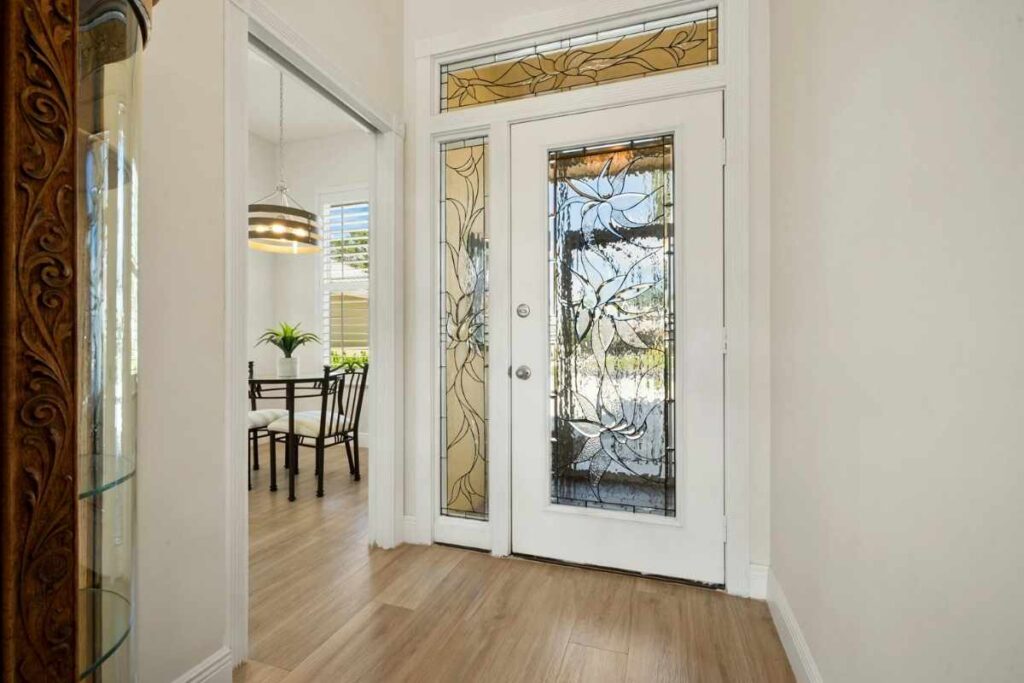
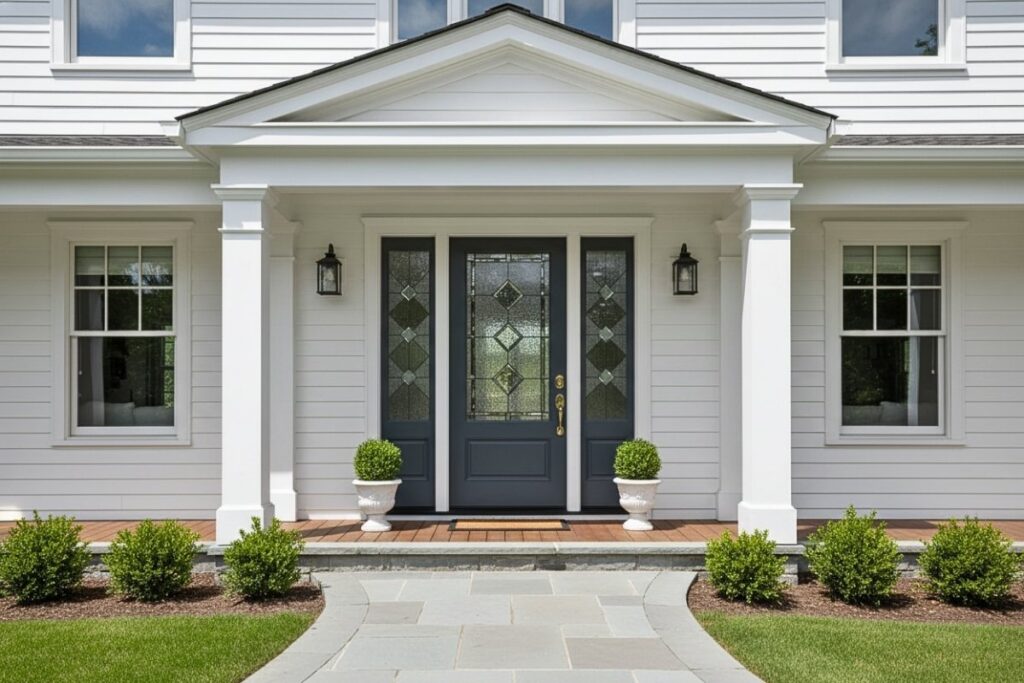
For homes where the sidelights sit beside a living room or staircase, stronger frosting can be used there while maintaining more decorative clear areas in the door. Coordinated glass front doors and sidelights create a more unified entry than combining unrelated stock glass patterns.
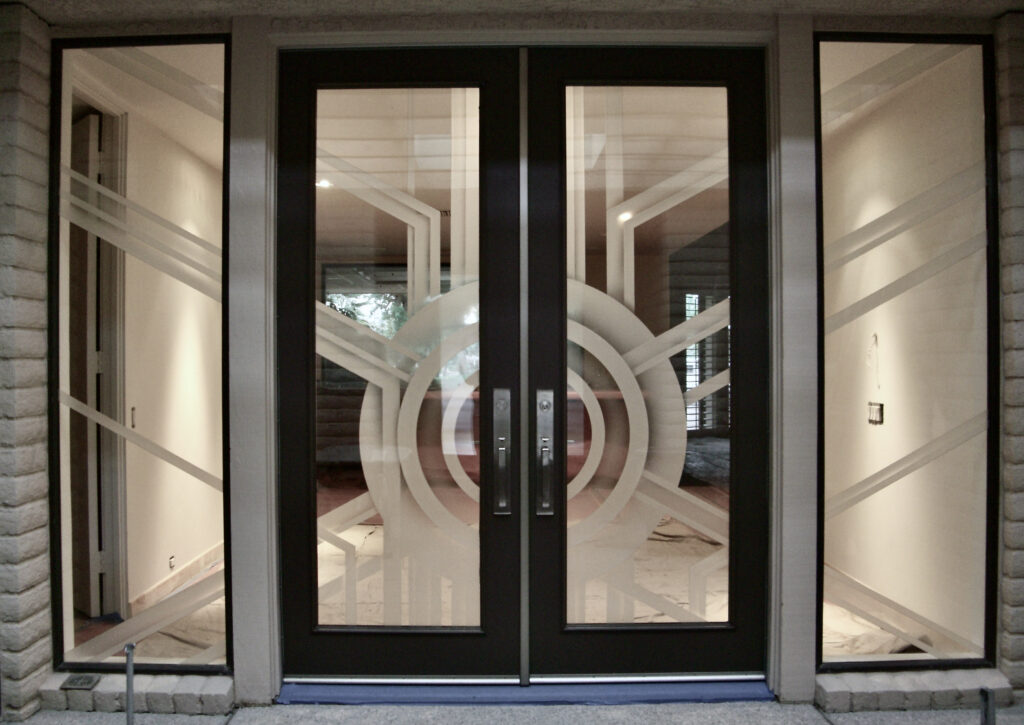
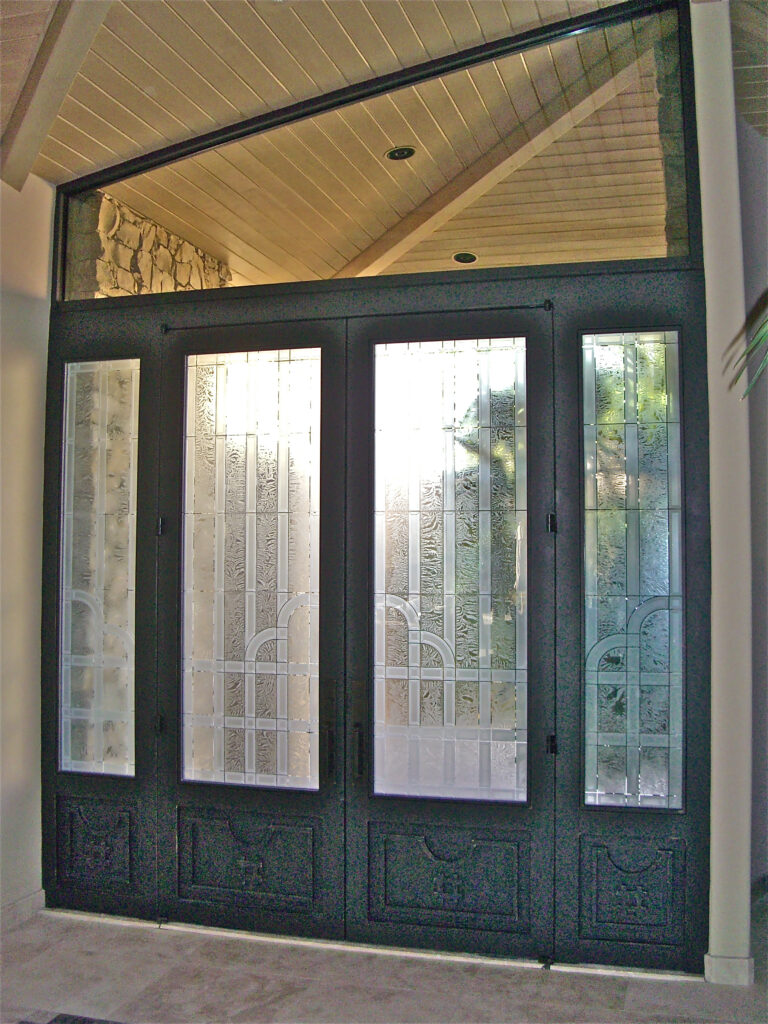
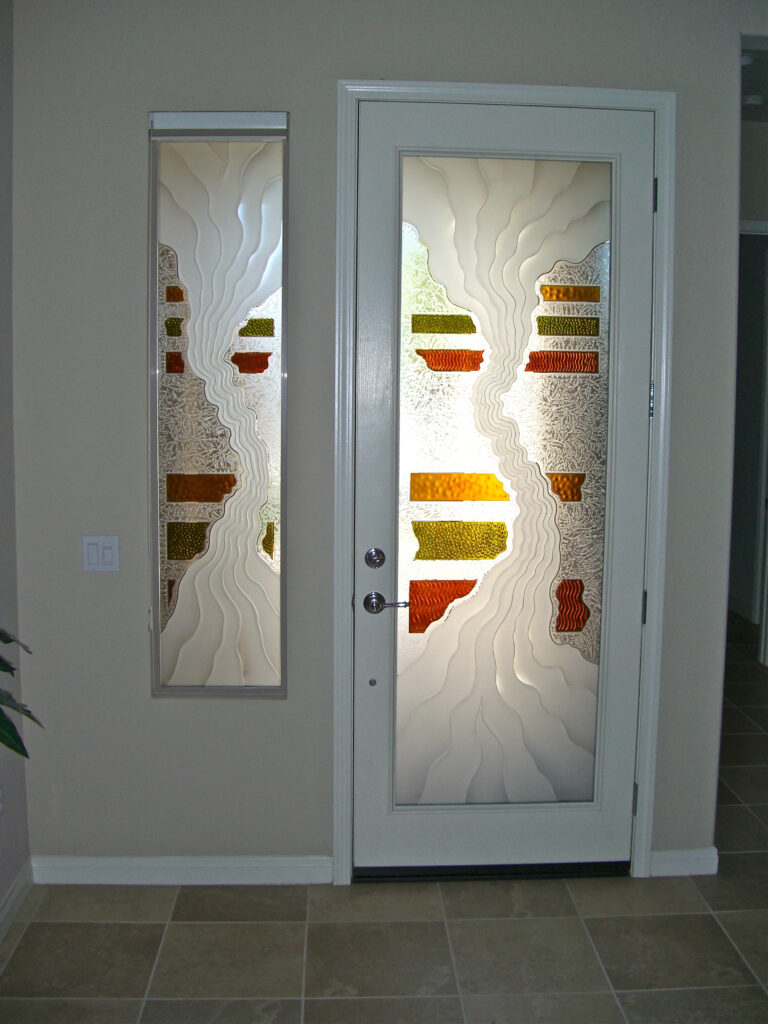
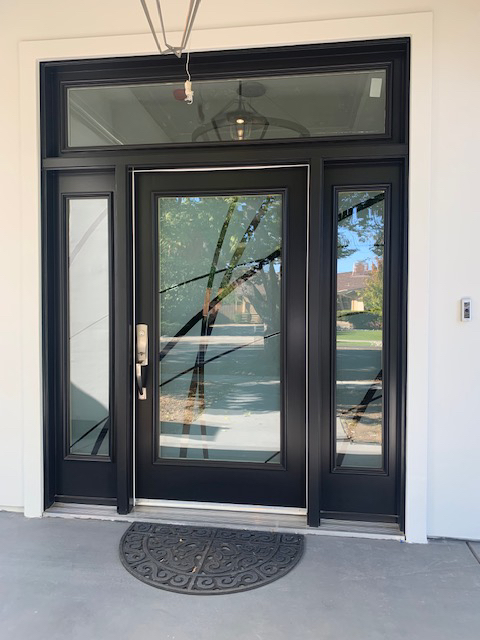
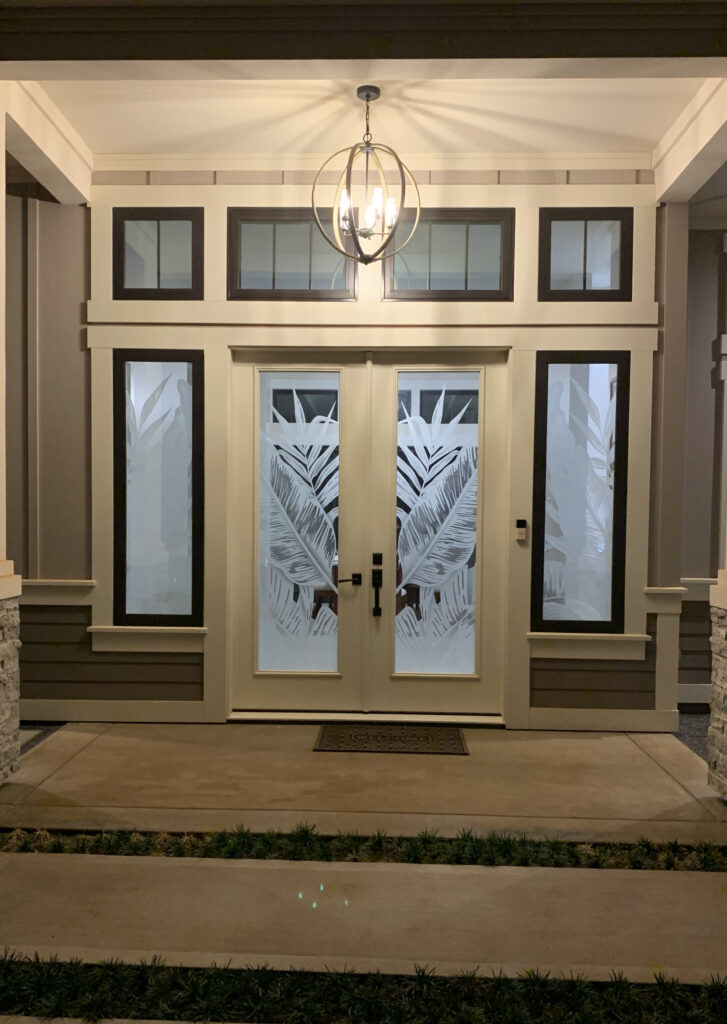
25. Custom Wood Front Door with Carved and Shaded Glass
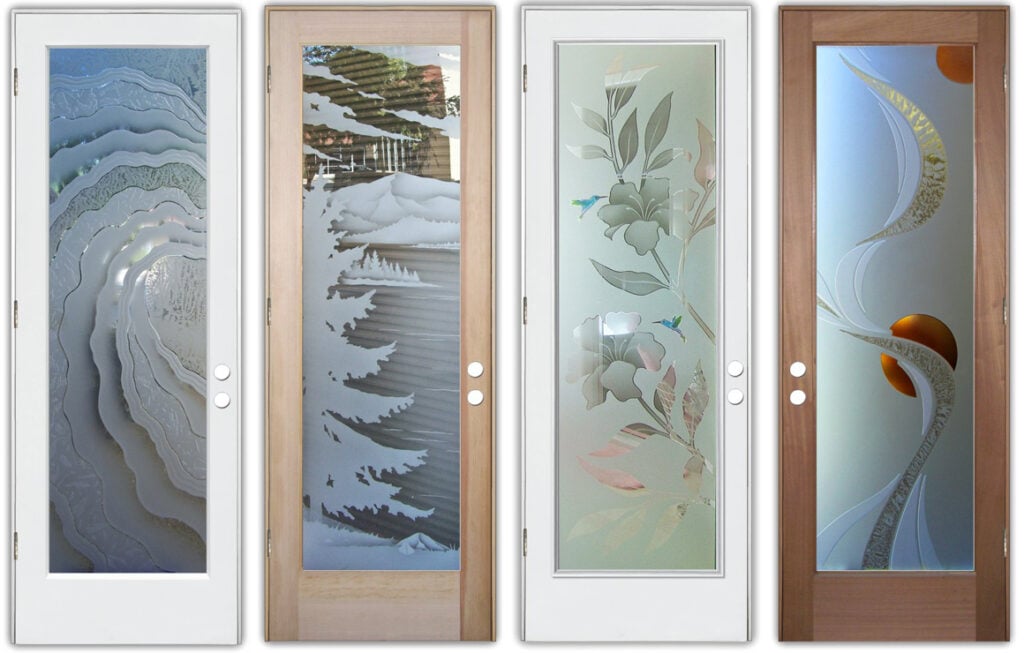
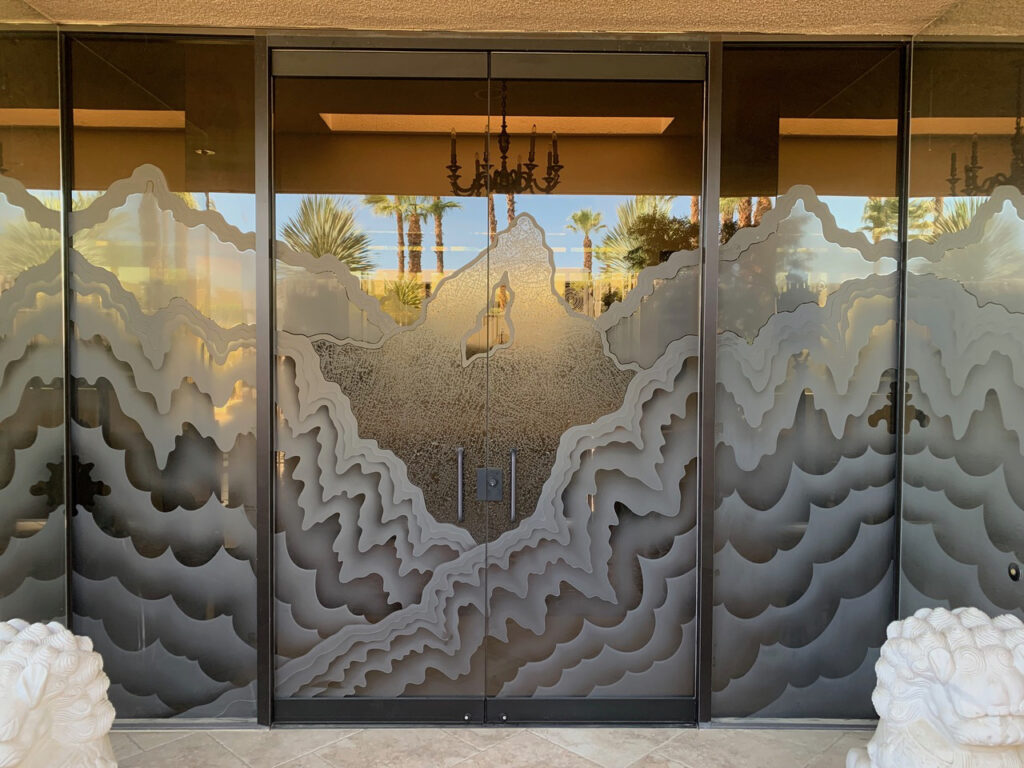
A custom wood front door with carved and shaded glass creates the most dimensional and artistic look of all the ideas in this list. Multi-level sandblasting can carve depth into flowers, wildlife, landscapes, geometric patterns, architectural motifs, or abstract designs, while hand shading adds contrast and definition to smaller details. The result is more sculptural than flat frosting, especially when light passes through the glass and emphasizes the carved areas.
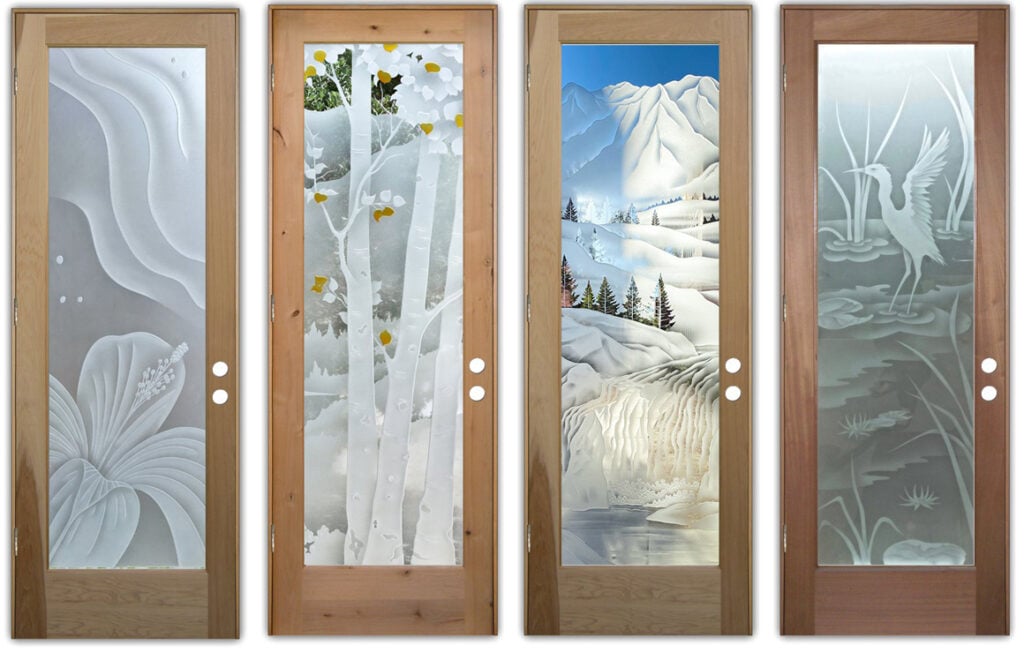
Dark walnut, mahogany, or black-stained wood creates dramatic contrast, while lighter oak gives the design a softer contemporary appearance. A custom frosted glass entry door can also be tailored to the home’s architecture, desired privacy level, panel size, and surrounding sidelights or transom.
👉 SEE MORE: Art Glass Doors YOU Customize to Suit Your Style! (and budget!)
Best Glass Panel Layouts for Wood Front Doors
Small Upper Glass Panel
A small upper glass panel is ideal for homeowners who want natural light without giving up the solid, substantial appearance of a wood entry door. Positioned at or above eye level, the glass allows daylight into the foyer while limiting direct views through the lower portion of the door. Square, rectangular, arched, and speakeasy-style openings work especially well with Craftsman, Tudor, rustic, farmhouse, and traditional architecture.
Clear glass suits private or recessed entrances, while frosted, textured, stained, or etched glass adds privacy and decorative detail. The large amount of surrounding wood also leaves room for raised panels, carved accents, dentil shelves, or iron hardware.
Narrow Vertical Glass Panel
A narrow vertical glass panel creates a tall, streamlined appearance that works especially well with modern, mid-century, and transitional homes. The insert may be centered for symmetry or placed off-center near the handle side to create a more contemporary composition. Extending the panel through most of the door’s height brings light into the entry without exposing as much interior space as a wide glass opening.
Reeded, geometric, lightly frosted, or etched glass complements the narrow proportions, while clear sections can provide a limited view outside. Pair the layout with a flat wood surface, visible vertical grain, minimal trim, and a long pull handle for a clean architectural look.
Half-Lite Glass Panel
A half-lite layout places glass across approximately the upper half of the door while keeping the lower section solid wood. This balanced configuration brings a useful amount of daylight into the foyer while maintaining privacy and visual weight near the bottom of the entrance. It works well with farmhouse, Craftsman, coastal, cottage, and traditional homes and can accommodate divided lites, arched glass, floral artwork, geometric patterns, or frosted backgrounds.
The solid lower section may feature raised panels, vertical planks, or simple flat wood depending on the architecture. A half-lite design is also practical for busy households because the lower wood area is less likely to show fingerprints, pet marks, and everyday contact than glass.
Three-Quarter-Lite Glass Panel
A three-quarter-lite wood front door uses a tall glass panel that begins above a smaller solid wood section at the bottom. The expanded glass area brings significantly more daylight into the entry and provides enough surface for detailed botanical, coastal, geometric, wildlife, or ornamental artwork.
Because the panel extends close to eye level and below, privacy should be carefully considered, especially when the door faces a street or neighboring property. Frosted backgrounds, dense etched patterns, or carved designs can obscure views without making the foyer feel dark. This layout is especially effective for transitional, contemporary, coastal, and custom statement doors where decorative glass is intended to be a prominent feature.
Full-Lite Glass Panel
A full-lite layout places one large glass panel within narrow wood stiles and rails, making the glass the primary visual feature of the door. It provides the greatest amount of daylight and the largest uninterrupted area for decorative artwork, making it well suited to modern, Scandinavian, coastal, and luxury custom homes. Because the glass occupies nearly the entire slab, homeowners should select the privacy level based on the door’s location, exterior lighting, and proximity to public areas.
Fully frosted, etched, carved, reeded, or textured glass can reduce visibility while preserving light. Dark walnut or black-stained wood creates strong contrast around bright sandblasted artwork, while natural oak gives the door a lighter, softer appearance.
Best Privacy Options for Wood Front Doors with Glass
Clear Glass
Clear glass provides the brightest and most open connection between the interior and exterior, making it best for secluded properties, gated courtyards, deep covered porches, or entries that do not directly face a public walkway. It allows homeowners to see visitors clearly and brings maximum daylight into the foyer, but it offers little privacy during the day and even less at night when interior lights are on.
Lightly Frosted Glass
Lightly frosted glass softens direct views while retaining a bright, airy appearance, making it a practical choice for entrances that need moderate privacy rather than complete visual coverage. The surface blurs facial features and interior details but may still reveal silhouettes, movement, and nearby objects, particularly at night or when someone stands close to the glass. This treatment works well with minimalist, geometric, botanical, and abstract designs because the subtle frosting does not overpower the artwork.
Fully Frosted Glass
Fully frosted glass provides stronger privacy by obscuring the view across the entire panel while continuing to transmit soft, diffused daylight. It is a strong option for doors facing sidewalks, neighboring homes, shared driveways, or frequently used outdoor spaces. The consistent frosted background also creates a bright surface that helps borders, carved details, shaded artwork, or clear decorative accents stand out.
Although shapes and shadows may still be visible at very close range, interior furnishings and facial details are generally much less recognizable than they would be through clear glass. Fully frosted glass works with nearly every architectural style and is especially useful in full-lite or three-quarter-lite doors.
Frosted Glass with Clear Decorative Areas
Frosted glass with clear decorative areas combines privacy and transparency by using a frosted background around carefully placed clear artwork, borders, or accents. Botanical leaves, waves, geometric lines, wildlife, and custom monograms can remain clear while the surrounding glass limits broader views into the home.
The location of the transparent areas is important: avoid large clear sections directly at eye level when strong privacy is needed, and use smaller openings or higher placements instead. This approach gives the glass more depth and visual contrast than uniform frosting and allows homeowners to see limited shapes or outdoor light through the artwork without exposing the entire entry.
Carved and Shaded Decorative Glass
Carved and shaded glass creates dimensional artwork while allowing the privacy level to be customized through the treatment of the background and surrounding design. Multi-level sandblasting cuts varying depths into the glass, while hand shading adds tonal contrast to flowers, trees, landscapes, wildlife, and architectural patterns.
A fully frosted background provides the greatest visual coverage, while clear backgrounds or strategically placed clear areas create a more open effect. Because the carving refracts and diffuses light, detailed portions of the design can also help interrupt direct sightlines. This option is particularly well suited to custom glass front doors where the glass is intended to function as both a privacy feature and a permanent work of art.
Solid Wood Species and Finishes That Work Best with Decorative Glass
Natural Oak
Natural oak gives a wood front door a warm, approachable appearance and highlights the grain without creating heavy contrast around the glass. White oak and lighter oak stains work especially well with Scandinavian, Craftsman, modern farmhouse, coastal, and transitional architecture. The pale golden or beige tones complement botanical artwork, soft geometric patterns, reeded glass, and lightly frosted backgrounds.
A clear or matte protective finish keeps the wood looking natural, while a medium stain can emphasize the grain and make bright etched details more visible. Oak also coordinates easily with stone, brick, white siding, black window frames, and brushed or matte black hardware.
Walnut or Dark Brown Stain
Walnut and dark brown stains create a rich frame around decorative glass and provide strong contrast that makes etched, carved, or frosted artwork appear brighter. These finishes work particularly well with modern, mid-century, transitional, traditional, and luxury exteriors. Walnut’s deep brown color and flowing grain complement geometric designs, clear borders, abstract artwork, and tall vertical glass panels, while darker espresso tones suit more formal or dramatic entrances.
To prevent the entry from feeling too heavy, balance the dark wood with lighter exterior walls, bright glass artwork, or streamlined hardware. Matte black, satin brass, and brushed stainless-steel finishes can each create a distinct look against dark wood.
Mahogany or Reddish-Brown Stain
Mahogany and reddish-brown stains give a front door a formal, polished appearance that pairs naturally with traditional, Colonial, Mediterranean, and estate-style homes. The wood’s warm red and brown undertones complement beveled glass, floral patterns, scrollwork, monograms, ornamental borders, and arched panels.
A deeper stain can make pale etched artwork stand out, while a more transparent finish preserves the wood’s natural variation and fine grain. Mahogany works especially well beside brick, stucco, limestone, and warm-toned stone. Polished brass, antique bronze, or oil-rubbed bronze hardware reinforces the classic character, while simpler black hardware can give the door a more updated transitional look. A high-quality wood door can boost a home’s resale value.
Knotty Alder
Knotty alder has visible knots, irregular grain, and natural color variation that give a front door a rustic, handcrafted appearance. It is especially appropriate for farmhouse, lodge, mountain, Southwestern, Mediterranean, and Old World homes. Warm honey, chestnut, and distressed brown stains emphasize the wood’s character and pair well with wildlife scenes, forest landscapes, textured glass, ironwork, and speakeasy-style panels. Because both the wood and decorative glass can contain substantial visual detail, the composition should have a clear focal point.
A simpler glass border works well with heavily distressed alder, while a more elaborate carved design is best framed by cleaner wood panels and restrained hardware.
Painted Wood
Painted wood allows the door to coordinate precisely with the home’s siding, trim, shutters, or overall exterior palette while providing a clean frame for decorative glass. White and soft cream suit coastal, cottage, and French country homes; black creates a dramatic modern or modern farmhouse look; and muted blue, sage green, charcoal, or gray can complement transitional and coastal architecture.
Painted surfaces work especially well with frosted, reeded, geometric, and botanical glass because the uniform color does not compete with the artwork. Dark paint makes bright etched designs stand out sharply, while lighter paint creates a softer, more blended appearance. Exterior-grade paint and proper maintenance are essential for protecting the wood from moisture and sun exposure. When selecting an exterior color, coordinate the painting of the door with nearby trim and architectural details so the decorative glass remains the focal point of the entry.
Caring for a Wood Front Door with Glass Panels
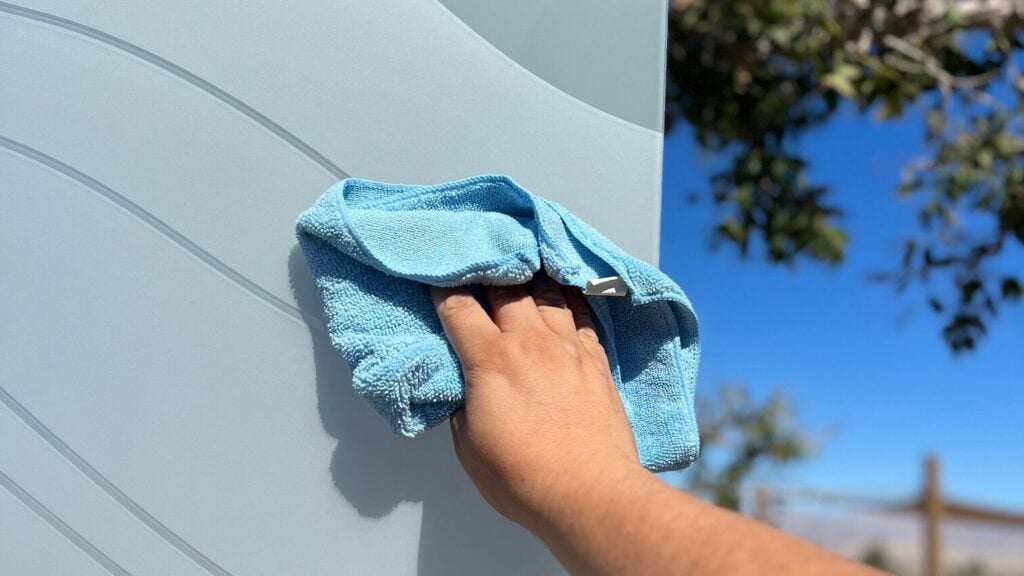
A wood front door with glass panels will provide decades of beauty when both the wood and glass are properly maintained. Clean the glass regularly with a non-abrasive glass cleaner and a soft microfiber cloth to remove fingerprints, dust, and water spots. If the door features decorative etched, carved, or frosted glass, avoid abrasive pads or harsh chemicals that could damage the surface or surrounding finish.
The wood should be cleaned periodically with a soft cloth and a mild soap solution, then dried thoroughly. Inspect the exterior finish at least once or twice a year for signs of fading, cracking, peeling, or moisture damage, especially on doors exposed to direct sunlight or harsh weather. Reapply a protective exterior-grade stain or clear finish as needed to help prevent UV damage and moisture penetration. It’s also a good idea to periodically check weatherstripping, door seals, hinges, and hardware to ensure the door continues to operate smoothly while maintaining its appearance, functionality, and long-term performance.
Find the Right Wood Front Door with Glass for Your Home
- Start with architectural style
- Choose the glass panel size
- Determine the required privacy
- Select a compatible wood finish
- Coordinate the door, sidelights, hardware, and exterior materials
Frequently Asked Questions
Are wood front doors with glass panels secure?
They can be secure when built with exterior-rated construction, safety glass, strong locks, quality frames, and professional installation. Glass type and panel placement also affect security. A well-designed glass door with privacy with reinforced or impact-resistant glass can provide both security and natural light without compromising durability.
What type of glass is best for a wood front door?
Tempered glass or laminated safety glass should be used where required. Decorative options include frosted, etched, carved, textured, reeded, stained glass, beveled, and clear glass. The best choice depends on privacy, style, and daylight needs. Frosted or obscure glass can provide privacy while still allowing light.
Do glass panels make a front door less private?
Clear glass does. Frosted, etched, textured, and carved designs can significantly reduce visibility. Privacy depends on the design density, background treatment, viewing distance, and lighting.
Can decorative glass be added to an existing wood front door?
Sometimes, depending on the door’s construction, panel layout, thickness, condition, and whether it can accept an exterior-rated glass insert. A door professional should evaluate the slab before modification. If you’re considering this upgrade, learn more about whether you can add glass to an existing front door.
What is the best wood for a front door with glass?
Mahogany, oak, walnut, Douglas fir, and knotty alder are common options. The best choice depends on climate, exposure, maintenance expectations, desired grain, and architectural style.
Are frosted glass front doors difficult to clean?
No, but cleaning methods depend on whether the frosted surface is exposed or enclosed within an insulated glass unit. Use nonabrasive products and avoid scraping textured or etched surfaces.
Should a front door glass design match the sidelights?
It should coordinate, but it does not have to be identical. Matching borders, textures, or design elements usually creates the most cohesive result.
Does insulated glass help improve the energy efficiency of exterior wood doors?
Yes. Exterior wood doors with insulated glass can help improve energy efficiency by reducing heat transfer and improving temperature control inside the home. Low-E (low-emissivity) insulating glass is designed to reduce energy costs by helping maintain indoor temperatures while also minimizing fading of furniture, flooring, artwork, and other furnishings caused by UV exposure. Insulated tempered glass is also available for exterior wood doors, providing added strength, safety, and durability for entry applications.
Create a Front Door That’s Truly One of a Kind
At Sans Soucie Art Glass, we offer a wide selection of handcrafted glass front doors, decorative glass inserts for exterior doors, and custom glass solutions for interior doors, all individually designed and handcrafted to your exact specifications.
As a family-owned and operated company since 1976, we’re proud to be celebrating 50 years of designing and handcrafting custom decorative glass for homeowners, architects, builders, and designers throughout the United States. Every project is made to order, allowing you to customize the artwork, privacy level, glass size, width, and overall design to complement your home’s architecture while delivering exceptional functionality, long-term performance, and timeless beauty.
Whether you’re looking for a fully customized entry or simply comparing styles, privacy options, and price ranges, our experienced team is here to help you create a high-quality glass front door that’s uniquely yours. You can also explore our website to view completed projects, compare decorative glass styles, and find inspiration for homes ranging from traditional to contemporary.
Interior Doors and Exterior Doors
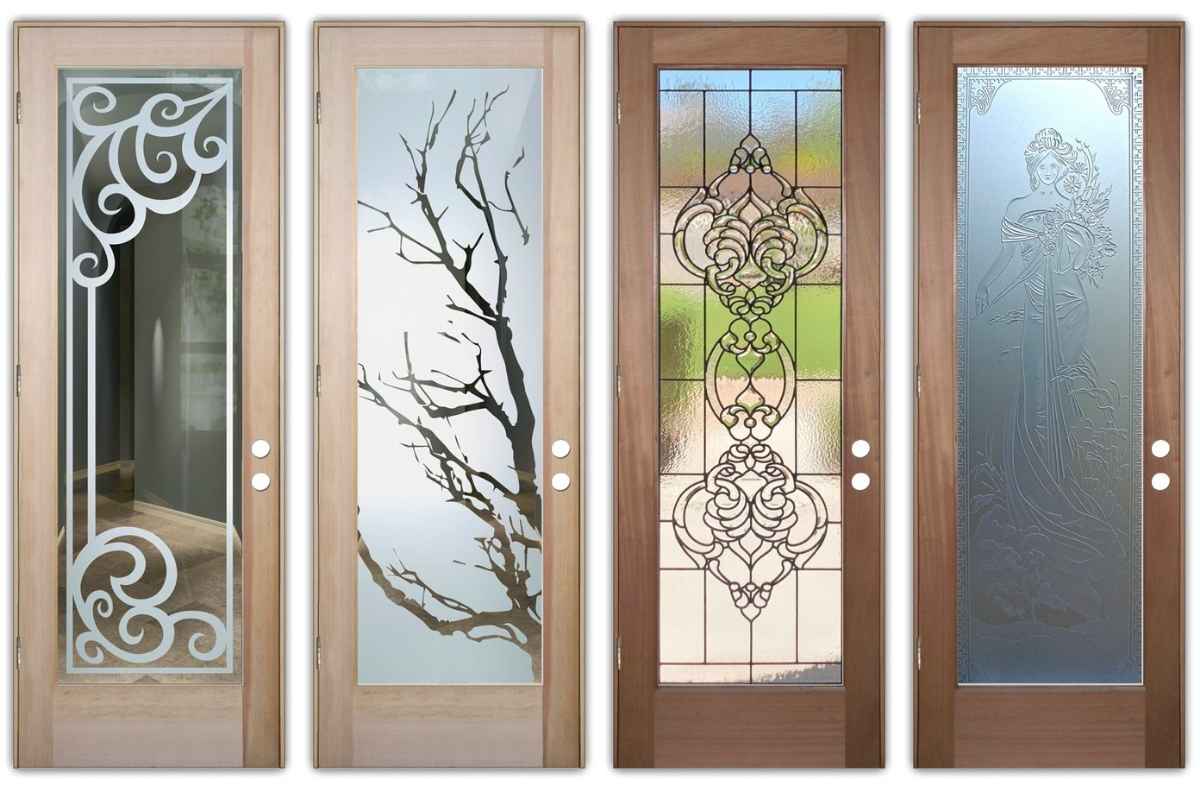
HELPFUL RESOURCES
If you’re still exploring ideas, browse our galleries to compare glass patterns, privacy levels, and architectural styles before choosing the design that’s right for your home.

Sans Soucie Art Glass: Decorative, Custom & Frosted Glass Doors, Windows, Showers & Stained Glass Since 1976
Family-owned and operated since 1976, Sans Soucie Art Glass leads the industry in decorative glass and custom glass design — from sandblast frosted glass and carved glass to hand-painted and stained glass art — transforming ordinary glass into Works of Art Captured in Glass recognized worldwide.
Innovative Frosted Glass Door Designer Tool
In 2010, we invented and launched our Frosted Glass Pantry Door Designer – a fun, easy-to-use tool that makes it simple for anyone to design and customize not only pantry doors, but a wide range of frosted glass doors for every room.
Explore our Frosted Glass Doors Collection
Our custom frosted glass doors include a beautiful variety for every style and space:
- Pantry Doors
- Frosted Glass Interior Door
- Interior Doors with Frosted Glass
- Frosted Glass French Doors
- Frosted Glass Front Door
- Front Doors with Frosted Glass
- Interior Glass Doors
- Glass Barn Doors
- Frosted Glass Barn Door
- Sliding Glass Barn Door
- All Glass Doors Interior
- All Glass Front Doors
- Bathroom Doors with Frosted Glass
- Laundry Room Doors
- Wine Room Doors
If you already have a door, and only need the glass insert, we also offer:
- Frosted Glass for Interior Doors
- Door Glass Inserts for Front Doors
- Glass Panels for Pantry Doors
- Frosted Glass Inserts for Bathroom Doors
- Laundry Room Door Glass Inserts
- Glass Panels for Interior Wine Cellar Doors
Elegant Frosted Glass Throughout Your Home
While our frosted glass doors are a top choice, we also create stunning glass products for every area of your home, including:
- Frosted Glass Shower Doors
- Glass Shower Partition
- Frosted Glass Shower Panel
- Frosted Glass Showers
- Frosted Glass Windows
- Bathroom Window Frosted Glass
- Decorative Window Glass, Window Frosting
- Custom Glass Dining Table
- Custom Glass Coffee Table
- Glass Shelves, Custom Glass Shelves
- Hand Carved & Painted Mirrors
- Frosted Glass Signs, Etched Glass Signs
- Cabinet Door Glass Inserts, Frosted Glass Inserts for Cabinet Doors
- Glass Wall Art, Wall Art on Glass
Looking for Inspiration? Explore Our Galleries
Discover visual idea boards, style concepts, décor applications, real project photos, and helpful information in our expanding gallery collection:
- Custom Glass
- Custom Glass Edges
- Custom Mirror
- Decorative Glass
- Decorative Glass Doors
- Decorative Glass Front Doors
- Decorative Glass Interior Doors
- Decorative Glass Window
- Stained Glass
- Stained Glass Doors
- Stained Glass Front Doors
- Stained Glass Windows
Free Shipping. Expert Packing, Peace of Mind
With FREE SHIPPING on most orders and worldwide delivery from our studio in Palm Desert, California, every order is packed in-house by our expert glaziers using custom materials and proven methods — ensuring safe arrival with a damage rate of less than 1%!
Explore our complete frosted glass doors collection and find the perfect frosted glass door for your space. Have questions? Contact us today!
Copyright © 2025, Sans Soucie Art Glass. All rights reserved.