Regular Clear Glass vs. Ultra-Clear (Low-Iron) Glass for Carved & Painted Art
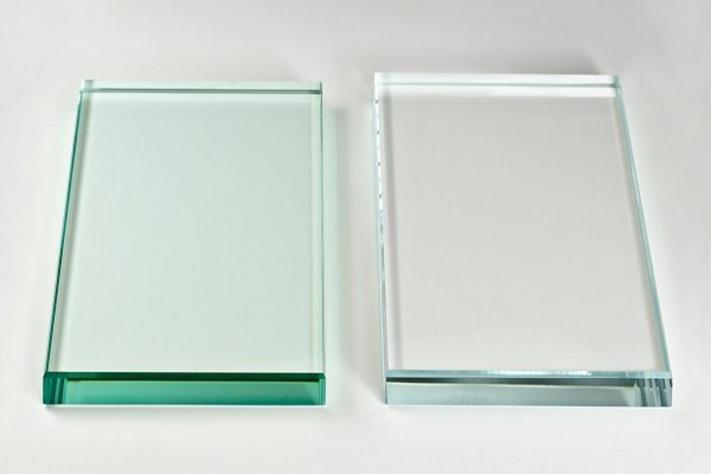
Choosing the right glass matters when you’re investing in carved or painted art glass. The difference between regular clear glass and ultra-clear (low-iron) glass directly affects color accuracy, brightness, and overall visual impact. This guide breaks down the key differences so you can quickly determine which option delivers the best result for your frosted glass design.
What Is Regular Clear Glass?
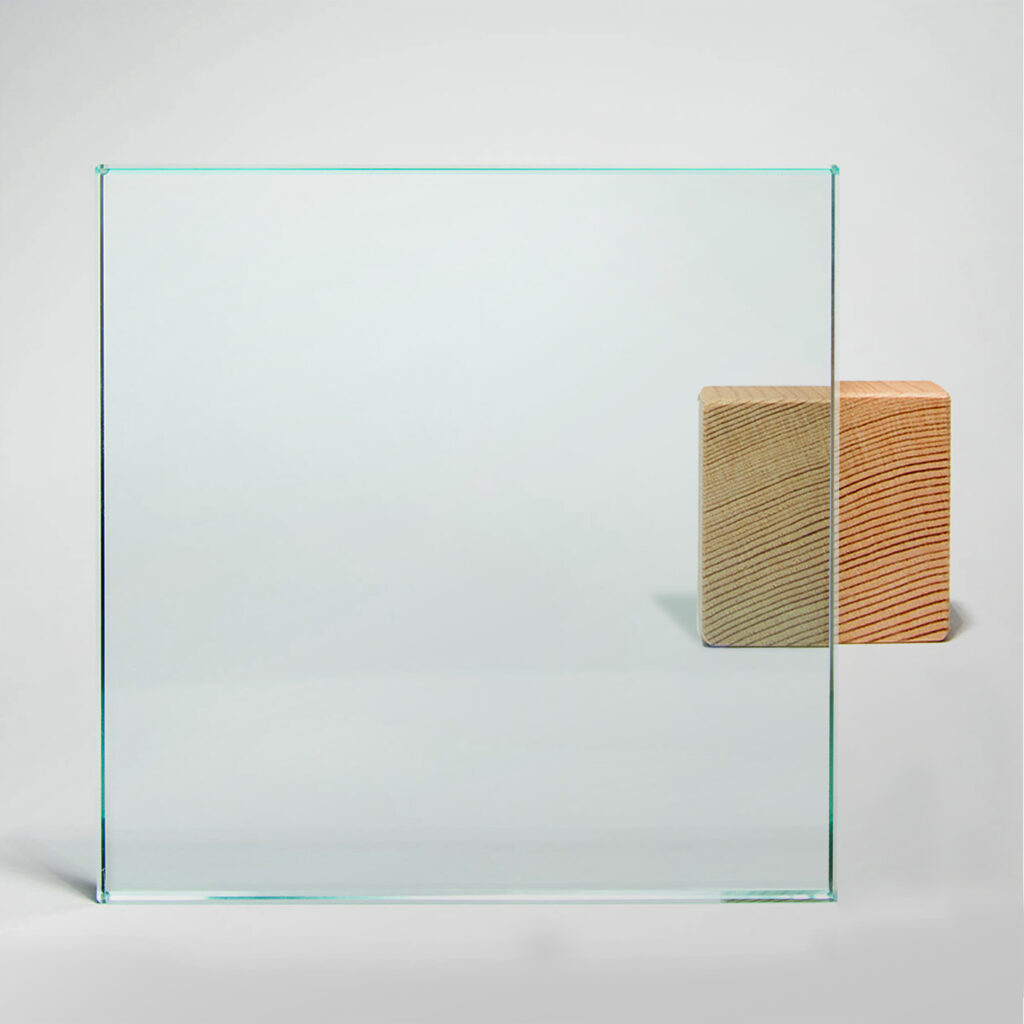
Regular clear glass is standard float glass made with natural iron content. This iron creates a subtle green tint that becomes more noticeable along the edges and in thicker panels. While it appears “clear” at first glance, the tint is always present and can influence how the glass looks in different lighting.
How It Affects Carved & Painted Glass
- Frosted and carved areas tend to appear slightly darker or cooler in tone
- Whites and light colors can look muted or slightly green
- Painted designs may shift in color, especially with soft neutrals and pastels
- Overall contrast between clear and frosted elements is slightly reduced
When It’s a Good Choice
Regular clear glass is a practical option for simpler etched designs or projects where budget is a priority and precise color accuracy is less critical.
What Is Ultra-Clear (Low-Iron) Glass?
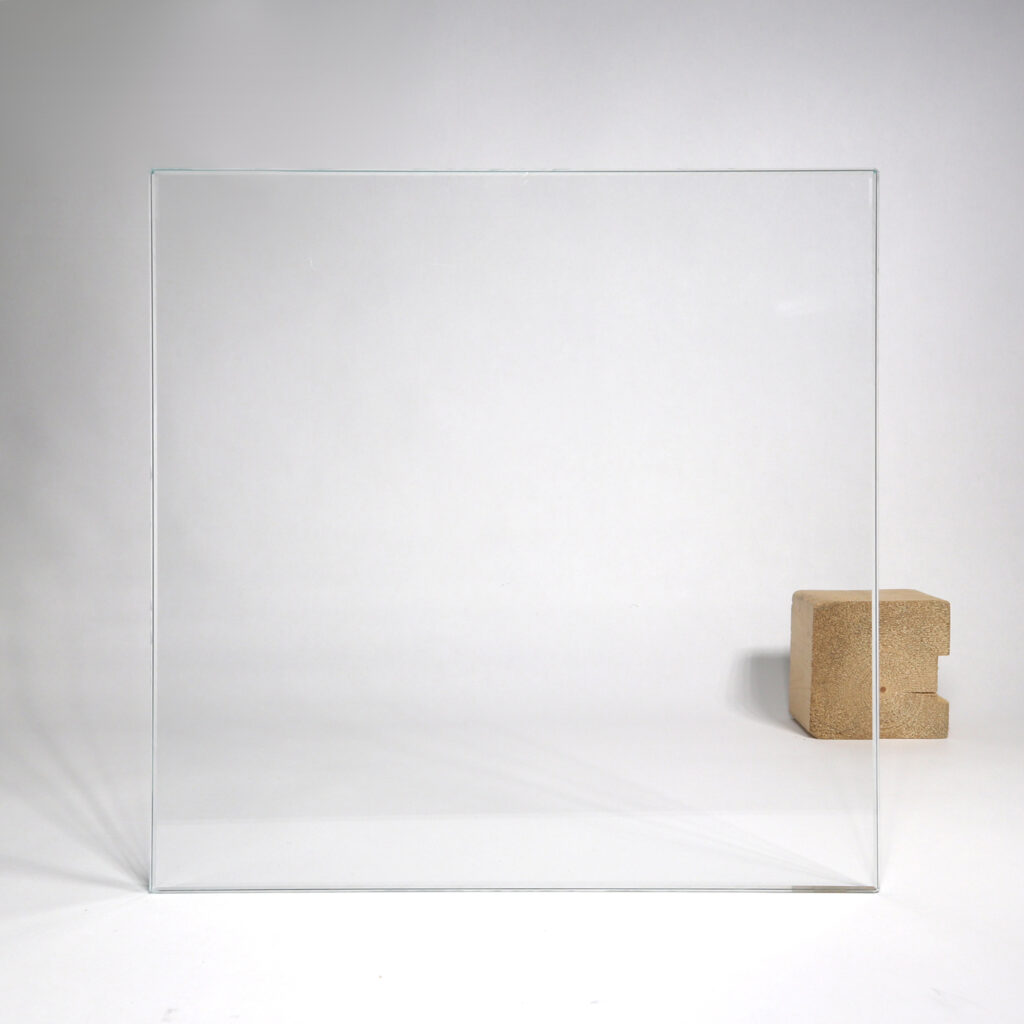
Ultra-clear glass—also called low-iron glass—is manufactured with significantly reduced iron content. Removing most of the iron eliminates the green tint found in standard clear glass, resulting in a more neutral, crystal-clear appearance. Edges appear clear or slightly bluish rather than green, especially in thicker panels.
How It Affects Carved & Painted Glass
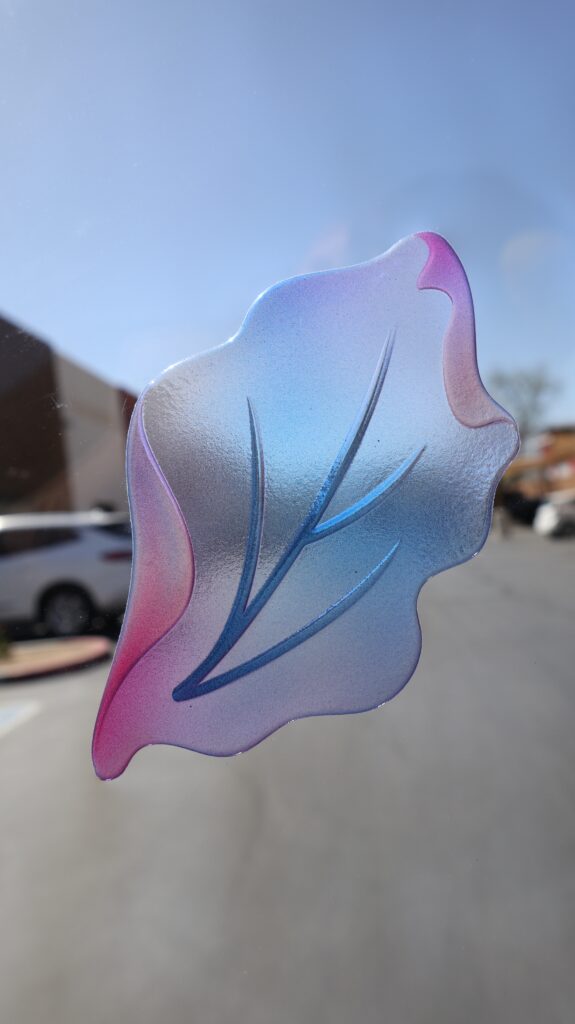
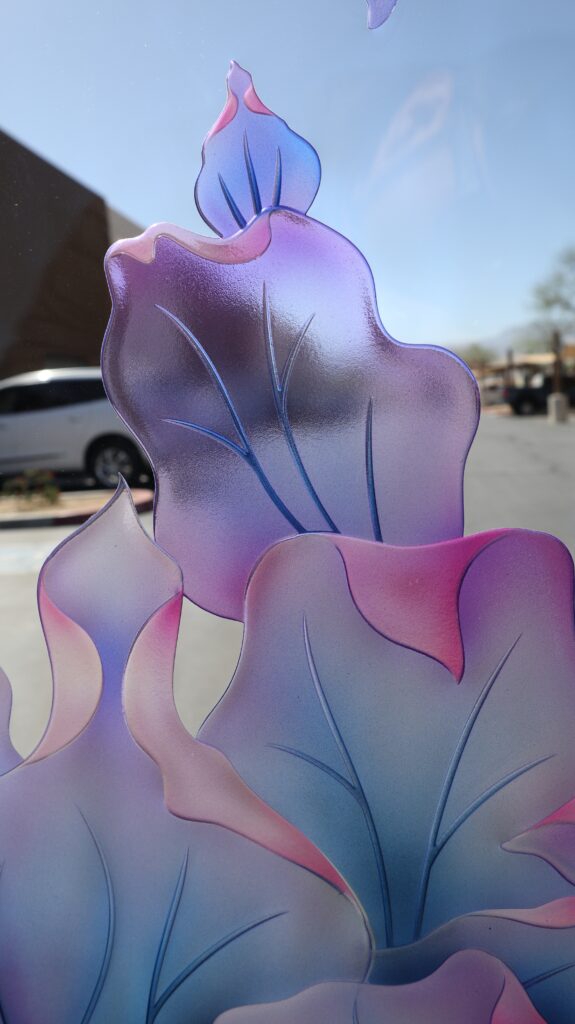
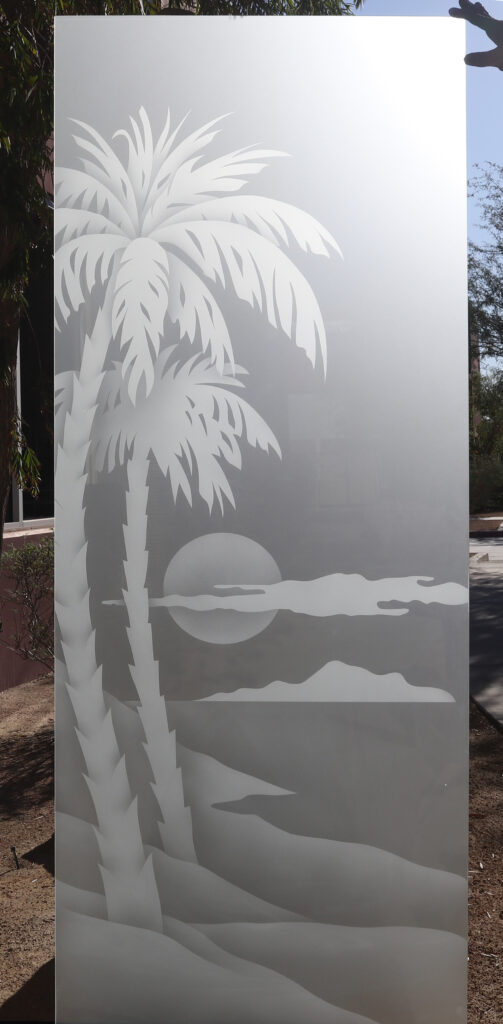
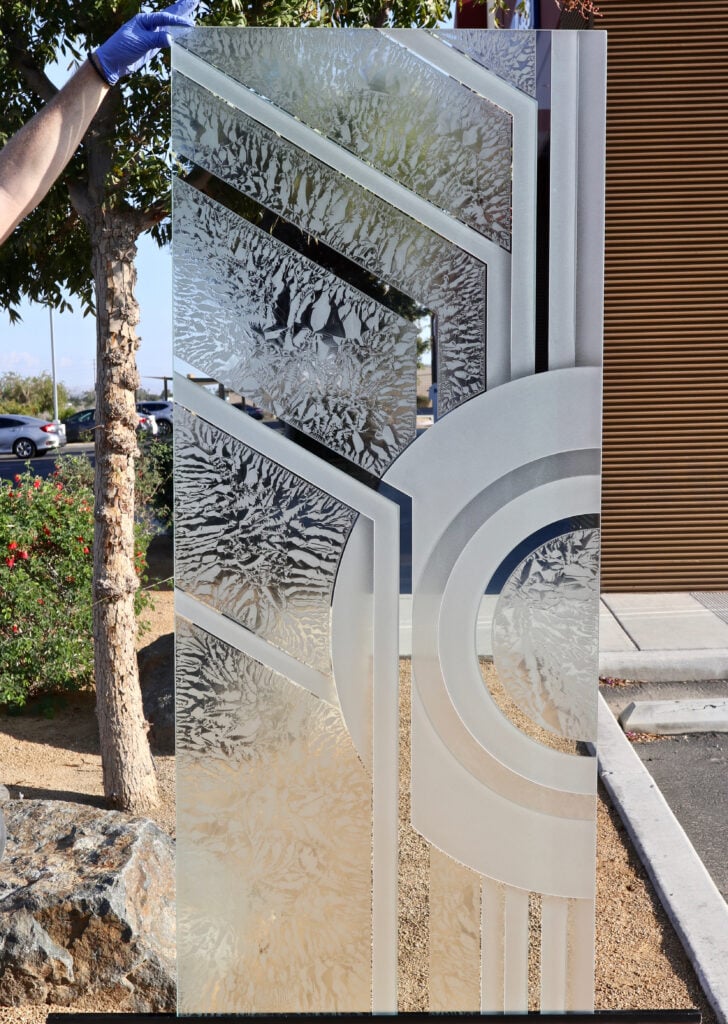
- Frosted and carved areas appear brighter, cleaner, and more luminous
- Whites stay true white, without a green or gray cast
- Painted colors remain accurate, including soft tones, gradients, and fine details
- Stronger contrast between clear and frosted elements enhances depth and definition
When It’s the Better Choice
Ultra-clear glass is ideal for detailed carved designs, multi-stage sandblasting, and any painted glass artwork where color accuracy, brightness, and overall visual impact are critical.
How Glass Size and Thickness Affect Edge Color
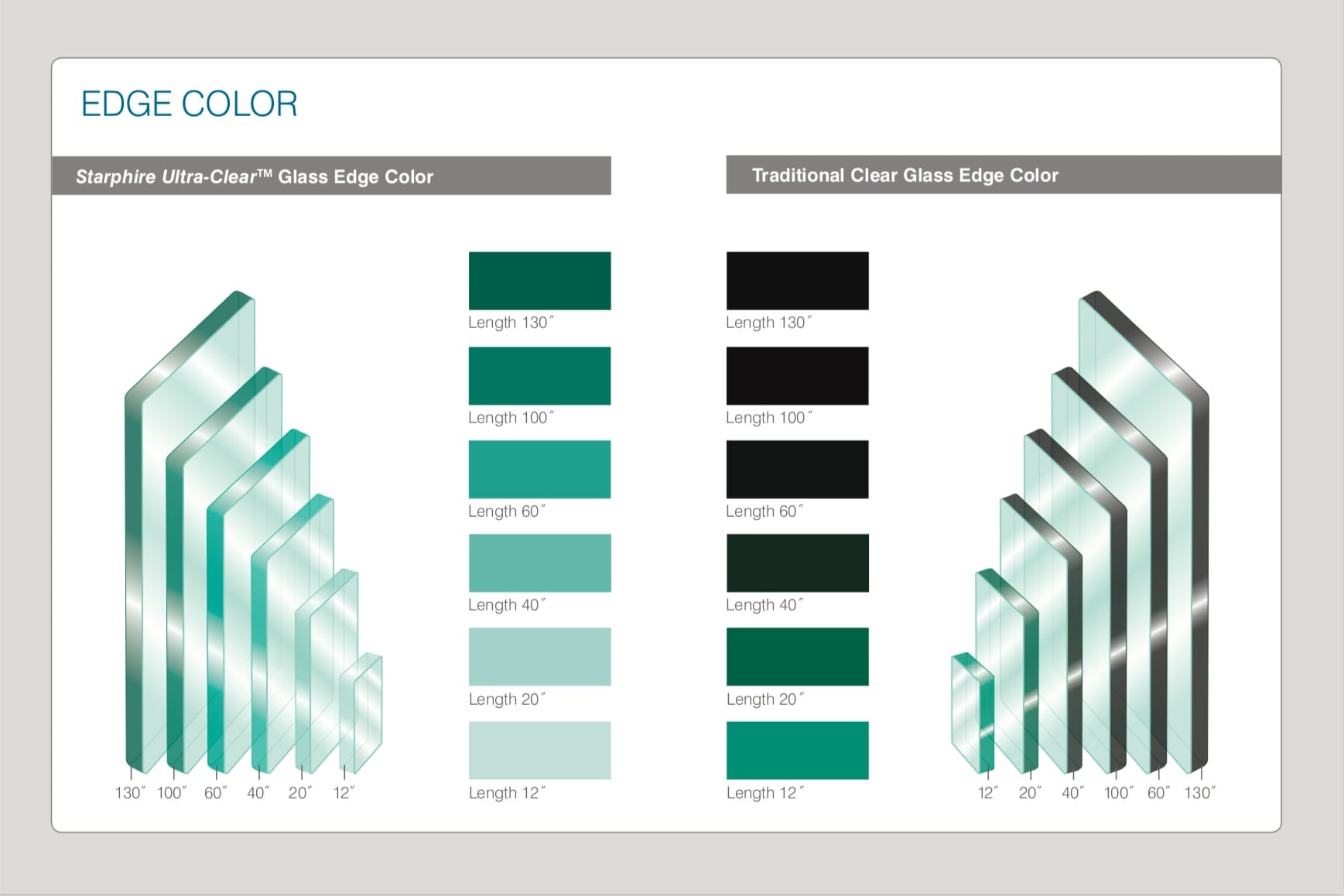
One of the biggest differences between regular clear glass and ultra-clear (low-iron) glass becomes more noticeable as the glass increases in size and thickness. While standard clear glass may appear relatively neutral in smaller pieces, its natural green tint becomes increasingly visible along the edges as panels get larger, thicker, or more heavily polished.
This is especially important in decorative architectural glass applications where the glass edge is exposed or where overall clarity plays a major role in the final appearance.
Why Regular Clear Glass Develops a Stronger Green Edge
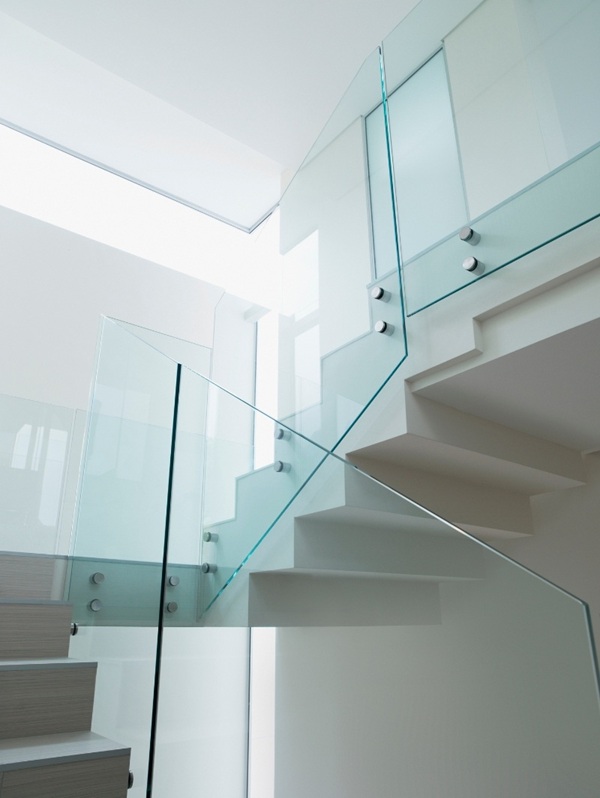
Regular clear glass contains naturally occurring iron oxide. As light travels through more material, the green tint becomes more concentrated and easier to see. This means larger panels and thicker glass often appear darker or greener around the perimeter and edges.
The effect is commonly noticeable in:
- Thick glass table tops
- Frameless shower enclosures
- Glass railings
- Large decorative panels
- Shelves and partitions
- Exposed polished-edge glass

In some lighting conditions, especially with backlighting or sunlight, the edge color can appear substantially darker than expected.
How Low-Iron Glass Maintains a Cleaner Appearance
Ultra-clear (low-iron) glass reduces the iron content responsible for the green cast, allowing the glass to maintain a lighter, more neutral edge color even as the panel becomes thicker or larger.
This creates several visual advantages:
- Cleaner, brighter edge appearance
- Better light transmission
- Less color distortion through the glass
- More accurate whites and neutral tones
- Greater visual consistency across large panels
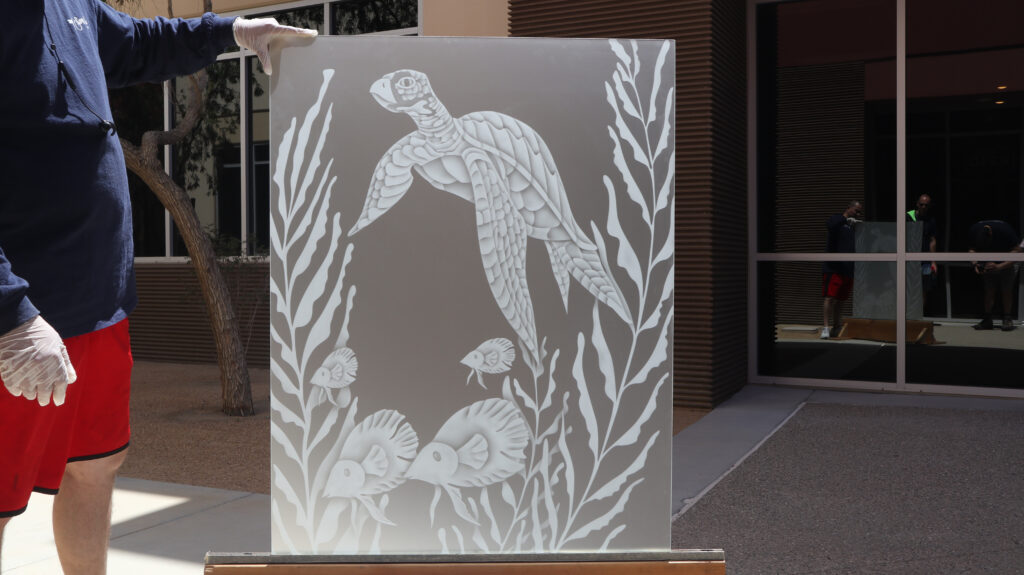
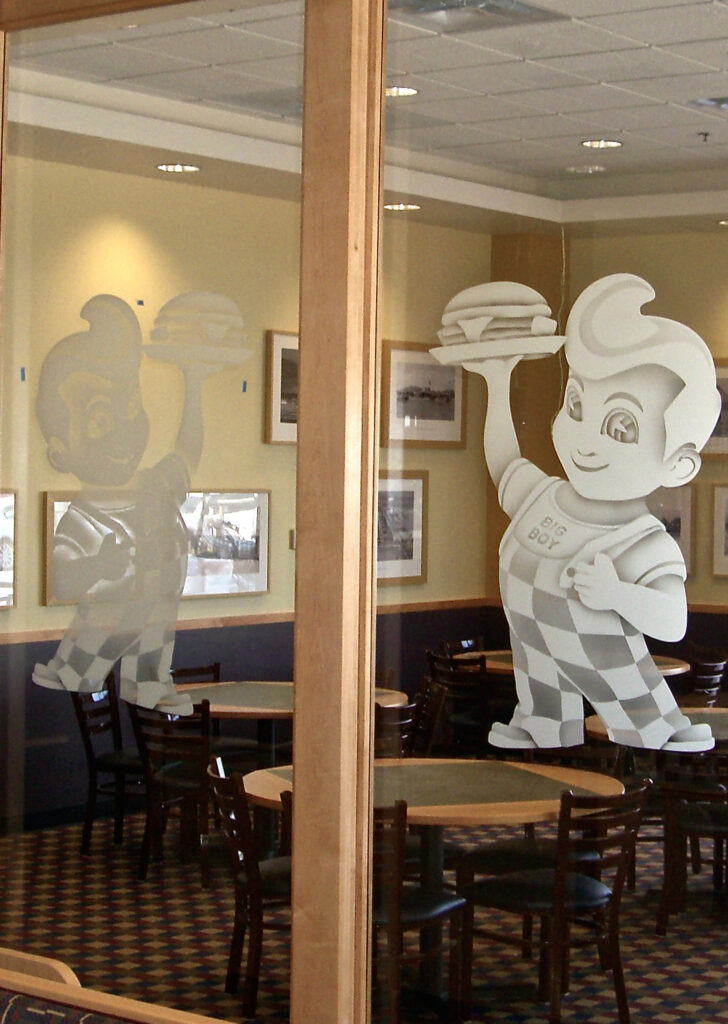
In decorative etched and painted glass, this improved clarity helps preserve the intended design details and prevents the glass itself from visually overpowering lighter artwork or frosted areas.
Thickness Makes the Difference More Noticeable
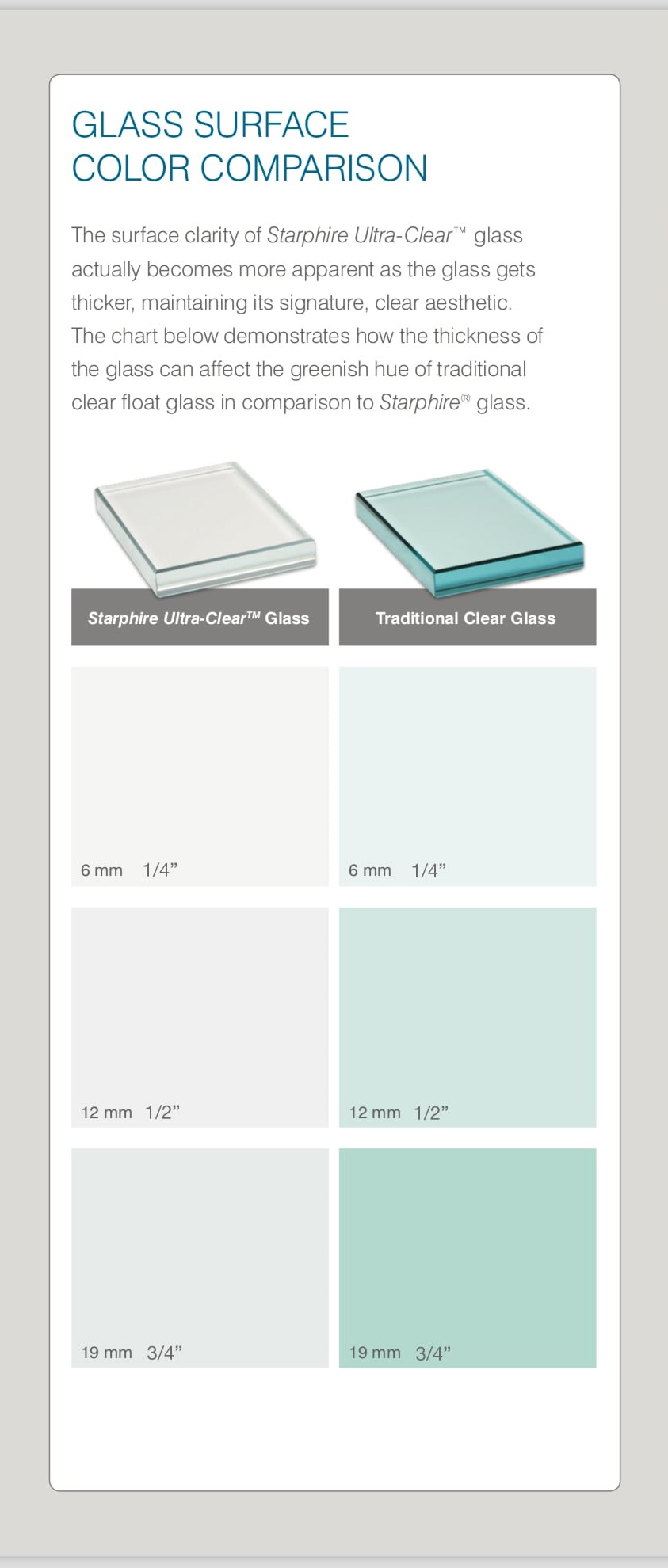
The thicker the glass, the more apparent the color difference becomes between standard clear and low-iron glass. In thinner glass, the variation may appear subtle. In thicker applications—such as 1/2″, 3/4″, or laminated decorative glass—the contrast becomes significantly easier to see.
For example:
- Thin glass may show only a slight green edge
- Medium-thickness glass often develops a more visible green hue
- Thick architectural glass can appear noticeably darker or greener around exposed edges
Low-iron glass minimizes this progression, maintaining a clearer and more refined appearance across varying thicknesses.
Why This Matters for Decorative Glass
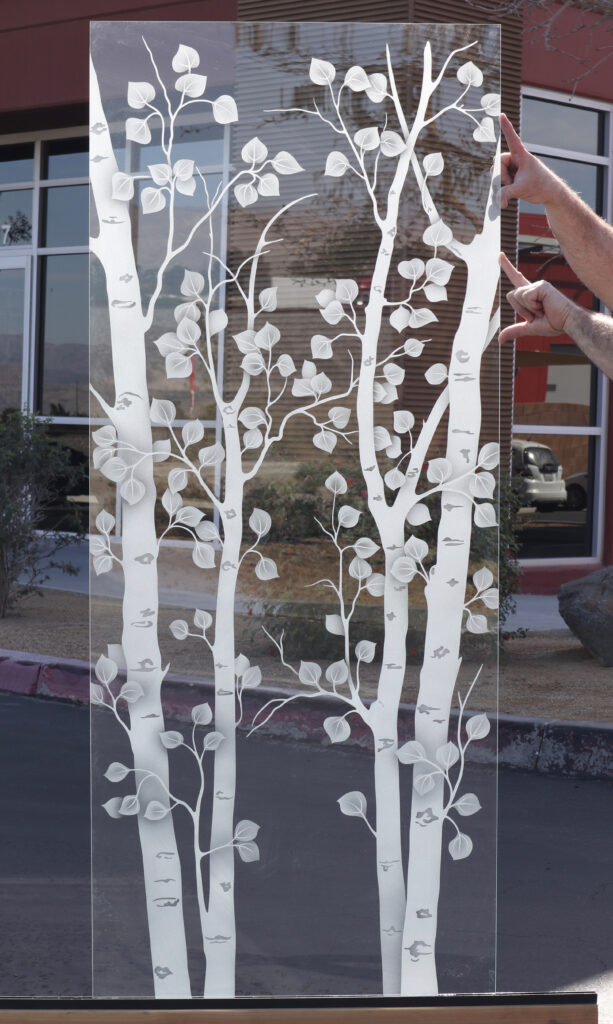
In decorative glass doors, partitions, shower enclosures, and carved glass artwork, edge color can influence the overall visual impact of the design. Cleaner glass clarity allows carved details, frosted areas, gradients, and painted elements to appear brighter and more defined.
For projects focused on luxury finishes, minimal color distortion, or maximum light transmission, low-iron glass is often the preferred choice because it preserves the cleanest possible appearance from both the face and the edge of the glass.
This is especially beneficial in decorative glass doors, carved privacy panels, and painted architectural glass where brightness, detail, and color accuracy play a major role in the final design.
Key Differences at a Glance
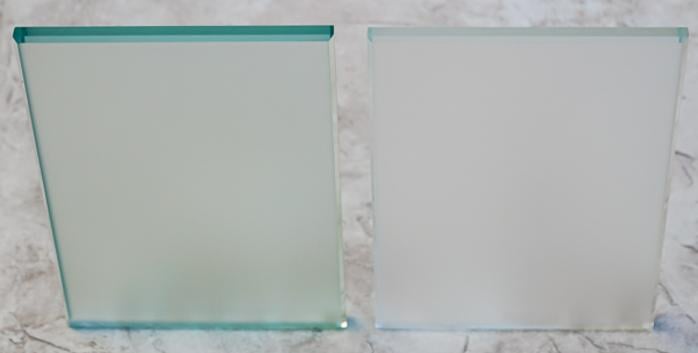
Visual Clarity
- Regular Clear Glass: Slight green tint, especially visible on edges and thicker glass
- Ultra-Clear Glass: Neutral, crystal-clear appearance with minimal color cast
Color Accuracy
- Regular: Can shift whites, pastels, and light tones (slightly green or muted)
- Ultra-Clear: Preserves true, accurate color across all tones
Frosted & Carved Appearance
- Regular: Frosted areas appear slightly darker or less crisp
- Ultra-Clear: Frosted areas appear bright white with sharper detail
Contrast & Detail
- Regular: Softer contrast between clear and etched areas
- Ultra-Clear: Stronger contrast, enhancing depth and definition
Lighting Performance
- Regular: Green tint becomes more noticeable with backlighting
- Ultra-Clear: Maintains brightness and clarity in all lighting conditions
Cost
- Regular: More affordable standard option
- Ultra-Clear: Higher cost due to refined manufacturing process
Best Use Case
- Regular: Simple etched designs, budget-conscious projects
- Ultra-Clear: High-end carved or painted glass where clarity and color matter most
Quick Summary
Ultra-clear (low-iron) glass offers better clarity, true color, brighter frosted areas, and stronger contrast—making it the preferred choice for detailed carved and painted glass. Regular clear glass is a more affordable option but introduces a slight green tint that can affect color and brightness.
Which Glass Is Better for Carved Glass Designs?
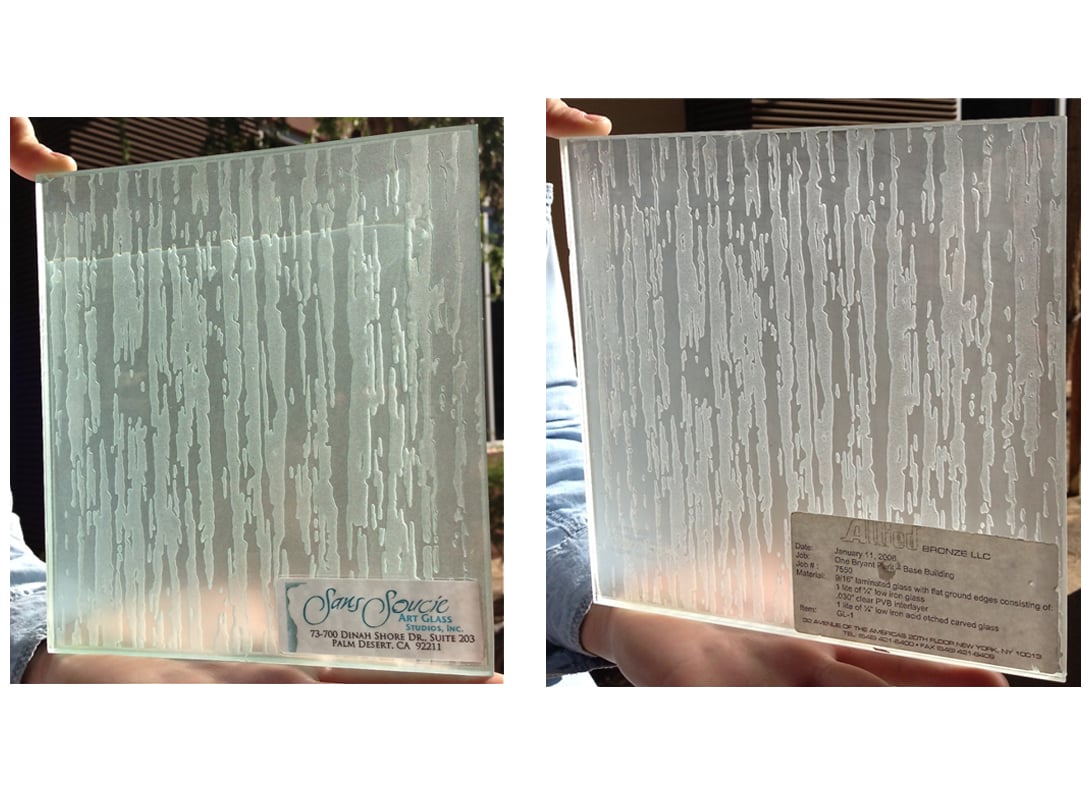
When to Choose Regular Clear Glass
- Simple etched or 1D designs
- Designs with minimal contrast needs
- Cost-sensitive applications
When to Choose Ultra-Clear Glass
- Deep carved or multi-stage (3D) designs
- Designs relying on light diffusion and contrast
- Projects where visual clarity is a priority
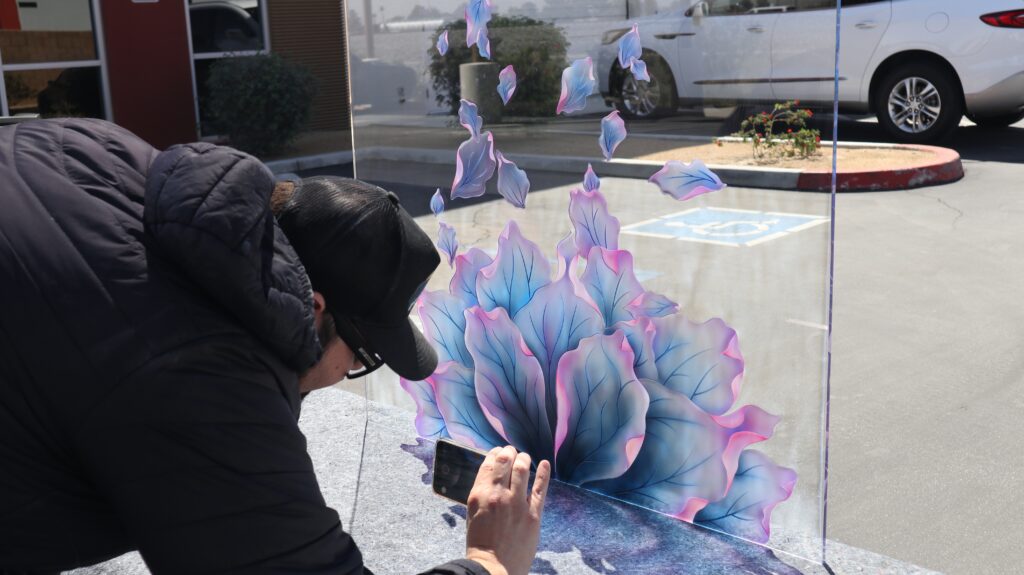
Which Glass Is Better for Painted Glass Art?
Regular Clear Glass Limitations
- Whites may appear dull or slightly green
- Blues and cool tones can shift
- Fine color gradients lose accuracy
Ultra-Clear Glass Advantages
- True whites and vibrant colors
- Accurate gradients and shading
- Cleaner, more luminous finished look
Cost Difference Explained
Why Ultra-Clear (Low-Iron) Glass Costs More
Ultra-clear (low-iron) glass costs more because it undergoes additional refining to remove much of the iron that naturally exists in standard glass. This extra processing increases material and production costs, but it results in a noticeably clearer, more neutral glass that performs better for detailed carving and painted designs.
Is the Upgrade Worth It?
For carved and especially painted art glass, the upgrade is typically worth it. Ultra-clear glass delivers brighter frosted areas, sharper contrast, and true-to-tone colors that standard glass cannot achieve. For simpler etched designs or projects where color precision is less critical, regular clear glass remains a practical, cost-effective option.
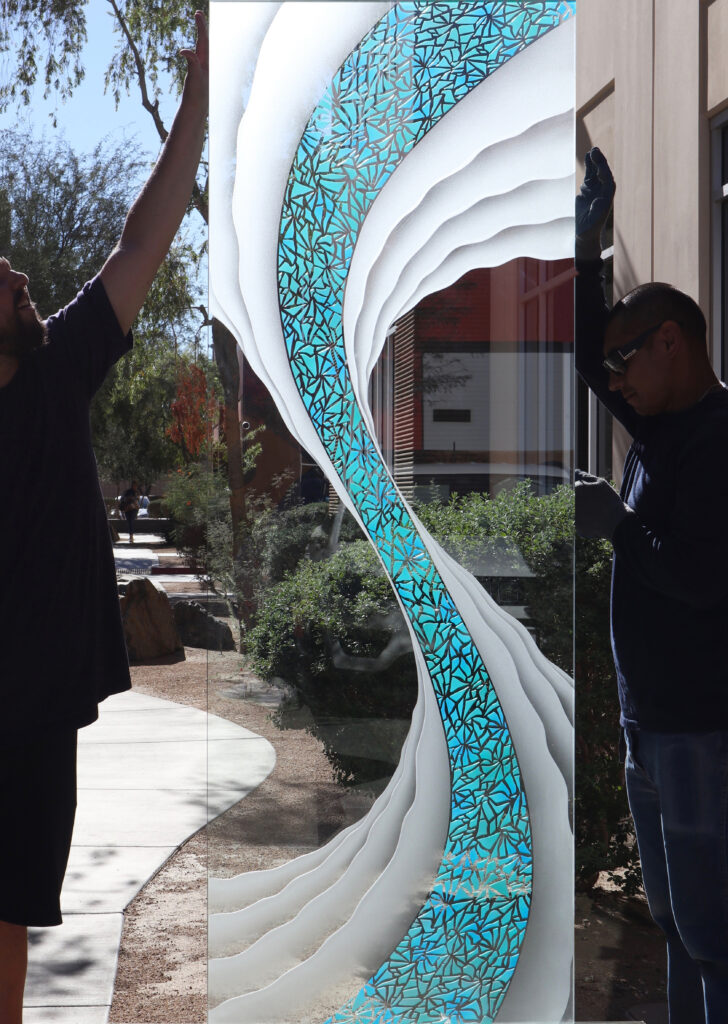
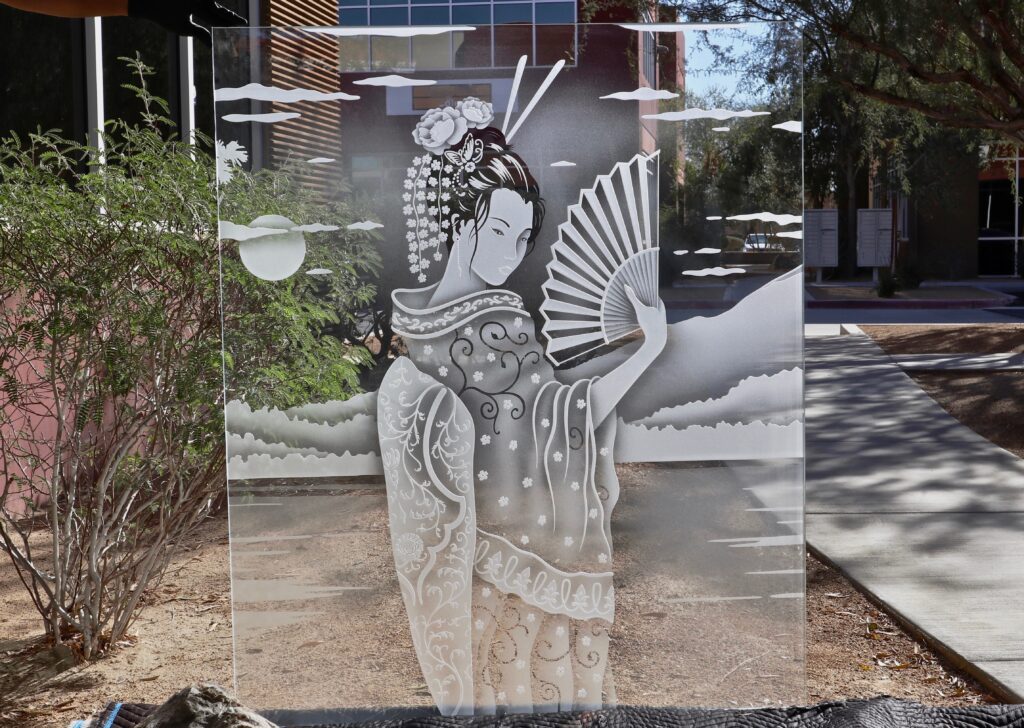
Best Applications for Each Glass Type
Regular Clear Glass
- Interior doors with simple frosted or 1D etched designs
- Office partitions or panels with minimal detail
- Projects where budget is the primary consideration
- Applications where slight color shift will not impact the overall look
Ultra-Clear (Low-Iron) Glass
- Decorative glass doors with carved or multi-stage designs
- Painted glass panels requiring true color accuracy
- Shower enclosures where brightness and clarity enhance the space
- Feature glass pieces where maximum visual impact is desired
Final Verdict
If your design relies on color accuracy, brightness, and crisp detail, ultra-clear (low-iron) glass is the better choice. If the project is simpler, unpainted, or budget-sensitive, regular clear glass provides a solid, functional option. The decision ultimately comes down to whether maximum visual performance or cost savings is the priority.
Frequently Asked Questions
Does low-iron glass make frosted glass look whiter?
Yes. Because low-iron glass reduces the green tint found in standard clear glass, frosted glass and carved areas appear cleaner, brighter, and more neutral in color. This is especially noticeable in thicker glass and decorative privacy glass designs where white frost and fine detail are important.
Is ultra-clear glass worth it for frosted glass designs?
Yes—particularly for detailed or multi-stage carved designs. Ultra-clear glass produces a cleaner, brighter white in frosted areas and improves contrast between clear and etched sections. For simple, light etching, regular clear glass can still perform well at a lower cost. Standard clear glass may still be suitable for simpler etched or lightly frosted glass designs.
Why do some decorative glass designs appear more “dimensional” on low-iron glass?
Low-iron glass improves contrast between clear and frosted areas, which helps multi-stage carving and shaded sandblast effects appear deeper and more layered. The cleaner base glass allows subtle transitions, gradients, and carved depths to stand out more distinctly.
Is the difference between standard and low-iron glass more noticeable in modern interiors?
Often, yes. Modern interiors commonly use lighter color palettes, minimal framing, and large expanses of glass, which make the green tint in standard clear glass easier to notice. Low-iron glass tends to complement contemporary spaces because it maintains a cleaner, more neutral appearance.
Does low-iron glass improve the appearance of backlit decorative glass?
Yes. Backlighting amplifies the color characteristics of the glass itself, making the green hue of standard clear glass more noticeable. Low-iron glass allows illuminated carved, etched, and painted designs to appear brighter, cleaner, and more color accurate when lit from behind. This effect is especially noticeable in larger or more transparent decorative glass applications.
Why do polished glass edges make the green tint easier to see?
Polished edges allow light to travel deeper through the thickness of the glass, which intensifies the visibility of iron content in standard clear glass. This is why exposed polished edges often appear greener on thicker panels made from regular clear glass.
Does low-iron glass make a difference in white or neutral painted designs?
Yes. White, ivory, gray, and other soft neutral tones are particularly sensitive to the green cast of standard clear glass. Low-iron glass helps preserve cleaner whites and more accurate neutral shades, especially in painted decorative glass applications.
Is low-iron glass beneficial for minimalist decorative glass designs?
Absolutely. Minimalist designs rely heavily on clarity, contrast, and clean visual lines. Because there are fewer visual elements competing for attention, the natural tint in standard glass can become more noticeable. Low-iron glass helps maintain a crisper and more refined appearance.
Why does low-iron glass appear more luminous in carved glass artwork?
Low-iron glass allows more light to pass through without the darker green undertones found in standard clear glass. This increased light transmission helps carved and frosted areas reflect and diffuse light more evenly, creating a brighter and more luminous appearance.
Does laminated decorative glass make the green tint more visible?
It can. Laminated glass combines multiple layers of glass and interlayers, increasing the overall material thickness. As thickness increases, the green tint in standard clear glass often becomes more noticeable, particularly along exposed edges and lighter design areas.
Why do luxury architectural projects often specify low-iron glass?
High-end architectural projects frequently prioritize visual clarity, clean color representation, and maximum light transmission. Low-iron glass helps achieve a more refined aesthetic by minimizing color distortion and maintaining a brighter, more neutral appearance across large glass surfaces. Glass selection can significantly influence the overall aesthetics of the finished design.
Can low-iron glass improve the appearance of carved privacy glass?
Yes. In carved privacy glass, the contrast between clear and frosted areas is an important part of the design. Low-iron glass helps maintain brighter frosted sections and sharper detail definition, which can make privacy patterns and carved artwork appear more crisp and visually balanced.
Does viewing angle affect how noticeable the green tint becomes?
Yes. The angle at which glass is viewed can influence how visible the tint appears, especially on thicker panels or exposed edges. Looking through the length or thickness of standard clear glass often makes the green coloration more apparent compared to viewing it straight on.
Can you tell the difference between clear and low-iron glass?
Yes. The difference is most visible when viewing the edge of the glass or when comparing side-by-side. Regular clear glass shows a green tint, while low-iron glass appears more neutral. The distinction also becomes more apparent in backlit conditions and in designs with white or painted elements. A side-by-side comparison often makes the color difference immediately easier to recognize. Seeing both glass types can help homeowners better understand the visual differences.
Which glass is best for painted glass doors?
Ultra-clear (low-iron) glass is the best choice for painted glass doors. It preserves true color, keeps whites clean and bright, and allows gradients and fine details to appear accurately without color distortion. Many homeowners specifically request low-iron glass for luxury decorative glass installations.
What is ultra white glass, and is it the same as low-iron glass?
Yes. Ultra white glass is another name commonly used for low-iron glass. Both refer to glass manufactured with reduced iron levels to achieve a clearer, more neutral appearance with minimal color tint. This same clarity advantage is one reason low-iron glass is frequently used in high-end aquariums.
How do the optical properties of glass affect carved and painted designs?
The optical properties of glass determine how light passes through, reflects, and diffuses across the surface. In carved and painted glass, better light transmission improves brightness, enhances contrast, and ensures details remain sharp and visually defined. Higher transparency allows carved and frosted details to appear cleaner and more visually defined.
Why does low iron content make such a noticeable difference?
Lower iron levels reduce the green tint found in standard glass, allowing more true light to pass through. This results in brighter frosted areas, more accurate colors, and a cleaner overall look—especially important in decorative and artistic applications.
Does glass thickness change how clear or green it looks?
Yes. As thickness increases, the natural tint in standard glass becomes more visible. Thicker panels amplify the green edge, while low-iron glass maintains a more neutral appearance. Even an additional fraction of an inch in thickness can increase the visibility of the green edge.
What should I take into account when choosing between glass types?
You should take into account design complexity, color usage, lighting conditions, and budget. Projects with painted elements or detailed carving benefit most from ultra-clear glass, while simpler designs can perform well with standard glass. It can also help to explore the glass samples under different lighting conditions before making a final decision.
Will objects behind the glass look different depending on the glass type?
Yes. Objects viewed through regular clear glass may appear slightly tinted or muted, while low-iron glass provides a more natural, true-to-life view with less color interference.
What is the difference in composition between regular glass and low-iron glass?
The primary difference in composition is the amount of iron oxide present. Standard glass contains more iron, which creates the green tint, while low-iron glass is refined to reduce this element and improve clarity.
Does iron in glass contain lead or harmful materials?
No. The iron content in standard glass does not mean it contains lead. Modern glass manufacturing does not use lead in typical architectural glass products. Tempering and fabrication requirements are still necessary for safety compliance where applicable.
Can switching to low-iron glass add value to a project?
Yes. Using low-iron glass can add visual quality and perceived value, especially in high-end or custom designs where clarity and detail are important.
Does the height or size of the glass panel impact how noticeable the tint is?
Yes. Larger panels—whether in height or overall size—make the tint in regular glass more noticeable, especially when viewed across wide surfaces or in strong lighting. The green tint generally becomes approximately more noticeable as glass thickness and panel size increase.
Does low-iron glass change the appearance of natural daylight inside a room?
Yes. Because low-iron glass allows more neutral light transmission, daylight passing through the glass appears cleaner and less color-shifted. In decorative architectural applications, this can make interiors feel brighter and help carved, frosted, or painted details appear more visually defined throughout the day.
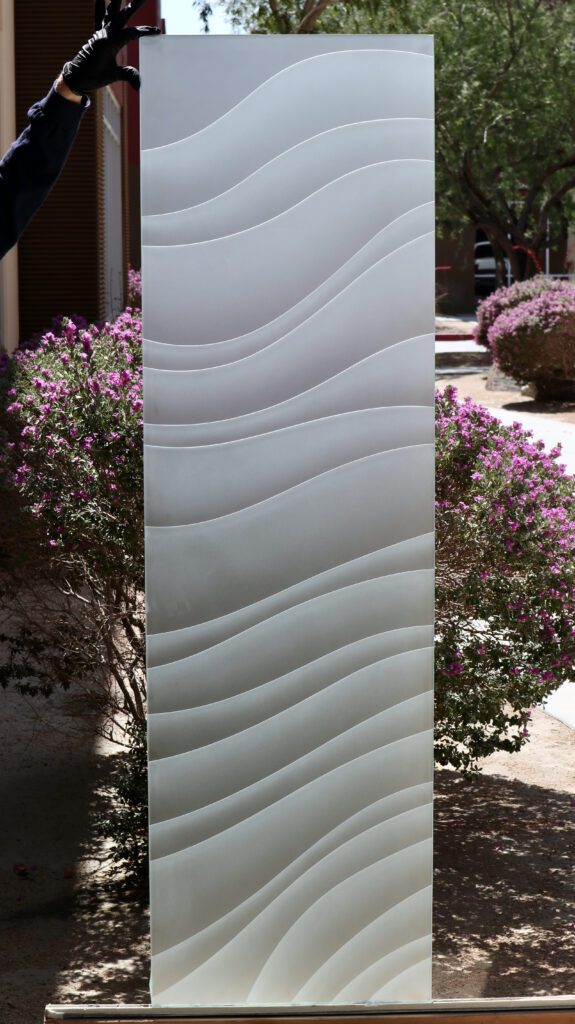
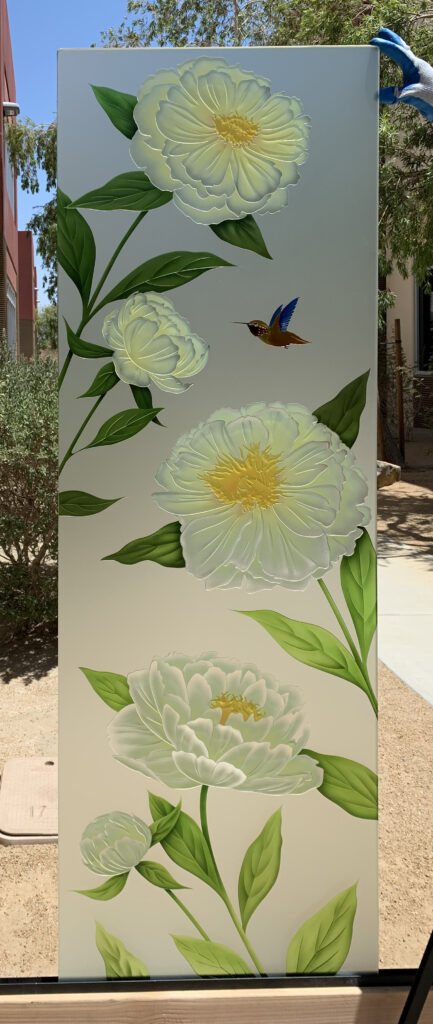

Sans Soucie Art Glass: Decorative, Custom & Frosted Glass Doors, Windows, Showers & Stained Glass Since 1976
Family-owned and operated since 1976, Sans Soucie Art Glass leads the industry in decorative glass and custom glass design — from sandblast frosted glass and carved glass to hand-painted and stained glass art — transforming ordinary glass into Works of Art Captured in Glass recognized worldwide.
Innovative Frosted Glass Door Designer Tool
In 2010, we invented and launched our Frosted Glass Pantry Door Designer – a fun, easy-to-use tool that makes it simple for anyone to design and customize not only pantry doors, but a wide range of frosted glass doors for every room.
Explore our Frosted Glass Doors Collection
Our custom frosted glass doors include a beautiful variety for every style and space:
- Pantry Doors
- Frosted Glass Interior Door
- Interior Doors with Frosted Glass
- Frosted Glass French Doors
- Frosted Glass Front Door
- Front Doors with Frosted Glass
- Interior Glass Doors
- Glass Barn Doors
- Frosted Glass Barn Door
- Sliding Glass Barn Door
- All Glass Doors Interior
- All Glass Front Doors
- Bathroom Doors with Frosted Glass
- Laundry Room Doors
- Wine Room Doors
If you already have a door, and only need the glass insert, we also offer:
- Frosted Glass for Interior Doors
- Door Glass Inserts for Front Doors
- Glass Panels for Pantry Doors
- Frosted Glass Inserts for Bathroom Doors
- Laundry Room Door Glass Inserts
- Glass Panels for Interior Wine Cellar Doors
Elegant Frosted Glass Throughout Your Home
While our frosted glass doors are a top choice, we also create stunning glass products for every area of your home, including:
- Frosted Glass Shower Doors
- Glass Shower Partition
- Frosted Glass Shower Panel
- Frosted Glass Showers
- Frosted Glass Windows
- Bathroom Window Frosted Glass
- Decorative Window Glass, Window Frosting
- Custom Glass Dining Table
- Custom Glass Coffee Table
- Glass Shelves, Custom Glass Shelves
- Hand Carved & Painted Mirrors
- Frosted Glass Signs, Etched Glass Signs
- Cabinet Door Glass Inserts, Frosted Glass Inserts for Cabinet Doors
- Glass Wall Art, Wall Art on Glass
Looking for Inspiration? Explore Our Galleries
Discover visual idea boards, style concepts, décor applications, real project photos, and helpful information in our expanding gallery collection:
- Custom Glass
- Custom Glass Edges
- Custom Mirror
- Decorative Glass
- Decorative Glass Doors
- Decorative Glass Front Doors
- Decorative Glass Interior Doors
- Decorative Glass Window
- Stained Glass
- Stained Glass Doors
- Stained Glass Front Doors
- Stained Glass Windows
Free Shipping. Expert Packing, Peace of Mind
With FREE SHIPPING on most orders and worldwide delivery from our studio in Palm Desert, California, every order is packed in-house by our expert glaziers using custom materials and proven methods — ensuring safe arrival with a damage rate of less than 1%!
Explore our complete frosted glass doors collection and find the perfect frosted glass door for your space. Have questions? Contact us today!
Copyright © 2025, Sans Soucie Art Glass. All rights reserved.