Textured Glass Options for Interior Doors
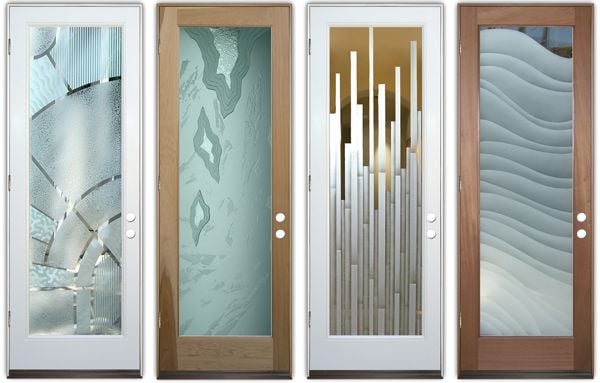
Textured glass is a popular choice for interior doors because it allows natural light to flow between spaces while softening visibility and adding visual interest. With a wide range of patterns and finishes available, textured glass offers a balance between openness, privacy, and style. Textured decorative interior glass doors are ideal for areas like pantries, laundry rooms, home offices, and interior French doors.
Below is a quick breakdown of the most common textured glass options, how private they are, and where textured interior door with glass designs are typically used.
Quick Answers: Textured Glass for Interior Doors
- Reeded / Fluted Glass
- Frosted / Acid Etched Glass
- Gluechip Glass
- Rain Glass
- Seedy Glass
- Patterned / Decorative Glass
What Is Textured Glass for Interior Doors?
Textured glass is a decorative type of glass featuring a patterned or raised surface that gently obscures visibility while still allowing light to pass through. When used in interior doors, textured glass helps define spaces, soften sightlines, and add visual interest—without fully closing off a room.
Unlike clear glass, textured glass distorts what’s seen through it,. It retains depth, movement, and character. It’s a popular choice for interior doors in areas like pantries, laundry rooms, home offices, and bathrooms where light is desired but full transparency isn’t.
In this guide, we’ll break down the most common textured glass options for interior doors like reeded and sleek frosted glass interior doors. We’ll explain how much privacy each provides, and help you decide which style best fits your space.
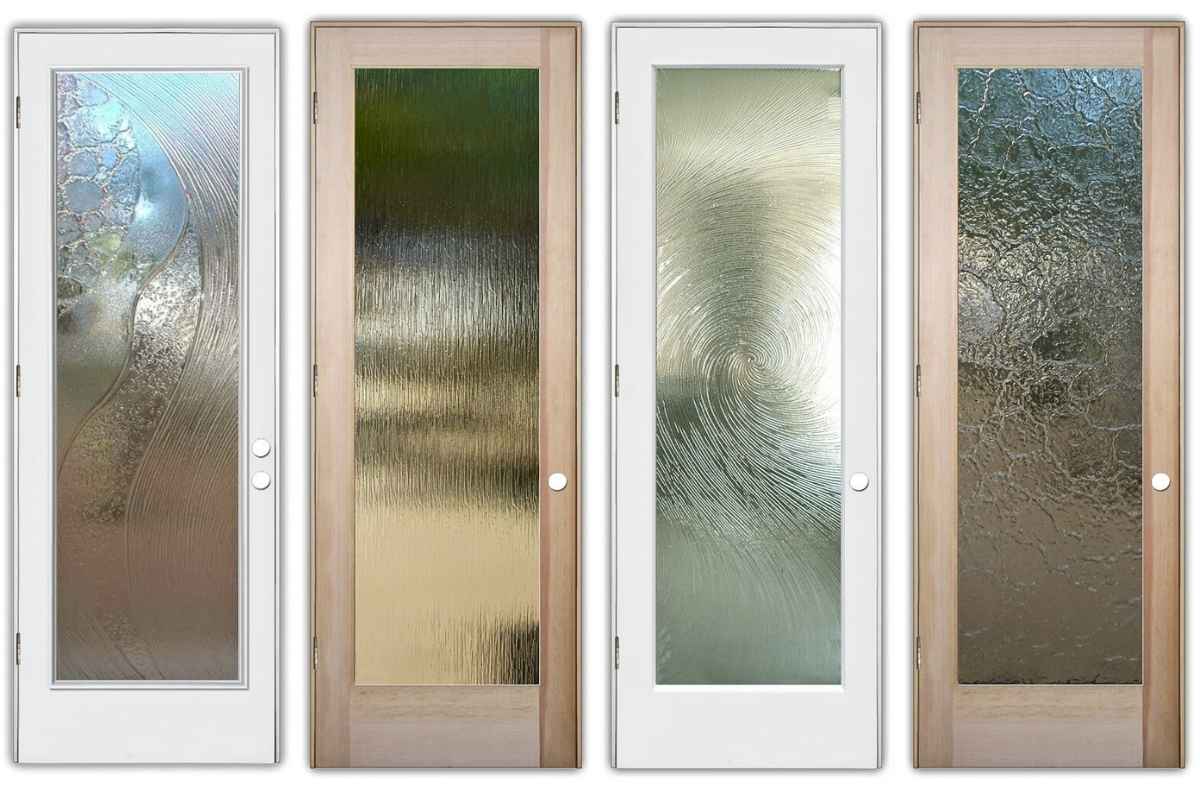


Popular Textured Glass Types for Interiors
Textured glass comes in a wide range of styles, each offering a different balance of light transmission, privacy, and visual character. Below are the most common textured glass options used in interior doors, along with what makes each one distinct.
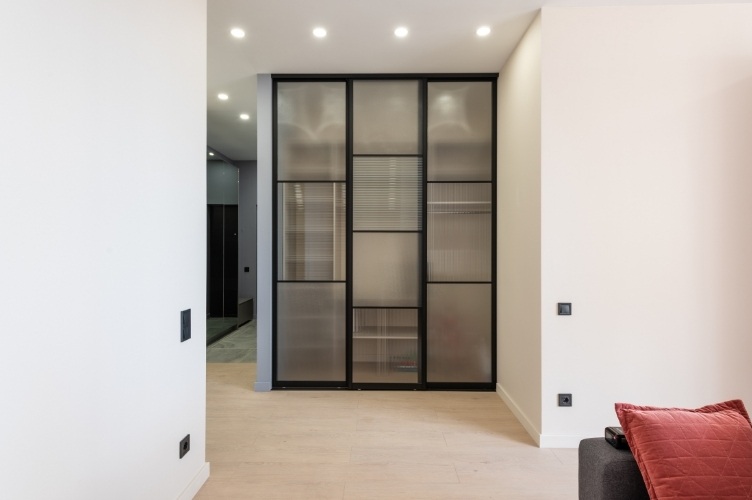
1. Reeded / Fluted Glass
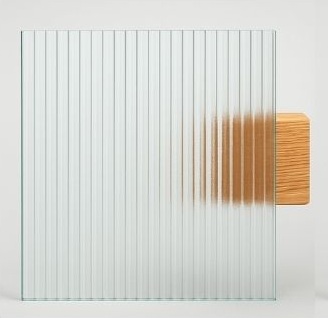
Reeded (also called fluted) glass features linear grooves—most commonly vertical—that subtly distort visibility while maintaining a clean, architectural look. It allows abundant light to pass through and is especially popular in modern, transitional, and mid-century interiors.
2. Frosted / Acid Etched Glass
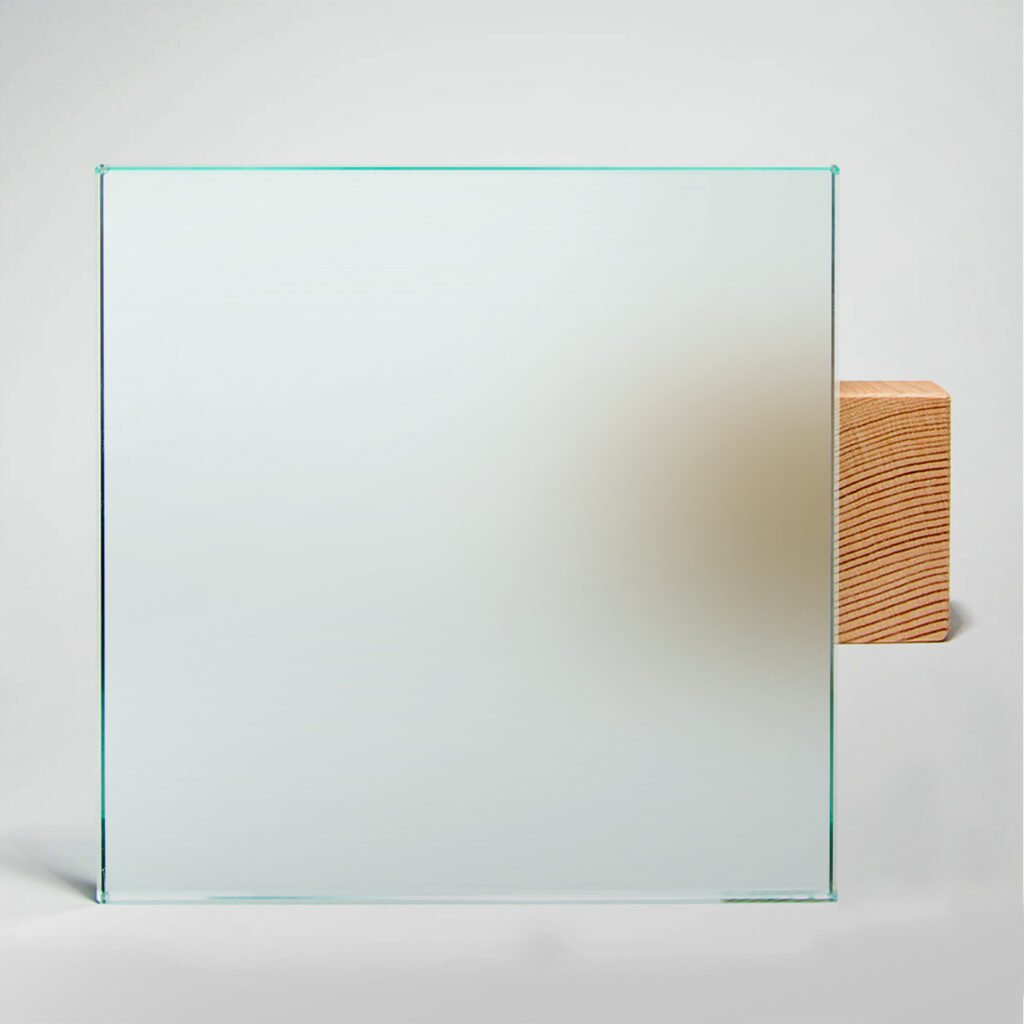
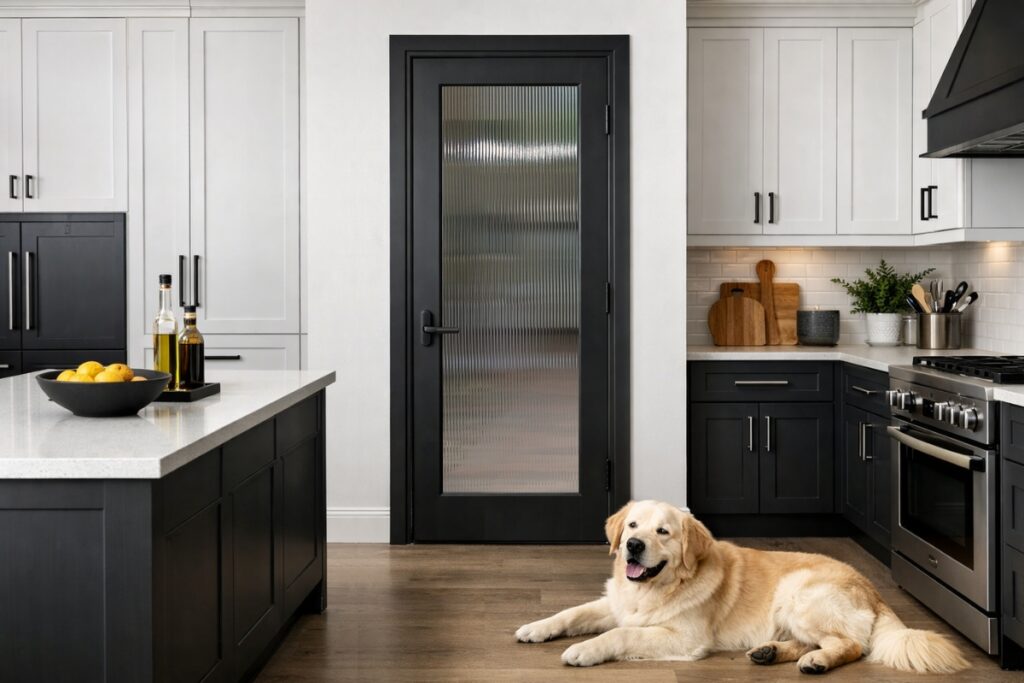
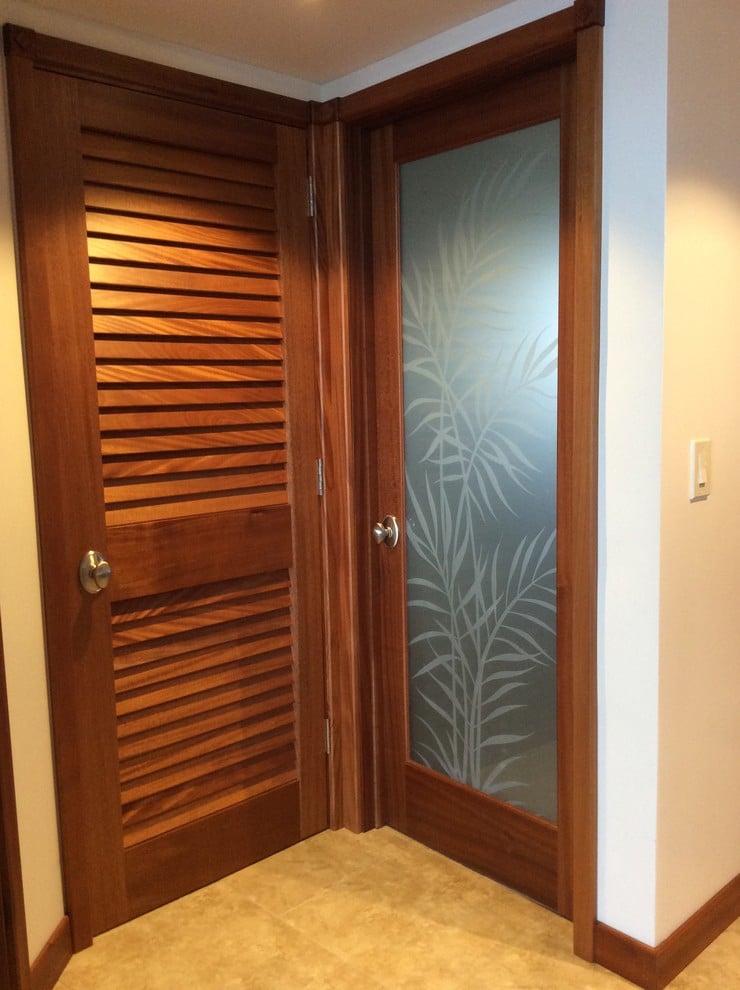
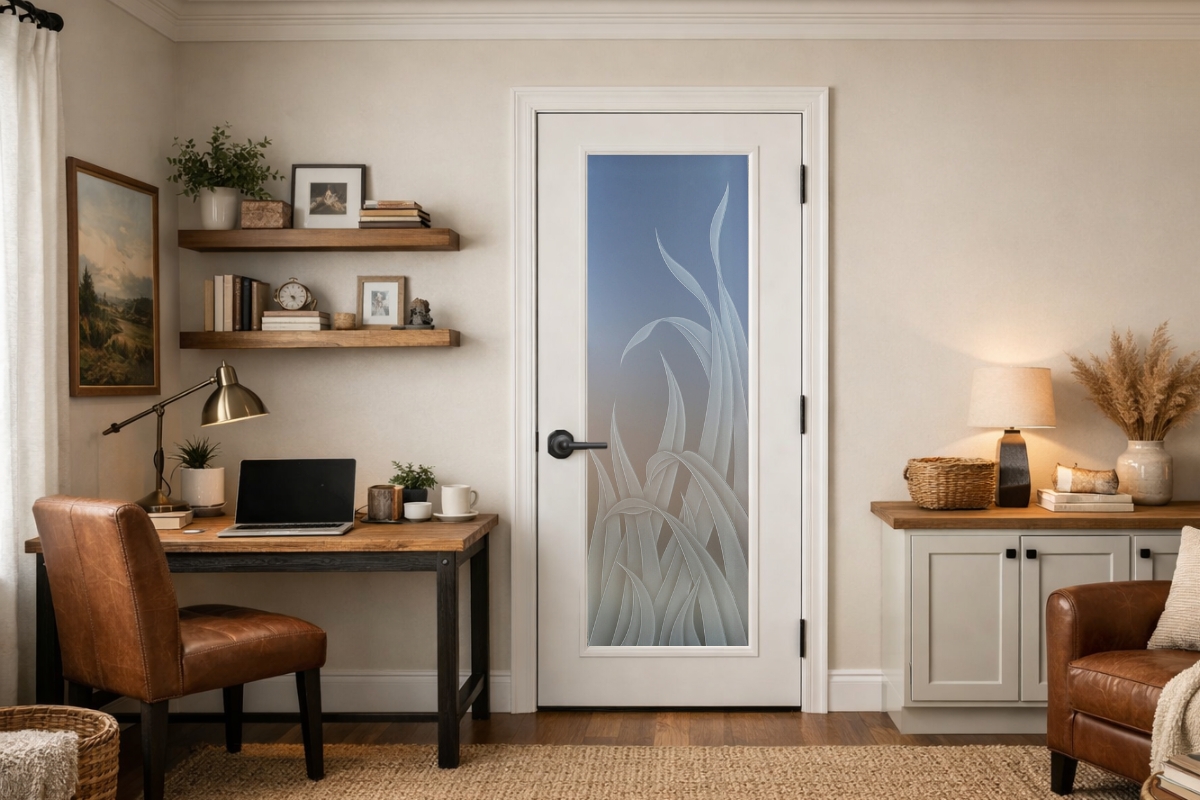
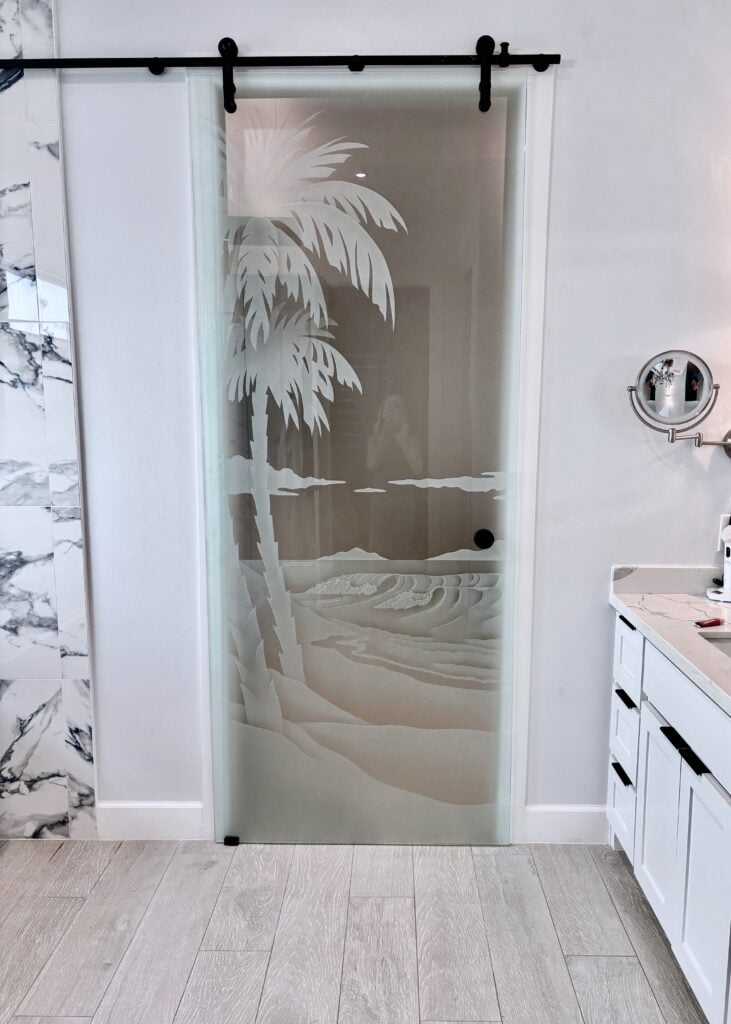
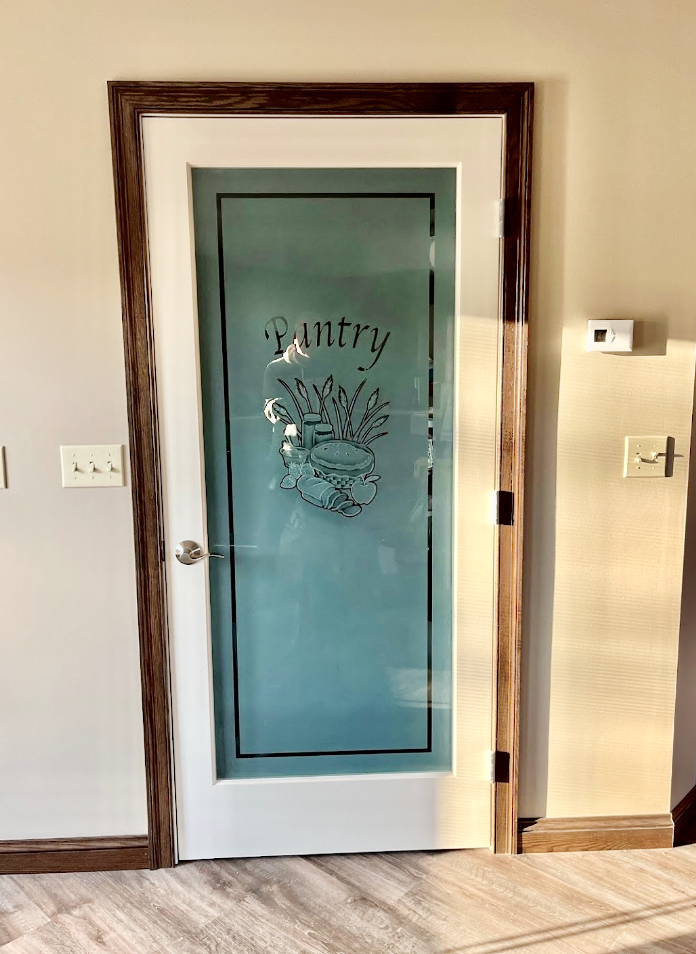
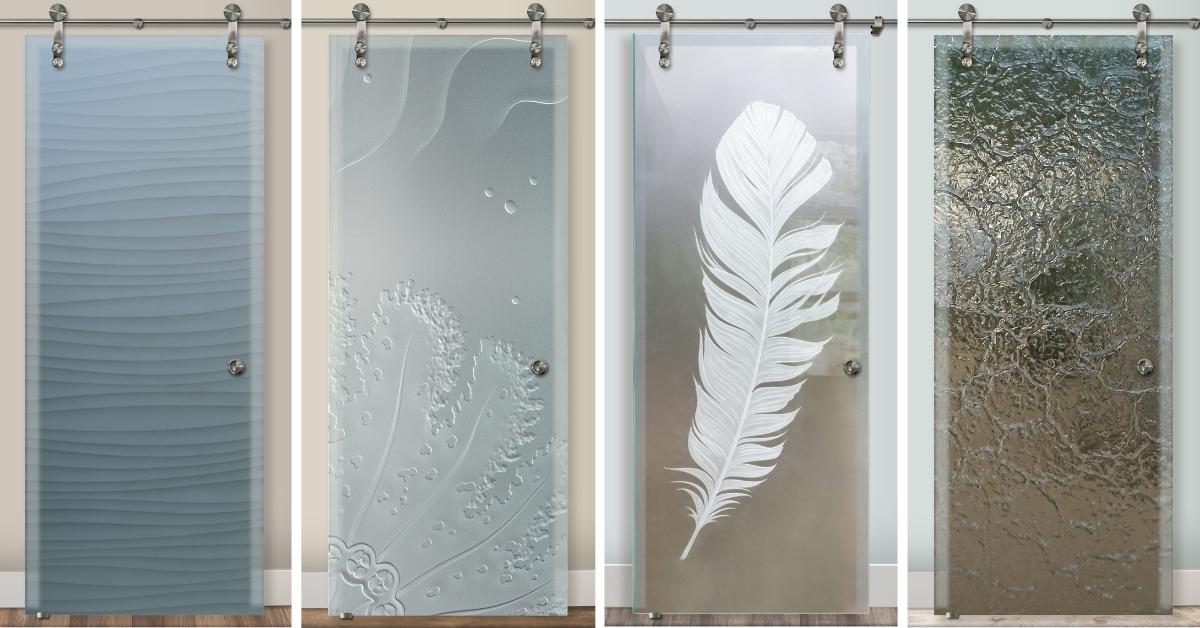
Frosted or acid-etched glass has a smooth, satin-like surface created through chemical etching. While technically not “textured” in a raised sense, it’s often grouped with textured options because it obscures visibility evenly while maximizing light and providing a sleek, contemporary appearance. Premium and custom frosted glass interior doors, however, may feature raised or textured elements due to added carved designs.
3. Gluechip Glass
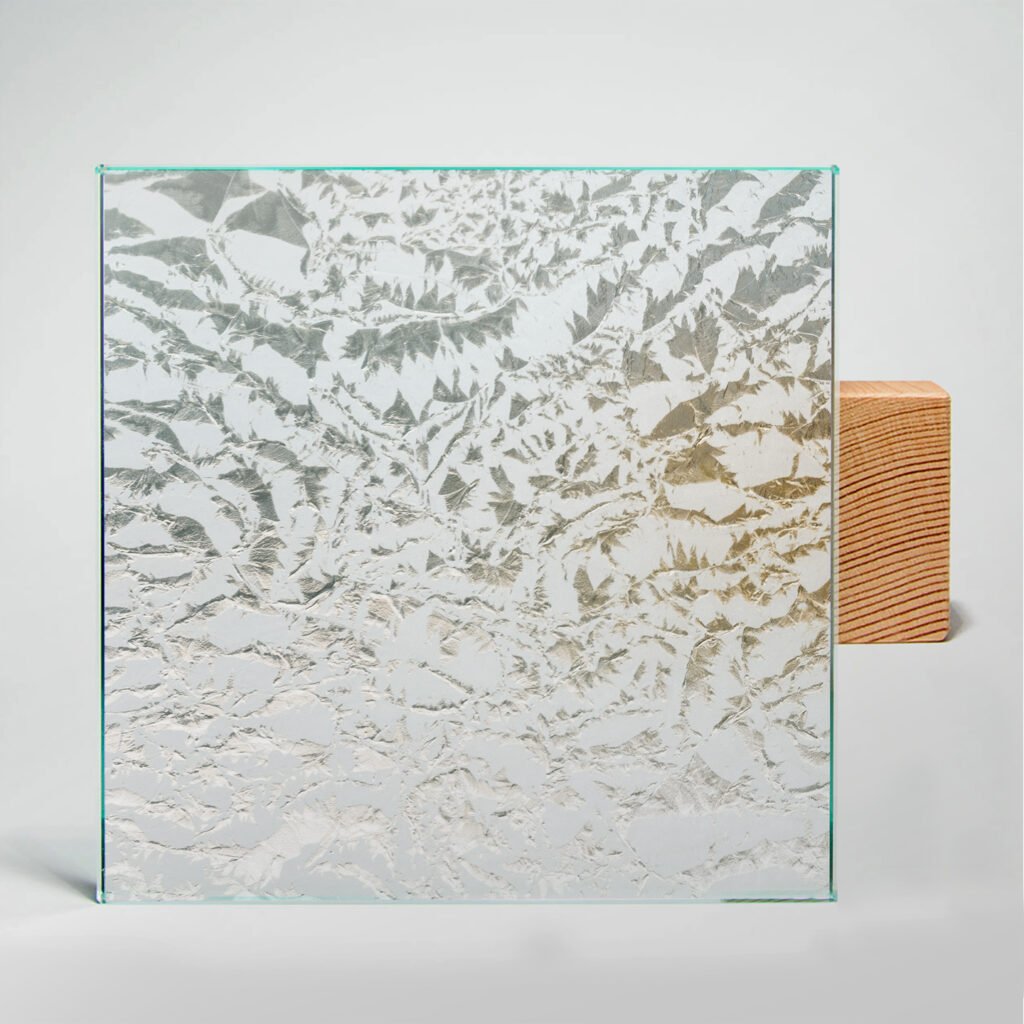
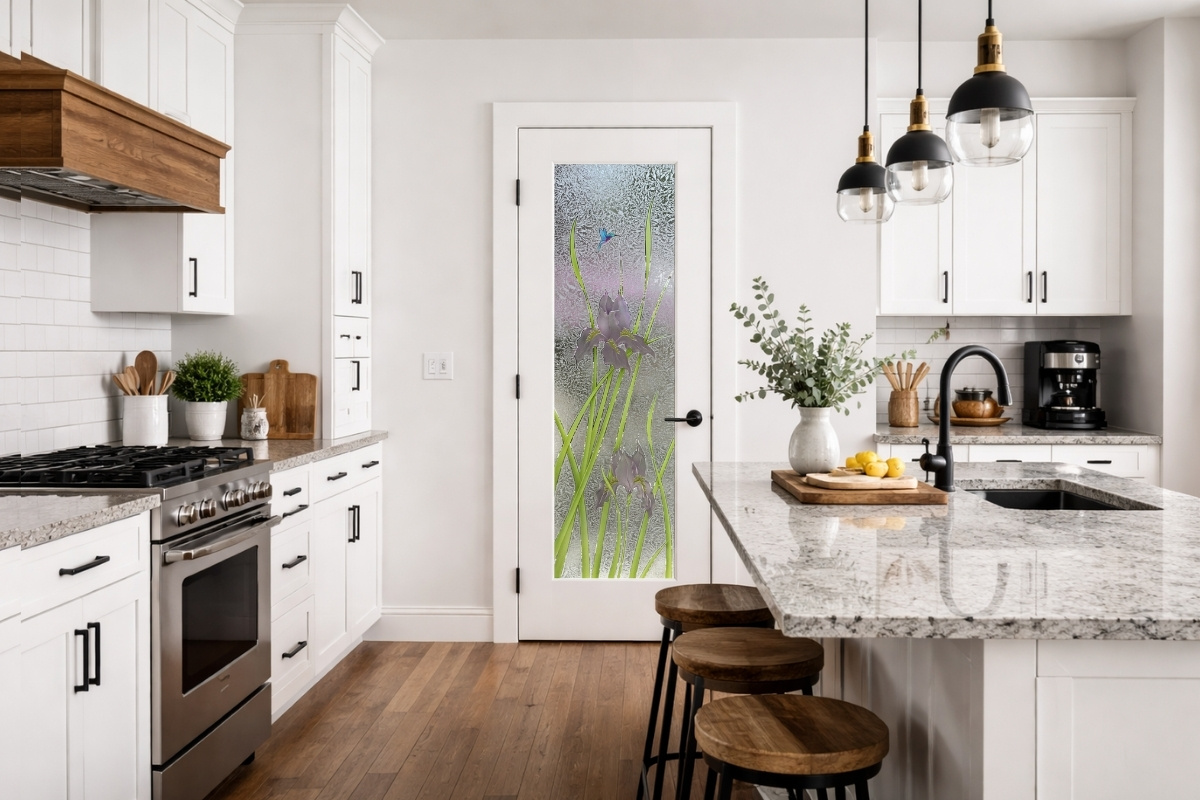
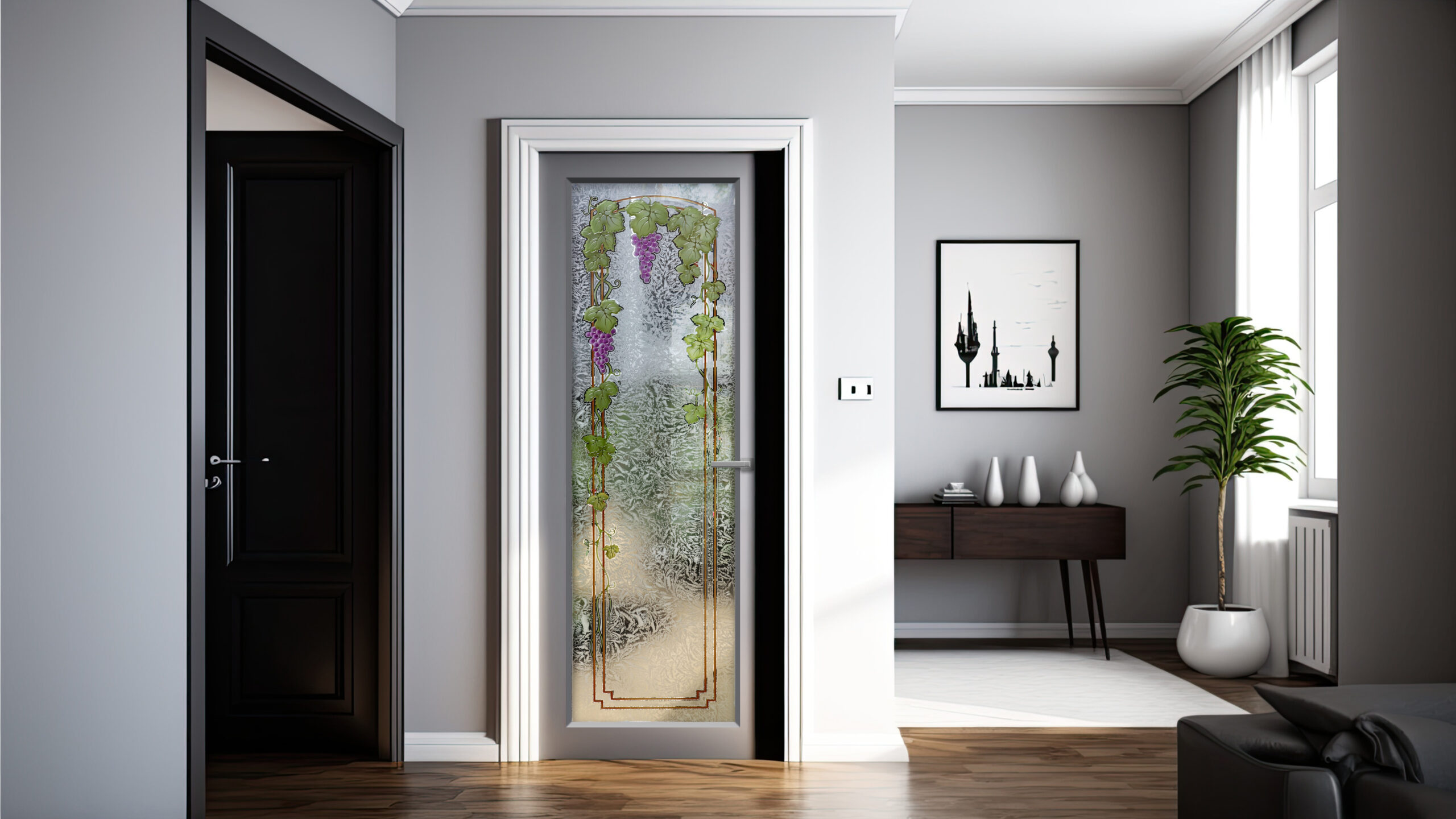
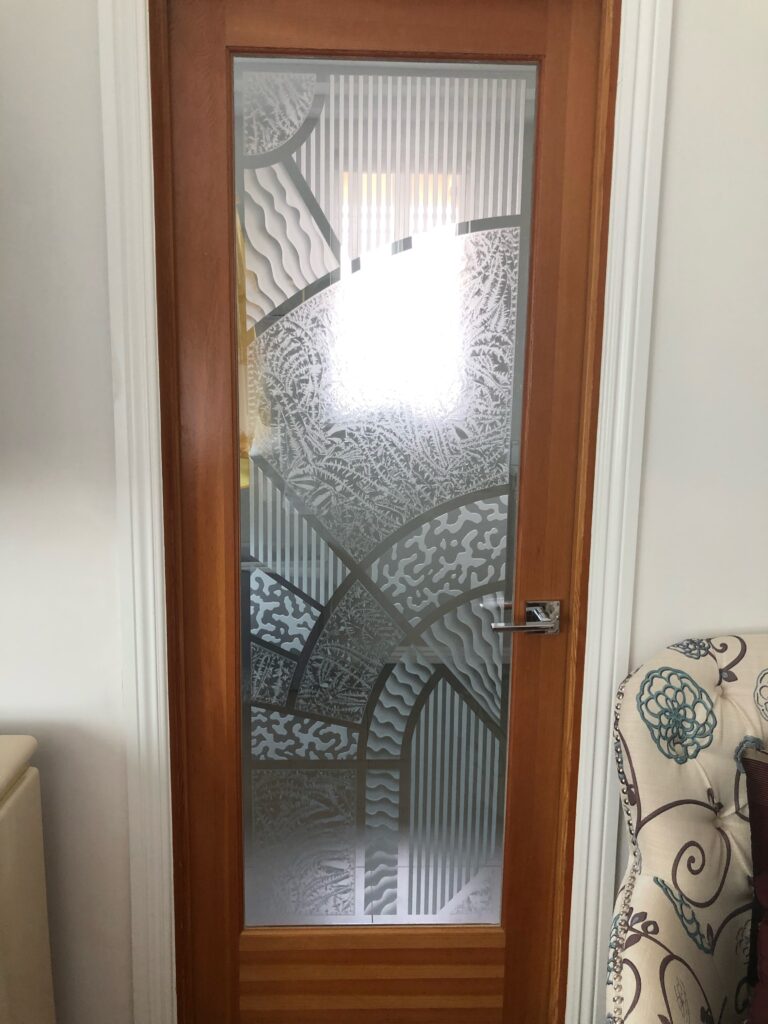
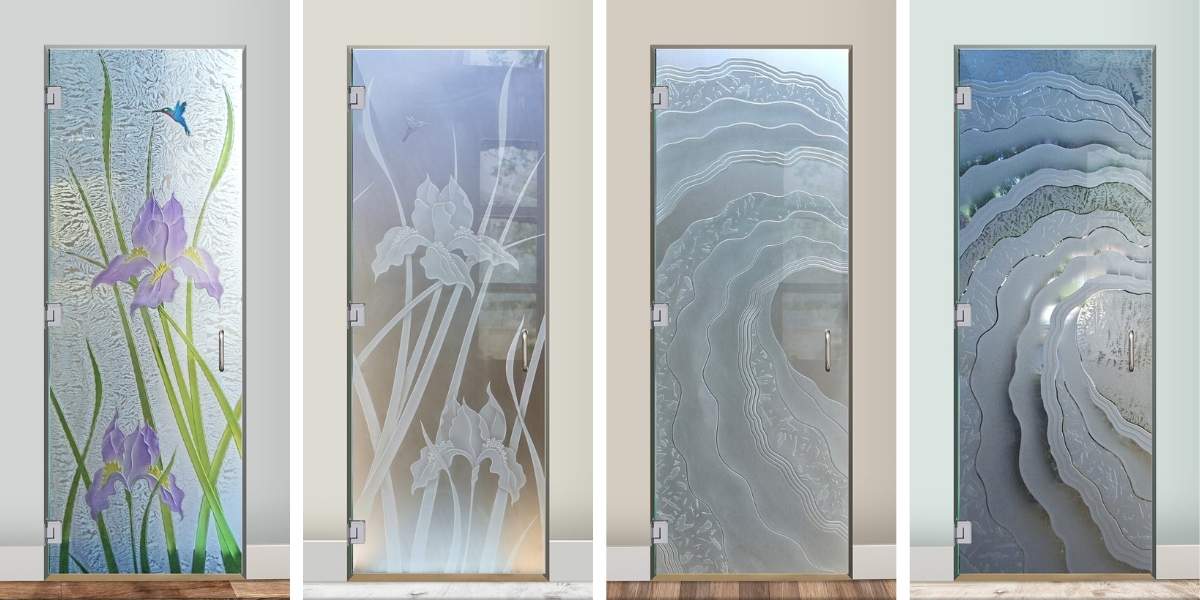
Gluechip glass has a distinctive ice-crystal or fern-like pattern formed through a controlled curing process. It offers higher visual interest and stronger obscurity than most linear textures, making it a decorative choice for doors where semi-privacy and artistry are both important.
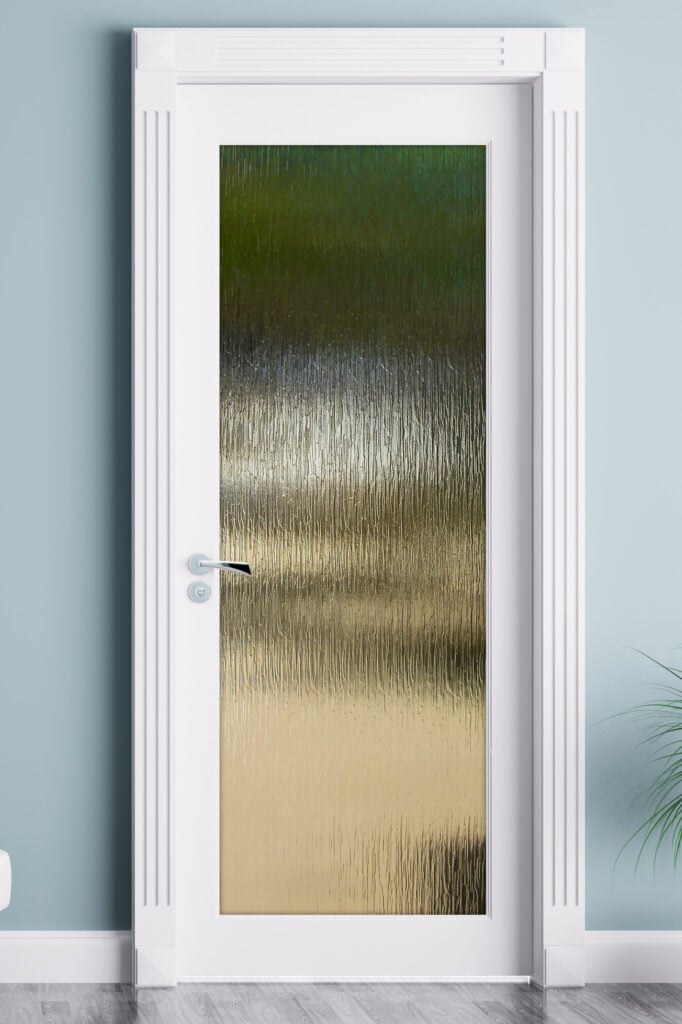
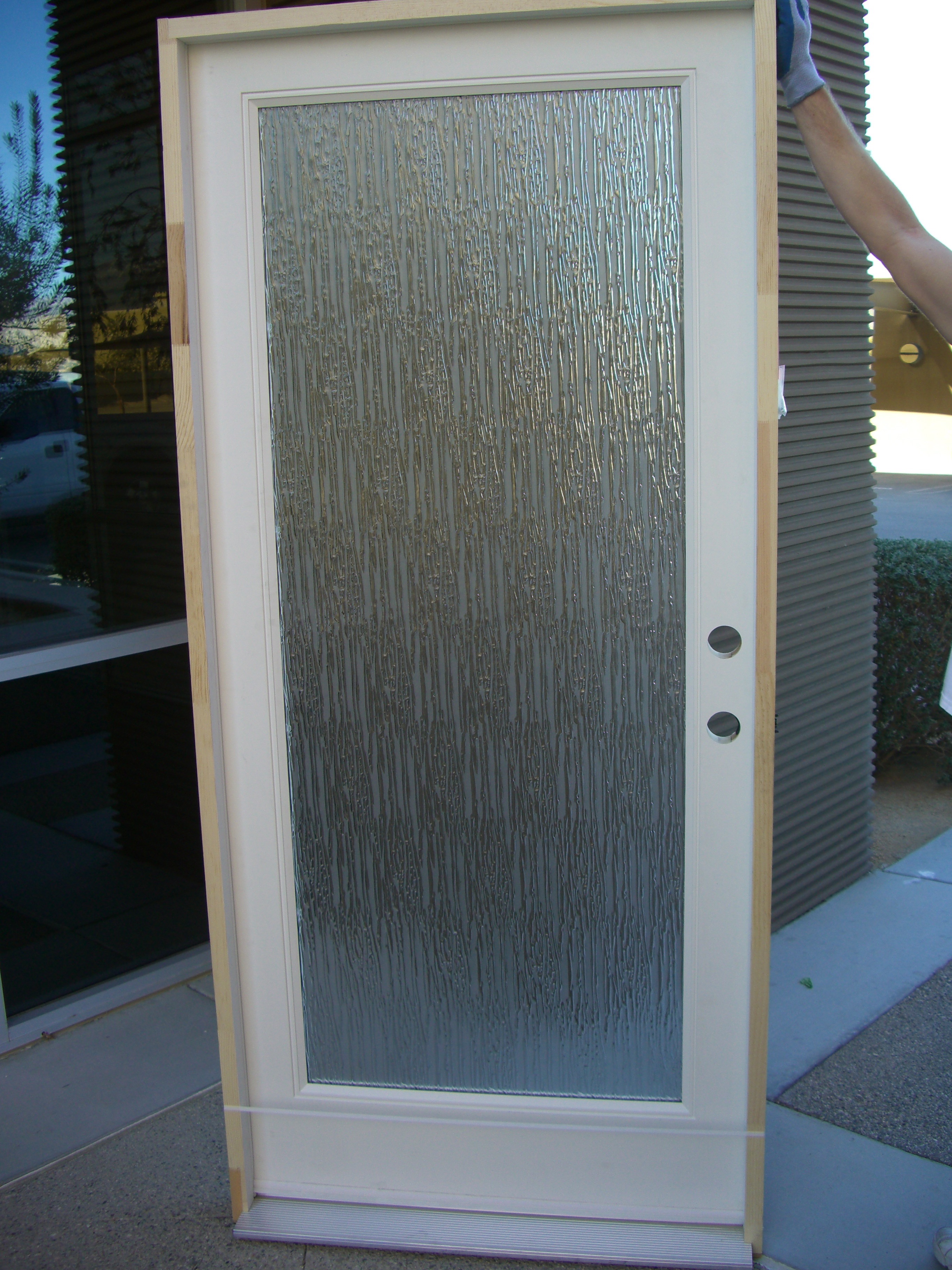
4. Rain Glass
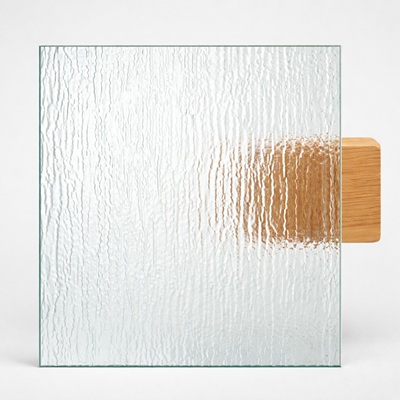
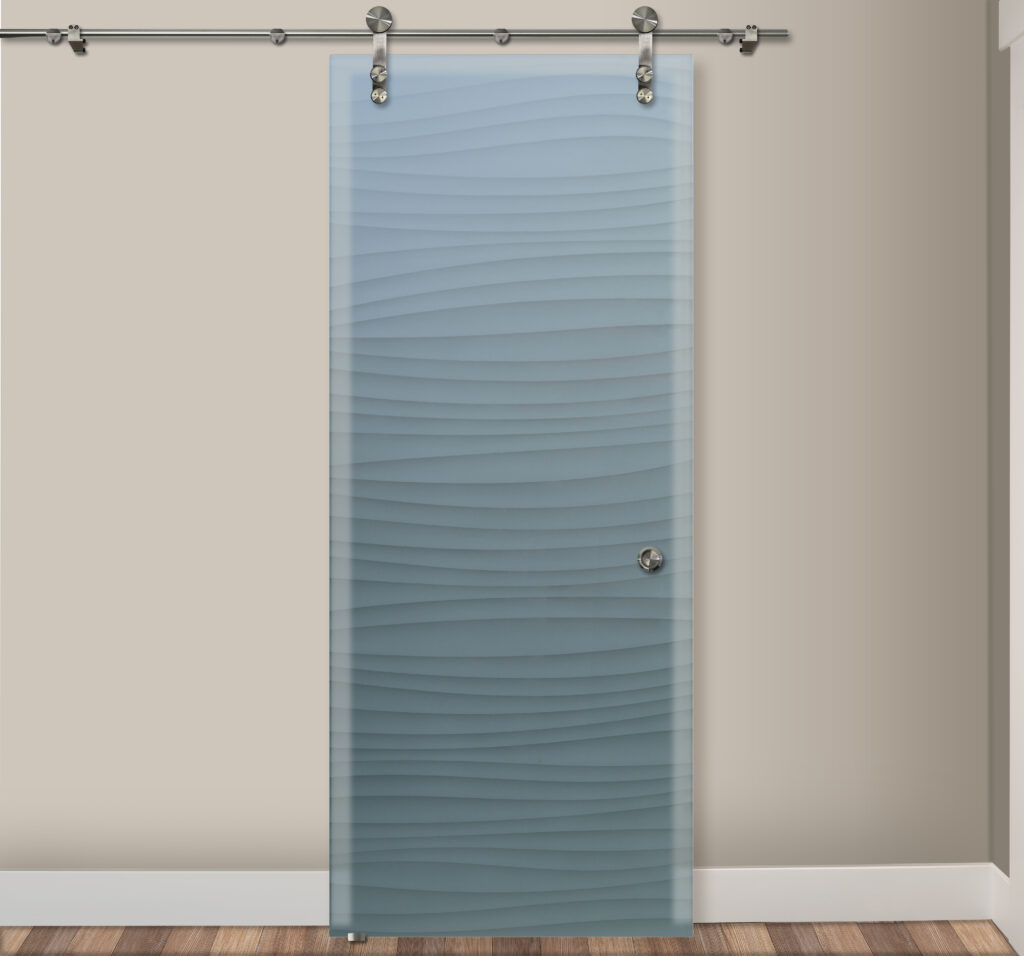
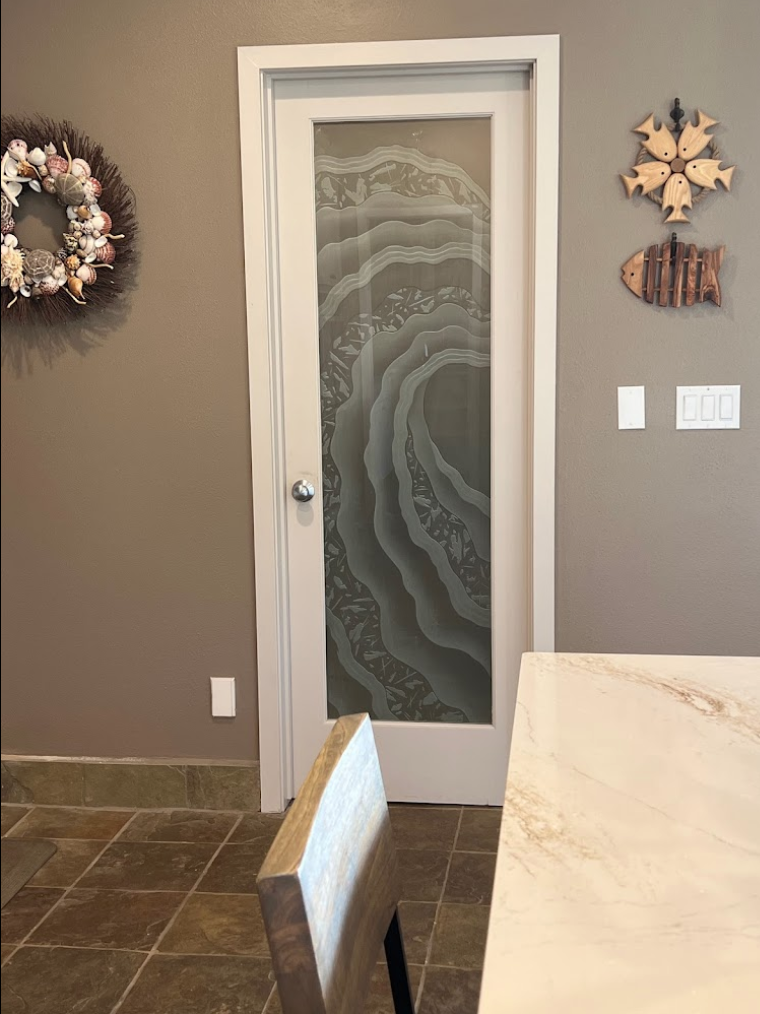
Rain glass features an organic, flowing pattern that mimics water running down the surface. It softens sightlines without fully blocking light and works well in casual, coastal, or spa-inspired interiors such as bathrooms and laundry rooms.
5. Seedy Glass
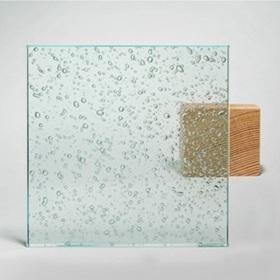
Seedy glass features small, irregular air bubbles suspended within the glass, creating a handcrafted, vintage-inspired look. The texture adds visual character and gently distorts visibility without fully obscuring light, making it a great option for interior doors where subtle privacy and warmth are desired. Seedy glass pairs especially well with farmhouse, traditional, and transitional interiors and works beautifully in pantries, interior French doors, and casual living spaces.

6. Cast Glass
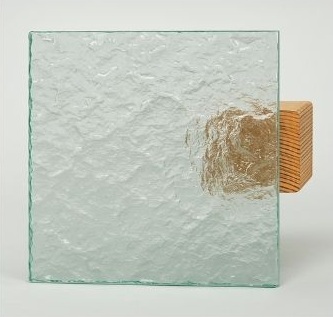
Cast glass is created by pouring molten glass into molds, resulting in deep, sculptural textures and dramatic visual depth. Cast glass patterns are often bold and three-dimensional. It’s an excellent choice for interior doors where semi-privacy is important and a high-end, architectural statement is desired. Cast glass works especially well in modern, luxury, and artistic interiors, as well as for feature doors that are meant to stand out.
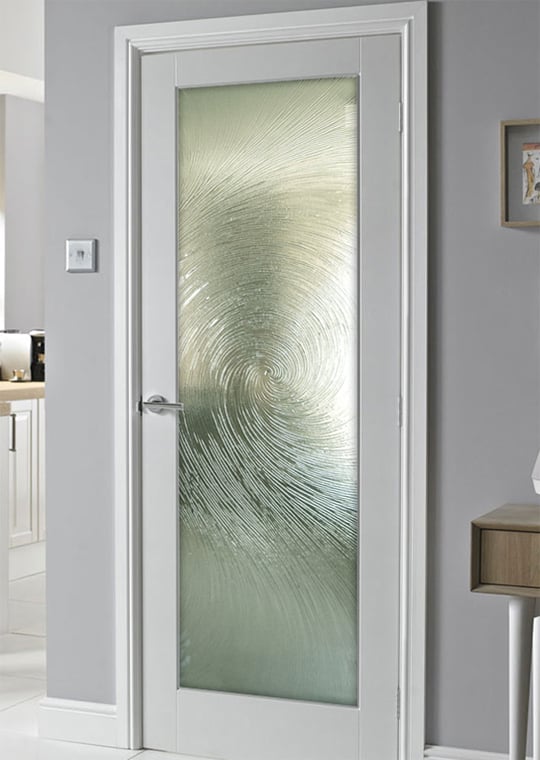
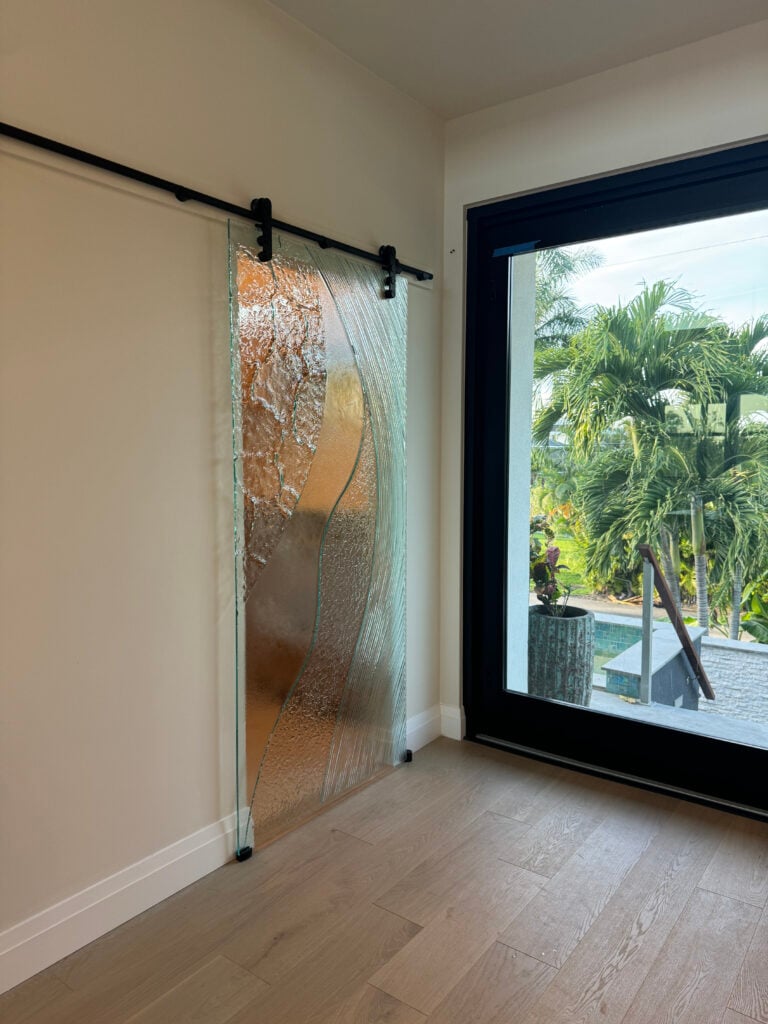
7. Patterned / Decorative Glass
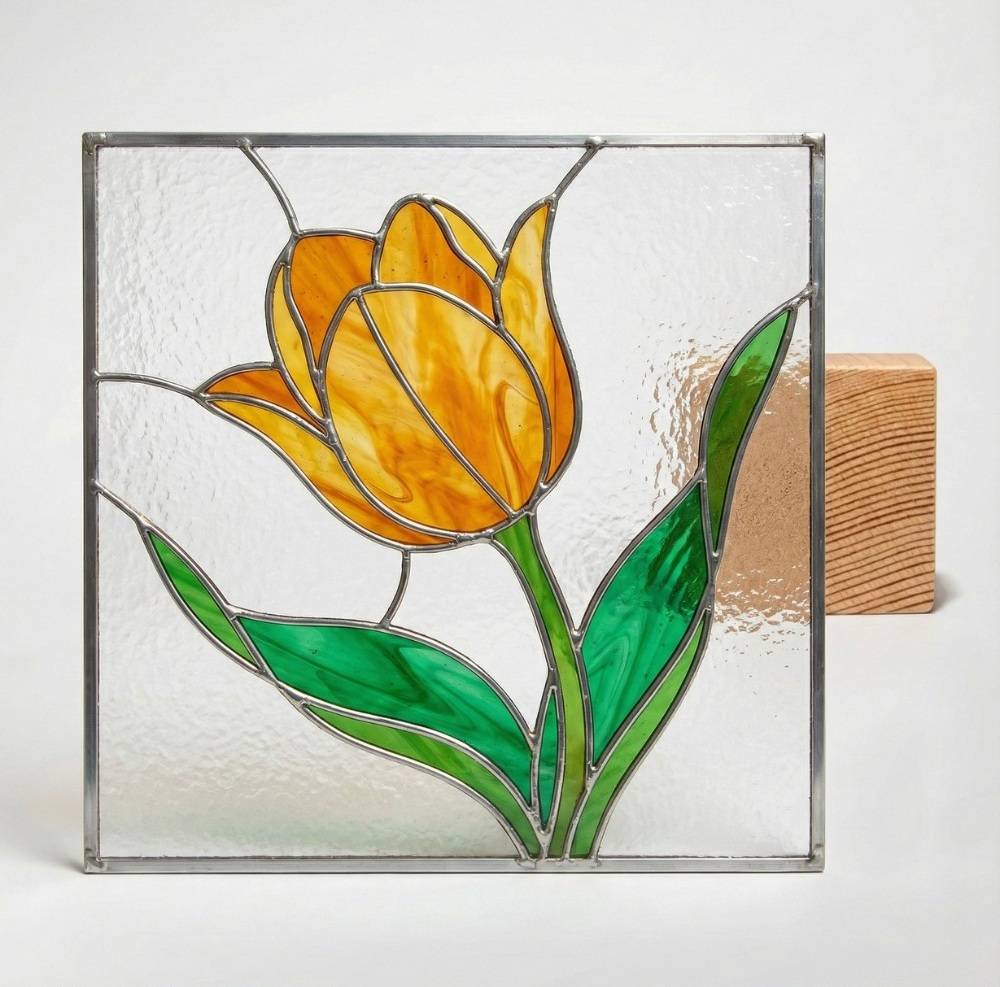
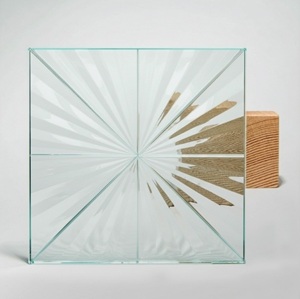
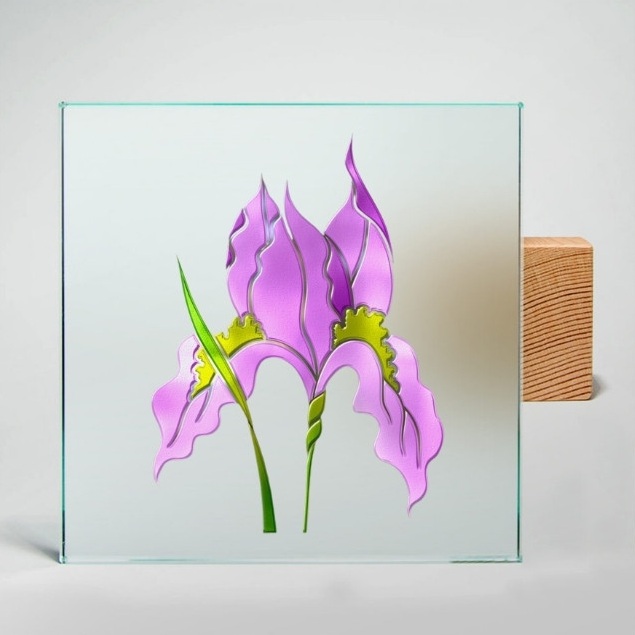
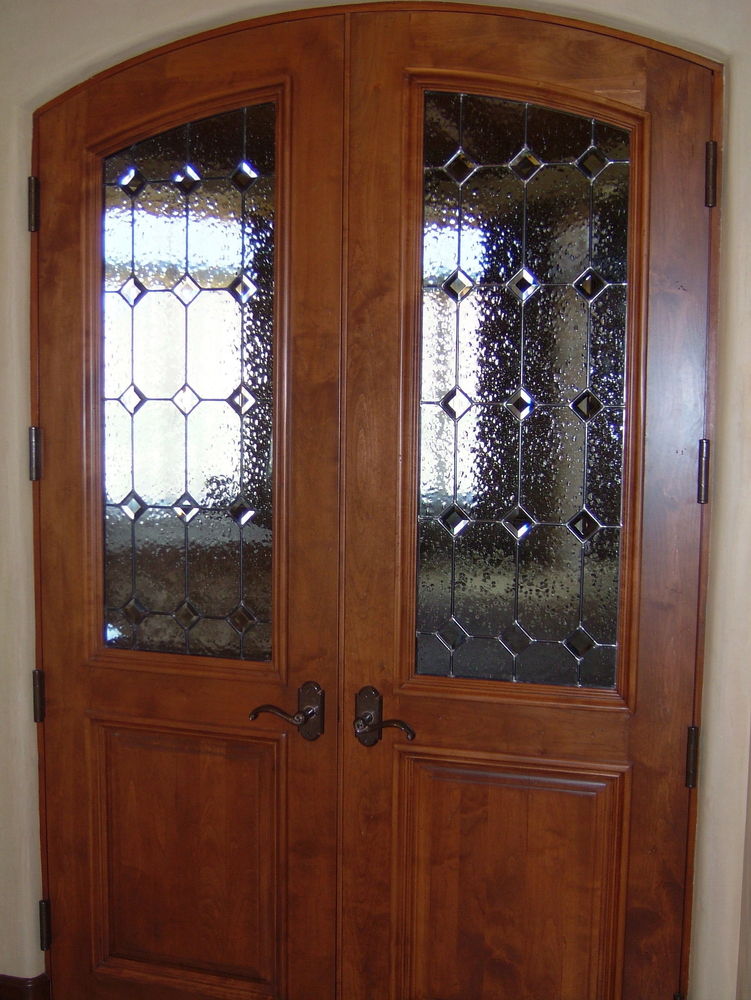
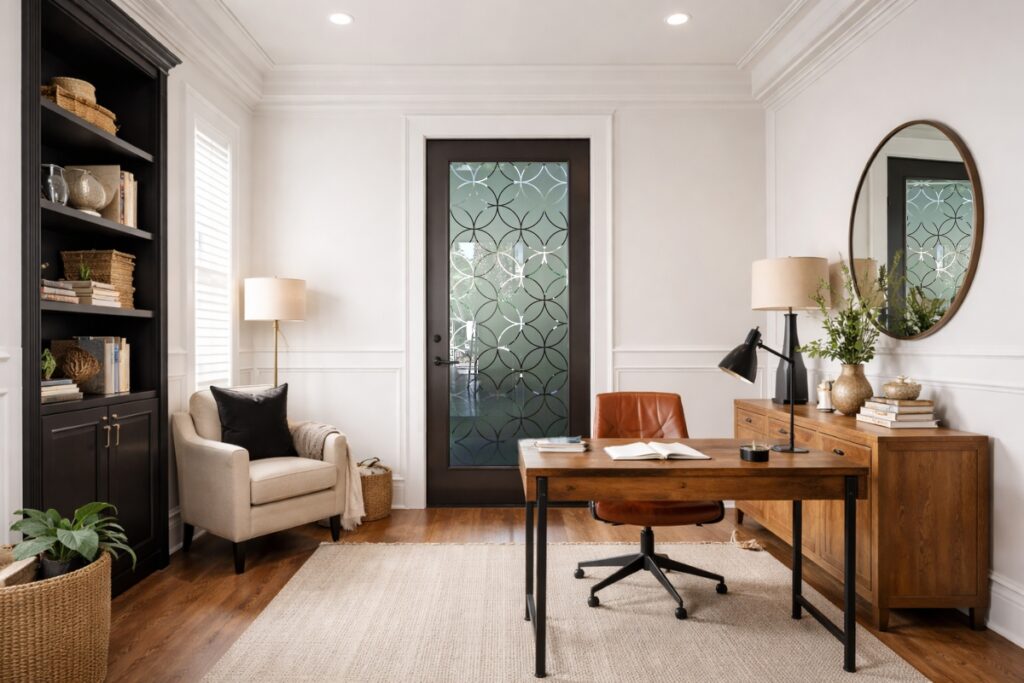
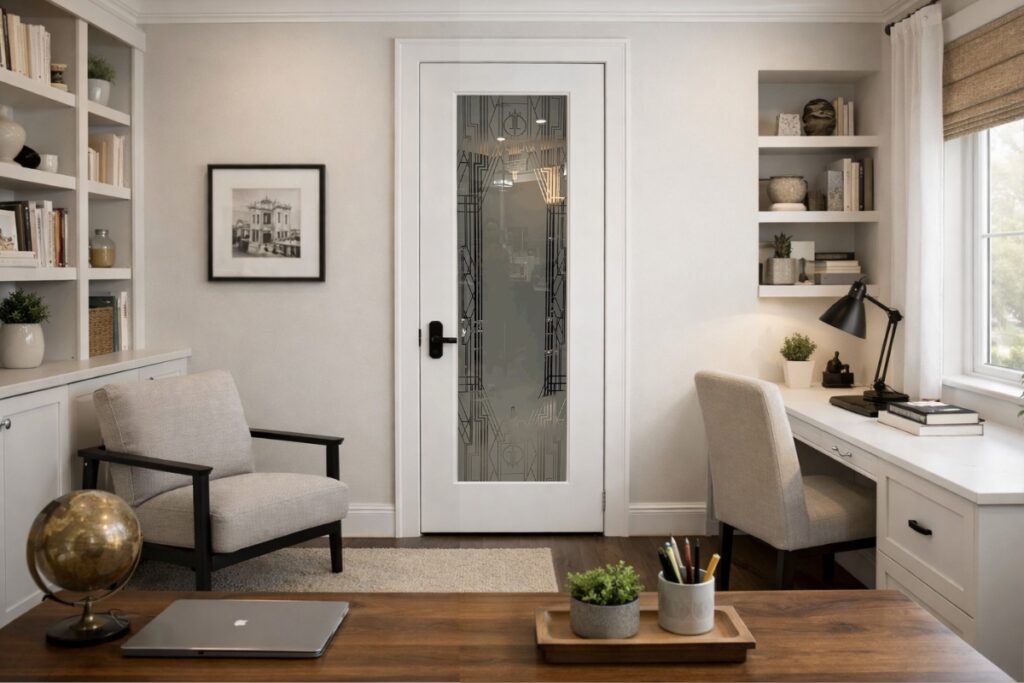
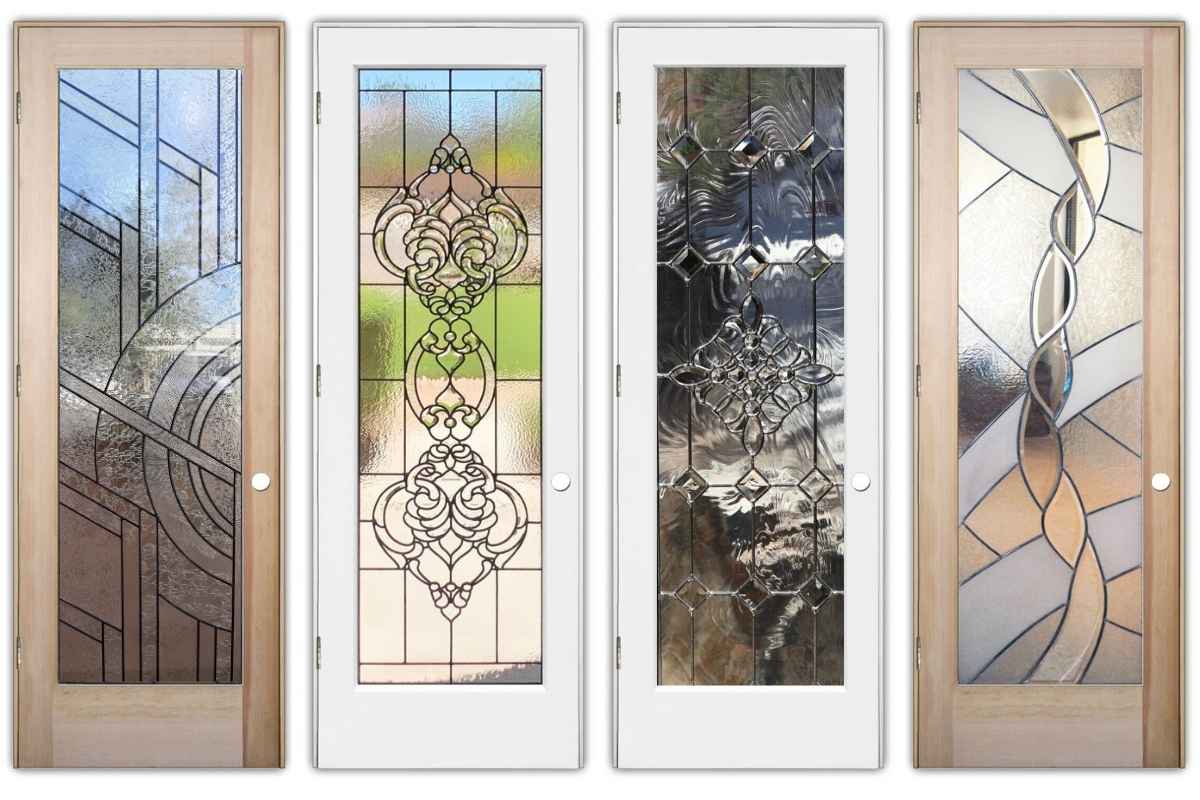
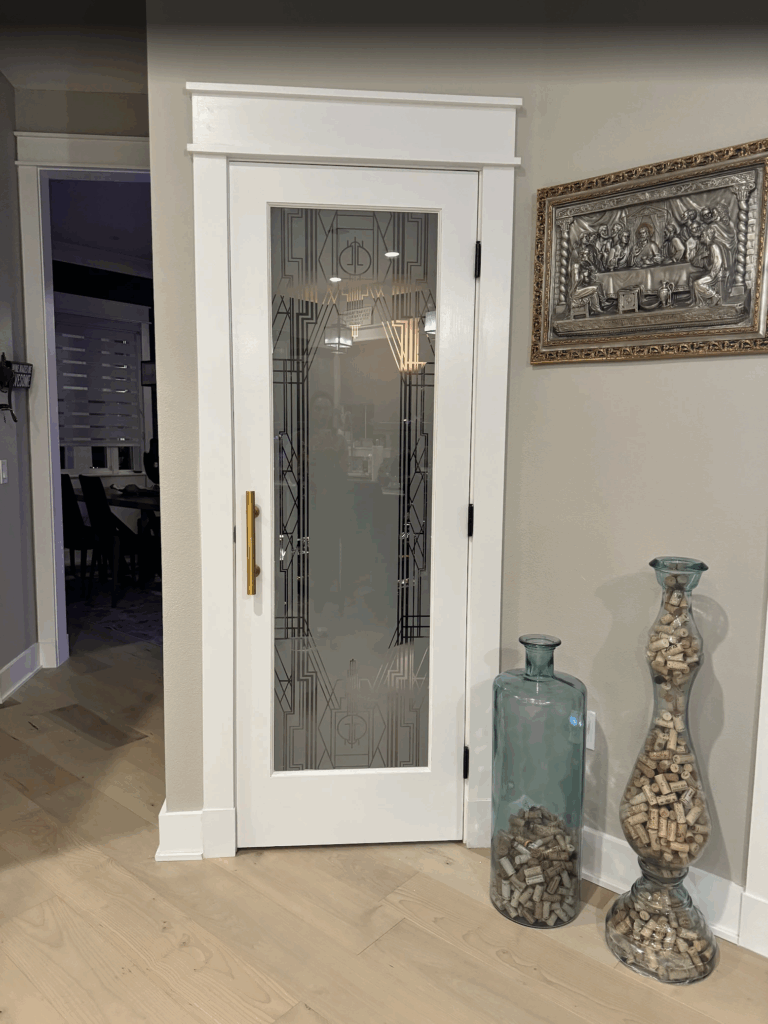
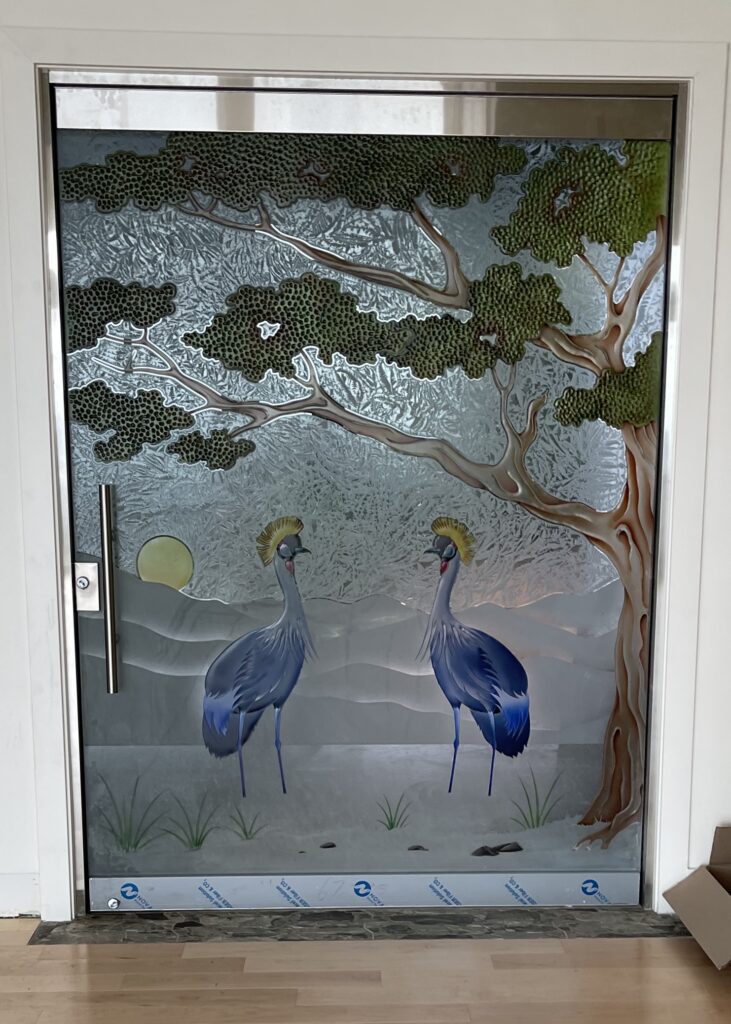
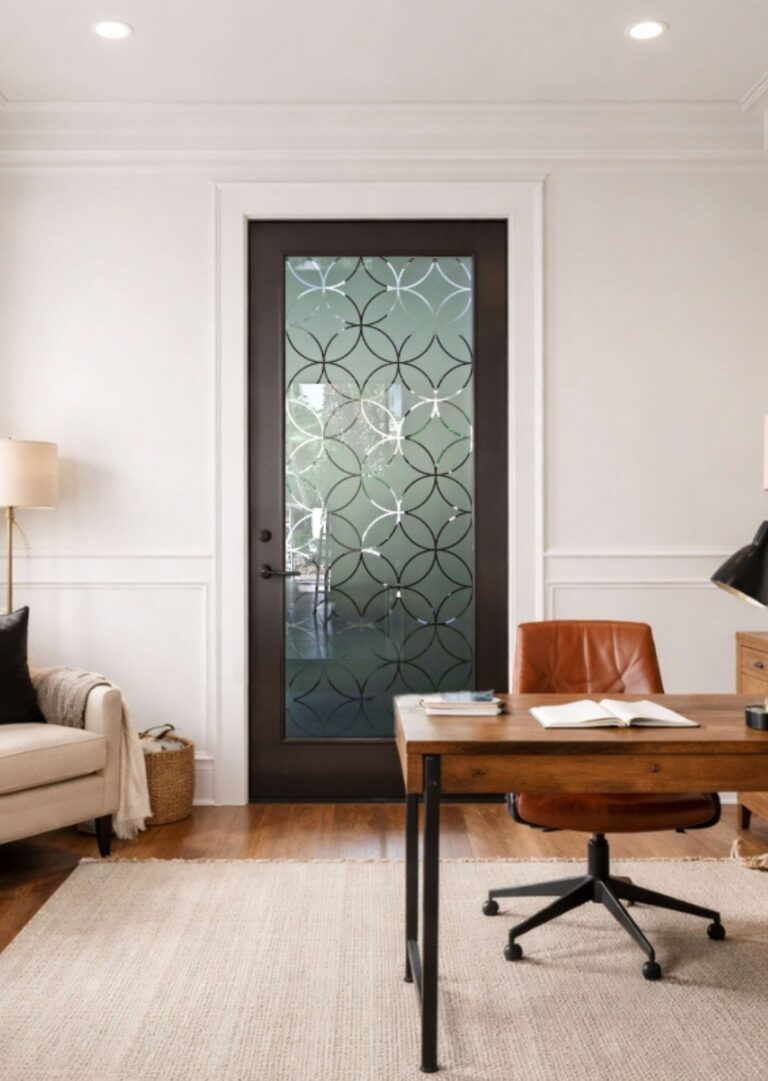
Patterned and decorative glass includes repeating motifs, geometric designs, or ornamental textures molded into the glass. Decorative interior glass doors add visual personality and can serve as a design focal point, often used in statement doors or to complement specific décor themes.
Stained glass is created using individual pieces of colored glass joined together to form a design or image. Beveled glass features angled, polished edges cut into clear glass, creating prismatic light effects and visual depth. While typically clear, the bevels distort sightlines enough to provide semi-privacy. Decorative and custom interior doors with frosted glass designs combine sandblasted or etched designs with frosted backgrounds, resulting in artwork permanently etched into the glass surface. Depending on the design density, this option can range from semi-private to fully private.
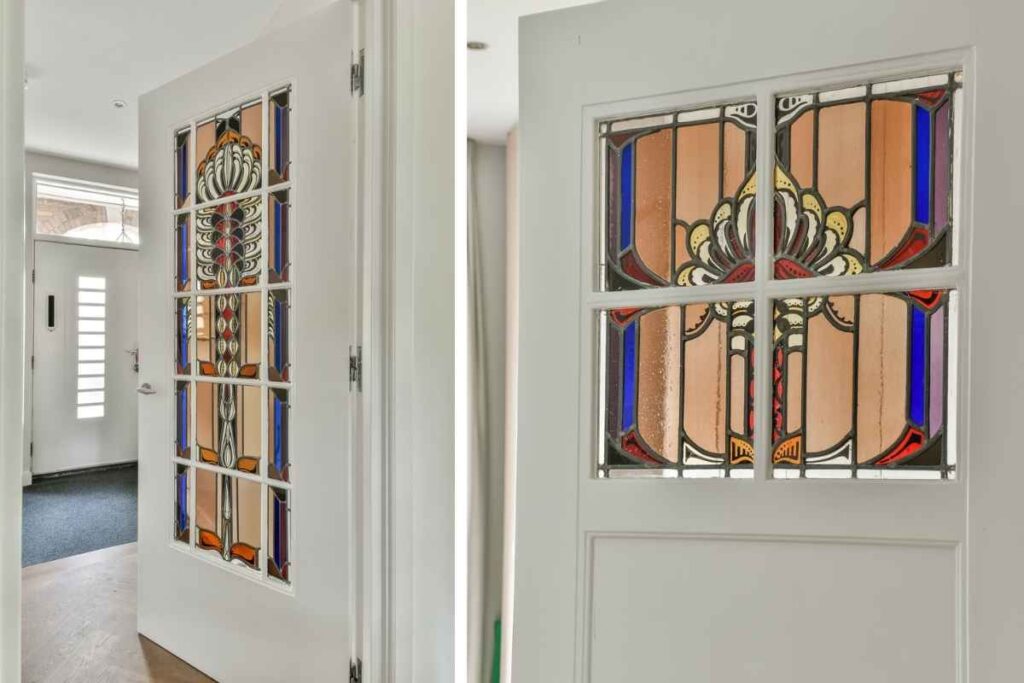
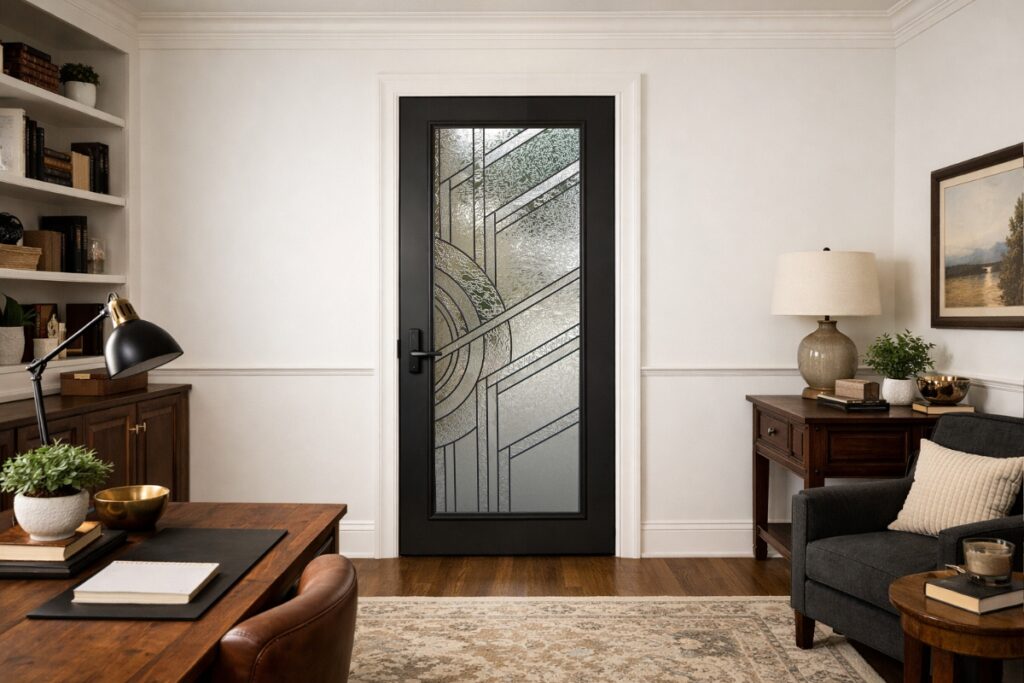
If you’re ready to upgrade your home with something truly distinctive, now’s the perfect time to shop interior door with glass designs crafted by Sans Soucie Art Glass. Our handcrafted glass doors combine privacy, natural light, and artistic detail—made custom for your space.
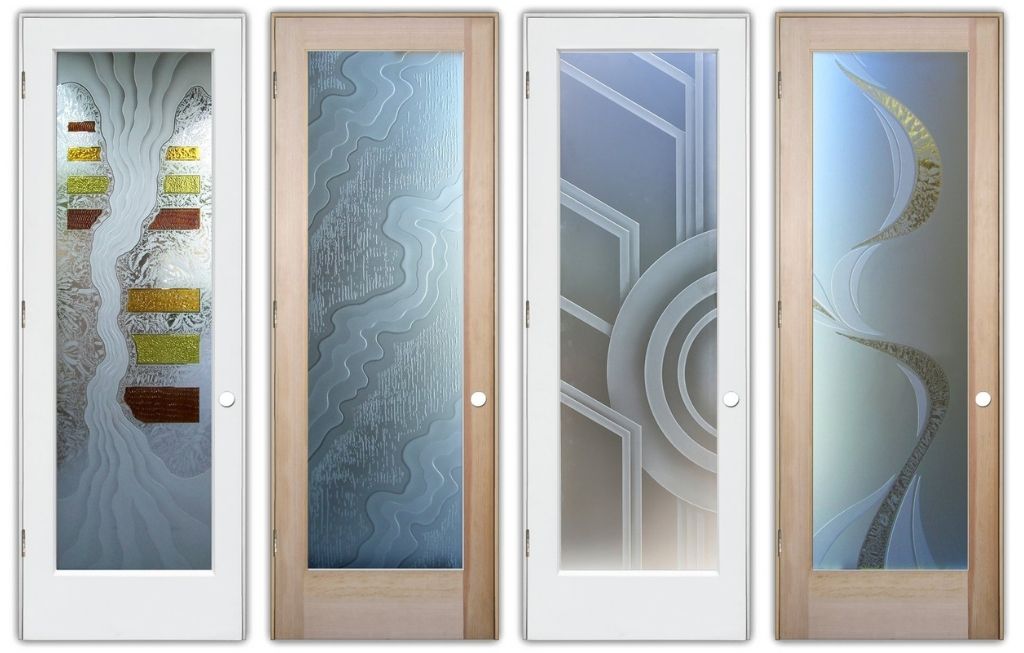
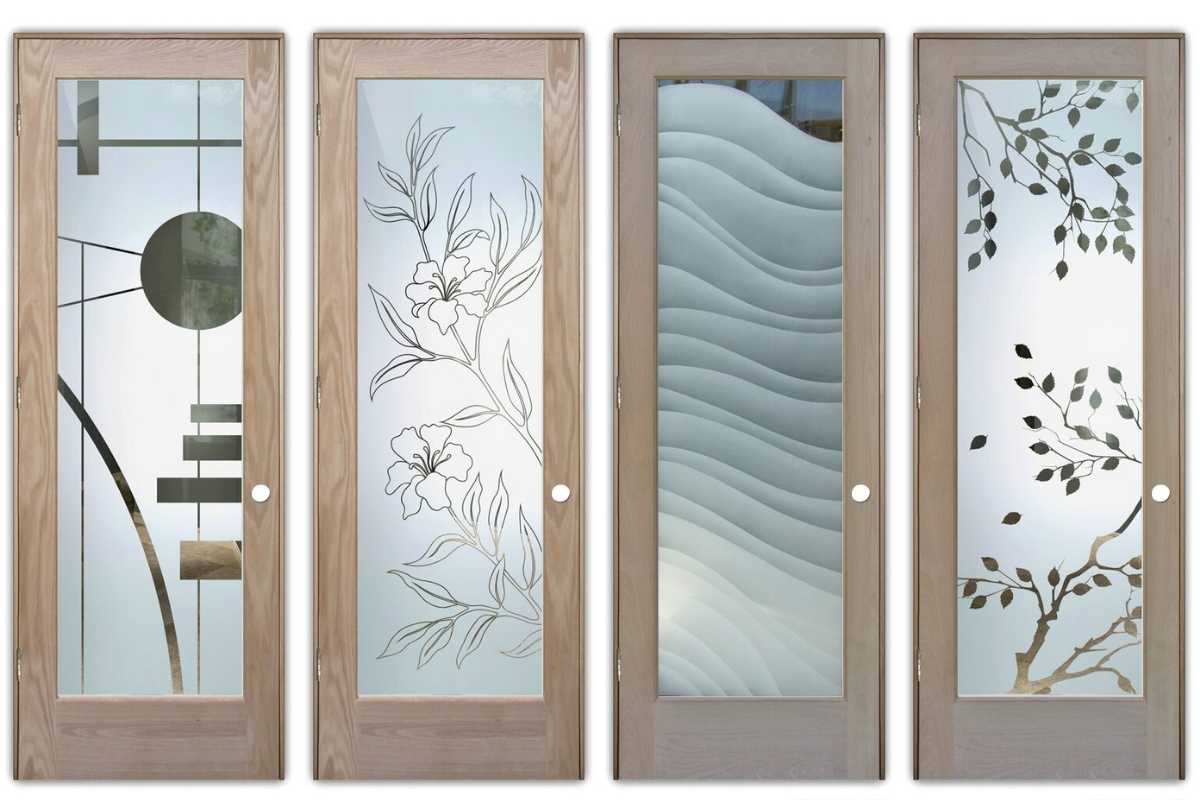
More Textured Glass Designs for Interior Doors

SEE MORE: Glass Doors, Interior Glass Doors with Frosted Designs
How Private Is Textured Glass?
Textured glass provides partial to moderate privacy, depending on the pattern, depth, and density of the texture. Most textured glass distorts shapes and movement rather than completely blocking visibility, which makes it ideal for spaces where light is important but full privacy isn’t required.
- Light textures (like reeded or rain glass) blur outlines but still allow silhouettes and movement to be seen.
- Heavier textures (such as gluechip or deeply patterned glass) offer stronger obscurity and reduce visibility more effectively.
- Distance and lighting matter—objects appear more visible when close to the glass or when strong backlighting is present.
If total privacy is required, fully frosted glass doors, carved, or sandblasted glass is typically a better choice than standard textured glass.

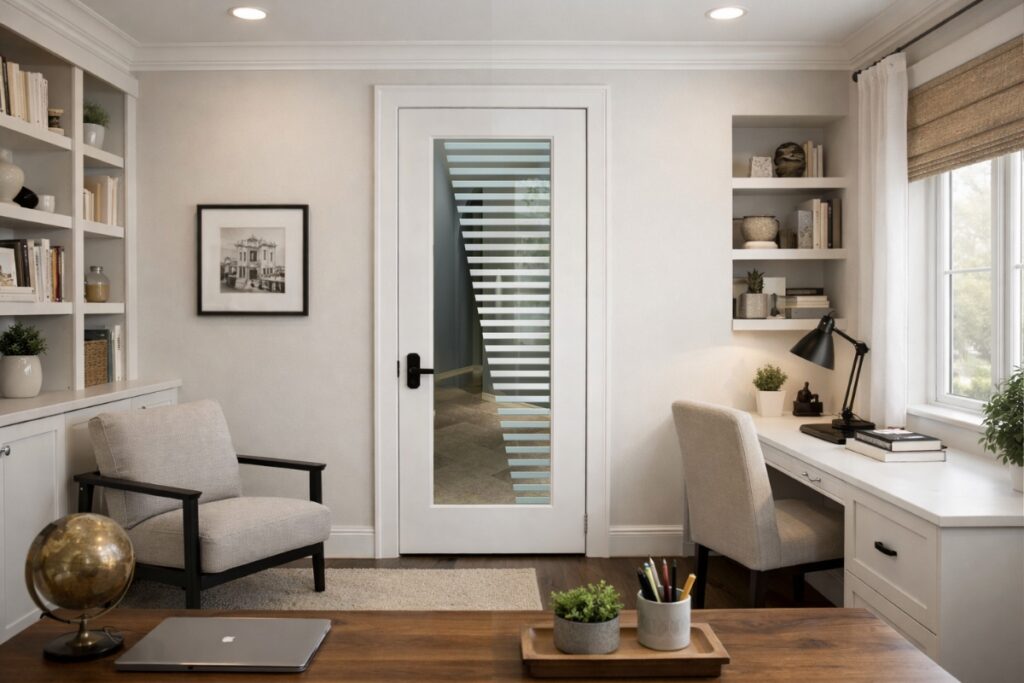
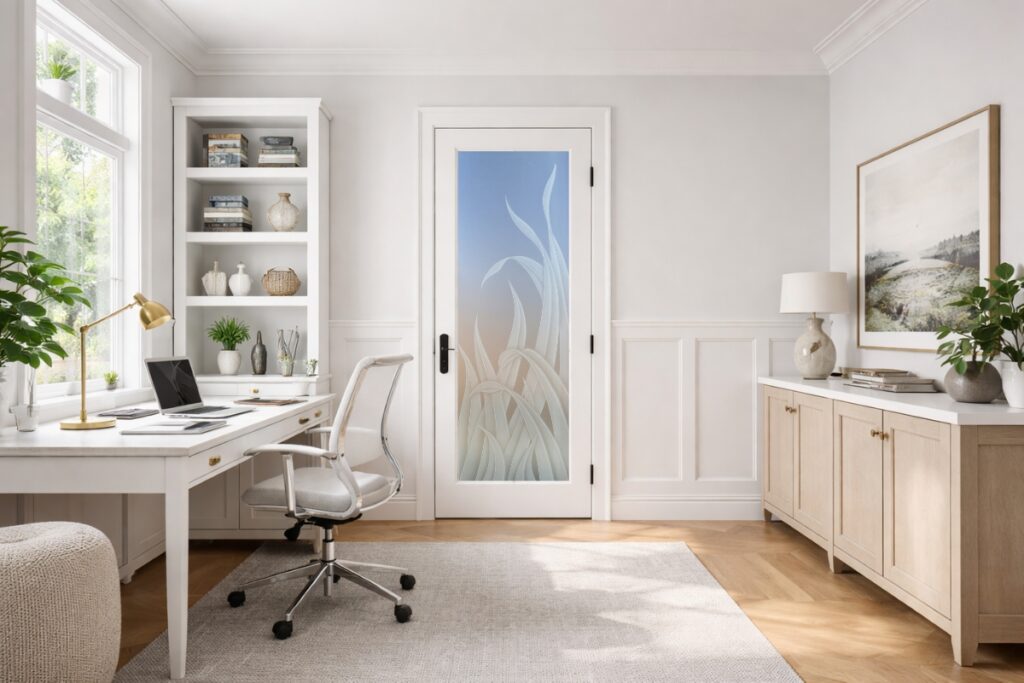
Where Does Textured Glass Work Best Indoors?
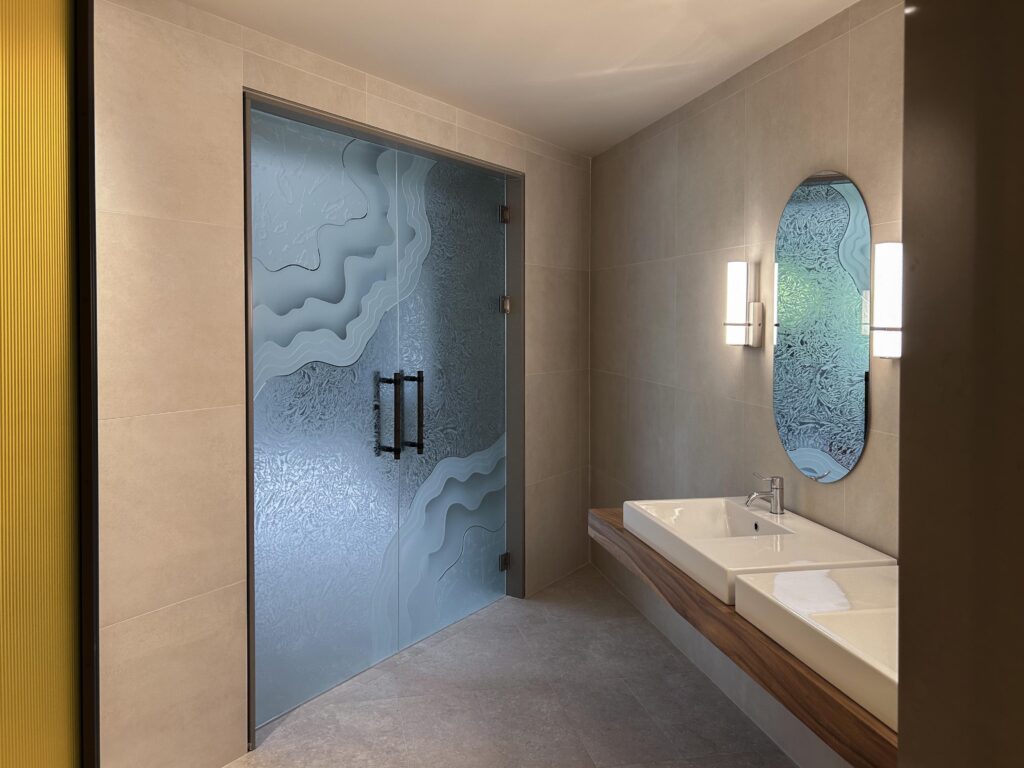
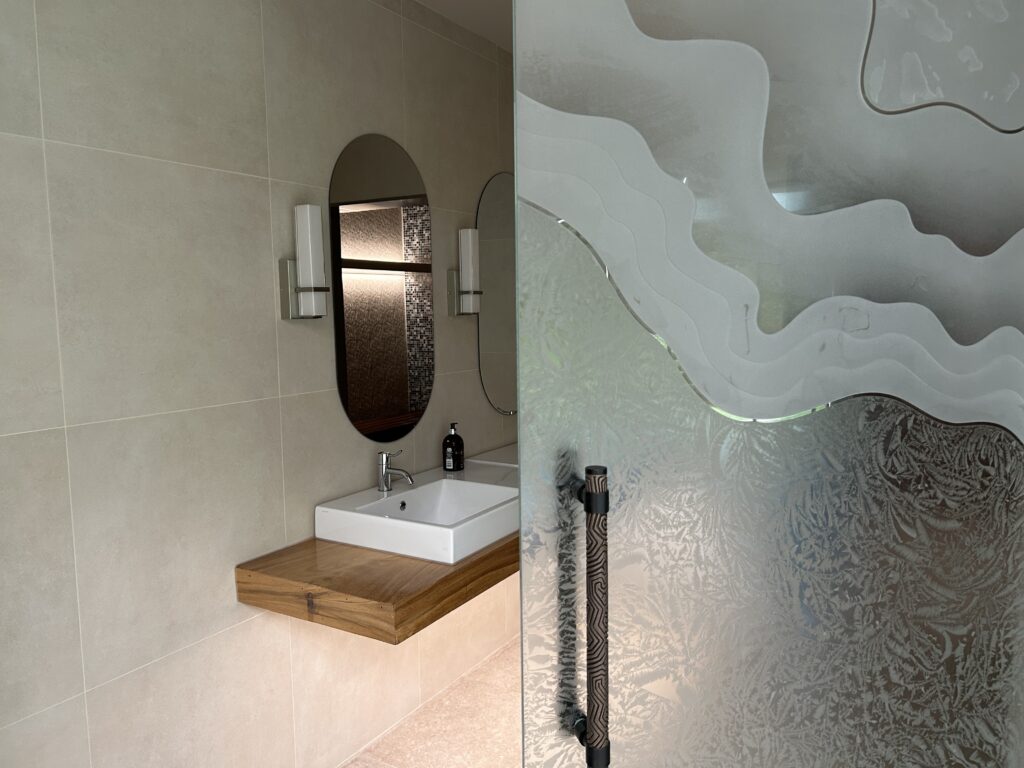
Textured glass is well-suited for interior doors that benefit from natural light and visual separation without feeling closed off.
Common applications include:
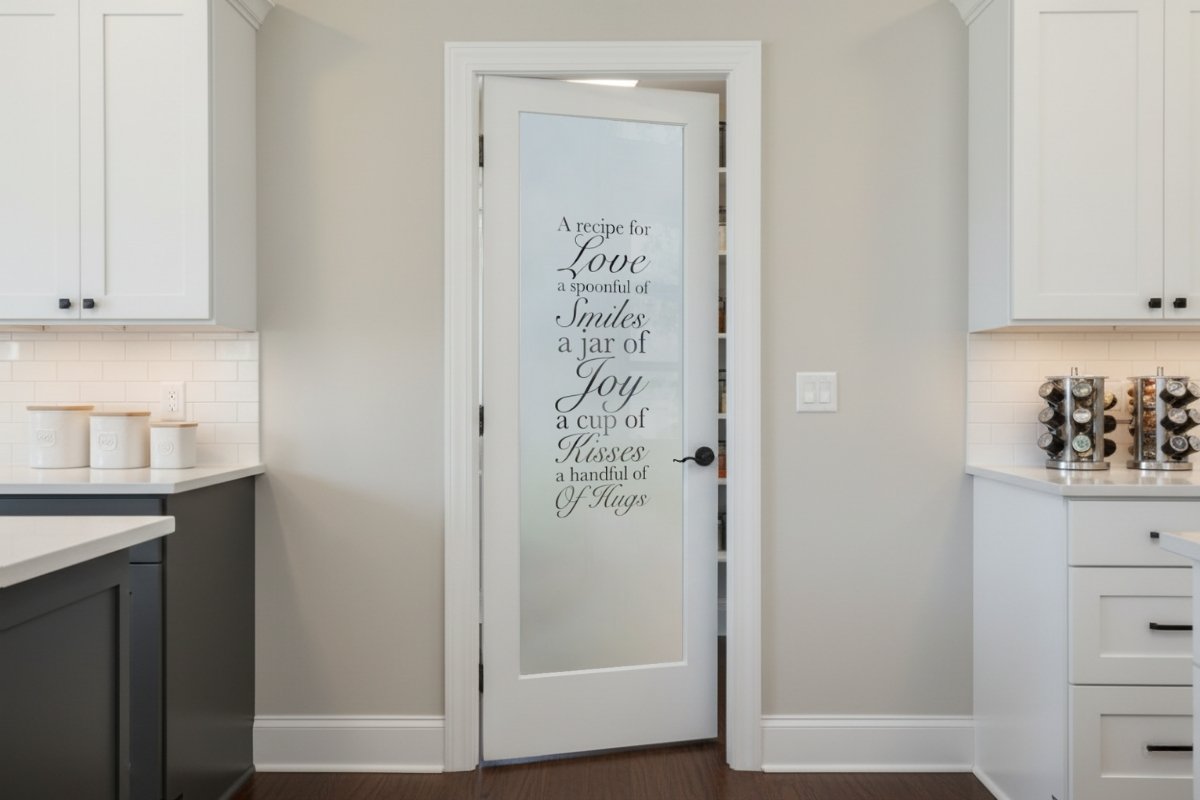
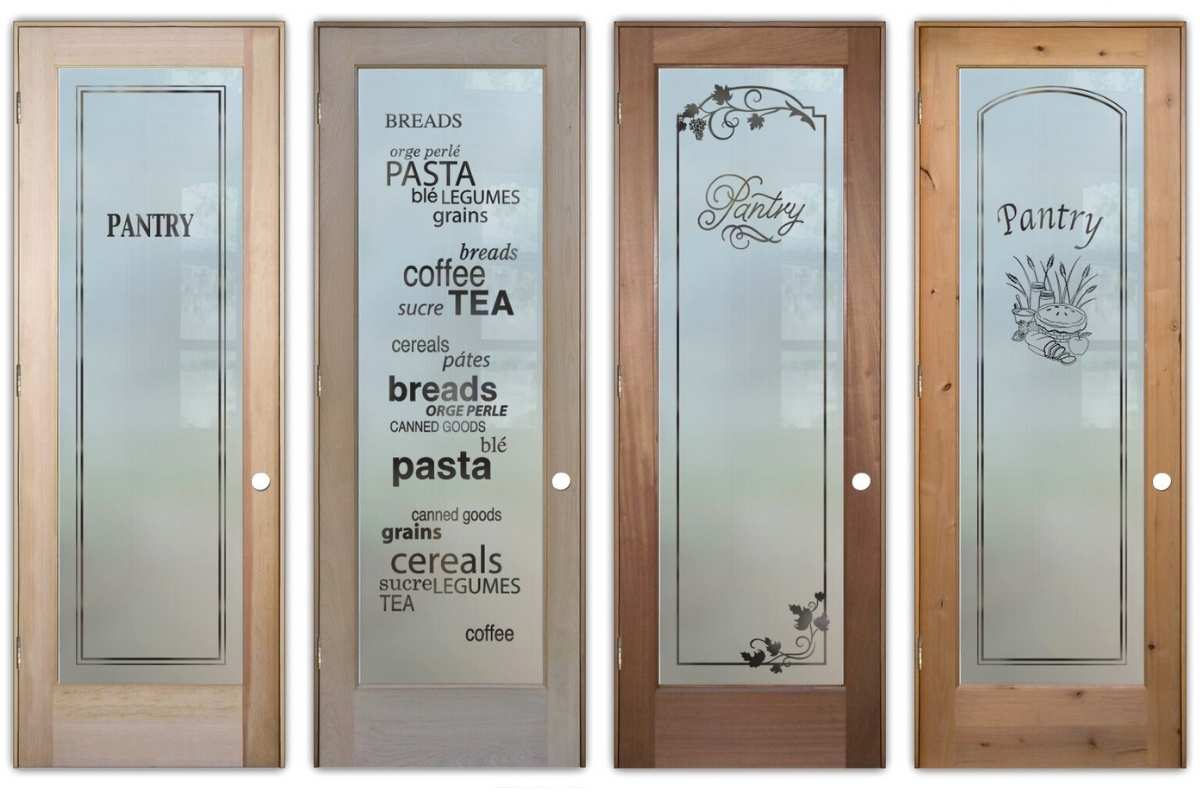
- Pantry doors – Adds light while softening views of shelving and contents
- Laundry room doors – Hides clutter while keeping spaces bright
- Home office doors – Creates separation without visual heaviness
- Bathroom doors – Works best when paired with heavier textures or additional obscurity
- Interior French doors – Maintains openness while reducing direct sightlines
Textured glass works especially well in open floor plans, helping define spaces without sacrificing brightness or flow. Custom interior doors with frosted glass designs are also popular among homeowners who want privacy, light, and a unique decorative statement that complements the surrounding architecture.

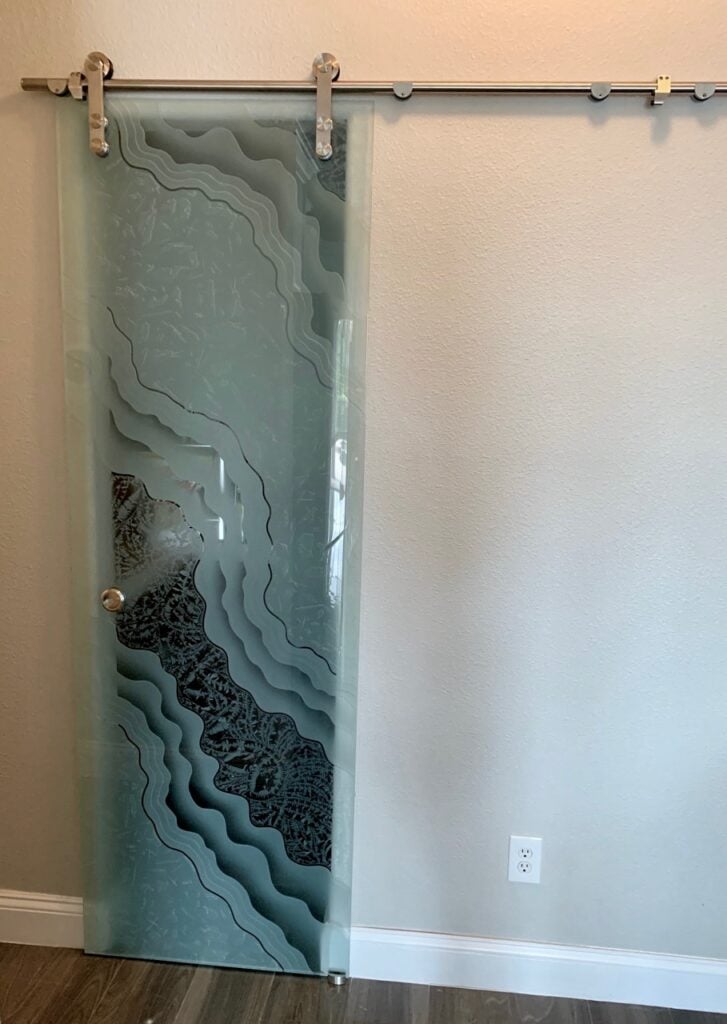
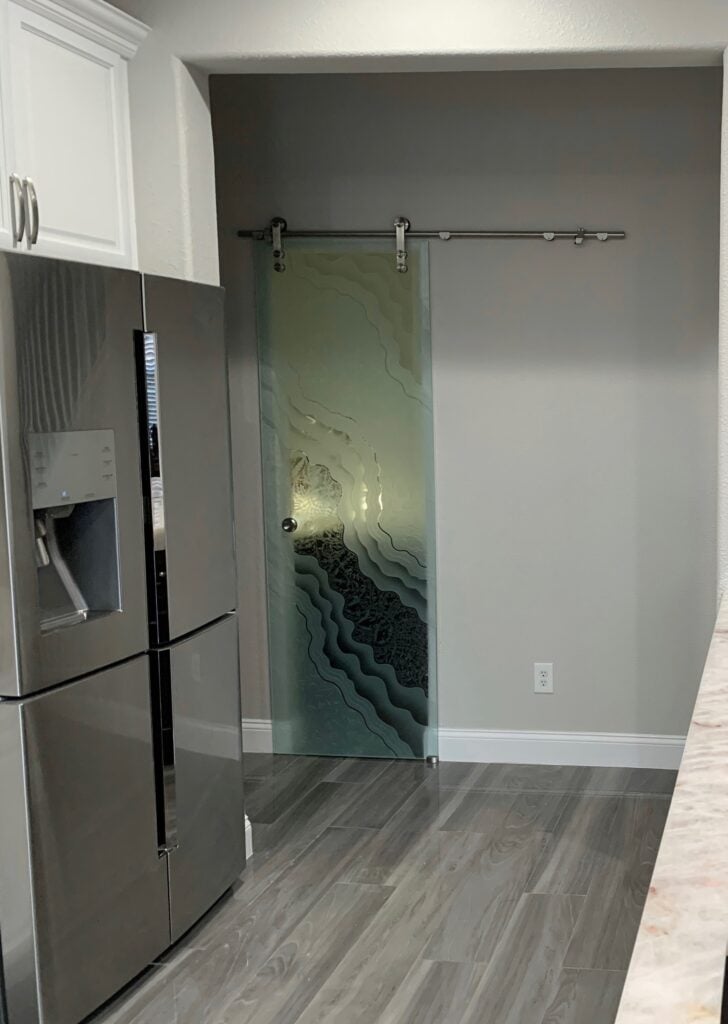
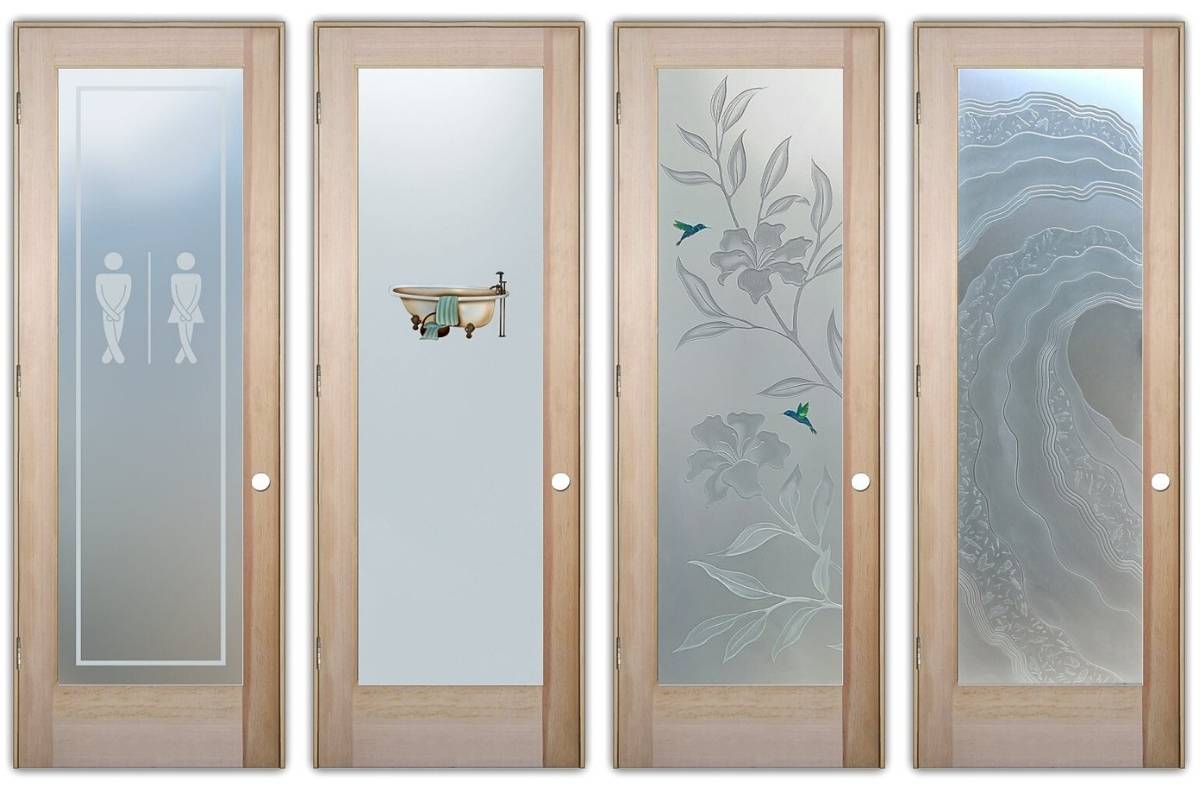
Textured Glass Doors for Bathroom Interiors
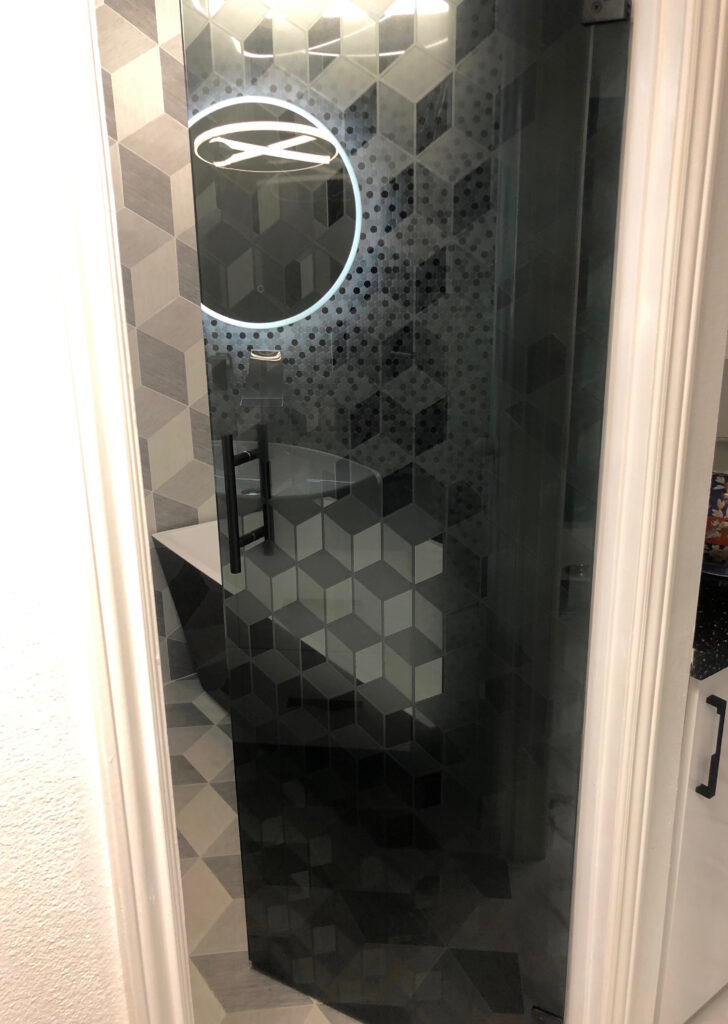

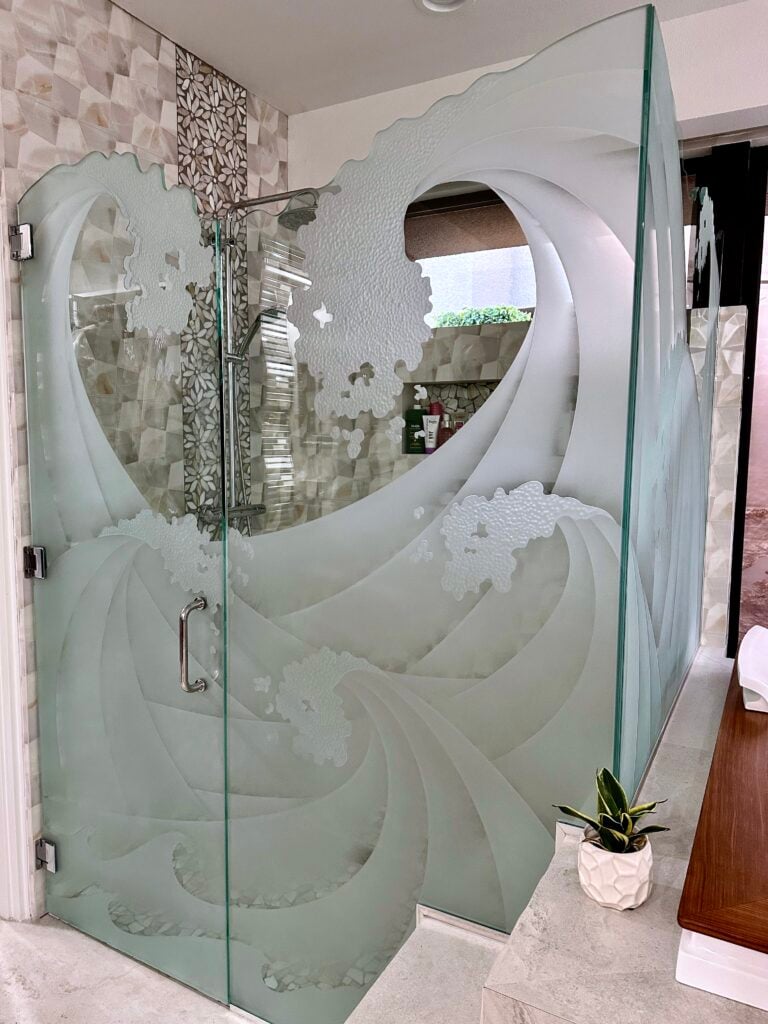

Ready to Elevate Your Interior Doors?
At Sans Soucie Art Glass, textured glass is a handcrafted work of art. For nearly 50 years, our master artisans have specialized in custom sandblasted, carved, and painted glass, creating one-of-a-kind interior doors that balance privacy, light, and breathtaking design. Whether you’re drawn to subtle textures, bold carved patterns, or fully custom artwork, every piece we create is made by hand in our U.S. studio and tailored to your exact space.
Design Considerations Before Choosing Textured Glass
Before selecting a textured glass style, it’s important to consider how the door will function within the space as well as how the glass will look under real-world conditions.
- Privacy needs: Evaluate whether partial obscurity is sufficient or if full privacy is required for the room.
- Lighting conditions: Strong backlighting can reduce the perceived privacy of lighter textures.
- Door location: Consider sightlines from adjacent rooms, hallways, or living areas.
- Interior style: Linear textures feel modern and structured, while organic patterns feel softer and more traditional.
- Maintenance: Some deeper or irregular textures may show fingerprints or dust more easily than smooth finishes.
Choosing the right texture ensures the glass enhances both the function and aesthetic of the interior door with glass.

Can Textured Glass Be Customized?
Yes—many textured glass options can be customized to suit your interior door and overall design.
Customization may include:
- Custom door sizes and shapes to fit standard or non-standard doors. Check out Door Size (Chart & Guide)
- Pattern orientation, such as vertical or horizontal reeding
- Combining textures with decorative borders or design elements
- Adjusting privacy levels by pairing texture with etching or sandblasting
Customization allows textured glass to feel intentional and tailored rather than generic.
👉 Explore textured and frosted glass interior doors, browse hundreds of real projects, or start designing your own custom glass door today.
Final Takeaway: Is Textured Glass Right for Your Interior Door?
Textured glass is an excellent choice when you want to maintain light, openness, and visual interest while gently softening visibility between rooms. It works best for interior doors where partial privacy is acceptable and design impact matters.
If your space requires complete privacy, a fully frosted or carved glass option may be more appropriate. But for many interior applications—pantries, offices, laundry rooms, and decorative doors—textured glass strikes a beautiful balance between form and function.
Looking to add style, light, and privacy to your space? Shop interior door with glass options handcrafted by the expert artisans at Sans Soucie Art Glass. From subtle textures to fully custom frosted designs, each door is made to order and designed to stand out.
Frequently Asked Questions About Textured Glass for Interior Doors
Does textured glass affect sound transmission between rooms?
Yes—textured glass does not significantly reduce sound on its own. While thicker glass and heavier doors may slightly dampen noise, textured glass is primarily a visual solution. If sound control is important (for offices or bedrooms), pairing textured glass with solid-core doors, perimeter seals, or acoustic features is recommended.
Is textured glass safe for interior doors?
Yes. Textured glass used in interior doors is typically tempered safety glass, meaning it’s heat-treated to be much stronger than standard glass. If broken, it shatters into small, blunt pieces rather than sharp shards, making it suitable for residential and commercial interiors.
Can textured glass be used in homes with kids or pets?
Absolutely. Tempered textured glass is durable and safe for everyday use. For high-traffic areas, smoother textures (like acid-etched or lightly reeded glass) may be easier to maintain and less prone to collecting fingerprints or smudges.
How do you clean and maintain textured glass?
Most textured glass can be cleaned using:
- A soft microfiber cloth
- Mild glass cleaner or a vinegar-and-water solution
- Gentle pressure to reach recessed areas
Avoid abrasive pads or harsh chemicals, especially on etched or sandblasted surfaces, to preserve the finish long-term.
Will textured glass yellow, fade, or wear over time?
No. Textured glass is a permanent surface treatment or molded pattern within the glass itself. Unlike films or coatings, it won’t peel, fade, or discolor over time—even with regular cleaning or exposure to light.
Can textured glass be replaced or upgraded later?
In many cases, yes. If your door is designed to accept glass inserts or panels, the glass can often be replaced without changing the entire door. This makes it possible to upgrade from a lighter texture to a more private or decorative option in the future.
Does textured glass affect resale value?
Textured glass interior doors can enhance resale appeal, especially when used thoughtfully in pantries, offices, or transitional spaces. They’re often seen as an architectural upgrade that adds light, style, and perceived quality—particularly when the glass is custom or decorative.
How do I choose between off-the-shelf textured glass and custom designs?
Off-the-shelf textured glass works well for simple applications. Custom designs are ideal when:
- You want a specific privacy level
- The door size is non-standard
- You’re matching an architectural style or theme
- You want the door to serve as a focal point
Custom glass offers more control over texture, pattern, and overall impact.
HELPFUL RESOURCES

Sans Soucie Art Glass: Decorative, Custom & Frosted Glass Doors, Windows, Showers & Stained Glass Since 1976
Family-owned and operated since 1976, Sans Soucie Art Glass leads the industry in decorative glass and custom glass design — from sandblast frosted glass and carved glass to hand-painted and stained glass art — transforming ordinary glass into Works of Art Captured in Glass recognized worldwide.
Innovative Frosted Glass Door Designer Tool
In 2010, we invented and launched our Frosted Glass Pantry Door Designer – a fun, easy-to-use tool that makes it simple for anyone to design and customize not only pantry doors, but a wide range of frosted glass doors for every room.
Explore our Frosted Glass Doors Collection
Our custom frosted glass doors include a beautiful variety for every style and space:
- Pantry Doors
- Frosted Glass Interior Door
- Interior Doors with Frosted Glass
- Frosted Glass French Doors
- Frosted Glass Front Door
- Front Doors with Frosted Glass
- Interior Glass Doors
- Glass Barn Doors
- Frosted Glass Barn Door
- Sliding Glass Barn Door
- All Glass Doors Interior
- All Glass Front Doors
- Bathroom Doors with Frosted Glass
- Laundry Room Doors
- Wine Room Doors
If you already have a door, and only need the glass insert, we also offer:
- Frosted Glass for Interior Doors
- Door Glass Inserts for Front Doors
- Glass Panels for Pantry Doors
- Frosted Glass Inserts for Bathroom Doors
- Laundry Room Door Glass Inserts
- Glass Panels for Interior Wine Cellar Doors
Elegant Frosted Glass Throughout Your Home
While our frosted glass doors are a top choice, we also create stunning glass products for every area of your home, including:
- Frosted Glass Shower Doors
- Glass Shower Partition
- Frosted Glass Shower Panel
- Frosted Glass Showers
- Frosted Glass Windows
- Bathroom Window Frosted Glass
- Decorative Window Glass, Window Frosting
- Custom Glass Dining Table
- Custom Glass Coffee Table
- Glass Shelves, Custom Glass Shelves
- Hand Carved & Painted Mirrors
- Frosted Glass Signs, Etched Glass Signs
- Cabinet Door Glass Inserts, Frosted Glass Inserts for Cabinet Doors
- Glass Wall Art, Wall Art on Glass
Looking for Inspiration? Explore Our Galleries
Discover visual idea boards, style concepts, décor applications, real project photos, and helpful information in our expanding gallery collection:
- Custom Glass
- Custom Glass Edges
- Custom Mirror
- Decorative Glass
- Decorative Glass Doors
- Decorative Glass Front Doors
- Decorative Glass Interior Doors
- Decorative Glass Window
- Stained Glass
- Stained Glass Doors
- Stained Glass Front Doors
- Stained Glass Windows
Free Shipping. Expert Packing, Peace of Mind
With FREE SHIPPING on most orders and worldwide delivery from our studio in Palm Desert, California, every order is packed in-house by our expert glaziers using custom materials and proven methods — ensuring safe arrival with a damage rate of less than 1%!
Explore our complete frosted glass doors collection and find the perfect frosted glass door for your space. Have questions? Contact us today!
Copyright © 2025, Sans Soucie Art Glass. All rights reserved.