The Best Home Office Doors: Ideas, Styles & Tips
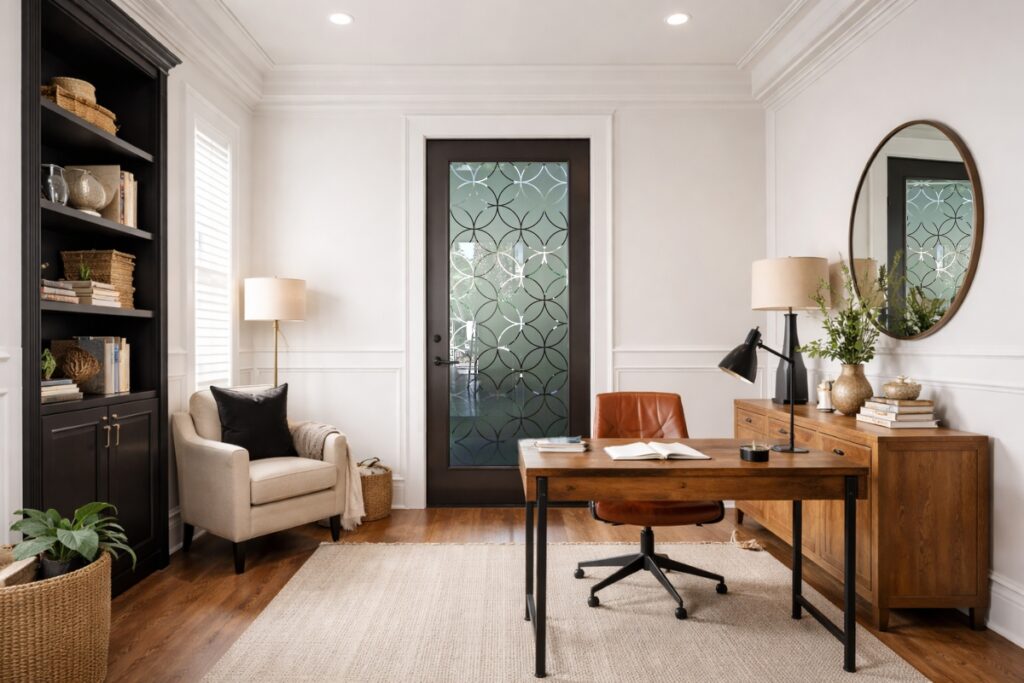
The right door can transform your home office from a makeshift desk setup into a legitimate workspace in a matter of hours. Whether you’ve carved out a dedicated room, converted a spare bedroom, or embraced the “cloffice” trend that gained momentum between 2020 and 2024, your office door is the single element that defines the boundary between work and the rest of your house.
Home office doors are one of the fastest upgrades to reduce distractions from kids, pets, or shared living spaces. A well-chosen interior door creates both physical and psychological separation—signaling to your family that you’re in work mode and helping you focus when deadlines stack up.
This guide will help you choose between solid core, sliding, French, frosted glass interior doors, and barn-style doors based on noise, light, and space constraints. With remote and hybrid work now a permanent fixture for many households, creating a dedicated or semi-dedicated work zone has become more important than ever.
Key Points
- The right home office door improves privacy, focus, and productivity.
- Interior door with glass brings in light; solid-core doors reduce noise.
- Frosted glass offer privacy without closing off the space.
- Sliding or bifold doors save space in smaller offices.
- Door style and placement affect comfort, security, and overall home design.
Why Your Home Office Door Matters
Your home office door does more than close off a room. It controls sound, manages natural light, influences furniture placement, and sets the visual tone for your workspace. A thoughtful door office choice can make a small office feel larger, a dark room brighter, and a noisy household quieter.
- A quality door upgrade improves focus by physically separating your workspace from household activity, letting you concentrate during calls and deep work sessions.
- The right door style enhances home design by creating a cohesive look between your office space and adjacent rooms like the hall, living room, or dining room.
- Upgrading from a basic hollow-core slab to a solid core or glass panel door is one of the simplest ways to make your office feel professional and intentional.
- Since 2020, homeowners have increasingly prioritized workspace functionality, transforming everything from spare bedrooms to closet space into productive offices.
- Your office door is often visible from shared spaces, so it contributes to the overall décor and flow of your home.
- A well-sealed door office solution creates a sound barrier that makes video calls clearer and reduces the mental effort of filtering out background noise.
Key Factors to Consider Before Choosing a Home Office Door
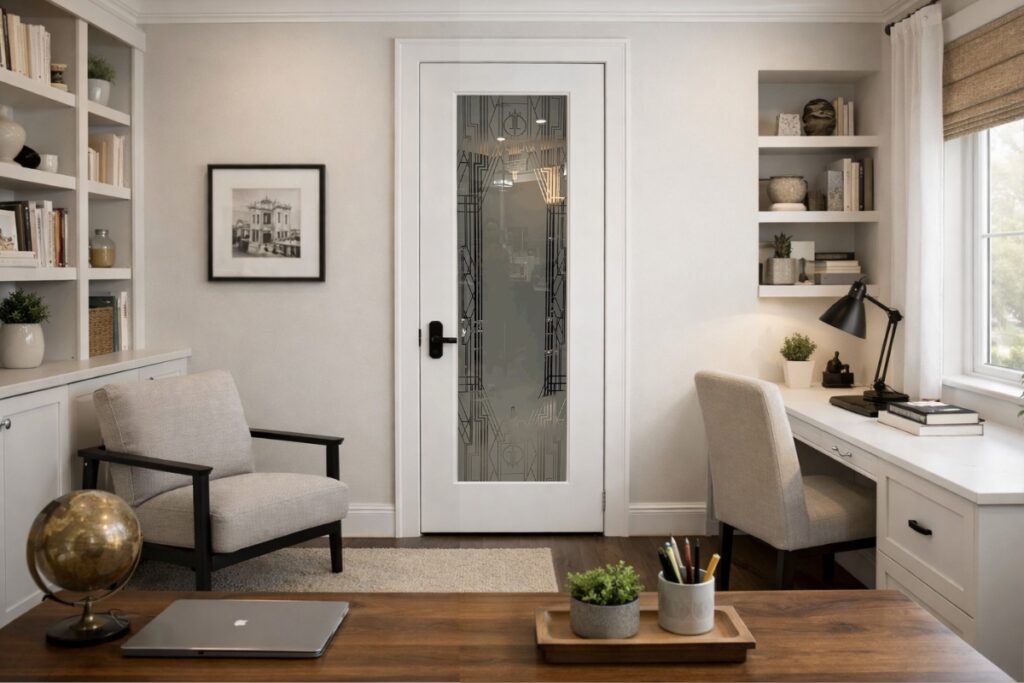
Before you fall in love with a specific style, run through this quick checklist. The perfect choice balances your privacy needs, acoustic requirements, light preferences, and spatial constraints—not just what looks good in pictures online.
- Privacy needs: Consider whether you need quiet for client calls and confidential work, or just visual separation for light admin tasks. A therapist conducting sessions requires different privacy than someone checking emails. A dedicated home office door can also enhance security by limiting access to work equipment and documents.
- Sound control: Solid core construction and well-sealed frames matter far more than how thick a door looks. Most sound leaks through gaps at the jamb, hinges, and the undercut at the bottom—not through the panel itself.
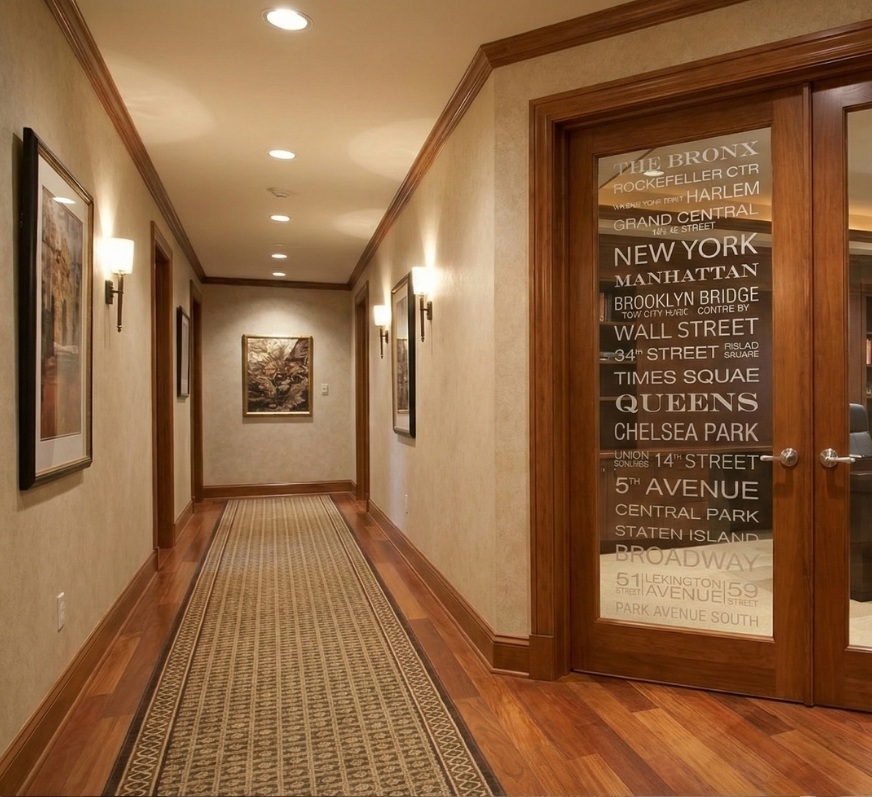
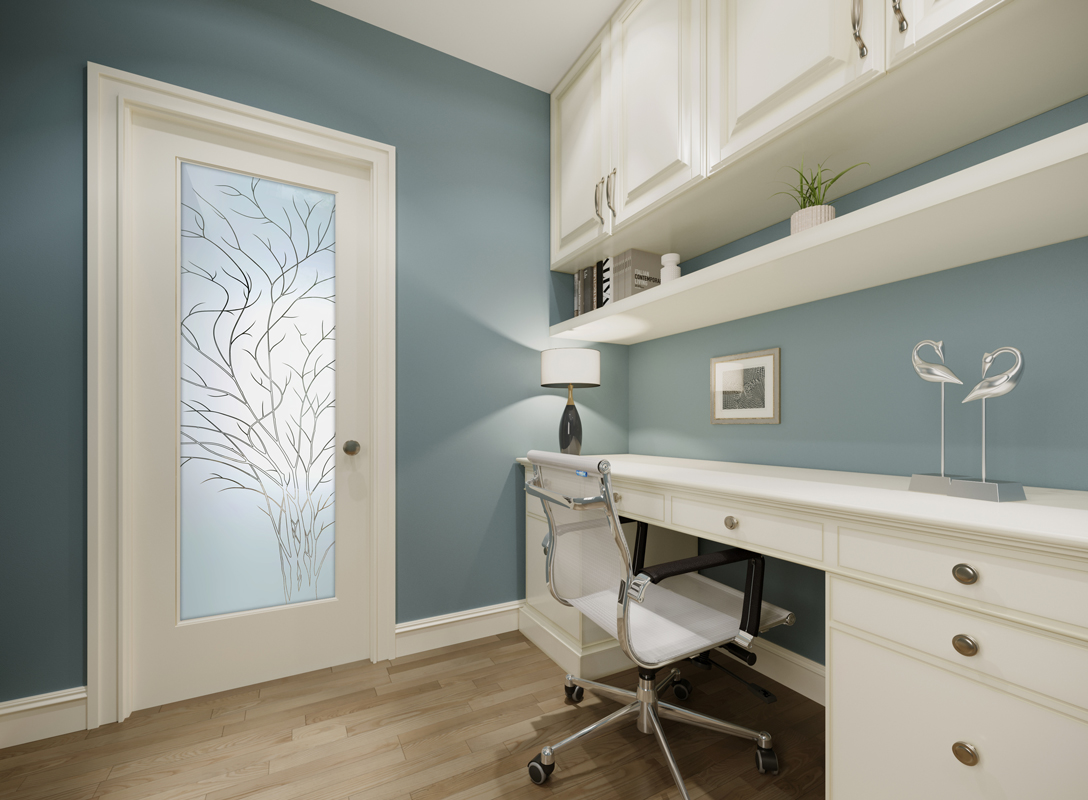
- Natural light access: If your office is an interior room or converted hallway niche, custom interior doors with frosted glass designs can borrow light from adjacent spaces. Weigh full glass against frosted glass options depending on how much visibility you’re comfortable with.
- Space and swing: In rooms under 120 square feet, door swing direction dramatically affects furniture placement. Measure twice before committing to an opening that blocks your desk, bookshelf, or chair movement.
- Budget ranges: Hollow core doors are the most affordable, solid core doors occupy the mid-range, and custom glass or barn door systems sit at the higher end. Plan accordingly based on how long you’ll use the space.
- Installation realities: A prehung solid core door is a reasonable DIY project for a handy homeowner. Pocket doors, reframing, or custom glass partitions typically require a contractor and a weekend or more of work.
- Frame condition: Check your existing frame before ordering. Older homes may need trim work or frame adjustments that add time and cost to installation.
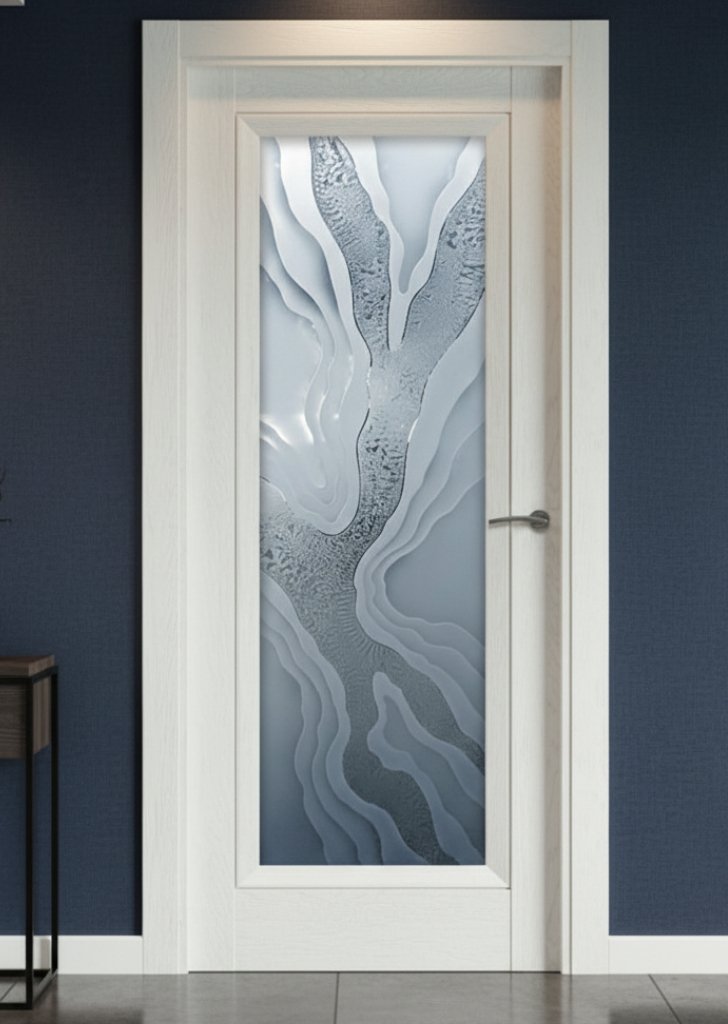
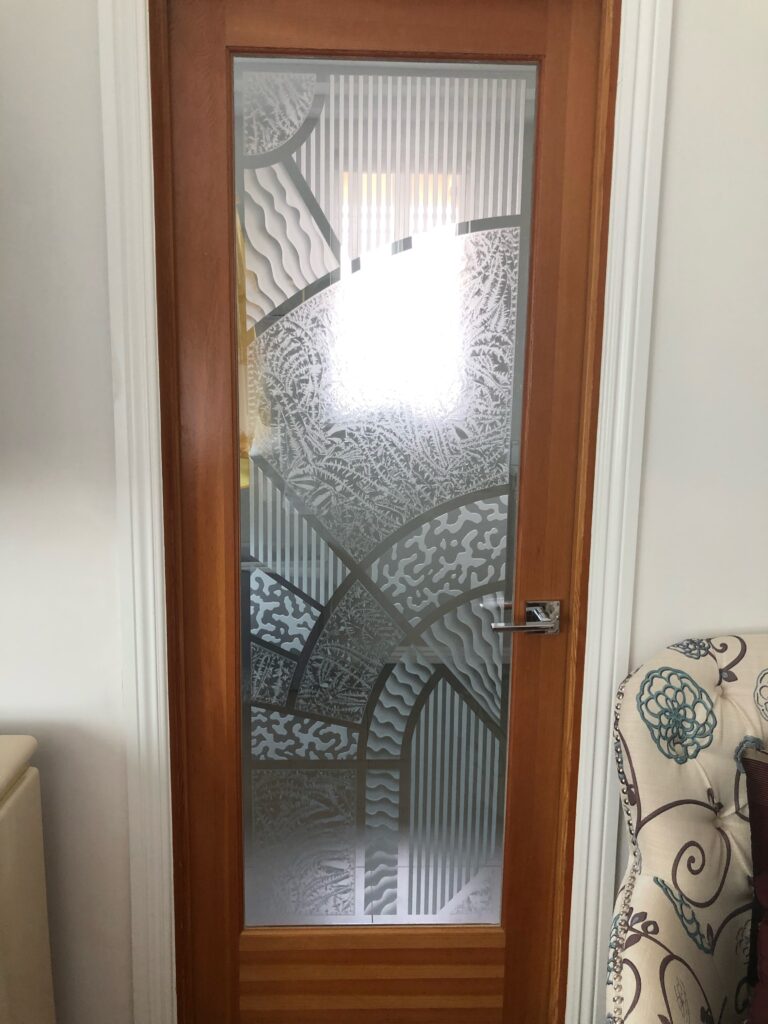
Sound-Dampening Solid Core Doors for Quiet Focus
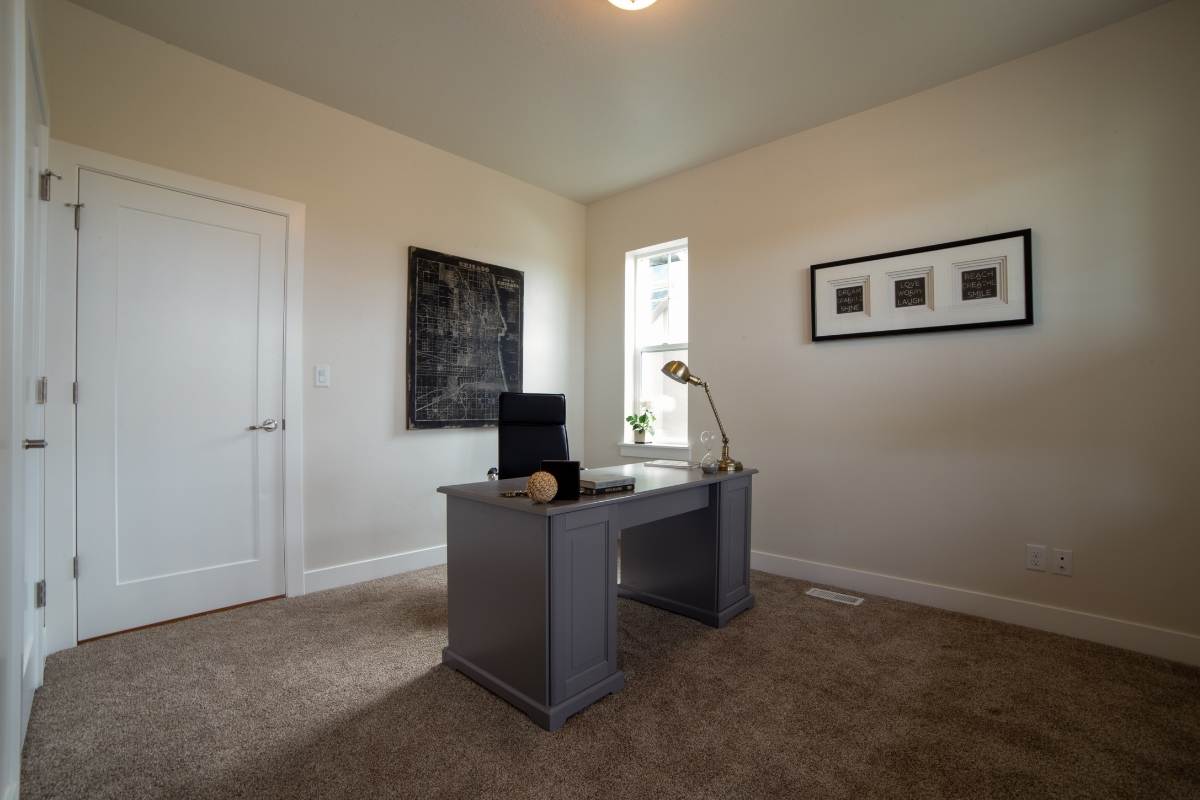
In most homes, the office door is the primary weak point for noise intrusion. Kitchen sounds, TV audio, and conversations drift through hollow-core slabs with almost no resistance. Upgrading to a solid core door dramatically improves quiet and is often the single best investment for a functional home office.
- What solid core means: Unlike hollow-core doors common in tract homes built since the 1990s, solid core doors feature an engineered wood or composite interior that blocks sound and adds durability.
- Benefits for remote work: A solid core door reduces household noise from adjacent rooms, improves audio clarity for Zoom and Teams calls, and creates a psychological boundary at the end of the workday—close it, and work is done.
- Maximizing sound performance: Combine your solid core slab with adhesive weatherstripping at the jamb and an adjustable door sweep or threshold to close gaps where sound leaks through. This simple addition makes a noticeable difference.
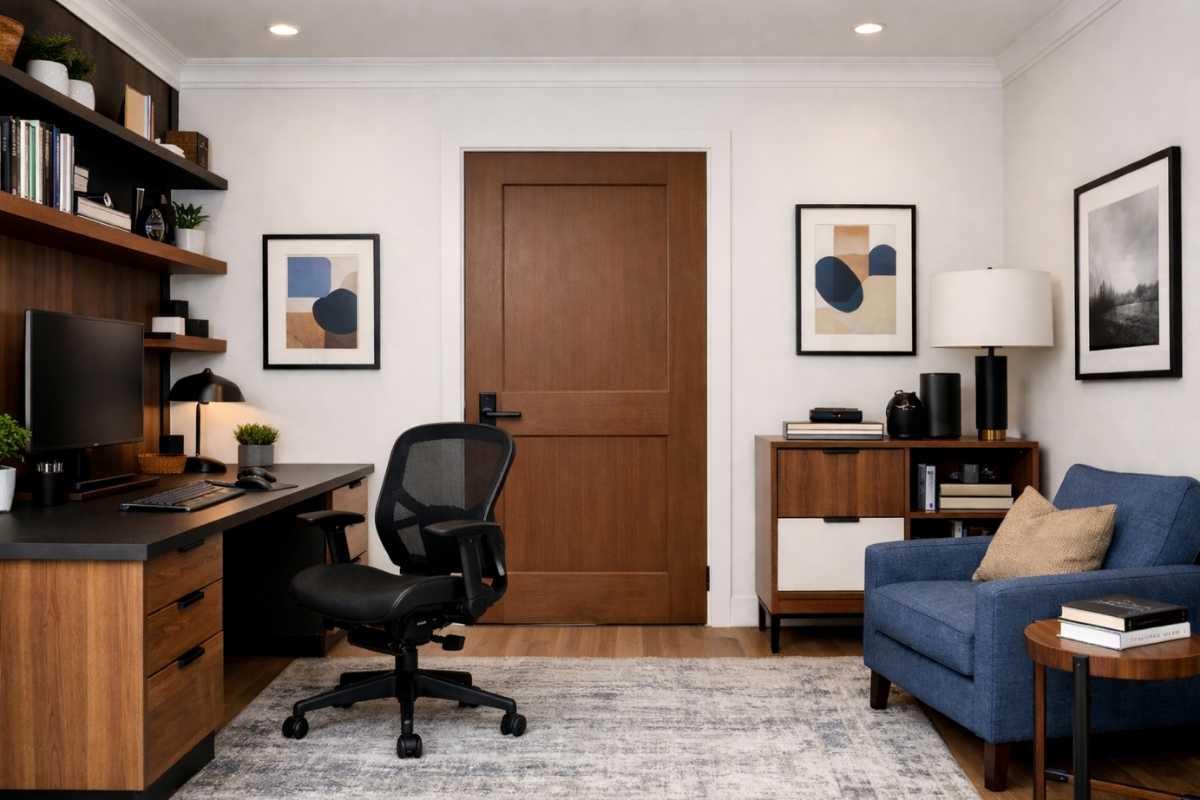
- Modern aesthetic options: Solid core doors come in contemporary styles like one-panel, two-panel, or Shaker profiles. They don’t have to feel heavy or old-fashioned—many feature clean lines suitable for any modern style interior.
- Real-world scenario: Consider an accountant working from a converted bedroom office. Privacy is essential for client confidentiality. A solid core door with proper sealing creates a space where sensitive conversations stay private.
Contemporary Panel Designs That Fit Most Home Styles
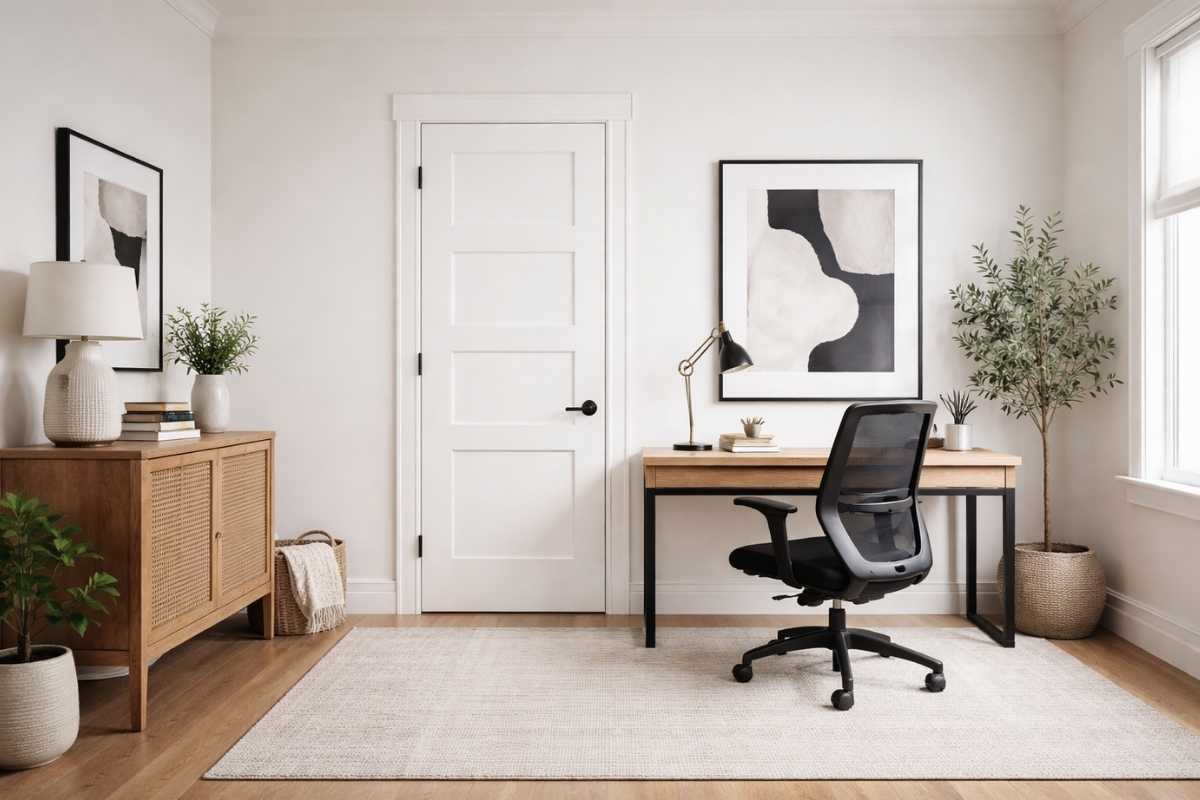
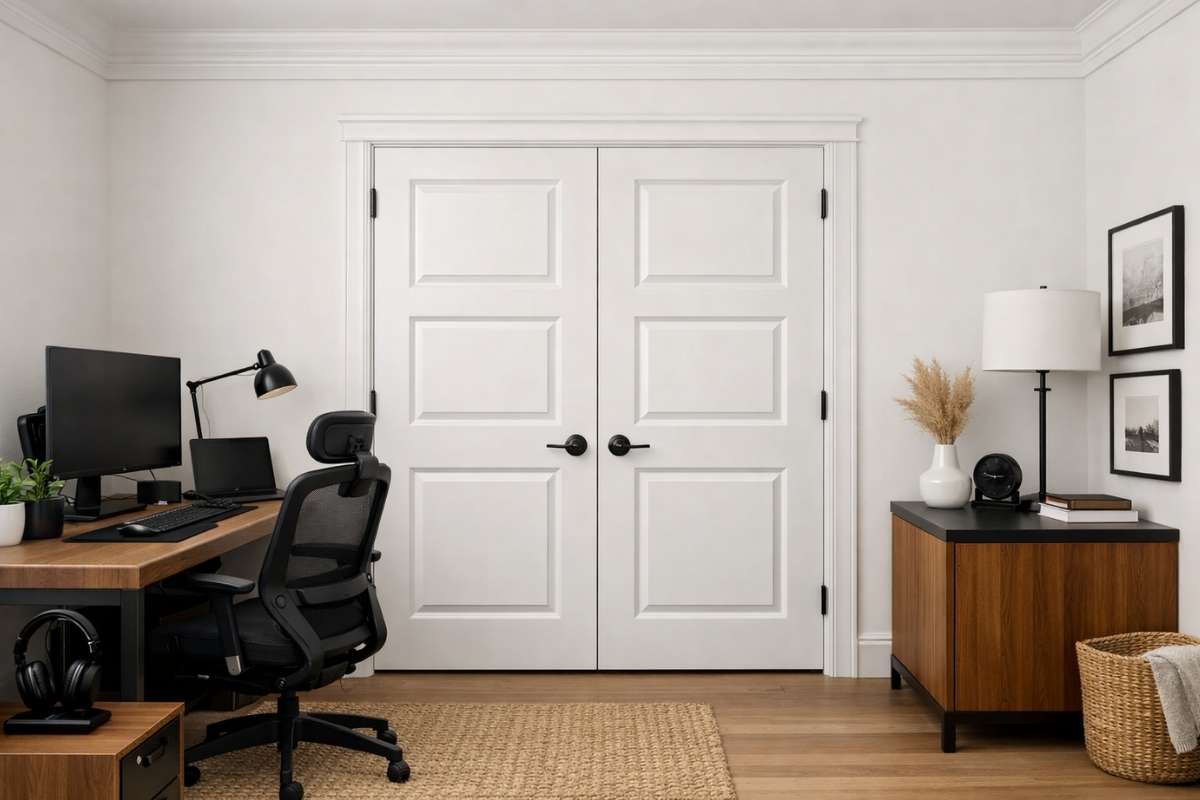
- Two- and three-panel Shaker-style solid core doors work beautifully with contemporary, Scandinavian, and Mid-century inspired offices.
- Crisp rectangular panels and simple profiles pair naturally with white walls, oak or walnut desks, and minimal hardware in matte black or brushed nickel finishes.
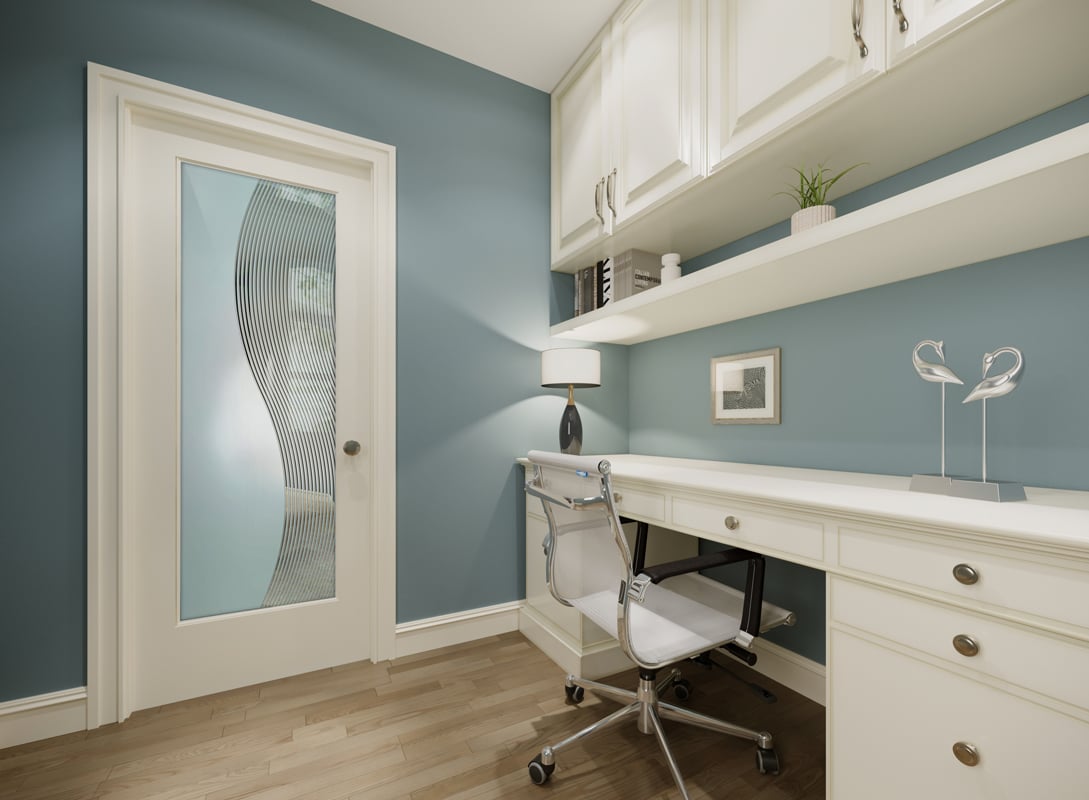
- Popular paint colors include warm whites, greige, slate, and deep navy for those wanting a statement door that anchors the room.
- These doors are the perfect choice for spare bedrooms transformed into offices, especially in post-2000 homes that originally had hollow-core slabs installed.
- The overall mood should feel calm, clean, and uncluttered—letting the door complement rather than compete with your workspace.
Traditional and Classic Looks for Formal Offices
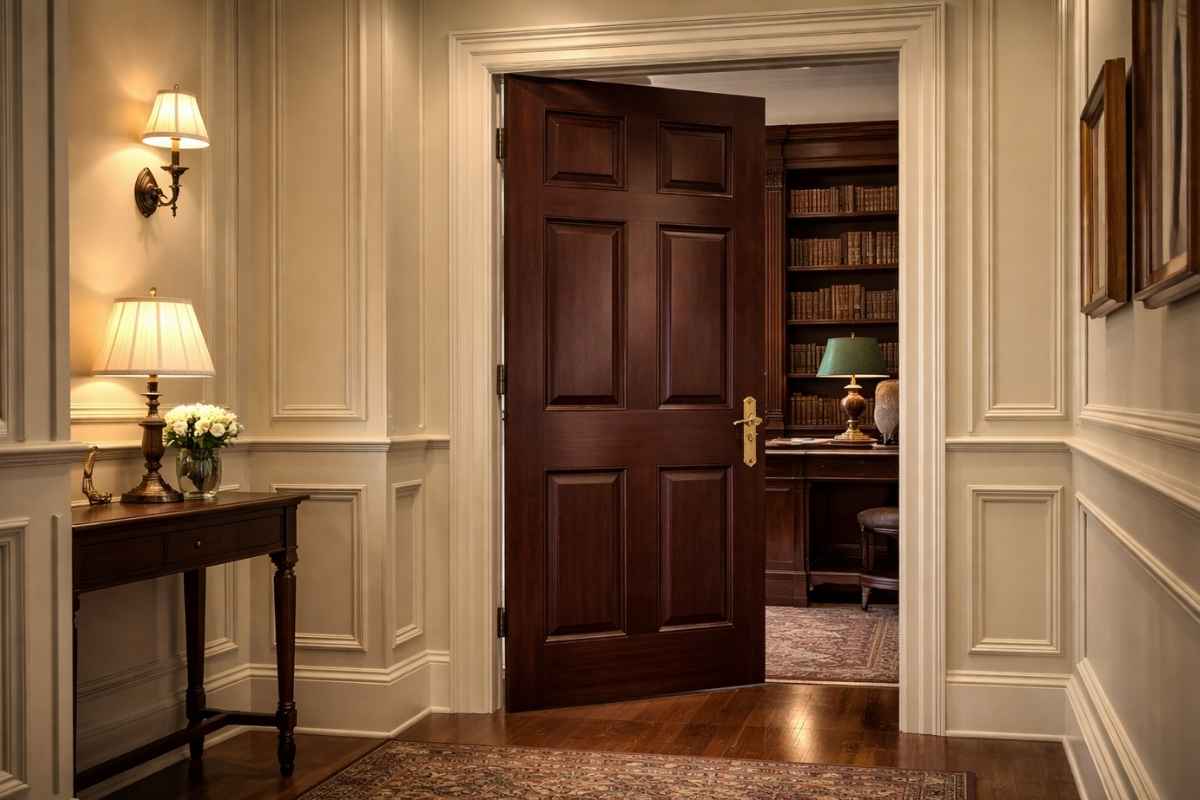
- Raised-panel solid core doors with four or six panels suit homes featuring traditional trim, wainscoting, or built-in bookcases.
- Rich stains in walnut or mahogany tones, or deep painted finishes like charcoal or forest green, create a library-style atmosphere appropriate for formal work.
- Oil-rubbed bronze or antique brass hinges and lever sets complete the cohesive classic look.
- This style works particularly well for front-of-house offices off an entry hall where the door is visible to guests and clients visiting your home.
- The atmosphere to convey is warm, formal, and timeless—suggesting permanence and professionalism.
Frosted Glass Interior Doors for Home Offices: Privacy Without Losing Light
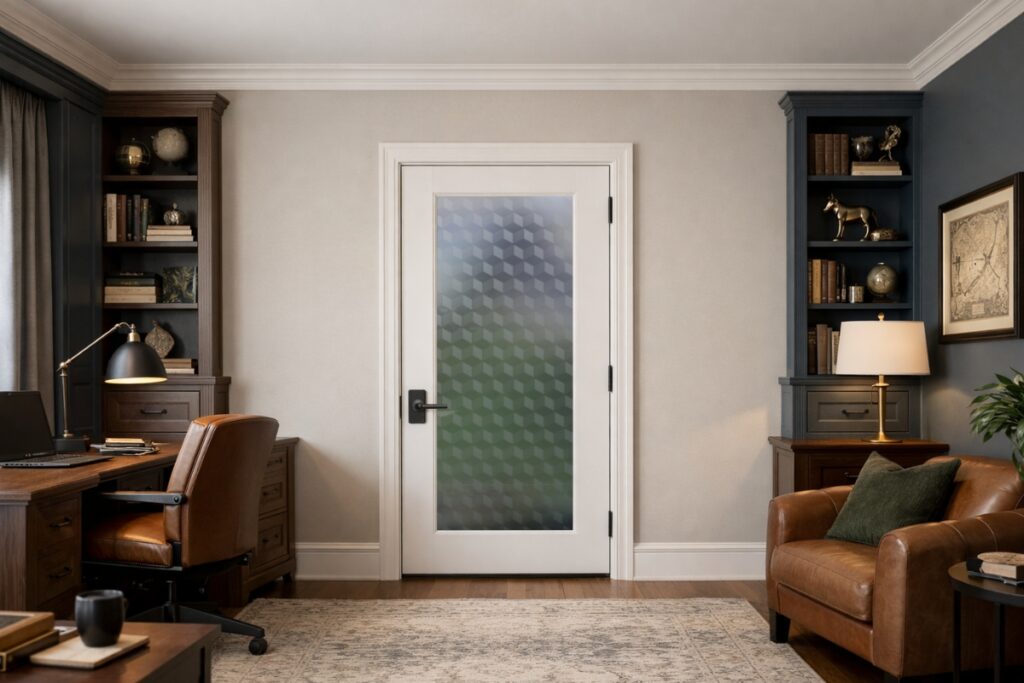
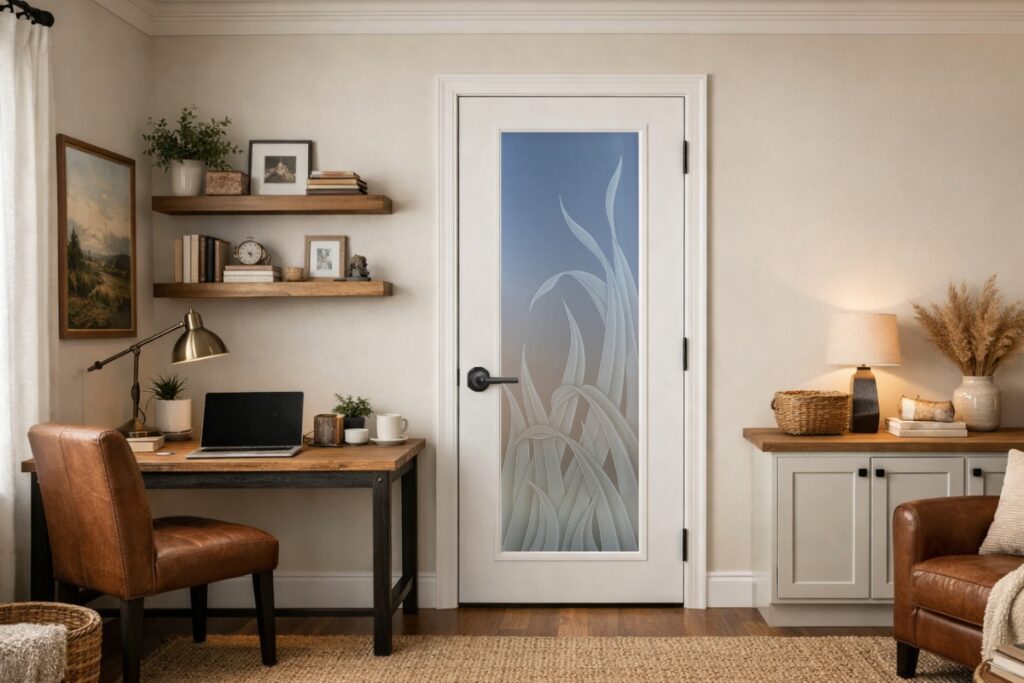

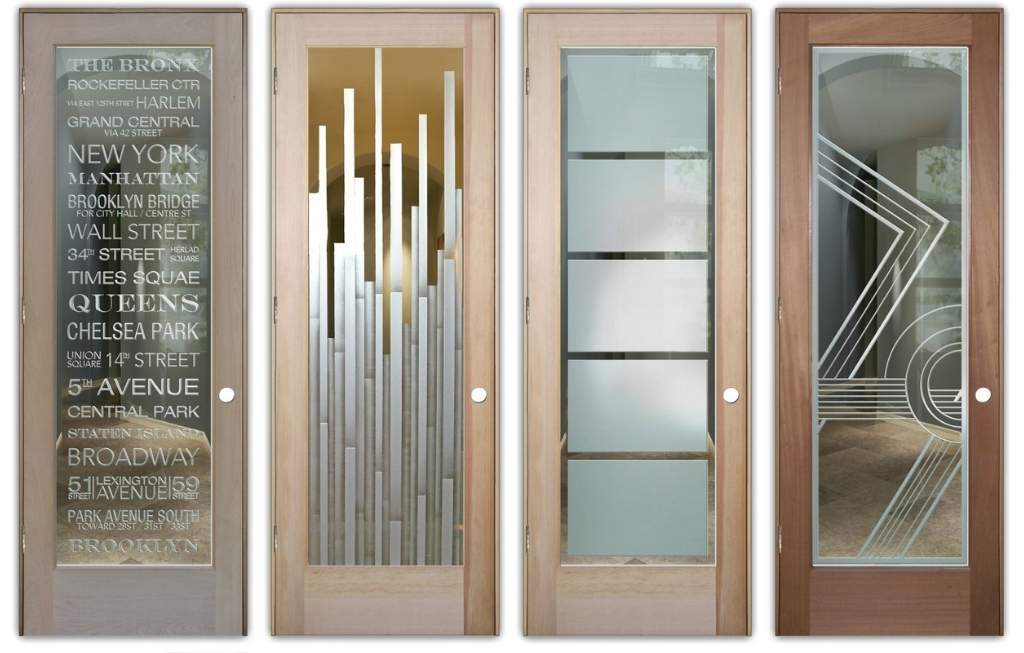
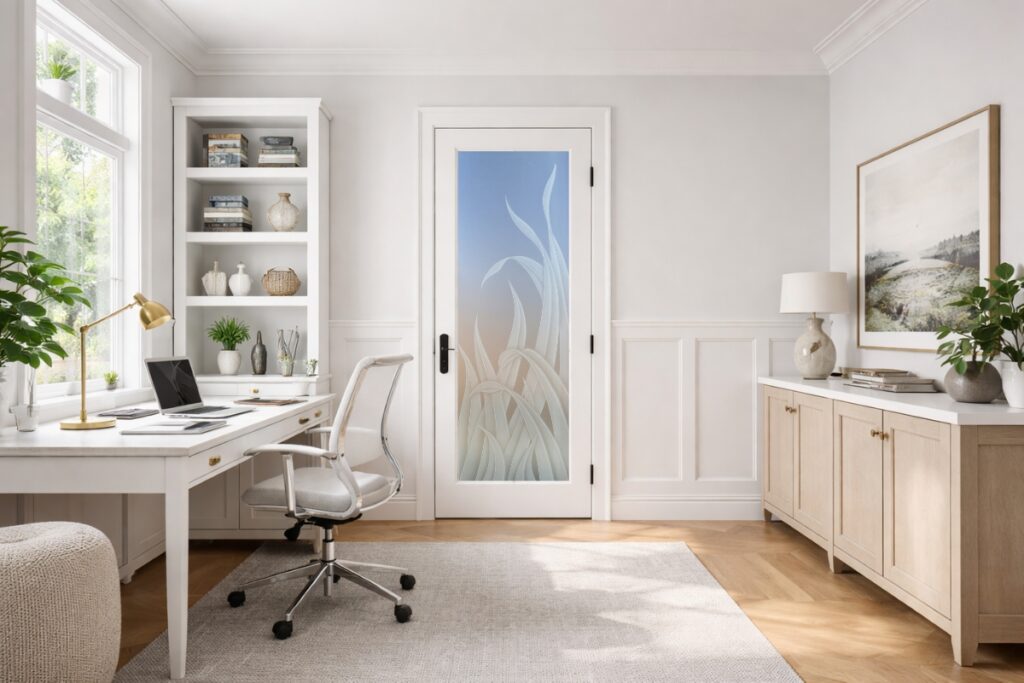
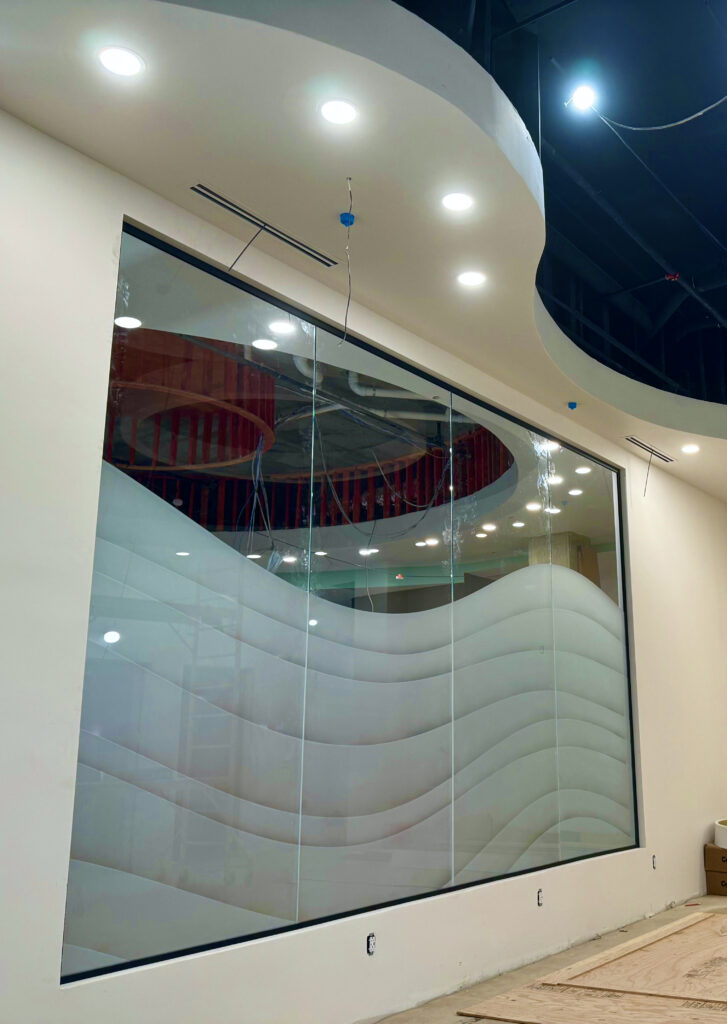
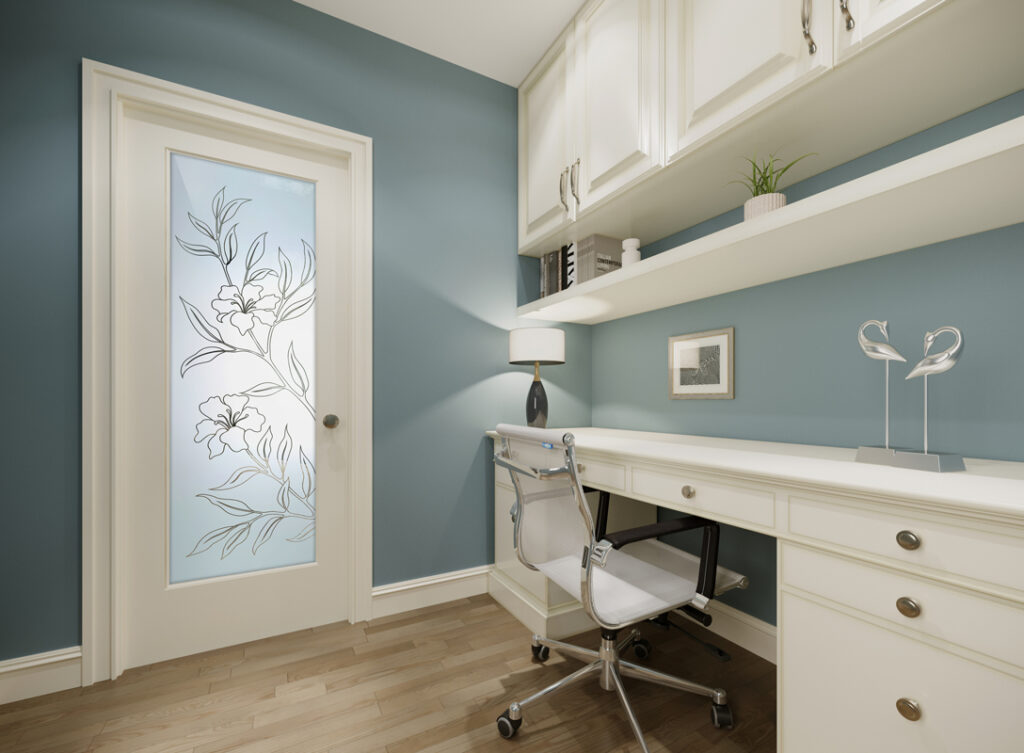
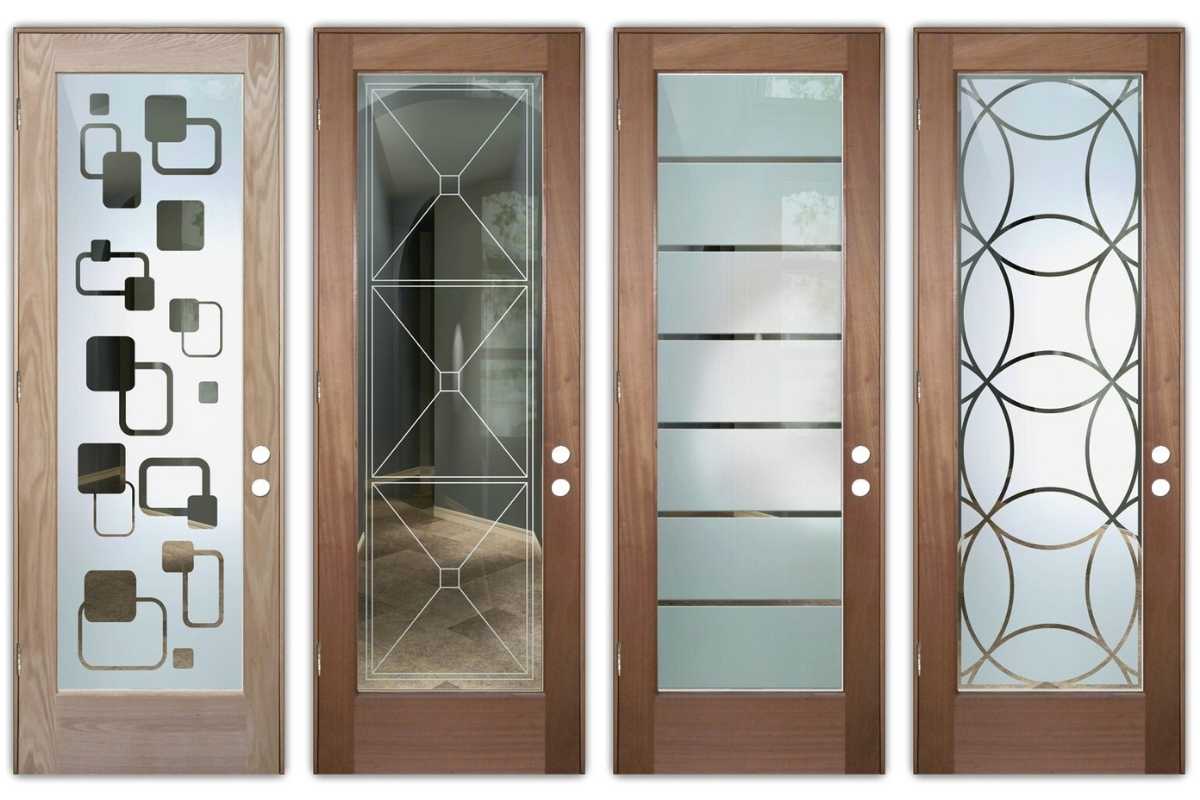
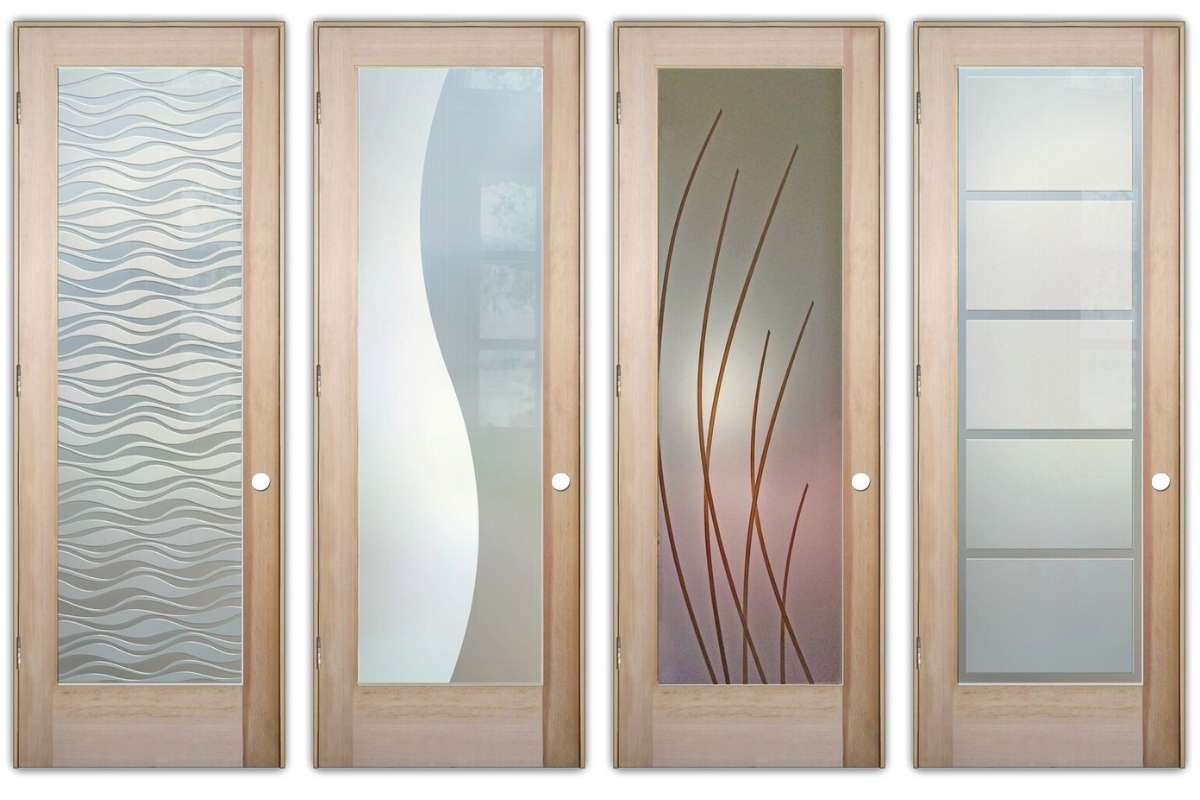
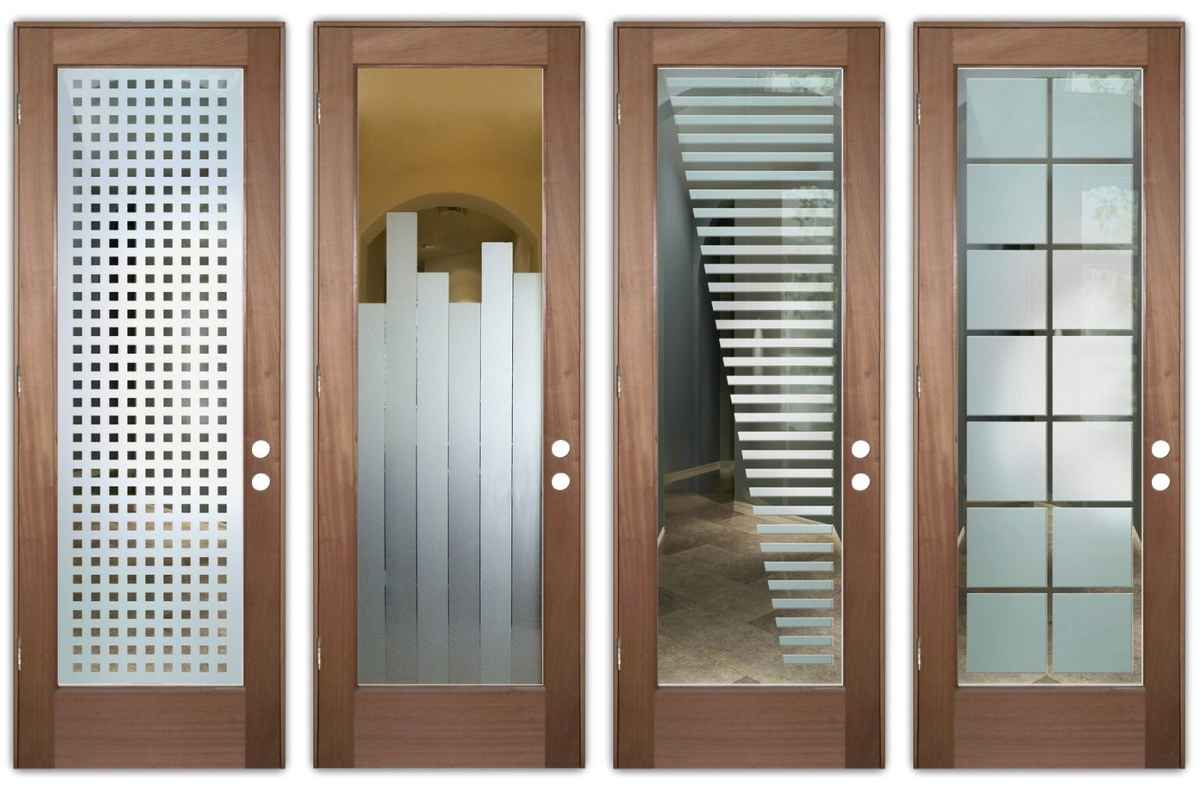
Frosted glass doors are a smart solution for home offices that need both privacy and light. By obscuring direct views while still allowing daylight to pass through, they create a workspace that feels focused, open, and intentionally designed. For modern work-from-home layouts, frosted glass offers a practical balance between separation and connection.
- Frosted glass interior doors are ideal for home offices where privacy and natural light are equally important. They block direct visibility while keeping the space bright and open.
- As interior home office doors, frosted glass designs help define the workspace without making it feel closed off—perfect for open layouts or offices near living areas.
- An interior frosted glass door reduces visual distractions by softening movement and silhouettes, supporting better focus during meetings or work calls.
- Interior doors with frosted glass offer a more balanced alternative to solid doors, providing privacy without sacrificing daylight or visual connection.
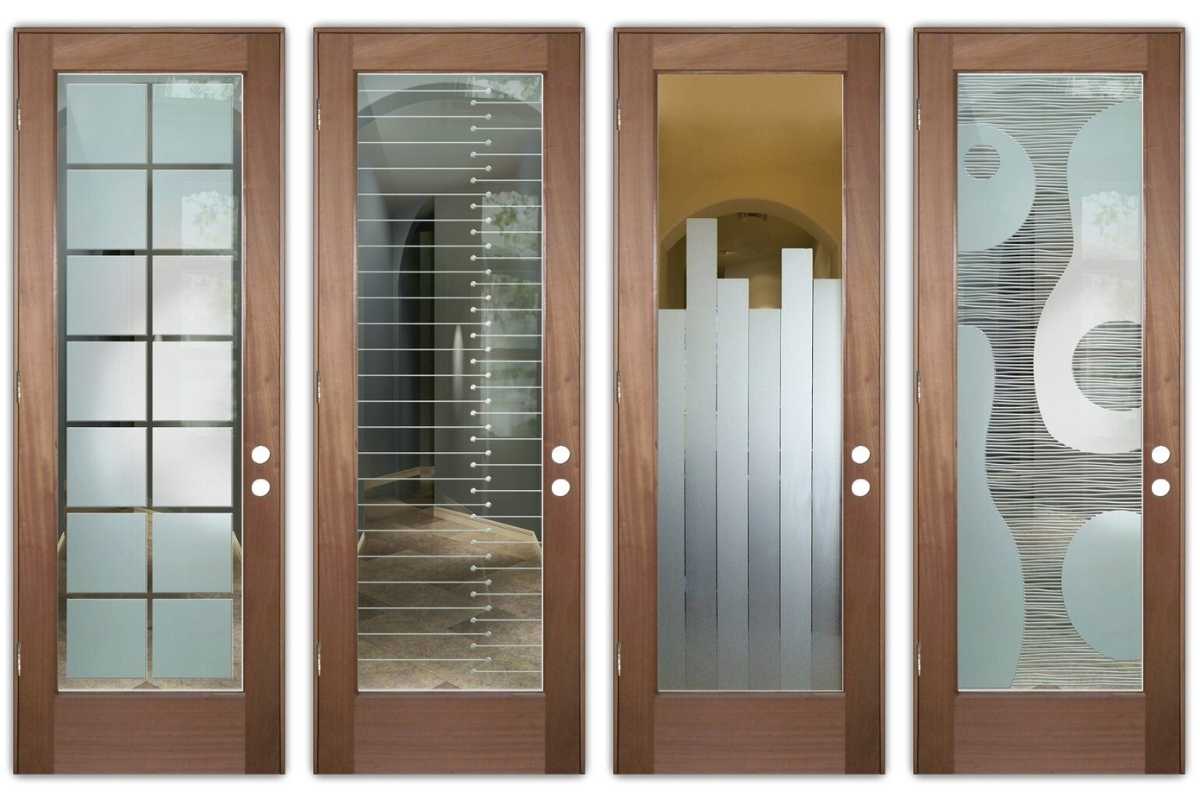
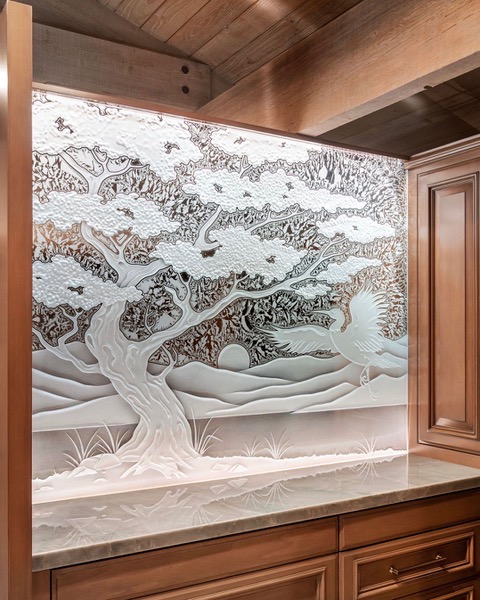
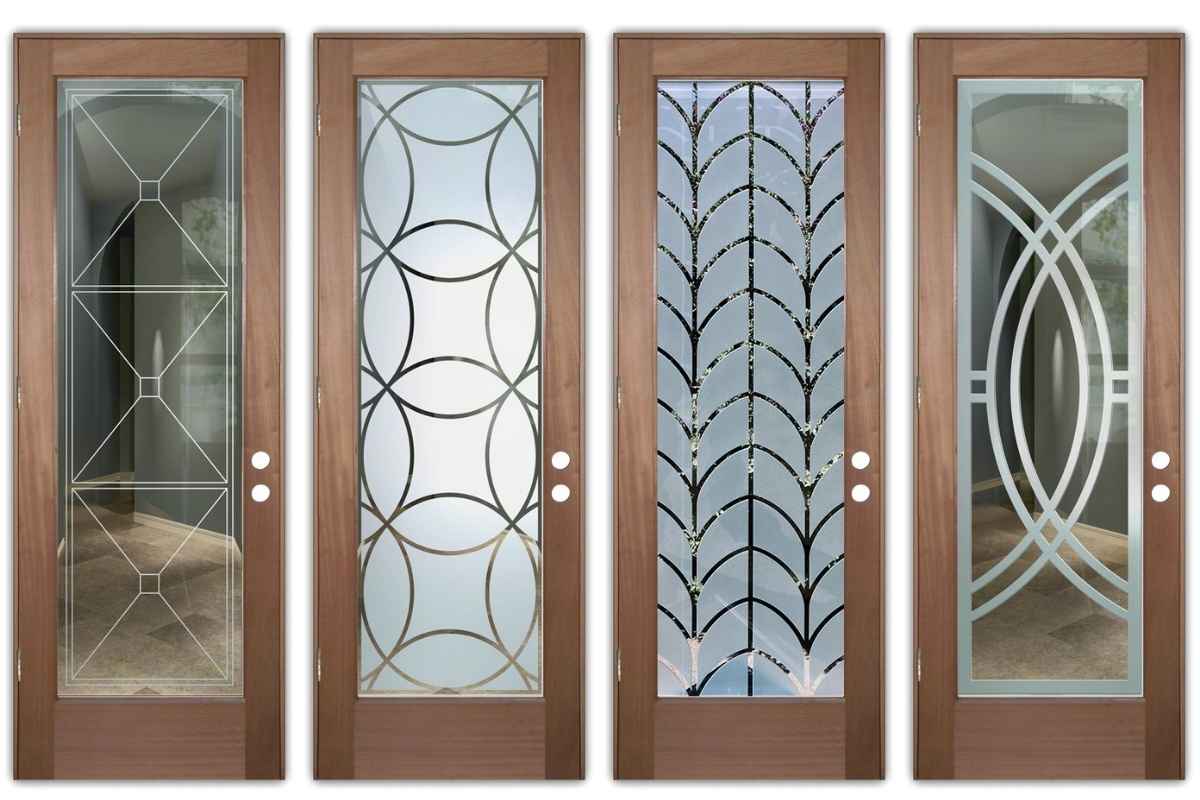
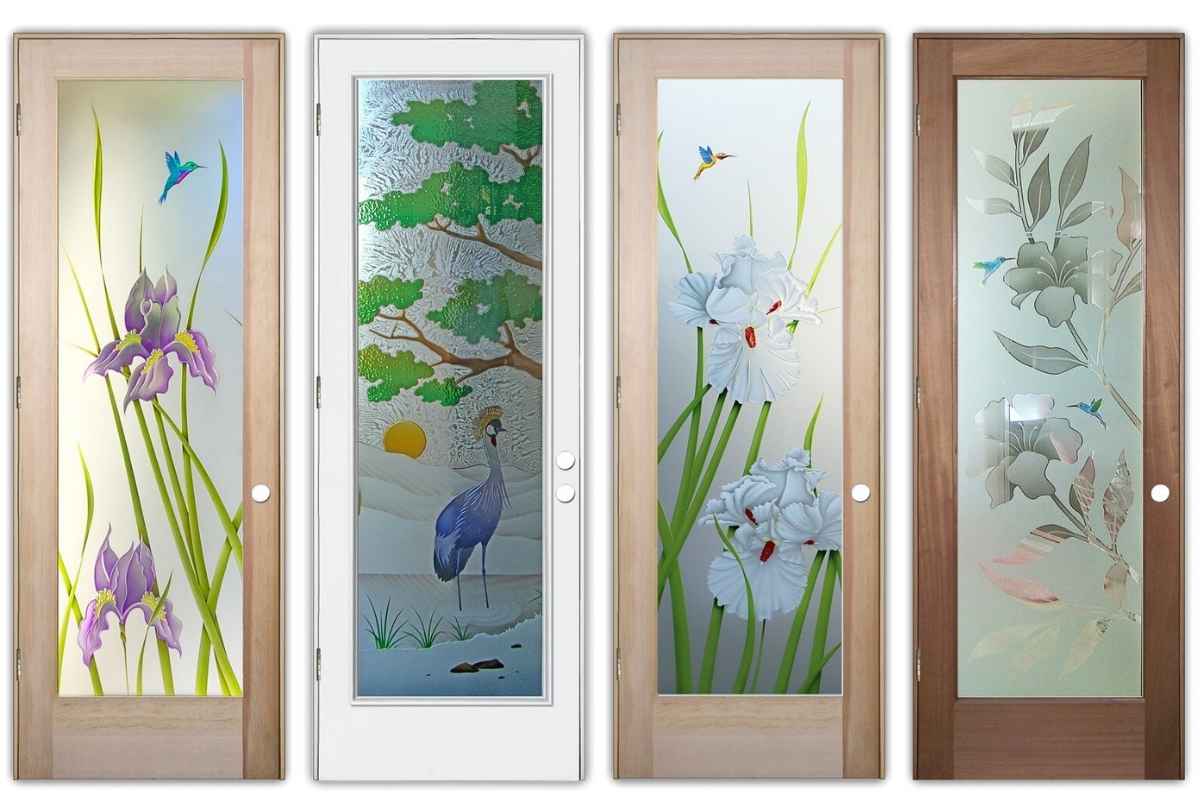
- Custom interior doors with frosted glass designs allow you to choose patterns, textures, and privacy levels that complement your home’s overall style.
- Decorative interior glass doors can act as both a functional feature and a design element, adding character to the office while maintaining professionalism.
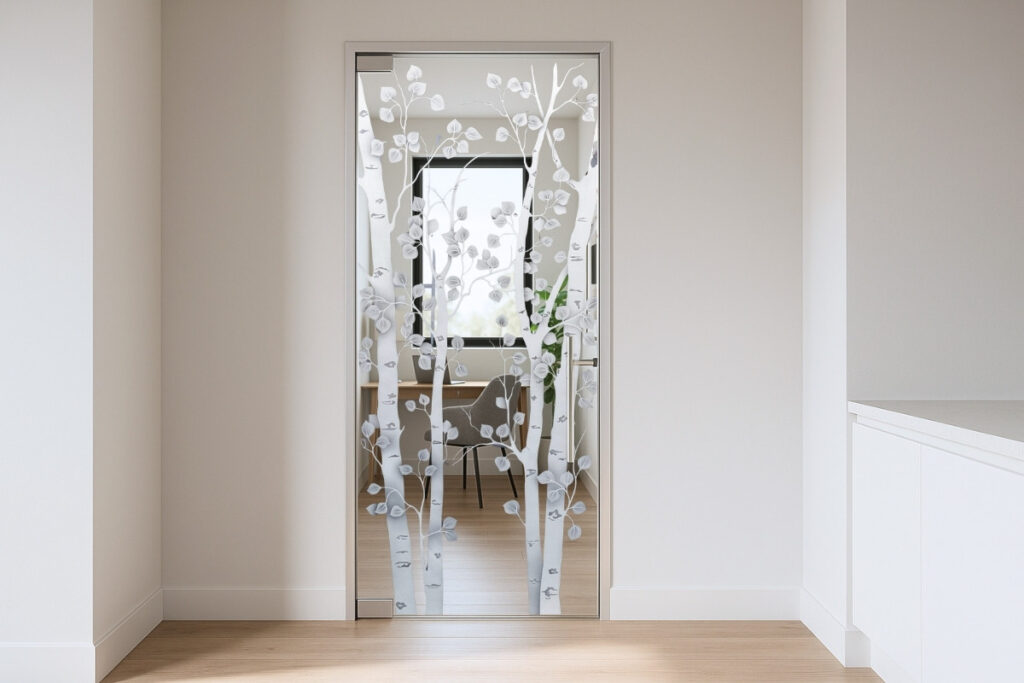
A single interior door with glass works well for smaller offices, while French-style layouts using frosted glass doors suit wider openings or shared workspaces.
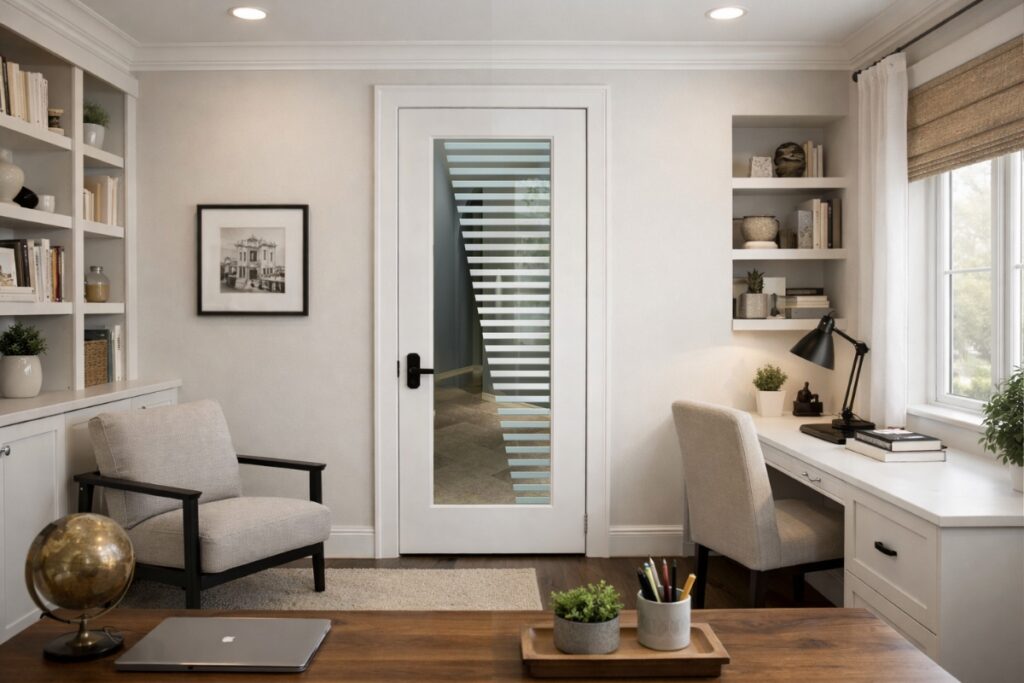
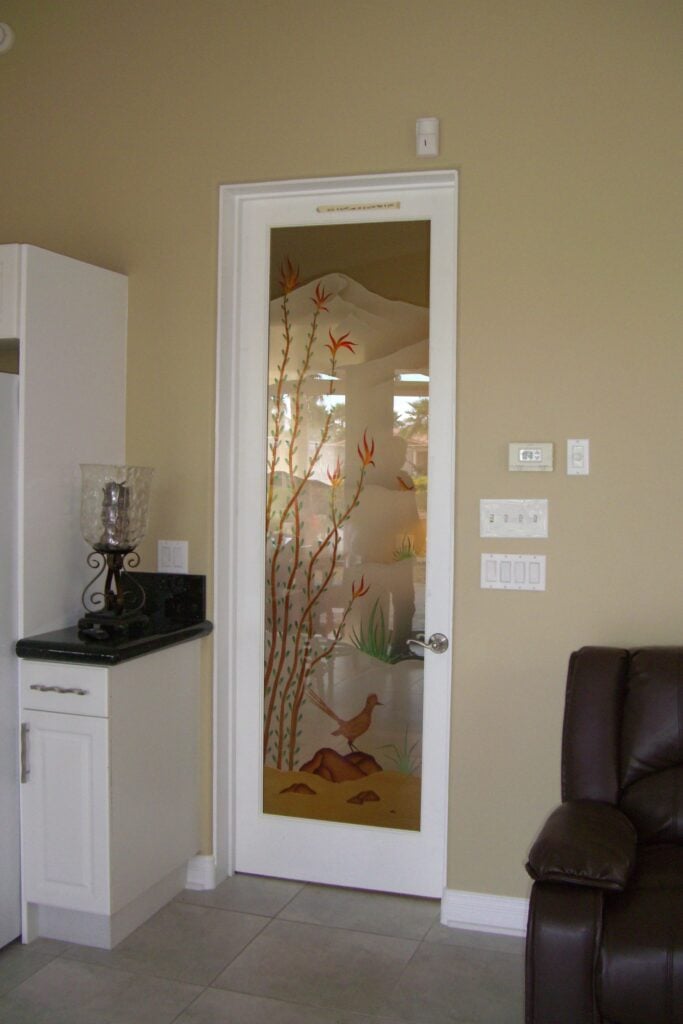
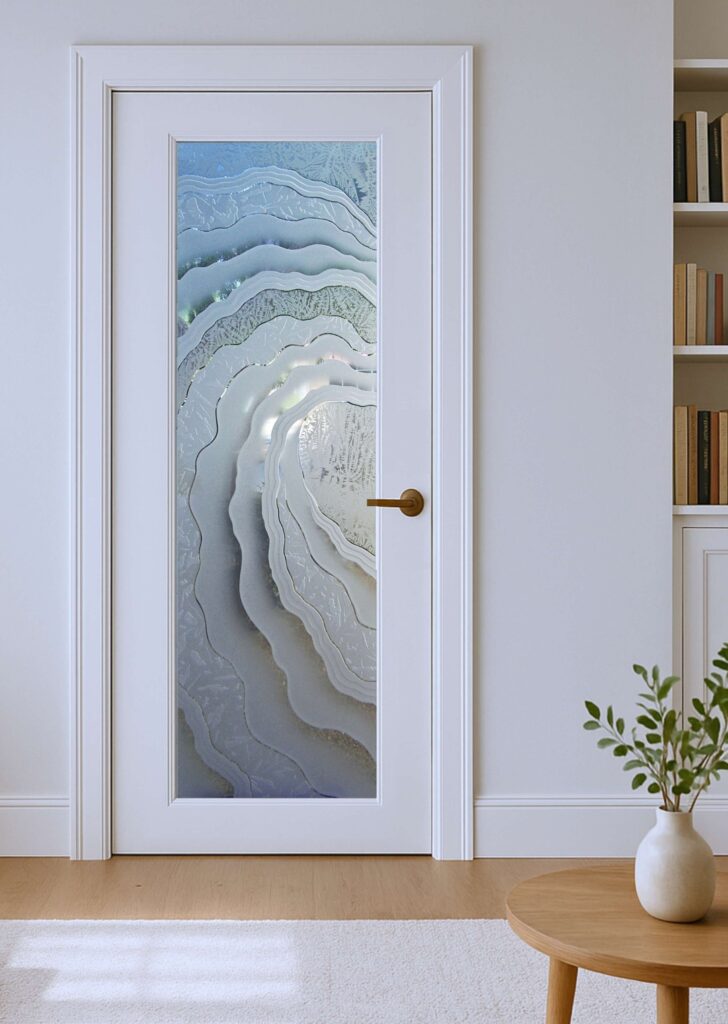
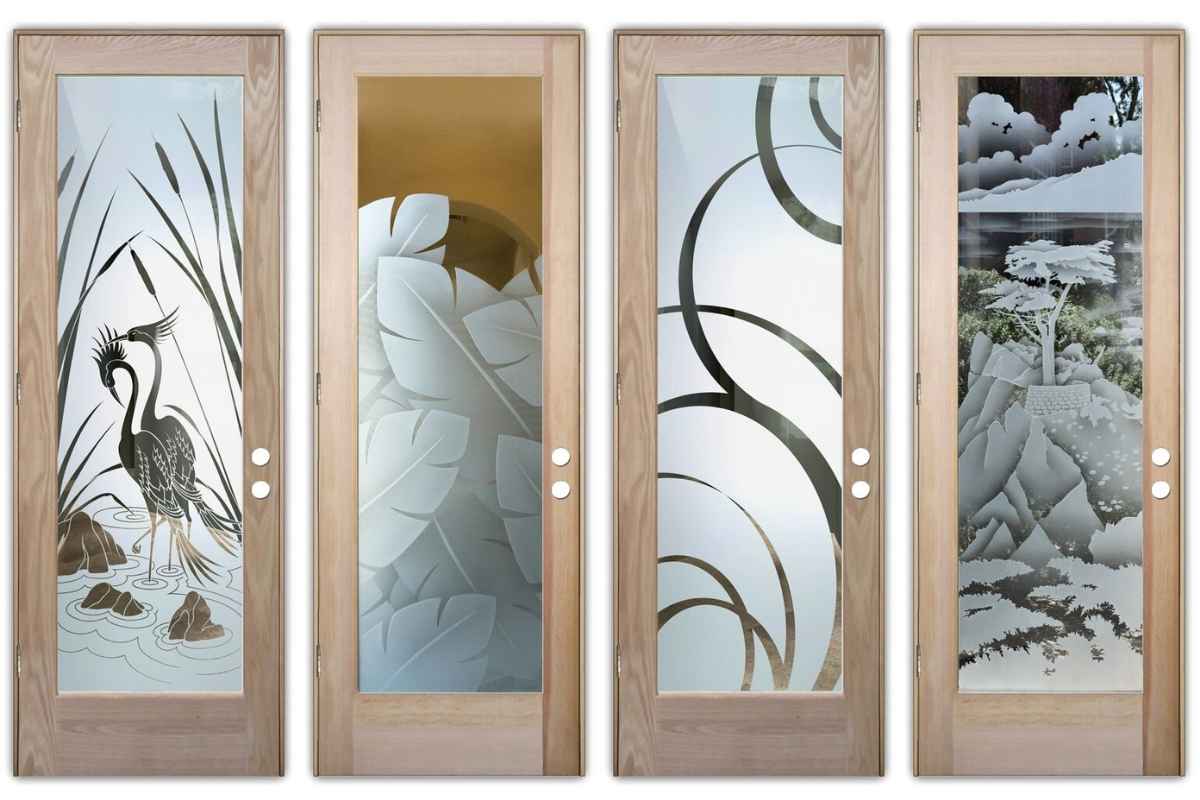
SEE MORE: Glass Doors, Interior Glass Doors with Frosted Designs
Space-Saving Sliding and Barn Doors for Compact Offices
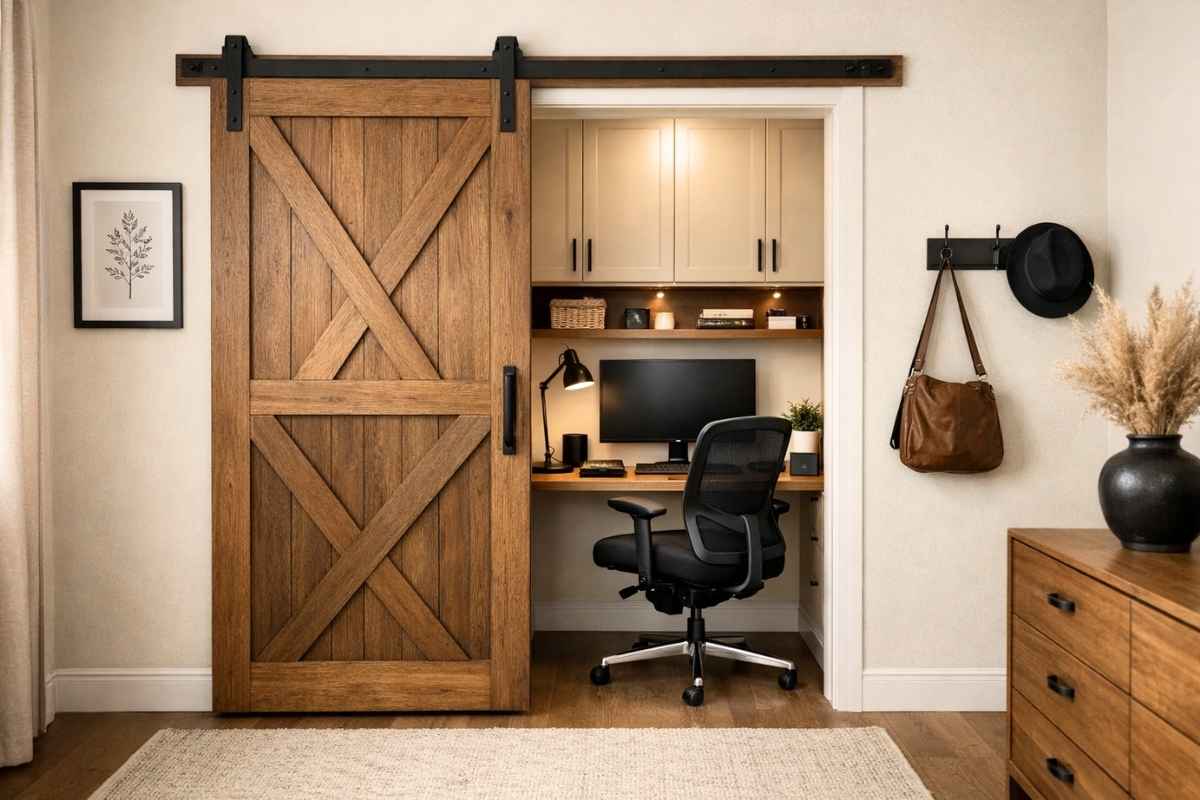
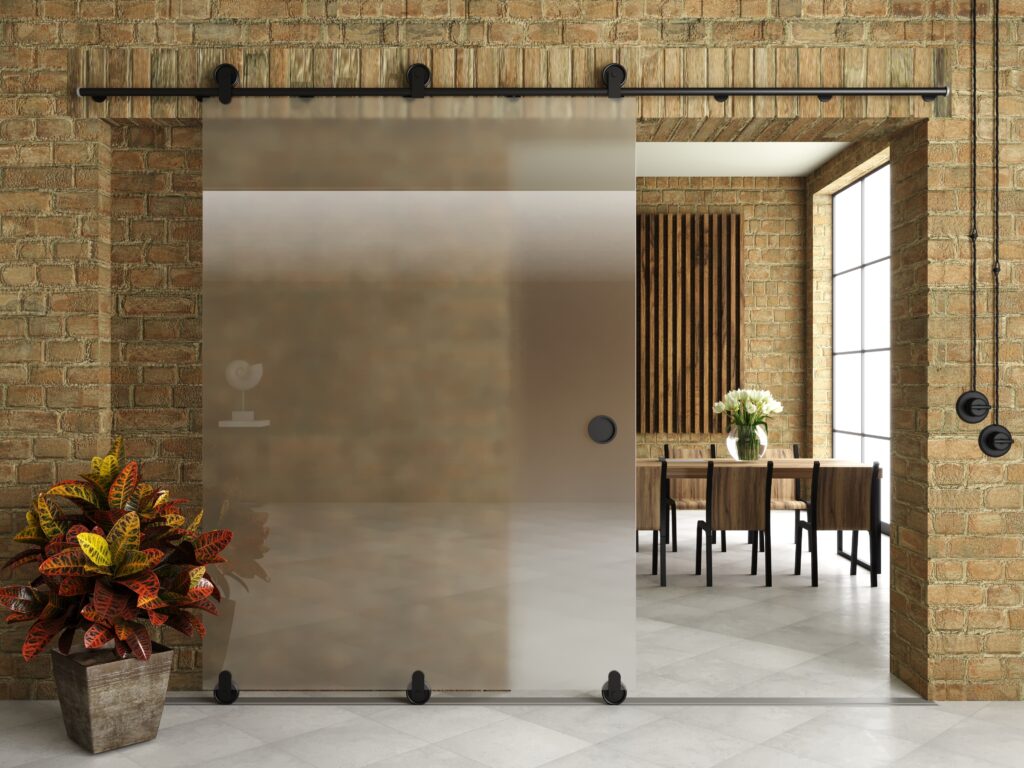
Sliding and barn doors solve a practical problem: what happens when a swinging door blocks your desk, shelving, or circulation path? In rooms measuring 8’ x 10’ or smaller, eliminating door swing can free up several square feet of usable floor space.
- Wall-mounted barn doors vs. pocket doors: Barn doors mount on an exposed track on the wall surface and slide parallel to the wall. Pocket doors slide into a cavity inside the wall, disappearing completely when open.
- Pros of sliding systems: No door swing means more furniture placement options, a strong visual statement when the door is both open and closed, and the ability to retrofit a standard opening without major structural changes for surface-mounted sliders.
- Honest cons: Sliding doors provide less effective acoustic sealing than standard hinged doors with weatherstripping. Expect some light and sound leakage at the edges.
- Common use cases: Cloffice setups in hallway niches, offices carved out of open-plan living rooms, and any small office where swing radius conflicts with desk or storage placement.
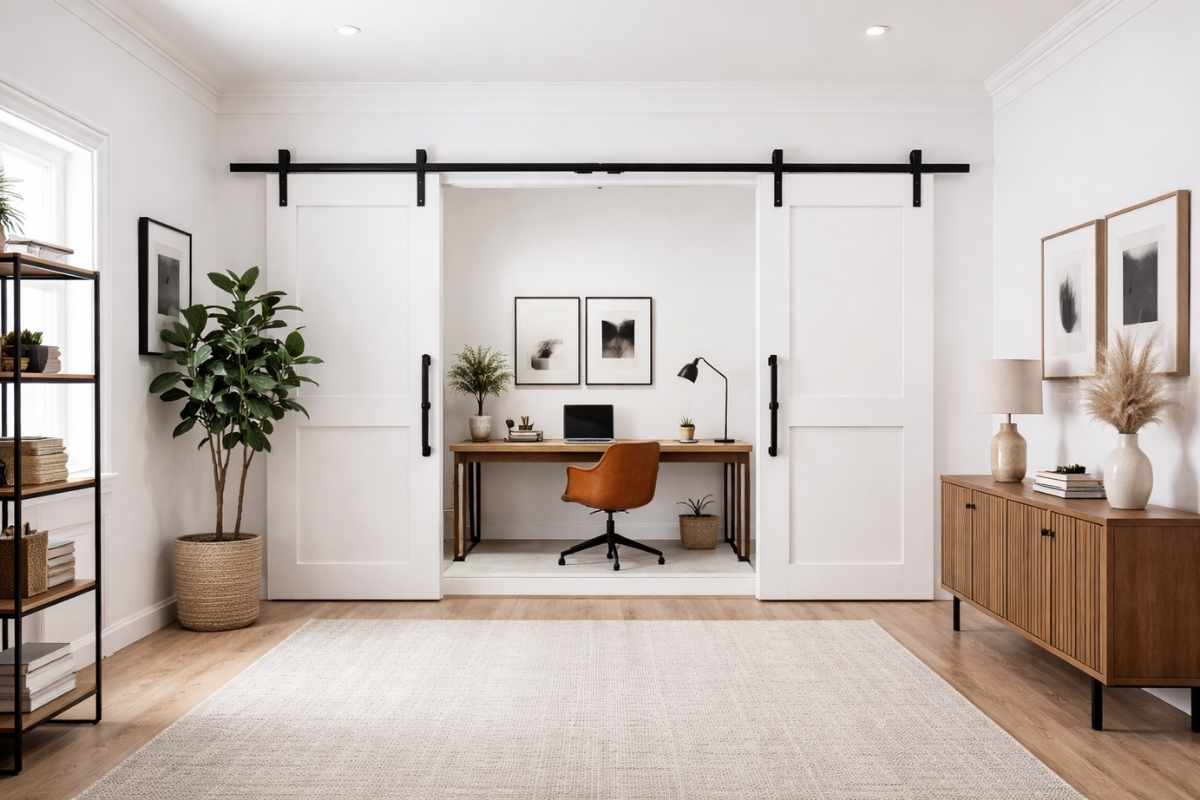
Modern Barn Doors for Home Offices
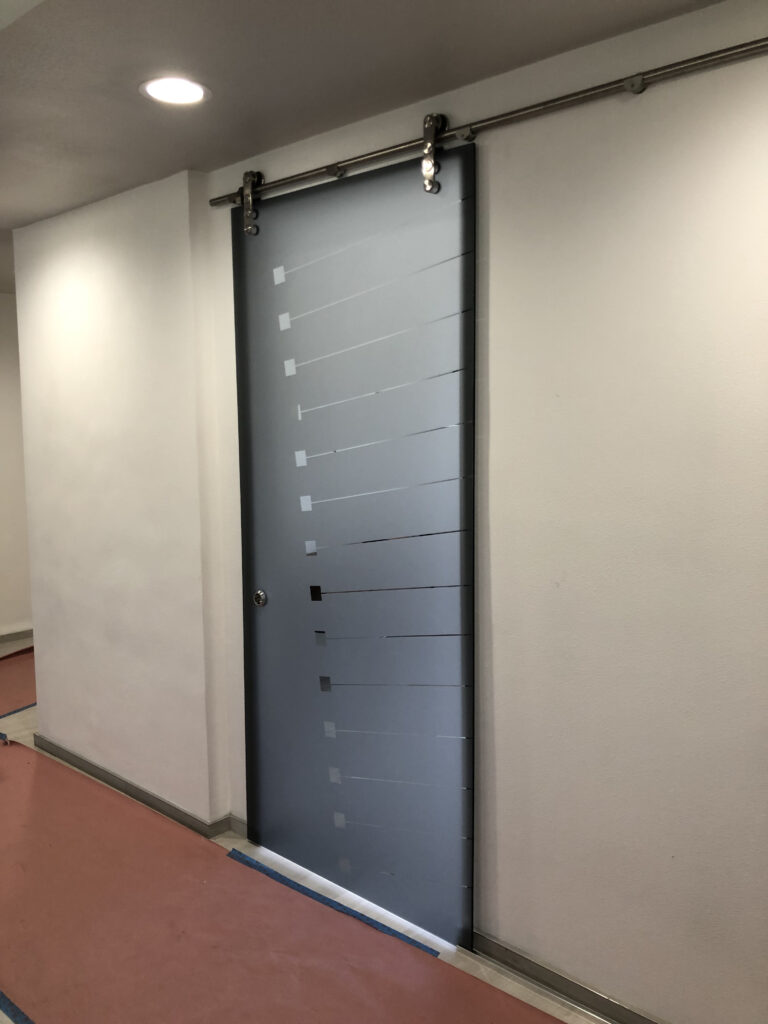
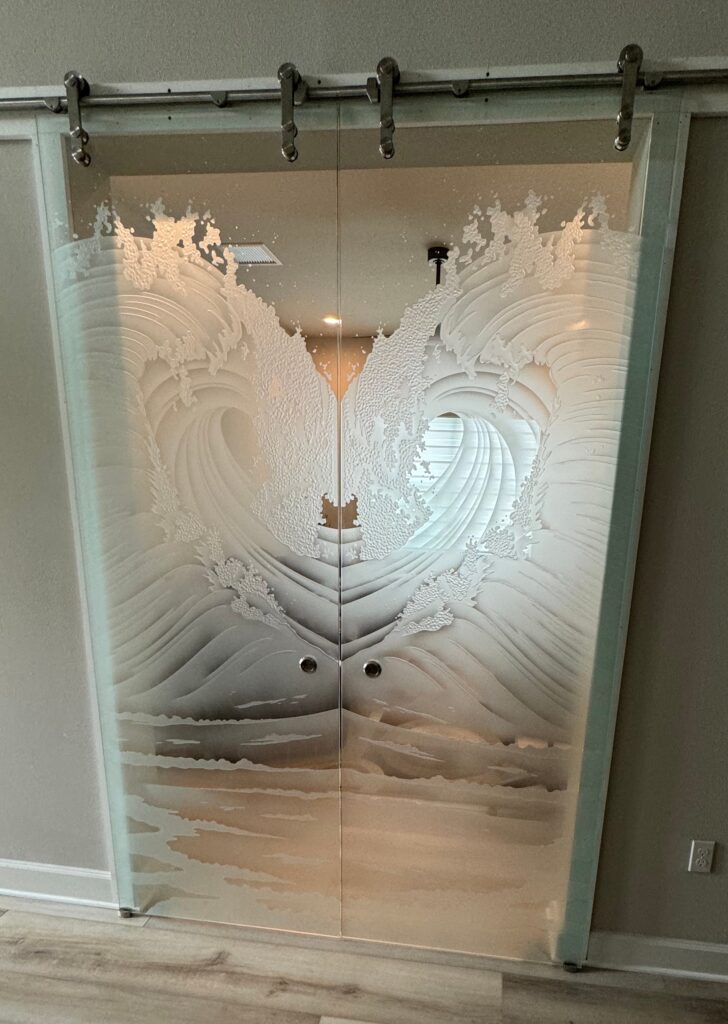
- A modern barn door features flat-panel or simple vertical-plank design, painted in neutral tones or black with minimalist hardware—skip the rustic reclaimed wood look for a cleaner aesthetic.
- Size the door slab at least 2” wider and 1” taller than the opening for adequate coverage and privacy when closed.
- Hardware details matter: choose an exposed metal track above the opening, consider soft-close options for quieter operation, and install matching pulls on both sides for convenience.
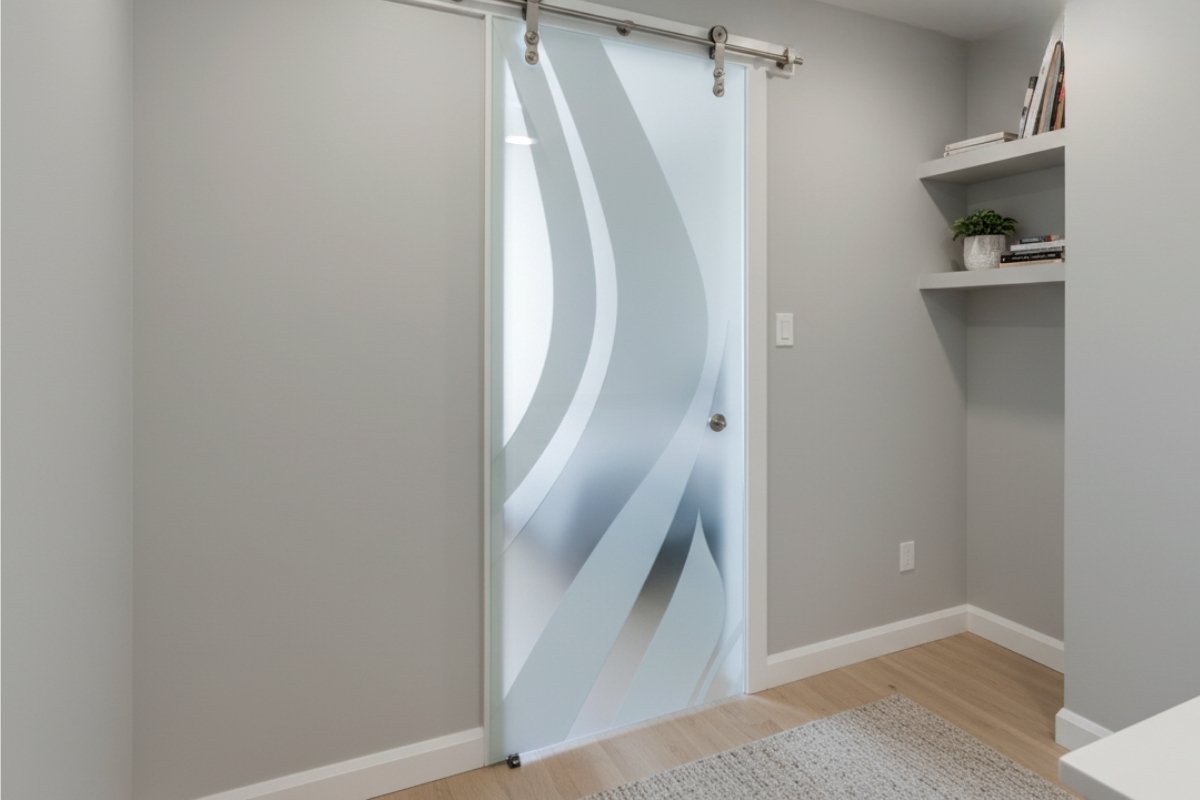
- Barn doors with frosted glass are ideal for offices off main living areas where you want visual separation and style without expecting studio-level sound isolation.
- When open, the door functions as wall art—a design element that enhances your contemporary interior rather than just hiding when not in use.
Sliding Glass and Pocket Doors for Light and Openness
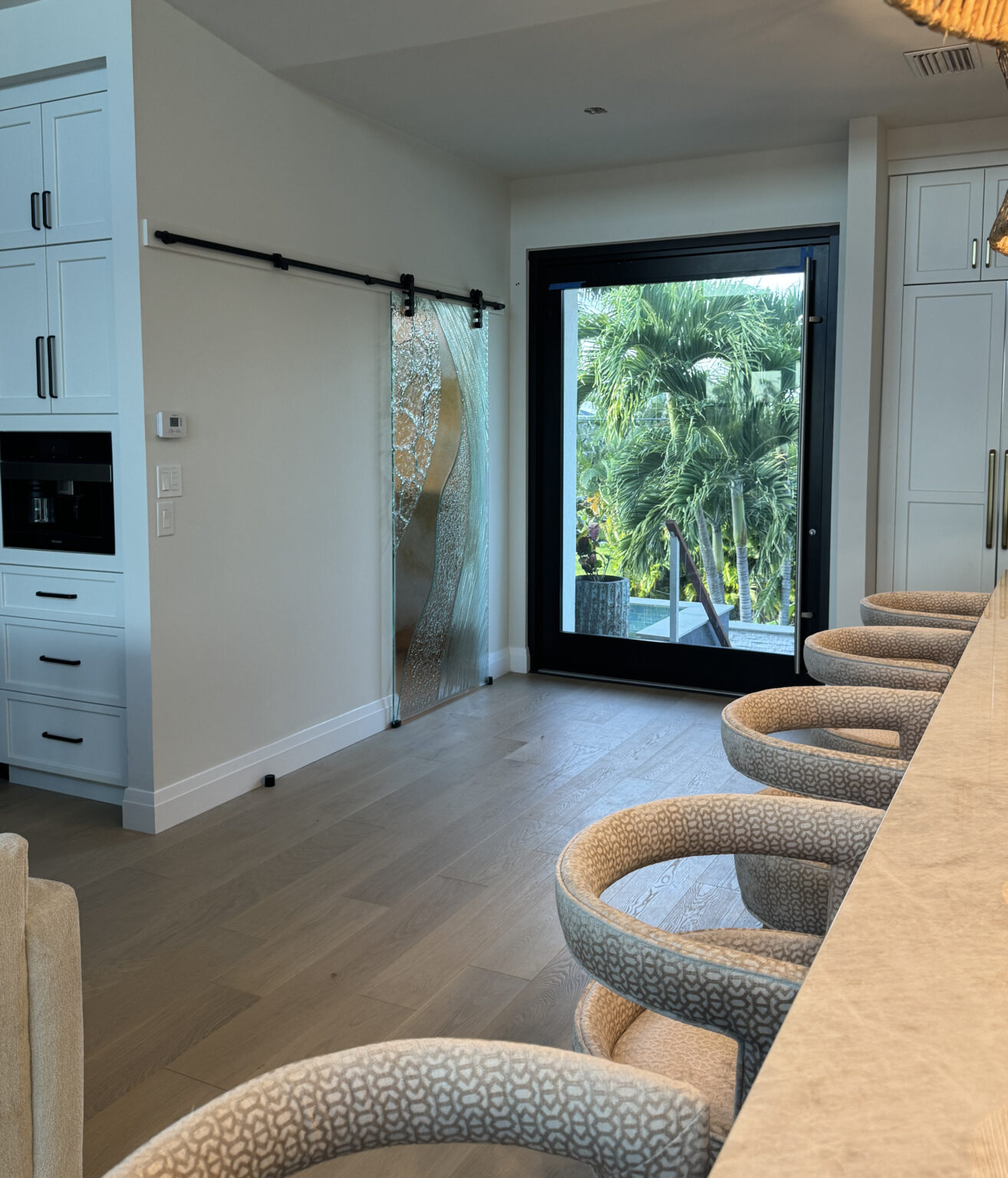
- Glass sliders and pocket doors excel when your office is tucked in a darker part of the home and needs borrowed light from adjacent spaces.
- Full-clear glass maximizes visibility and light transfer. Frosted or reeded glass door office design provides diffused light while blurring outlines—useful for maintaining privacy during video calls.
- Pocket doors require wall modification since the door slides into the wall cavity, but they feel seamless and are worth considering for long-term renovations or additions.
- Bi-fold doors offer similar benefits while folding neatly to one side when opened. Bifold doors are a popular option for home offices where flexibility and space efficiency matter.
- Frame options in slim aluminum or wood can match your existing trim and nearby windows for a unified, intentional look.
- The visual emphasis should be airy and uncluttered, with daylight flowing between spaces.
French and Glass Doors to Maximize Natural Light
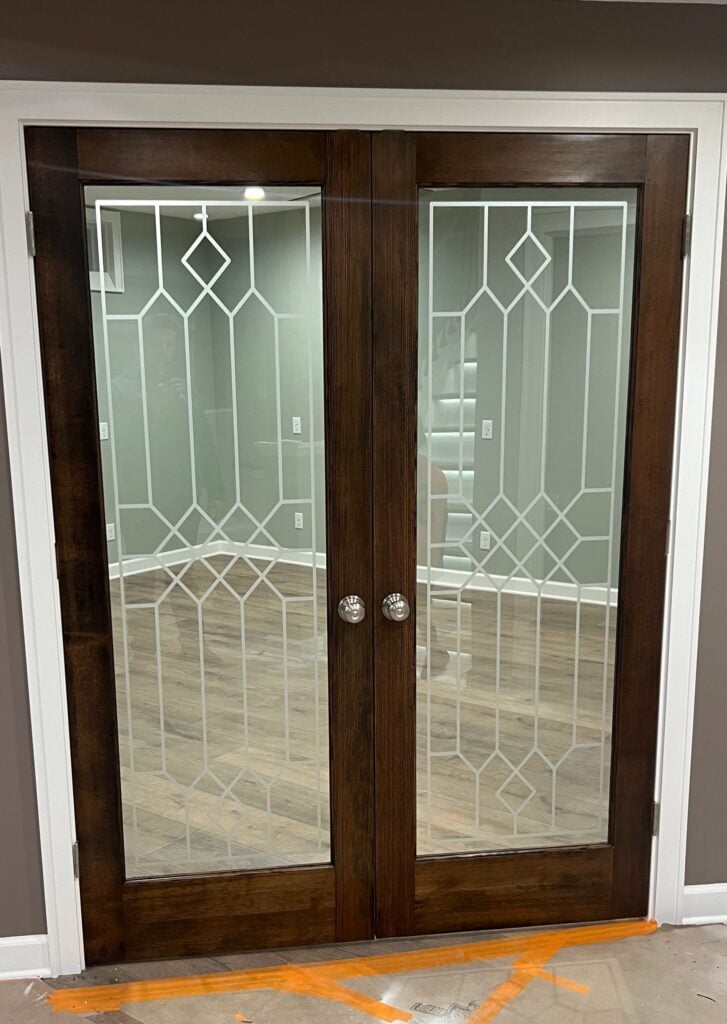
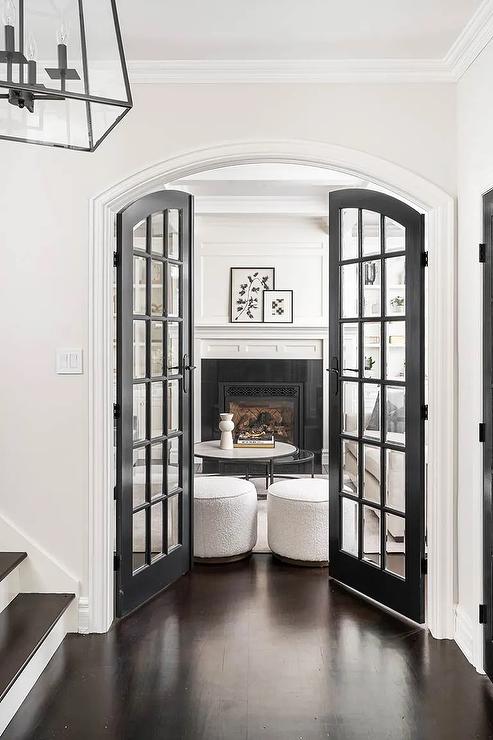
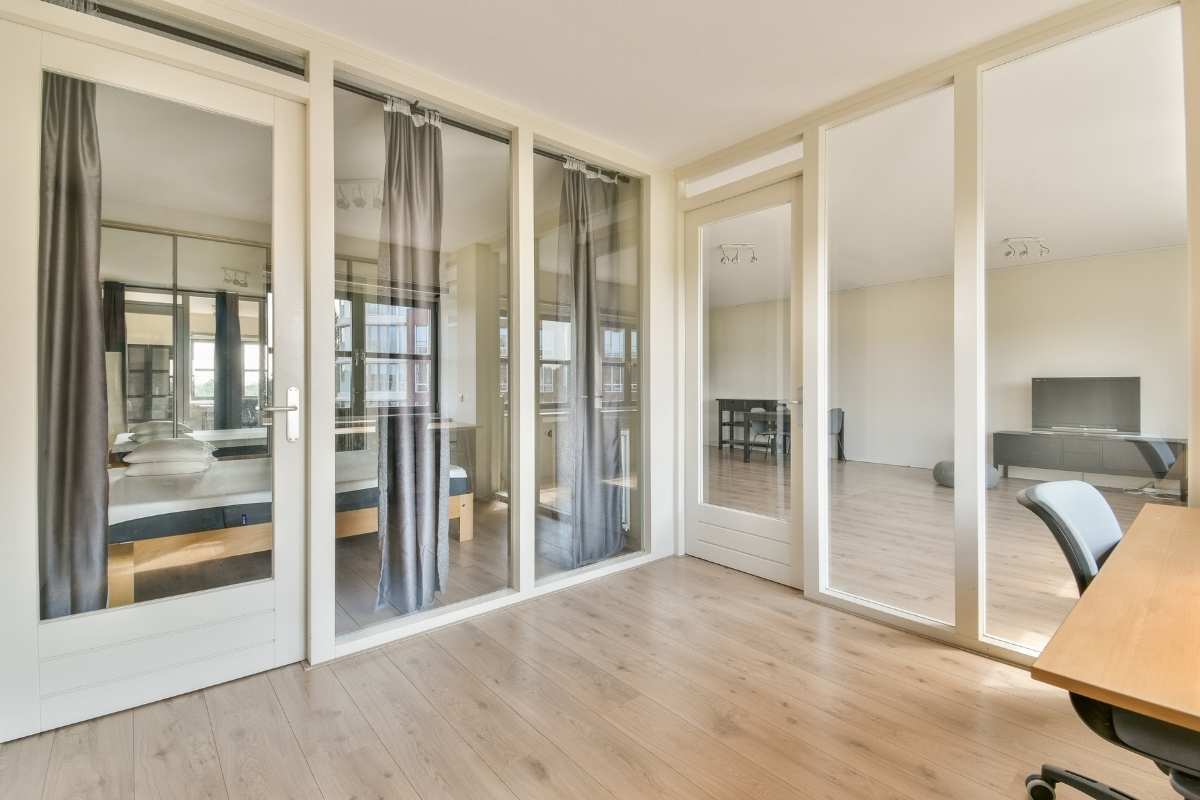
French doors and glass-panel doors strike a perfect blend between defining your office as a dedicated zone and keeping it visually connected to the rest of your home. They’re ideal when you want boundaries without barriers.
- Key benefits: A brighter workspace, a room that feels larger than its footprint, and an uplifting mood during long workdays. Glass doors that extend closer to the ceiling can help maximize light and make the room feel taller.
- Suitable applications: Offices connecting to a hallway, living room, or sunroom—especially conversions from 2020–2024 renovation trends where homeowners repurposed underused spaces.
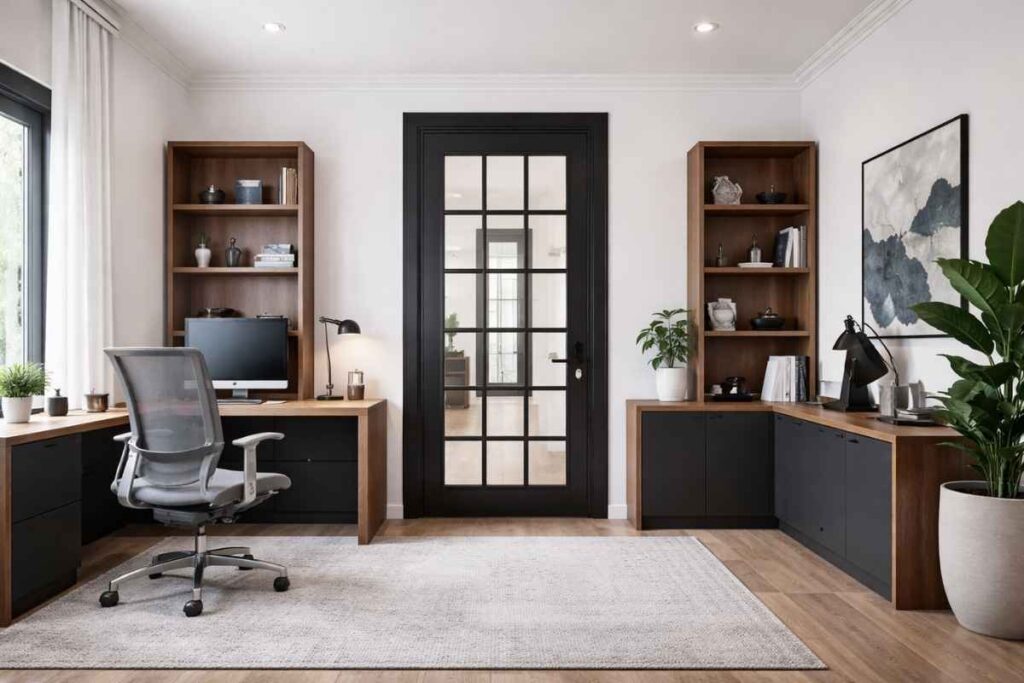
- Privacy options: Choose from clear glass for maximum openness, high-quality frosted glass for diffused privacy, textured glass for visual interest, or divided-light patterns with multiple small panes for traditional charm.
- Adding privacy on demand: Sheer curtains or internal blinds mounted inside the door frame allow quick privacy adjustments during calls without permanent changes.
- Consider your backdrop: Glass doors mean your office is visible from common areas, so keep your workspace tidy or use frosted panels strategically.
Full-Lite French Doors for Bright, Open Offices
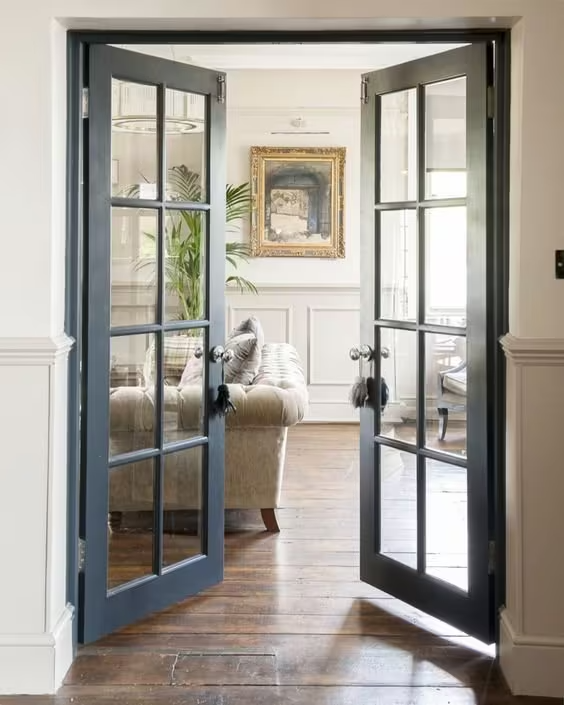
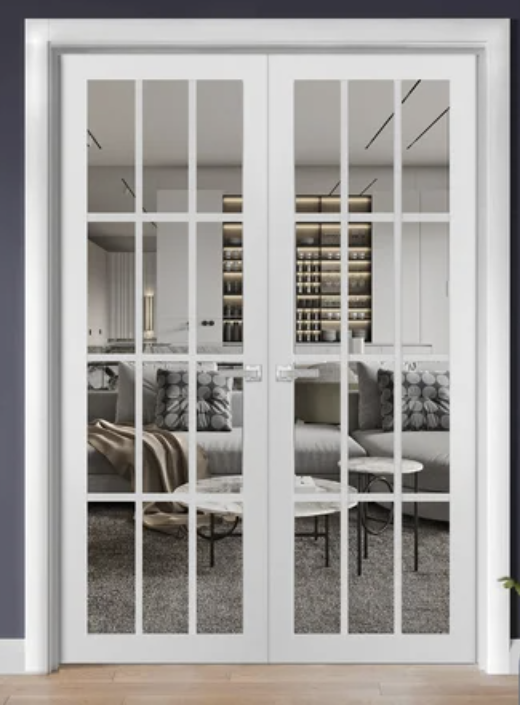
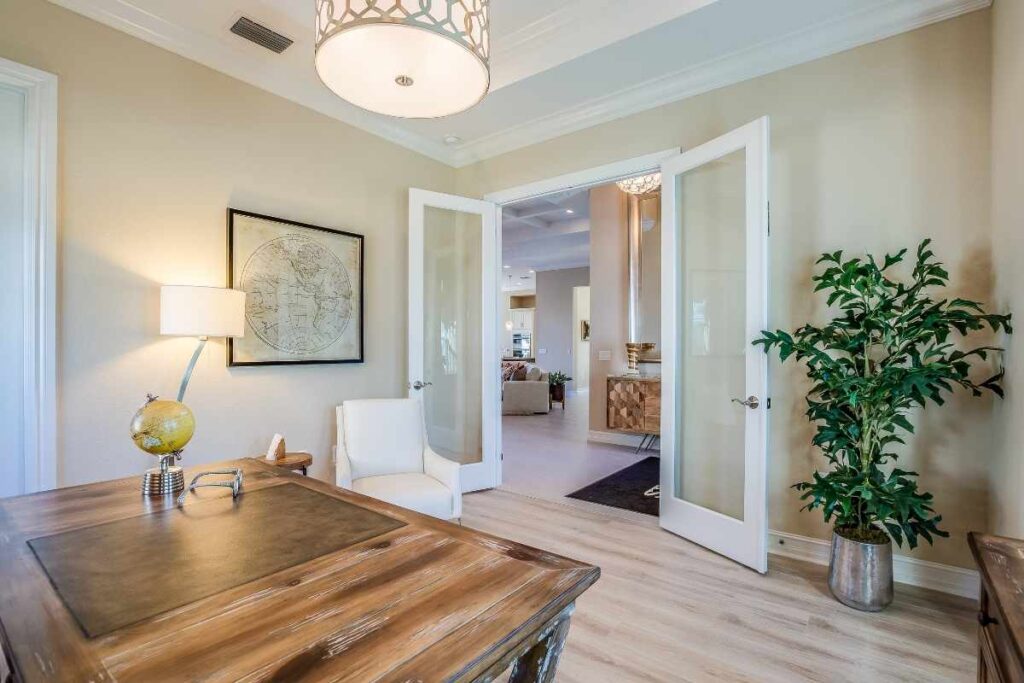
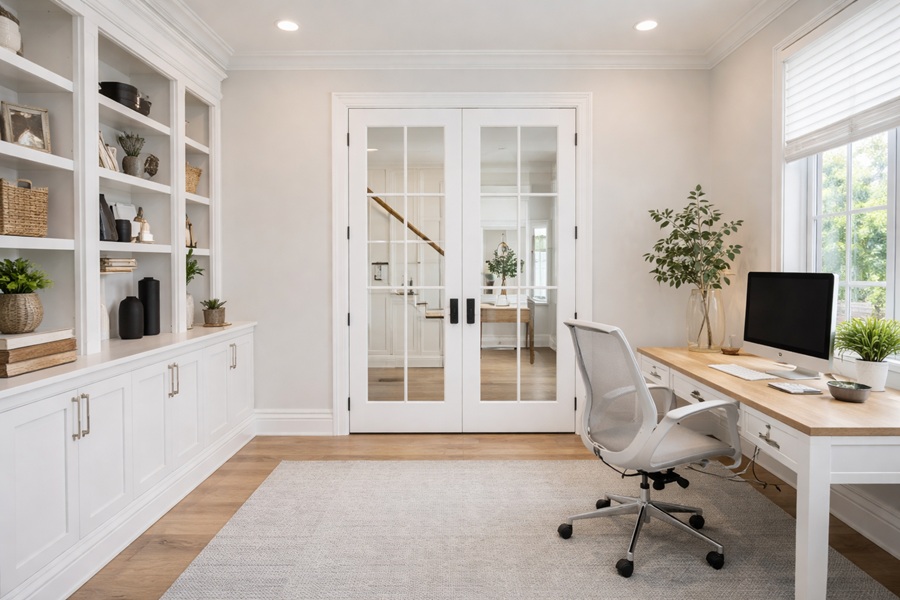
- Double French doors with nearly full-height glass panes framed in painted wood create an elegant transition between office and living or dining spaces.
- Finishes like crisp white or soft warm beige blend with baseboards and window trim, maintaining visual cohesion throughout your home.
- These doors perform especially well in offices with south- or west-facing windows where natural light is already abundant and you want to extend it into adjacent rooms.
- If privacy needs change, simple fabric panels or adhesive privacy film can be added without permanent modification.
- The overall ambiance is airy, sophisticated, and connected—your office feels like part of the home rather than walled off from it.
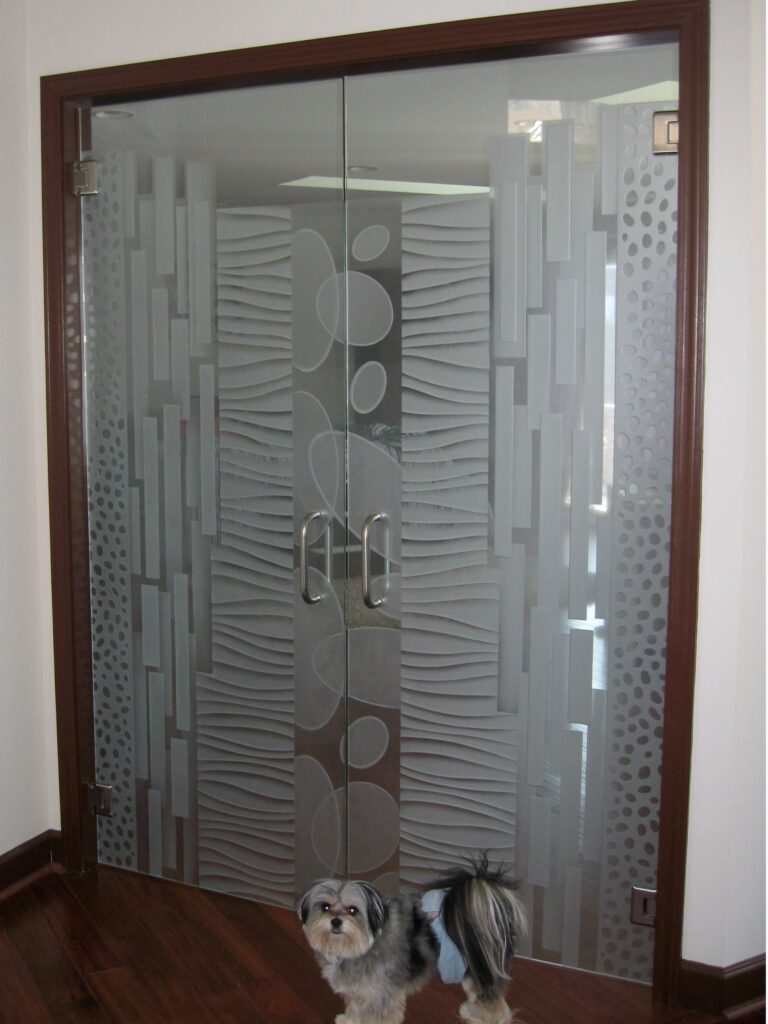
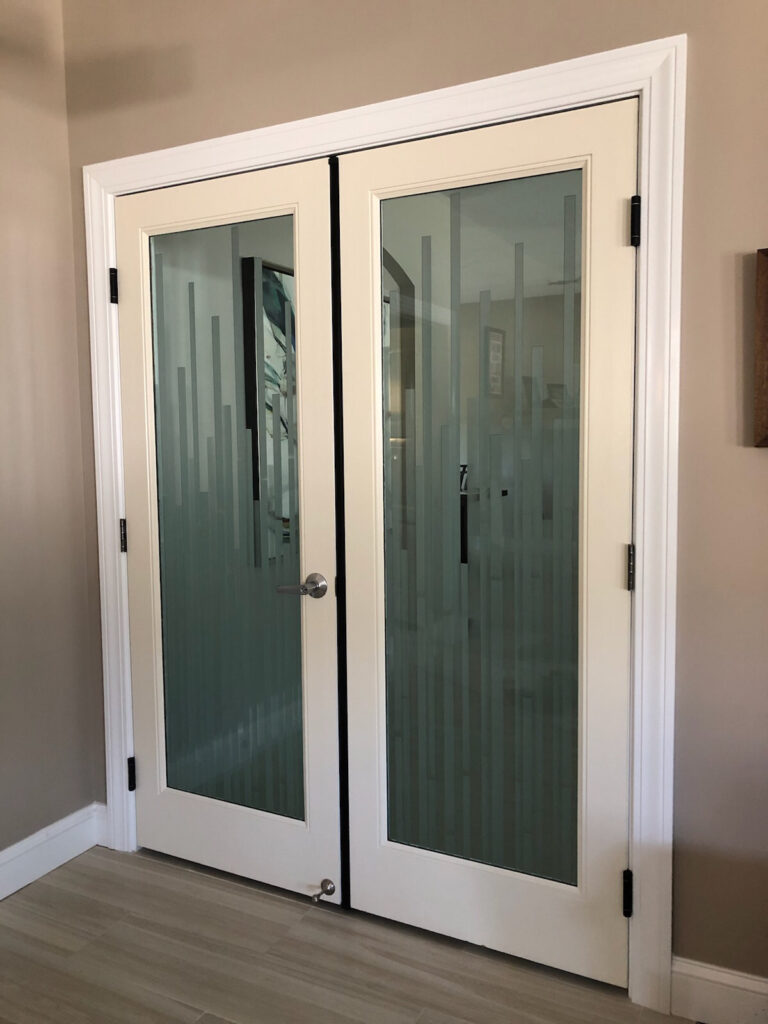
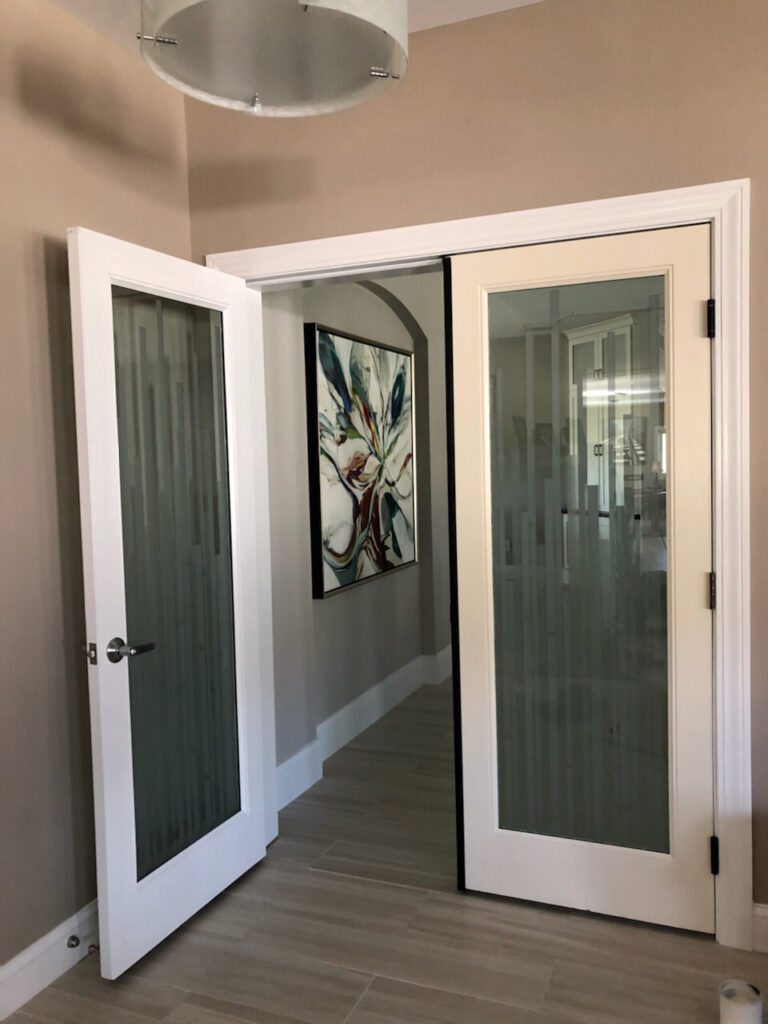
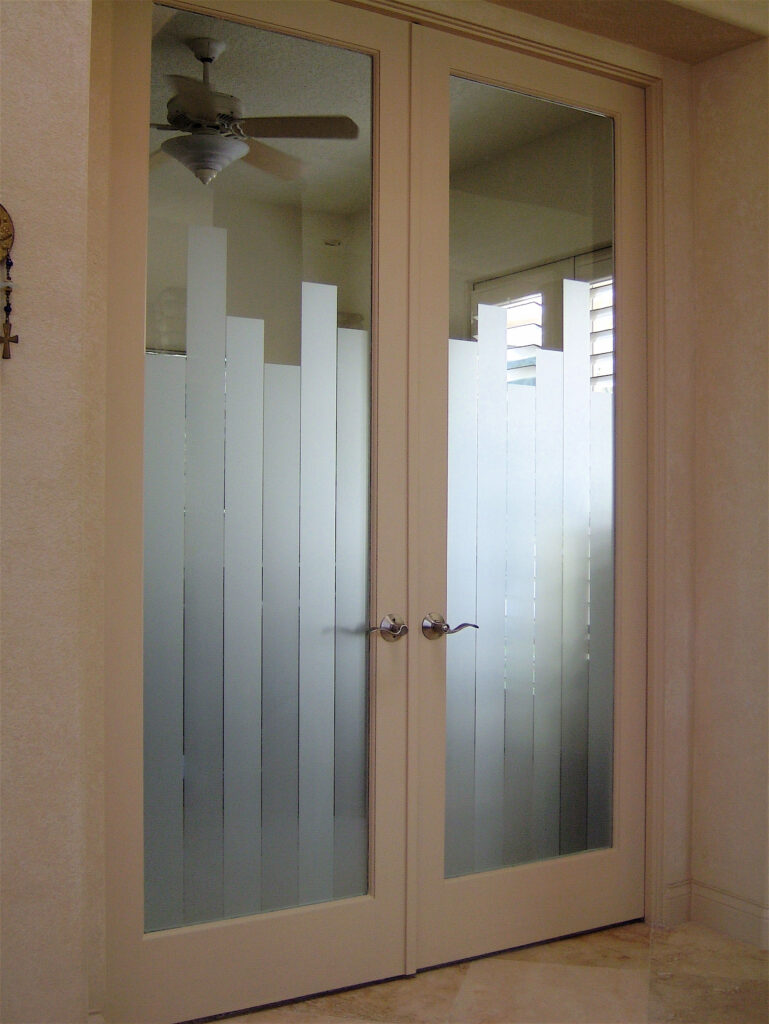
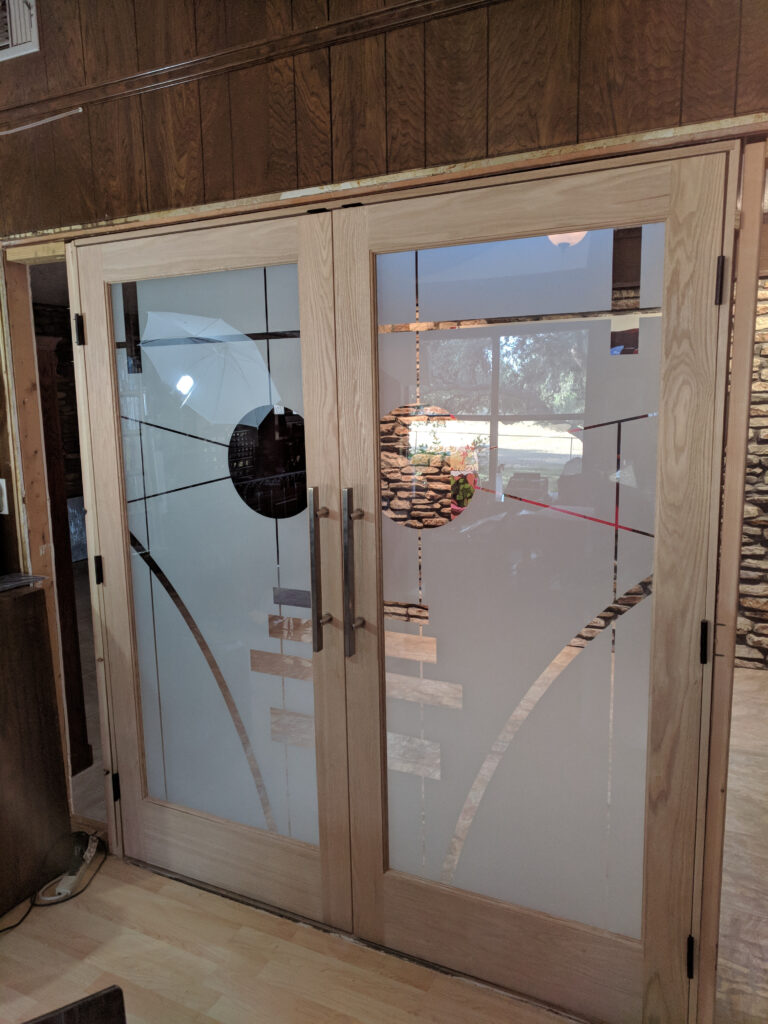
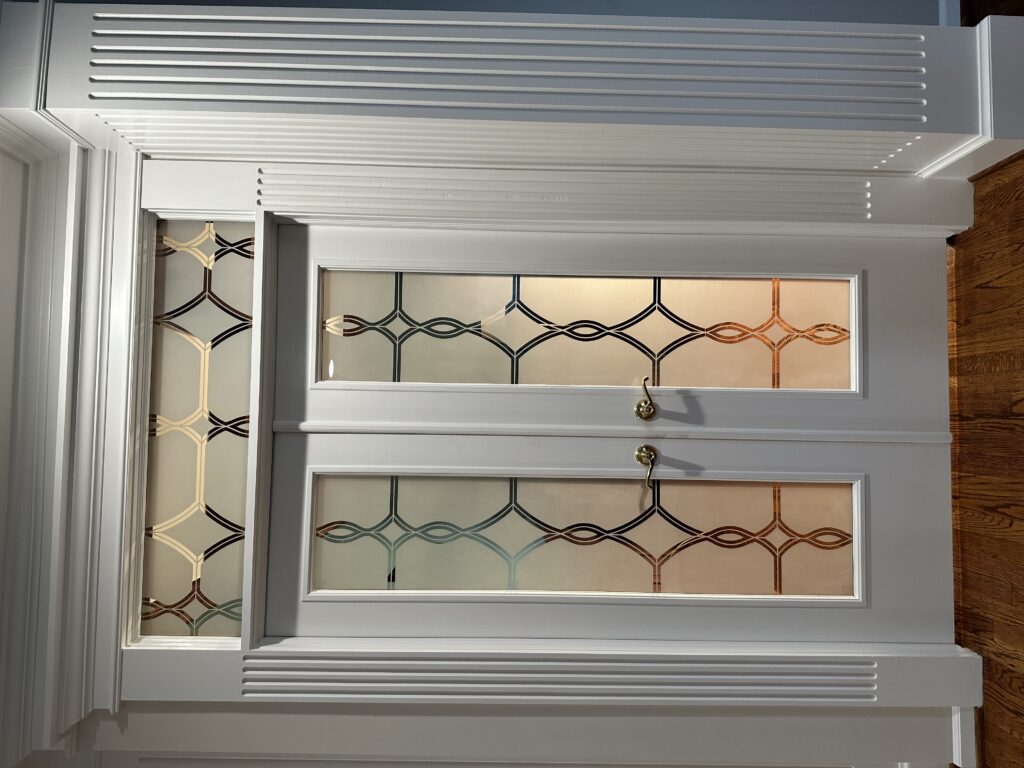
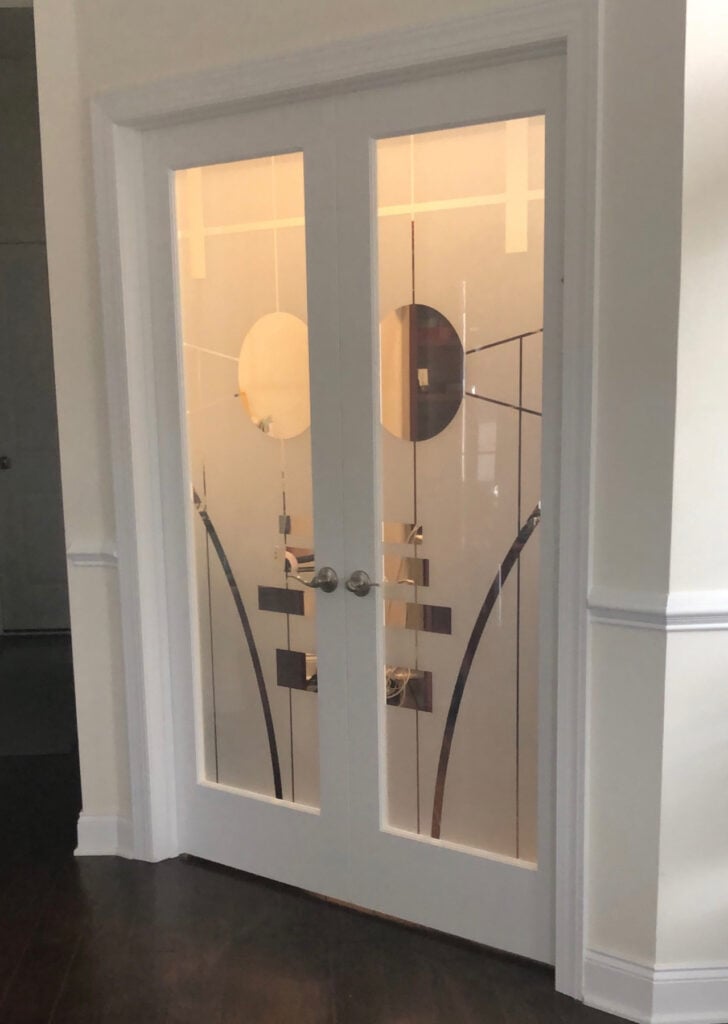
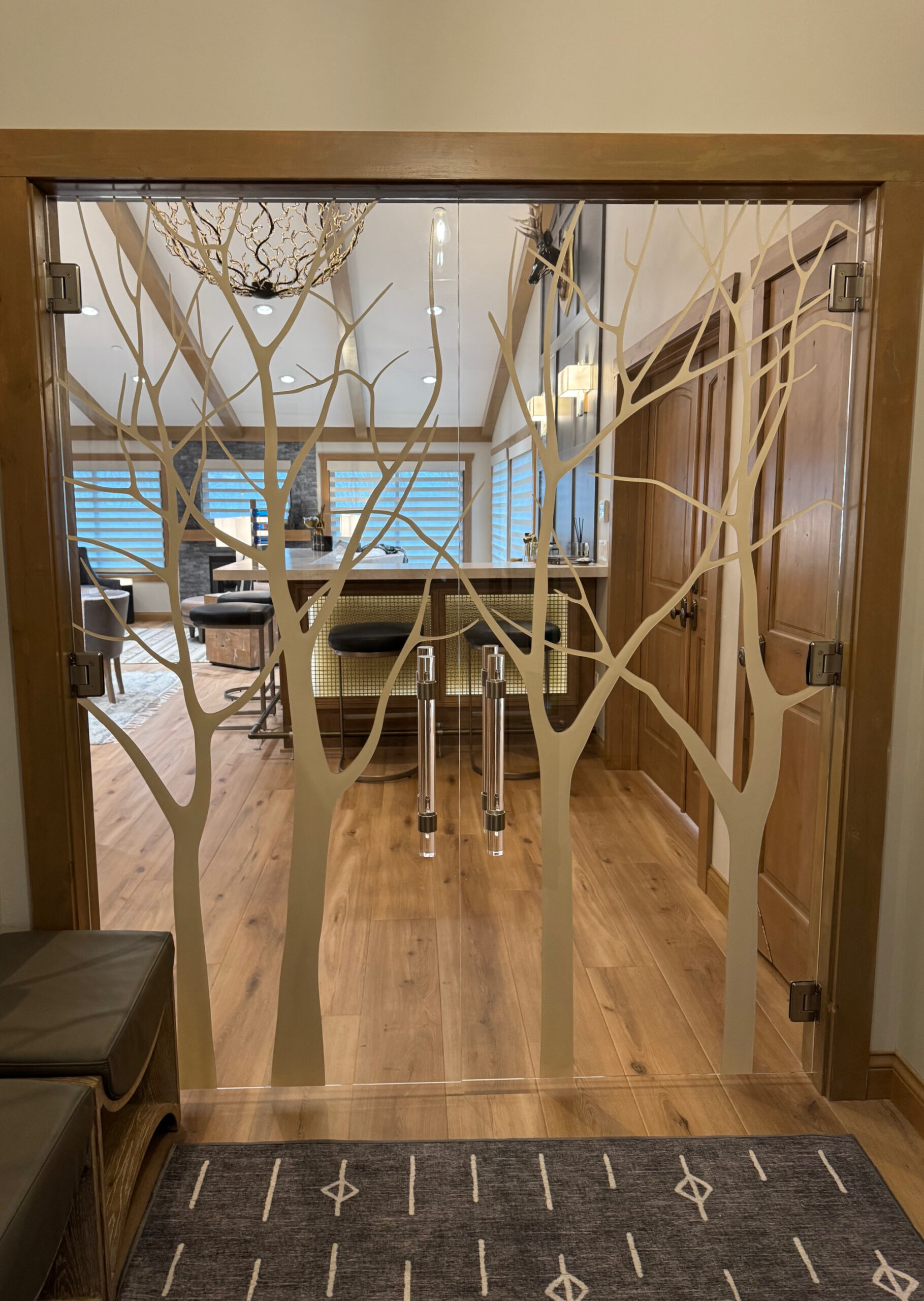
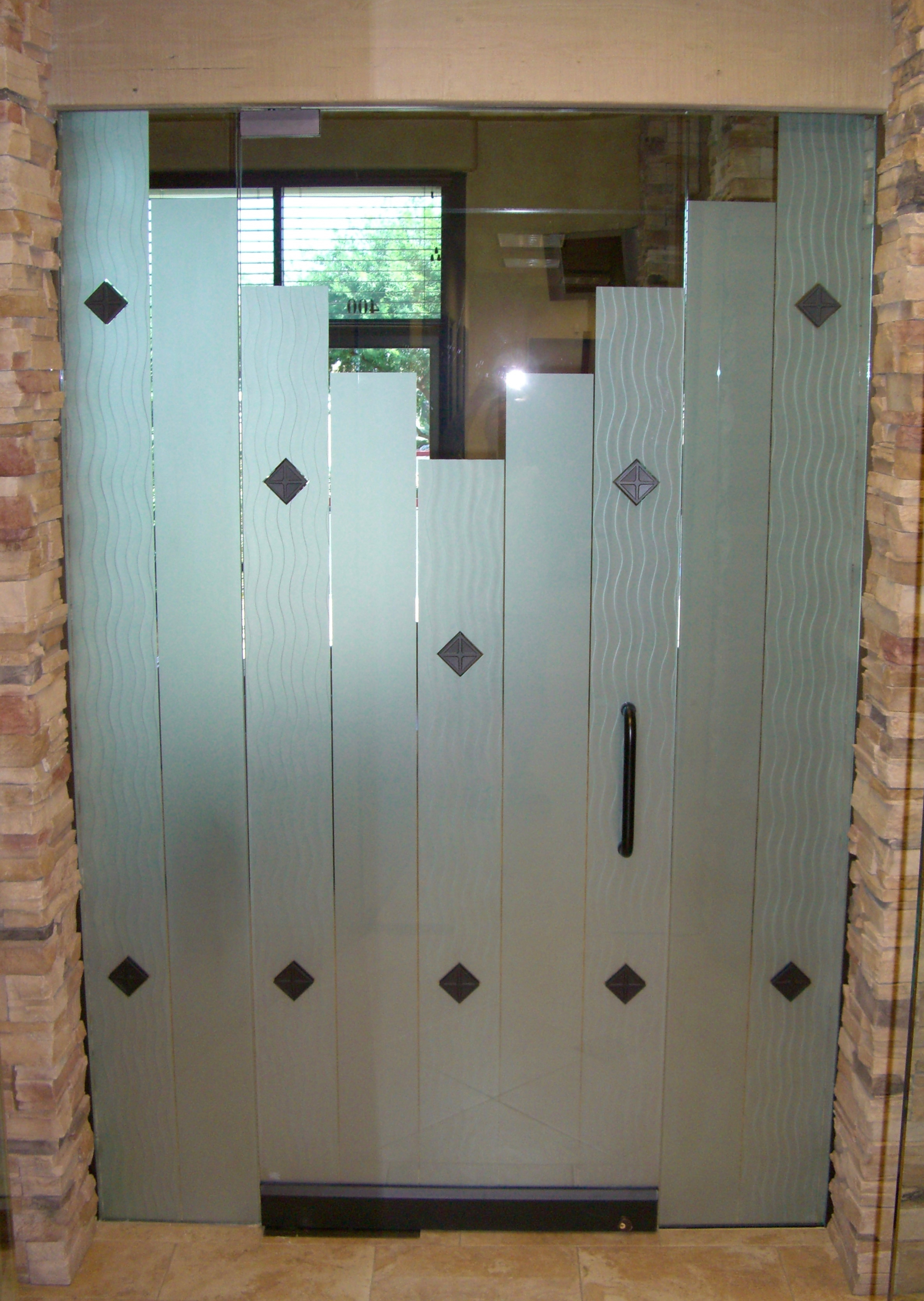
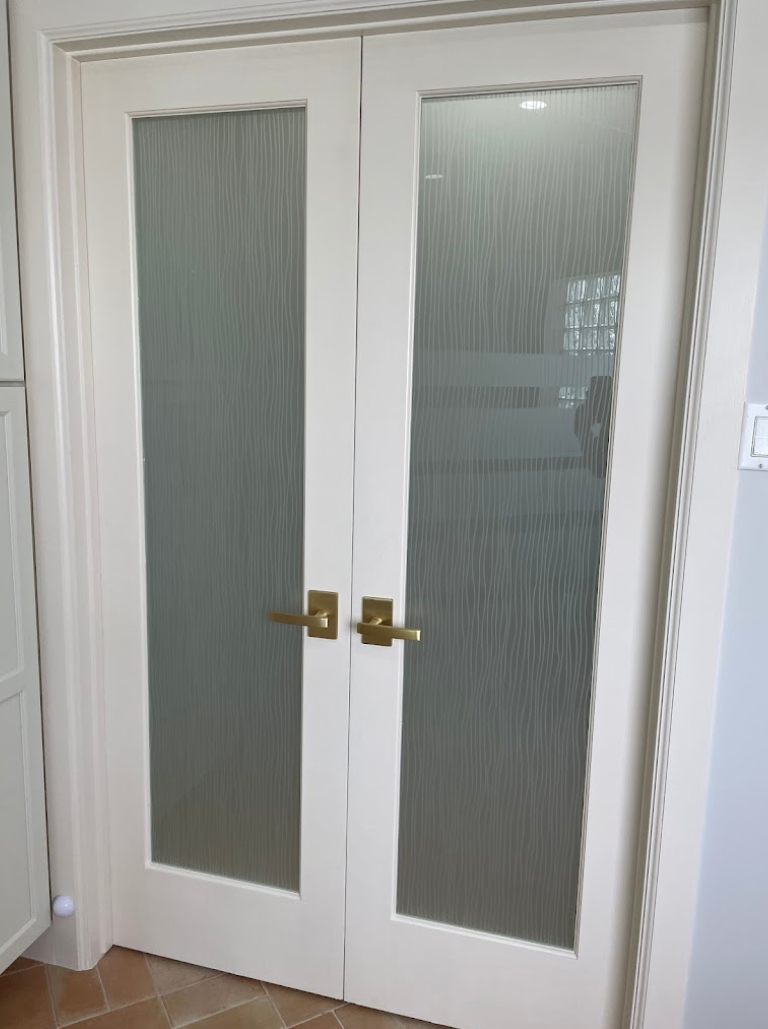
For homeowners who love the openness of full-lite French doors but want a touch more discretion, double frosted glass interior doors offer a smart alternative. Subtle frosting or patterned glass preserves the airy feel while softening visibility, making it easy to adapt the space as work habits or privacy needs evolve—without sacrificing light or style.
See examples of double doors below.
Frosted glass interior doors: Mosaics

Half-Lite and Partial-Glass Designs for Balanced Privacy
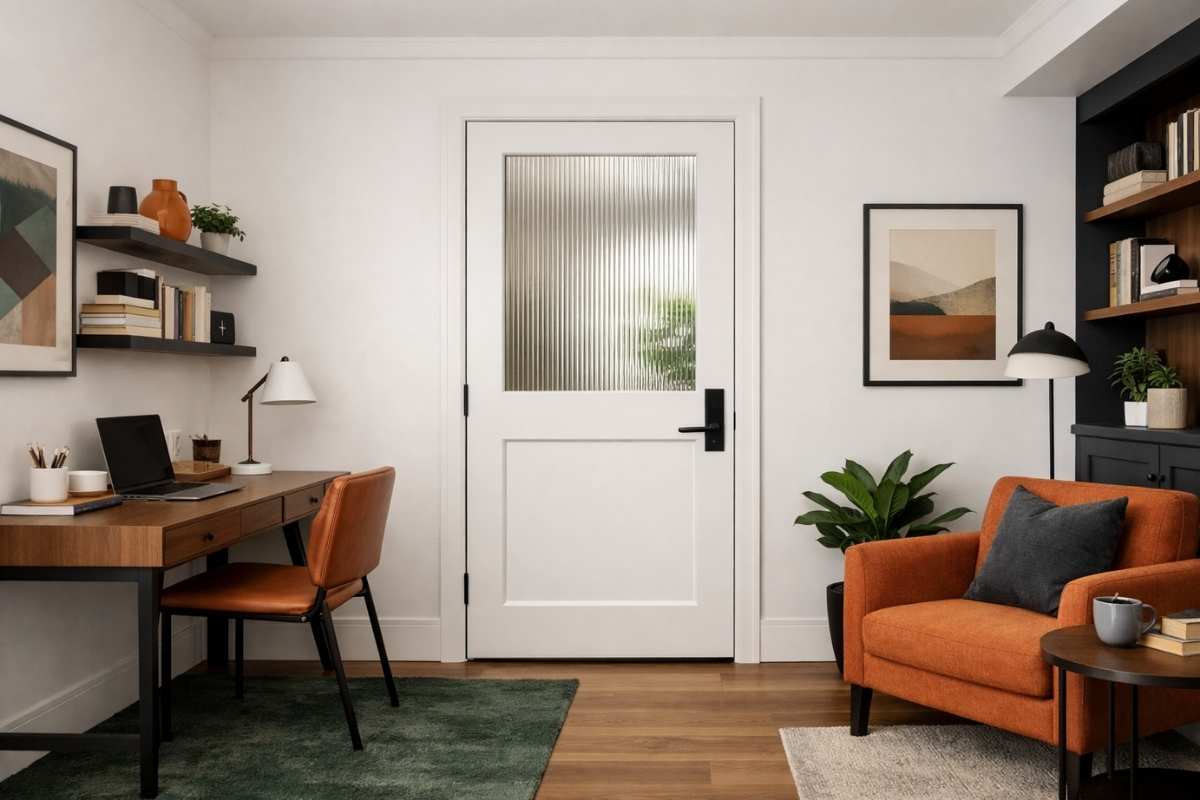
- Half-lite doors feature glass on top and a solid panel on the bottom, allowing daylight to flow through the upper portion while the lower section hides desk clutter, cords, and your feet on casual Friday.
- These designs work well for sunroom, porch, or patio conversions where the office shares a wall with exterior glazing.
- Frosted glass or patterned glass in the upper section keeps the view discreet during work hours in busier households with frequent hallway traffic. Frosted glass interior doors can make a small home office feel a bit more open and less confined.
- Choose hardware that feels slightly more substantial—lever handles and mortise locks give a “real office” feel compared to basic interior passage sets.
- The focus is on balancing functionality with aesthetics for small to midsize home offices.
If you’re drawn to the balance of privacy and light that half-lite doors offer, Sans Soucie Art Glass specializes in interior door glass inserts crafted specifically for home offices. From subtle, elegant frosting to fully custom artwork, each glass panel is handcrafted to deliver the exact level of privacy and style your space needs.
Glass Partitions, Room Dividers and Hybrid Solutions
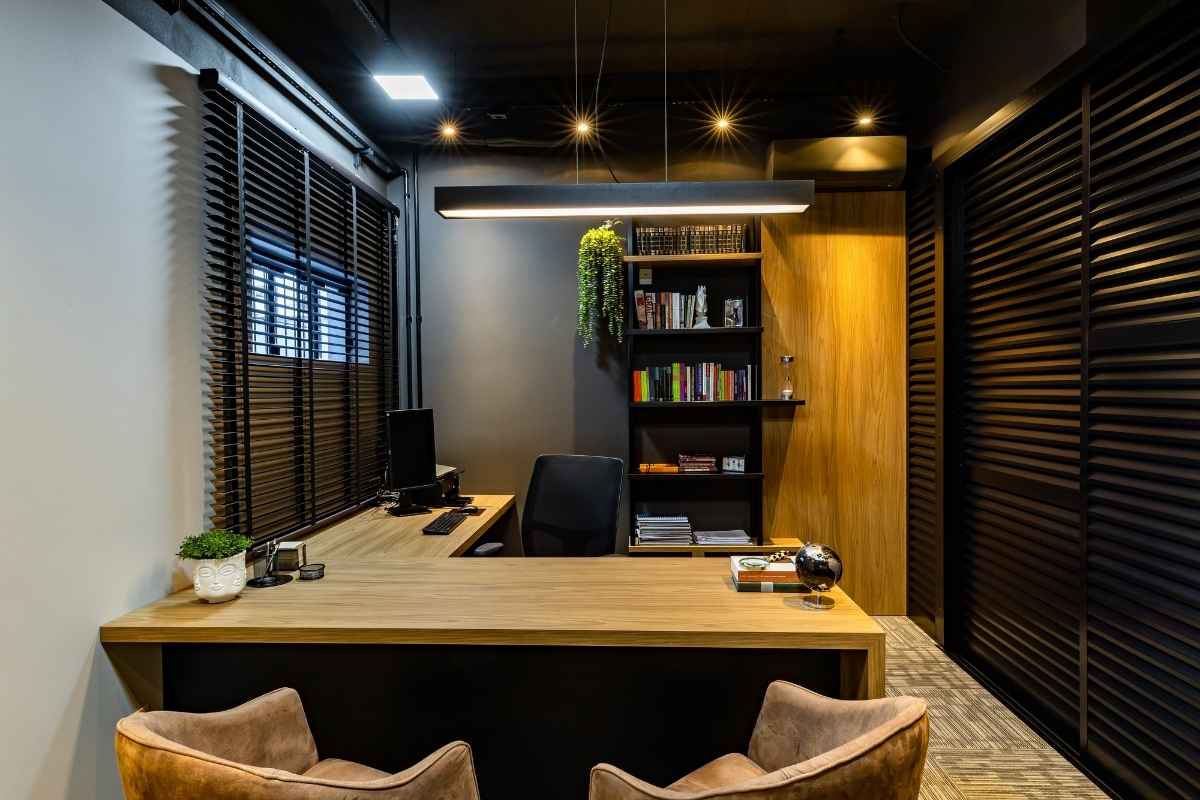
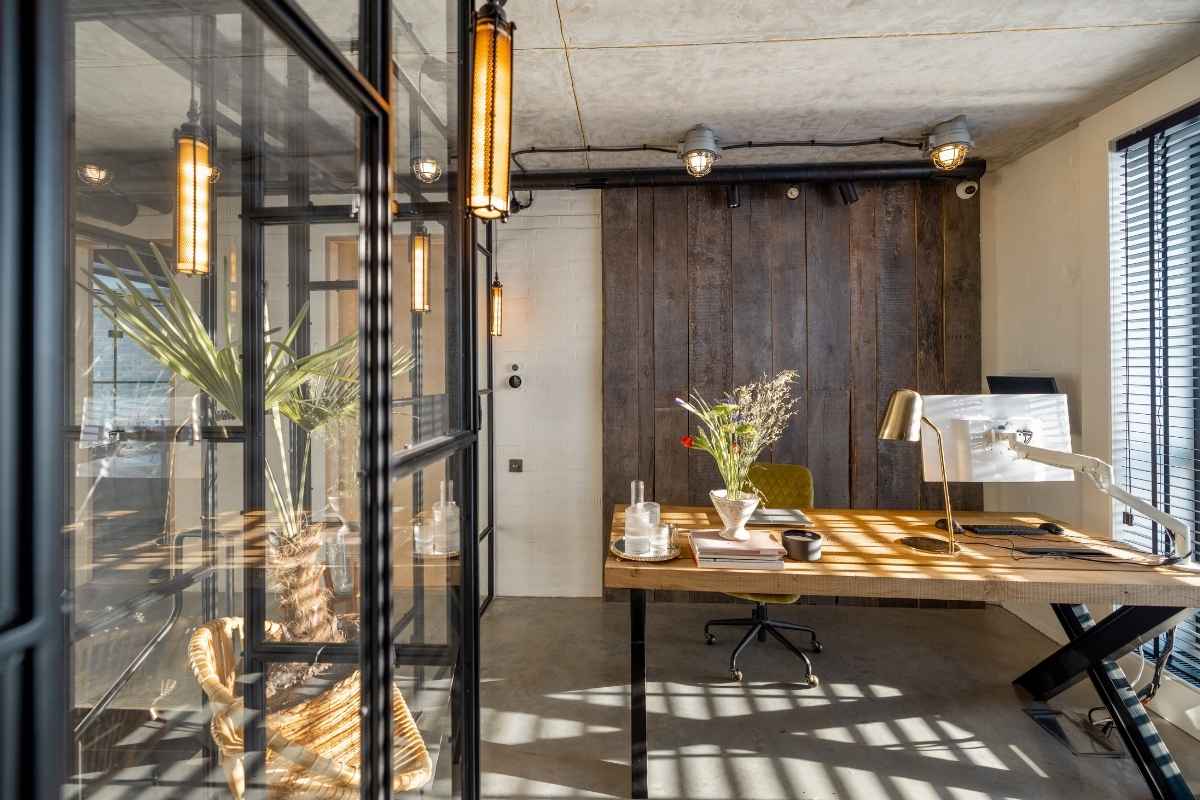
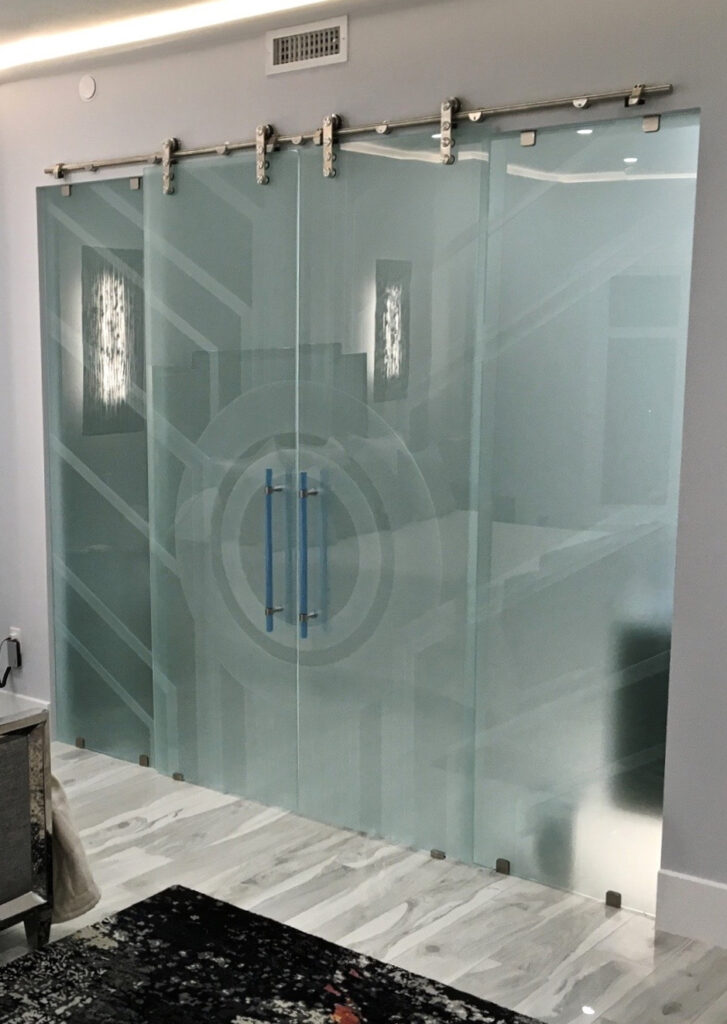
Not every home has a fully enclosed room available for an office. Sometimes the best solution is adding a sliding partition or glass wall to carve out a workspace from an open floor plan. These hybrid solutions create definition without the permanence of traditional doors.
- Sliding glass room dividers can separate a corner of a living room or studio apartment while preserving sight lines and natural light throughout the space.
- Fixed glass panels combined with one operable door panel create a “front” to an open office niche—you get the feel of an enclosed office without full construction.
- Systems range from frameless glass for maximum minimalism to slim aluminum or wood frames that match modern décor and existing trim.
- Example scenario: In a one-bedroom apartment, a glass divider can turn part of the bedroom into a weekday office that visually “disappears” on weekends when work-life separation matters most.
- These solutions offer flexibility—they can often be removed or reconfigured as your needs change over time. A door choice should suit the person using the home office day to day.
Suspended and Wall-Slide Systems Without Floor Tracks
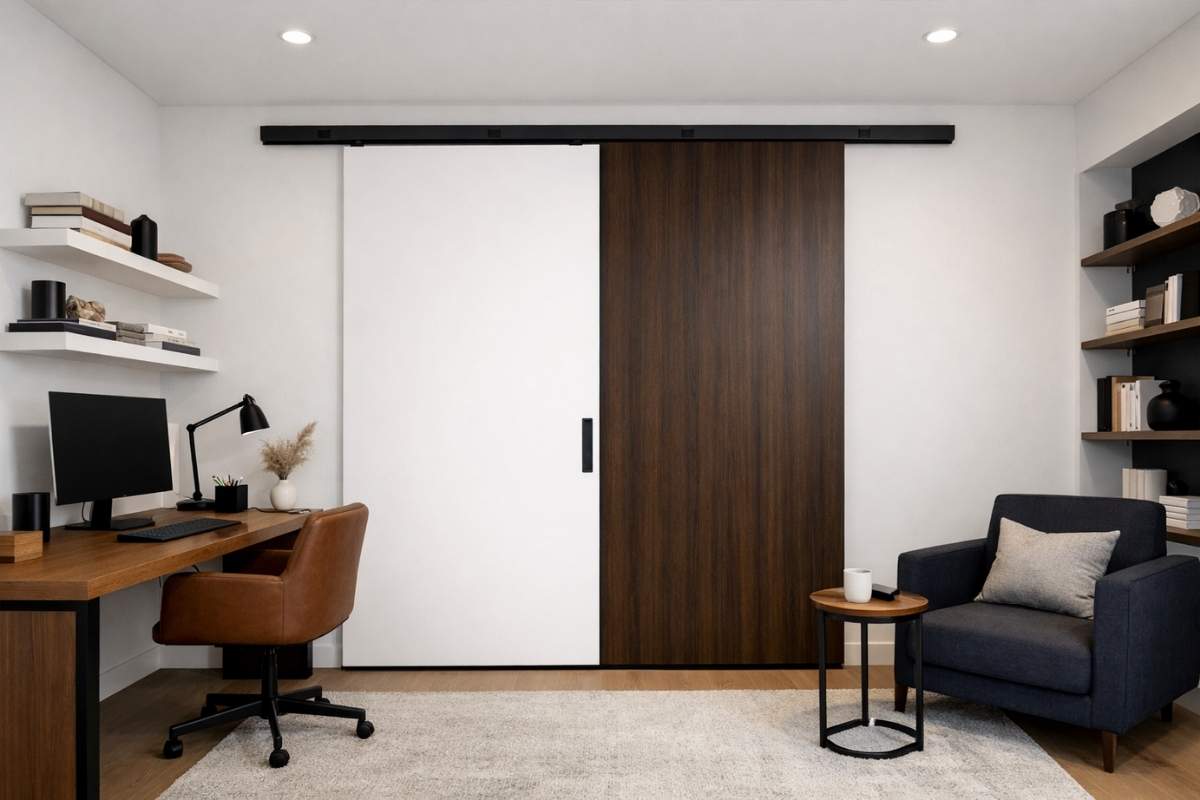
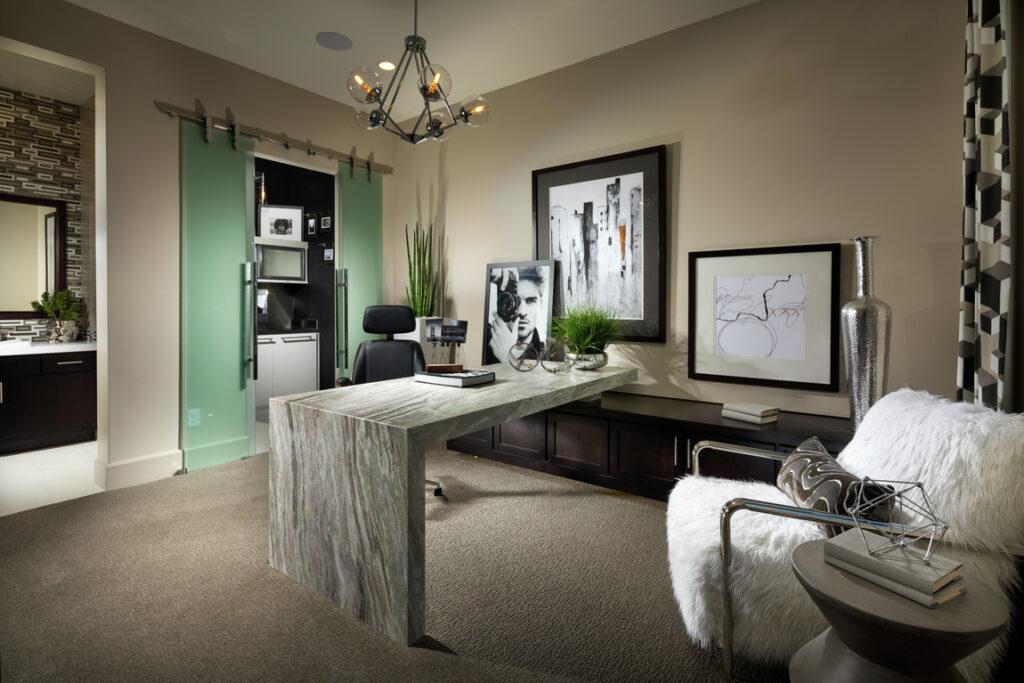
- Top-hung suspended doors glide on an upper track with no floor rail, keeping your flooring completely uninterrupted and clean.
- Key benefits: Easy cleaning underneath, safer for rolling desk chairs, and visually cleaner lines in modern interiors.
- These systems suit home offices that double as guest rooms or play areas where the boundary needs to flex based on time of day or week.
- Soft-close mechanisms and high-quality rollers make everyday use quieter and more professional—no jarring slams or grinding sounds.
- The overall impression is premium, minimal, and space-efficient—a sturdy solution for homeowners who prefer to invest in quality.
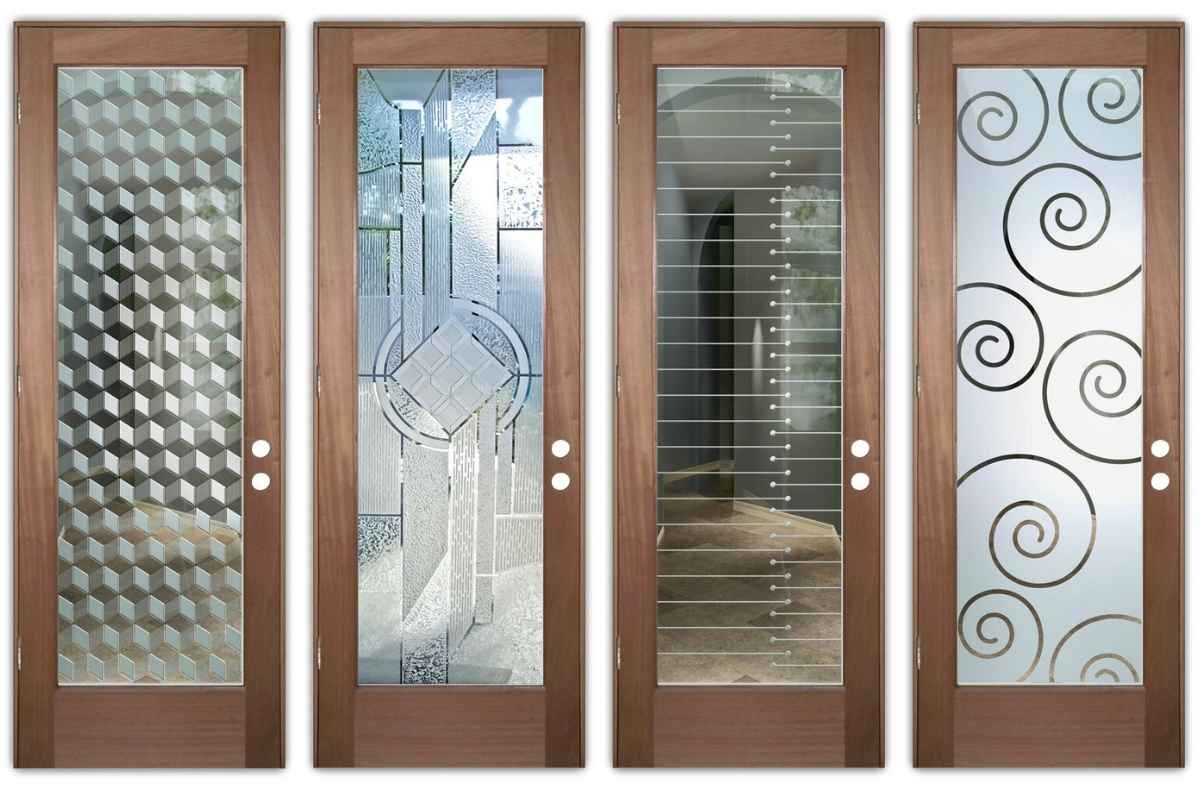
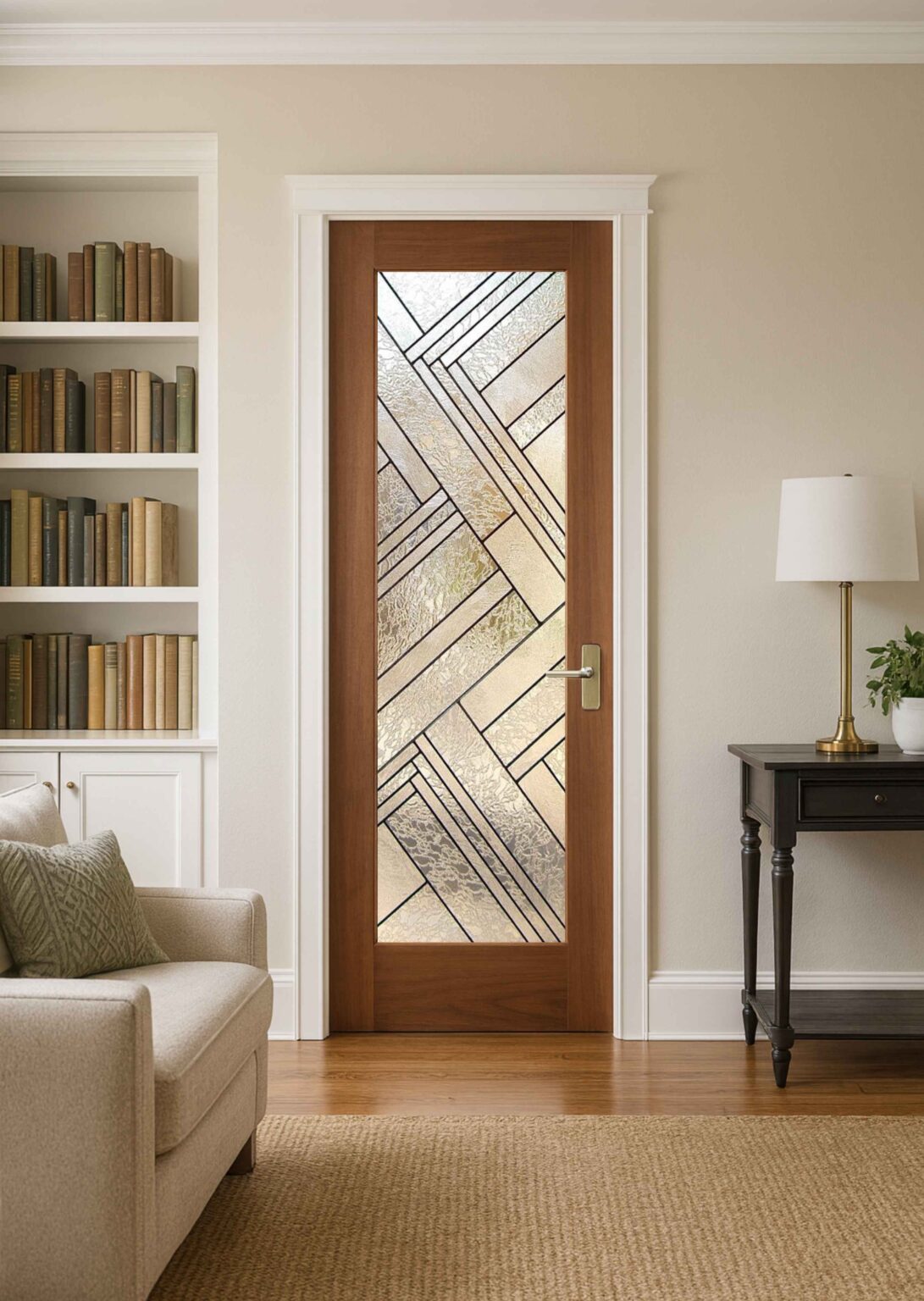
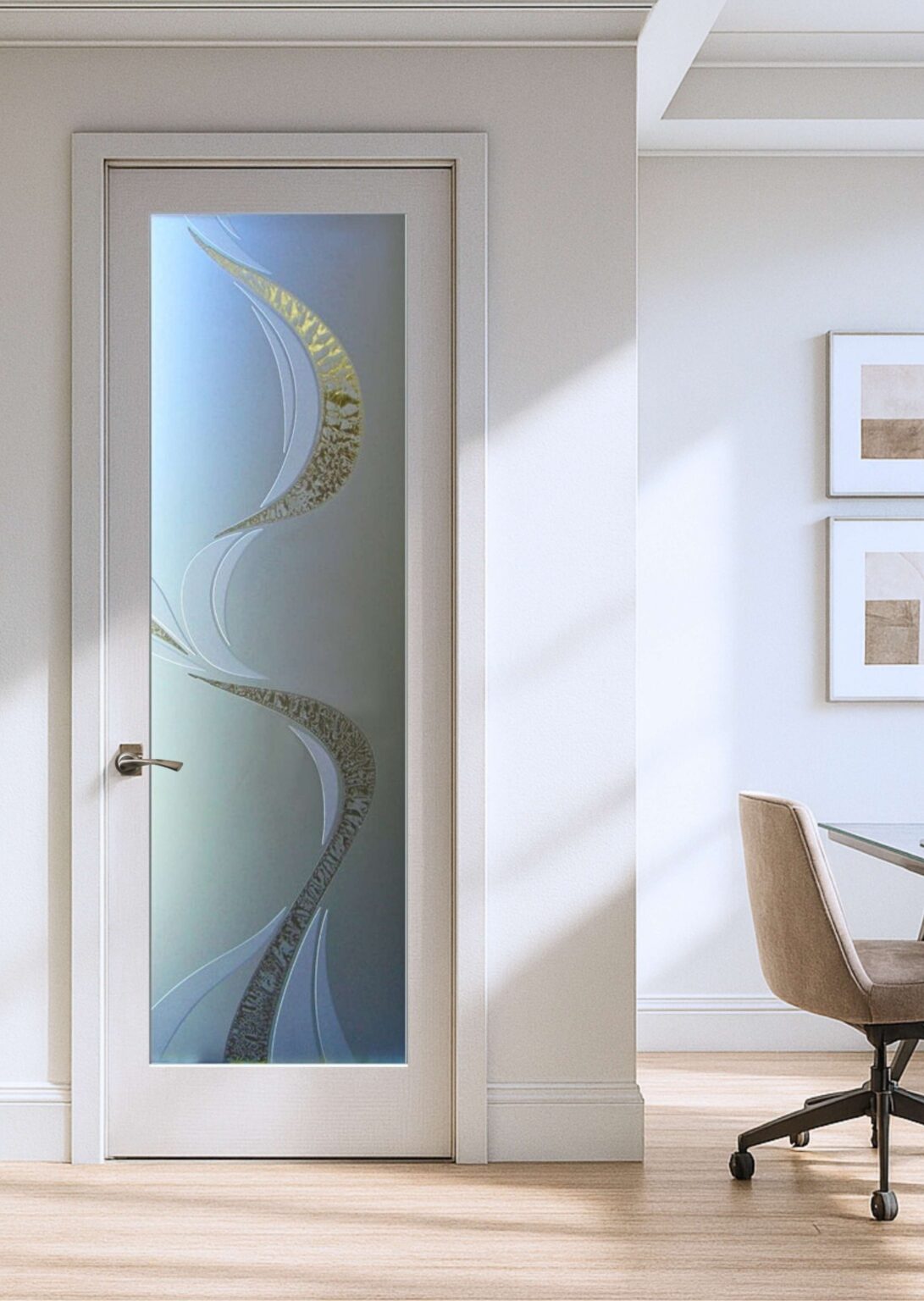
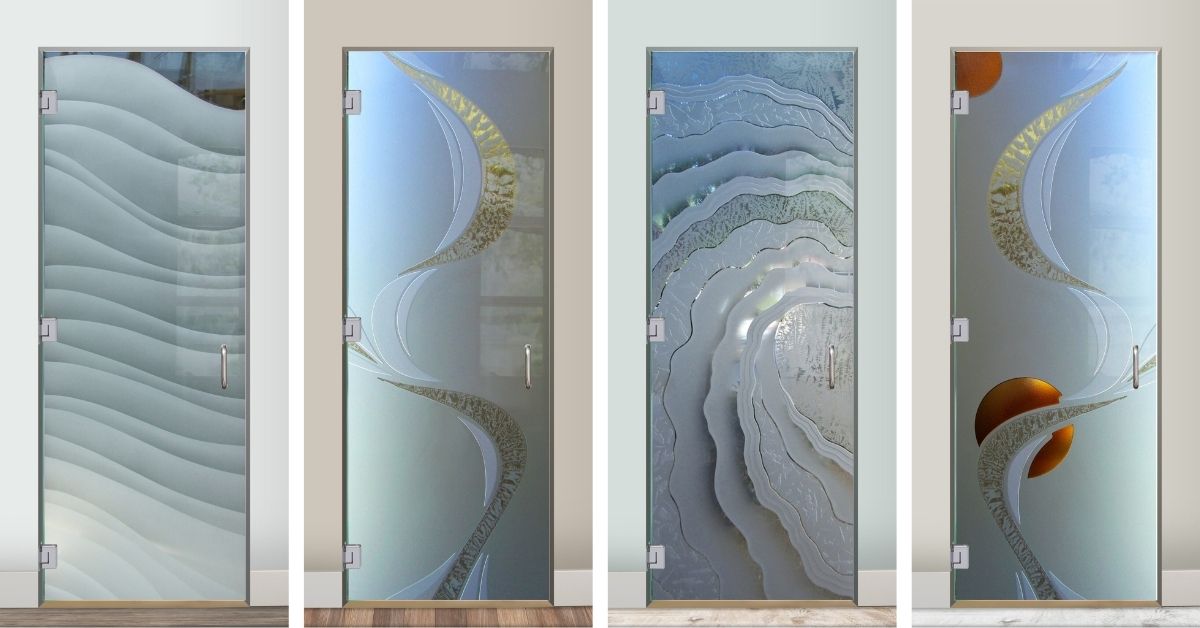
Home Design Inspiration: Decorative Home Office Door Ideas That Work
Door Office Solutions | Discover The Best Home Office Doors
Whether you need a quiet place to work or a flexible space for meetings, a door office is a great solution. Explore the best doors for office room that can fit into your home or office environment.

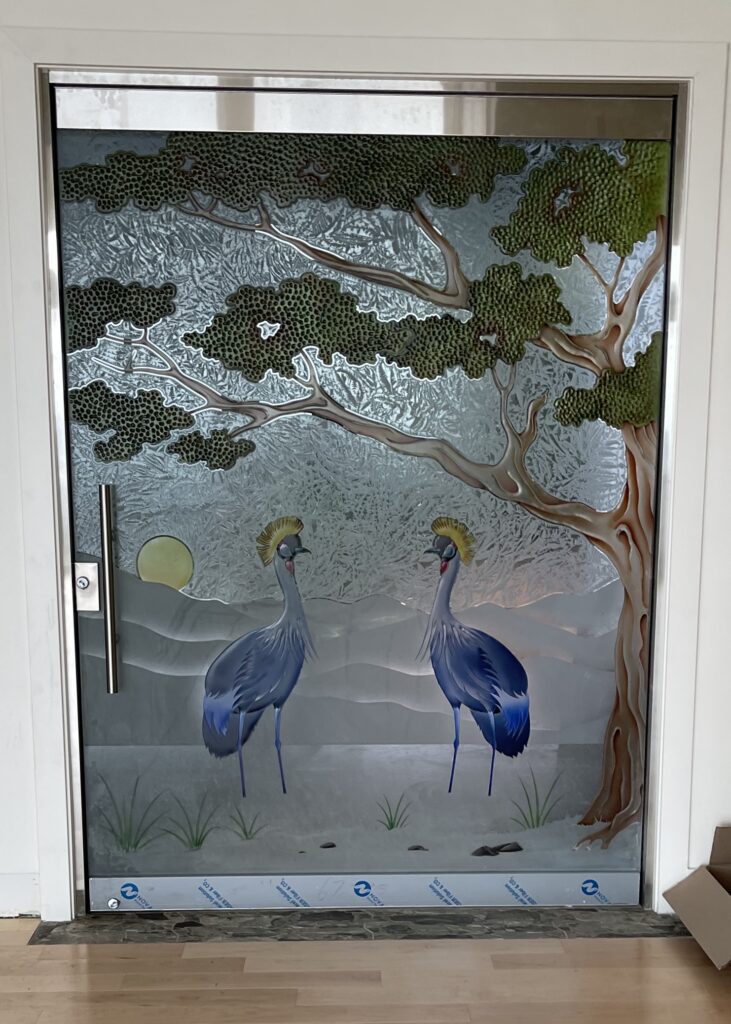
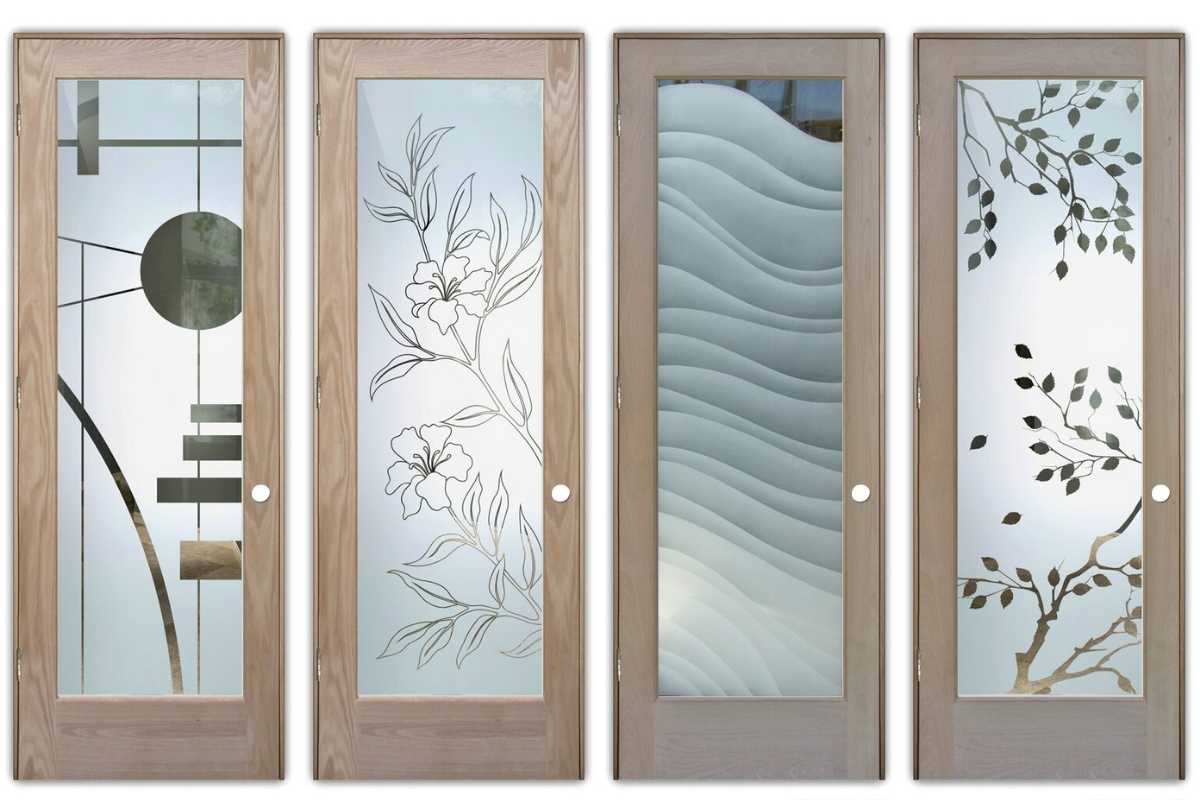
Frequently Asked Questions (FAQs) About Home Office Doors
Should My Home Office Door Swing In or Out?
In most cases, your door should swing inward into the office. This keeps hallways and shared areas clear for traffic and aligns with standard residential installation practices.
Consider an outswing door when your office is extremely compact or when furniture layout makes an inswing impractical. If your desk needs to sit right next to the door opening, reversing the swing might free up just enough space to make the room functional.
Be mindful of building code considerations, especially in tight corridors or near stairs. While this isn’t a permit-requiring change in most jurisdictions, safety matters if the door opens directly into a high-traffic path.
Example: A homeowner with an 8’ x 8’ converted closet space found that reversing the door swing created room for a small storage cabinet that previously wouldn’t fit.
How can I improve soundproofing for my office door?
Upgrading from hollow core to solid core is the single biggest improvement you can make. Solid core doors use dense materials that block sound transmission far more effectively than the thin shells of hollow-core slabs.
Beyond the door itself, focus on sealing gaps:
- Add adhesive weatherstripping around the frame where the door meets the jamb
- Install an adjustable door sweep or threshold to close the gap at the bottom
- Check that hinges are tight and the door closes flush without gaps
For those who record frequently or take many calls, heavy curtains or acoustic panels on the office side of the wall and door can further absorb reflected sound.
Perfect studio-level sound isolation requires specialized construction, but these simple steps significantly reduce everyday household noise at minimal cost.
What color should I paint my home office door?
Coordinate your door color with your trim and wall colors so the result looks intentional from both the office and hallway sides. A door that clashes with adjacent spaces feels like an afterthought.
For small, low-light offices, light neutrals like soft white, warm gray, or greige keep the space from feeling closed in. These colors reflect available light and create a sense of openness.
Darker statement colors like charcoal, navy, or black work when the office is a focal point off an entry hall or when you desire a sophisticated backdrop for video calls. A dark door can anchor a room and add personality.
Choose a satin or semi-gloss finish for durability and easier cleaning around high-touch areas. Flat finishes show fingerprints and scuffs more readily and require more work to maintain.
What type of door is best for a home office?
The best door for a home office depends on your priorities—privacy, noise control, and natural light. Solid-core interior doors are ideal for sound reduction. Glass doors for office are perfect when you want separation without closing off light. Many homeowners choose frosted glass doors because they provide privacy while maintaining an open, professional feel. For flexibility, custom home office doors allow you to balance design and function.
Do home office doors need to meet any building or safety requirements?
In most cases, home office doors are treated like standard interior doors, so there are no special code requirements. However, if your office is part of a converted garage, basement, or bonus room, local codes may require tempered safety glass or specific fire-rating standards. It’s always smart to confirm requirements during a remodel—especially if the space may be used as a bedroom in the future.
How wide should a home office door be for comfort and accessibility?
Standard home office doors are typically 30 to 36 inches wide, which allows comfortable movement for office chairs, desks, and equipment. Wider doors can improve accessibility and airflow, while narrower doors may feel restrictive in daily use. Choosing the right door width also ensures proper swing clearance and furniture placement.
Can a home office door help with temperature control?
Yes. A properly installed home office door helps regulate temperature by separating the workspace from the rest of the house. Solid-core doors offer better insulation. Glass doors paired with laminated or insulated glass can reduce heat transfer without blocking light. This is especially helpful if your office gets warm from electronics or afternoon sun.
What hardware works best for home office doors?
Hardware plays a bigger role than most people realize. Soft-close hinges, quality latch mechanisms, and well-fitted door seals improve daily comfort and reduce noise. For glass home office doors, selecting hardware designed for glass panels ensures proper support and long-term durability while maintaining a clean, professional appearance.
Are glass doors good for a home office?
Yes—glass doors for home offices are an excellent choice, especially for modern work-from-home spaces. They allow natural light to flow through the room, making the office feel larger and more inviting. Frosted glass office doors offer visual privacy without creating a closed-in environment, which helps maintain focus while still feeling connected to the rest of the home.
Do home office doors provide enough privacy?
Absolutely. Home office doors with privacy glass, such as frosted or etched glass, block direct visibility while still allowing light. If maximum privacy is needed—for video calls or confidential work—solid interior office doors or fully frosted glass doors are excellent options. Privacy levels can be customized based on glass opacity and design.
What door helps reduce noise in a home office?
For noise control, solid-core home office doors perform best because of their dense construction. Doors with higher STC ratings reduce sound transmission more effectively. While glass doors aren’t fully soundproof, laminated or thicker glass office doors paired with proper seals can noticeably reduce noise while keeping the space visually open.
Should a home office door be solid or glass?
Both options work—it depends on how the office is used. A solid door for a home office offers the best sound insulation and privacy. A glass door with frosted or obscure glass is ideal when natural light and aesthetics matter more. Many homeowners prefer glass doors for home offices that double as guest rooms or creative spaces.
Are frosted glass doors private enough for work calls?
Yes. Frosted glass home office doors obscure shapes and movement, making them more than private enough for meetings and video calls. Unlike clear glass, frosted designs prevent distractions while maintaining brightness. This makes them a popular solution for private door office solution in open floor plans.
Can I use a sliding door for a home office?
Yes, sliding home office doors are a great solution for small spaces or tight layouts. They save floor space and can be designed with frosted glass panels for privacy. Keep in mind that sliding doors typically provide less sound insulation than hinged doors, so they’re best for quieter households.
What’s the difference between a slab and prehung office door?
A slab home office door is just the door panel and is ideal if you already have an existing frame. A prehung office door includes the frame, hinges, and jamb, making installation easier—especially for new construction or remodels. Both options work well for door office design, depending on your project scope.
What size door is best for a home office?
Most home office doors are 80 inches tall. Also, 84-inch doors are a popular upgrade that make the space feel taller and brighter—especially with glass panels. Single doors are typically 30–36 inches wide, and French doors are commonly a pair of 24–30 inch panels. Custom sizes can be used to better match ceiling height, window placement, or room layout.
Here are helpful resources:
How do I make my home office quieter with the right door?
To reduce noise, choose a solid-core interior office door, ensure proper weatherstripping, and install tight seals around the jamb. Even with glass, upgrading to laminated or thicker glass panels helps minimize sound transfer. Door hardware and correct installation also play a big role in overall sound control.
Are home office doors important for resale value?
Yes. Dedicated work-from-home spaces with proper home office doors are increasingly attractive to buyers. A well-designed office door signals function, privacy, and flexibility—especially when paired with stylish materials like glass or custom designs.
What’s the best door style for a small home office?
For small offices, glass home office doors or sliding doors help keep the space feeling open. Frosted glass maintains privacy without making the room feel cramped. Minimalist or modern home office door designs also visually expand smaller rooms.
Can home office doors match other interior doors in the house?
Yes. Custom home office doors can be designed to match existing interior doors in style, material, and finish. Whether your home features modern, transitional, or traditional interiors, office doors can blend seamlessly. They also offer unique functional features like privacy glass or sound control.
Bringing It All Together
Choosing the right home office door comes down to understanding your priorities. If noise is your biggest challenge, a solid core door with weatherstripping will deliver immediate results. If your office feels dark and disconnected, French doors or glass panels can completely transform the mood. And if space is tight, a sliding barn door or pocket door frees up square footage for furniture and movement.
Start by identifying your main pain point. Then work backward to find the style and material that solves it while complementing your home’s existing décor. The best door is one you barely notice because it simply works, day after day.
Whether you’re tackling this as a weekend DIY project or working with a contractor on a larger renovation, the investment in a quality door office solution pays dividends in focus, privacy, and the professional feel of your workspace. Your home office deserves more than an afterthought. Give it the entrance it needs to help you do your best work.
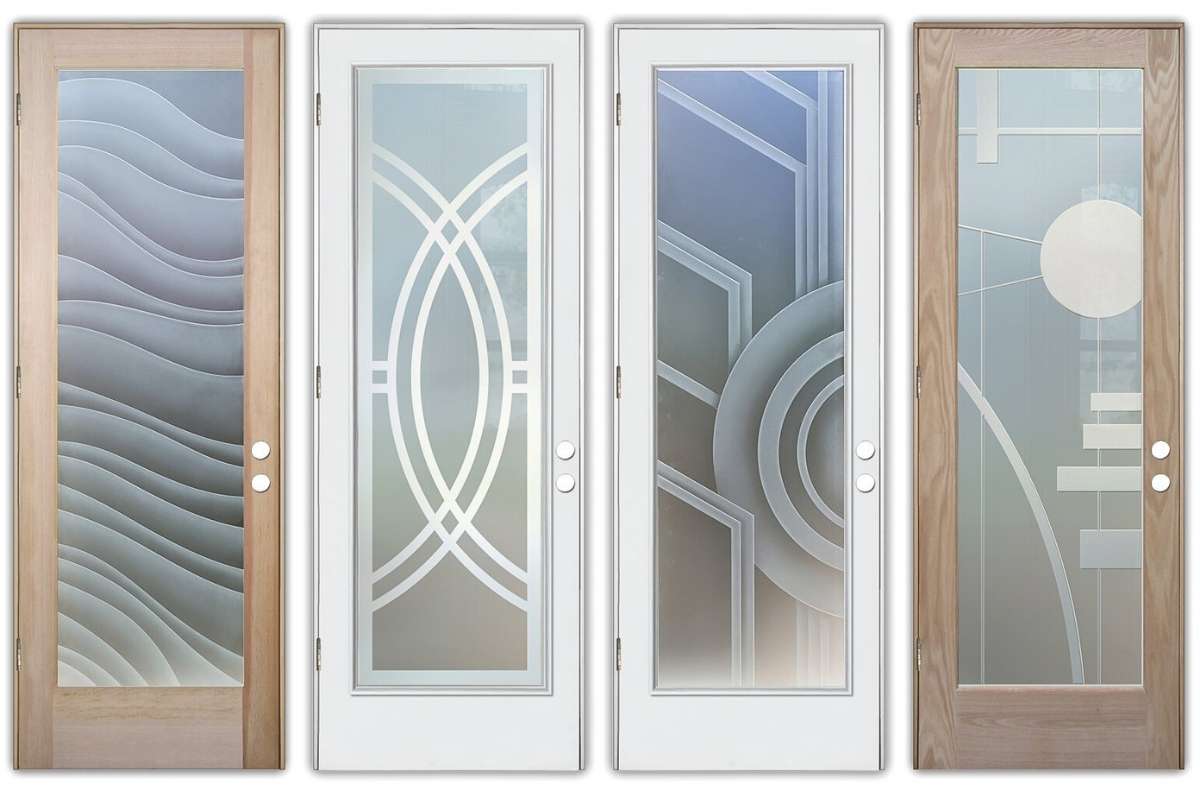

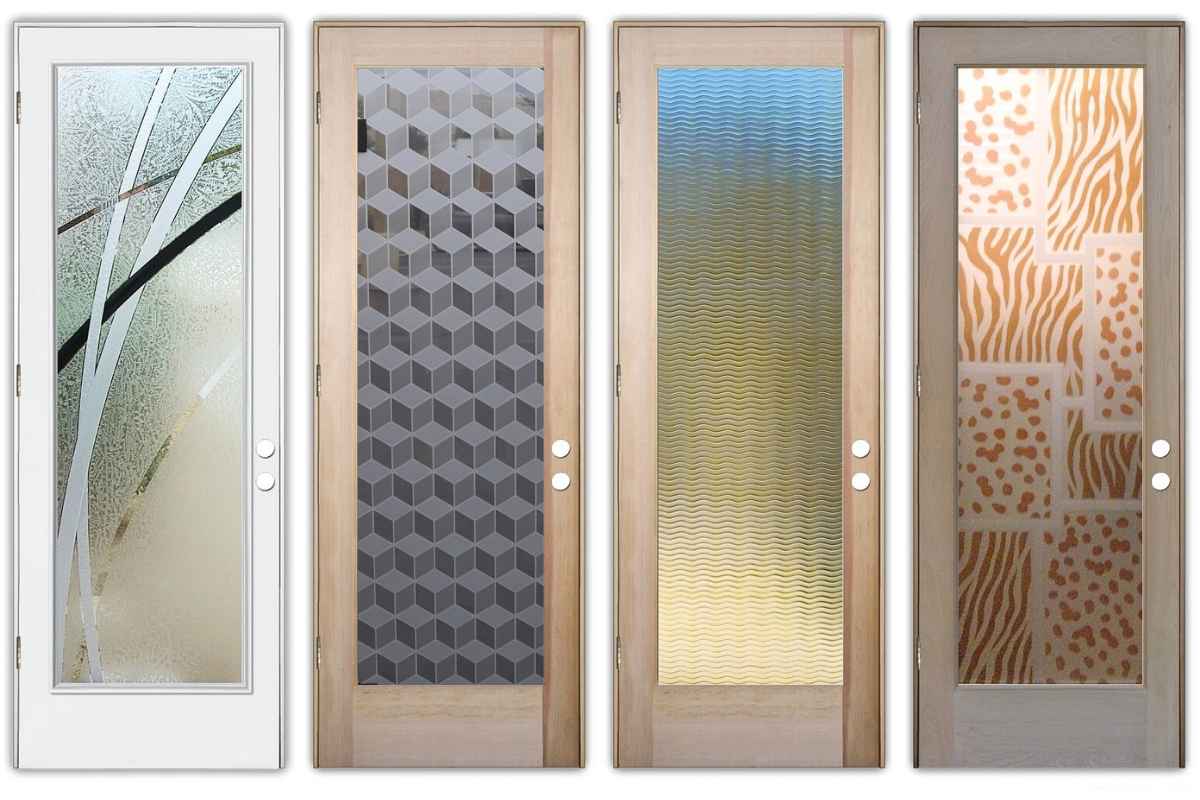
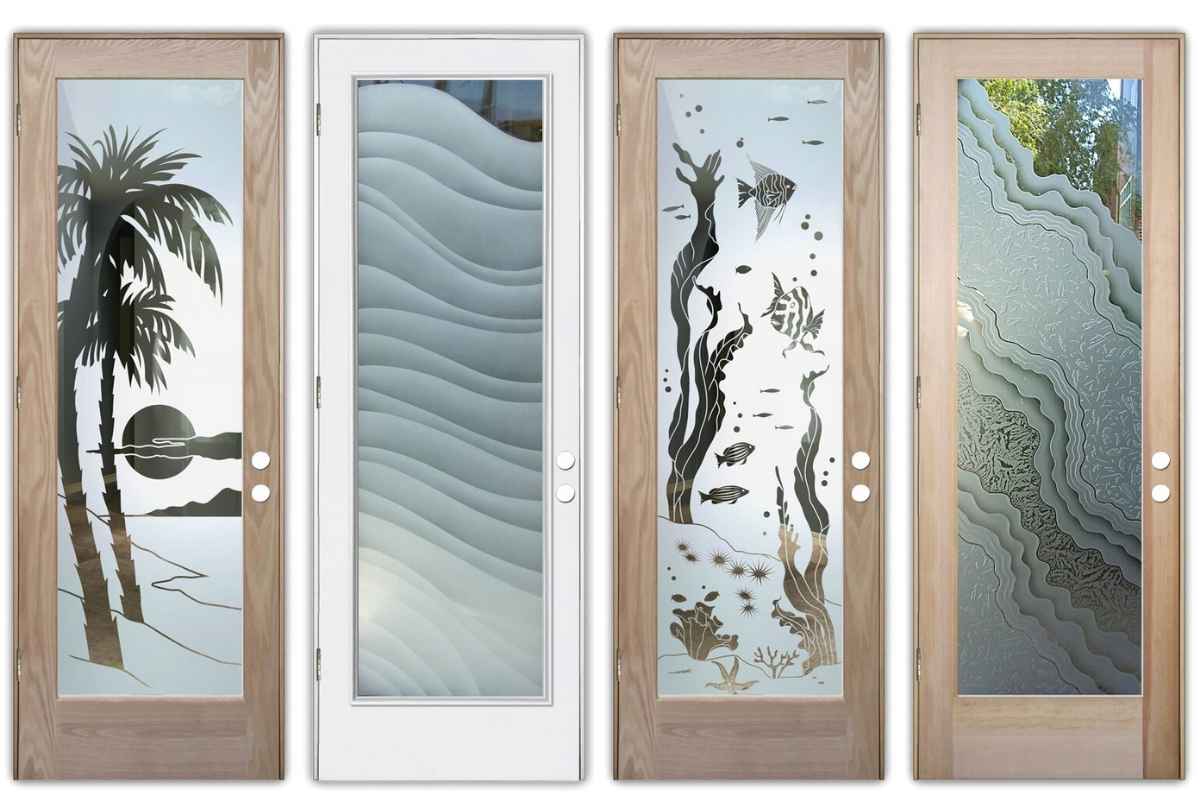
🏷️ SHOP High-quality Frosted Glass Interior Doors

Sans Soucie Art Glass: Decorative, Custom & Frosted Glass Doors, Windows, Showers & Stained Glass Since 1976
Family-owned and operated since 1976, Sans Soucie Art Glass leads the industry in decorative glass and custom glass design — from sandblast frosted glass and carved glass to hand-painted and stained glass art — transforming ordinary glass into Works of Art Captured in Glass recognized worldwide.
Innovative Frosted Glass Door Designer Tool
In 2010, we invented and launched our Frosted Glass Pantry Door Designer – a fun, easy-to-use tool that makes it simple for anyone to design and customize not only pantry doors, but a wide range of frosted glass doors for every room.
Explore our Frosted Glass Doors Collection
Our custom frosted glass doors include a beautiful variety for every style and space:
- Pantry Doors
- Frosted Glass Interior Door
- Interior Doors with Frosted Glass
- Frosted Glass French Doors
- Frosted Glass Front Door
- Front Doors with Frosted Glass
- Interior Glass Doors
- Glass Barn Doors
- Frosted Glass Barn Door
- Sliding Glass Barn Door
- All Glass Doors Interior
- All Glass Front Doors
- Bathroom Doors with Frosted Glass
- Laundry Room Doors
- Wine Room Doors
If you already have a door, and only need the glass insert, we also offer:
- Frosted Glass for Interior Doors
- Door Glass Inserts for Front Doors
- Glass Panels for Pantry Doors
- Frosted Glass Inserts for Bathroom Doors
- Laundry Room Door Glass Inserts
- Glass Panels for Interior Wine Cellar Doors
Elegant Frosted Glass Throughout Your Home
While our frosted glass doors are a top choice, we also create stunning glass products for every area of your home, including:
- Frosted Glass Shower Doors
- Glass Shower Partition
- Frosted Glass Shower Panel
- Frosted Glass Showers
- Frosted Glass Windows
- Bathroom Window Frosted Glass
- Decorative Window Glass, Window Frosting
- Custom Glass Dining Table
- Custom Glass Coffee Table
- Glass Shelves, Custom Glass Shelves
- Hand Carved & Painted Mirrors
- Frosted Glass Signs, Etched Glass Signs
- Cabinet Door Glass Inserts, Frosted Glass Inserts for Cabinet Doors
- Glass Wall Art, Wall Art on Glass
Looking for Inspiration? Explore Our Galleries
Discover visual idea boards, style concepts, décor applications, real project photos, and helpful information in our expanding gallery collection:
- Custom Glass
- Custom Glass Edges
- Custom Mirror
- Decorative Glass
- Decorative Glass Doors
- Decorative Glass Front Doors
- Decorative Glass Interior Doors
- Decorative Glass Window
- Stained Glass
- Stained Glass Doors
- Stained Glass Front Doors
- Stained Glass Windows
Free Shipping. Expert Packing, Peace of Mind
With FREE SHIPPING on most orders and worldwide delivery from our studio in Palm Desert, California, every order is packed in-house by our expert glaziers using custom materials and proven methods — ensuring safe arrival with a damage rate of less than 1%!
Explore our complete frosted glass doors collection and find the perfect frosted glass door for your space. Have questions? Contact us today!
Copyright © 2025, Sans Soucie Art Glass. All rights reserved.