Which Is Better, a Pocket Door or a Sliding Door?
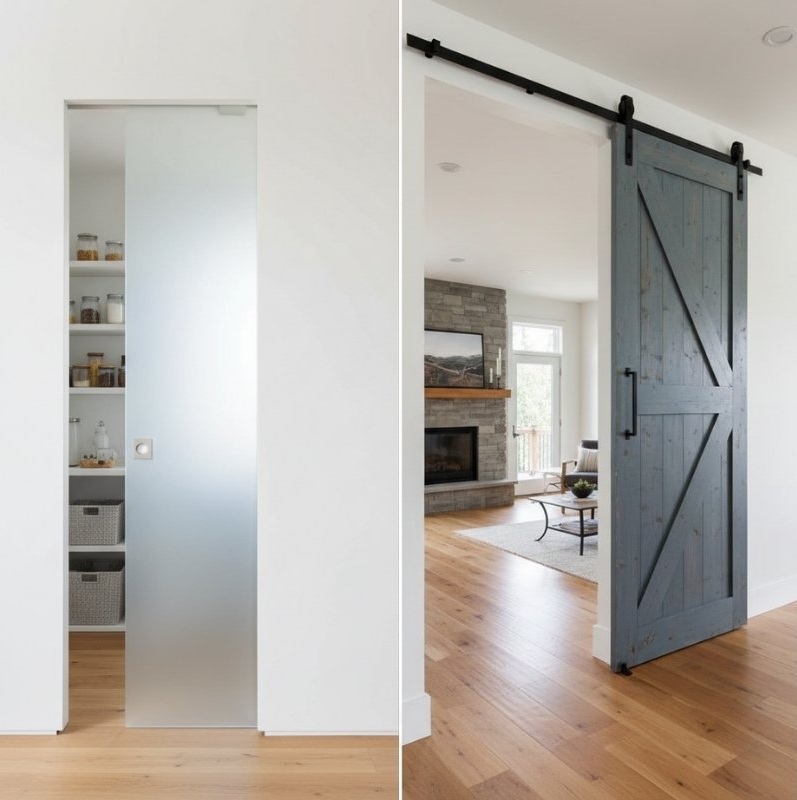
Choosing between a pocket door vs sliding door can be tricky when you’re designing or remodeling your home. Both options save floor space and add a clean, modern touch but they work in different ways. The best choice depends on your layout, privacy needs, and how much wall space you have to work with.
In this guide, we’ll compare pocket doors and sliding doors in terms of function, style, and practicality, so you can decide which one fits your space best—whether it’s a compact pantry, an interior passage, or a wide patio opening. You’ll also see how a frosted glass can enhance both designs by adding light and privacy.
KEY TAKEAWAYS
- Pocket doors slide into the wall, making them ideal for small or tight spaces like bathrooms, pantries, and hallways.
- Sliding doors move along the wall and are easier to install and maintain, great for patios or open-concept interiors.
- Pocket doors save more wall space, while sliding doors make a stronger design statement.
- Both styles can feature frosted glass for added privacy and light.
- Choose a pocket door for efficiency and a sliding door for flexibility and visual impact.
Pocket Door vs Sliding Door
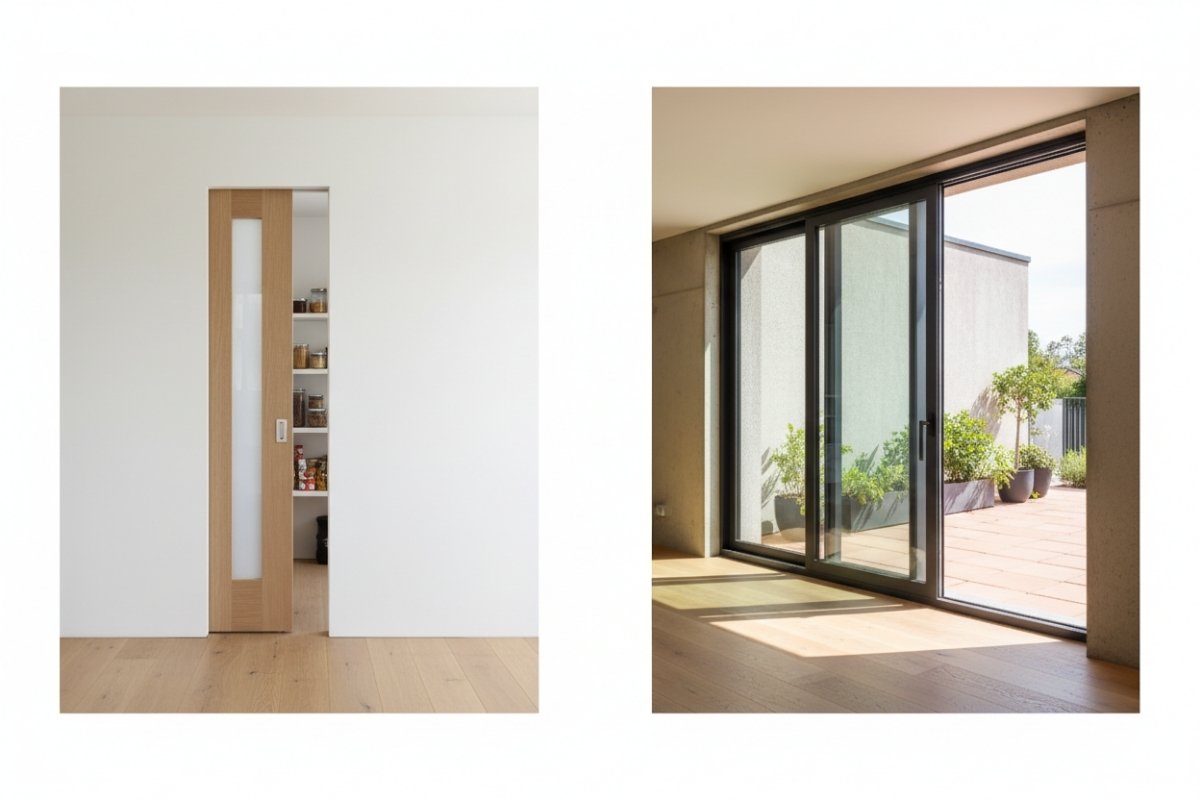
Before choosing, it helps to know how each door operates and what makes them unique. Both offer space-saving solutions and modern functionality, but their structure, installation, and design flexibility differ. Knowing these distinctions will help you choose the right door for your space.
What Is a Pocket Door?
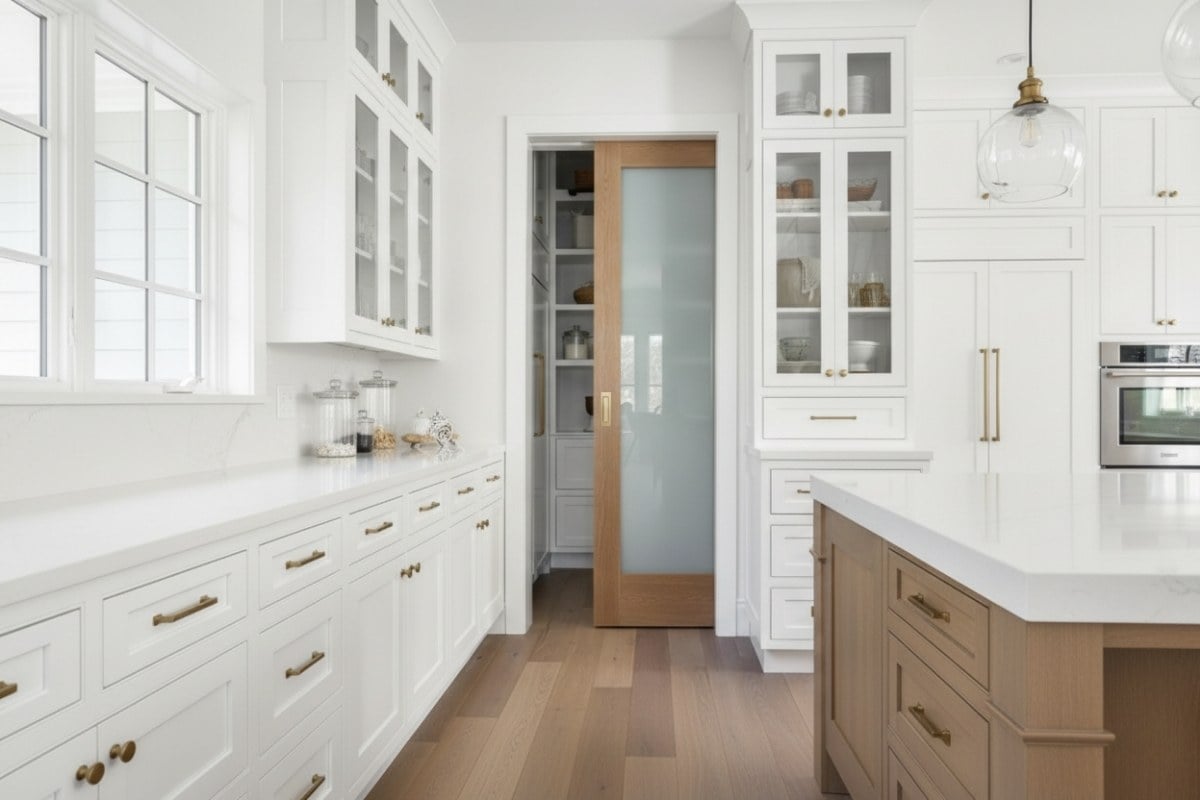
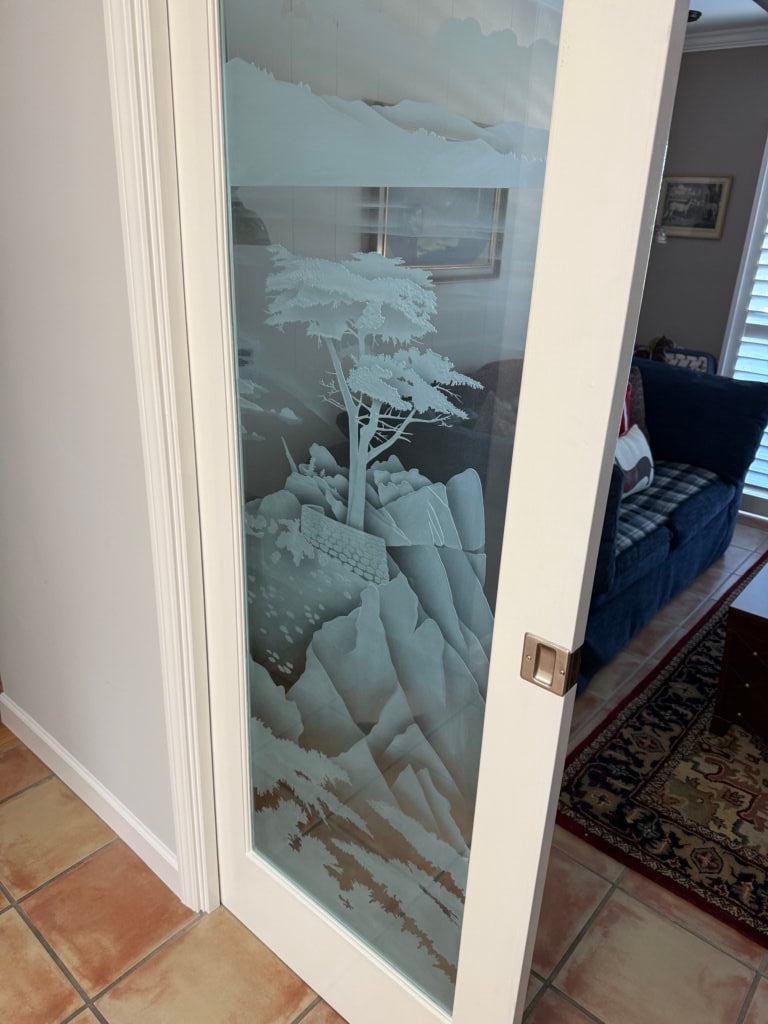
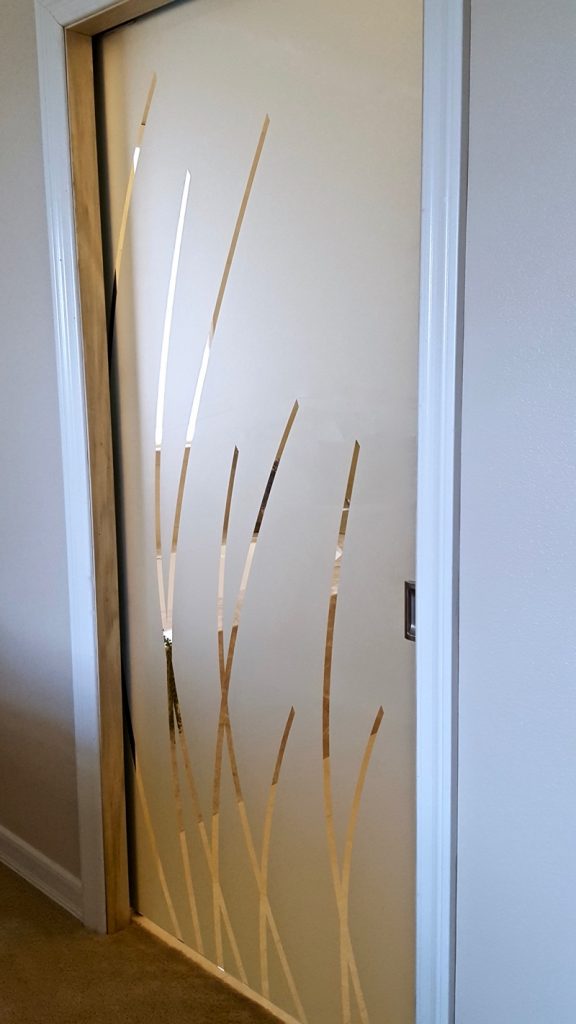
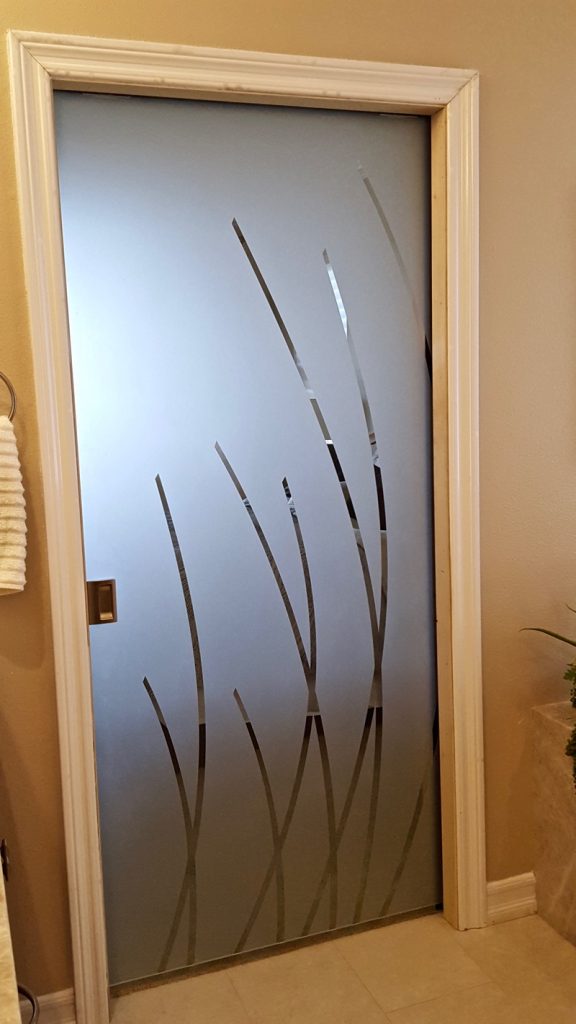
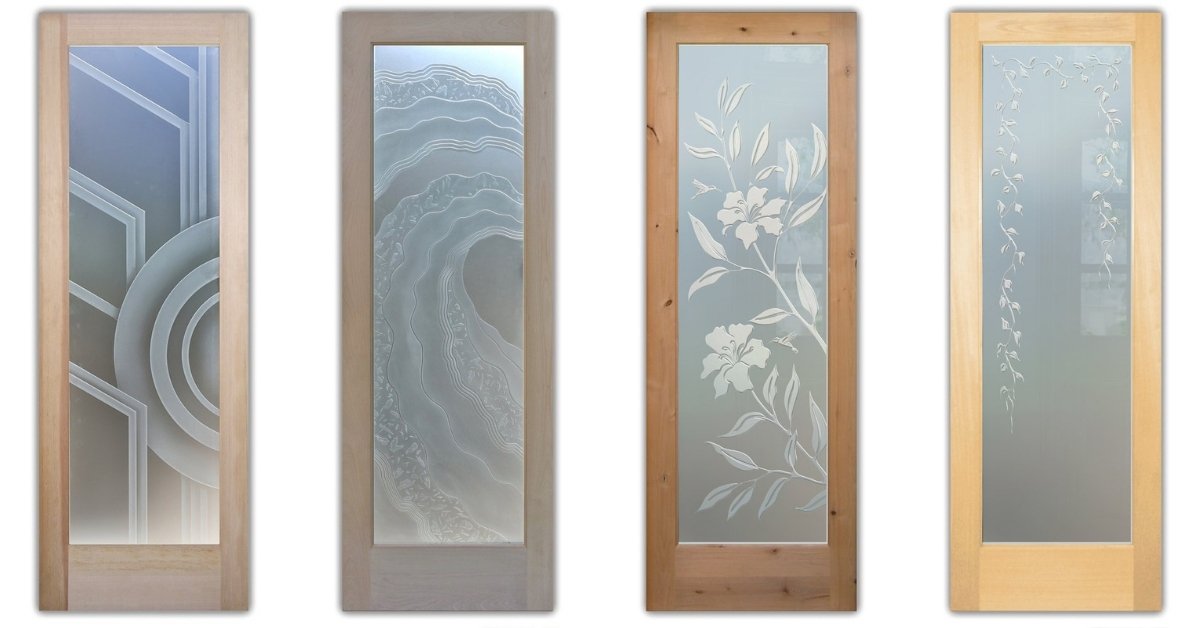
A pocket door slides directly into the wall cavity, disappearing completely when opened. It’s ideal for small areas like bathrooms, laundry rooms, or pantries where swinging doors take up too much space. Because it glides inside the wall, a pocket door provides a seamless look and maximizes usable square footage. Homeowners often choose frosted glass doors for pocket doors for added light while maintaining privacy.
What Is a Sliding Door?
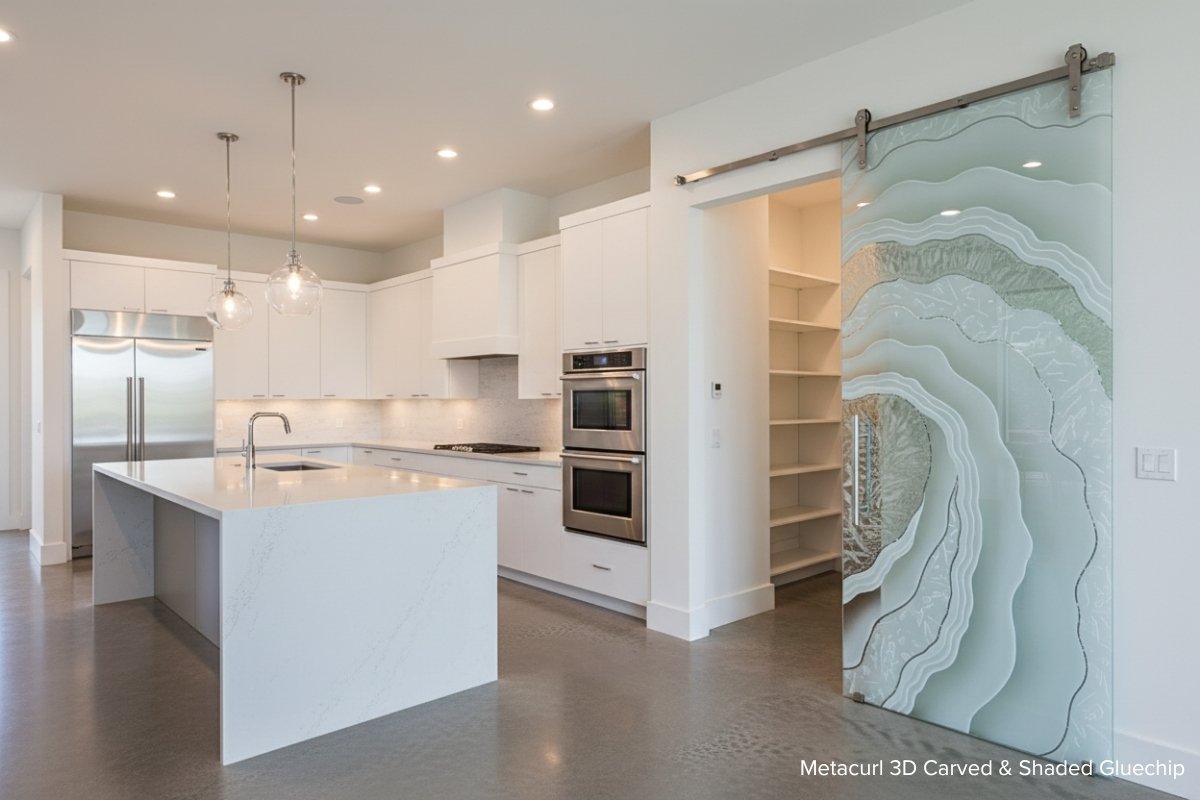
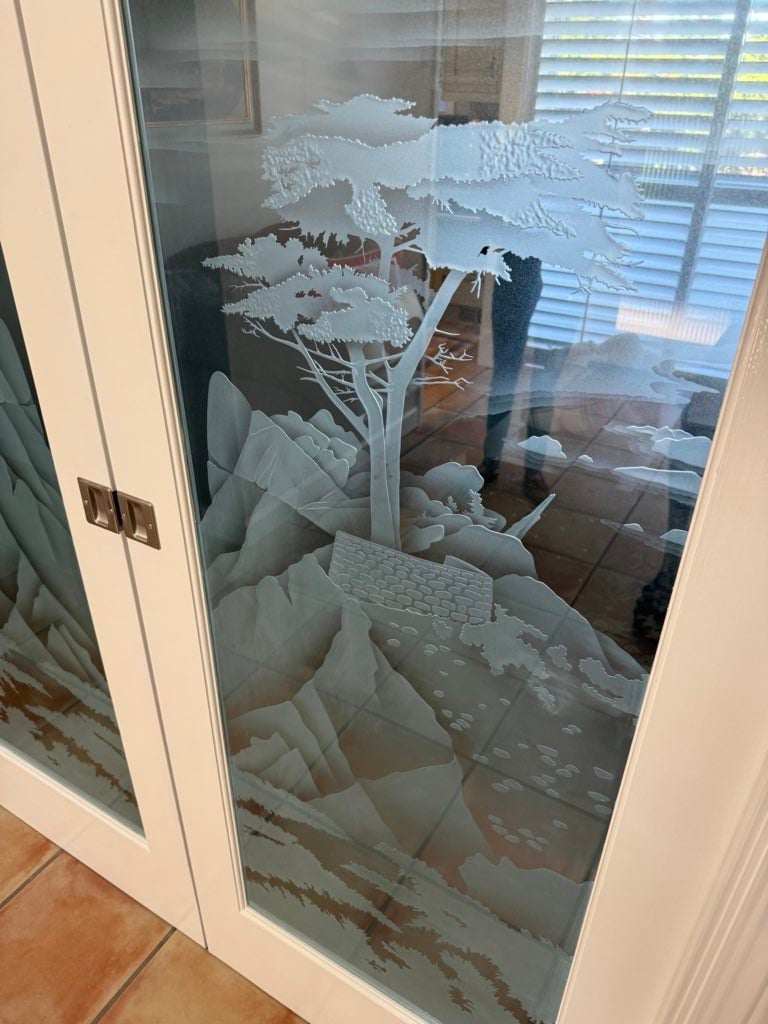
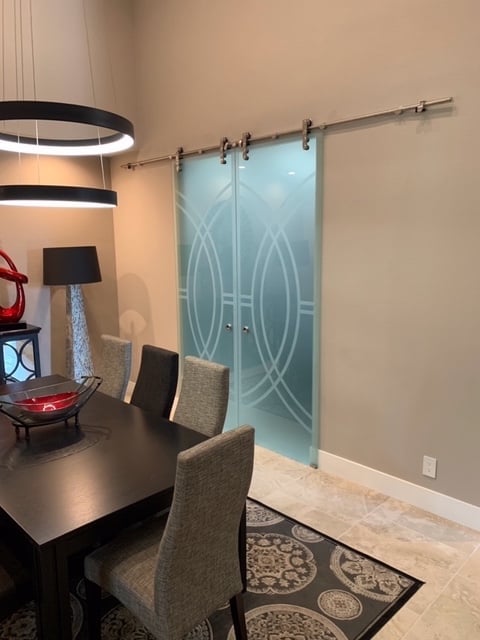
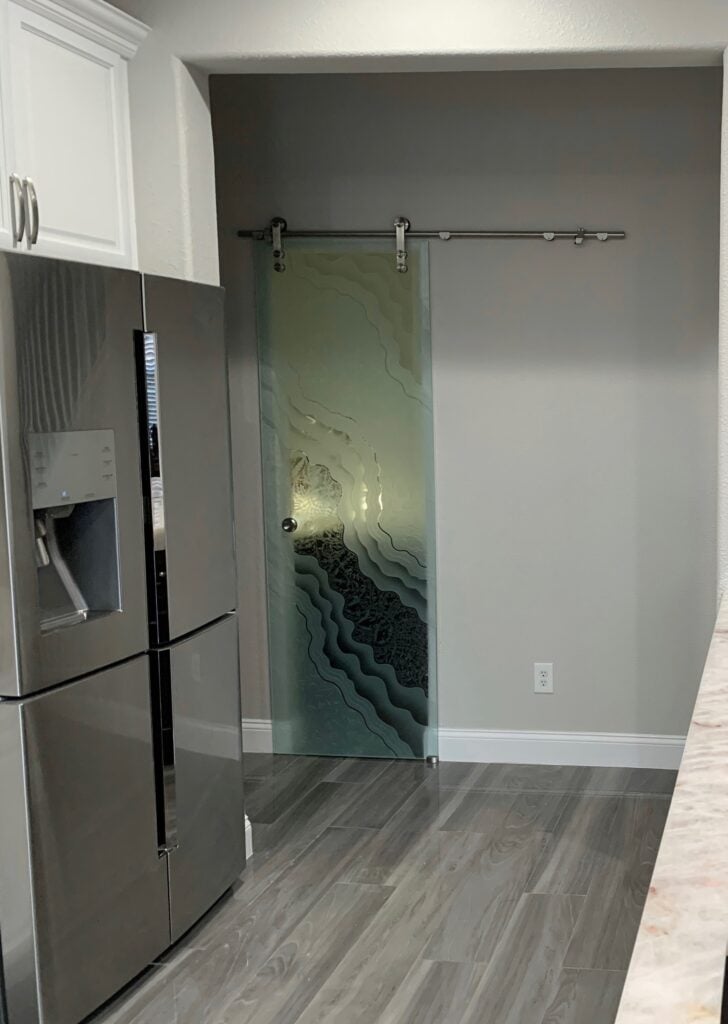
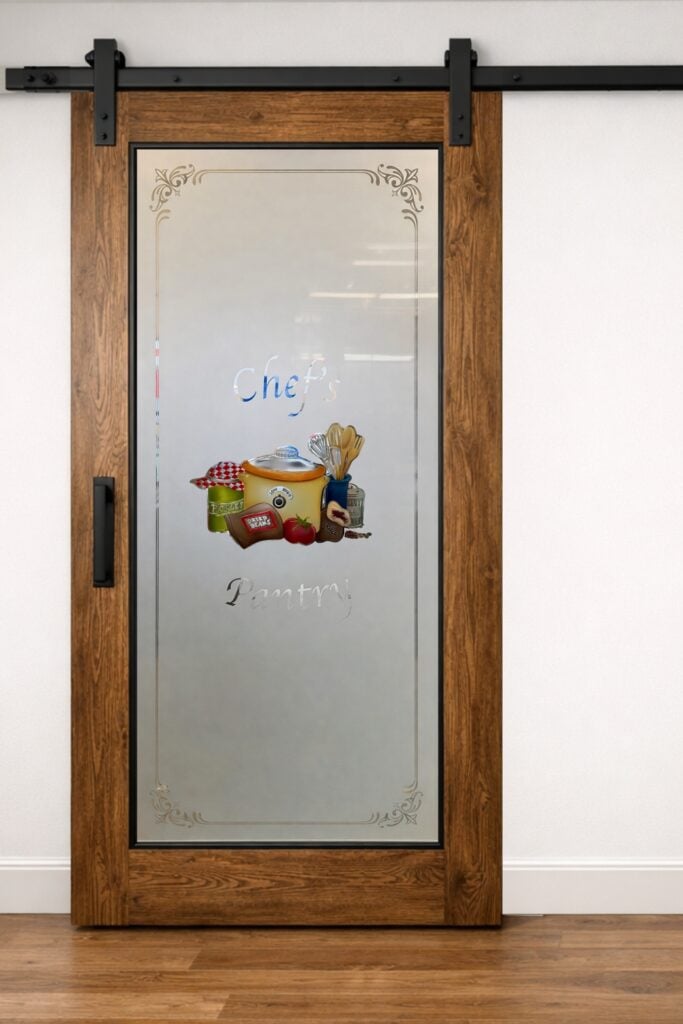
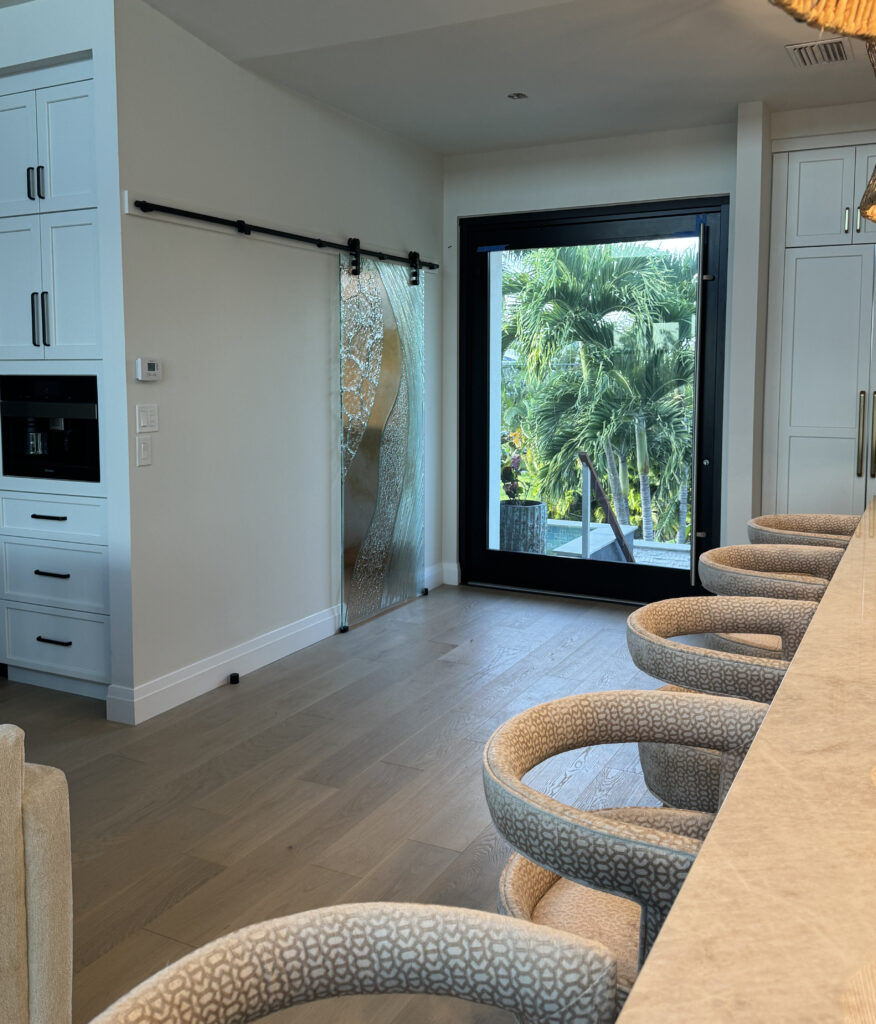
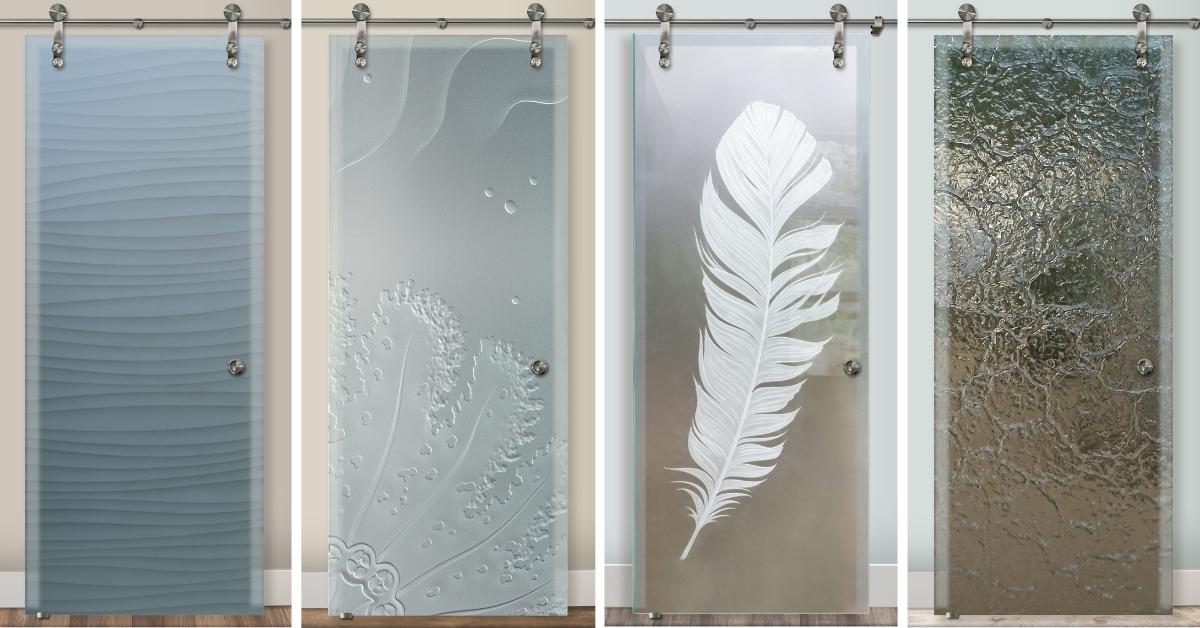
A sliding door moves along a visible track mounted on the wall or ceiling. It doesn’t hide inside the wall like a pocket door, making it easier to install and maintain. Sliding doors are often used as patio doors, glass barn doors, or modern interior dividers. With customizable options like decorative glass doors or sliding glass barn door with etched designs, a sliding door can double as both a functional and statement piece in any room.
Comparing Pocket Doors and Sliding Doors
Space Efficiency and Functionality
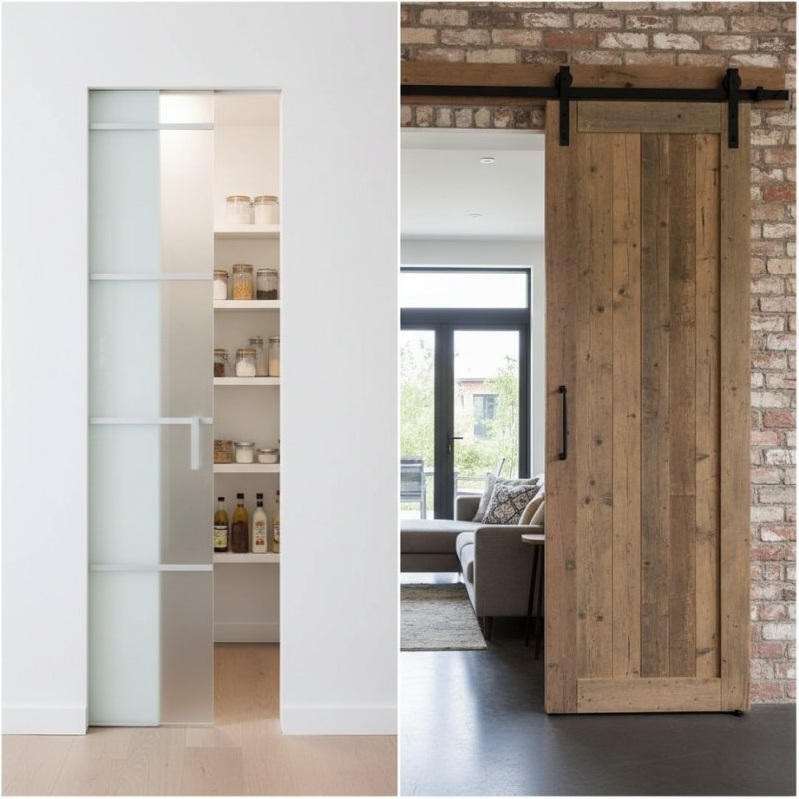
When it comes to saving space, a pocket door is the clear winner. Since it slides into the wall cavity, it eliminates the need for clearance around the doorway—making it ideal for compact areas like pantries, hallways, and bathrooms. A sliding door, on the other hand, glides along the wall, which means you’ll need to keep that wall clear of furniture or décor.
If you’re working with tight square footage, pocket doors maximize space. But for larger openings or accent features, sliding doors offer more visual presence and versatility.
Aesthetic and Curb Appeal
From a design standpoint, both pocket doors and sliding doors add modern appeal to any home. A pocket door delivers a clean, seamless look that blends into the wall for a minimalist finish, while a sliding door becomes a statement piece that enhances the room’s style and flow. Whether you choose a frosted glass door design for privacy or a decorative glass barn door for artistic detail, both options can boost your home’s aesthetic and overall curb appeal.
Installation and Maintenance
A pocket door requires more complex installation since it involves modifying the wall to create a recessed pocket. This is easier during new construction than in remodels. Once installed, accessing the hardware for repairs can be tricky because it’s hidden inside the wall.
Sliding doors, in contrast, mount on an exposed track, making them much easier to install and service. Whether you’re adding a barn-style sliding door or a glass sliding door, maintenance is simple and repairs are straightforward.
Privacy and Noise Control
Both options can provide privacy, but the level depends on the door material and seal. Pocket doors tend to have small gaps around the frame, which can let sound through. Sliding doors often perform slightly better in this area, especially when equipped with frosted glass that softens light and reduces visibility.
When to Choose a Pocket Door
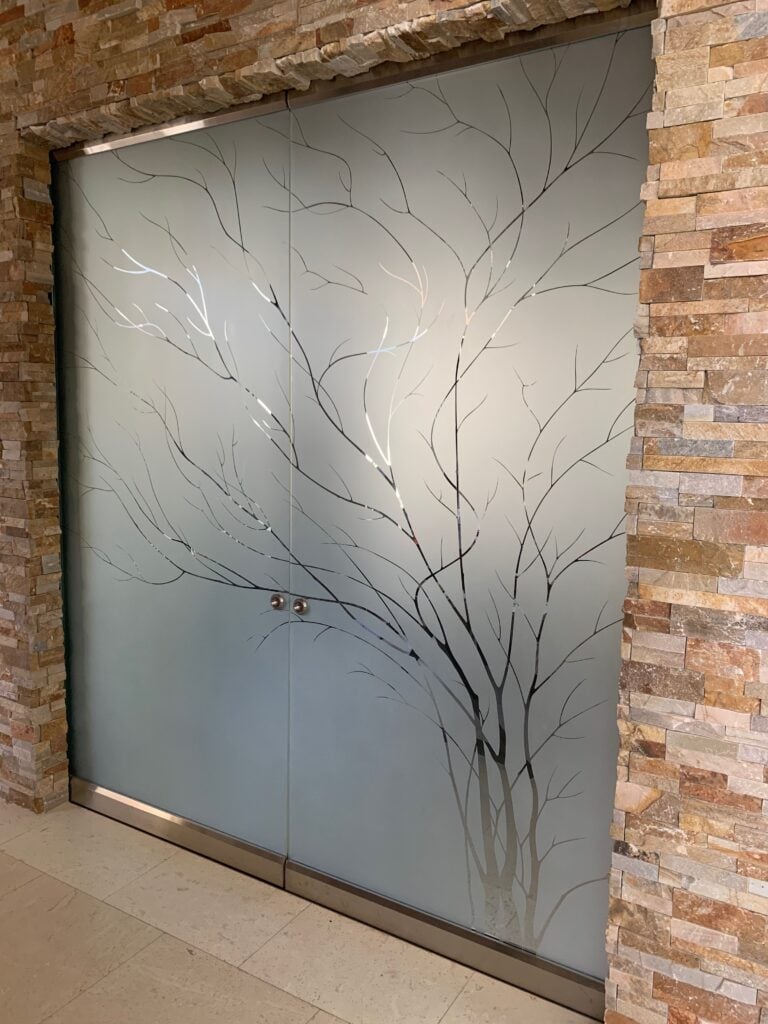
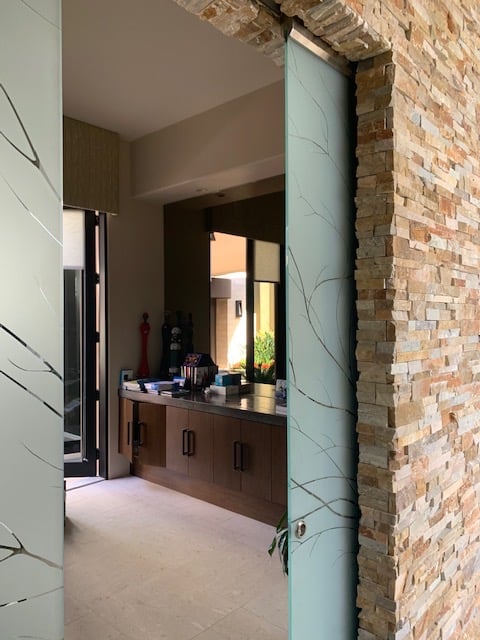
A pocket door is best suited for spaces where every inch matters. It’s perfect for bathrooms, laundry rooms, closets, or pantries—anywhere you want to free up floor or wall space. Its disappearing design gives small rooms a clean, open feel.
You can also customize pocket doors with frosted glass or etched designs to let light pass through while maintaining full privacy. This makes them a popular choice for homeowners who want both functionality and a touch of artistry in compact spaces.
When to Choose a Sliding Door
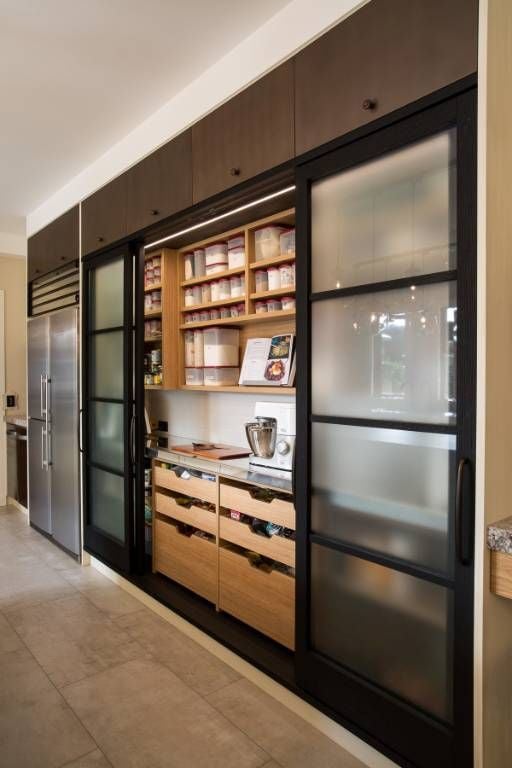
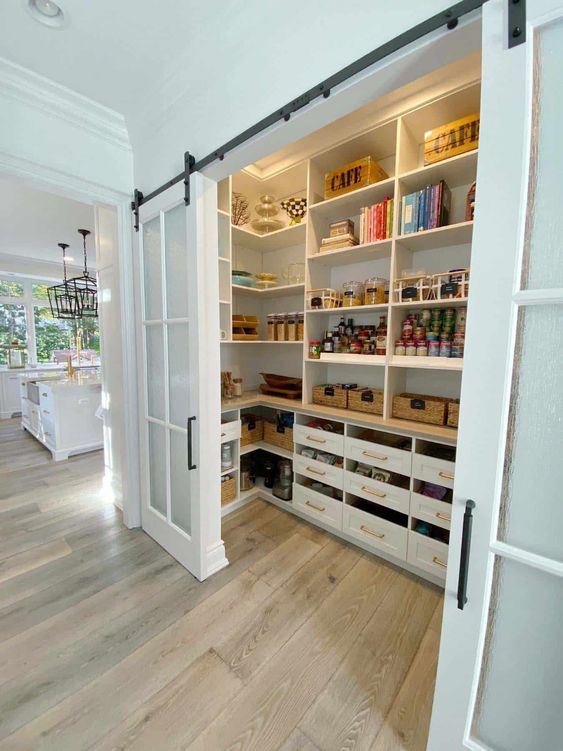
A sliding door is the better choice when you want a design element that stands out while still saving space. Unlike a pocket door that hides inside the wall, a sliding door becomes part of the room’s aesthetic. It’s ideal for patios, living rooms, and interior spaces where you want a smooth transition between rooms or to the outdoors.
Sliding glass doors work well for wide openings, offering natural light and a modern look. You can also customize them with frosted glass for added privacy without losing brightness. Homeowners often use sliding doors as barn-style dividers in open-concept homes, giving flexibility to separate or connect spaces easily.
If you want a stylish, easy-to-maintain, and versatile option that complements both modern and rustic interiors, a sliding door is a solid investment.
Use Frosted Glass for Pocket and Sliding Doors

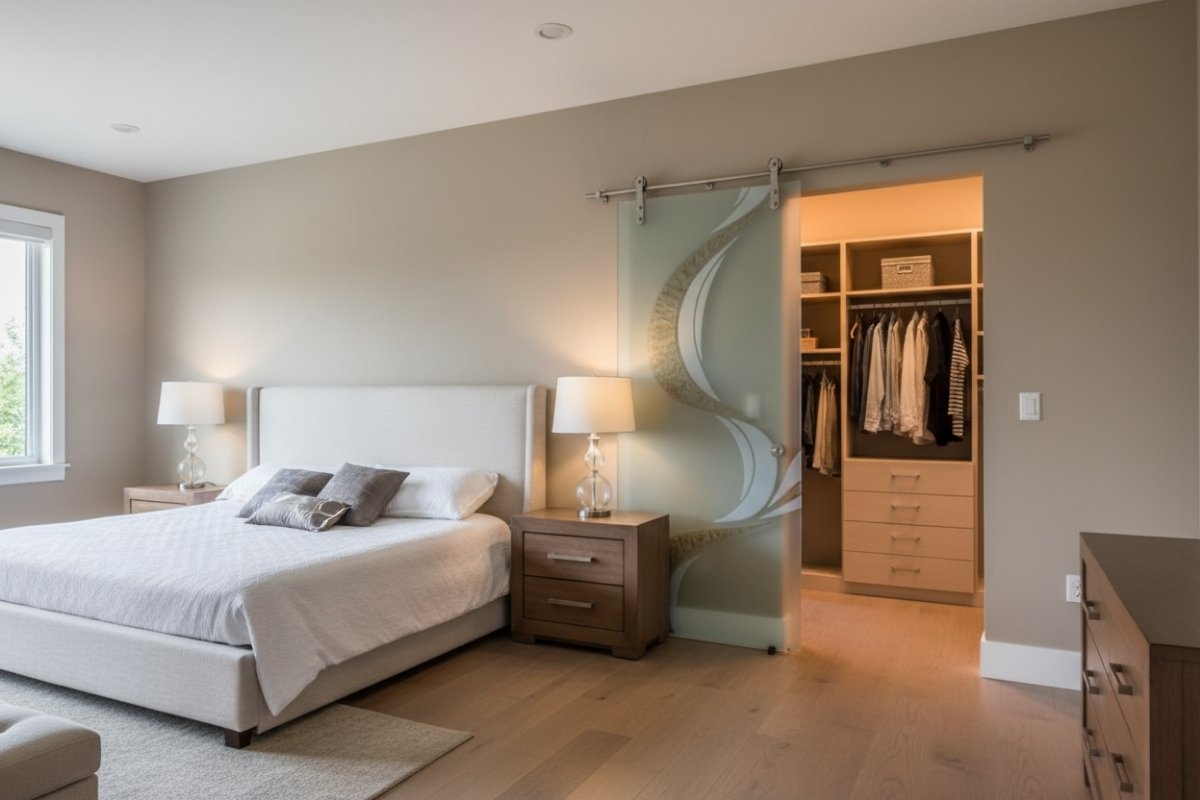
Whether you prefer the clean look of a pocket door or the bold style of a sliding door, choosing glass instead of solid wood instantly elevates your space. Glass doors allow natural light to flow between rooms, making smaller areas feel brighter and more open without sacrificing privacy.
Frosted glass is one of the most popular options for both pocket and sliding applications. It diffuses light beautifully while blocking visibility—ideal for bedrooms, bathrooms, interiors, and pantries. For homeowners who want privacy with artistry, Sans Soucie Art Glass offers handcrafted frosted glass doors available for pocket doors, sliding glass barn doors, and even frameless glass door designs.
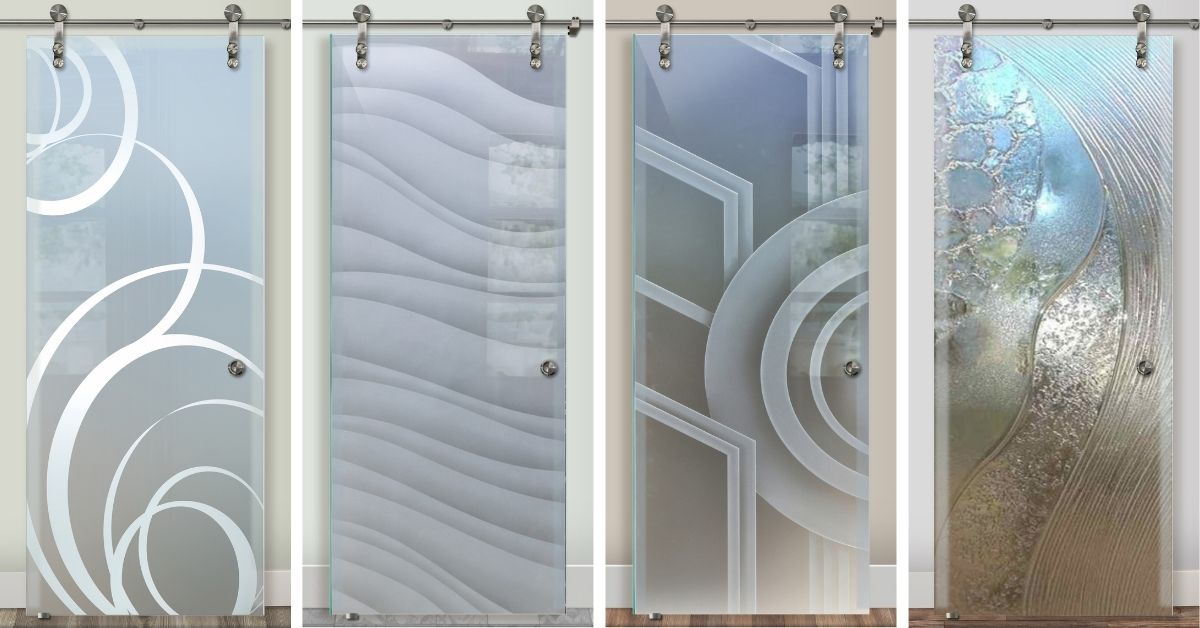
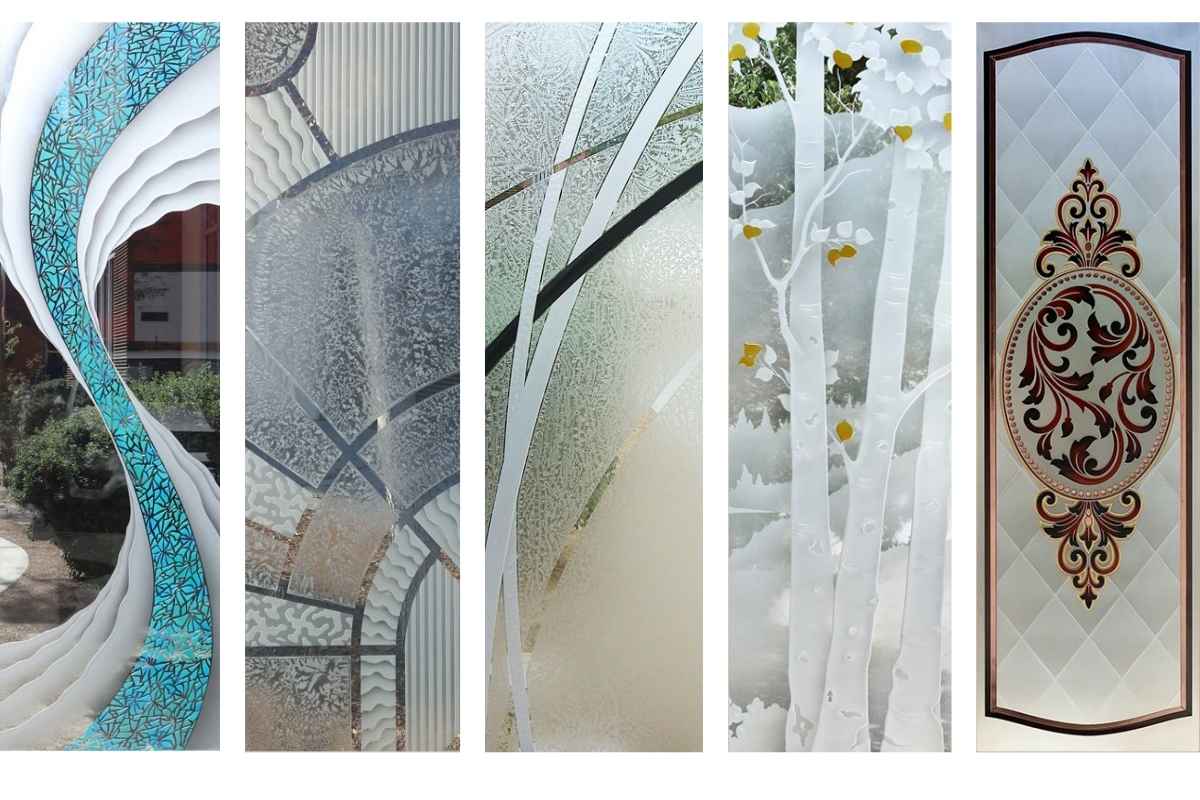
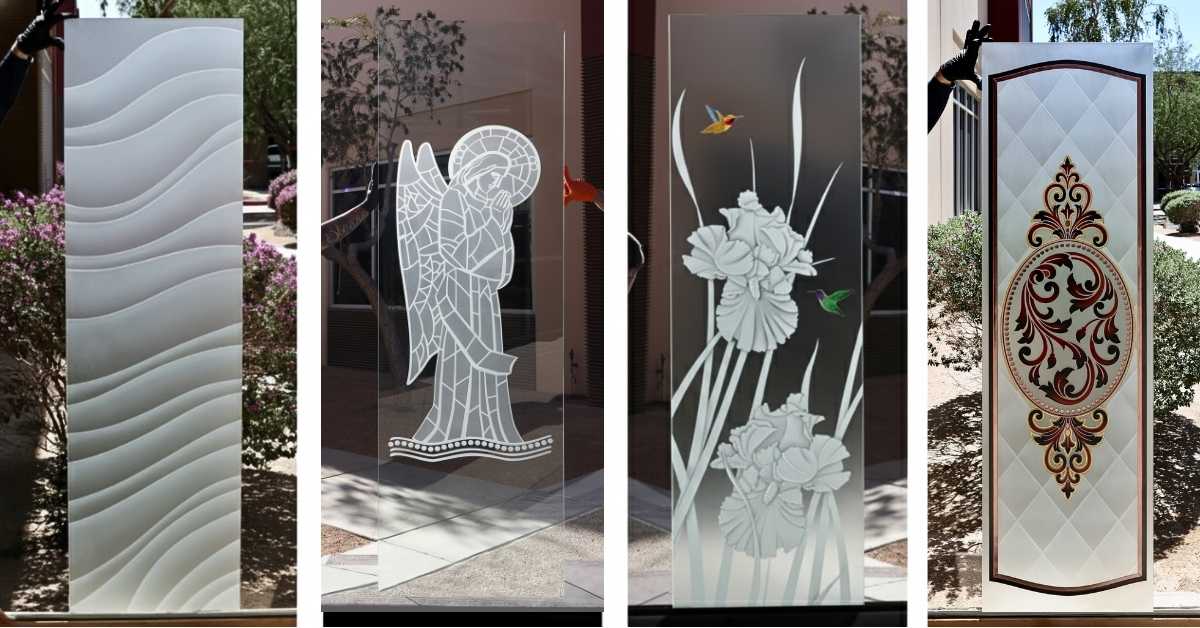
Our custom glass panels and inserts are designed to fit seamlessly into pocket doors and sliding barn doors, giving homeowners endless options to personalize their space. Choose from subtle etched patterns, carved artwork, or fully frosted designs depending on the level of privacy and light you want.
Adding a frosted glass barn door or frosted glass pocket door gives your home the best of both worlds: light, privacy, and timeless design that enhances every room.
Explore Frosted Glass Door Designs →
Pocket Door vs Sliding Door: Pros and Cons
|
Feature |
Pocket Door |
Sliding Door |
|---|---|---|
|
Space Saving |
Excellent for tight areas; door disappears into wall |
Good, but needs wall space for track |
|
Installation |
Complex; requires wall modification |
Simple; mounts on surface track |
|
Maintenance |
Harder to access hardware |
Easy to maintain and repair |
|
Privacy |
Moderate; small gaps possible |
Better sound control; customizable with frosted glass |
|
Design Impact |
Subtle and seamless |
Bold and decorative |
|
Cost |
Moderate to higher (depends on wall work) |
Varies by size and glass design |
Final Verdict: Which Is Better for Your Space?
Choosing between a pocket door vs sliding door depends on your priorities. If your goal is to save space in smaller areas, a pocket door is the smarter choice. It keeps walls clear and makes rooms feel open and uncluttered.
If you want a door that adds visual appeal and is easy to maintain, a sliding door is the better fit. It’s ideal for larger spaces, patio access, and interior designs where the door itself becomes a focal point.
Both options can be customized with frosted glass doors or etched designs, combining privacy, light, and style. Ultimately, the right choice depends on your layout, aesthetic, and how you want the door to function within your space.
At Sans Soucie Art Glass, each high-quality frosted glass door is made-to-order and can feature a wide range of styles. You can choose your desired privacy level, glass finish, and design theme to perfectly match your interior style.

Frequently Asked Questions
Are pocket doors outdated or modern?
Pocket doors are still very much in style. They’ve evolved into a sleek, modern option that maximizes space and complements minimalist designs. When paired with high-quality frosted glass or privacy glass, they create a clean, contemporary look.
Can sliding doors be installed inside rooms?
Yes. An interior sliding glass barn door is popular for offices, closets, and living spaces. They function well as room dividers and can feature glass inserts for added light and design appeal.
Which type offers better soundproofing?
Sliding doors generally seal better along the edges, offering slightly improved noise control. For better sound privacy, choose solid-core materials or frosted glass options that reduce sound transmission.
Can I add frosted glass to either type?
Absolutely. Both pocket doors and sliding doors can include frosted, carved, or art glass panels. This adds privacy while letting natural light flow between rooms.
How much space is needed for a pocket door?
A standard pocket door needs enough wall space to fit a door slab of the same width inside the wall cavity. For example, a 30″ door requires at least 60″ of total wall space (door + pocket).
How thick should a pocket door wall be?
A pocket door typically requires a minimum wall thickness of 4 inches for a standard 2×4 stud wall. However, to ensure stability and allow for the pocket frame and track system, most builders recommend 4½ to 5 inches. If you’re using thicker or tempered glass panels, a deeper wall cavity may be needed.
Can a pocket door be installed in a load-bearing wall?
It’s possible, but it requires professional reinforcement. Since a pocket door frame replaces part of the wall structure, the header and framing must be engineered to support the load. Always consult a contractor or structural engineer before attempting installation in a load-bearing wall.
What is the standard size for a sliding glass door?
Most interior sliding glass doors measure between 28″–36″ wide and 80″ tall, though custom sizes can be made to fit larger openings or floor-to-ceiling applications. For Sans Soucie’s custom frosted glass sliding barn doors, the glass panel can be tailored to exact dimensions to match your space.
Can pocket or sliding doors be made from tempered glass?
Yes. Tempered safety glass is highly recommended for both sliding and pocket door systems. It’s up to five times stronger than regular glass and, if broken, crumbles into small, less dangerous pieces. All Sans Soucie frosted glass doors are made from tempered glass for maximum durability and safety.
Do pocket or sliding doors need special hardware for glass panels?
They do. Glass pocket doors and sliding glass barn doors require hardware designed for weight distribution and stability. Look for top-mounted track systems with smooth rollers, soft-close features, and proper seals to minimize vibration and noise. Sans Soucie’s glass doors are compatible with a variety of track and handle hardware options.
Can I retrofit an existing doorway into a pocket door?
Yes, but it’s more complex than replacing a standard hinged door. You’ll need to remove drywall, adjust the framing, and install a pocket door frame kit. This process is easiest in non-load-bearing walls and may require extending the wall thickness to fit the track and pocket cavity.
What type of glass is best for privacy?
For full privacy, choose frosted or sandblasted glass. Sans Soucie offers several privacy effects—from 1D solid frost to 3D carved designs—that completely obscure visibility while still allowing light to pass through. These effects can be applied to both pocket and sliding glass doors.
Explore Custom Glass Door Options
Upgrade your home with handcrafted glass doors that blend artistry, privacy, and function.
At Sans Soucie Art Glass, you can fully customize pocket doors and sliding glass doors—choose your design, glass effect, and privacy level. Each frosted glass door is made by hand, built to fit your exact measurements, and ships safely nationwide.
Start Designing Your Custom Glass Door Today →
Frosted Glass Panels and Inserts for Pocket and Sliding Doors


Sans Soucie Art Glass: Decorative, Custom & Frosted Glass Doors, Windows, Showers & Stained Glass Since 1976
Family-owned and operated since 1976, Sans Soucie Art Glass leads the industry in decorative glass and custom glass design — from sandblast frosted glass and carved glass to hand-painted and stained glass art — transforming ordinary glass into Works of Art Captured in Glass recognized worldwide.
Innovative Frosted Glass Door Designer Tool
In 2010, we invented and launched our Frosted Glass Pantry Door Designer – a fun, easy-to-use tool that makes it simple for anyone to design and customize not only pantry doors, but a wide range of frosted glass doors for every room.
Explore our Frosted Glass Doors Collection
Our custom frosted glass doors include a beautiful variety for every style and space:
- Pantry Doors
- Frosted Glass Interior Door
- Interior Doors with Frosted Glass
- Frosted Glass French Doors
- Frosted Glass Front Door
- Front Doors with Frosted Glass
- Interior Glass Doors
- Glass Barn Doors
- Frosted Glass Barn Door
- Sliding Glass Barn Door
- All Glass Doors Interior
- All Glass Front Doors
- Bathroom Doors with Frosted Glass
- Laundry Room Doors
- Wine Room Doors
If you already have a door, and only need the glass insert, we also offer:
- Frosted Glass for Interior Doors
- Door Glass Inserts for Front Doors
- Glass Panels for Pantry Doors
- Frosted Glass Inserts for Bathroom Doors
- Laundry Room Door Glass Inserts
- Glass Panels for Interior Wine Cellar Doors
Elegant Frosted Glass Throughout Your Home
While our frosted glass doors are a top choice, we also create stunning glass products for every area of your home, including:
- Frosted Glass Shower Doors
- Glass Shower Partition
- Frosted Glass Shower Panel
- Frosted Glass Showers
- Frosted Glass Windows
- Bathroom Window Frosted Glass
- Decorative Window Glass, Window Frosting
- Custom Glass Dining Table
- Custom Glass Coffee Table
- Glass Shelves, Custom Glass Shelves
- Hand Carved & Painted Mirrors
- Frosted Glass Signs, Etched Glass Signs
- Cabinet Door Glass Inserts, Frosted Glass Inserts for Cabinet Doors
- Glass Wall Art, Wall Art on Glass
Looking for Inspiration? Explore Our Galleries
Discover visual idea boards, style concepts, décor applications, real project photos, and helpful information in our expanding gallery collection:
- Custom Glass
- Custom Glass Edges
- Custom Mirror
- Decorative Glass
- Decorative Glass Doors
- Decorative Glass Front Doors
- Decorative Glass Interior Doors
- Decorative Glass Window
- Stained Glass
- Stained Glass Doors
- Stained Glass Front Doors
- Stained Glass Windows
Free Shipping. Expert Packing, Peace of Mind
With FREE SHIPPING on most orders and worldwide delivery from our studio in Palm Desert, California, every order is packed in-house by our expert glaziers using custom materials and proven methods — ensuring safe arrival with a damage rate of less than 1%!
Explore our complete frosted glass doors collection and find the perfect frosted glass door for your space. Have questions? Contact us today!
Copyright © 2025, Sans Soucie Art Glass. All rights reserved.