Choosing the Right Size Door for Your Interior or Exterior Prehung Door: A Step-by-Step Guide
When it comes to choosing the right size door for your interior or exterior prehung door or book door, there are things to know and take into consideration. Whether you’re replacing an existing door, or installing a new interior door or exterior door, size matters, and it’s essential to take the right steps. Not sure where to begin? Here’s a comprehensive guide to ensure a perfect fit.
1. Why Measure?
Before diving into the measuring process, understand the ‘why’ behind it. An ill-fitting door can lead to the door not opening and closing properly and not having the tight fit you want. Getting the right measurements ensures your door is properly functional, energy-efficient, and aesthetically pleasing.
2. Measuring an Existing Door:
If you’re replacing a door, this is your starting point:
- Width: Horizontally measure the door from edge to edge, ideally across the middle.
- Height: Vertically measure from the top to the bottom edge.
- Thickness: While most interior doors have a standard thickness of 1 3/8 inches, it doesn’t hurt to confirm.
3. Working with a Rough Opening:
In cases where a door doesn’t exist yet:
- Width: Take three horizontal measurements – top, middle, and bottom. Use the largest value and add roughly 2 inches for the frame and shimming.
- Height: Vertically measure from the floor (or subfloor) up to the bottom of the header. Do this on the left, middle, and right, using the largest value. Remember to add about 2.5 inches for potential flooring and the frame.
- Thickness: This is the jamb width. Measure wall thickness from the back of the interior trim to the back of the exterior trim.
4. Familiarizing with Standard Door Sizes:
While custom doors are an option, there are standard door sizes:
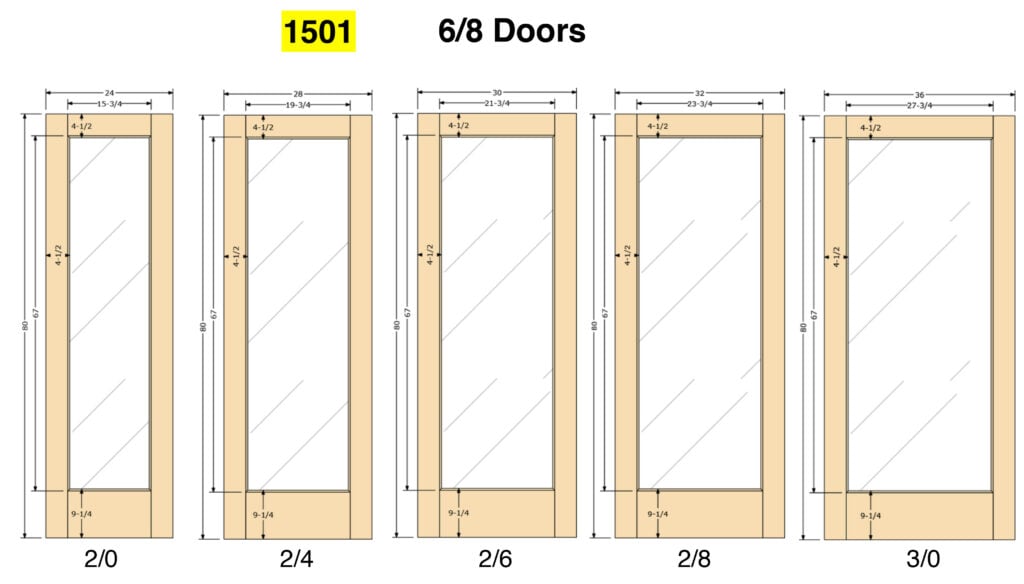
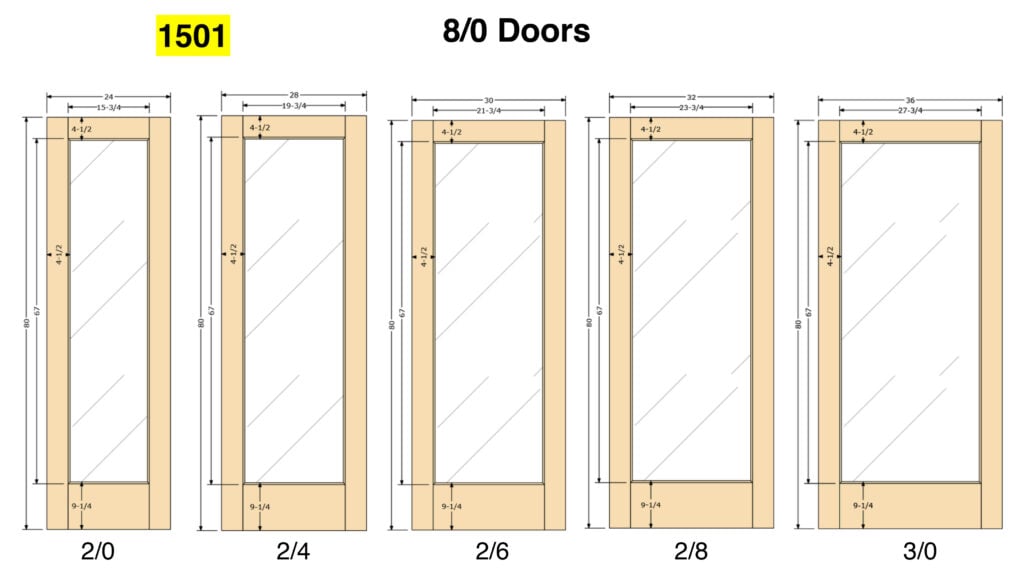
- Common widths for interior doors are: 24, 28, 30, 32 and 36 inches
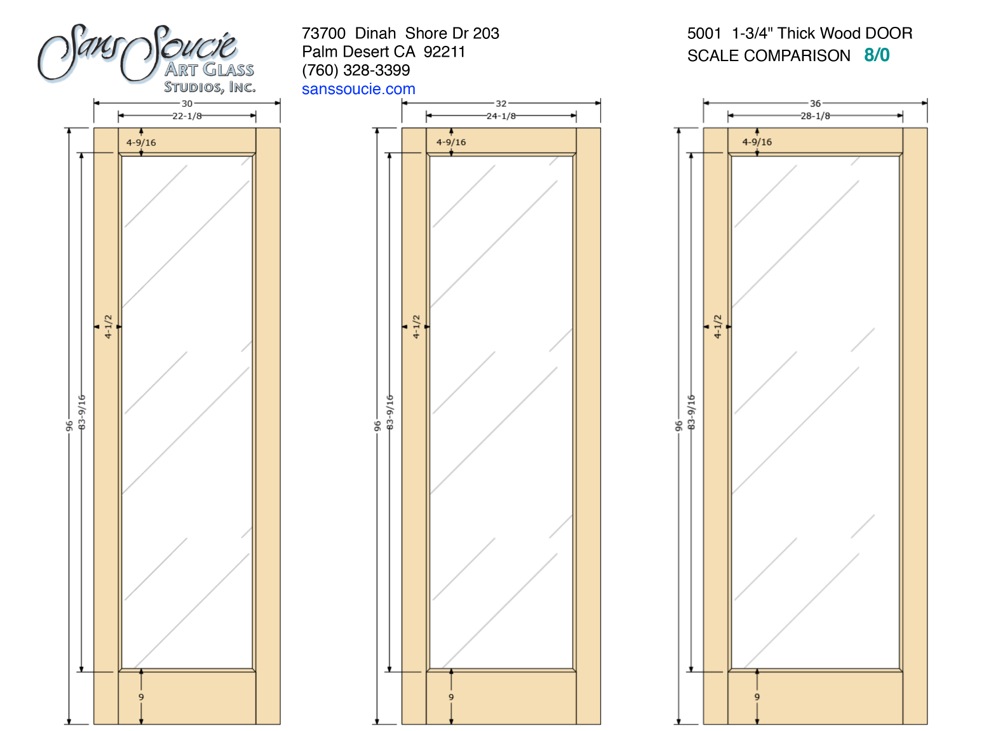
- Common widths for exterior doors are: 30, 32 and 36 inches
- Standard height for both interior and exterior: 80 inches (a.k.a. 6/8)
- Taller door: 96 inches (a.k.a. 8/0)
Being aware of these sizes helps you compare your measurements and determine whether you need a standard size or custom size door. Bear in mind that custom size doors are custom made to order and will be at a higher price as well as a longer lead time.
At Sans Soucie Art Glass, we sell what’s called “full lite glass doors”, which are available as stunning frosted glass doors in a variety of designs and privacy levels. The glass size varies by the door size. Here’s a visual example of the sizes and specs of our doors:
INTERIOR DOOR SIZE AND SCALE
(Style 1501)
EXTERIOR DOOR SIZE AND SCALE
(Style 5001)
5. Special Considerations:
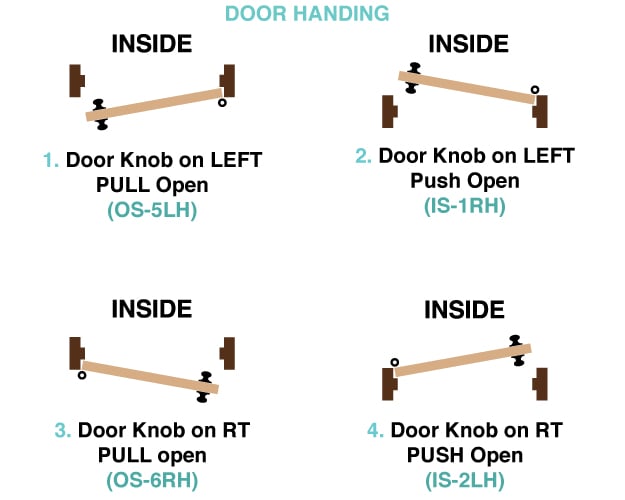
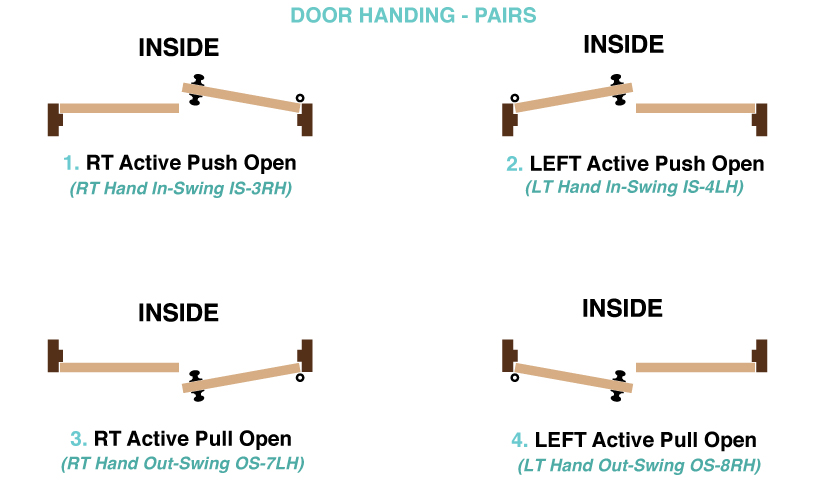
- Swing Direction: Picture your door – when you approach your door from outside the room, do y ou want the door knob on the left or right? Do you want to PUSH it open, or would it be best for it to PULL open?
- Flooring: Future flooring changes? Factor in the thickness of any new flooring to your door height measurements.
6. Consultation and Purchase:
Equipped with your measurements, you’re ready to hit the stores or browse online. Most home improvement stores or door vendors will provide additional guidance if needed. Remember, if in doubt, overestimating the size is slightly is better than underestimating. That’s because the door can typically be shaved down, either on the sides or off the bottom of the door. These adjustments can be made during the installation process.
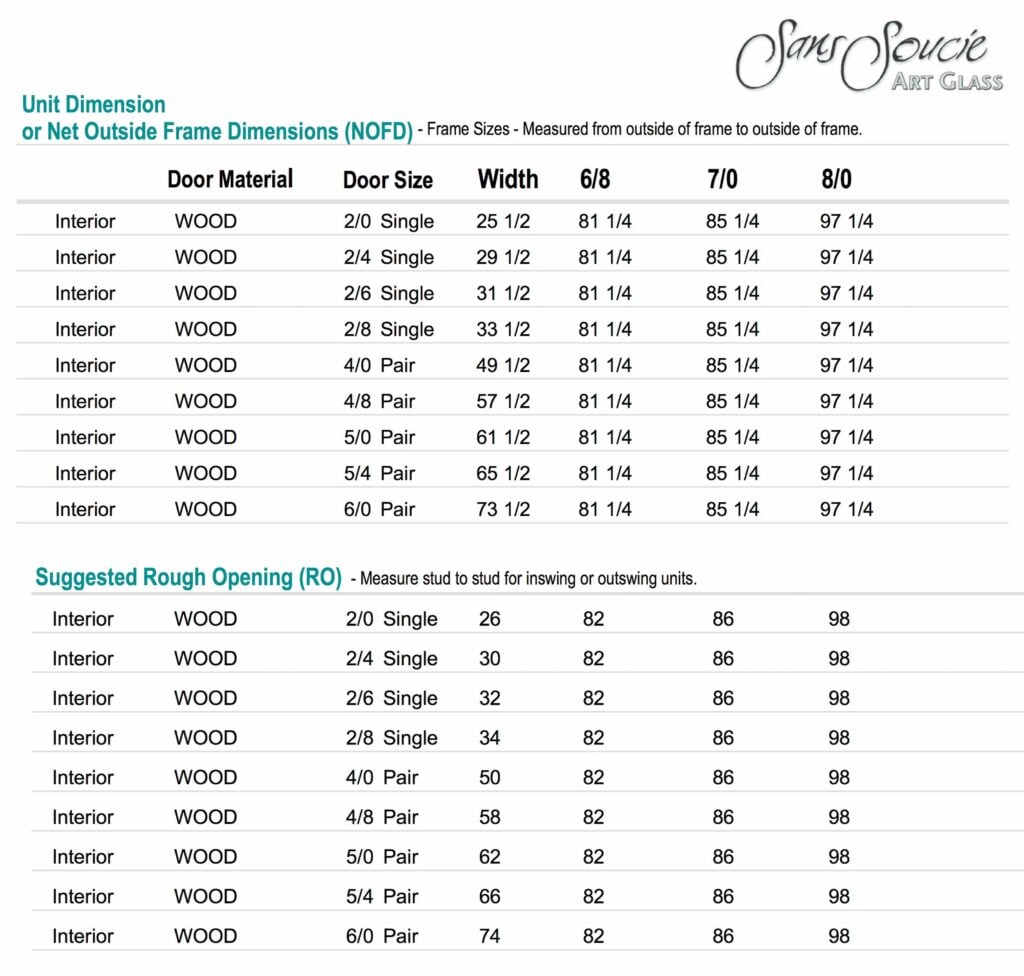
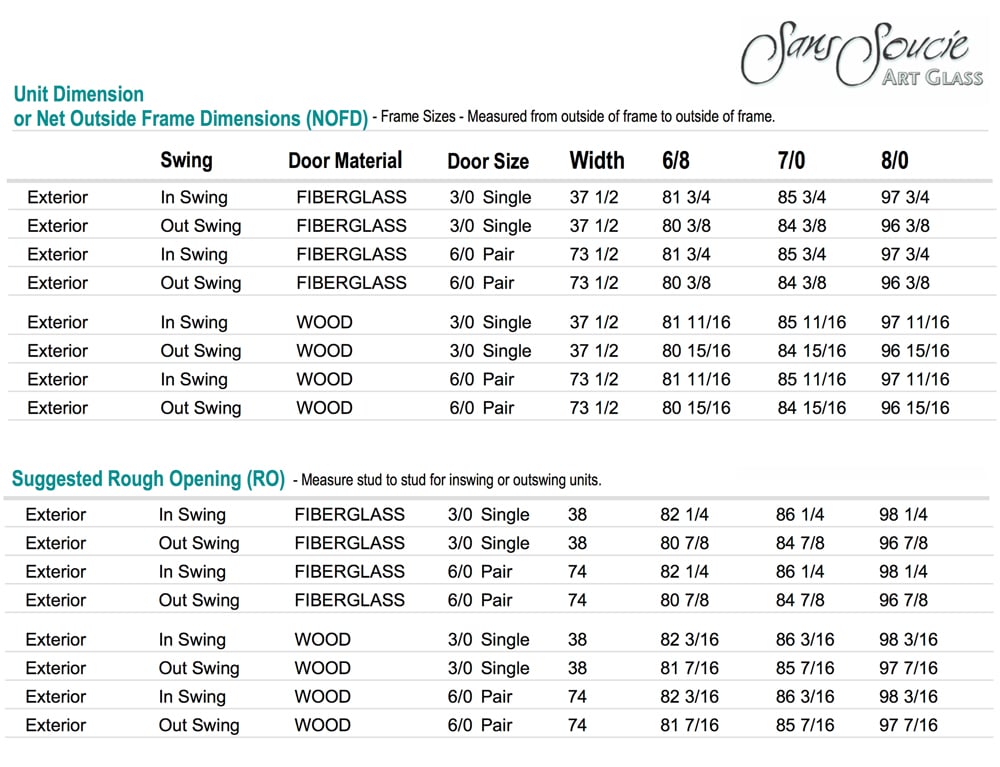
Here are two helpful guides for both Interior Doors and Exterior Doors, that list what the rough opening will need to be, based on the Door Size:
In Conclusion
Selecting the right door size can seem daunting, but with precise measurements and a bit of planning, you’re well on your way to enhancing the aesthetics and functionality of your space. If you’re looking for a unique and artistic option, frosted glass is a beautiful choice for both interior and exterior doors, offering privacy without sacrificing natural light. Happy door shopping!
Frequently Asked Questions
1. What is the difference between a slab door and a prehung door when it comes to sizing?
A slab door is just the door itself, without hinges or a frame, so you’ll need to match it precisely to your existing opening and hardware setup. A prehung door, on the other hand, comes already mounted in a frame, which means you’ll be sizing based on the rough opening rather than just the door panel. If you’re replacing everything (frame + door), a prehung door is typically easier and more accurate for achieving a proper fit.
2. How much clearance should there be under a door?
Most interior doors should have about 1/2 inch clearance from the finished floor, while exterior doors typically have a tighter seal to improve energy efficiency. If you’re installing over tile, hardwood, or adding rugs, you may need slightly more clearance to prevent dragging. This is especially important when working with prehung doors where adjustments are more limited.
3. Can I use the same door size for both interior and exterior applications?
Not always. While some standard sizes overlap (like 32″ or 36″ widths), exterior doors are typically thicker (1 3/4″) and built for durability, insulation, and security, whereas interior doors are thinner (usually 1 3/8″). Even if the width and height match, the construction and performance requirements are very different.
4. How do I know if my door opening is square and level?
Use a level to check both the vertical sides (jambs) and the top (header), and measure diagonally from corner to corner. If the diagonal measurements are equal, the opening is square. If not, adjustments will be needed during installation. This step is critical—especially when your project includes decorative glass doors, where alignment affects both function and visual presentation.
5. Do decorative or frosted glass doors affect sizing or installation?
The overall door size remains the same, but decorative glass (especially full lite designs) may require more precise installation to ensure proper alignment, sealing, and visual balance. Because these doors often feature detailed artwork and varying privacy levels, even small installation errors can impact the final look. It’s also important to confirm how the glass design scales within different door sizes—something your blog’s infographics help visualize clearly.
HELPFUL RESOURCES

Sans Soucie Art Glass: Decorative, Custom & Frosted Glass Doors, Windows, Showers & Stained Glass Since 1976
Family-owned and operated since 1976, Sans Soucie Art Glass leads the industry in decorative glass and custom glass design — from sandblast frosted glass and carved glass to hand-painted and stained glass art — transforming ordinary glass into Works of Art Captured in Glass recognized worldwide.
Innovative Frosted Glass Door Designer Tool
In 2010, we invented and launched our Frosted Glass Pantry Door Designer – a fun, easy-to-use tool that makes it simple for anyone to design and customize not only pantry doors, but a wide range of frosted glass doors for every room.
Explore our Frosted Glass Doors Collection
Our custom frosted glass doors include a beautiful variety for every style and space:
- Pantry Doors
- Frosted Glass Interior Door
- Interior Doors with Frosted Glass
- Frosted Glass French Doors
- Frosted Glass Front Door
- Front Doors with Frosted Glass
- Interior Glass Doors
- Glass Barn Doors
- Frosted Glass Barn Door
- Sliding Glass Barn Door
- All Glass Doors Interior
- All Glass Front Doors
- Bathroom Doors with Frosted Glass
- Laundry Room Doors
- Wine Room Doors
If you already have a door, and only need the glass insert, we also offer:
- Frosted Glass for Interior Doors
- Door Glass Inserts for Front Doors
- Glass Panels for Pantry Doors
- Frosted Glass Inserts for Bathroom Doors
- Laundry Room Door Glass Inserts
- Glass Panels for Interior Wine Cellar Doors
Elegant Frosted Glass Throughout Your Home
While our frosted glass doors are a top choice, we also create stunning glass products for every area of your home, including:
- Frosted Glass Shower Doors
- Glass Shower Partition
- Frosted Glass Shower Panel
- Frosted Glass Showers
- Frosted Glass Windows
- Bathroom Window Frosted Glass
- Decorative Window Glass, Window Frosting
- Custom Glass Dining Table
- Custom Glass Coffee Table
- Glass Shelves, Custom Glass Shelves
- Hand Carved & Painted Mirrors
- Frosted Glass Signs, Etched Glass Signs
- Cabinet Door Glass Inserts, Frosted Glass Inserts for Cabinet Doors
- Glass Wall Art, Wall Art on Glass
Looking for Inspiration? Explore Our Galleries
Discover visual idea boards, style concepts, décor applications, real project photos, and helpful information in our expanding gallery collection:
- Custom Glass
- Custom Glass Edges
- Custom Mirror
- Decorative Glass
- Decorative Glass Doors
- Decorative Glass Front Doors
- Decorative Glass Interior Doors
- Decorative Glass Window
- Stained Glass
- Stained Glass Doors
- Stained Glass Front Doors
- Stained Glass Windows
Free Shipping. Expert Packing, Peace of Mind
With FREE SHIPPING on most orders and worldwide delivery from our studio in Palm Desert, California, every order is packed in-house by our expert glaziers using custom materials and proven methods — ensuring safe arrival with a damage rate of less than 1%!
Explore our complete frosted glass doors collection and find the perfect frosted glass door for your space. Have questions? Contact us today!
Copyright © 2025, Sans Soucie Art Glass. All rights reserved.