Privacy Glass: 8 Sandblasted Frosted Glass Effects on FROSTED Glass
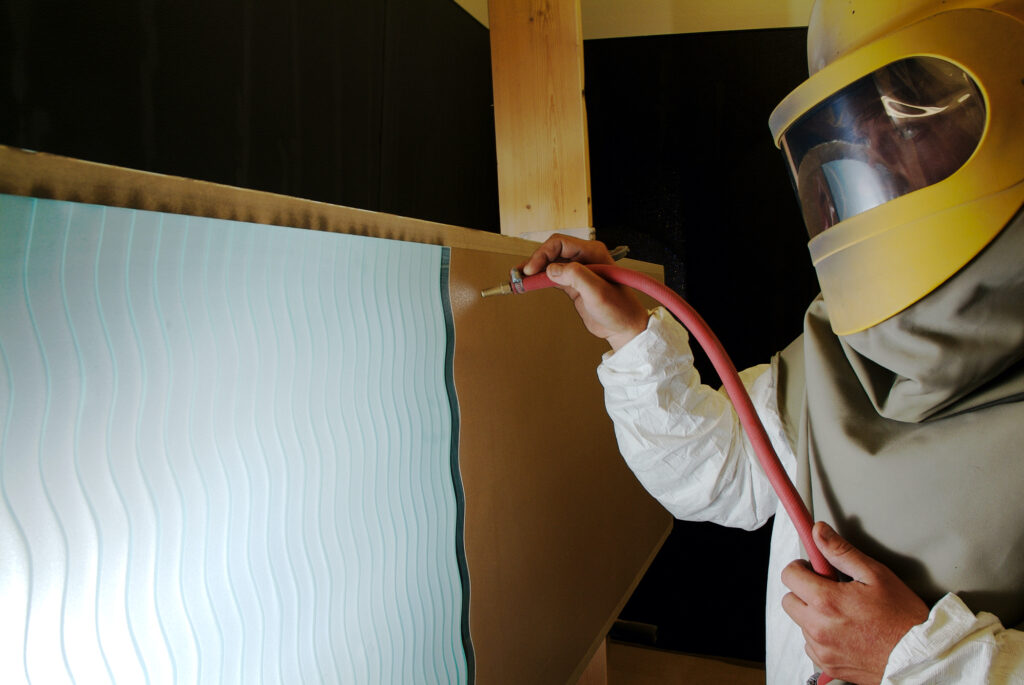
Sandblasted glass is a popular technique for creating frosted glass effects, offering a stylish and practical solution for privacy. This process involves using abrasive materials to etch patterns or textures into the glass surface, resulting in an opaque finish that diffuses light while maintaining a sleek, modern aesthetic. Sandblasted glass provides both privacy and beauty.
This is How our Sandblast Frosted Effects Look on a
FROSTED GLASS BACKGROUND (for Privacy)
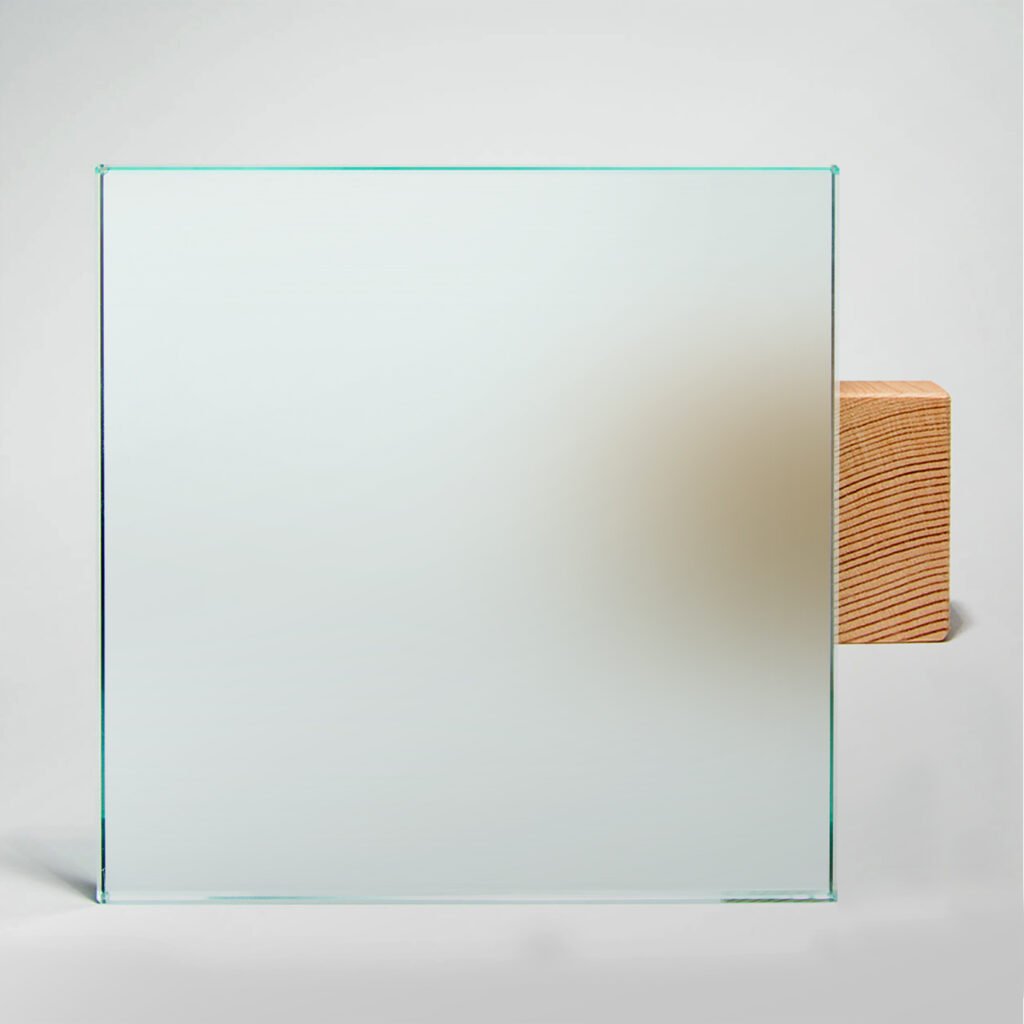
Using a frosted glass background means that the glass will be private. A Frosted Glass Finish is an opaque, aesthetically attractive glass finish that’s made thru a number of abrasive processes. Objects are only visible when pressed right up against the glass. Once a few inches away, objects can’t be seen, making it the perfect solution where you need privacy, without blocking light.
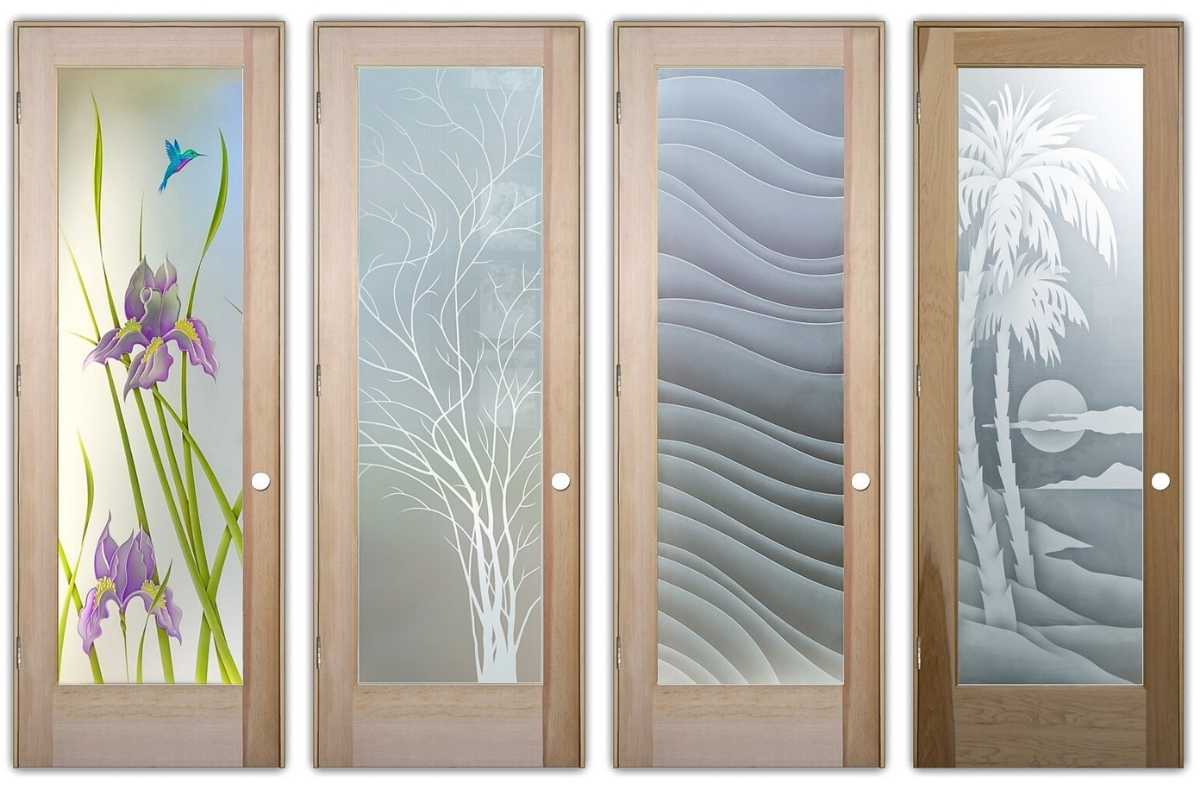
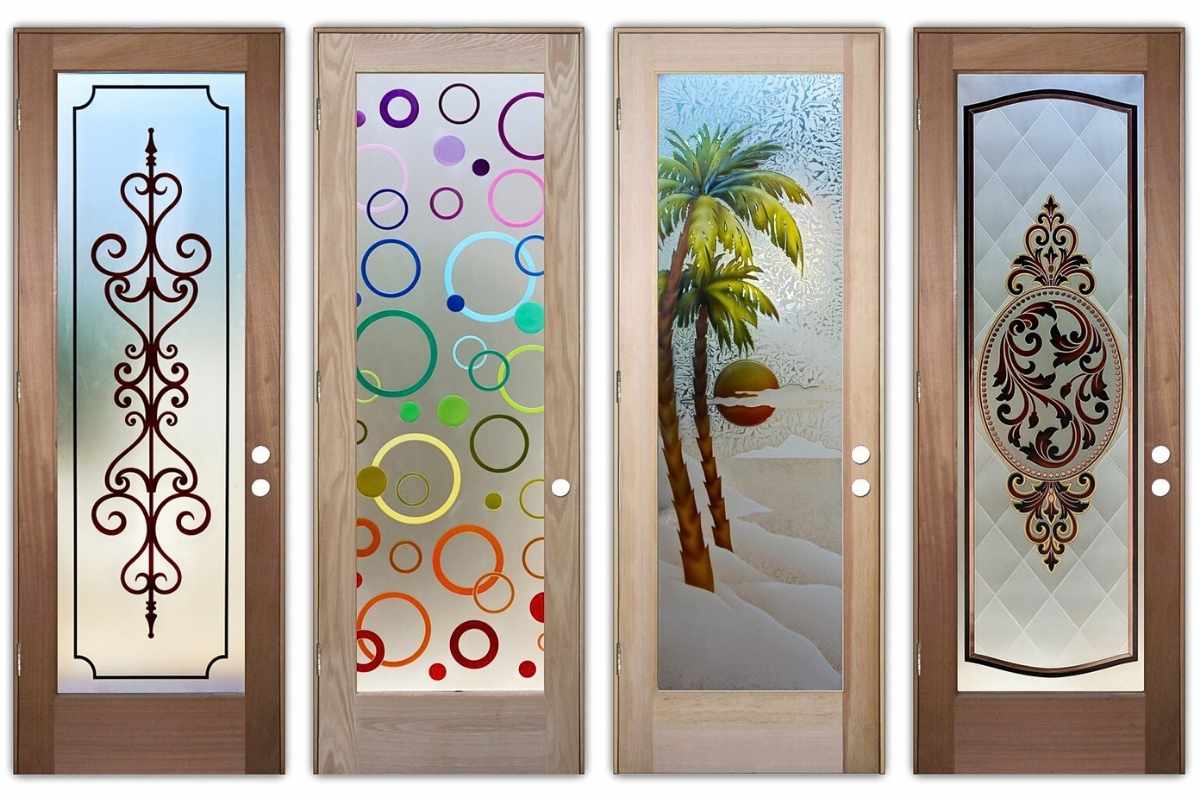
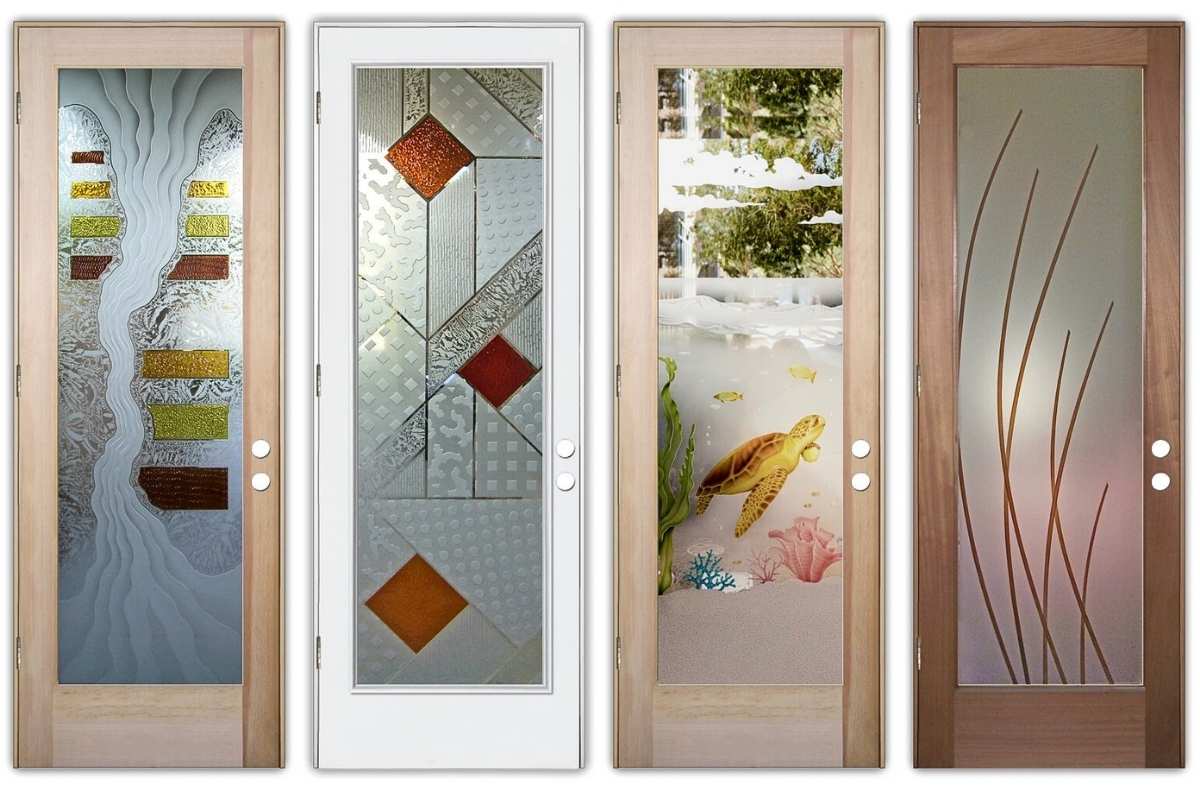
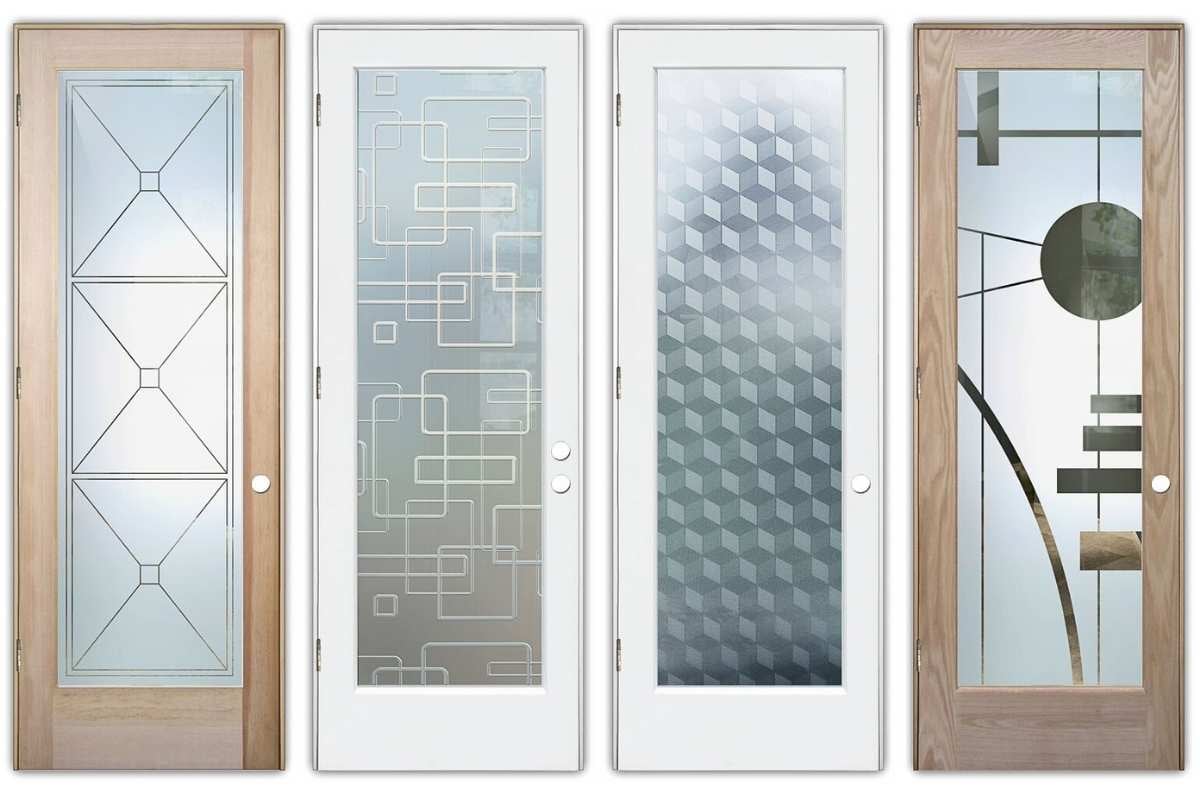
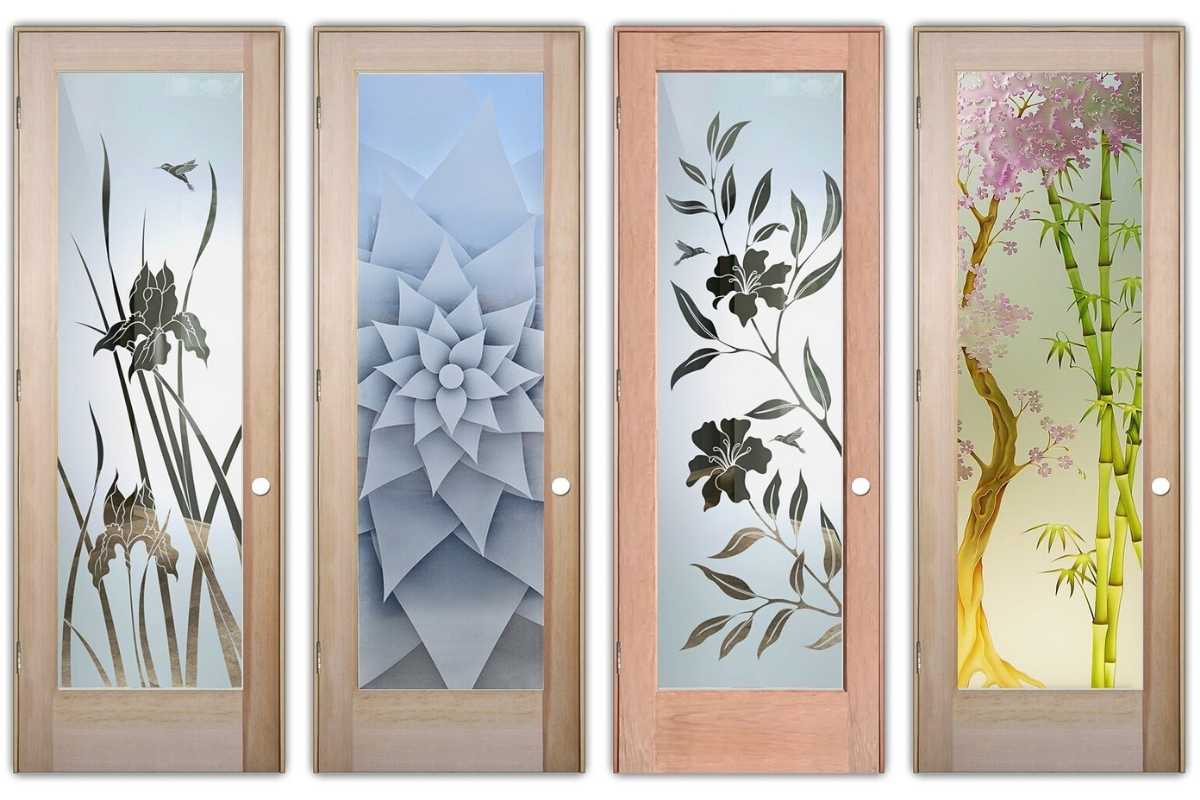
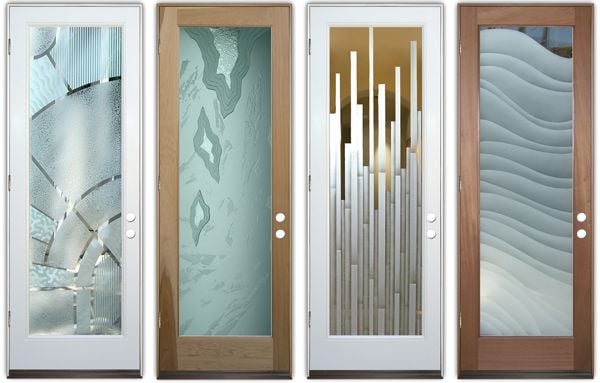
See design examples at the bottom of this page that demonstrate this.
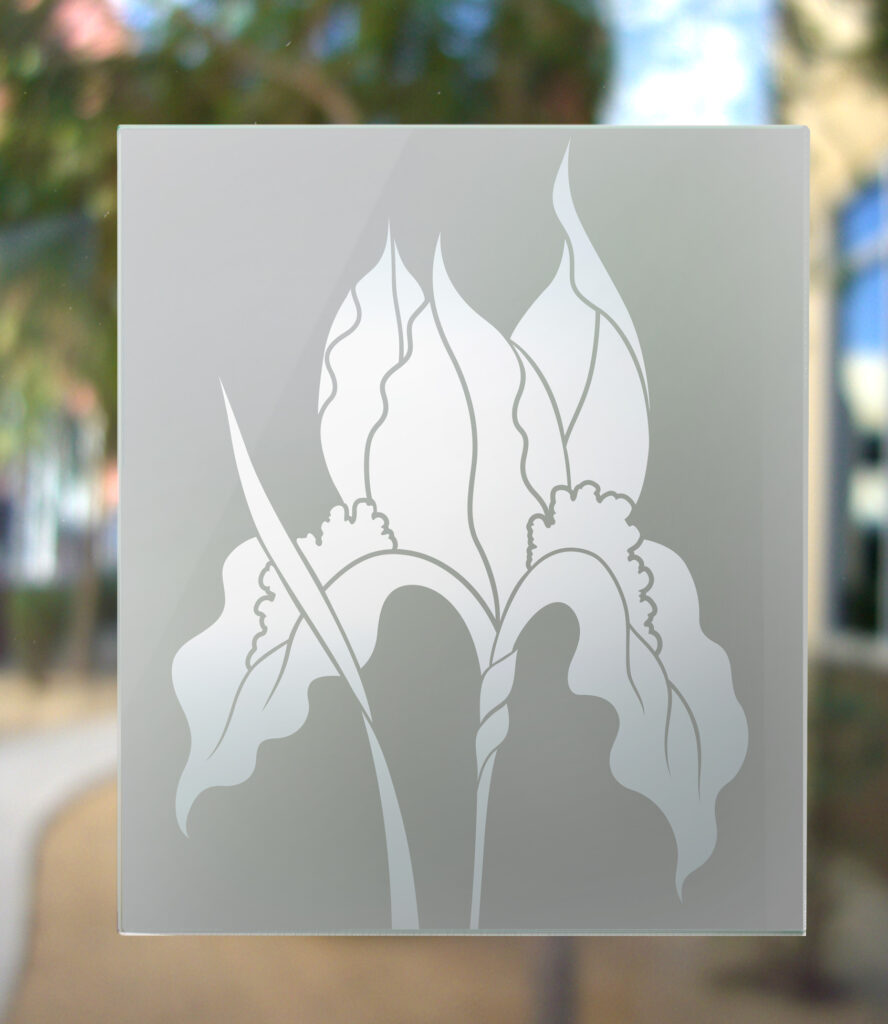
Design elements are Sandblast Etched on the top surface of the glass, and are solid white shapes.
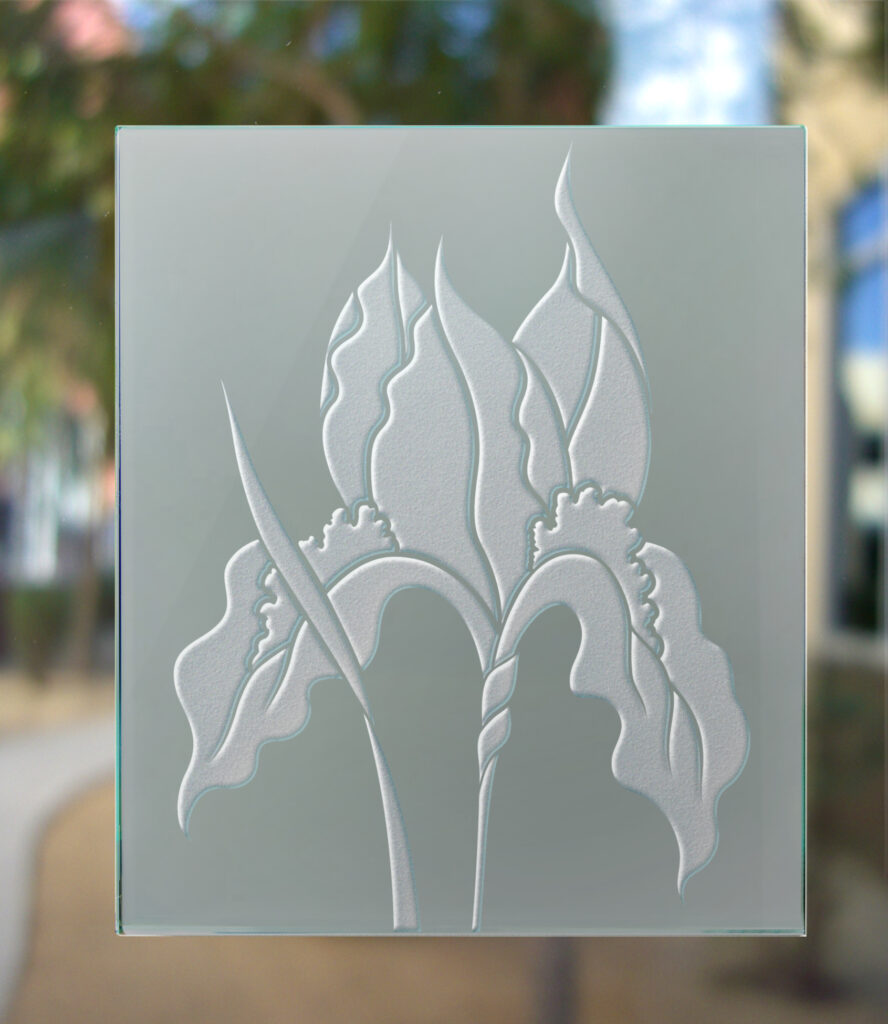
Design elements are Sandblast Sculpted, cut deep into the glass, a flat emboss look, of solid white shapes.
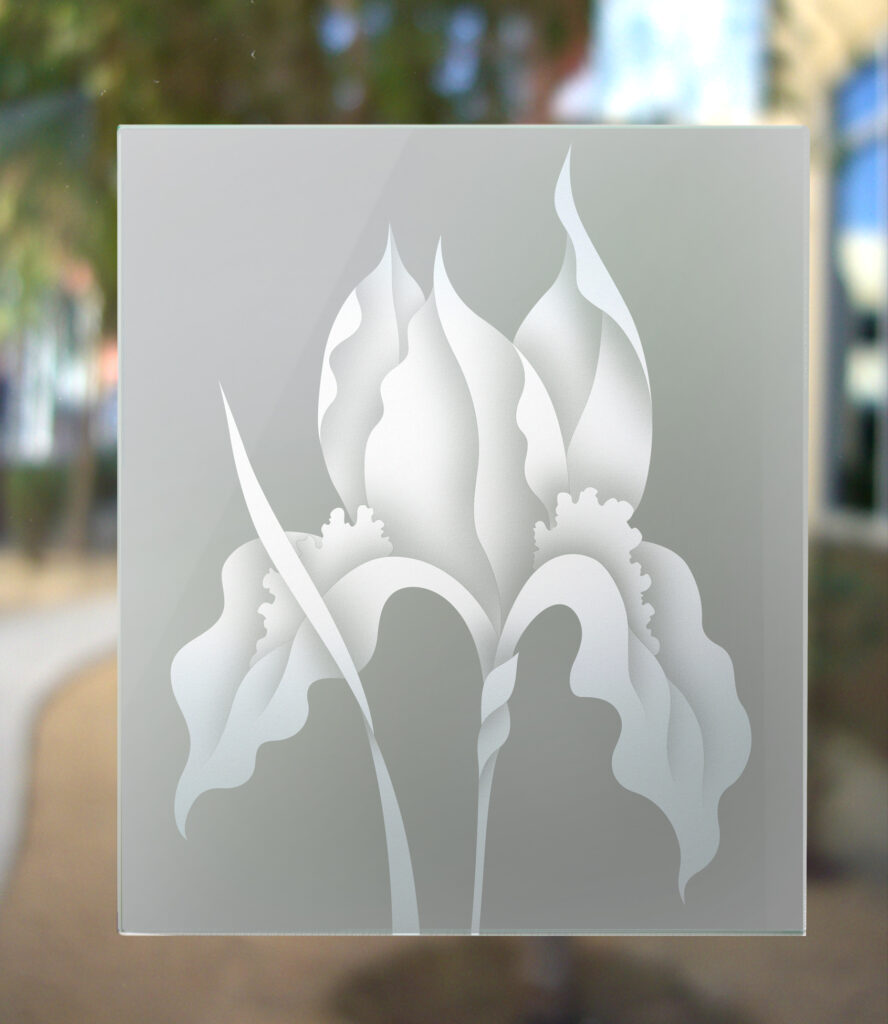
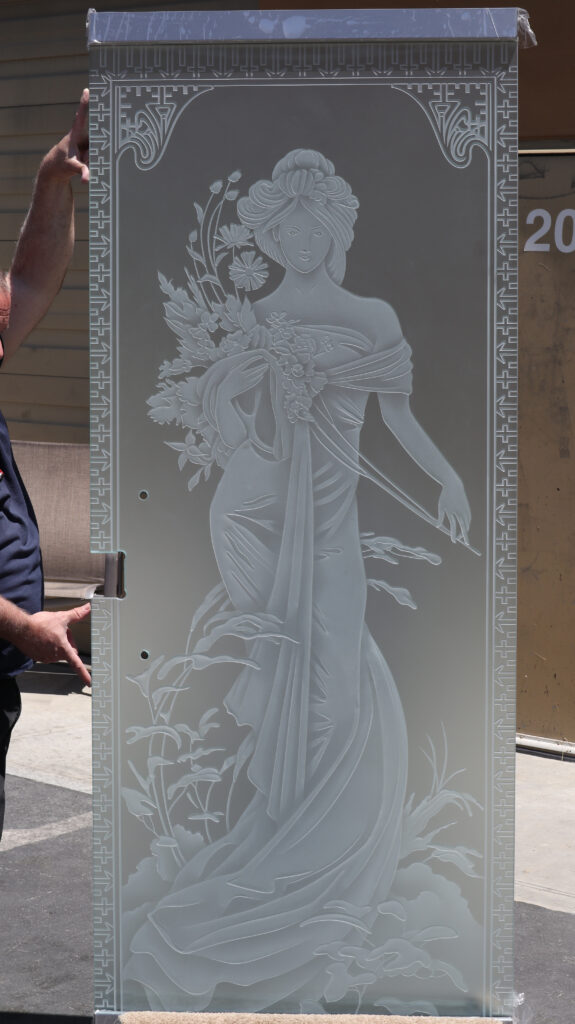
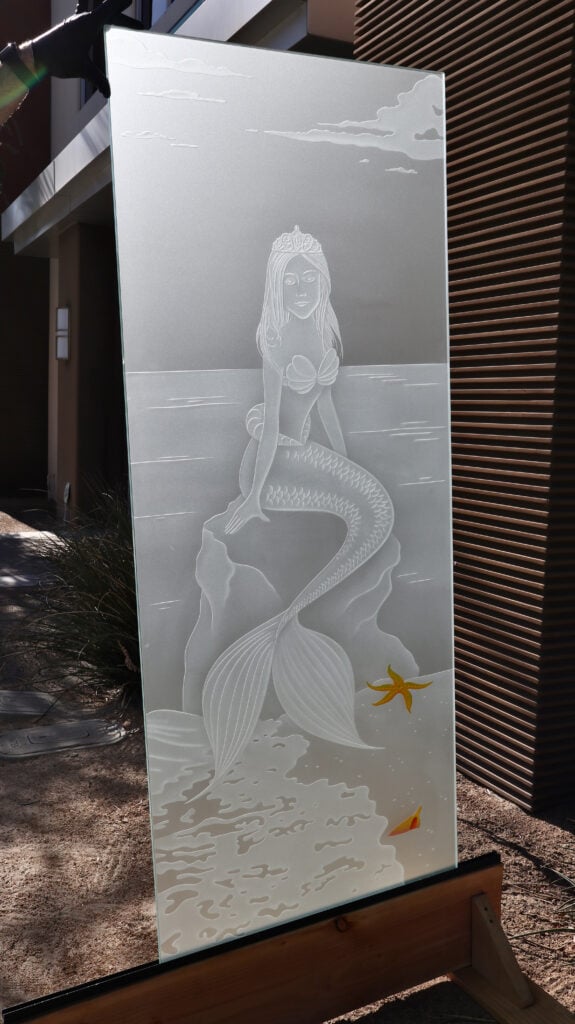
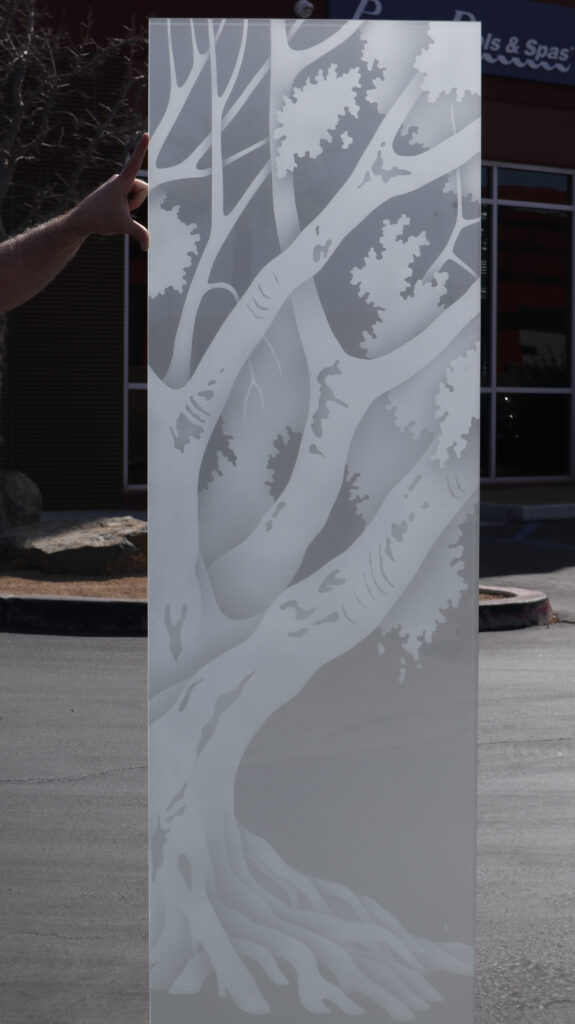
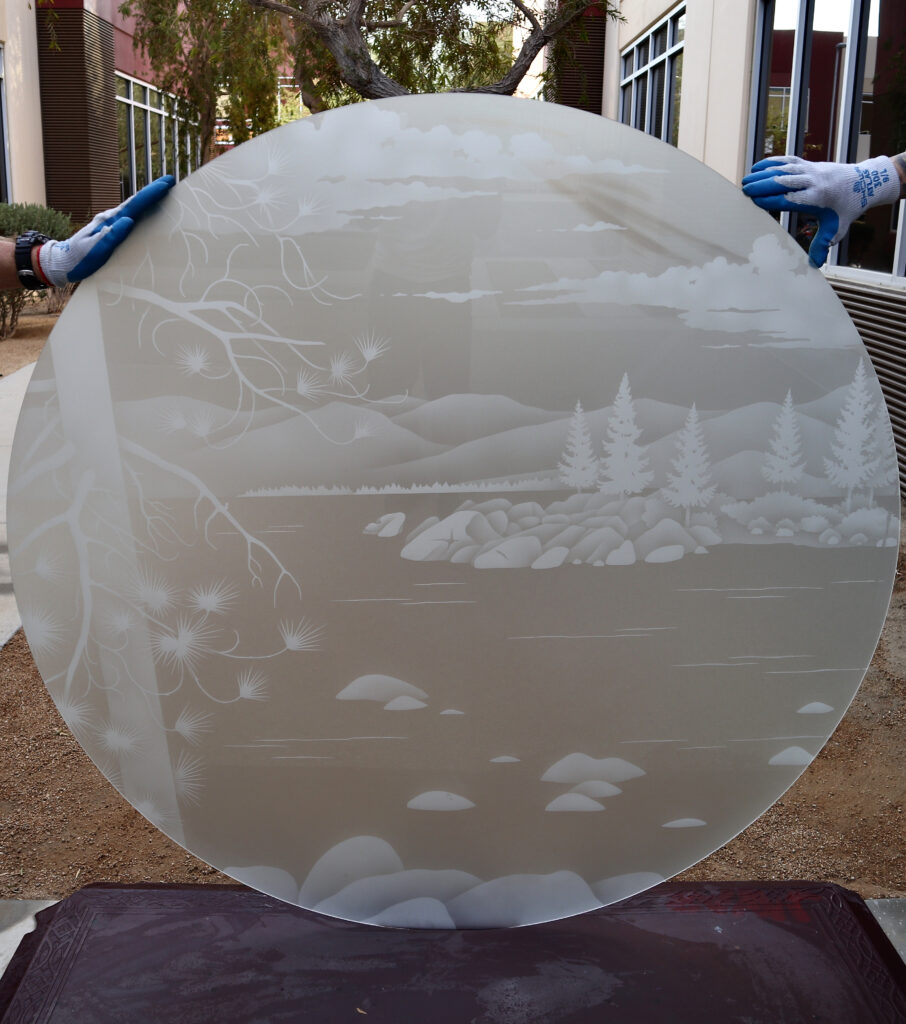
Design elements are Sandblast Etched on the top surface of the glass, and features “shading” where the sandblast density gently fades out to clear glass, (a “gradient-like” effect) that creates a 2 dimensional effect, but is not caved deep into the glass like 3D.
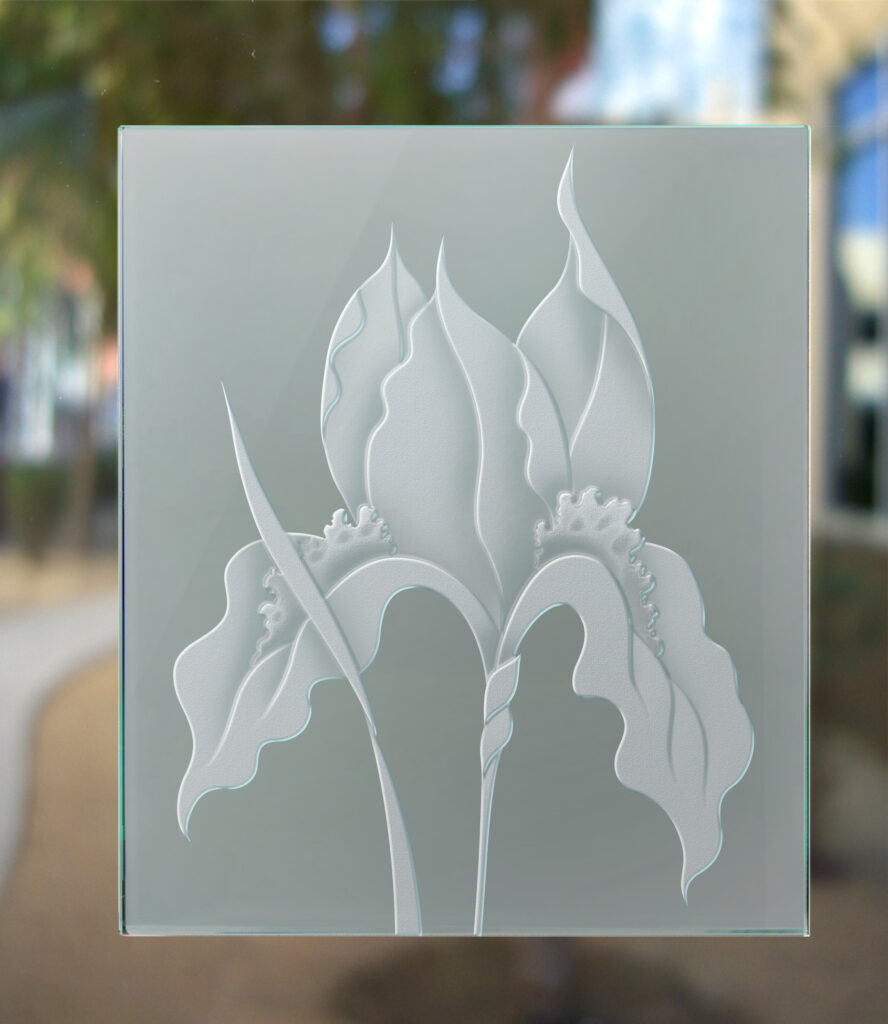
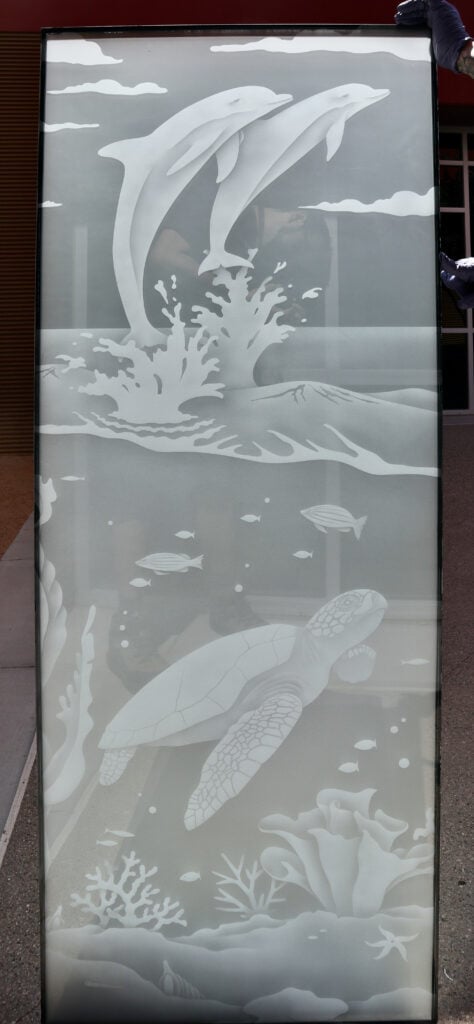
Design elements are Sandblast Sculpted, cut deep into the glass at varying depths that create a relief texture. Sandblasting has “shading”, where the sandblast density gently fades out to clear glass, (a “gradient-like” effect), creating 3 dimensions in the design elements.
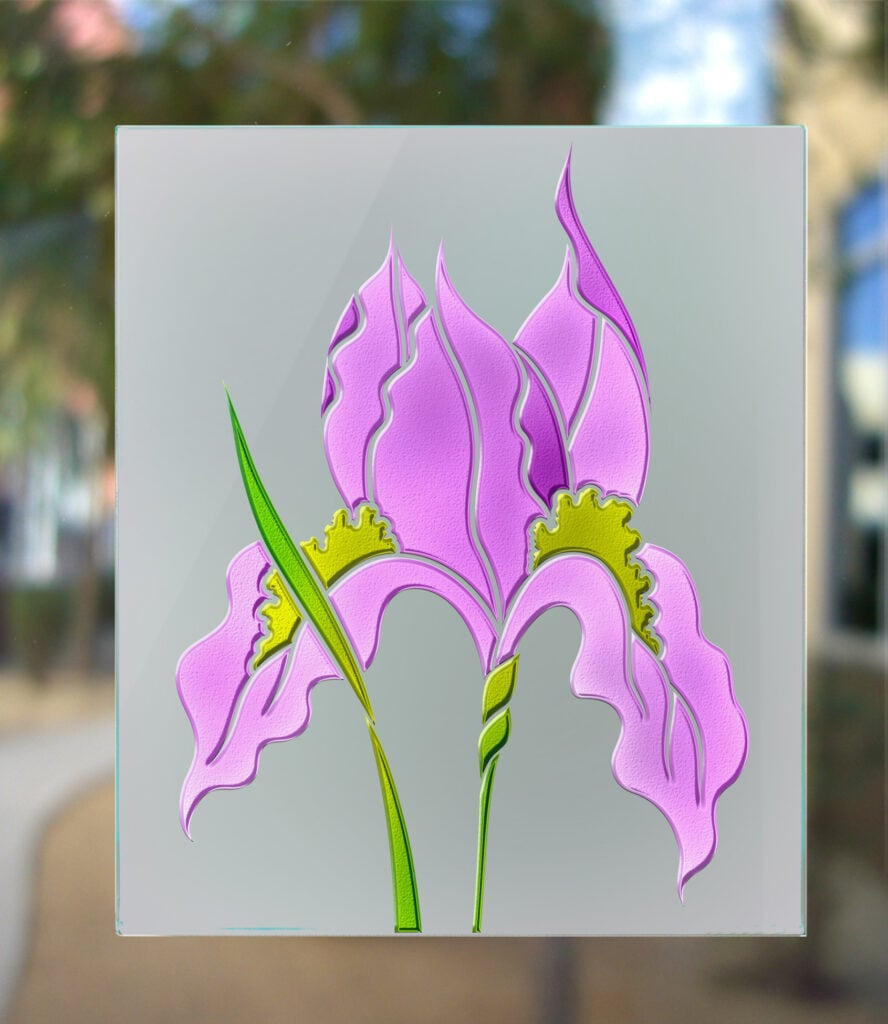
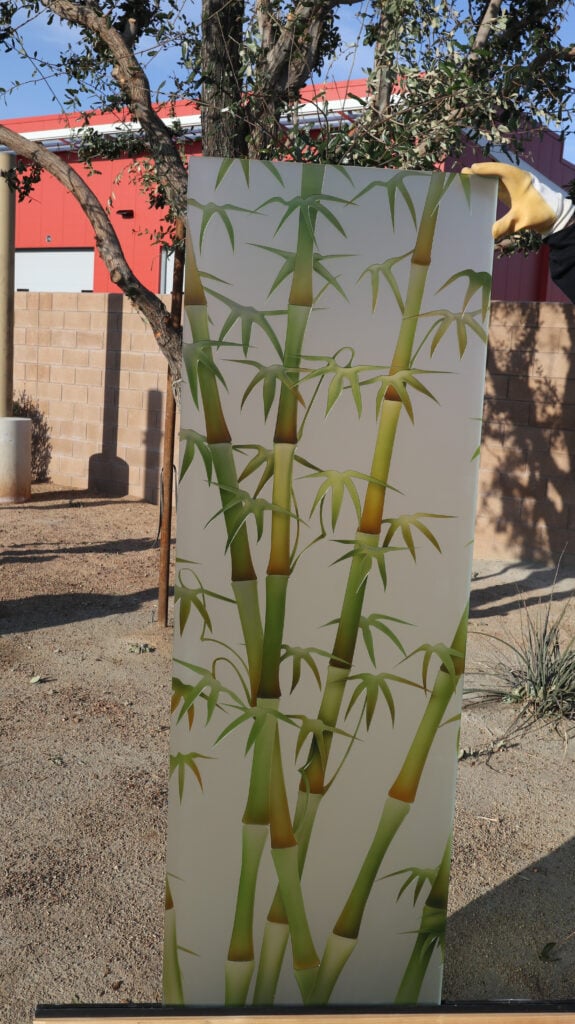
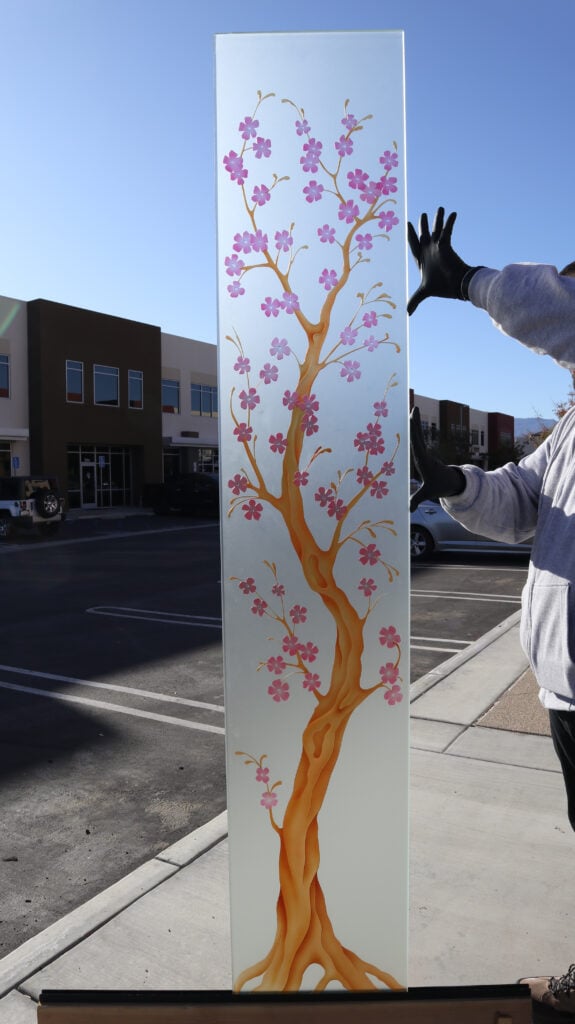
Design elements are Sandblast Sculpted, cut deep into the glass, a flat emboss look. Carved elements are airbrush painted with a permanent translucent glass dye.
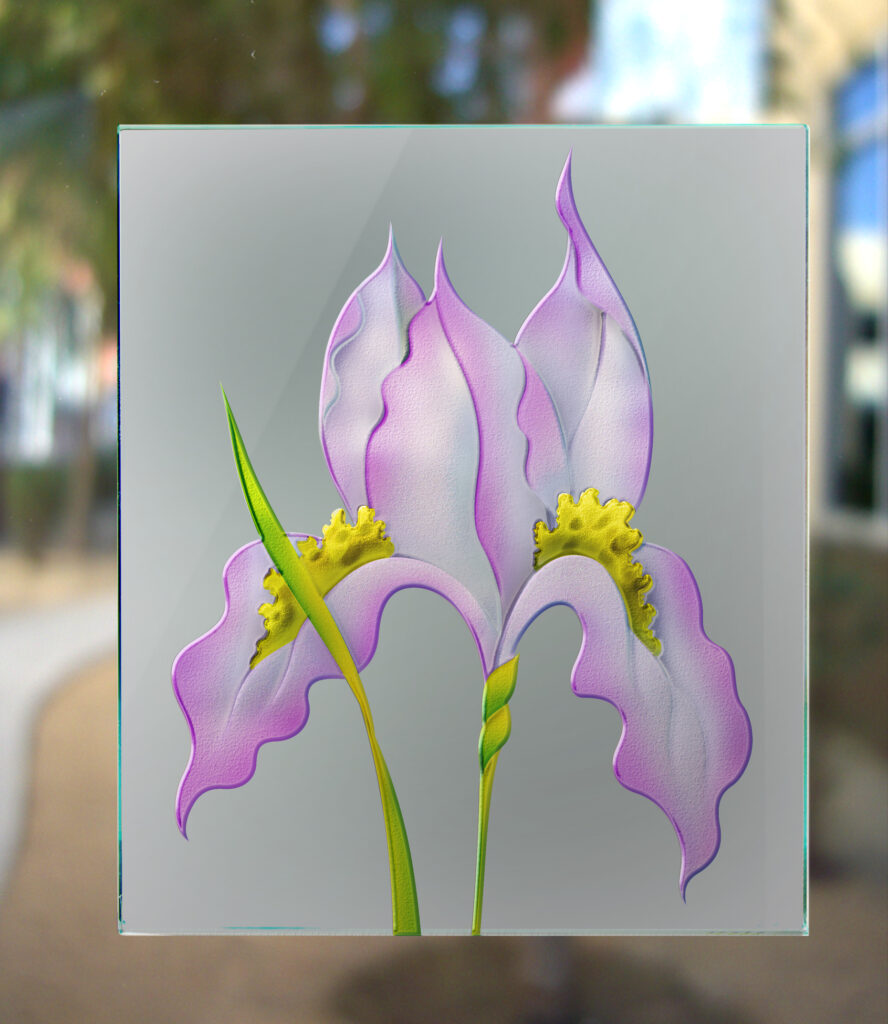
Design elements are Sandblast Sculpted, cut deep into the glass at varying depths creating a relief texture. Carved areas are airbrush painted with a permanent translucent glass dye. Dark and light gradients are added to highlight details and enhance the look.
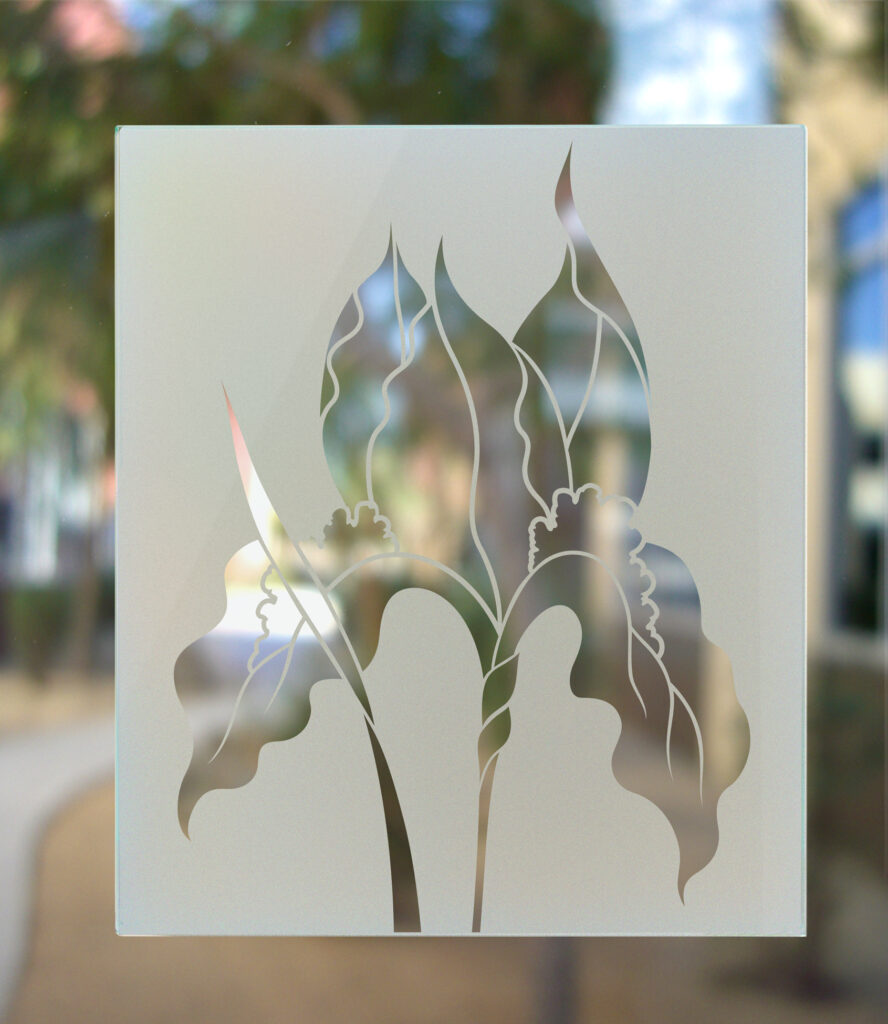
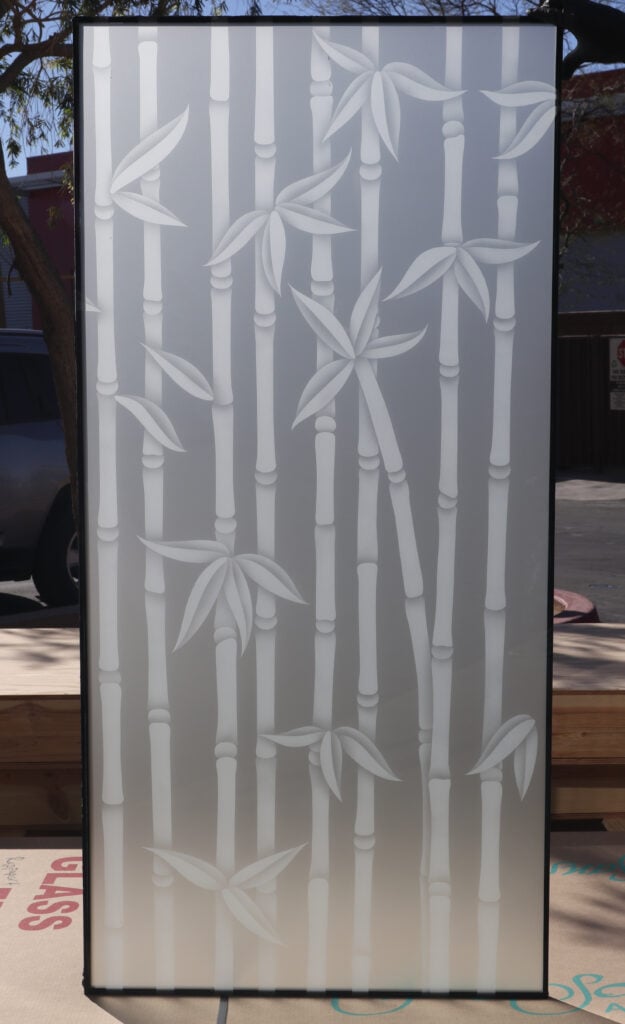
Design elements are clear glass. Background is Sandblast Frosted Solid White.
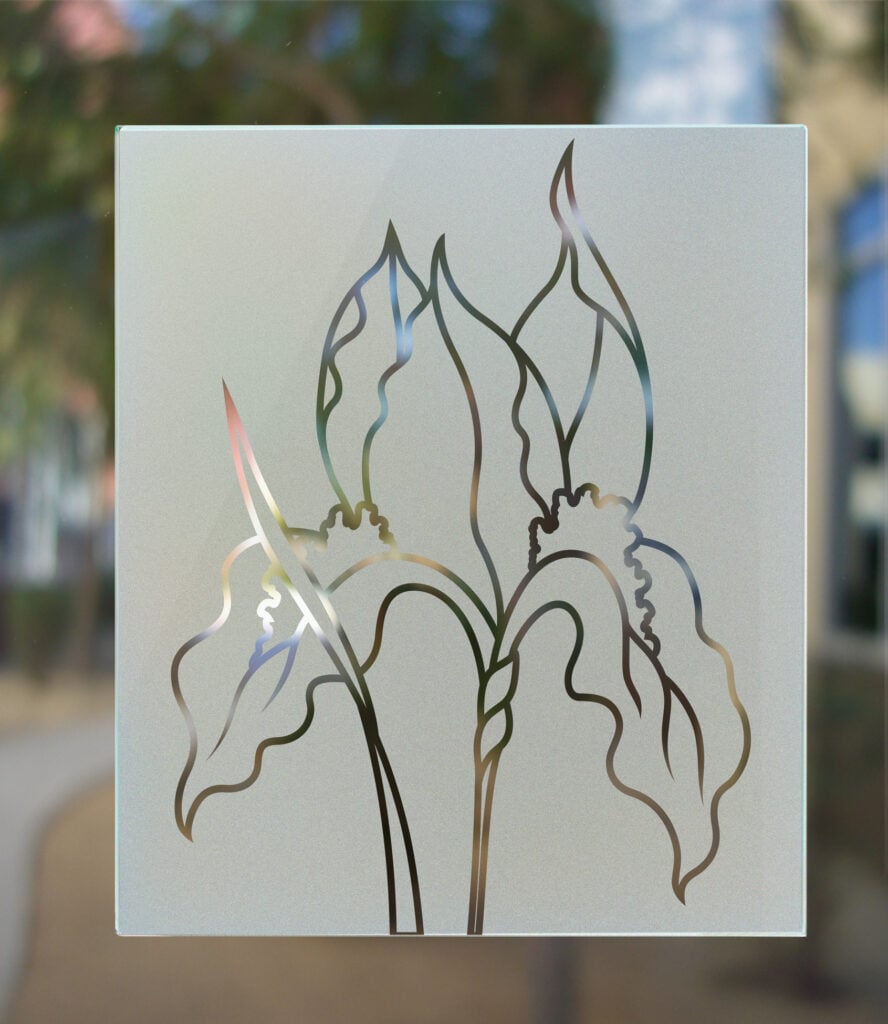
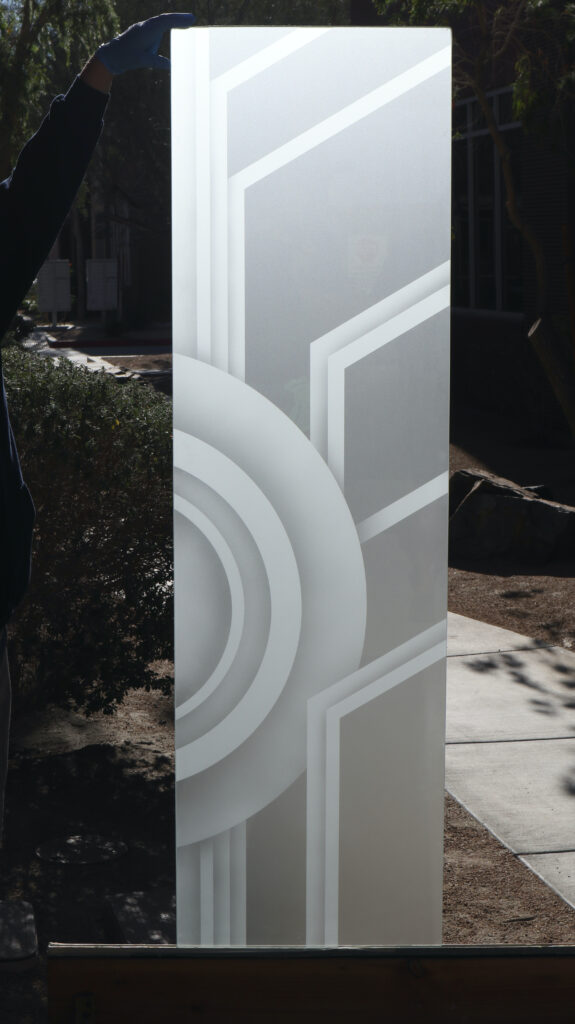
Design elements are made up of thin, clear glass pinstripes approx. 1/8” – 1/4” wide. Background is Sandblast Frosted Solid White.
EXAMPLES OF 3D Enhanced Painted – Frosted
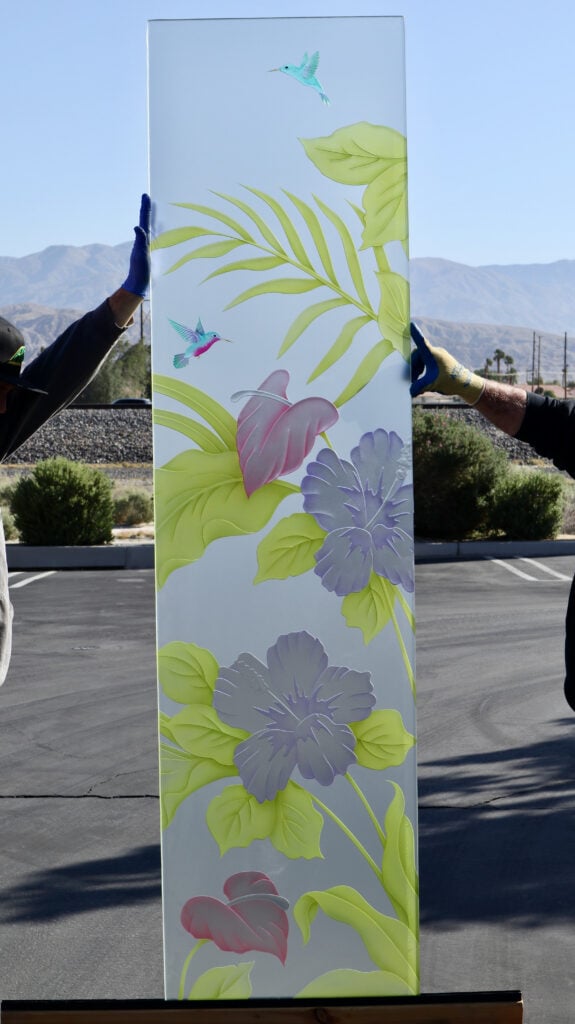
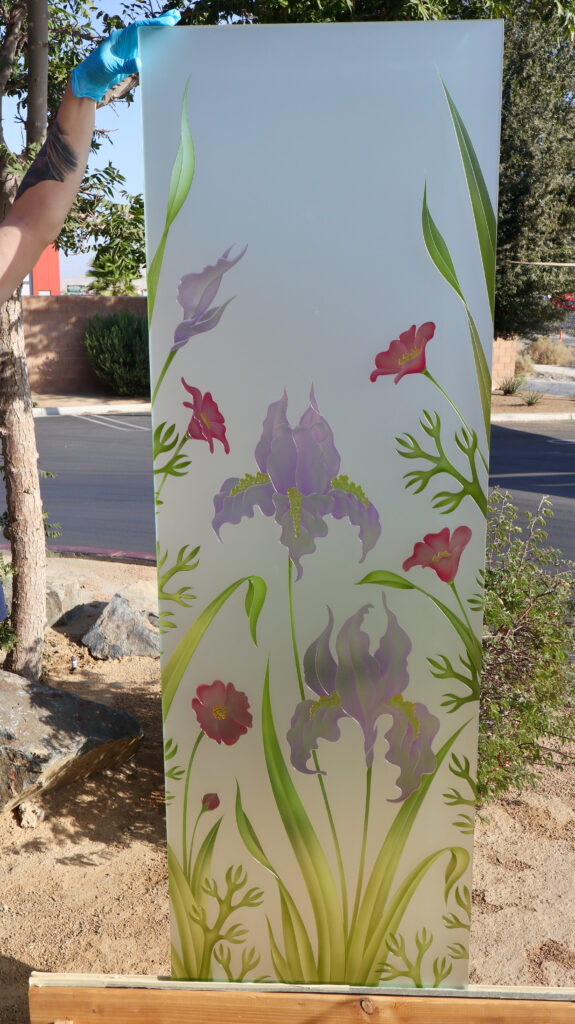
EXAMPLES OF 3D Enhanced – Frosted
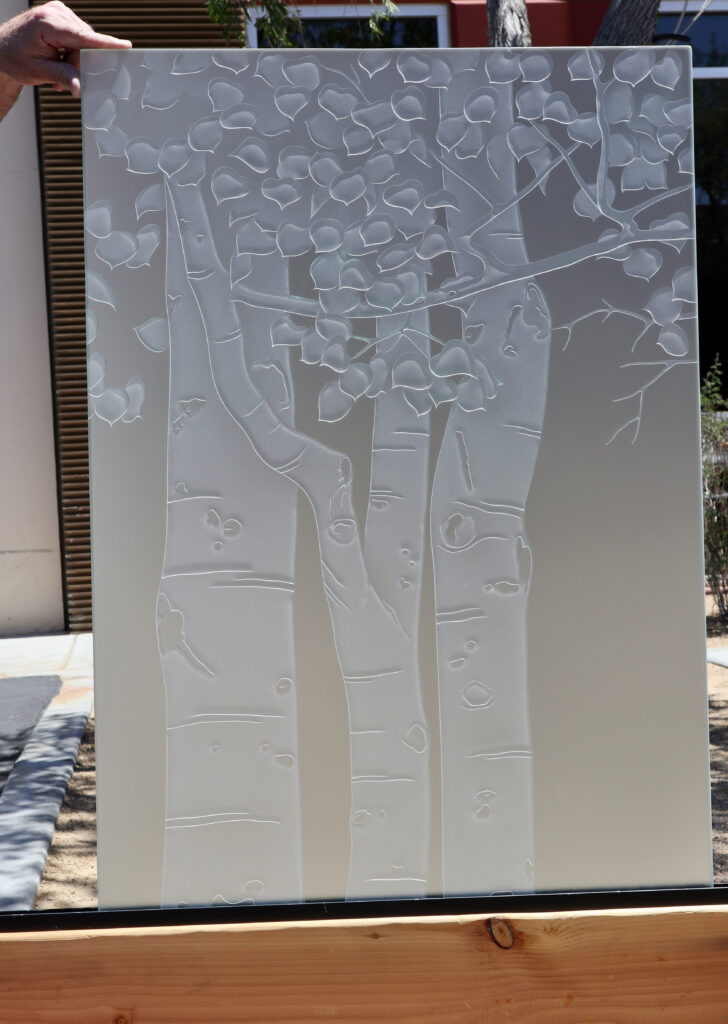
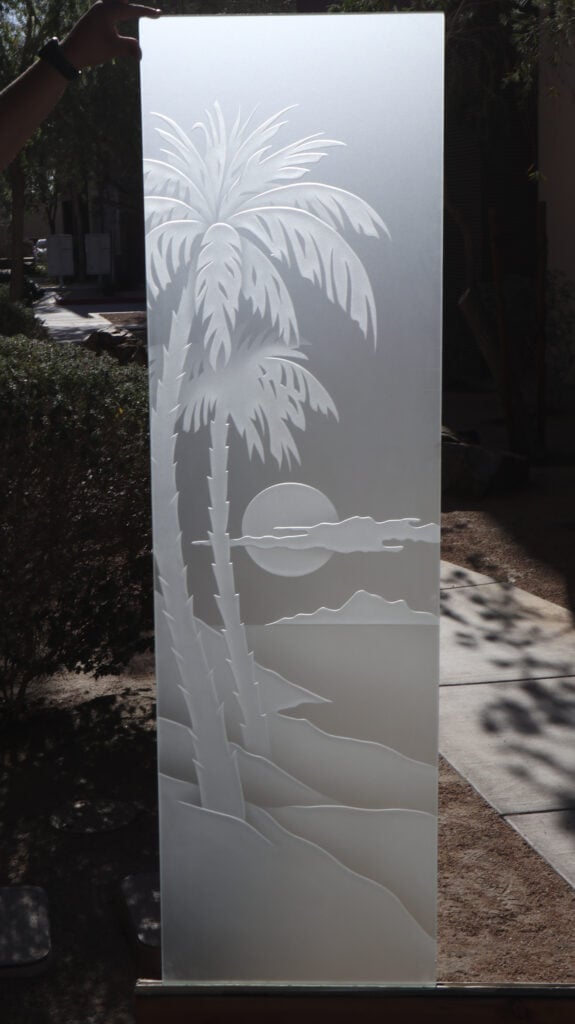
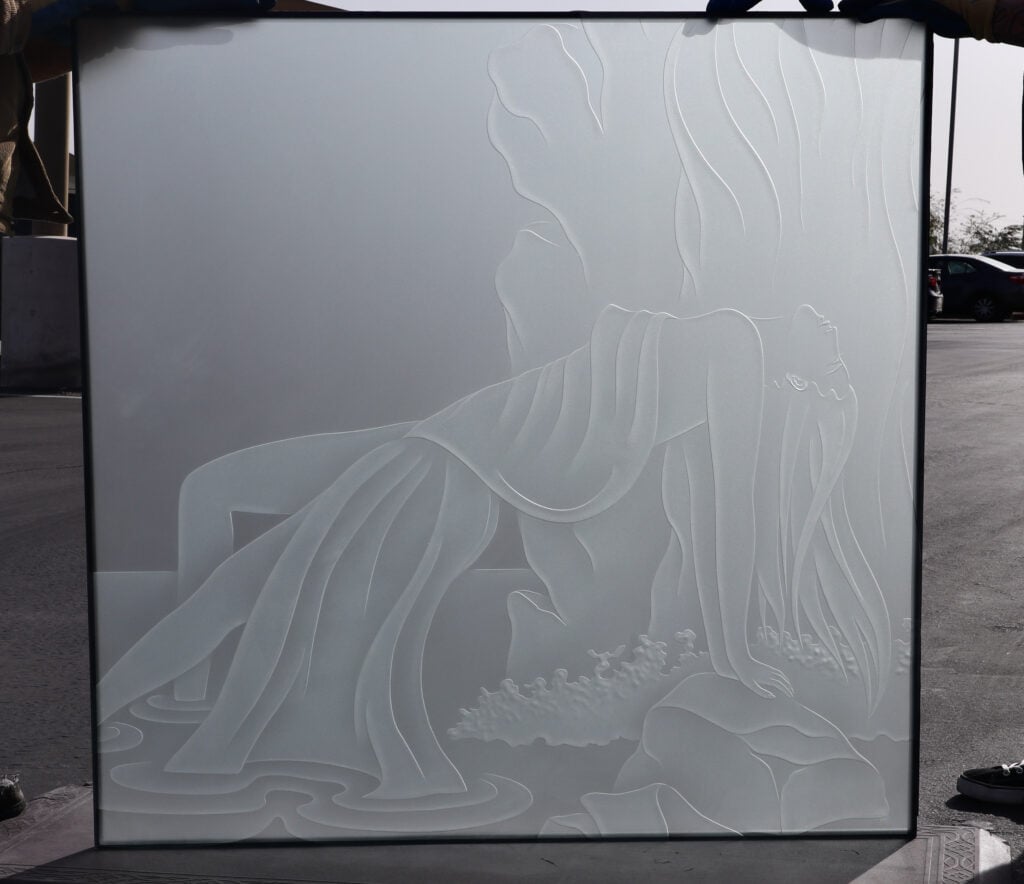
EXAMPLES OF 2D Frosted
How to Choose the Right Frosted Glass Effect for Your Space
When deciding which sandblasted frosted glass effect is best for your project, it’s helpful to consider more than just privacy. Each effect not only controls how much you can see through the glass but also contributes a unique visual texture and level of artistry to your space.
Here are a few tips to help guide your decision:
- Start with your privacy needs. If the glass will be used for a bathroom, pantry, or entry door, look for effects applied to a frosted glass background, like 1D Negative or 3D Enhanced Frosted. These will offer the highest levels of obscurity.
- Consider your design complexity. If you love intricate details and shaded dimension, a 2D or 3D Enhanced effect will bring that layered beauty to life. If you’re looking for something clean and bold, a 1D or 3D Solid effect offers strong visual impact with simplicity.
- Match the mood of the room. A soft, nature-inspired 2D effect might feel perfect for a spa or master bath, while a high-contrast 1D Pinstripe could suit a modern kitchen or office partition.
- Factor in your budget. The more complex the sandblasting technique, the more time, skill, and cost involved. That said, every effect—whether entry-level or premium—is handcrafted and completely custom, so you’re never sacrificing quality.
With so many frosted glass doors and window options available, you can find the perfect balance of privacy, light, and design to transform your space from functional to unforgettable.



💡 Frequently Asked Questions
What is sandblasted glass?
Sandblasted glass is glass that has been treated with high-pressure abrasive media to permanently roughen the surface. This creates a frosted appearance that diffuses light and can form patterns, designs, or full-coverage privacy glass.
What is the difference between sandblasted and frosted glass?
“Frosted glass” is a broad term describing the look. Sandblasted glass is one method of achieving that look. Other methods include acid-etching or films, but sandblasting is the most permanent and customizable.
Does sandblasted glass let natural light in?
Yes. Sandblasted glass allows natural light to pass through while diffusing it, reducing glare and visibility without darkening the space.
Why is it called sandblasting?
The name comes from the process itself—abrasive particles (historically sand) are blasted at high pressure onto the glass surface to alter its texture.
What does sandblasting do to glass?
Sandblasting permanently changes the surface of the glass, creating texture, translucency, and decorative or privacy effects by removing microscopic layers of the surface.
Can you fix sandblasted glass?
No. Sandblasting permanently alters the glass surface. When you sandblast the glass, it alters the surface permanently, and you cannot restore it to clear glass.
What are the four types of glass?
Common architectural glass types include:
- Annealed glass (standard float glass)
- Tempered (toughened) glass
- Laminated glass
- Low-iron glass
Which glass type is most expensive?
Low-iron glass is typically the most expensive due to its clarity and reduced green tint. Decorative or custom glass treatments can also significantly increase cost.
Which quality of glass is best?
“Best” depends on the application. Tempered glass is best for safety, laminated glass for security and sound control, and low-iron glass for maximum clarity. 👉 Read this helpful article: What Is Tempered Glass
What is the strongest type of glass?
Tempered glass is the strongest standard architectural glass, up to four times stronger than annealed glass.
How to clean sandblasted glass?
Use a mild glass cleaner or diluted vinegar with a soft cloth. Avoid abrasive pads or harsh chemicals, which can leave residue or damage the textured surface.
How do you sandblast glass?
The process involves masking the design, then using compressed air to propel abrasive media onto the exposed glass areas. You’ll need professional equipment and safety controls to achieve consistent results.
What is the difference between sandblasted and etched glass?
Sandblasted glass uses physical abrasion, while etched glass typically uses acid or chemical processes. Sandblasting allows deeper texture, more variation, and greater artistic control.
Can you remove sandblasting from glass?
No. Sandblasting permanently alters the surface of the glass and you cannot remove or reverse the effect.
Does sandblasted glass reduce light?
Slightly. It diffuses light instead of blocking it, allowing brightness to remain high while reducing visibility.
Bring Custom Privacy Glass to Life with Sans Soucie Art Glass
Ready to upgrade your home or commercial space with handcrafted privacy glass? At Sans Soucie Art Glass, every design is created to order in the exact sizes you need, giving homeowners and businesses a beautiful way to add privacy without losing light or style. Through our expert sandblasting process, we turn ordinary glass into lasting works of art that enhance the view while delivering the right level of obscurity for your space.
Explore our collection, learn more about each effect, and use the product examples on this page for helpful information as you choose the design that fits your project. With 50 years of experience in custom decorative glass, Sans Soucie is here to help you create something truly special.

Sans Soucie Art Glass: Decorative, Custom & Frosted Glass Doors, Windows, Showers & Stained Glass Since 1976
Family-owned and operated since 1976, Sans Soucie Art Glass leads the industry in decorative glass and custom glass design — from sandblast frosted glass and carved glass to hand-painted and stained glass art — transforming ordinary glass into Works of Art Captured in Glass recognized worldwide.
Innovative Frosted Glass Door Designer Tool
In 2010, we invented and launched our Frosted Glass Pantry Door Designer – a fun, easy-to-use tool that makes it simple for anyone to design and customize not only pantry doors, but a wide range of frosted glass doors for every room.
Explore our Frosted Glass Doors Collection
Our custom frosted glass doors include a beautiful variety for every style and space:
- Pantry Doors
- Frosted Glass Interior Door
- Interior Doors with Frosted Glass
- Frosted Glass French Doors
- Frosted Glass Front Door
- Front Doors with Frosted Glass
- Interior Glass Doors
- Glass Barn Doors
- Frosted Glass Barn Door
- Sliding Glass Barn Door
- All Glass Doors Interior
- All Glass Front Doors
- Bathroom Doors with Frosted Glass
- Laundry Room Doors
- Wine Room Doors
If you already have a door, and only need the glass insert, we also offer:
- Frosted Glass for Interior Doors
- Door Glass Inserts for Front Doors
- Glass Panels for Pantry Doors
- Frosted Glass Inserts for Bathroom Doors
- Laundry Room Door Glass Inserts
- Glass Panels for Interior Wine Cellar Doors
Elegant Frosted Glass Throughout Your Home
While our frosted glass doors are a top choice, we also create stunning glass products for every area of your home, including:
- Frosted Glass Shower Doors
- Glass Shower Partition
- Frosted Glass Shower Panel
- Frosted Glass Showers
- Frosted Glass Windows
- Bathroom Window Frosted Glass
- Decorative Window Glass, Window Frosting
- Custom Glass Dining Table
- Custom Glass Coffee Table
- Glass Shelves, Custom Glass Shelves
- Hand Carved & Painted Mirrors
- Frosted Glass Signs, Etched Glass Signs
- Cabinet Door Glass Inserts, Frosted Glass Inserts for Cabinet Doors
- Glass Wall Art, Wall Art on Glass
Looking for Inspiration? Explore Our Galleries
Discover visual idea boards, style concepts, décor applications, real project photos, and helpful information in our expanding gallery collection:
- Custom Glass
- Custom Glass Edges
- Custom Mirror
- Decorative Glass
- Decorative Glass Doors
- Decorative Glass Front Doors
- Decorative Glass Interior Doors
- Decorative Glass Window
- Stained Glass
- Stained Glass Doors
- Stained Glass Front Doors
- Stained Glass Windows
Free Shipping. Expert Packing, Peace of Mind
With FREE SHIPPING on most orders and worldwide delivery from our studio in Palm Desert, California, every order is packed in-house by our expert glaziers using custom materials and proven methods — ensuring safe arrival with a damage rate of less than 1%!
Explore our complete frosted glass doors collection and find the perfect frosted glass door for your space. Have questions? Contact us today!
Copyright © 2025, Sans Soucie Art Glass. All rights reserved.