Acid-Etched vs Sandblasted Glass: What’s the Difference?
The biggest difference is this: acid-etched glass is chemically treated, while sandblasted glass is mechanically etched with abrasive blasting.
Acid-etched glass and sandblasted glass are two different ways to create frosted glass. Both can provide privacy, soften light, and feature custom designs. The main difference is how the glass surface is etched and the type of finish each process creates.
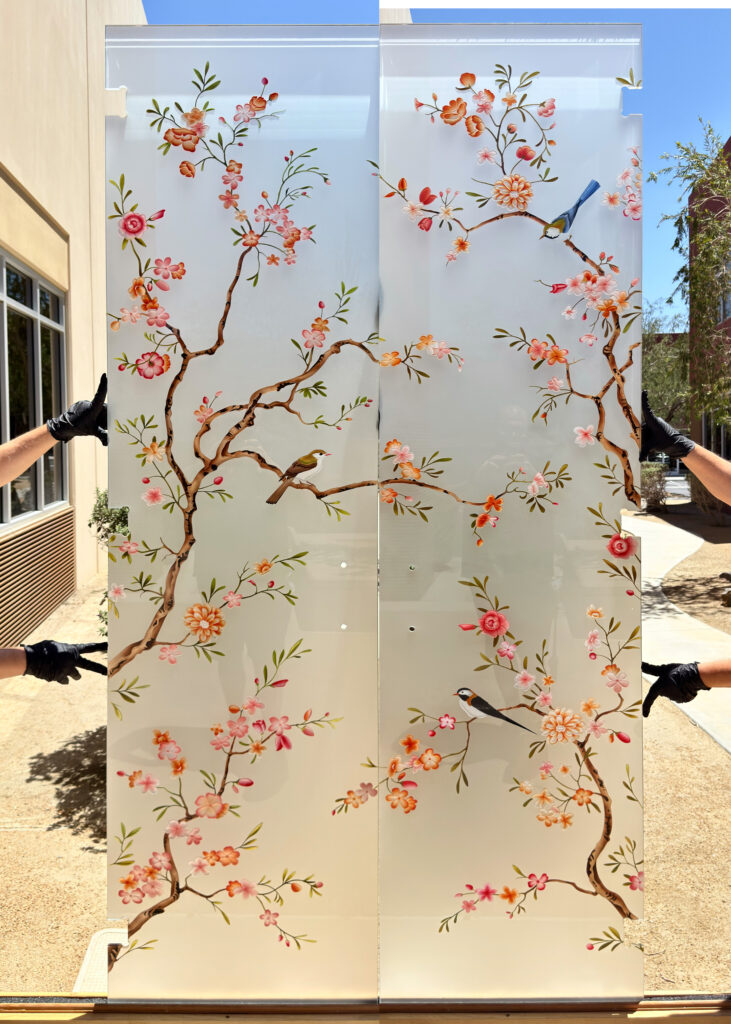
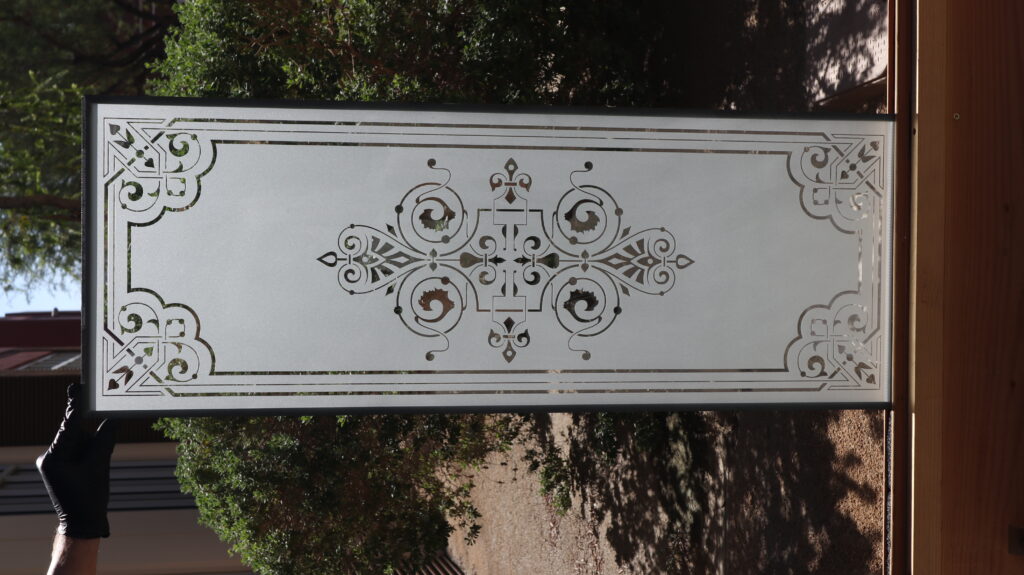
If you’re comparing acid-etched glass and sandblasted glass for a door, window, shower enclosure, partition, or other decorative glass project, understanding the differences can help you choose the right option for your needs. This guide explains how each type of frosted glass is made, how their finishes compare, and what to consider regarding appearance, maintenance, durability, and customization.
Whether you’re a homeowner, designer, architect, or builder, knowing the strengths of each method can help you make a more informed decision for your project. Choosing the right etching method is important because it can influence the look, texture, cleaning requirements, privacy level, and overall success of the finished decorative glass project.
Acid-Etched Glass vs Sandblasted Frosted Glass: Quick Comparison
| Feature | Acid-Etched Glass | Sandblasted Glass |
|---|---|---|
| Etching method | Chemical etching | Abrasive blasting |
| Common etching agents | Hydrofluoric acid or fluoride-based compounds | Sand, aluminum oxide, or other abrasive media |
| Surface feel | Smooth, satin-like frost | Frosted, textured, carved, or dimensional surface |
| Privacy | Can be customized | Can be customized |
| Designs | Can include decorative patterns | Can include decorative patterns, carving, and shading |
| Best known for | Smooth frosted glass finish | Handcrafted depth, texture, carving, and artistic detail |
| Permanent? | Yes | Yes |
What Is Acid-Etched Glass?
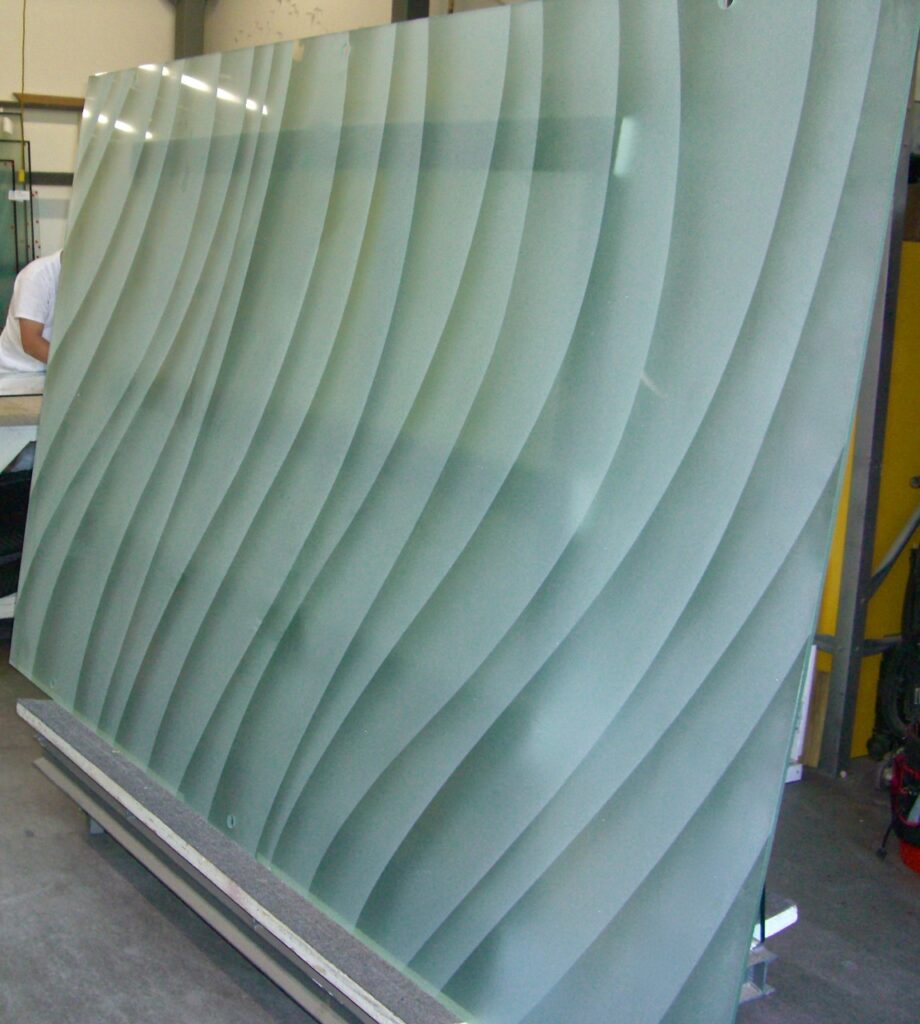
Acid-etched glass is glass that has been chemically treated to create a frosted surface. The process changes the surface of the glass itself, creating a permanent matte or satin finish. In architectural glass, acid etching is commonly used to create privacy glass, decorative glass panels, doors, windows, partitions, and other frosted glass products.
The finished surface is usually smooth and refined, often with a soft satin sheen or subtle low-gloss luster depending on the finish. It diffuses light, reduces visibility, and creates a clean frosted appearance.
What Is Sandblasted Glass?
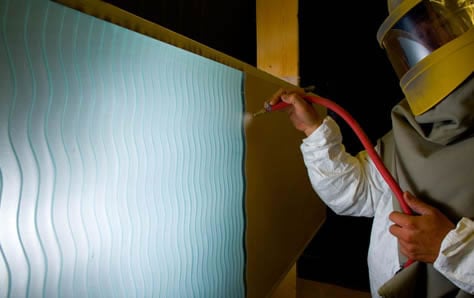
Sandblasted glass is created by blasting the glass surface with abrasive material under pressure. This process typically produces a more matte, finely textured finish compared to acid-etched glass, with a slightly granular appearance depending on the blasting intensity. The sandblasting process physically removes part of the glass surface and creates a permanent frosted effect.
The appearance can range from a light frost to a deeper, more dimensional carved look. Sandblasting can also create shading, texture, and depth depending on the technique used. Sandblasted glass is commonly used for frosted glass doors, windows, shower glass, partitions, signs, and decorative architectural glass.
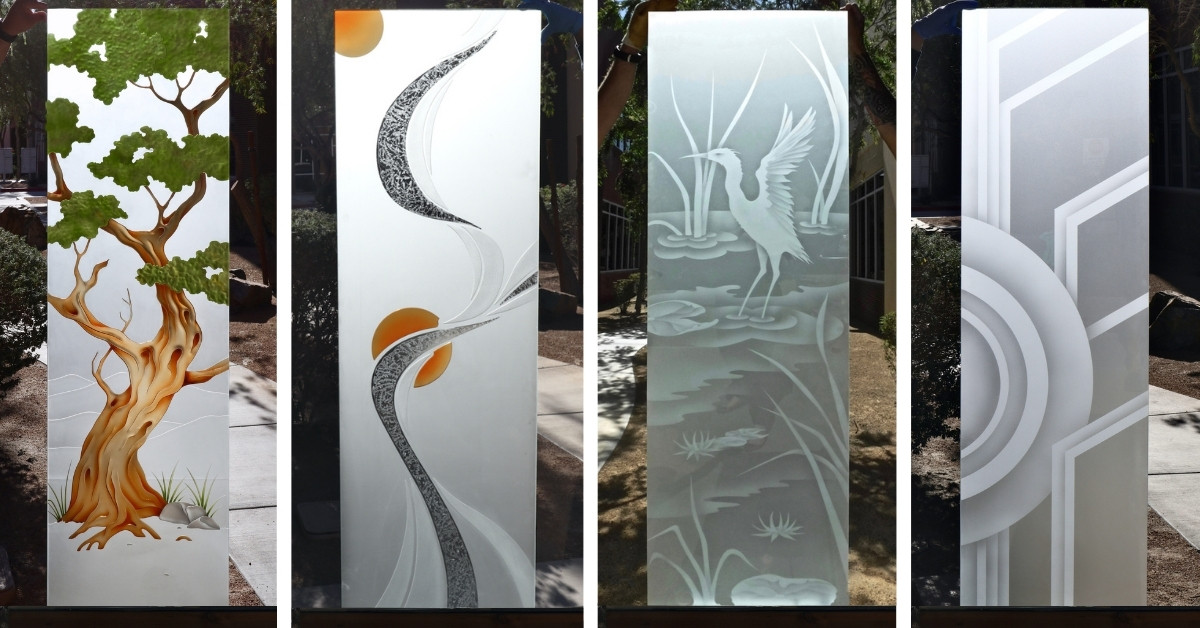
Main Difference: Glass Acid-Etching vs Sandblasted Glass Etching
The main difference between acid-etched glass and sandblasted glass is the process.
Acid-etched glass is chemically etched. The acid or fluoride-based compound reacts with the glass surface and creates a smooth frosted finish.
Sandblasted glass is mechanically etched. Abrasive particles strike the glass surface and physically carve or frost the glass.
Both methods can create privacy. Both methods can include custom designs. The difference is not whether the glass can be customized — the difference is the surface character, production method, and final texture.
Surface Finish and Appearance
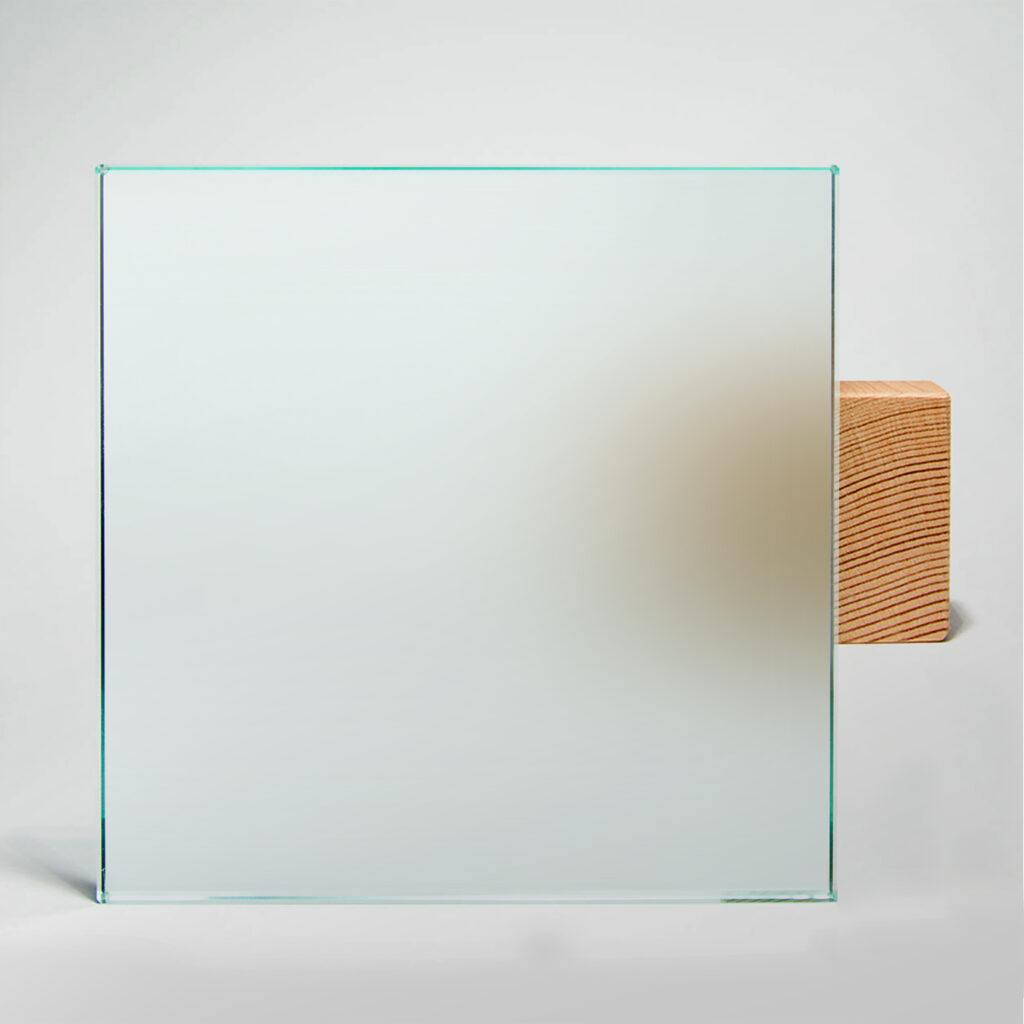
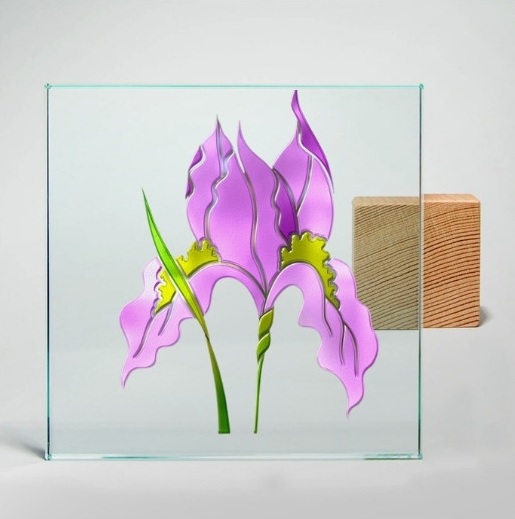
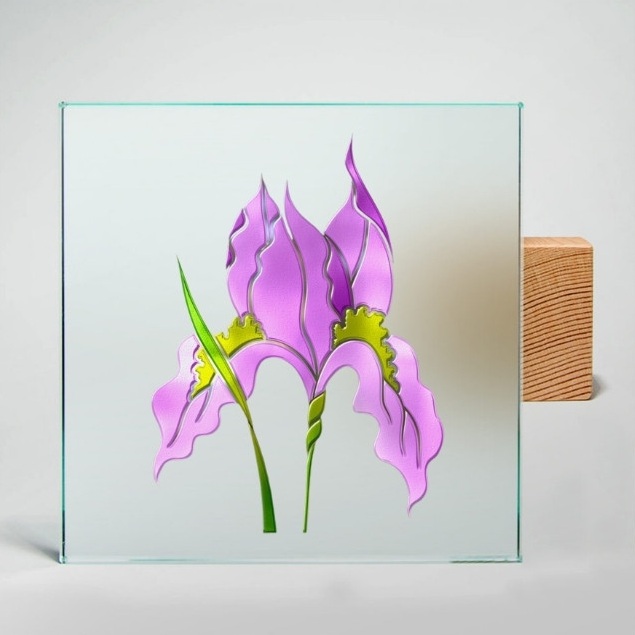
Acid-etched glass usually has a smooth, satin-like surface. It often looks soft, even, and clean.
Sandblasted glass usually has more texture because the surface is physically abraded. Depending on the blasting technique, it can look lightly frosted, deeply carved, shaded, or sculptural.
For a simple frosted surface, acid etching can be a beautiful option. For glass with more depth, carved detail, or handcrafted texture, sandblasting is often preferred.
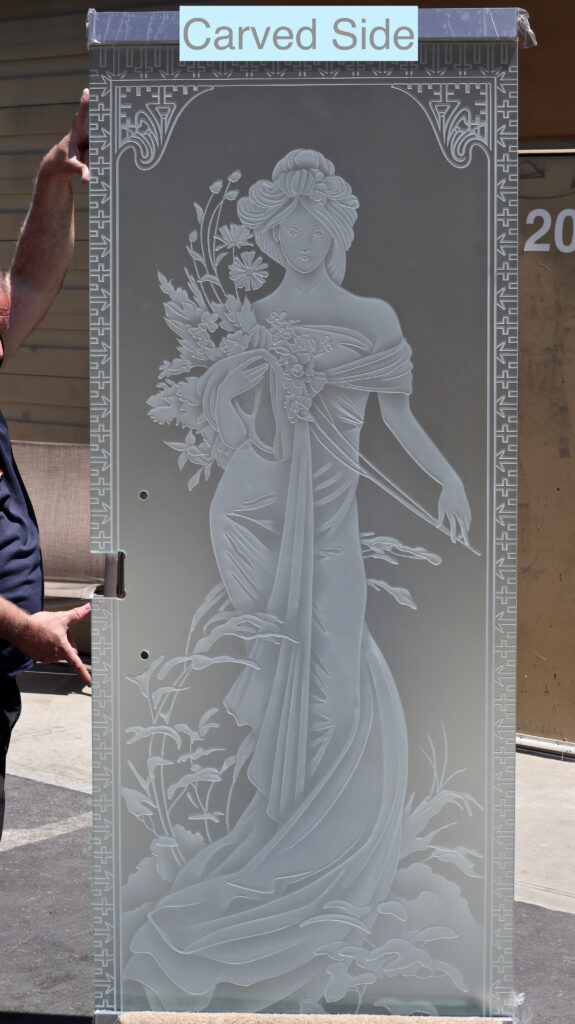
Sandblasting is not limited to surface frosting. It can also be used to create deeply carved, three-dimensional artwork known as carved or sculpture-carved glass. By etching different areas to varying depths, craftsmen can produce relief designs with highlights, shadows, and dimensional detail. The carved edges often reflect light more intensely, making them appear brighter and helping create the illusion that the artwork is floating within the glass. This type of decorative glass is commonly used for high-end architectural and artistic applications.
🎥 Why Some Frosted Glass Costs More
See how sandblasting creates depth, texture, and artistic detail in frosted glass, and why these effects often increase the overall cost.
Privacy and Light
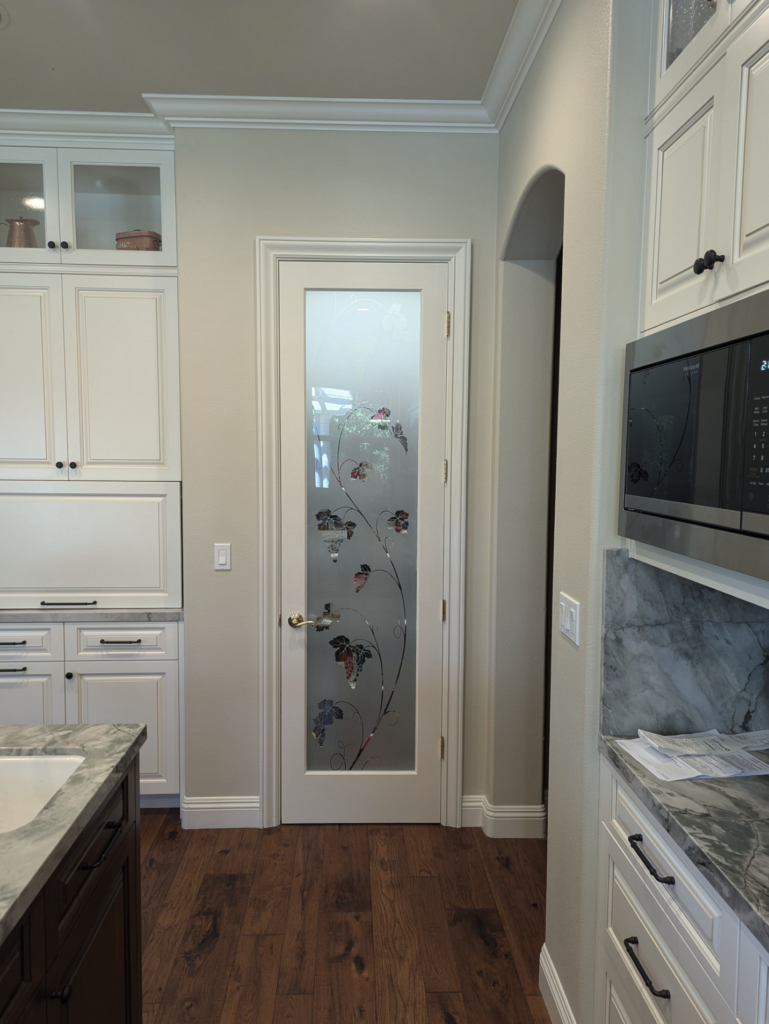
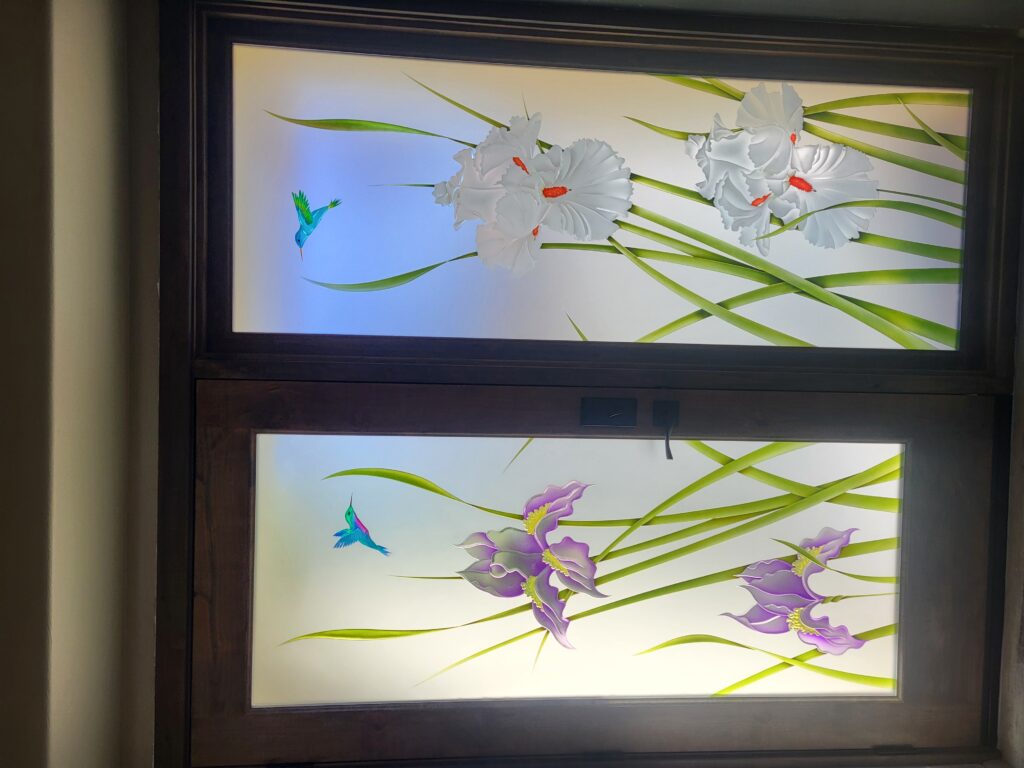
Both acid-etched glass and sandblasted glass can provide privacy while still allowing light to pass through. Privacy depends on the opacity of the frosted areas, the design layout, the lighting on each side of the glass, and how close someone is to the glass.
A full frosted background generally provides more privacy than a design with large clear areas. This applies to both acid-etched and sandblasted glass.
Durability and Permanence
Both acid-etched glass and sandblasted glass are permanent surface treatments. The frosted effect is created directly on the glass. Unlike temporary privacy films, these treatments do not peel, bubble, or lift from the glass surface.
The glass should still be cleaned properly, especially if it has a decorative or textured surface. Harsh cleaners, abrasive pads, and oily residues should be avoided.
Are Acid-Etched and Sandblasted Glass Safe and Durable?
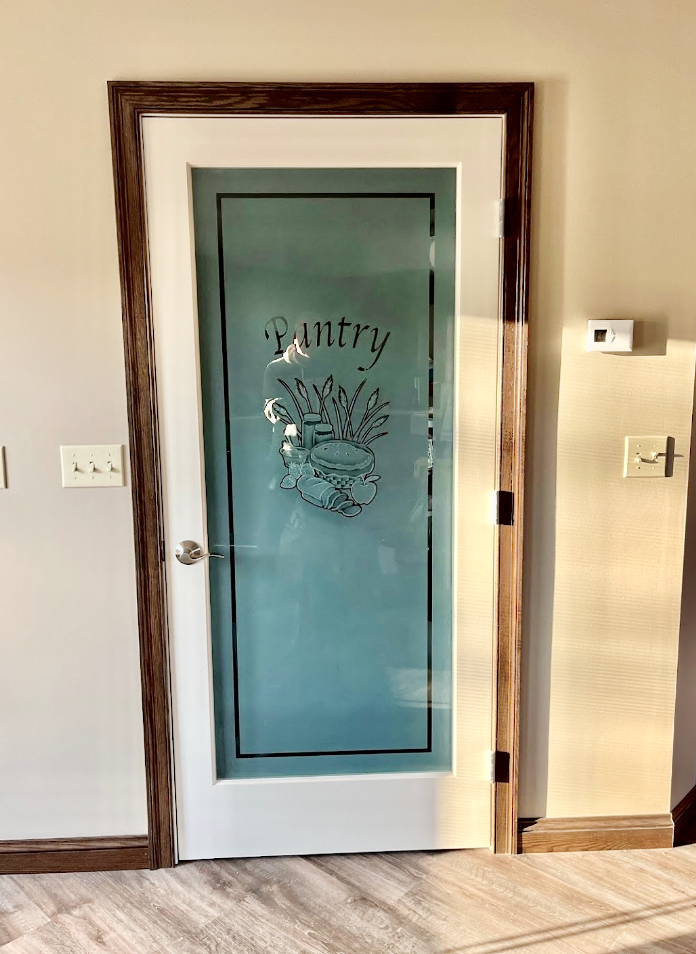
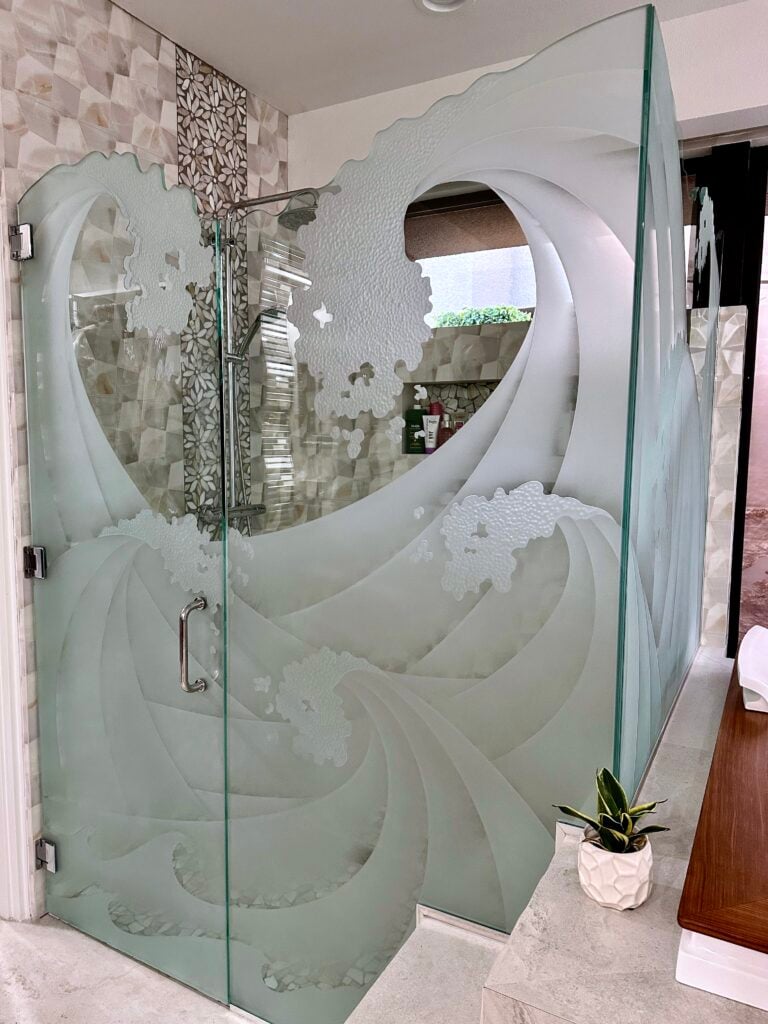
Acid-etched glass and sandblasted glass are both safe, durable architectural glass options when professionally manufactured and properly specified for the application. The etched or frosted effect is created on the glass surface itself, so it is not a film, coating, or temporary layer that can peel away.
It is also important to clarify that finished acid-etched glass is not a health risk in normal use. Although the acid-etching process involves hazardous chemicals during manufacturing, the finished glass is thoroughly processed, cleaned, and safe to handle once complete. Similarly, sandblasted glass is created with abrasive blasting during production, but the finished glass does not release blasting dust or harmful residue during everyday use.
For doors, showers, partitions, and other safety-sensitive areas, etched glass is often made from tempered glass. Tempered glass is heat-treated for added strength and is designed to break into small pieces rather than sharp shards if broken. In some applications, laminated glass may be used instead. Laminated glass includes an interlayer between two pieces of glass, helping hold the glass together if it breaks.
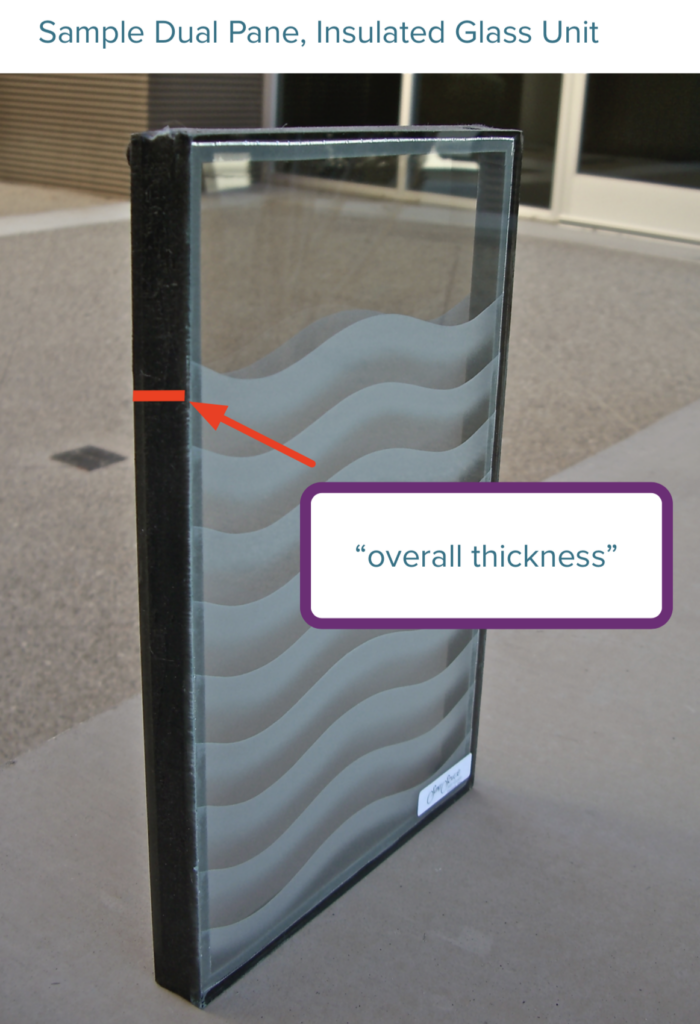
For exterior windows, entry doors, and certain architectural applications, acid-etched or sandblasted glass can also be incorporated into double-pane insulated glass units. These double-pane units can improve energy performance while still allowing the glass to include privacy, decorative patterns, or custom etched artwork.
The safest choice depends on where the glass will be installed, whether it is interior or exterior, and whether building codes require tempered, laminated, or insulated glass.
Does One Require More Maintenance?
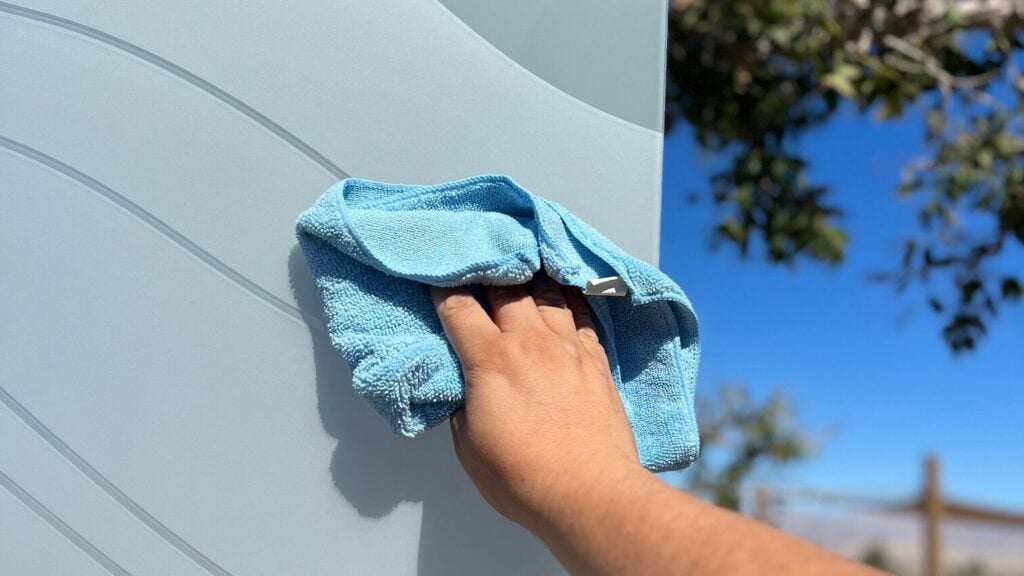
Both acid-etched glass and sandblasted glass are considered durable, long-lasting decorative glass finishes. However, they do not always clean the same way.
Acid-etched glass is generally regarded as a low-maintenance option because of its smooth, satin-like surface. It resists fingerprints, does not readily show dirt marks, and is highly resistant to water stains. These qualities make acid-etched glass particularly well suited for bathrooms, shower enclosures, and other areas exposed to moisture and frequent use.
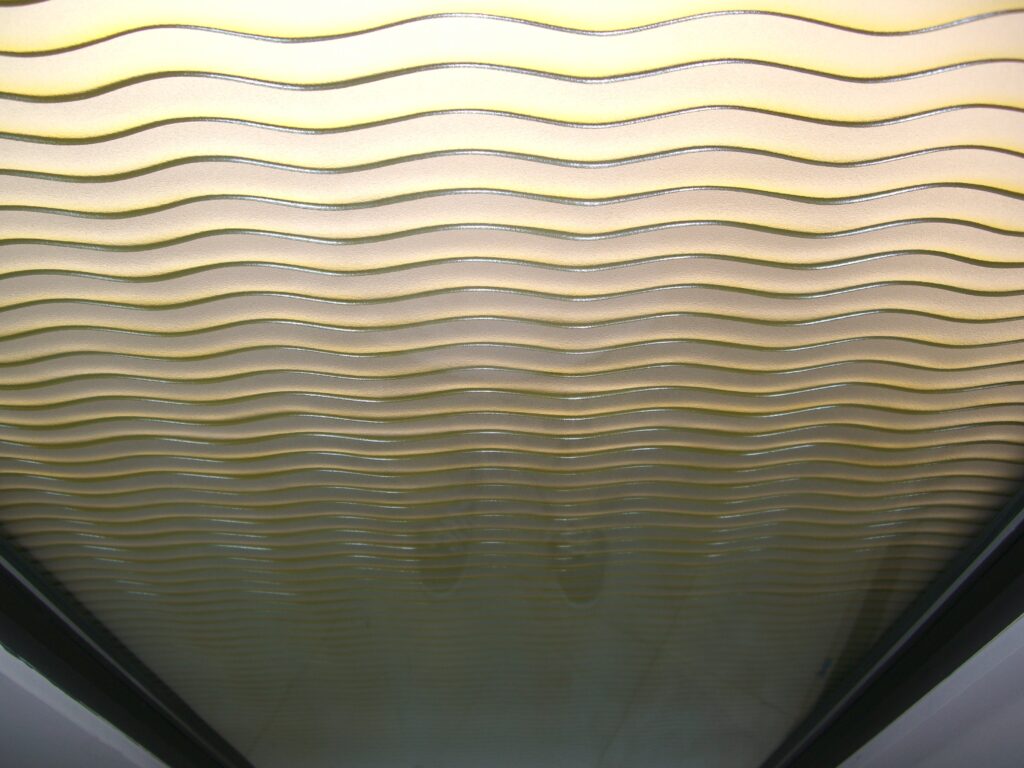
Sandblasted glass, on the other hand, often has a more textured surface. Depending on the depth and style of the etching, the texture can trap dirt, oils, soap residue, and other contaminants more easily than a smooth acid-etched finish. Deeply carved or heavily textured designs may also require occasional extra attention during cleaning because residue can collect within recessed areas of the artwork.
This does not mean sandblasted glass is difficult to maintain. In most residential and commercial applications, routine cleaning is all that is required. However, when comparing the two strictly from a maintenance perspective, acid-etched glass is generally easier to clean and less likely to show fingerprints, water spots, and everyday surface marks.
For projects where decorative carving, dimensional artwork, and sculpted effects are priorities, many homeowners and designers find the additional maintenance of sandblasted glass well worth the visual impact. For those seeking the easiest day-to-day care, acid-etched glass often has the advantage.
👉 ALSO READ: How to Clean Frosted Glass
Can Acid Etching and Sandblasting Be Combined?
Yes. Acid etching and sandblasting can be used together on the same glass project.
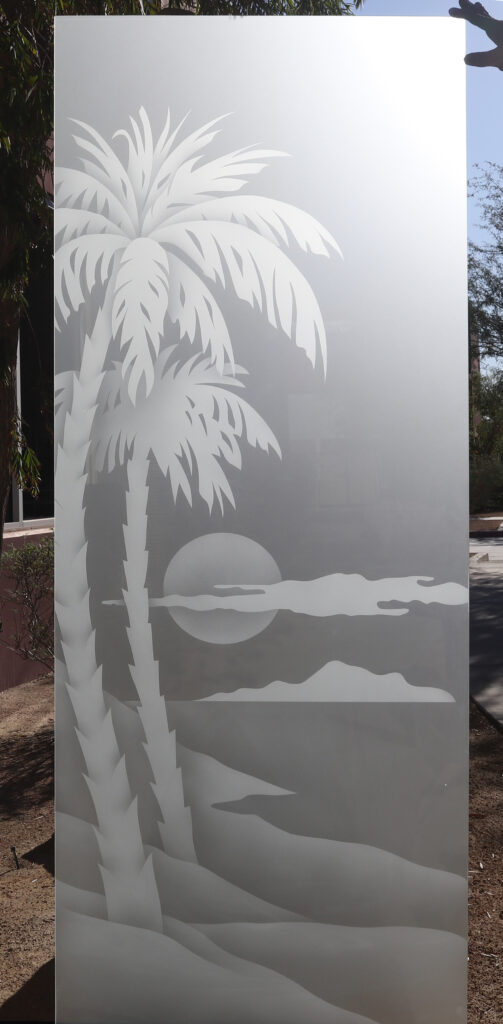
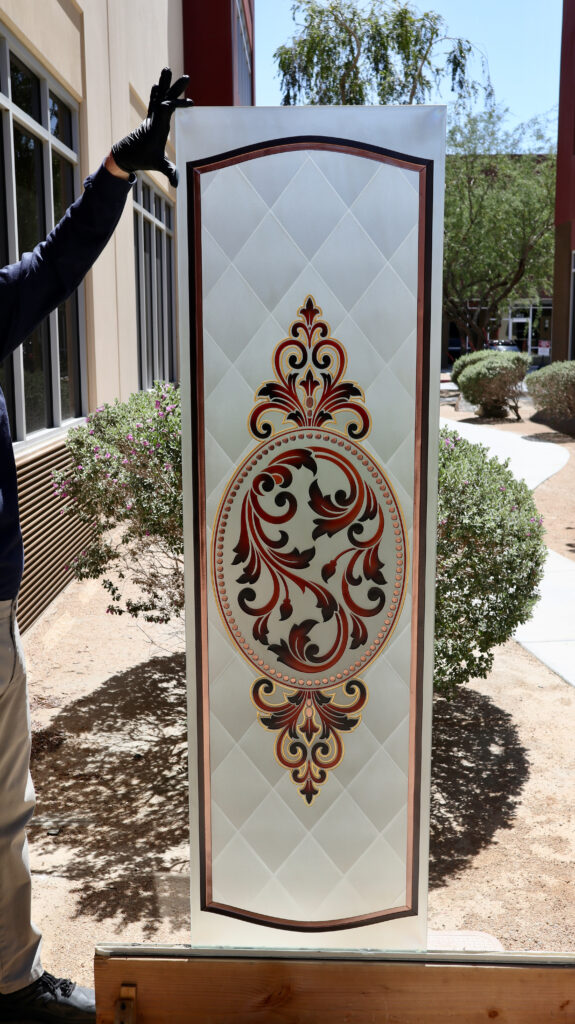
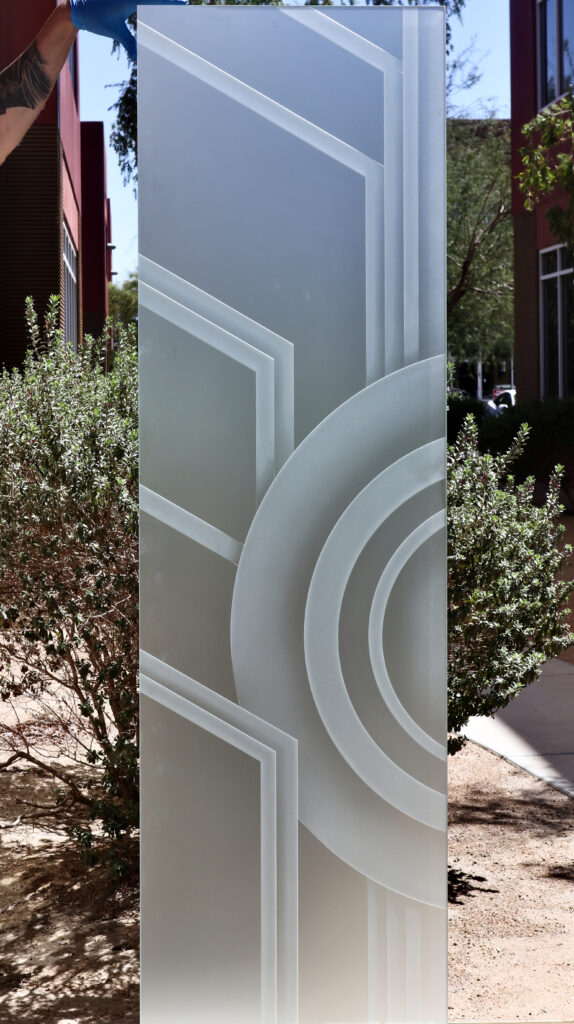
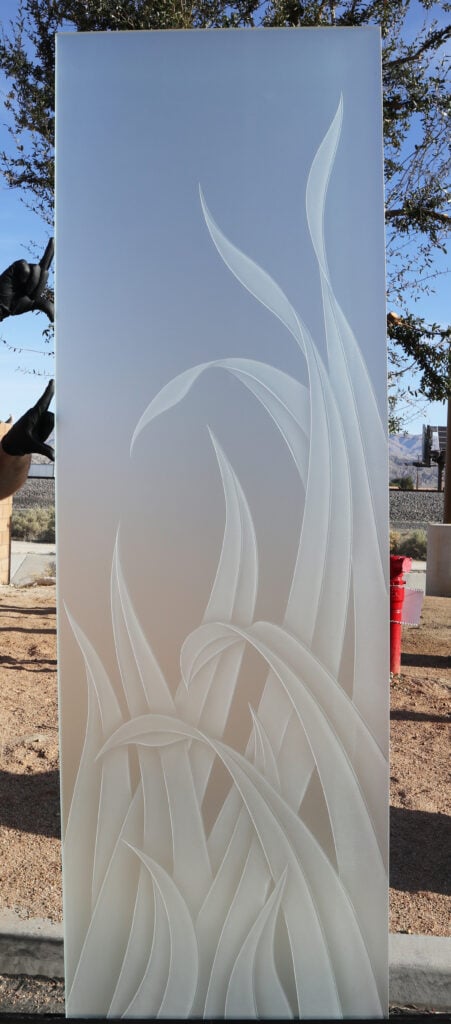
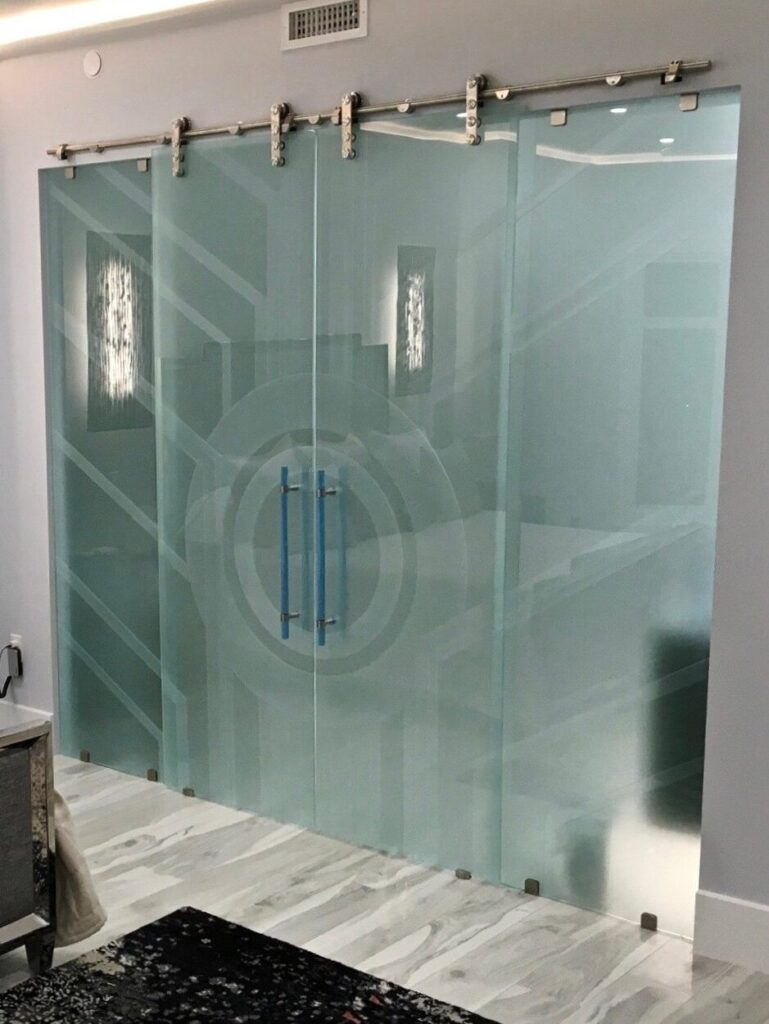
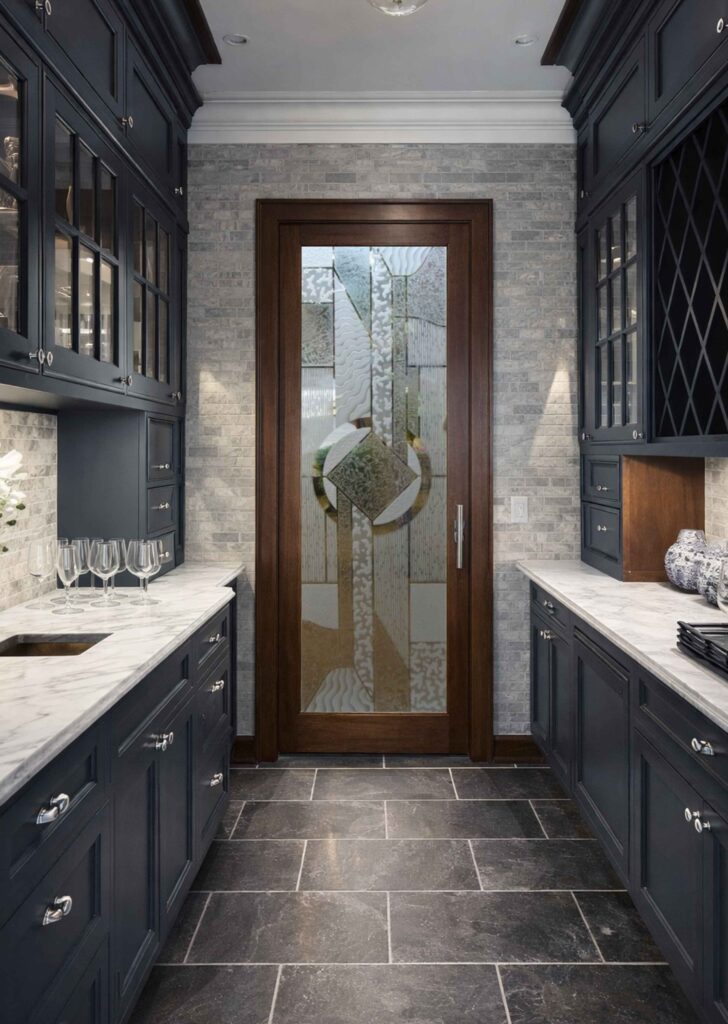
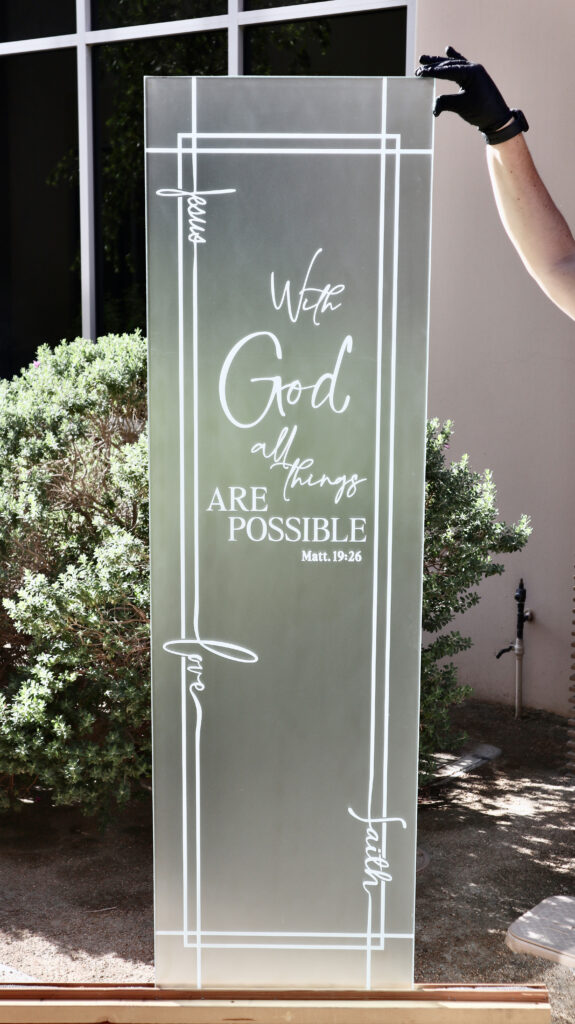
For example, a glass panel may be acid etched across the full surface to create an even privacy background. Then sandblasting can be used to add carved artwork, borders, lettering, shading, or deeper decorative details.
This combined approach allows the glass to have both a smooth privacy finish and more dimensional artistic elements.
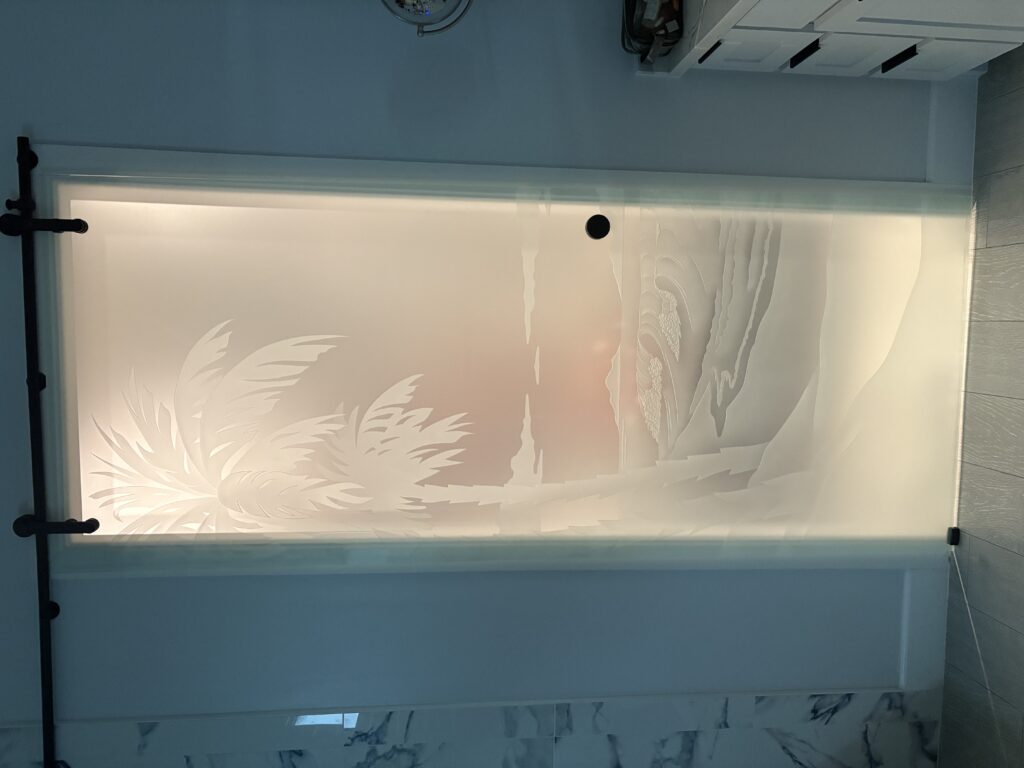
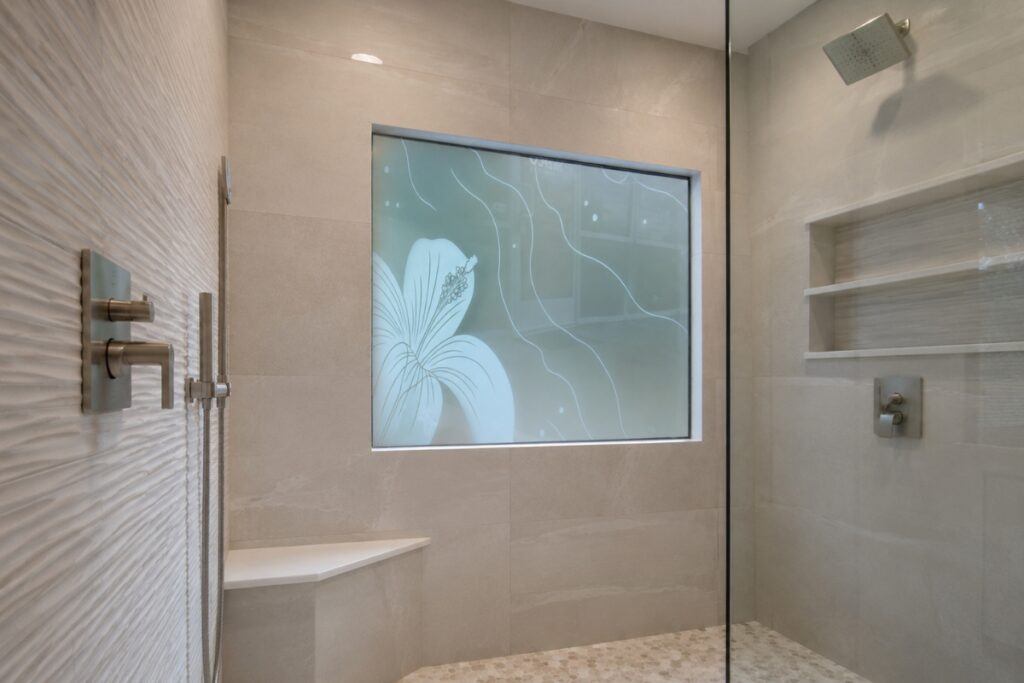
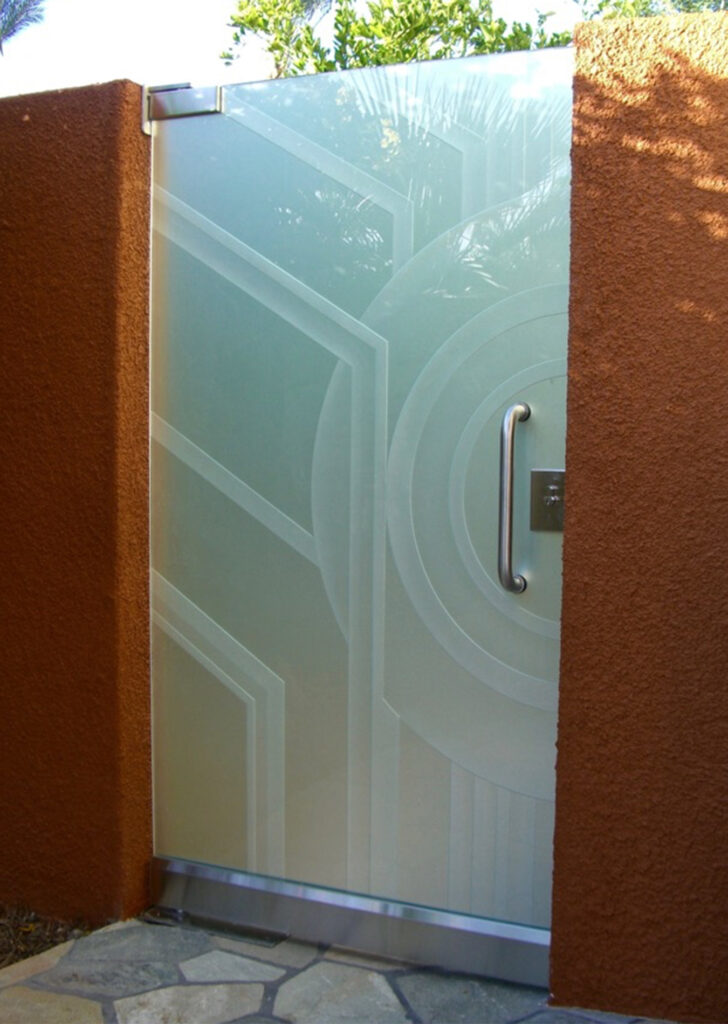
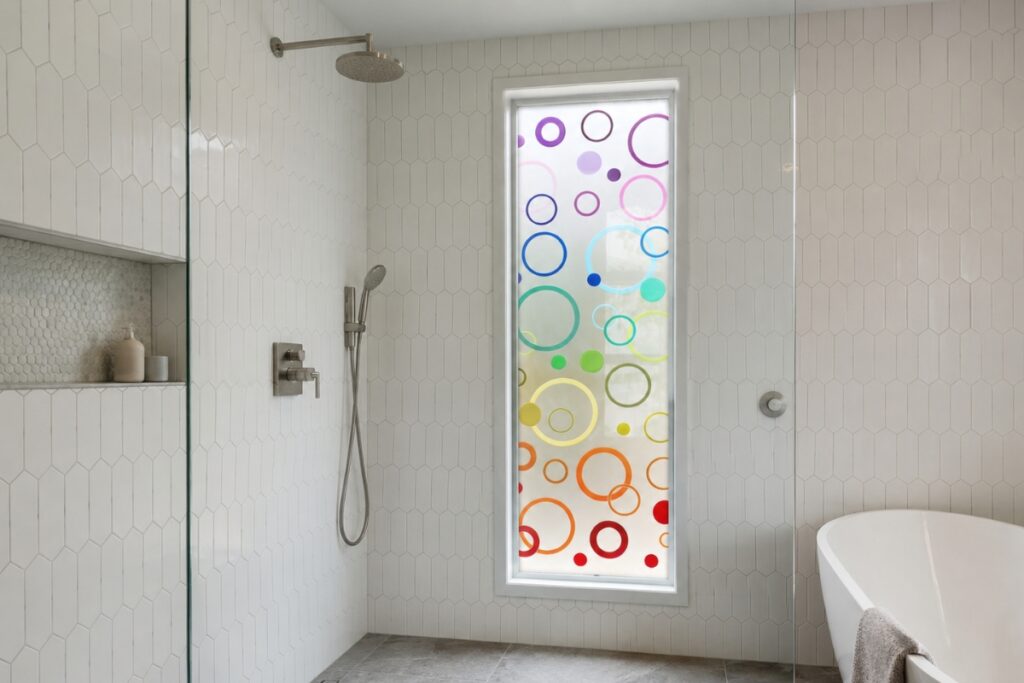
Sans Soucie Art Glass: 50 Years of Frosted Glass Experience
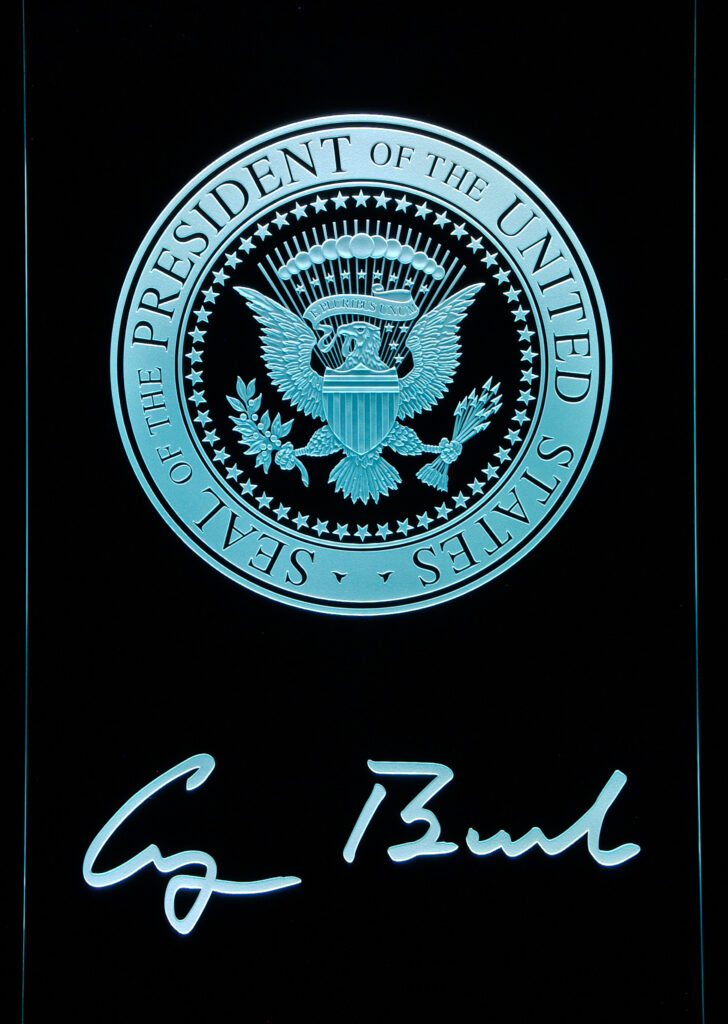
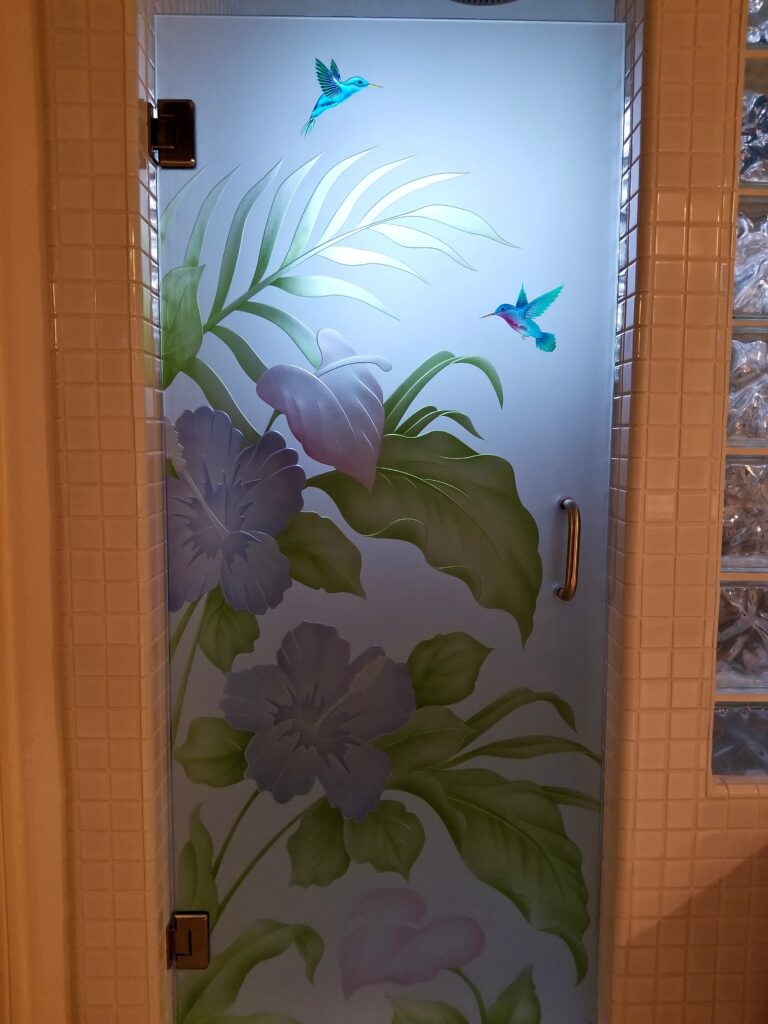
Sans Soucie Art Glass has 50 years of experience producing custom frosted glass using acid etching, sandblasting, carved glass, and hand-painted airbrushed effects. For many projects, Sans Soucie combines multiple techniques to create the final look. A panel may include full-panel acid etching for privacy, sandblasted carving for decorative depth, and airbrushed painted designs for color and dimension.
This allows one piece of glass to provide privacy, light, artwork, and architectural style at the same time. The result is not just frosted glass, but custom decorative glass designed for doors, windows, showers, partitions, signs, and other architectural applications.
Final Answer
Acid-etched glass and sandblasted glass are both permanent frosted glass options. Both can be customized, provide privacy, and include decorative designs.
The real difference is the method and finish: acid-etched glass is chemically etched, often using hydrofluoric acid or fluoride-based compounds, while sandblasted glass is mechanically etched with abrasive blasting. Acid etching usually creates a smooth satin finish, while sandblasting can create more texture, depth, carving, and handcrafted detail.
⁉️ Frequently Asked Questions (FAQ)
What is the difference between acid etch and sandblast finish?
The main difference between an acid-etched finish and a sandblasted finish is the process used and the resulting surface appearance. Acid-etched glass is chemically treated to create a smooth, refined frosted surface that often has a soft satin sheen or subtle low-gloss luster. Sandblasted glass is created by blasting the glass with abrasive material under pressure, producing a more matte, finely textured finish with a slightly granular appearance.
Is frosted glass acid-etched or sandblasted?
Frosted glass can be either acid-etched or sandblasted. Both methods create a translucent surface that provides privacy while allowing light to pass through. The term “frosted glass” describes the appearance of the glass, not the specific manufacturing process used to create it.
Is laser engraving better than sandblasting on glass?
Neither method is universally better, but they produce different results. Laser engraving typically creates a surface mark or shallow etching, while sandblasting can produce deeper frosting, carving, shading, and dimensional effects.
Why do some frosted glass surfaces show fingerprints more than others?
The texture of the glass plays a role. Some textured finishes can leave fingerprint marks more visibly because natural skin oils may collect within microscopic surface variations. Glass with a very smooth surface often wipes clean more easily, while more textured decorative finishes may require slightly more frequent cleaning.
Can acid etching and sandblasting be used on the same decorative glass design?
Yes. Many custom glass projects combine both techniques. A designer may start with acid frosted glass to create a uniform privacy background and then add artwork, carving, or shading through sandblasting. The result is often referred to as sandblasted and etched glass, combining the visual qualities of both processes within a single panel.
Why are some etched glass designs more detailed than others?
The level of detail depends on the artwork, masking techniques, equipment, and production method. Skilled artisans can create fine detail, detailed patterns, and highly intricate designs by carefully controlling the etching process and the depth of the design.
What causes visible texture differences in frosted glass?
The texture is largely determined by how the glass surface is altered. During sand blasting, abrasive media strikes the glass at high pressure, creating a different texture than chemical etching. These production methods create some of the most noticeable key differences between the two finishes.
Is frosted glass suitable for shower enclosures?
Yes. Both acid-etched and sandblasted finishes are commonly used to etch glass shower doors. Frosted glass can provide privacy while still allowing light to pass through the enclosure, making it a popular choice for modern bathrooms.
Does frosted glass require special cleaning products?
No special products are usually necessary. Most decorative glass can be cleaned using standard glass cleaners and warm water. The most important consideration is avoiding abrasive pads or harsh chemicals that could affect the appearance of the glass over time.
Can decorative glass be used in commercial buildings?
Absolutely. Frosted and etched glass is frequently installed in offices, restaurants, hotels, and other types of public space environments. It can provide privacy, branding opportunities, and architectural interest while maintaining natural light.
Why do some carved designs appear to have depth?
Depth is created when different areas of the glass are etched to different levels. Multiple passes during production can remove more material from selected areas, creating a visual layer effect that adds dimension and artistic character.
Can moisture become trapped inside etched glass?
Not within the etched surface itself. However, moisture can sometimes become trapped inside insulated glass units if the seal between the panes fails. This issue is related to the window assembly rather than the etched design.
Are sandblasted designs always deeply carved?
No. Sandblasted frosted glass can range from a very light frost to deeply sculpted carving. The final appearance depends on the desired design, privacy requirements, and the amount of material removed during production.
Does etched glass work with contemporary home styles?
Yes. Decorative glass is extremely versatile and can complement nearly any home design, from traditional and farmhouse interiors to contemporary and minimalist architecture. The design itself often has a greater impact on style than the etching method.
Can etched glass still allow natural light into a room?
Yes. Most frosted glass remains translucent, meaning it diffuses light while obscuring visibility. This is one of the primary benefits of etched glass in both residential and commercial applications.
What should homeowners look for when choosing etched glass?
When choosing etched glass, consider the desired privacy level, design style, maintenance expectations, lighting conditions, and where the glass will be installed. Matching the glass design to the function of the space often produces the best long-term results.
Do textured glass surfaces collect more dirt?
Textured surfaces can sometimes hold a decent amount of dirt compared to smoother finishes. This does not mean they are difficult to maintain, but some decorative surfaces may require a little more attention during routine cleaning.
Are etched glass surfaces durable enough for daily use?
Yes. Properly produced etched glass is highly durable and intended for long-term architectural applications. Decorative doors, windows, partitions, and etched panels can remain beautiful for decades when properly maintained.
Why do some etched designs appear darker or lighter than others?
The appearance depends on how much light passes through different portions of the design. Areas with heavier etching scatter more light, while clearer sections remain more transparent, creating visual contrast within the artwork.
Can modern equipment improve consistency in glass etching?
Yes. A high speed machine can help achieve consistent results for certain production stages. However, many custom decorative glass projects still rely heavily on skilled craftsmanship to achieve unique artistic effects and precision.
Are protective treatments ever applied to etched glass?
Yes. Some manufacturers apply specialized coatings to help reduce staining, improve cleanability, or enhance performance in specific environments. These treatments vary depending on the application.
Is one method more cost effective than the other?
Project pricing depends on design complexity, size, quantity, and production requirements. In some applications, one method may be more cost effective than the other, but there is no universal answer because every project is different.
Can environmental conditions affect decorative glass?
In coastal regions, airborne salt and other environmental contaminants may accumulate on any exterior glass surface. Regular cleaning helps maintain the appearance of etched and frosted glass regardless of the production method.
What are the most common methods used to create frosted decorative glass?
The two most common methods are acid etching and sandblasting. Both permanently alter the glass surface to create privacy and decorative effects, though they do so using different production techniques.
Does sandblasted glass require more maintenance?
Some textured decorative surfaces may require a bit more maintenance than smoother etched finishes because residues can collect more readily on textured areas. Even so, most decorative glass remains relatively low maintenance when cleaned routinely.
Can frosted glass be both decorative and elegant?
Yes. Frosted glass can take almost any visual form, from simple privacy panels to elaborate artwork. Whether acid etched, sandblasted, or combined, decorative glass can add an elegant architectural feature to a space.
How does sandblasted etched glass differ from plain frosted glass?
Sandblasted etched glass often incorporates artistic elements, carved depth, shading, or custom imagery in addition to privacy. Plain frosted glass typically focuses on creating a uniform obscured surface without decorative enhancements.
How do designers decide between acid etching and sandblasting?
The decision often comes down to the desired finish, texture, artwork, and overall project goals. While acid etching creates a smooth satin appearance, unlike sandblasted glass, it generally does not produce the same carved or textured surface characteristics that some designs require.
Create Custom Frosted Glass Made to Last
Whether you love the smooth simplicity of acid-etched glass or the artistic depth of sandblasted glass, Sans Soucie Art Glass can help you create a custom piece that fits your home beautifully. Family-owned and operated since 1976, we’re proud to be serving homeowners, designers, and builders for 50 years with handcrafted decorative glass—acid-etched and sandblasted glass—designed for privacy, light, and lasting beauty.
Explore our custom frosted glass doors, windows, frosted shower doors, glass barn doors and decorative glass designs to bring your vision to life.

Sans Soucie Art Glass: Decorative, Custom & Frosted Glass Doors, Windows, Showers & Stained Glass Since 1976
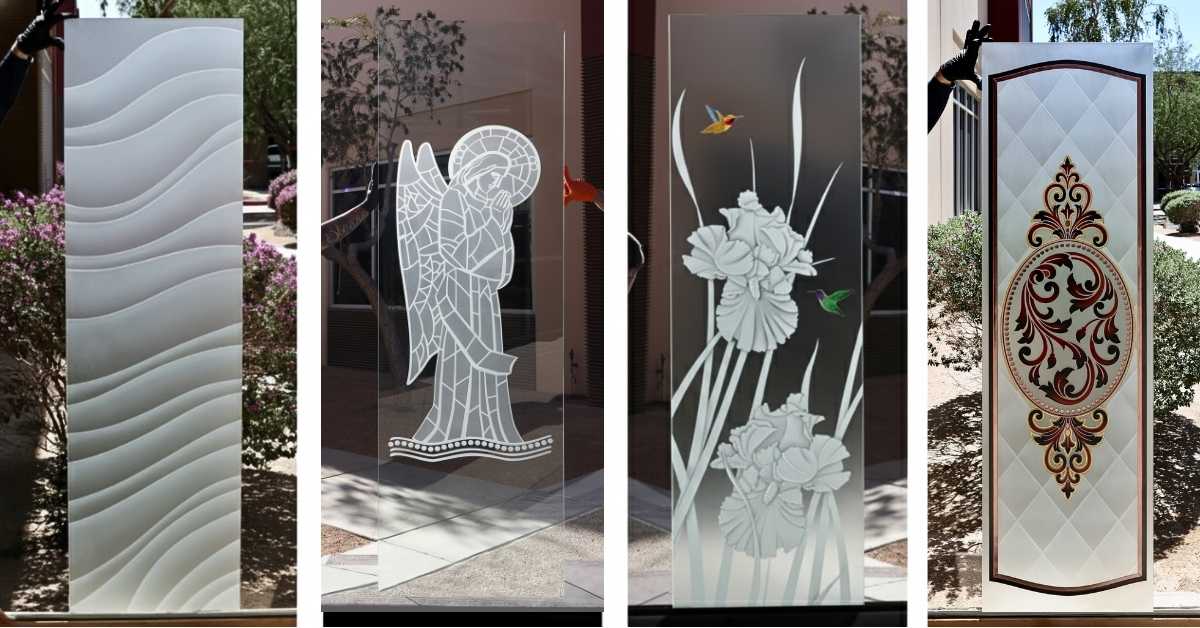
Family-owned and operated since 1976, Sans Soucie Art Glass leads the industry in decorative glass and custom glass design — from sandblast frosted glass and carved glass to hand-painted and stained glass art — transforming ordinary glass into Works of Art Captured in Glass recognized worldwide.
Innovative Frosted Glass Door Designer Tool
In 2010, we invented and launched our Frosted Glass Pantry Door Designer – a fun, easy-to-use tool that makes it simple for anyone to design and customize not only pantry doors, but a wide range of frosted glass doors for every room.
Explore our Frosted Glass Doors Collection
Our custom frosted glass doors include a beautiful variety for every style and space:
- Pantry Doors
- Frosted Glass Interior Door
- Interior Doors with Frosted Glass
- Frosted Glass French Doors
- Frosted Glass Front Door
- Front Doors with Frosted Glass
- Interior Glass Doors
- Glass Barn Doors
- Frosted Glass Barn Door
- Sliding Glass Barn Door
- All Glass Doors Interior
- All Glass Front Doors
- Bathroom Doors with Frosted Glass
- Laundry Room Doors
- Wine Room Doors
If you already have a door, and only need the glass insert, we also offer:
- Frosted Glass for Interior Doors
- Door Glass Inserts for Front Doors
- Glass Panels for Pantry Doors
- Frosted Glass Inserts for Bathroom Doors
- Laundry Room Door Glass Inserts
- Glass Panels for Interior Wine Cellar Doors
Elegant Frosted Glass Throughout Your Home
While our frosted glass doors are a top choice, we also create stunning glass products for every area of your home, including:
- Frosted Glass Shower Doors
- Glass Shower Partition
- Frosted Glass Shower Panel
- Frosted Glass Showers
- Frosted Glass Windows
- Bathroom Window Frosted Glass
- Decorative Window Glass, Window Frosting
- Custom Glass Dining Table
- Custom Glass Coffee Table
- Glass Shelves, Custom Glass Shelves
- Hand Carved & Painted Mirrors
- Frosted Glass Signs, Etched Glass Signs
- Cabinet Door Glass Inserts, Frosted Glass Inserts for Cabinet Doors
- Glass Wall Art, Wall Art on Glass
Looking for Inspiration? Explore Our Galleries
Discover visual idea boards, style concepts, décor applications, real project photos, and helpful information in our expanding gallery collection:
- Custom Glass
- Custom Glass Edges
- Custom Mirror
- Decorative Glass
- Decorative Glass Doors
- Decorative Glass Front Doors
- Decorative Glass Interior Doors
- Decorative Glass Window
- Stained Glass
- Stained Glass Doors
- Stained Glass Front Doors
- Stained Glass Windows
Free Shipping. Expert Packing, Peace of Mind
With FREE SHIPPING on most orders and worldwide delivery from our studio in Palm Desert, California, every order is packed in-house by our expert glaziers using custom materials and proven methods — ensuring safe arrival with a damage rate of less than 1%!
Explore our complete frosted glass doors collection and find the perfect frosted glass door for your space. Have questions? Contact us today!
Copyright © 2025, Sans Soucie Art Glass. All rights reserved.